Rabbit ears changed watching television into an experience, and if you grew up before cable and satellite dishes, you probably remember them well. It wasn’t enough to just watch TV – we had skills that kids these days truly will never understand. Here is a list of techniques the kids with rabbit ear antennas had to master.
Table of Contents
- 1 1. The Perfect Antenna Position
- 2 2. The Human Antenna Effect
- 3 3. The Aluminum Foil Trick
- 4 4. Weather Forecasting
- 5 5. The Fine Art of Timing
- 6 6. The UHF Dial Mastery
- 7 7. The Interference Dance
- 8 8. The Signal Strength Test
- 9 9. The Collaborative Effort
- 10 10. The Vertical Hold Expertise
- 11 11. Distance Calculations
- 12 12. The Reception Dance
1. The Perfect Antenna Position

Finding the sweet spot was like cracking a safe combination. Every channel had a perfect antenna position, and once you found the channel’s sweet spot, it became a memory you had to keep like a secret code. Left ear at 45 degrees, right ear straight up, and don’t breathe! The more dedicated even went as far as taping the floor in the perfect position.
Save for later
Want to come back to this story? Save it with your email so it is easy to find again.
2. The Human Antenna Effect

We learned that the reception could always be better. We took to standing by the television, touching the antenna, and holding our bodies in a certain way to transform the snowy static into a picture that is visible. This turned into evenings with one player being a \”statue\” to allow everyone else to see the show.
3. The Aluminum Foil Trick
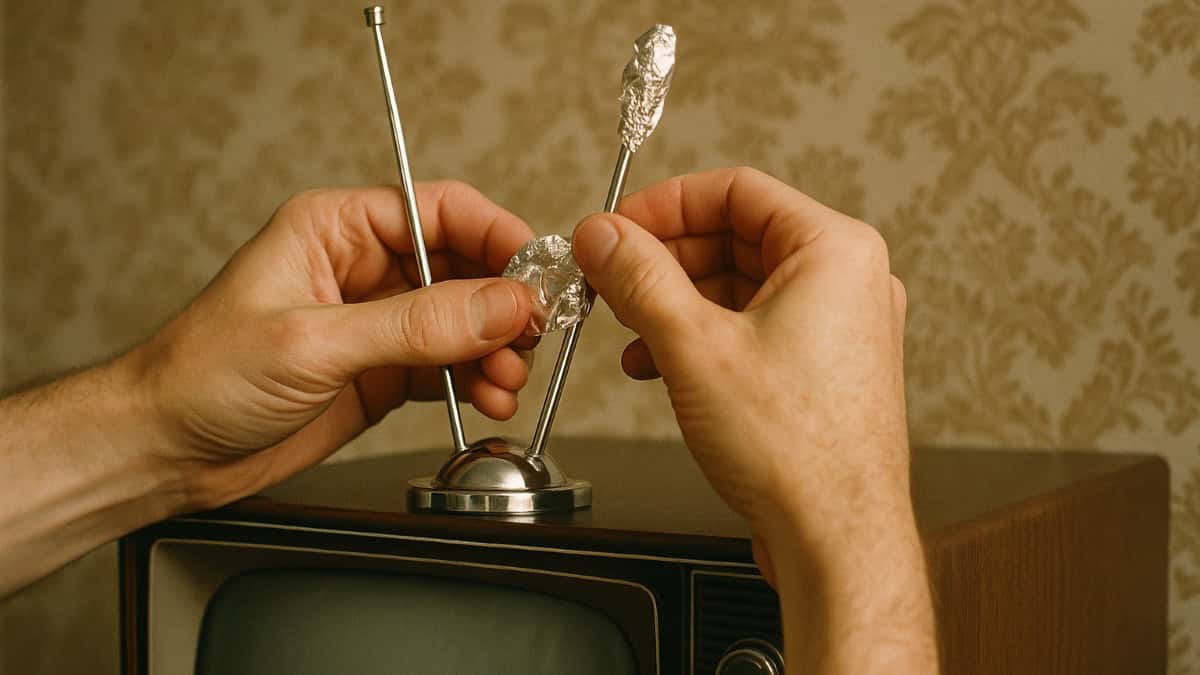
Foiling the rabbit ears became an art. Molding the foil in to the perfect shape became our passion, and kids in each family became the masterpieces of silver construction that seemed to modern art.
4. Weather Forecasting

We started predicting the weather because we noticed that the stormy weather affected the clarity of the TV reception. We would have to adjust the antenna every time that it was cloudy or raining, while viewing the channel on the TV. The severe thunderstorms would make the signal completely unclear. It would help us out a lot if we could predict when the storms would arrive so that we could see the weather channel more clearly.
5. The Fine Art of Timing

When adjusting the antenna it required perfect timing in the middle of each commercial break, so it would give us post to go adjust it. Each family member would sprint to the TV to make adjustments on it without getting killed before the show resumed. This was like a dance to all the family members.
6. The UHF Dial Mastery

It took precision to get the dial set to the right channel on the UHF dial, as they didn’t click into place like the VHF channels. We would give each other more precise steps than you would in a first aid scenario. We developed the utmost elite hand-eye coordination to set the dial to the right channel.
7. The Interference Dance
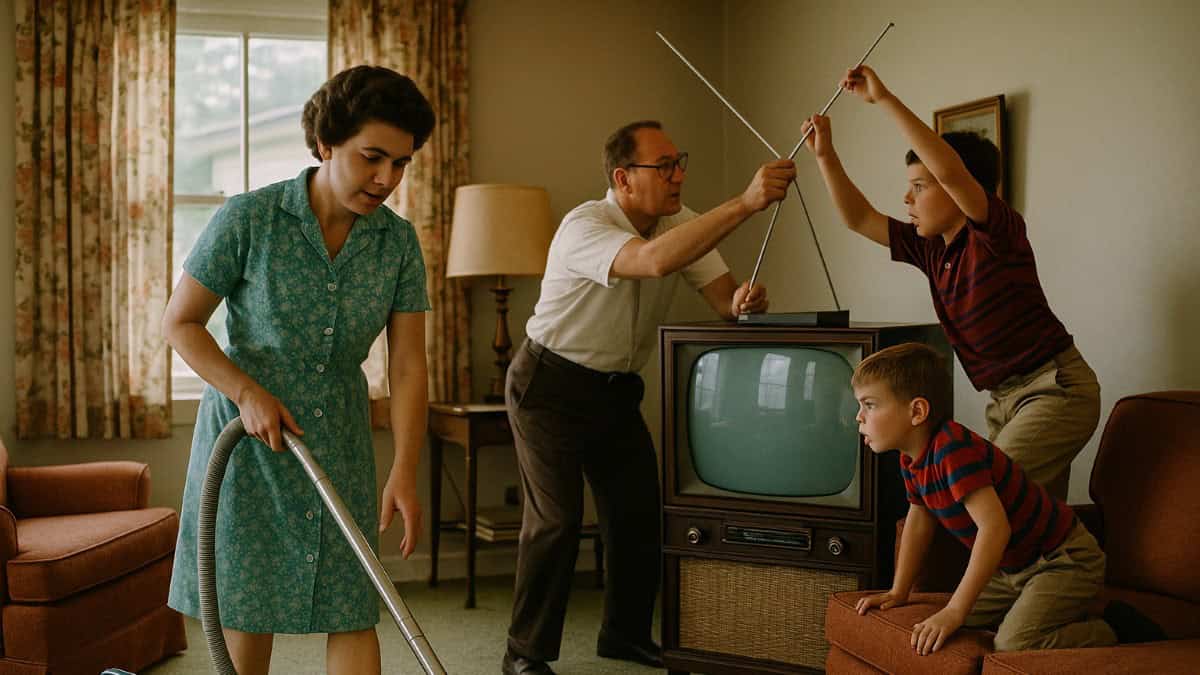
We learned to work around the interference by using the vacuum clean or running the blender, which would disrupt the TV signal. We all tried to fit our TV watching schedules around the chores that had to be done.
8. The Signal Strength Test

We knew what the static meant. Each problem that we faced had a different kind of interference. We had all the combined knowledge and experience to find all of the solutions to all these problems.
9. The Collaborative Effort
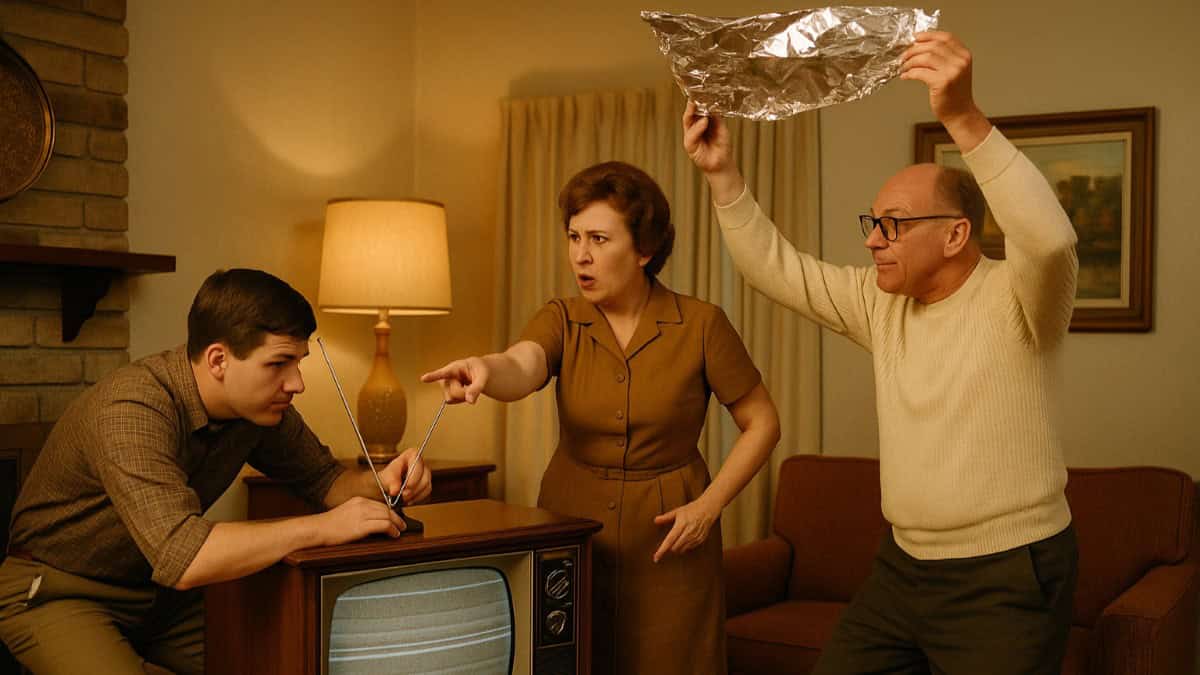
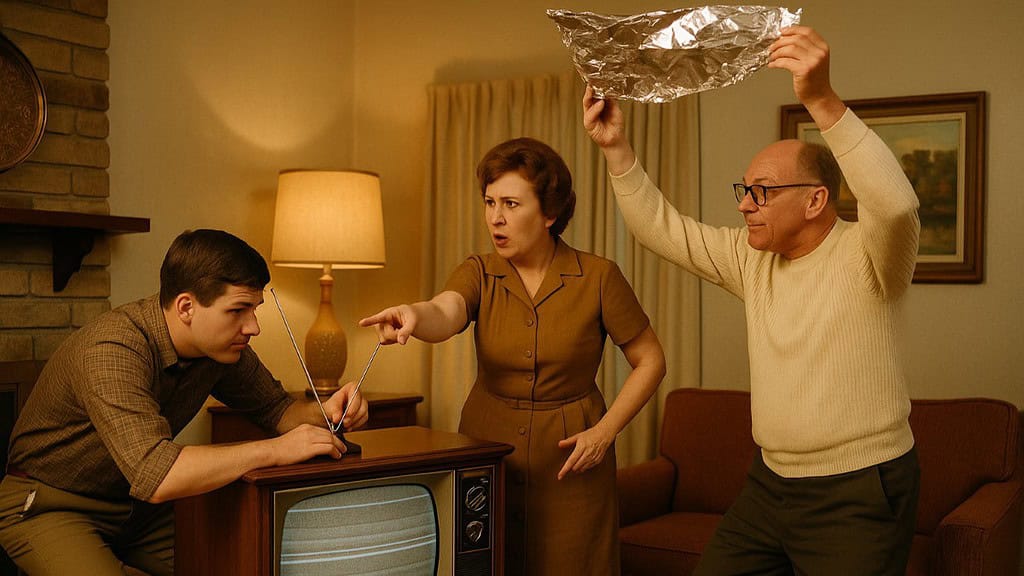
To get good reception you often needed cooperation. One person would adjust the antenna while someone else would stand across the room directing them. “A little to the left….no, back a bit…perfect, DON’T MOVE!” It was like a family game of Marco Polo, but for TV signals.
10. The Vertical Hold Expertise

In addition to adjusting the antenna, we learned how to use the vertical hold control. When the picture was rolling, we knew exactly which way to turn the knob to stabilize it. It was like trying to catch a moving target, but we normally got it on the first few tries.
11. Distance Calculations

We understood the effect of signal strength and distance on the reception of the TV channels. Some channels were clear, while others were always a bit fuzzy. We learned in what direction each station was located and how the weather affected reception at different distances.
12. The Reception Dance

Occasionally, we would have to do what we called the reception dance, which meant moving around the room to hold the antenna while contorting yourself into different positions to get the reception right. It was common to have someone sitting frozen in a strange pose for the duration of their favorite show.