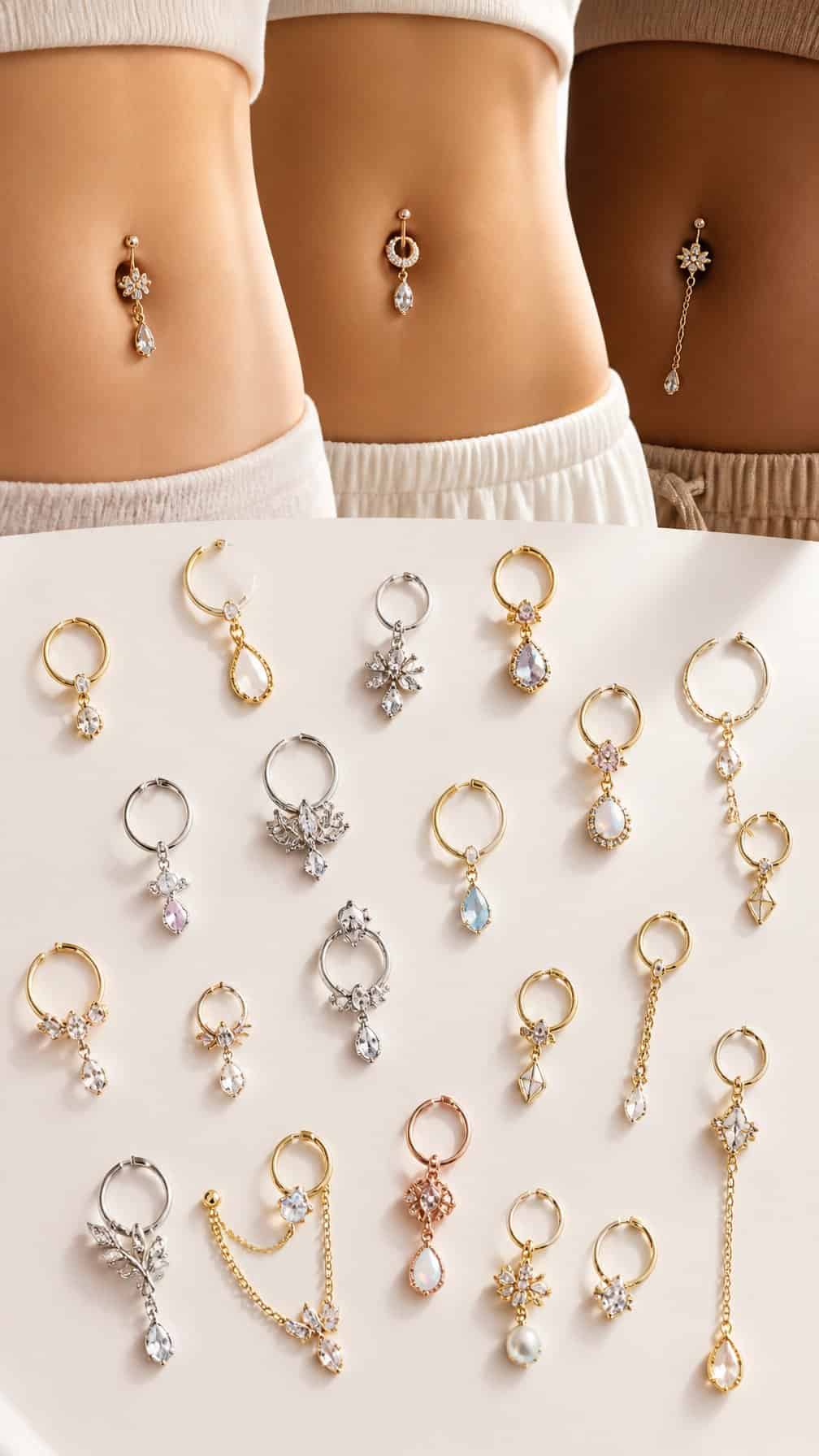
A belly button piercing can express your style without relying on a traditional barbell. You can explore delicate shapes, polished hoops, gemstone details, and playful charms that give your jewelry a more personal look.
Save for later
Want to come back to this story? Save it with your email so it is easy to find again.
You can find a flattering design by considering your preferred style, jewelry material, body fit, and comfort during healing. I’ll cover varied ideas for subtle, decorative, and statement-making looks, along with practical guidance on choosing the right size, caring for a healing piercing, and styling each piece.
Table of Contents
- 1 1) Dainty Captive Bead Ring
- 2 2) Beaded Clicker Hoop
- 3 3) Opal Seamless Ring
- 4 4) Dangling Crescent Moon Ring
- 5 5) Triple Gemstone Curved Bar
- 6 6) Reverse-Set Crystal Ring
- 7 7) Marquise Gemstone Ring
- 8 8) Floral Filigree Clicker
- 9 9) Double Hoop Belly Ring
- 10 10) Snake-Chain Dangle Ring
- 11 11) Pearl Drop Belly Ring
- 12 12) Minimalist Horseshoe Ring
- 13 13) Heart-Shaped Clicker
- 14 14) Moonstone Teardrop Ring
- 15 15) Sunburst Gemmed Ring
- 16 16) Butterfly Dangle Ring
- 17 17) Geometric Triangle Ring
- 18 18) Emerald-Cut Crystal Ring
- 19 19) Layered Chain Belly Ring
- 20 20) Evil Eye Charm Ring
- 21 Choosing Jewelry Materials And Sizes
- 22 Gauge, Length, And Fit
- 23 Implant-Grade Materials And Metal Sensitivities
- 24 Healing, Aftercare, And Styling Considerations
- 25 Signs Of Proper Healing
- 26 When To Change Your Jewelry
- 27 Matching Jewelry To Your Anatomy And Wardrobe
1) Dainty Captive Bead Ring
I like a dainty captive bead ring for its clean shape and understated detail. A small polished ring follows the navel’s curve, while the bead adds a subtle focal point without the length of a traditional barbell.
I would choose a slim gauge and a bead sized to suit the anatomy, since proportions affect both comfort and appearance. Implant-grade titanium or solid 14-karat gold offers durable, body-safe options when sourced from a reputable piercer.
The circular design can complement simple outfits and layered jewelry elsewhere on the body. I would also leave enough room for natural movement and swelling during healing, following the piercer’s aftercare instructions.
2) Beaded Clicker Hoop
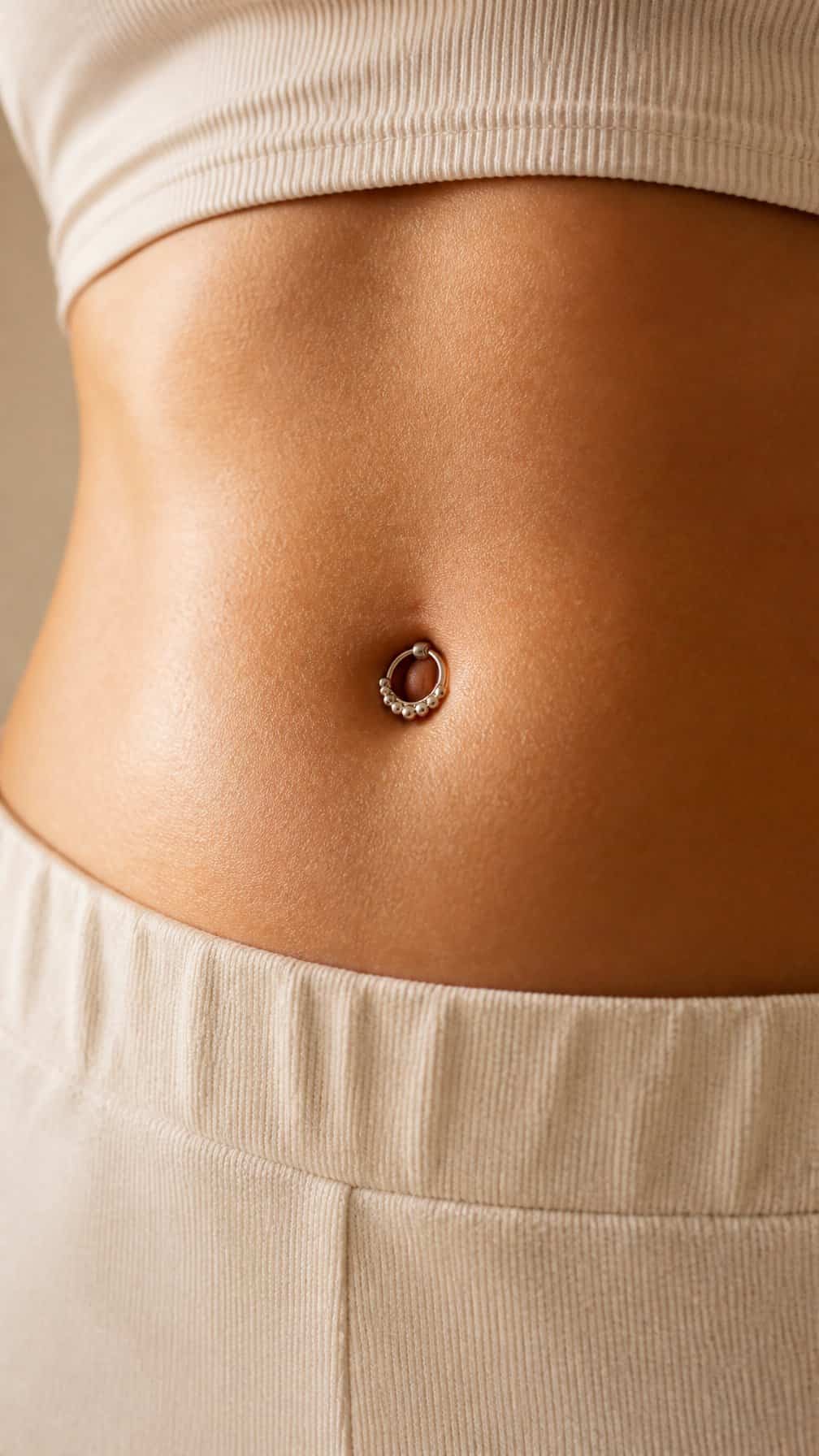
I like a beaded clicker hoop for its rounded profile and secure hinged closure. Small beads placed around the ring add texture without relying on a traditional barbell shape, while a polished finish keeps the design clean.
I would choose a lightweight, properly fitted hoop made from implant-grade titanium or another body-safe material. The inner diameter should suit the piercing’s anatomy without pressing against the skin, and the clasp should close smoothly without pinching.、】【
3) Opal Seamless Ring
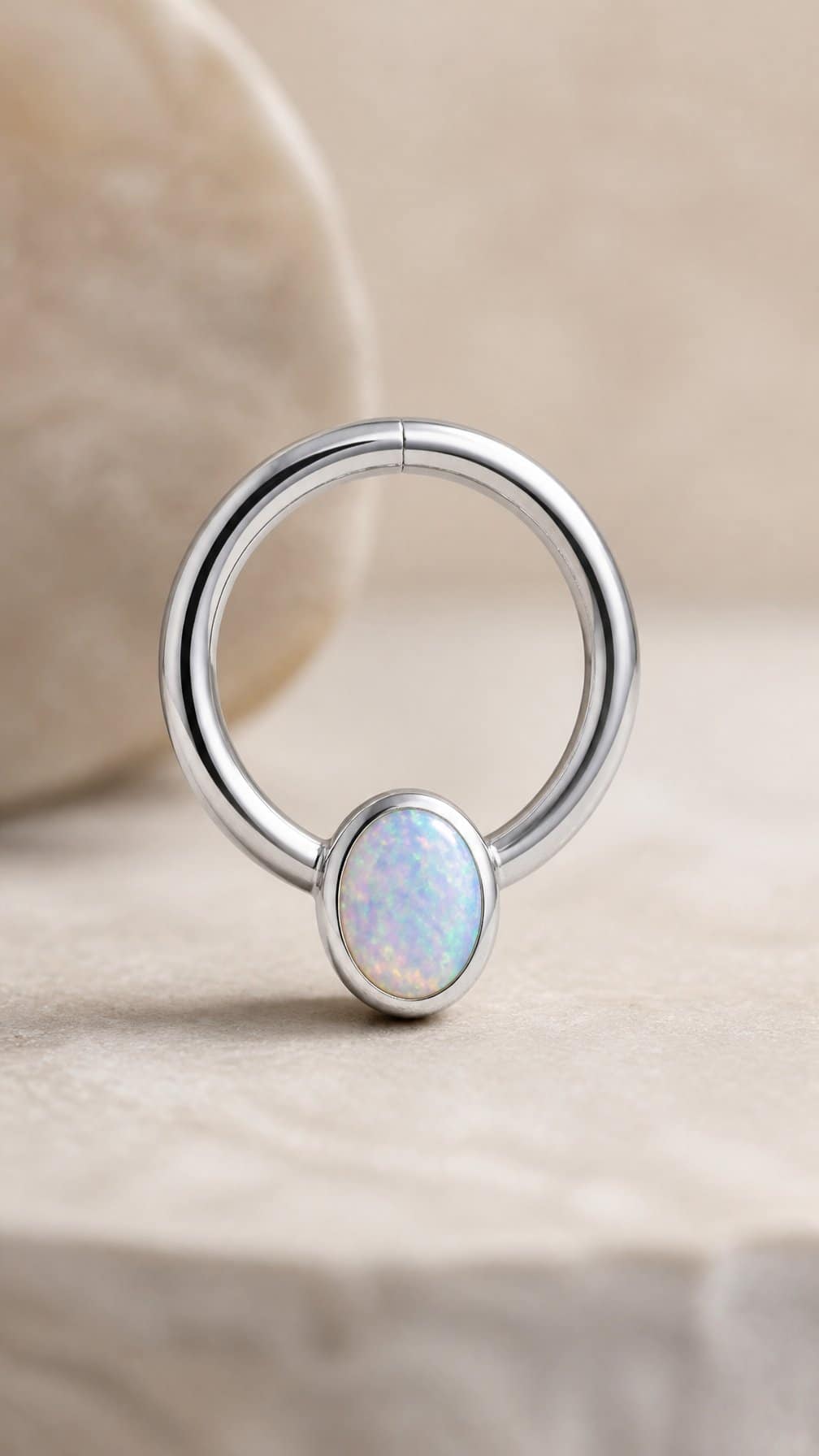
I like an opal seamless ring for its clean shape and subtle color shift. Its continuous design creates a smooth outline around the navel, while the opal insert can reflect blue, green, pink, or white tones depending on the lighting.
I would choose implant-grade titanium or solid gold for the ring and confirm that the opal setting sits securely. Because a seamless ring can move more than a curved barbell, I would wait until the piercing has fully healed before wearing one. A smaller diameter usually keeps the look neat and reduces snagging on clothing.
4) Dangling Crescent Moon Ring
I like a crescent moon charm for the way it adds movement without the bulk of a traditional barbell. The curved shape sits neatly against the navel, while a small dangling charm creates a subtle focal point when I move.
I would choose a lightweight ring with a secure clasp and smooth edges to reduce snagging on clothing. Sterling silver, titanium, or solid gold can work well, depending on my skin’s sensitivity and the piercing’s healing stage.
I also consider the charm’s length before buying. A shorter crescent feels understated, while a longer design creates more swing and visual interest.
5) Triple Gemstone Curved Bar
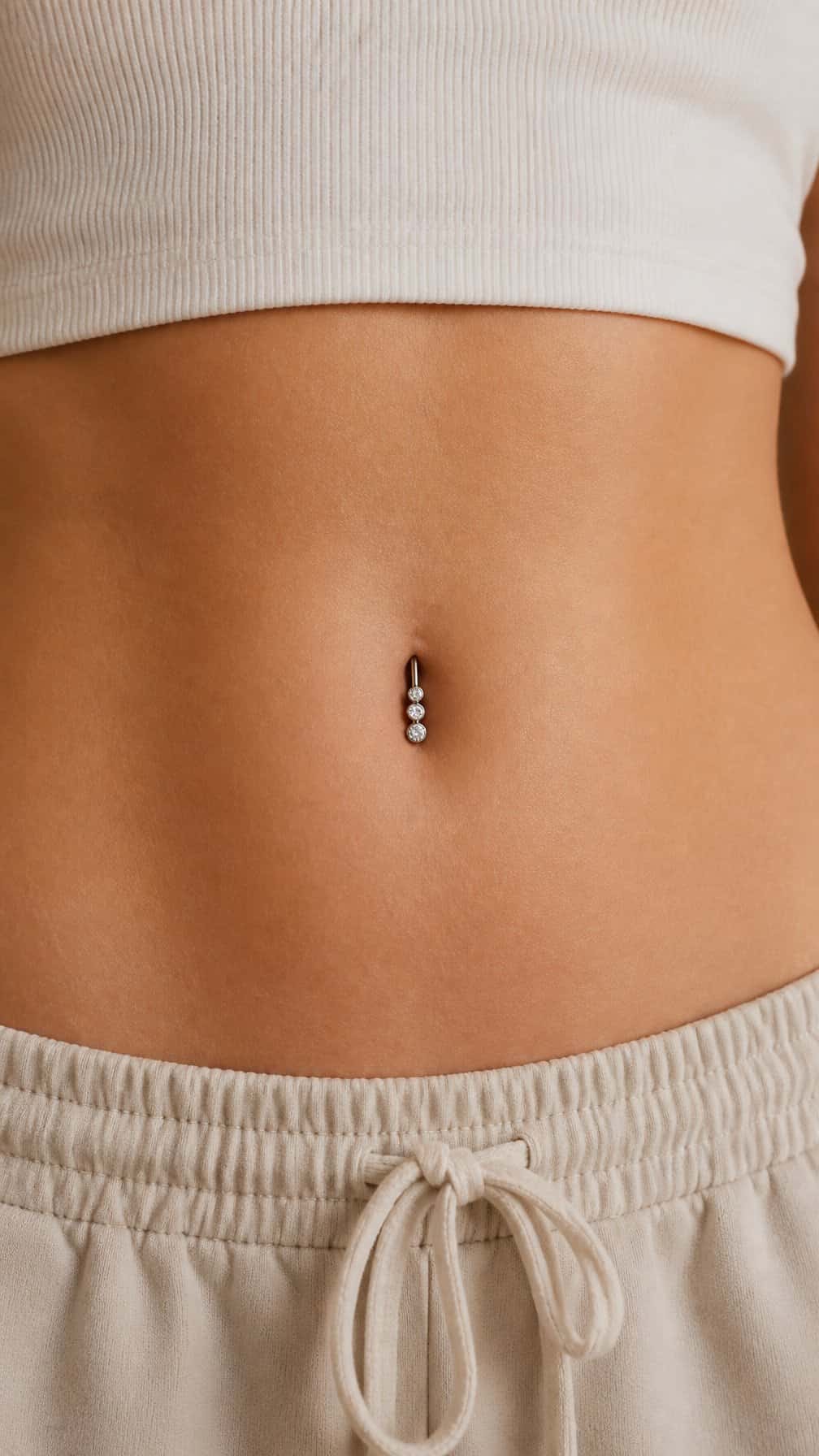
I like the triple gemstone curved bar for its balanced arrangement and subtle movement. Three stones sit along the curve, creating a centered look that feels more decorative than a standard barbell without appearing overly busy.
I would choose stones in one color for a streamlined finish, or combine complementary shades for more contrast. Clear, pink, blue, and green stones each create a different effect, while titanium or surgical-grade stainless steel can provide a practical metal choice for properly healed piercings.
The curved shape follows the navel’s natural contour, but fit still matters. I would have a professional piercer check the bar length, gemstone settings, and placement before wearing it, especially if the piercing experiences pressure from clothing or frequent movement.
6) Reverse-Set Crystal Ring
I like a reverse-set crystal ring for its subtle sparkle and smooth profile. The stone sits against the jewelry rather than facing outward, creating a smaller, more discreet detail around the navel.
I find this style works well with simple outfits because it adds interest without looking overly ornate. I would choose implant-grade titanium or solid gold, then confirm the setting feels secure and the ring fits comfortably without pressing against the piercing channel.
7) Marquise Gemstone Ring
I like a marquise gemstone ring for its elongated shape and refined profile. The pointed ends can follow the natural curve of the navel, while a colored stone adds a focused detail without relying on a traditional barbell design.
I would choose a ring made from implant-grade titanium, niobium, or solid gold suitable for body jewelry. A secure closure matters, especially because waistbands can catch on exposed settings. I would also check that the gemstone sits smoothly against the skin and does not press into the piercing channel.
8) Floral Filigree Clicker
I like floral filigree clickers for their detailed metalwork and clean, hinged design. Delicate petals, leaves, or scrolls can frame the navel without the straight-line look of a traditional barbell.
I would choose a clicker made from implant-grade titanium or solid gold, especially for a fresh or sensitive piercing. The hinge should close securely, while the decorative elements should sit smoothly against the skin without sharp edges or snagging points.
This style works well with small gemstones placed at the flower’s center or along the curved frame. I would confirm that the jewelry suits my anatomy and that the piercer selects an appropriate diameter, since a clicker that fits too tightly can cause pressure and irritation.
9) Double Hoop Belly Ring
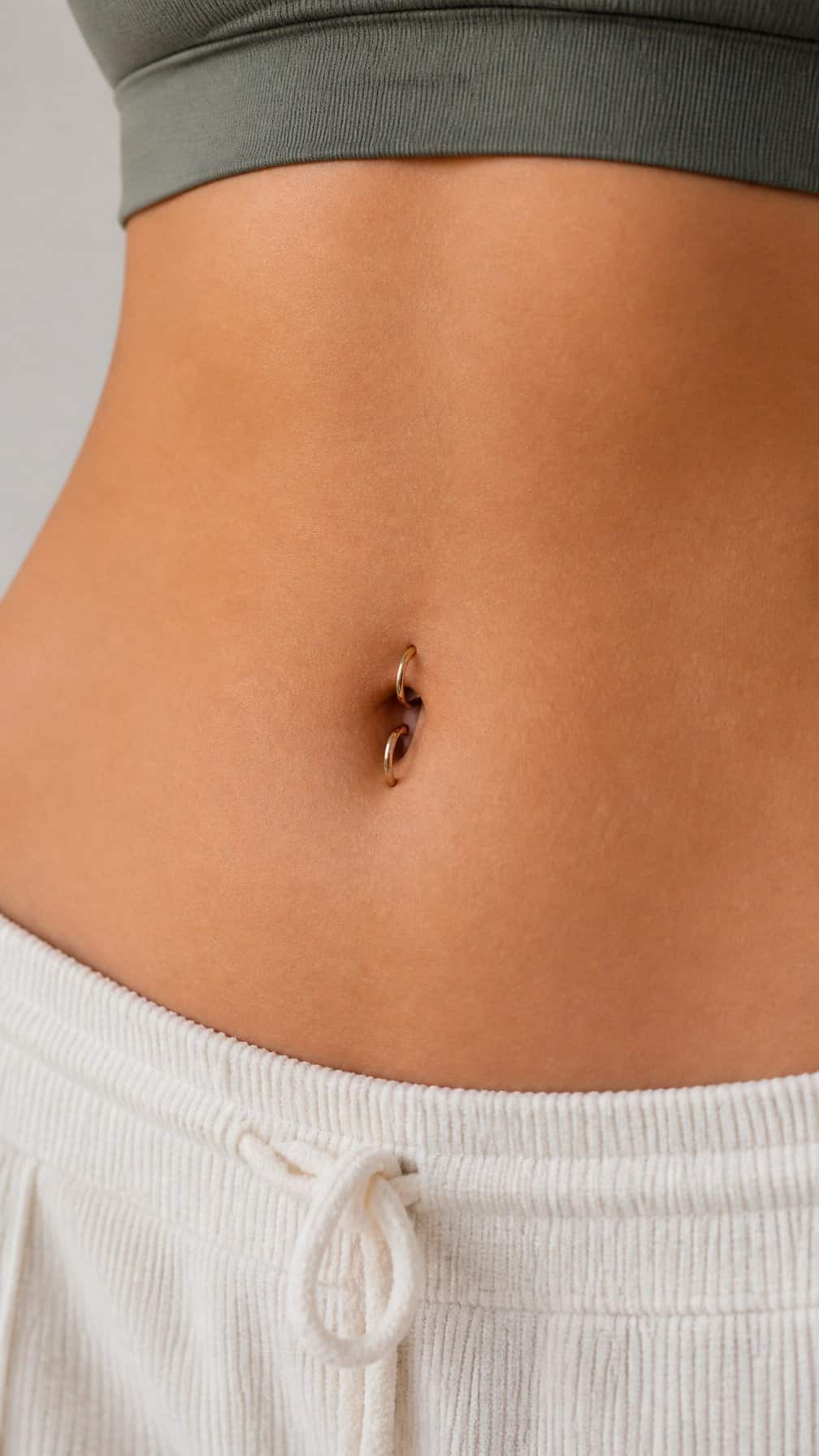
I like the double hoop design because it creates a layered look without relying on a traditional barbell. Two connected or closely spaced hoops can frame the navel neatly, while different metal finishes add subtle contrast.
I would choose lightweight jewelry with smooth edges and a secure closure to reduce snagging on clothing. The fit matters: each hoop should sit comfortably without pressing against the skin or pulling on the piercing channel.
I would also confirm that the jewelry suits my anatomy and piercing placement before wearing it. A professional piercer can check the size, material, and style, especially if the piercing is still healing.
10) Snake-Chain Dangle Ring
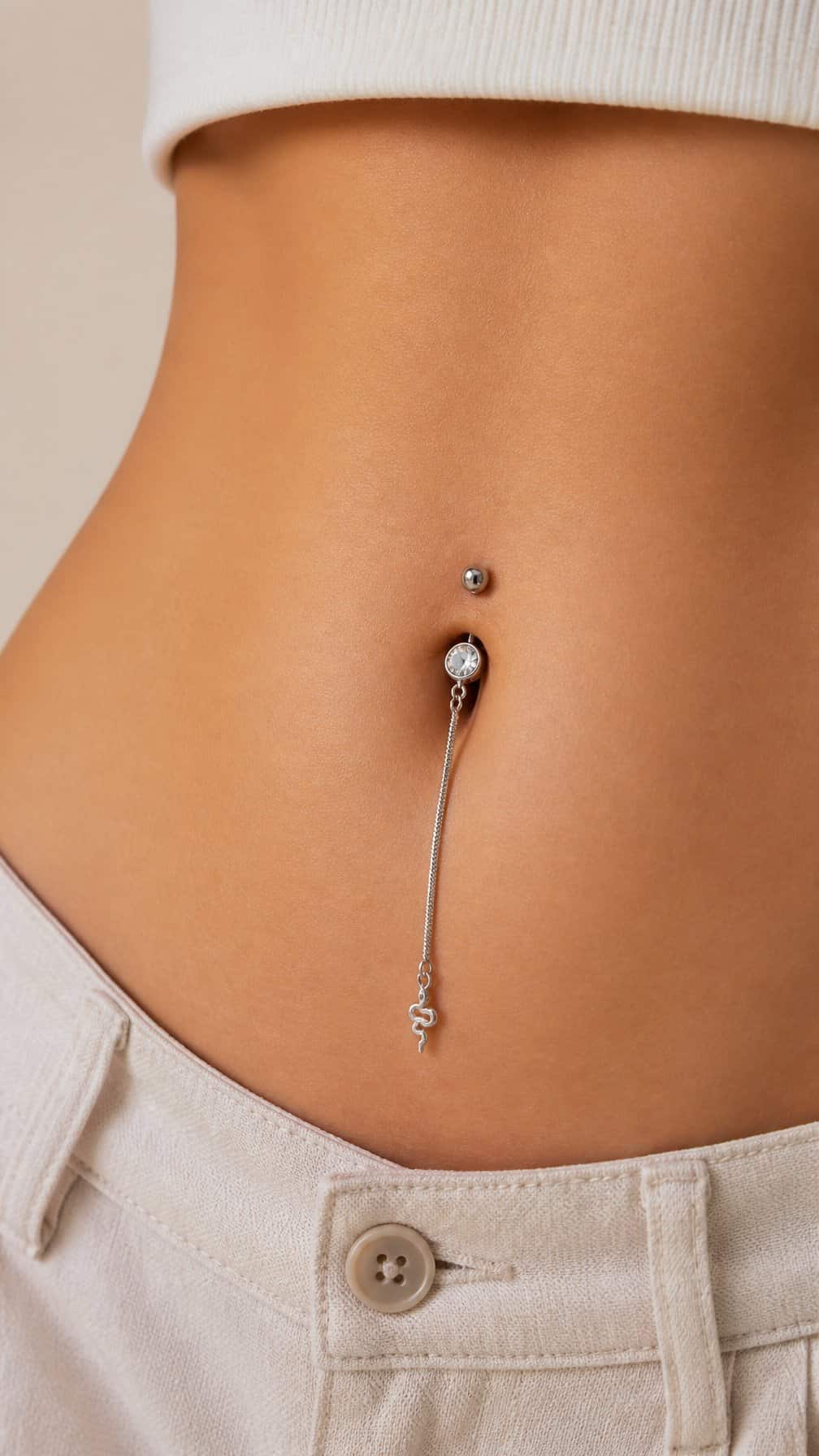
I like a snake-chain dangle ring for its fluid movement and polished finish. The flexible chain hangs from a curved ring, creating a softer look than a fixed barbell while keeping the design simple.
I would choose a lightweight style with a secure closure and a smooth surface to reduce snagging on clothing. Stainless steel, titanium, or solid gold options can suit different preferences, but I would avoid plated pieces if the finish may wear against the piercing.
The dangle should remain short enough to move comfortably without pulling on the fistula. I would also match the metal tone to any existing jewelry for a coordinated result.
11) Pearl Drop Belly Ring
I like a pearl drop belly ring when I want a softer alternative to a standard barbell. Its curved top follows the navel, while the suspended pearl adds movement and a polished, understated detail.
I would choose a pearl size that suits my anatomy and clothing preferences. A smaller drop works well for everyday wear, while a larger pearl creates a more noticeable accent without relying on extra stones or bright metal.
I would also check the material and construction before wearing one. Implant-grade titanium or solid gold can suit healed piercings, and a smooth setting helps reduce snagging on waistbands.
12) Minimalist Horseshoe Ring
I like a horseshoe ring for its clean shape and open-ended design. Its curved bar can frame the navel without the heavier appearance of a traditional barbell, while small ball ends keep the look balanced and understated.
I would choose a slim ring in titanium, surgical-grade stainless steel, or solid gold, depending on my budget and skin sensitivity. A polished finish creates a sharper look, while a matte finish feels more subtle. I would also check that the diameter and gauge suit my anatomy and allow enough room for comfortable movement.
13) Heart-Shaped Clicker
I like a heart-shaped clicker for its compact design and defined outline. Unlike a standard barbell, it creates a single, recognizable focal point at the navel while keeping the jewelry close to the skin.
I would choose a hinged clicker made from implant-grade titanium or solid gold, especially for a fresh or sensitive piercing. The smooth closure should sit securely without pressing into the piercing channel, and the heart should have rounded edges to reduce snagging.
I find this style works well with simple outfits because it adds a small decorative detail without needing extra charms. I would also check the clicker’s diameter and hinge placement with a professional piercer before wearing it.
14) Moonstone Teardrop Ring
I like a moonstone teardrop ring for its soft shape and subtle color. Its pear-shaped stone hangs from a curved ring, creating gentle movement without the structured look of a barbell. The design works well with simple jewelry and suits outfits that benefit from a small, polished detail.
I would choose a secure, properly fitted piece made from implant-grade titanium or solid gold. Moonstone can scratch more easily than harder gemstones, so I would avoid twisting the jewelry, catching it on clothing, or using abrasive cleaners. A piercer can check the fit and confirm whether the shape suits my anatomy.
15) Sunburst Gemmed Ring
I like a sunburst gemmed ring for its decorative shape and balanced sparkle. Small stones radiate from the center, creating a star-like detail that stands out without relying on a traditional straight barbell.
I would choose a ring made from implant-grade titanium or solid 14-karat gold, with securely set gems and a smooth inner surface. The design needs enough room to move comfortably through the piercing without pressing against the skin.
I would also consider the gem color when matching it with other jewelry. Clear stones offer a subtle finish, while colored gems can coordinate with a personal style or add contrast to simpler pieces.
16) Butterfly Dangle Ring
I like a butterfly dangle ring for the movement it adds to a navel piercing without relying on a standard barbell shape. A small butterfly charm can hang from a curved ring, creating a delicate detail that shifts gently as I move.
I would choose a lightweight design with smooth edges and a secure closure to reduce snagging on clothing. Implant-grade titanium or solid gold offers suitable material options, while a shorter charm keeps the jewelry balanced and comfortable for everyday wear.
17) Geometric Triangle Ring
I like a geometric triangle ring for its clean lines and defined shape. Unlike a standard circular hoop, it creates a sharper outline around the navel and gives the piercing a modern, structured appearance.
I would choose a slim design for a subtle look or a thicker ring for stronger visual definition. Before selecting one, I would check that the triangle’s corners feel smooth and cannot catch on clothing. Proper sizing also matters, since a ring that sits too tightly may press against the piercing as it moves.
18) Emerald-Cut Crystal Ring
I like an emerald-cut crystal ring for its clean, elongated shape and subtle geometric detail. The rectangular stone catches light across its flat facets, creating a polished look without the familiar appearance of a standard barbell.
I would choose a ring with a secure closure and a smooth setting to reduce snagging on clothing. Implant-grade titanium or solid gold can provide suitable material options, while the crystal’s color lets me match the jewelry to my personal style. I would also wait until the piercing has fully healed before wearing a ring, since movement can irritate fresh tissue.
19) Layered Chain Belly Ring
I like layered chain belly rings for the movement and texture they add to a simple piercing. Several fine chains hang from the jewelry, creating staggered lines that sit across the upper stomach without relying on a traditional barbell shape.
I would choose a lightweight design with smooth links and secure closures to reduce pulling or snagging. Gold-tone, silver-tone, and black finishes each create a different effect, while small charms can add a personal detail without making the piece look crowded.
I would wear this style with fitted tops or swimwear that keeps the chains visible. During healing, I would avoid layered designs unless a professional piercer confirms that the jewelry suits the placement and will not place unnecessary pressure on the piercing.
20) Evil Eye Charm Ring
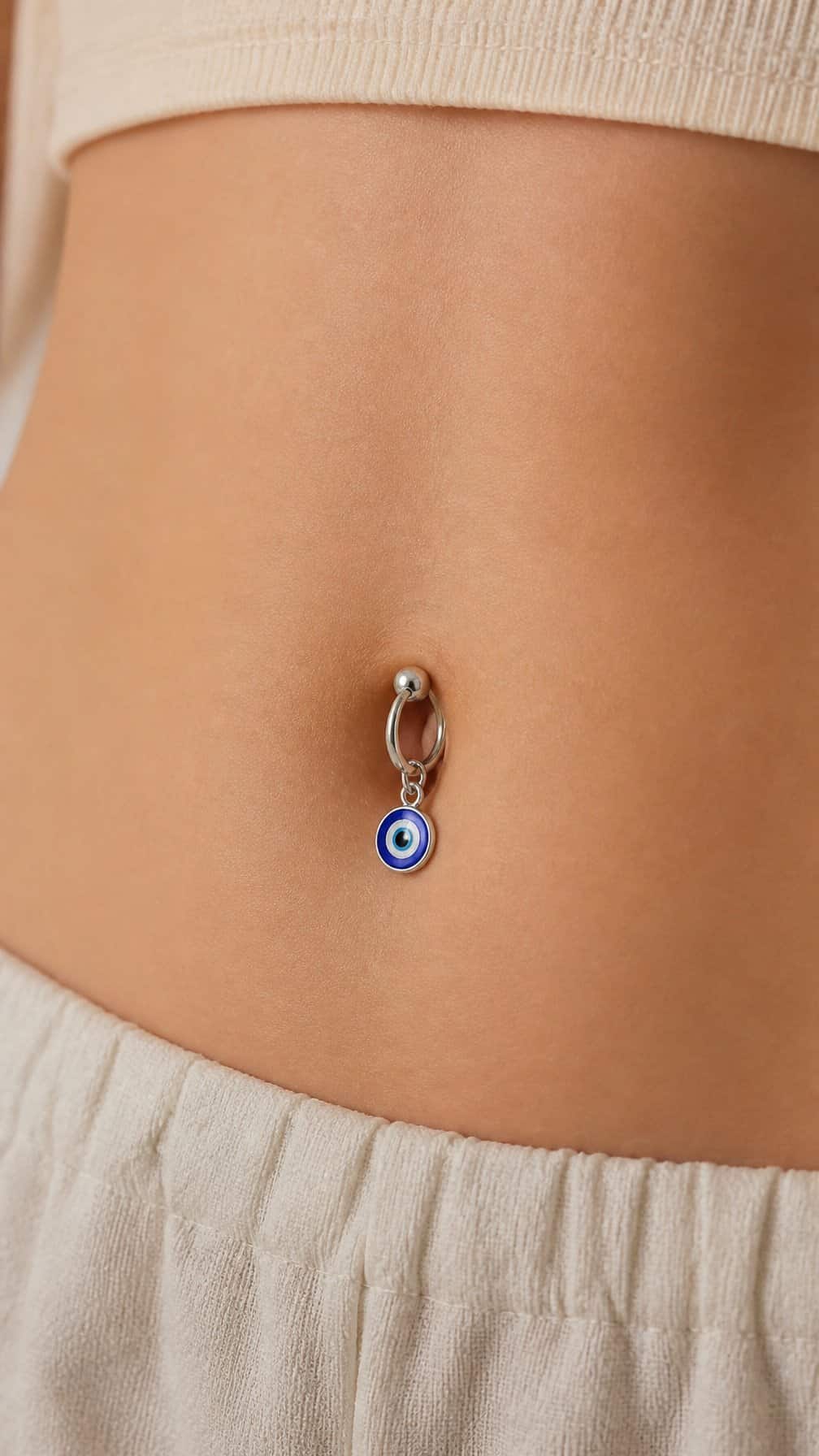
I like an evil eye charm ring for its distinctive detail and open, curved shape. The charm can sit near the navel or hang slightly below it, depending on the ring’s size and placement. Blue-and-white enamel creates the classic look, while gold or silver finishes offer different styling options.
I would choose a lightweight ring with a securely attached charm to reduce pulling on the piercing. A smooth surface also makes cleaning easier and helps limit contact with clothing. Before wearing one, I would confirm that the piercing has healed and select jewelry made from a body-safe material such as implant-grade titanium or solid gold.
Choosing Jewelry Materials And Sizes
I prioritize jewelry that matches the piercing’s anatomy, allows room for normal swelling, and uses materials with established biocompatibility. The right gauge, length, shape, and metal can reduce pressure, irritation, and allergic reactions.
Gauge, Length, And Fit
Most navel piercings use 14-gauge jewelry, although a professional piercer may recommend 12 or 16 gauge based on your existing channel and anatomy. I would not downsize or stretch the piercing without professional guidance, because an incorrect gauge can cause tearing, migration, or prolonged irritation.
Length matters just as much. Curved barbells need enough clearance for the upper and lower openings without pressing into the surrounding skin. I prefer an initial piece with slight room for swelling, followed by a shorter replacement after healing. Excess length can catch on clothing, while jewelry that fits too tightly can embed or create pressure sores.
For alternatives to standard barbells, I check that the design sits securely without pulling on the channel. Dangling charms, chains, and larger ends should remain lightweight, especially during healing.
Implant-Grade Materials And Metal Sensitivities
I choose implant-grade titanium, certified implant-grade steel, or solid 14-karat or 18-karat gold from a reputable source. Titanium works well for many people because it is lightweight and available in nickel-free grades. Gold should be solid rather than plated; plating can wear away and expose an unknown base metal.
I avoid sterling silver, gold-plated jewelry, mystery alloys, and nickel-containing pieces for fresh or sensitive piercings. Silver can tarnish and irritate tissue, while nickel commonly triggers contact dermatitis. If I have reacted to earrings, watches, or belt buckles, I tell the piercer before selecting jewelry.
I also verify the material certification and polished finish. Rough surfaces, sharp edges, and poorly fitted threaded ends can trap debris or damage the piercing channel.
Healing, Aftercare, And Styling Considerations

I focus on calm healing, timely jewelry changes, and designs that suit both the navel’s shape and daily clothing. Clean handling, low friction, and well-fitted jewelry help reduce irritation while preserving the look of the piercing.
Signs Of Proper Healing
I expect mild tenderness, limited swelling, and a small amount of clear or pale fluid during the early healing period. The skin should gradually look less red, feel less sensitive, and produce fewer crusts. Jewelry should move only slightly without sharp pain or tightness.
I clean the piercing with sterile saline, then pat it dry with disposable paper rather than twisting or removing the jewelry. I avoid alcohol, hydrogen peroxide, harsh soaps, pools, hot tubs, and tight waistbands that rub the area.
Contact a qualified piercer or healthcare professional if redness spreads, warmth increases, swelling worsens, thick yellow or green discharge appears, or fever develops. Persistent pressure marks, thinning skin, or jewelry becoming visible through the skin can indicate migration or rejection.
When To Change Your Jewelry
I wait until the piercing has healed fully before changing decorative jewelry. Navel piercings often need several months to heal, and the exact timing depends on anatomy, irritation, jewelry quality, and aftercare. A piercer should assess the channel before the first change.
For an initial replacement, I choose implant-grade titanium, niobium, or solid high-karat gold from a reputable source. I avoid plated metals, rough surfaces, dangling pieces, and jewelry with sharp edges while the channel remains sensitive.
I wash my hands, prepare the new piece, and stop if insertion causes resistance or bleeding. A professional piercer can perform the change safely and select the correct length, gauge, and curvature. I keep the original jewelry in place if the piercing shows pain, discharge, or swelling.
Matching Jewelry To Your Anatomy And Wardrobe
I select jewelry according to the navel’s depth, upper and lower rims, and the amount of skin available for support. A piercer can determine whether a curved barbell, floating design, hoop, or flat-backed piece will sit securely without pressing into the channel.
Low-rise jeans, belts, uniforms, and fitted sportswear can catch on dangling charms or large gemstones. For frequent friction, I prefer smooth, low-profile jewelry with rounded ends. I reserve longer drops and elaborate designs for clothing that leaves the area undisturbed.
I also match metal color and scale to my wardrobe. Gold tones complement warm palettes, silver-toned metals suit cooler palettes, and small stones create a restrained look. I check that every component has a secure setting and a polished surface before wearing it regularly.