Back in the days before travel teams and structured leagues took over youth baseball, summer meant one thing – heading to the local baseball diamond with your friends. From sunup to sundown, we’d create our own games, make up rules on the fly, and learn life lessons between the base paths. Here’s a trip down memory lane to those endless summer days when all you needed was a bat, a ball, and a dream.
Table of Contents
- 1 1. Ghost Runners and Honor System Calls
- 2 2. The Sacred Art of Choosing Teams
- 3 3. The Endless Equipment Debates
- 4 4. Ground Rules for Every Obstacle
- 5 5. The Water Jug Ritual
- 6 6. Base Path Engineering
- 7 7. The Endless Last Inning
- 8 8. The Lost Ball Hunt
- 9 9. The Snack Bar Economy
- 10 10. The Storytelling Sessions
- 11 11. The Bike Rack Parking Lot
- 12 12. The Improvised Scorekeeper
1. Ghost Runners and Honor System Calls

When you only had five kids for a game, imagination filled the bases. Ghost runners were an art form – we’d debate their speed, argue about whether they’d have scored on a hit, and somehow always agree in the end. The honor system ruled supreme, with heated but friendly arguments about whether that grounder was fair or foul.
Save for later
Want to come back to this story? Save it with your email so it is easy to find again.
2. The Sacred Art of Choosing Teams

Two captains, alternating picks, and the unspoken rule that you didn’t want to be chosen last. We developed complex trading systems, negotiated player swaps, and somehow managed to keep teams fairly even. The diplomacy skills learned during team selection rivaled anything taught in school.
3. The Endless Equipment Debates

That one lucky bat everyone wanted to use. The ancient glove that “just needed breaking in.” The ball that had seen better days but still had some life left. Equipment sharing was a lesson in democracy, with unwritten rules about who got to use what and when.
4. Ground Rules for Every Obstacle

Every field had its quirks – the chain-link fence in right field, the dip in center, the tree that counted as a ground-rule double. We became experts at creating rules for every possible scenario, developing our own legal system on the fly.
5. The Water Jug Ritual

Someone’s mom would send along that giant orange cooler of water, and sharing it was a sacred tradition. No one cared about germs – we all drank from the same plastic cups, usually warm by mid-afternoon but somehow more refreshing than anything from a bottle today.
6. Base Path Engineering

Creating the diamond was an exercise in geometry – cardboard bases, sometimes just someone’s t-shirt marking home plate. We’d pace out the distances, argue about whether they were regulation, then completely forget about it once the game started.
7. The Endless Last Inning

Nobody wanted to end on a loss, so the “last inning” could stretch for hours. “Next run wins” became “best of three” became “okay, THIS is really the last one.” Games would end only when someone’s mom started calling or the street lights came on.
8. The Lost Ball Hunt

When someone hit a foul ball into the bushes, the whole game stopped for an epic search mission. Everyone had their own strategy – some used sticks to poke through leaves, others crawled on hands and knees. Finding the ball was celebrated like striking gold.
9. The Snack Bar Economy

If you were lucky enough to play at a field with a snack bar, it became the center of complex negotiations. Trading baseball cards for a frozen Snickers, pooling change for a box of Cracker Jack, debating the merits of Big League Chew versus regular bubble gum.
10. The Storytelling Sessions
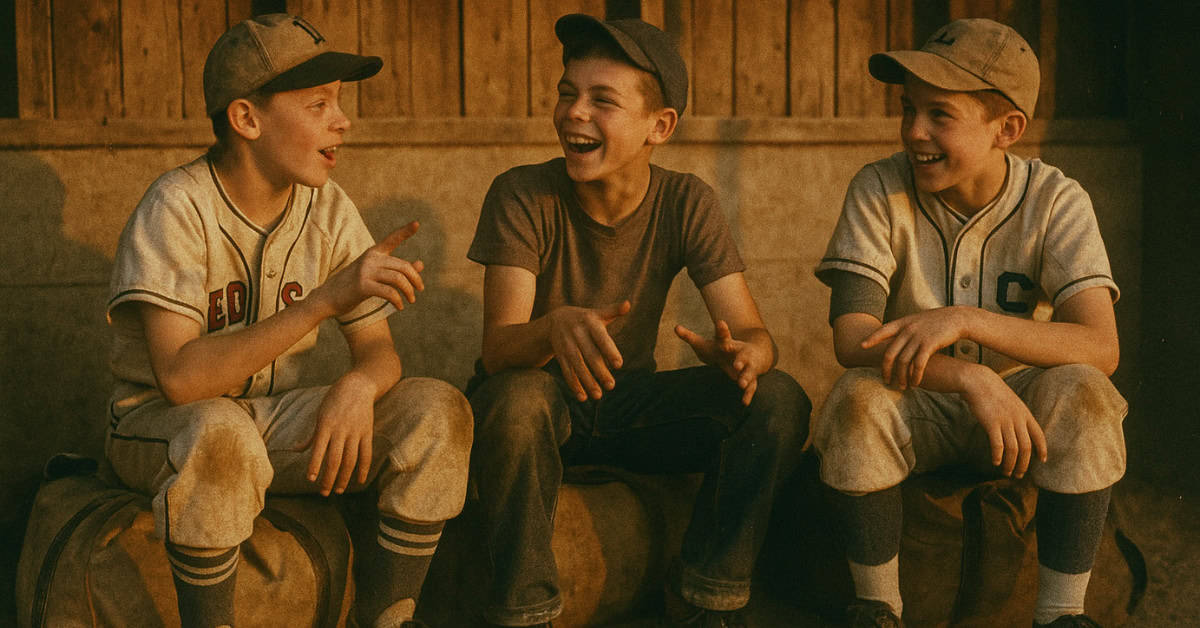
Between innings, we’d share stories about our favorite major leaguers, debate impossible scenarios, and plan our future careers in the big leagues. Every kid had their signature move copied from their baseball hero, practiced until it was almost perfect.
11. The Bike Rack Parking Lot

Bikes sprawled everywhere around the diamond, creating our own parking lot. The end of the game meant the chaos of finding your ride home, usually covered in dust from the day’s adventures. Those Schwinns and Huffys were our ticket to independence and summer freedom.
12. The Improvised Scorekeeper

Someone’s older sister or brother would usually end up being the designated scorekeeper, using torn notebook paper and a stubby pencil to track the chaos. The scoring system was creative – hash marks, stick figures, and mysterious symbols that only made sense to the creator. Arguments about the actual score were as much a part of the game as the plays themselves.