Cute drawings give you an easy way to practice shapes, expressions, and simple details while creating artwork that feels personal. Whether you sketch often or pick up a pencil for the first time, you can find ideas that match your interests and comfort level.
Save for later
Want to come back to this story? Save it with your email so it is easy to find again.
You can build drawing confidence by starting with approachable subjects and gradually adding your own creative style. Explore a range of charming characters, animals, food, nature scenes, and everyday objects designed to keep your practice enjoyable and manageable.
Table of Contents
- 1 1) Kawaii Cat with Oversized Eyes
- 2 2) Smiling Cartoon Sun
- 3 3) Tiny Mushroom House
- 4 4) Adorable Sleeping Bear
- 5 5) Rainbow with Puffy Clouds
- 6 6) Cute Axolotl Underwater
- 7 7) Bunny Holding a Carrot
- 8 8) Chibi Ice Cream Cone
- 9 9) Happy Houseplant in a Pot
- 10 10) Penguin Wearing a Scarf
- 11 11) Fox Curled Around Its Tail
- 12 12) Cupcake with Sprinkles
- 13 13) Dinosaur Riding a Skateboard
- 14 14) Little Ghost with a Bow
- 15 15) Whale Among Floating Stars
- 16 16) Panda Drinking Bubble Tea
- 17 17) Hedgehog Carrying a Leaf
- 18 18) Smiling Crescent Moon
- 19 19) Koala Hugging a Eucalyptus Branch
- 20 20) Frog Sitting on a Lily Pad
- 21 21) Chibi Dragon with Tiny Wings
- 22 22) Hot Chocolate with Marshmallows
- 23 23) Cat Inside a Cardboard Box
- 24 24) Otter Holding a Shell
- 25 25) Bear-Shaped Backpack
- 26 Getting Started With Simple Drawing Supplies
- 27 Essential Tools for Beginners
- 28 Choosing Paper and Pencils
- 29 Building Drawing Confidence
- 30 Using Basic Shapes and Guidelines
- 31 Practicing Without Perfectionism
- 32 Adding Your Own Creative Style
- 33 Exploring Color and Texture
- 34 Creating a Consistent Practice Routine
1) Kawaii Cat with Oversized Eyes
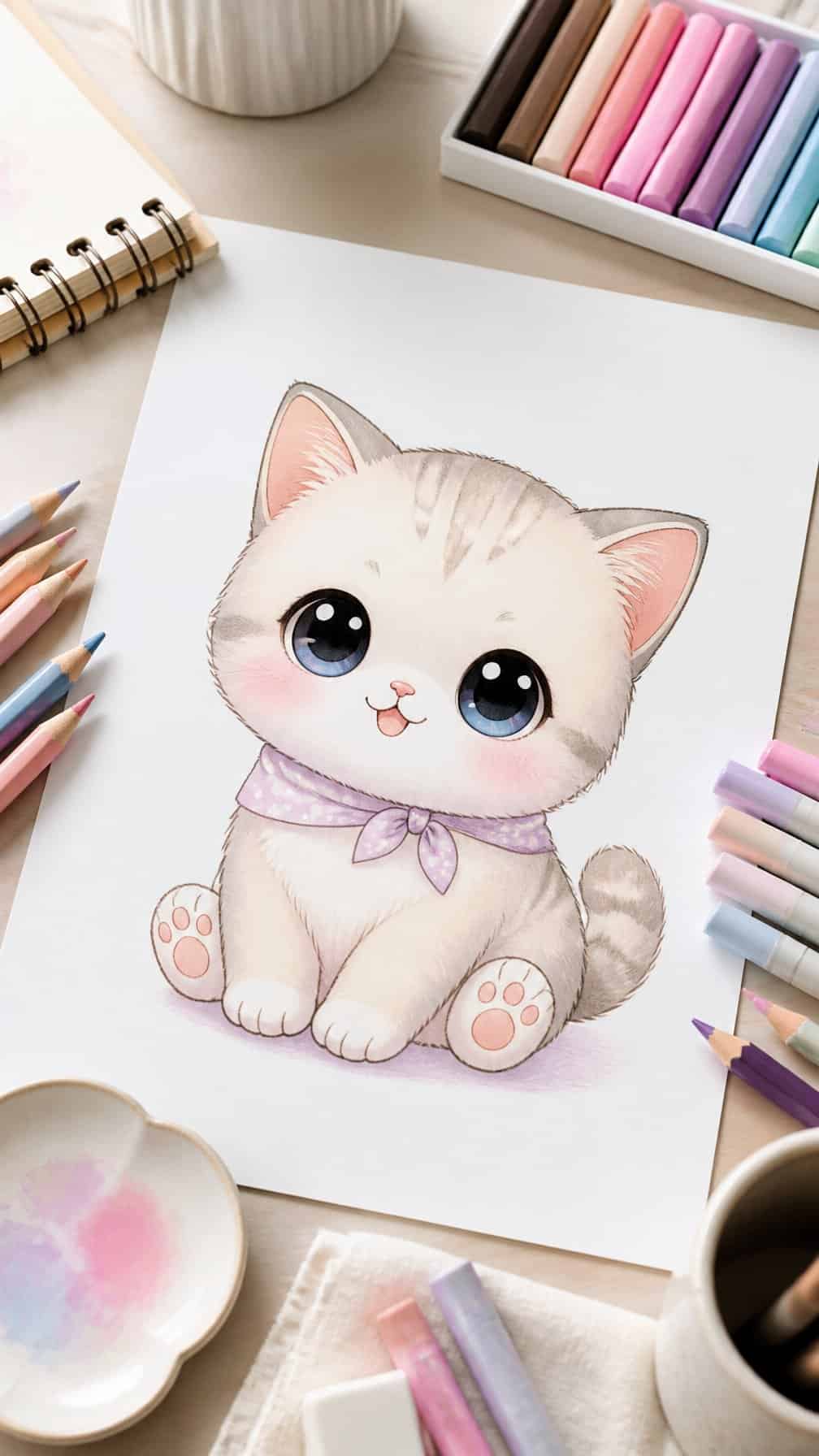
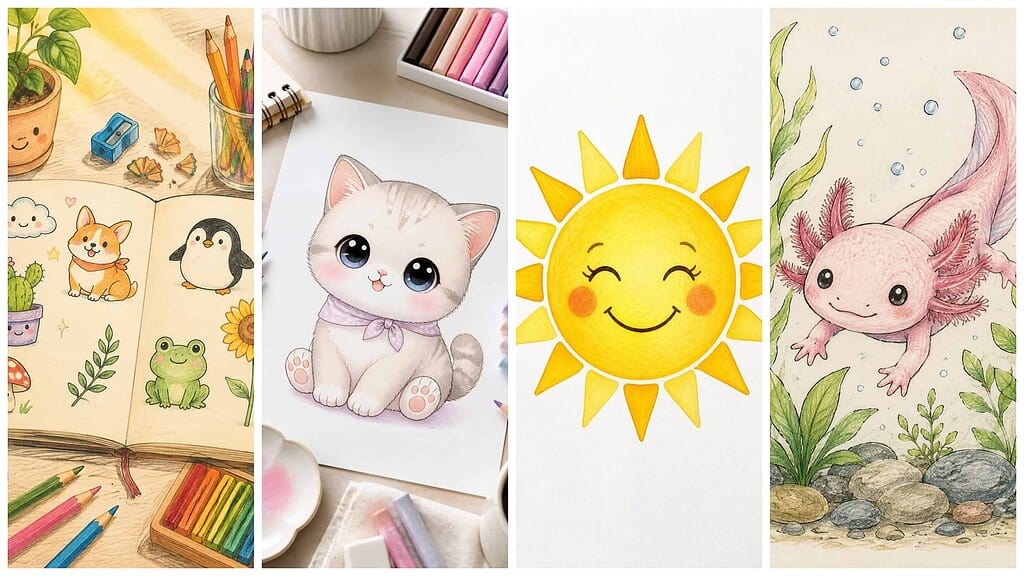
I start with a round head, small triangular ears, and a compact body. I place two large eyes slightly below the center of the face, leaving enough space between them for a tiny nose and curved mouth.
I keep the eyes simple with dark pupils, small highlights, and smooth outlines. Short whiskers, rounded paws, and a curled tail add character without making the drawing complicated.
I use soft colors such as cream, peach, or light gray, then add small details like inner ears, cheek marks, or a collar. I vary the expression by changing the mouth and eyebrow shapes.
2) Smiling Cartoon Sun
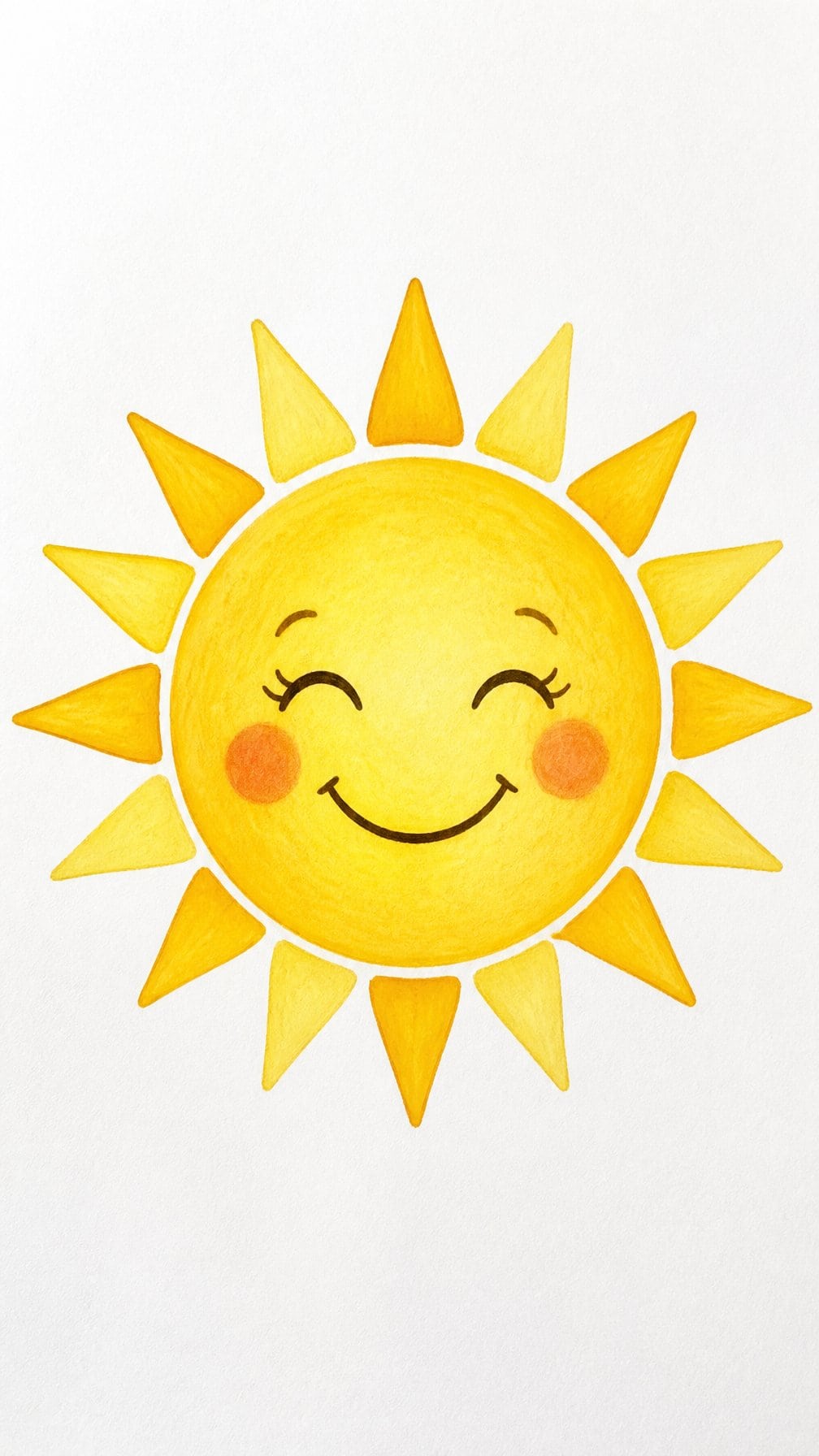
I draw a large circle for the face, then add short, evenly spaced rays around it. Two curved eyes and a small smiling mouth give the sun a friendly expression without requiring complex details.
I use warm colors such as yellow, orange, and soft red, but I can also leave the design in black and white for coloring practice. Small cheek circles, simple clouds, or a pair of sunglasses let me personalize the scene while keeping the shapes easy to manage.
3) Tiny Mushroom House
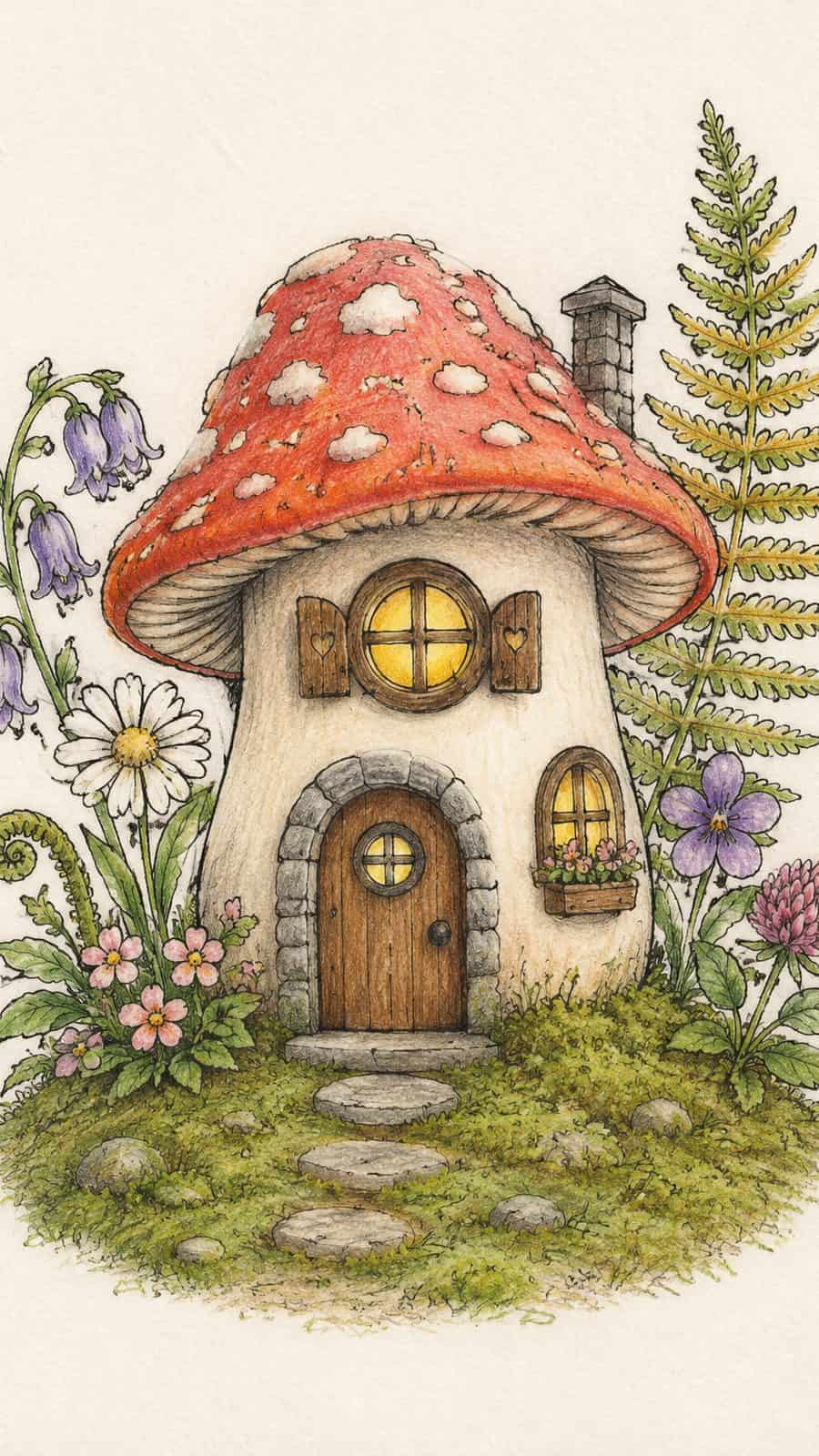
I draw a small mushroom cap as the roof, then add a short, rounded stem beneath it as the house. I place a tiny arched door near the bottom and frame it with simple windows.
I use curved lines to show the cap’s shape and add a few spots in different sizes. For extra detail, I sketch grass, pebbles, or a small path around the entrance without crowding the scene.
I keep my colors soft, such as red, cream, green, and brown, but I can also use pencils or black ink for a simple version.
4) Adorable Sleeping Bear
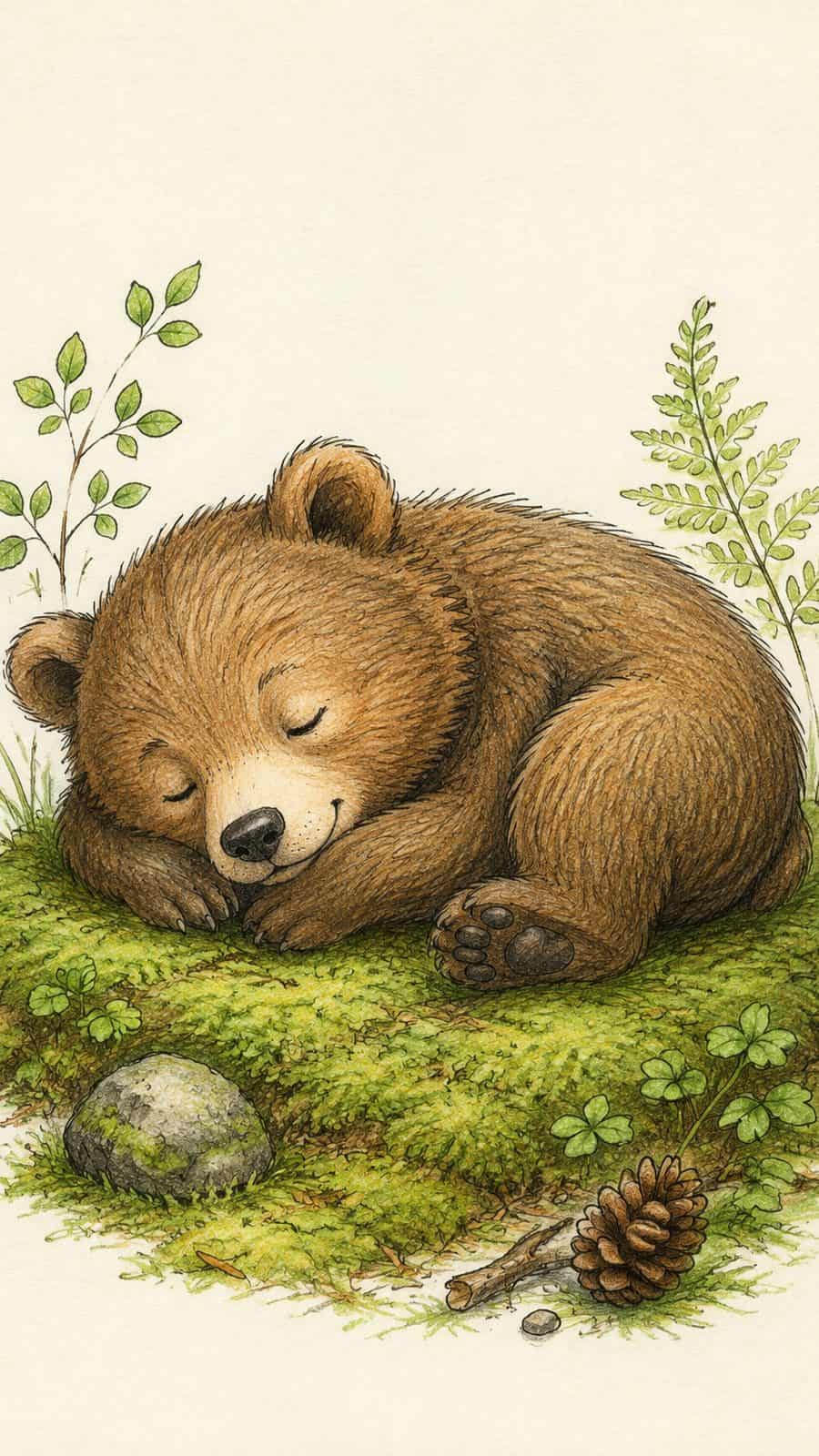
I draw the bear curled into a small oval, with its paws tucked beneath its chin and rounded ears resting above its head. A gentle curve for the back helps show its sleeping position without adding complex details.
I use short, soft lines for closed eyes and add a tiny nose, then place the bear on a simple blanket or small cloud. I keep the shapes smooth and leave open space around the figure, which makes this idea approachable for beginners while giving me room to add patterns, shading, or a cozy color palette.
5) Rainbow with Puffy Clouds
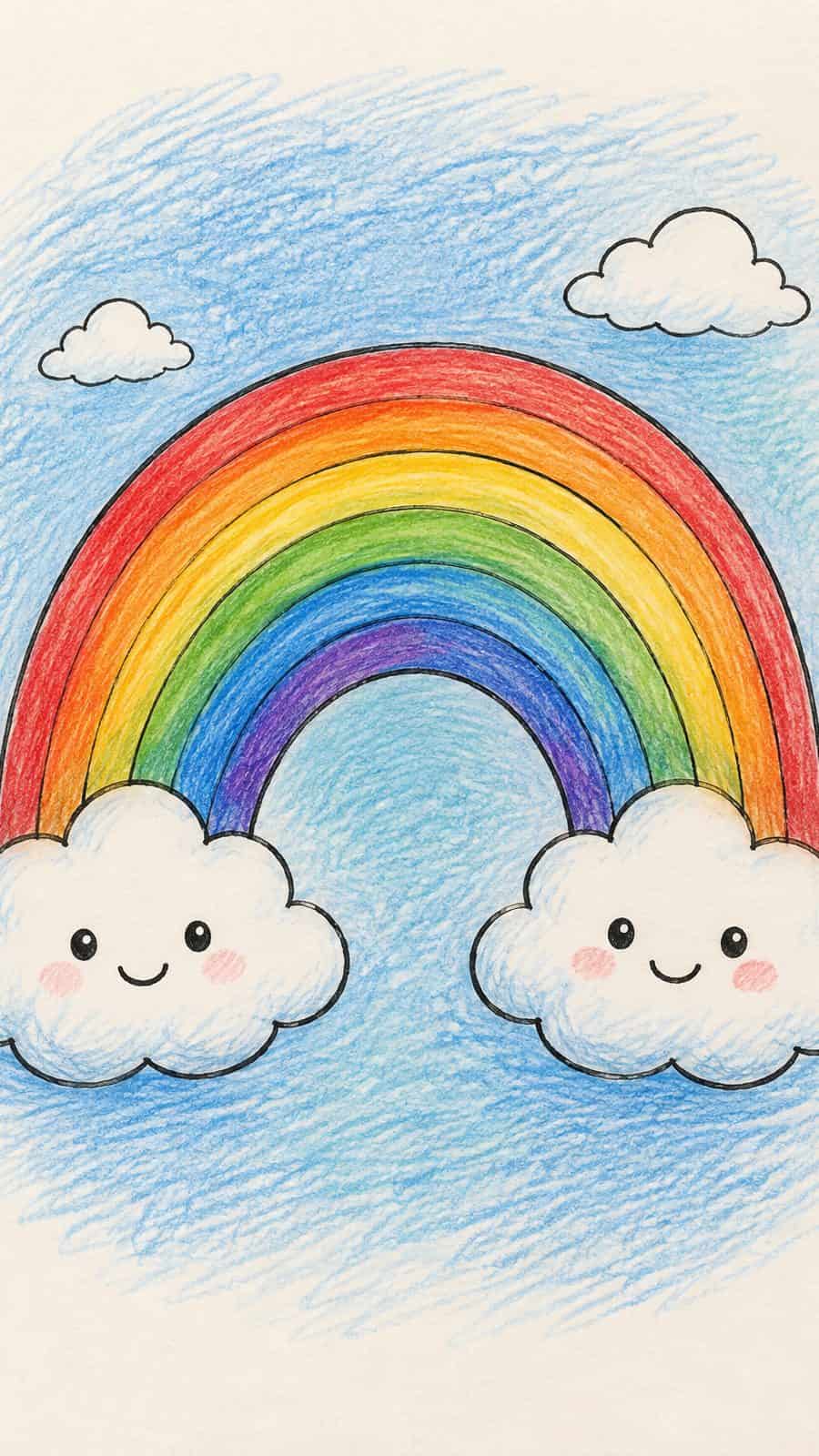
I draw a simple arc for the rainbow, then add several curved bands beneath it. I use bright, separate colors and keep the lines slightly uneven to create a friendly, hand-drawn look.
For the clouds, I sketch overlapping rounded bumps at both ends of the rainbow. I fill them with soft blue, pale gray, or white, then add small curved lines to suggest fluffy texture without crowding the picture.
I can personalize the scene with tiny stars, raindrops, or a smiling sun. Light outlines and simple shapes make this idea approachable while leaving room to experiment with color combinations.
6) Cute Axolotl Underwater
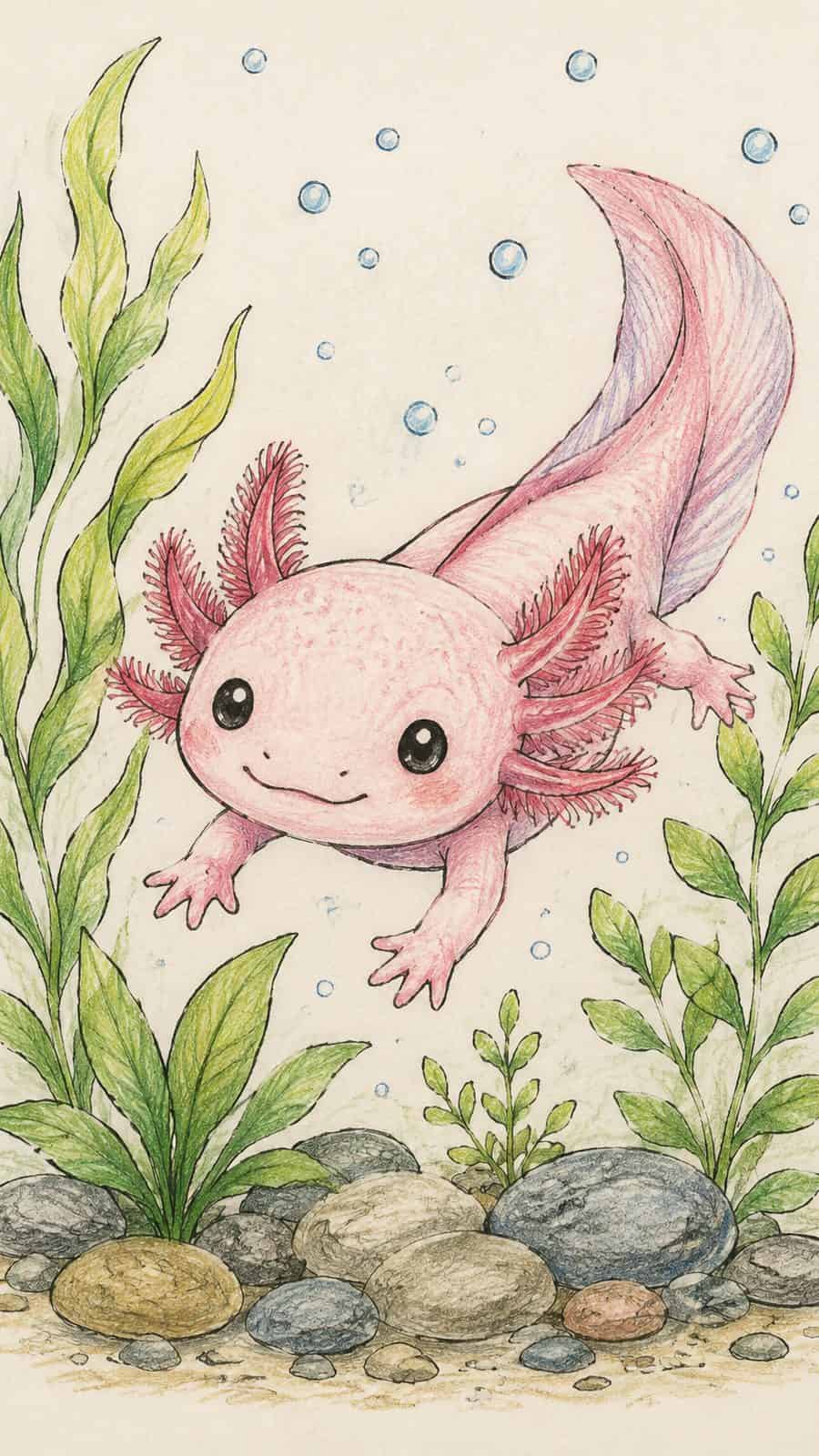
I draw a rounded axolotl floating among simple aquatic plants, using its wide head, tiny legs, and feathery external gills as defining details. I give it a calm smile and large eyes to create a friendly expression without adding complex features.
I use soft colors such as pink, lavender, or pale yellow for the body, then add darker accents to the eyes and gills. Small bubbles, pebbles, and gently curving plants fill the background while keeping the axolotl as the main focus.
I vary the plant shapes and bubble sizes to suggest movement underwater. A few light marks across the body can show texture, while leaving open space around the character keeps the drawing clean.
7) Bunny Holding a Carrot
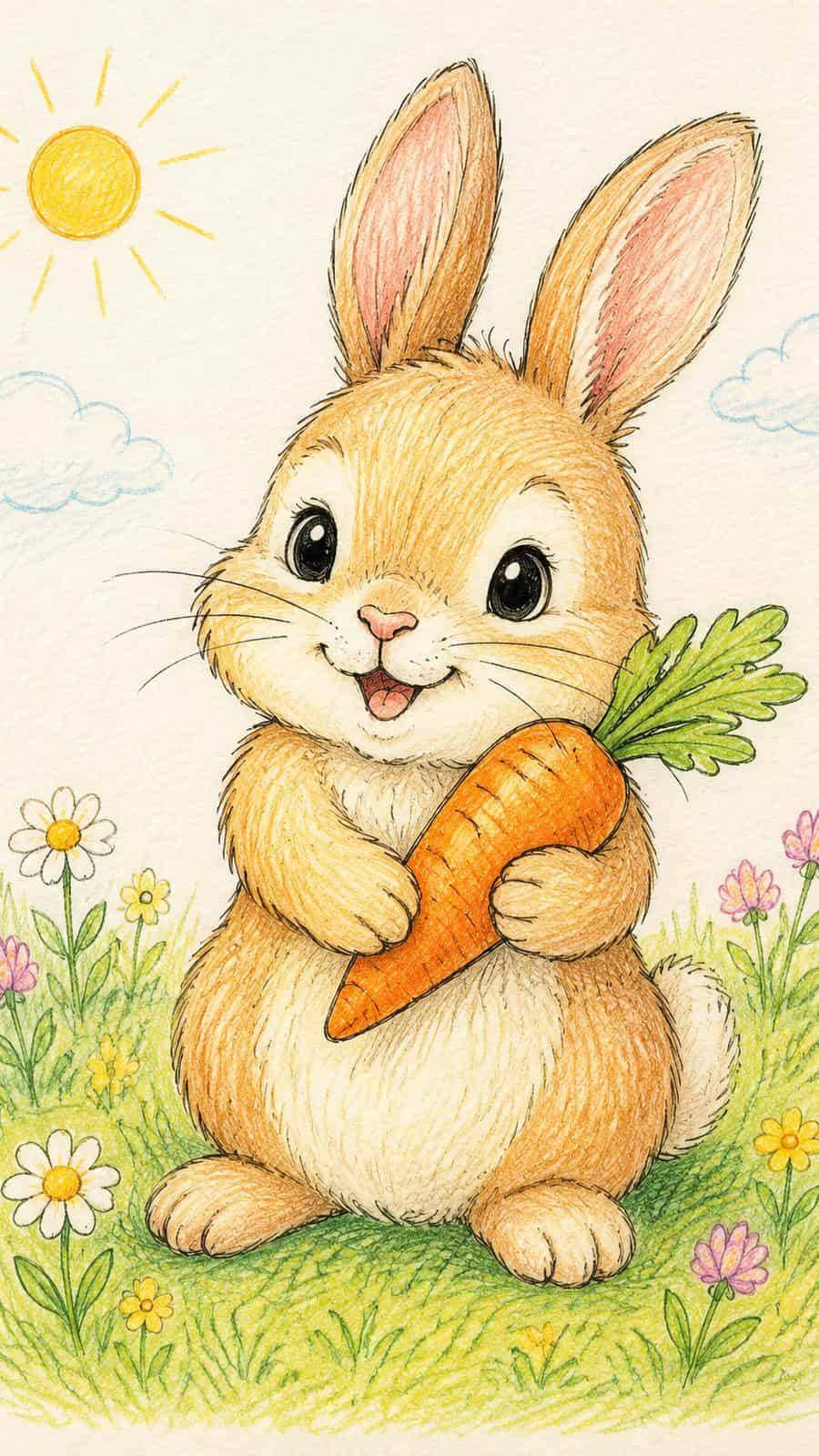
I draw the bunny sitting upright, with its front paws wrapped around a carrot. I keep the body rounded and use simple oval shapes for the head, cheeks, paws, and feet.
I give the ears different positions to add personality: one can stand tall while the other bends slightly. Small details, such as whiskers, a leafy carrot top, and soft fur marks, make the drawing more expressive without adding much complexity.
I use gentle curves for the carrot and leave clear space between its leaves and the bunny’s face. For an easy finish, I add light shading beneath the paws, ears, and body.
8) Chibi Ice Cream Cone
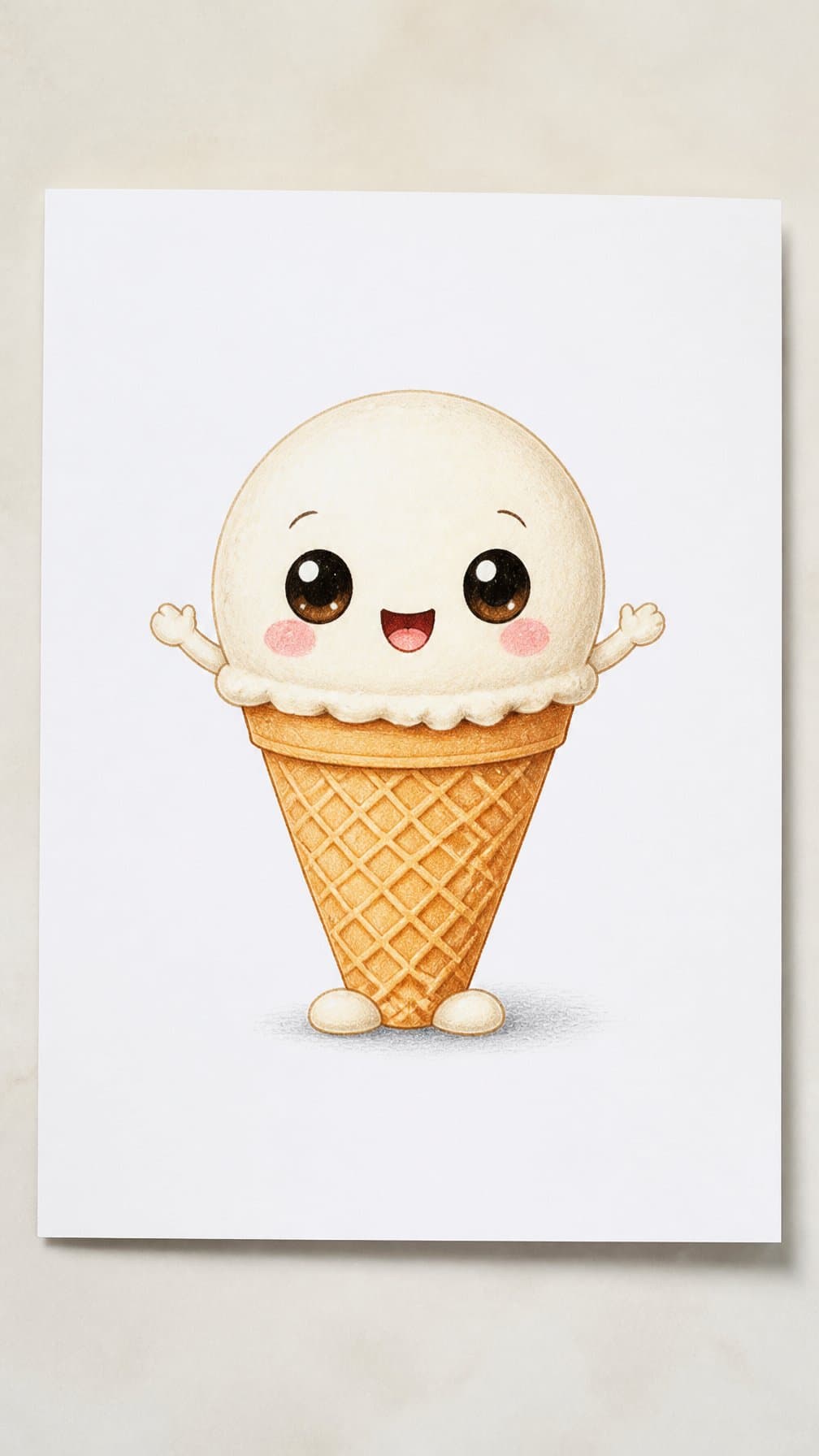
I draw a small cone with rounded edges, then add a generous scoop with a soft, uneven outline. I give the scoop a cheerful face using two dot eyes and a tiny curved mouth.
I use diagonal lines to create the cone’s waffle pattern and add a few sprinkles for texture. Small blush marks on the cheeks make the character feel friendly without overcrowding the design.
I keep the colors simple: a warm tan cone, a pastel scoop, and a few bright toppings. A light shadow beneath the cone helps it sit on the page.
9) Happy Houseplant in a Pot
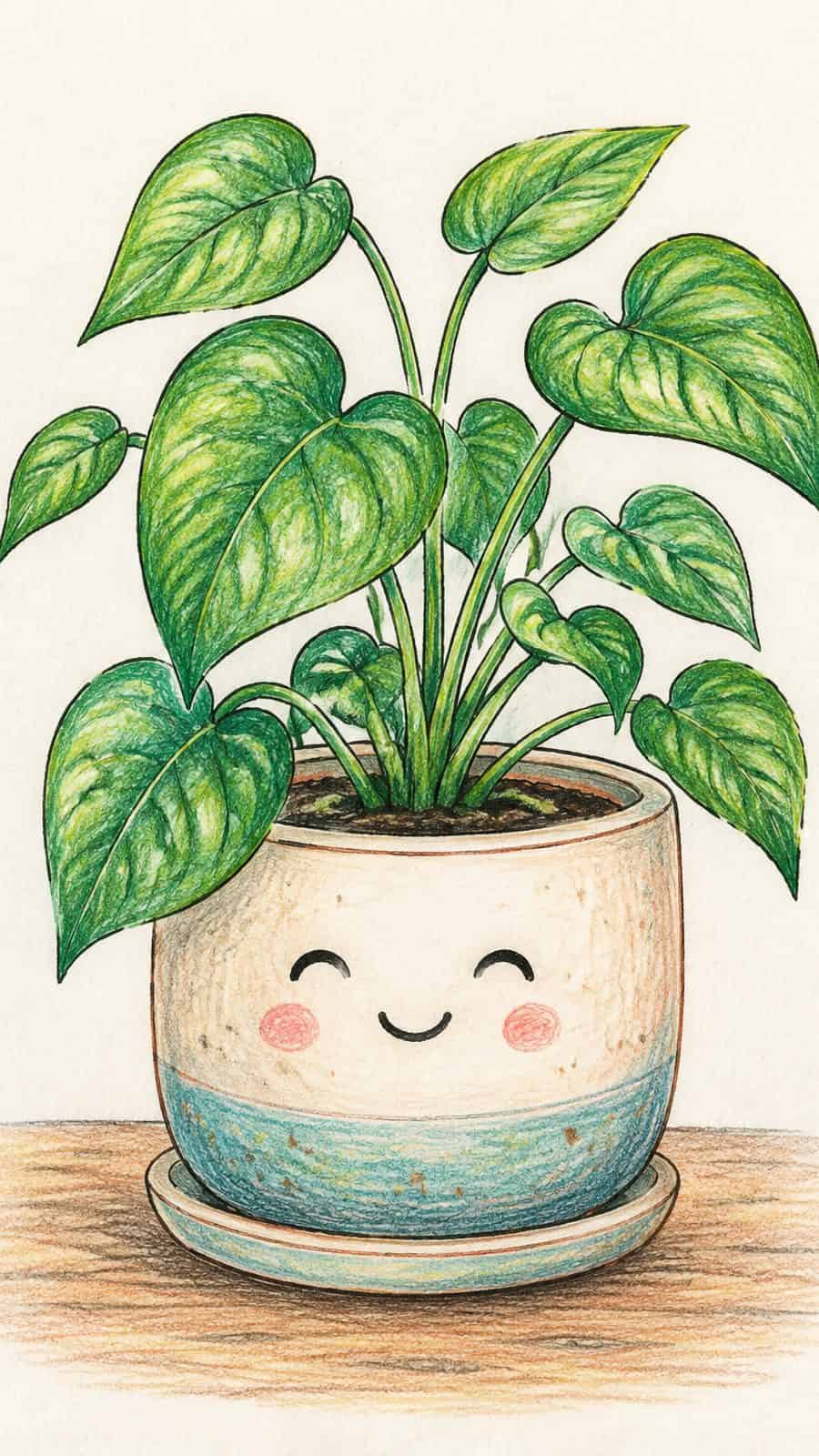
I draw a small potted plant with rounded leaves and a simple smiling face on the pot. I use curved lines for the stems and vary the leaf sizes to make the plant look lively without adding much detail.
I usually give the pot a bright color and add a few short lines to show its texture. Tiny soil marks, a scalloped rim, or a simple pattern can personalize the design while keeping the shapes easy to copy.
I adjust the expression to change the mood: raised corners create a cheerful smile, while closed eyes suggest a calm, content character.
10) Penguin Wearing a Scarf
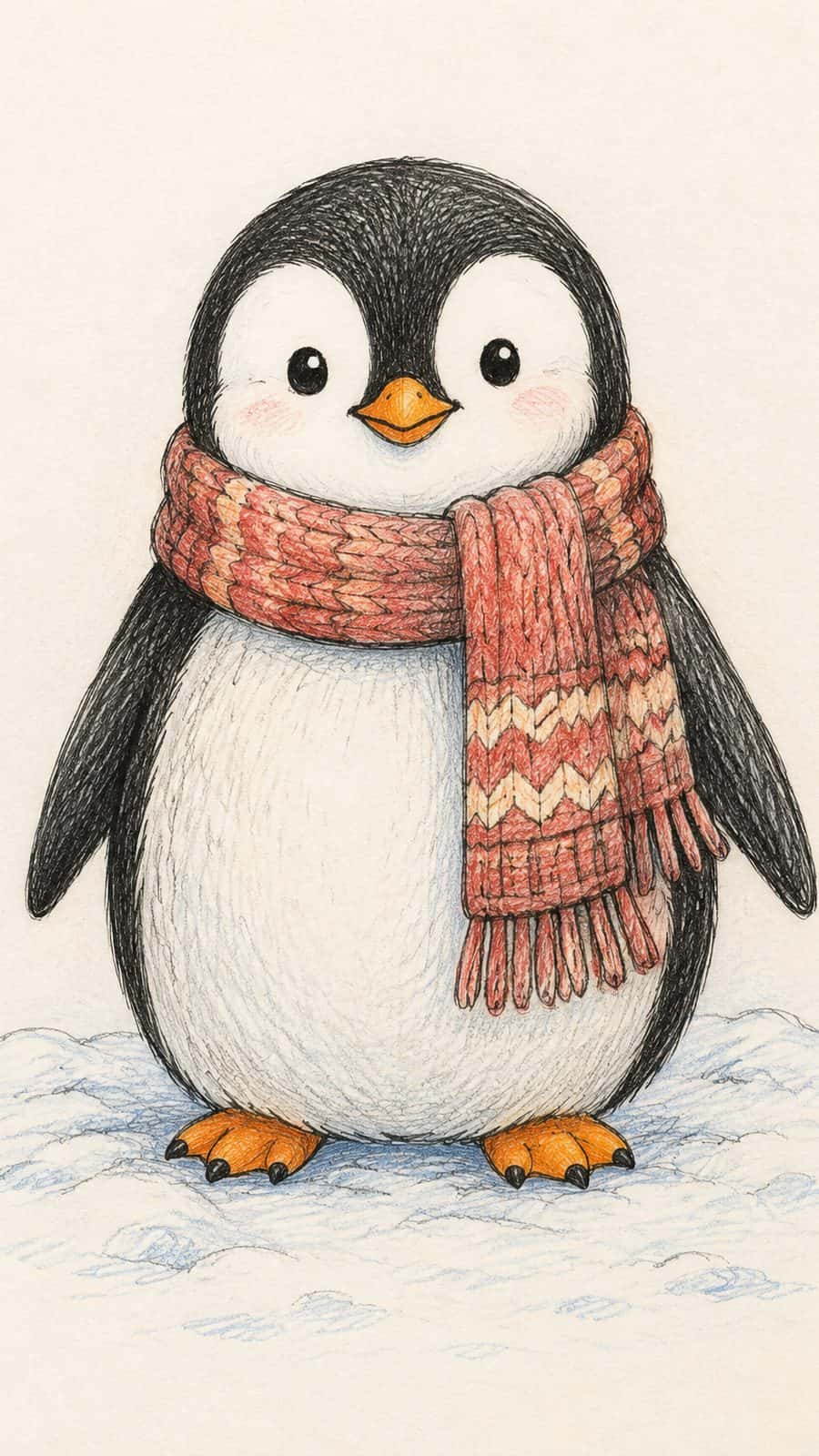
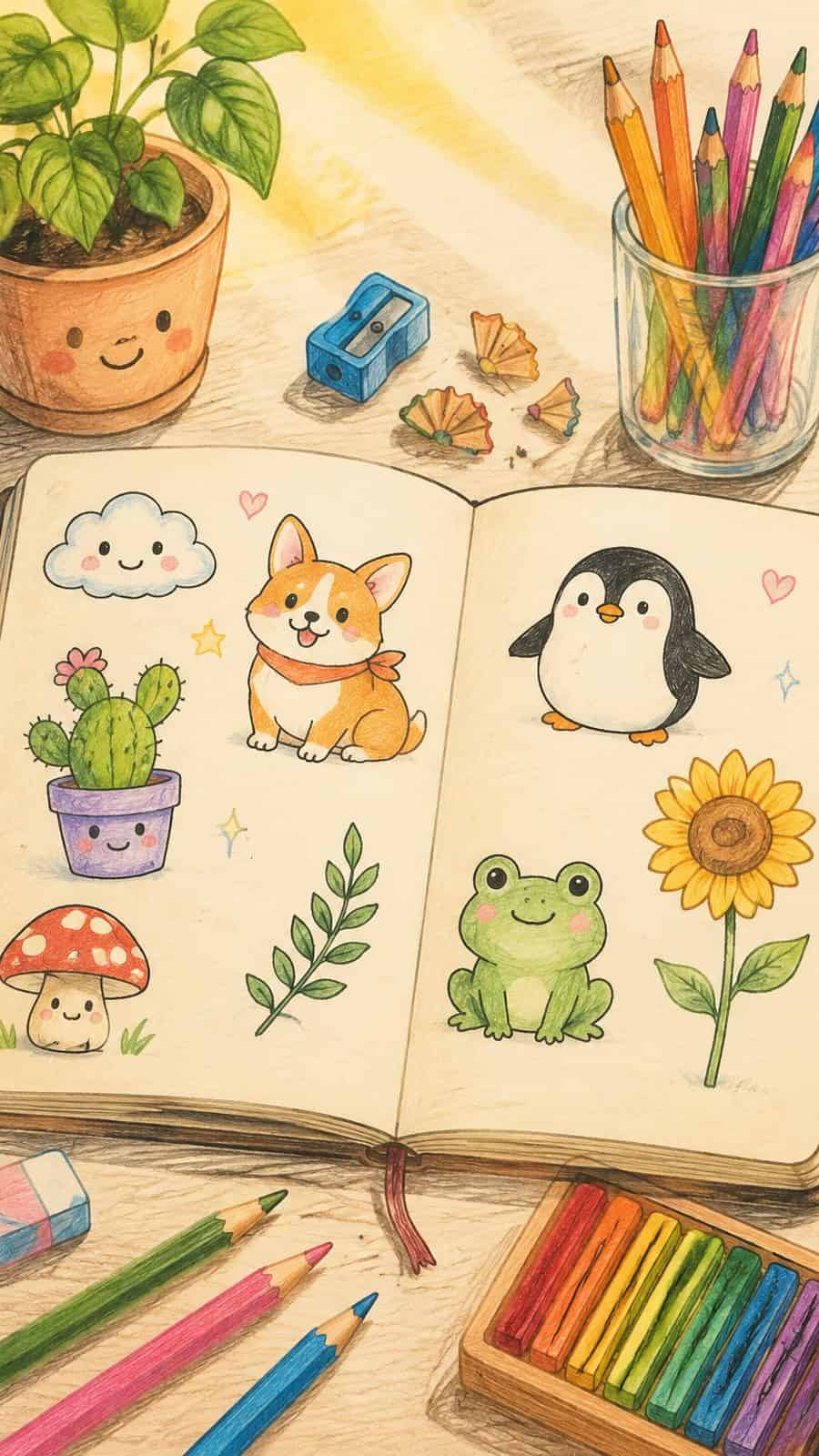
I draw a rounded penguin body with a white belly, small flippers, and short feet. I add a cheerful face using two dark eyes and a small triangle beak, keeping the features simple enough for beginners.
For the scarf, I wrap a curved band around the penguin’s neck and let both ends hang to one side. I use stripes, dots, or small snowflake patterns to add detail, then give the scarf gentle folds where it overlaps.
I finish with a few soft snow shapes or tiny ice patches around the penguin. Varying the body size, scarf pattern, and expression lets me create several different versions without changing the basic design.
11) Fox Curled Around Its Tail
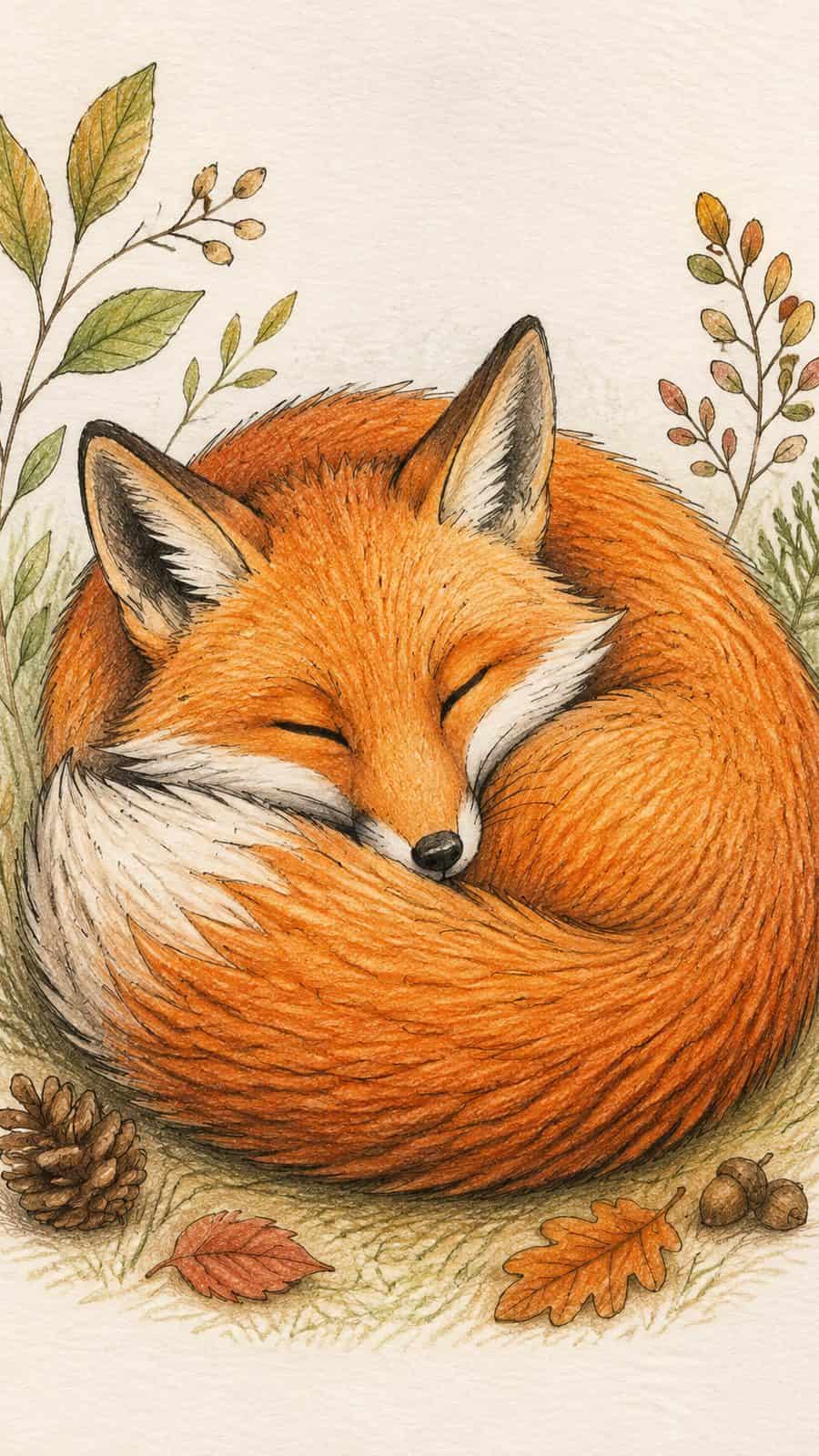
I start with a compact oval for the fox’s body, then add a smaller head tucked near its chest. The large tail curves around the body like a soft border, giving the pose a clear, rounded shape.
I keep the ears triangular but slightly uneven to make the drawing feel natural. Simple facial features, pointed paws, and a few fur marks define the fox without clutter. I use curved lines around the tail tip and chest to suggest overlapping fur.
12) Cupcake with Sprinkles
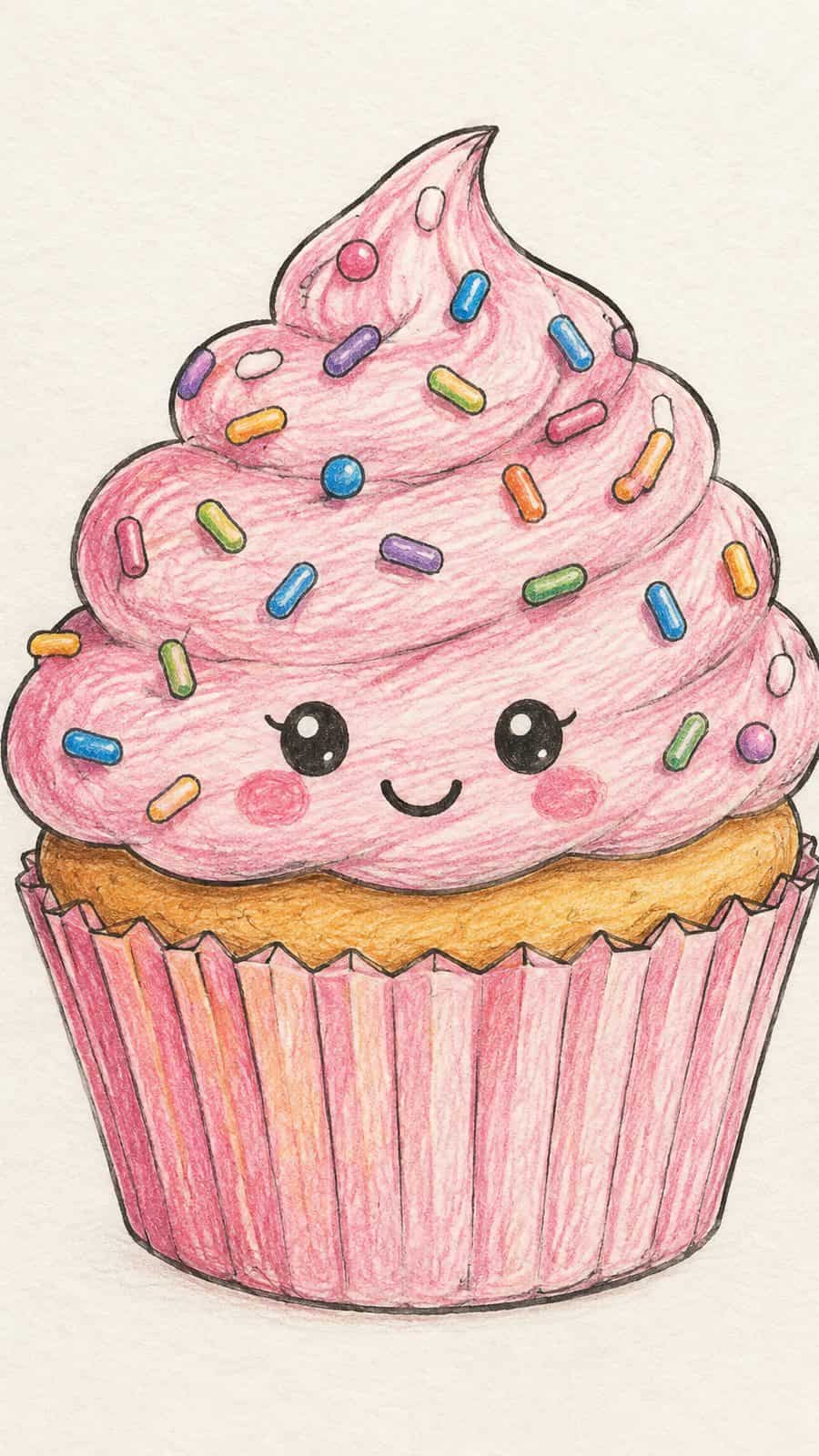
I start with a rounded wrapper, adding vertical lines to show its folds. Above it, I draw a soft, uneven mound of frosting with a gentle peak or swirl.
I use small ovals, dashes, and rectangles for the sprinkles, spacing them across the frosting instead of clustering them in one area. A few curved lines on the wrapper and a light shadow beneath the cupcake add depth without making the drawing complicated.
I choose two or three bright colors for the frosting and sprinkles, then leave small areas white to suggest shine. A simple face on the wrapper can give the cupcake a friendly expression.
13) Dinosaur Riding a Skateboard
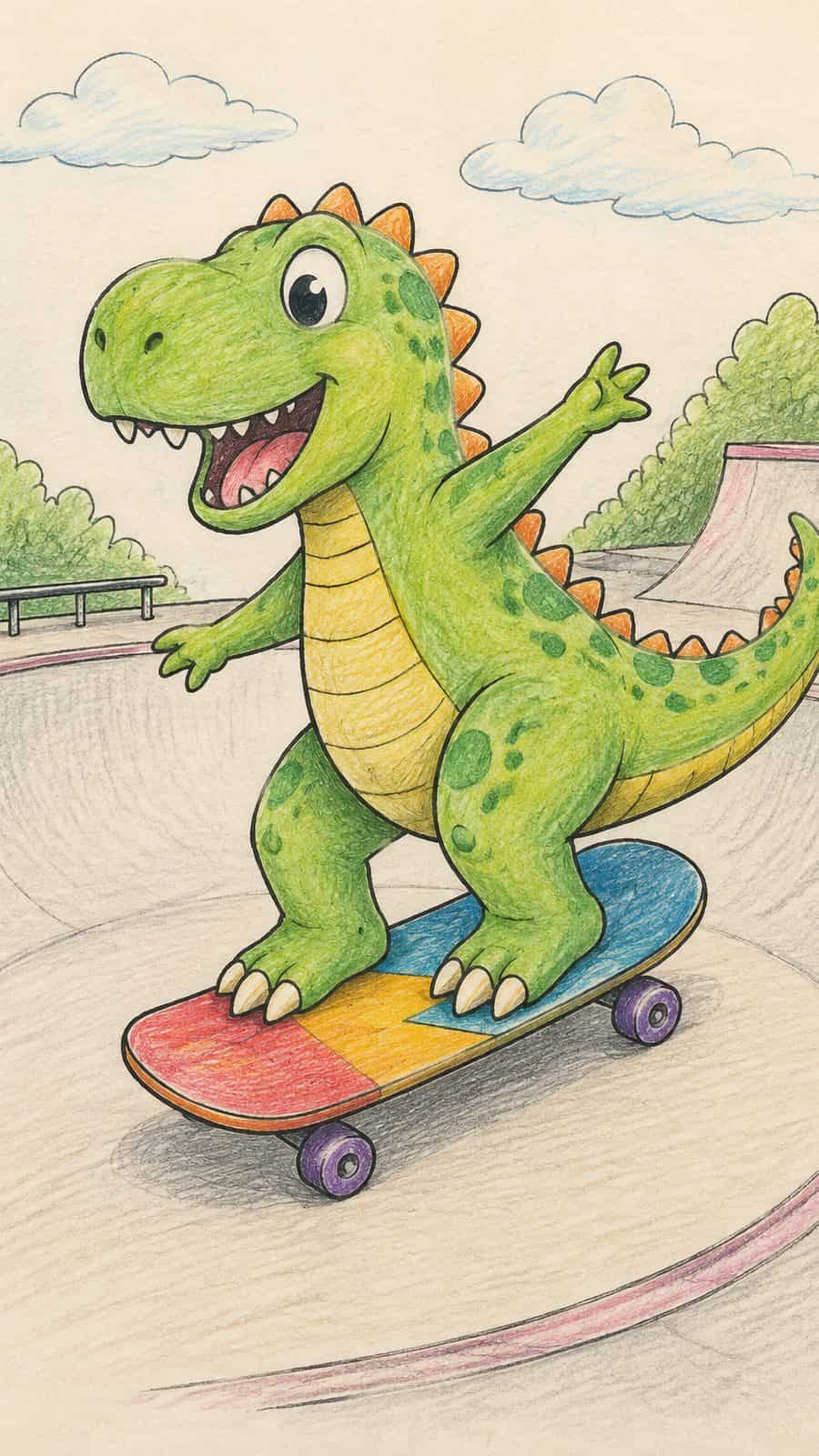
I draw a small dinosaur leaning forward on a skateboard, using its tail as a counterweight. I keep the body rounded and the legs short, then add simple claws and a friendly expression.
I use curved motion lines near the wheels to suggest movement without adding complex detail. A helmet, knee pads, or a tiny backpack gives the character extra personality while keeping the drawing approachable.
I start with basic circles and ovals for the head, body, and wheels. After refining the pose, I add scales, board details, and a few ground lines.
14) Little Ghost with a Bow
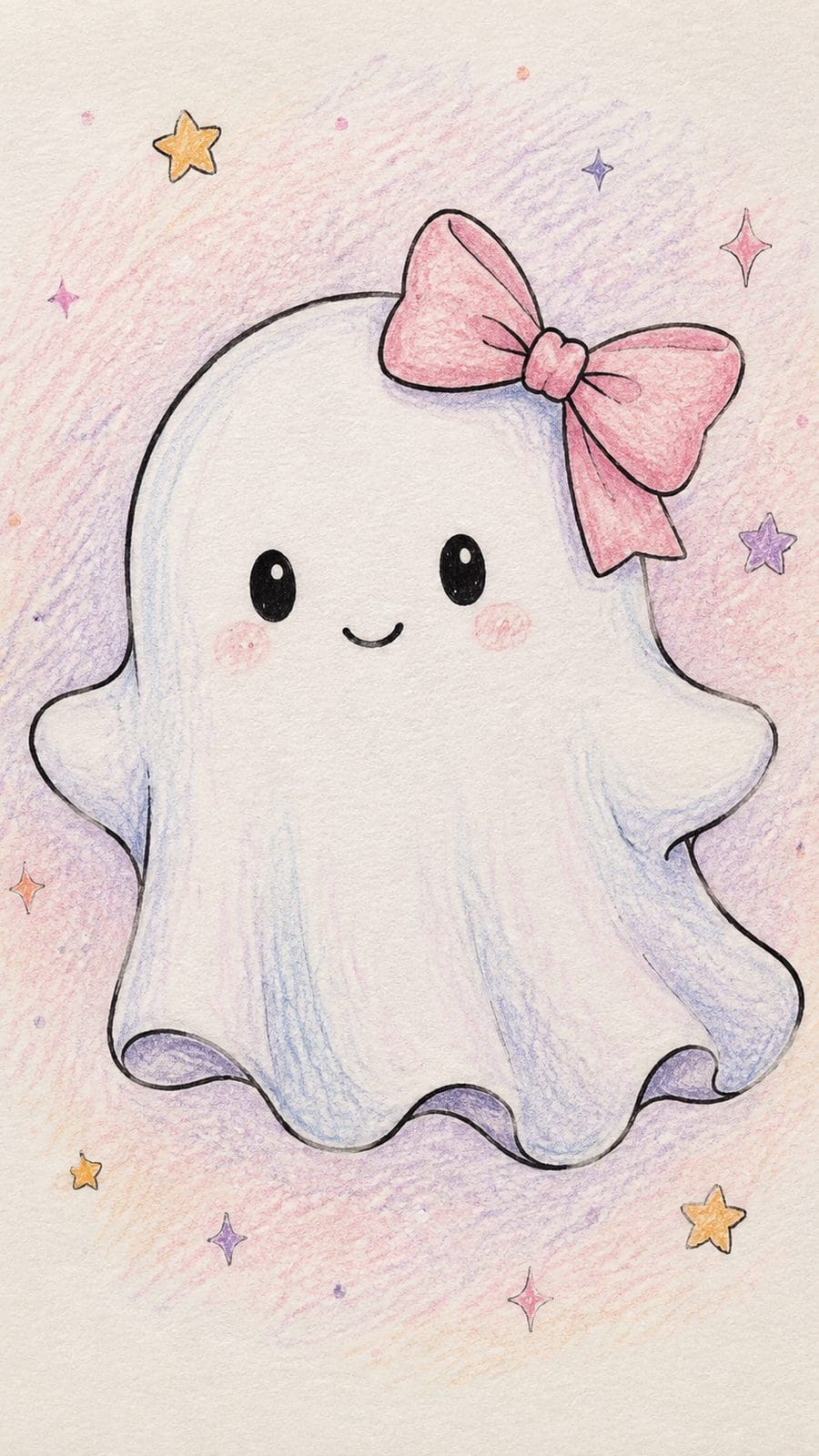
I draw a small, rounded ghost with a gently uneven outline to give it a handmade look. I add two oval eyes, a tiny curved mouth, and a bow near one side of its head.
I keep the details simple, then use light shading beneath the ghost to suggest a floating pose. I choose soft colors for the bow, cheeks, or background while leaving the body mostly white. Tiny stars or dots can fill the empty space without distracting from the character.
15) Whale Among Floating Stars
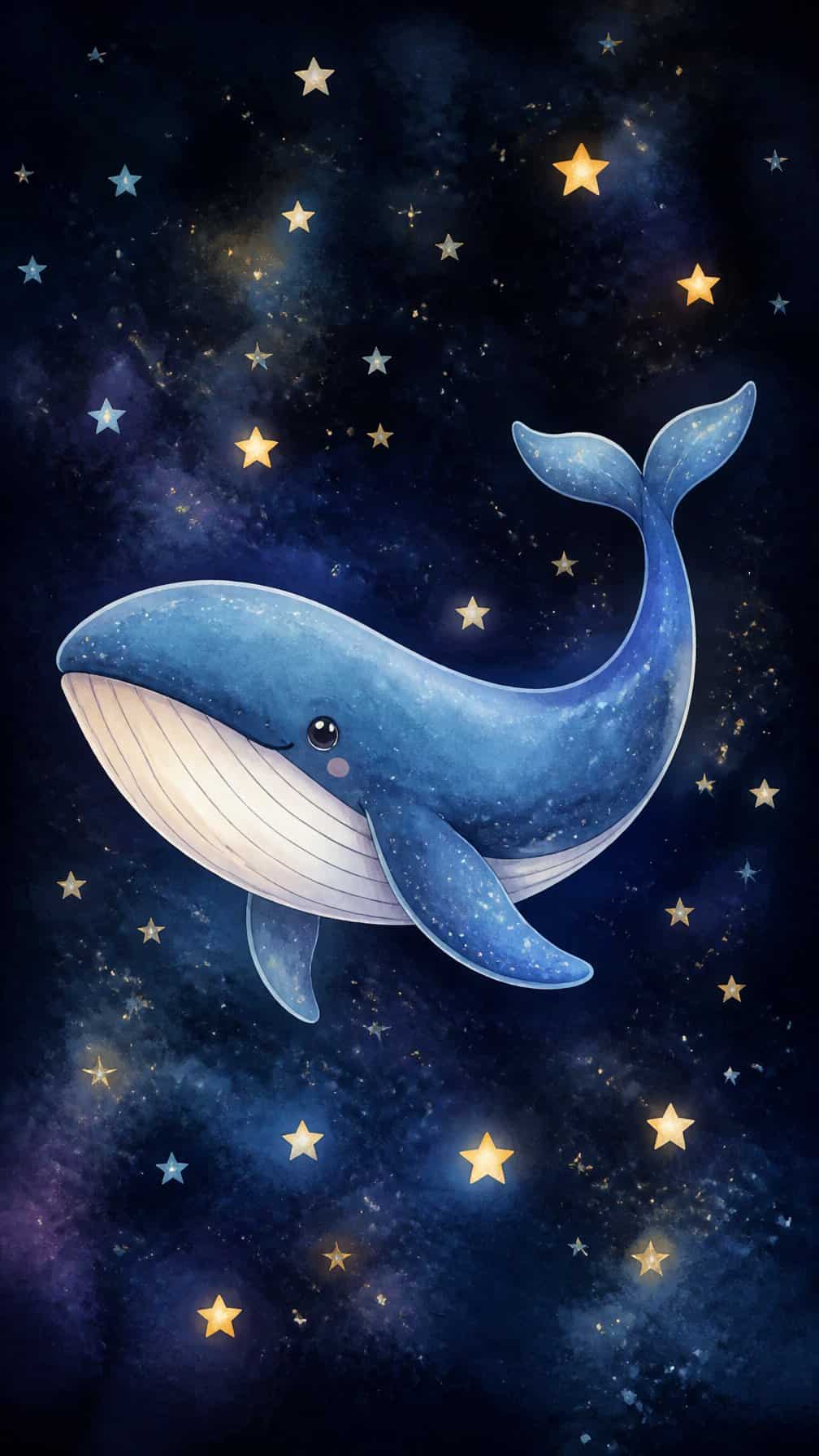
I draw a rounded whale swimming through a quiet night sky, using its curved body and tail to create gentle movement. I add small stars around it, varying their size and shape so the scene feels balanced without becoming crowded.
I use a deep blue background and leave a soft lighter area around the whale for contrast. For a playful touch, I draw tiny bubbles, a smiling face, or a few stars reflected along its back.
I keep the whale’s outline simple, then add small details such as fins, a curved mouth, and a subtle belly line. This idea works well with pencils, markers, crayons, or digital brushes.
16) Panda Drinking Bubble Tea
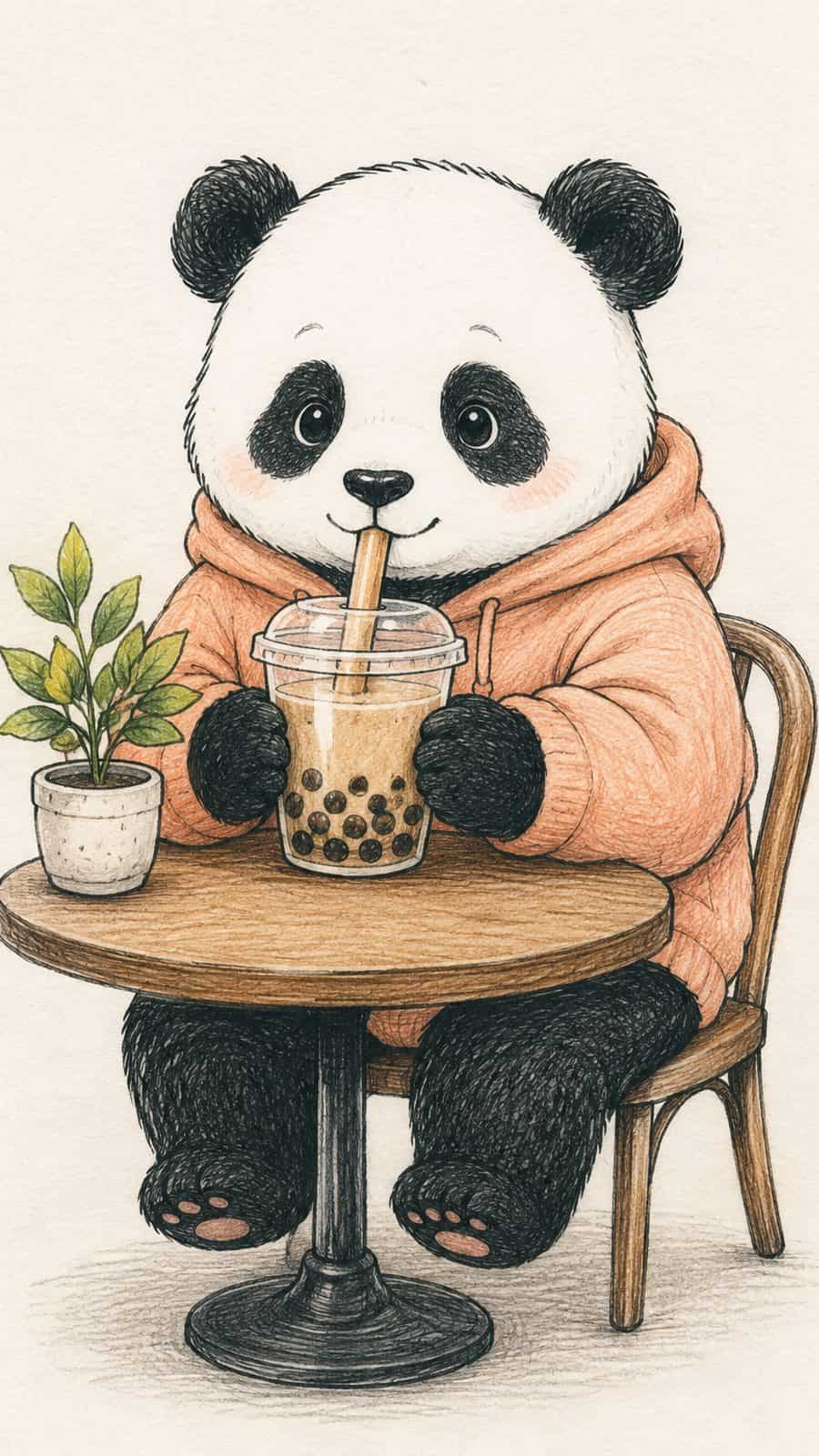
I draw the panda with a rounded head, small ears, and a relaxed body leaning toward the cup. I keep the shapes simple, then add black patches around the eyes, ears, arms, and legs.
For the bubble tea, I sketch a clear cup with a domed lid, a wide straw, and several tapioca pearls at the bottom. I use curved lines for the drink and leave a small highlight on the cup to suggest a smooth surface.
I finish the scene with the panda holding the cup in both paws. Small details, such as a content expression, a tiny straw bend, or a few bubbles near the lid, give the drawing personality without making it difficult.
17) Hedgehog Carrying a Leaf
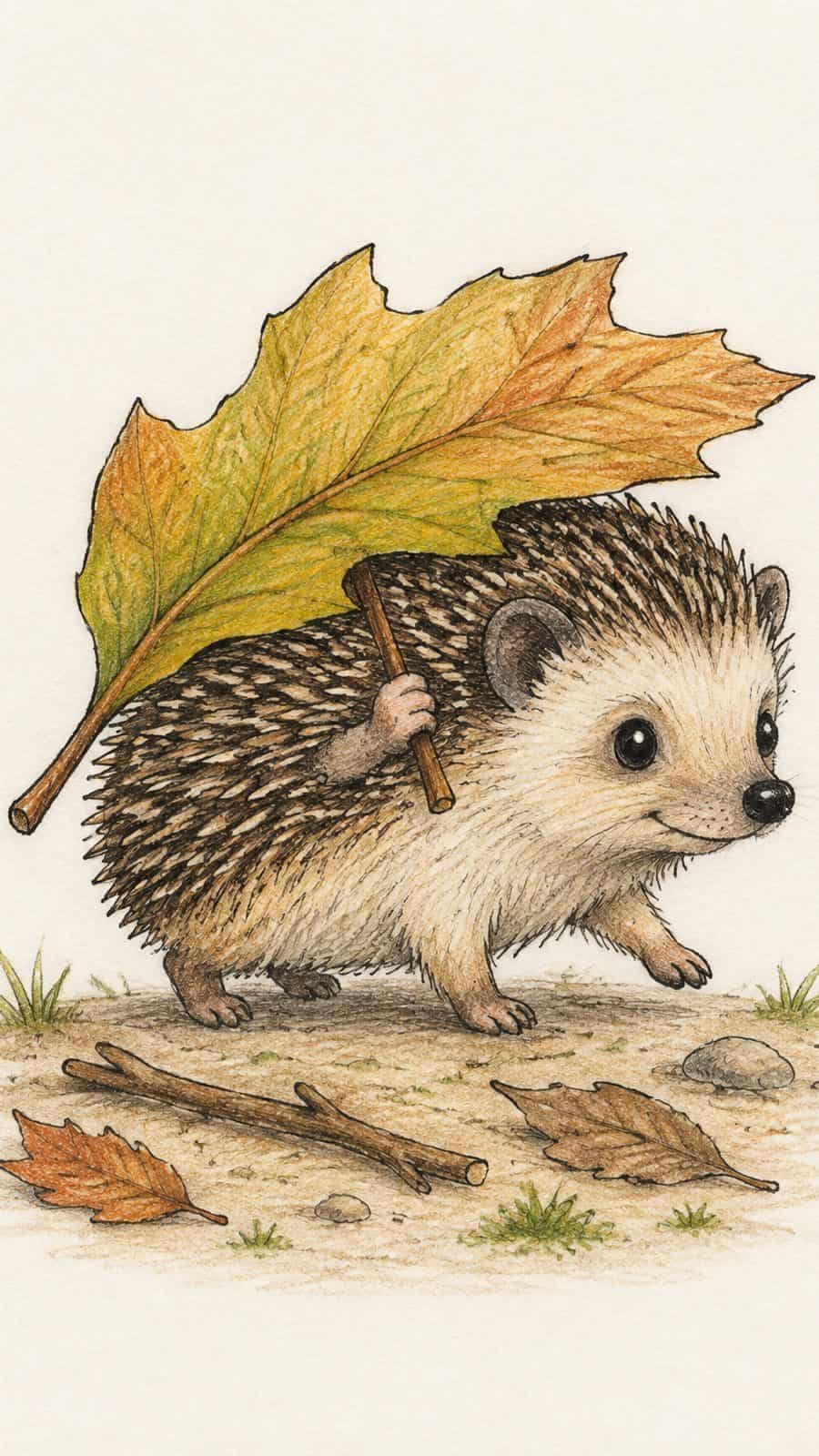
I start with a small oval body and add a pointed face at one end. Short, curved strokes create the hedgehog’s spines without making them look too uniform.
I draw the leaf across its back or between its tiny front paws, then give the leaf a central vein and a few simple side lines. Small eyes, a nose, and rounded feet add expression while keeping the design easy to follow.
I use gentle curves for the body and slightly darker lines around the face, paws, and leaf. A few ground marks beneath the hedgehog can place it on a path without adding clutter.
18) Smiling Crescent Moon
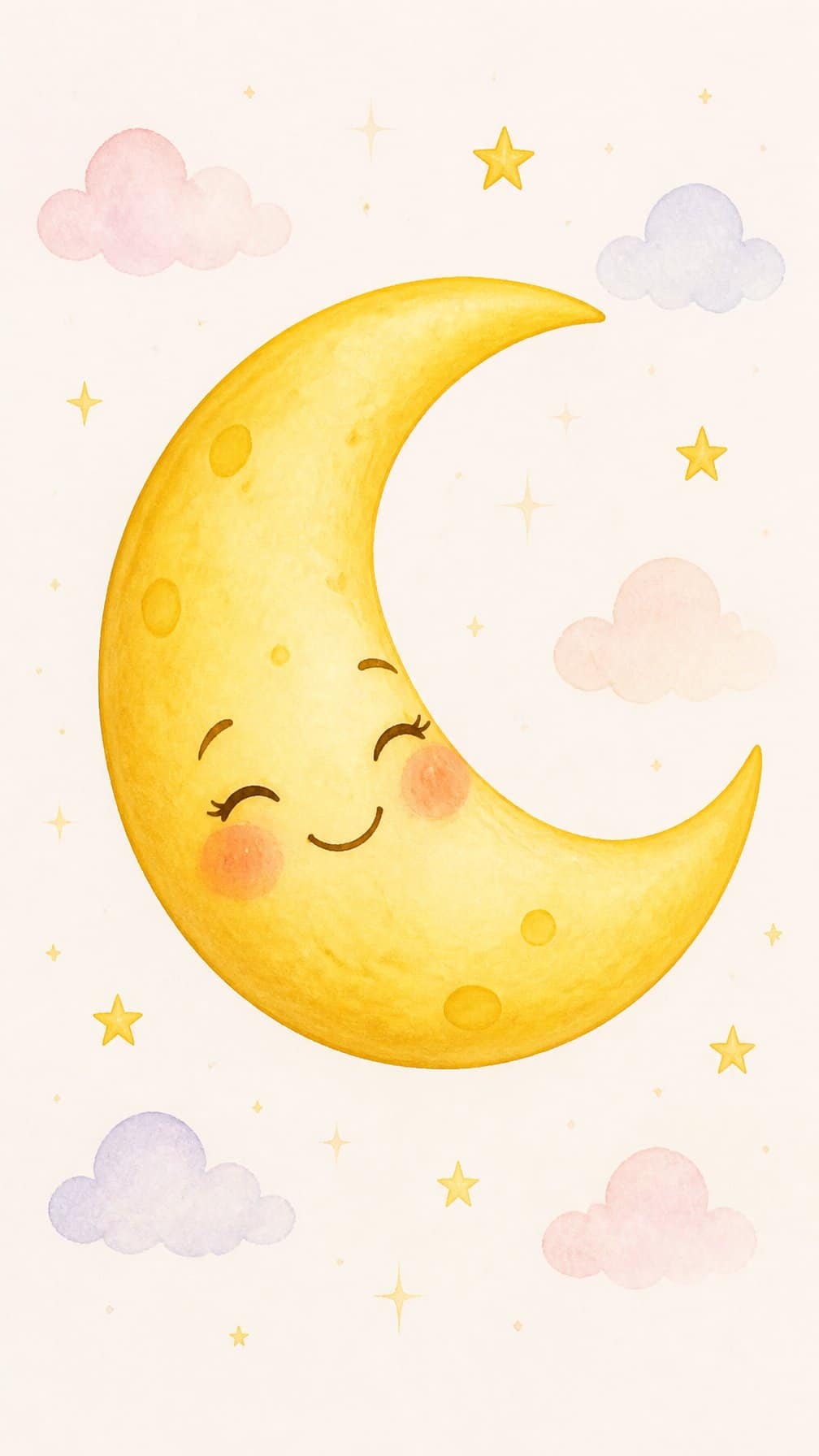
I draw a curved crescent with tapered points, then add two small eyes and a gentle smile inside the open space. I keep the facial features simple so the moon remains easy to recognize.
I often add a few tiny stars, dots, or soft clouds around it. For a cozy look, I use warm yellow for the moon and muted blue or purple for the background, while leaving the outlines clean and rounded.
19) Koala Hugging a Eucalyptus Branch
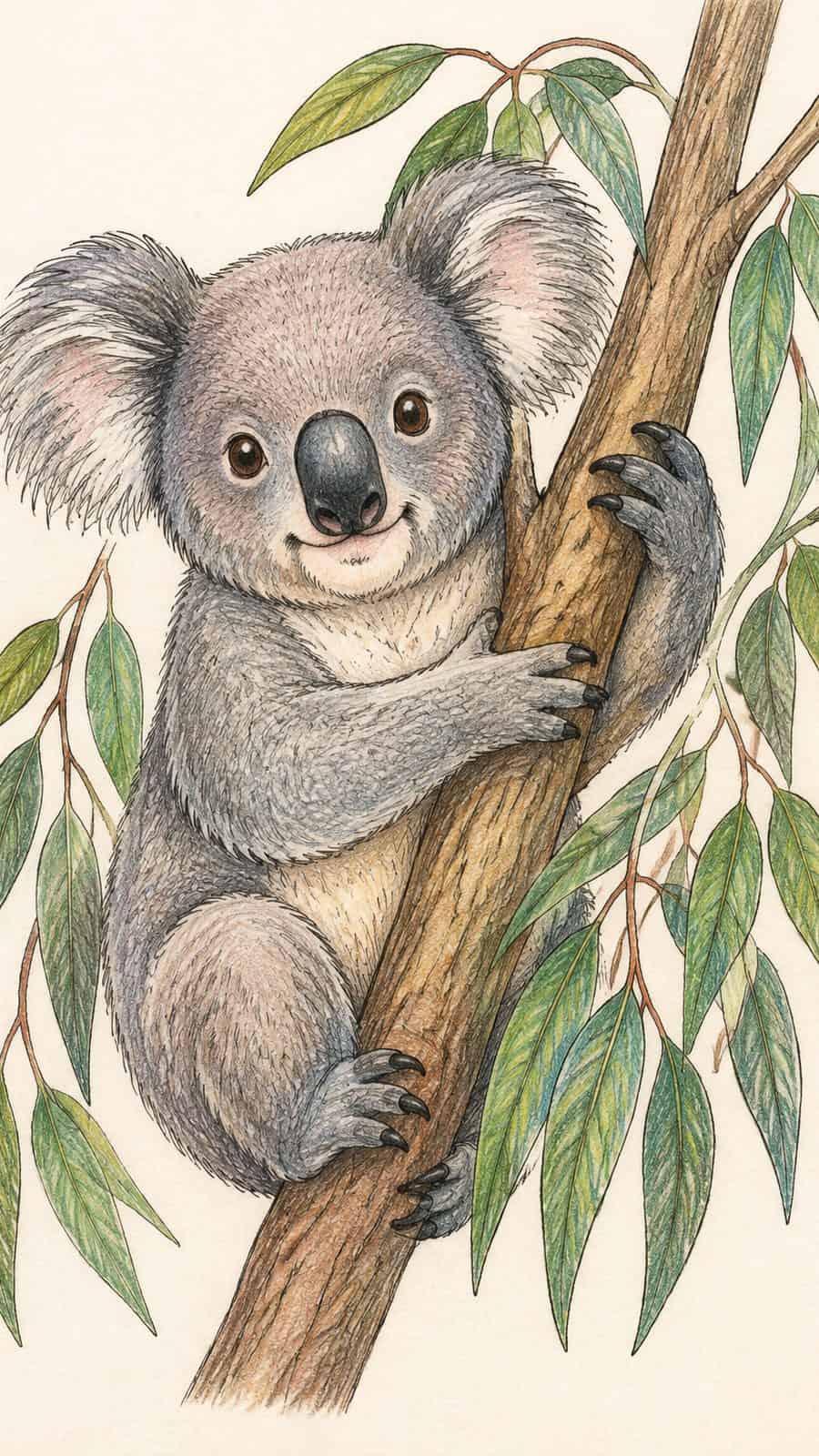
I start with a rounded koala body wrapped around a gently curving eucalyptus branch. I keep the head large, add small rounded ears, and place the nose near the center of the face. Short, loose strokes suggest soft fur without making the drawing look crowded.
I use curved paws to show the koala gripping the branch, then add several oval leaves along its smaller twigs. I shade beneath the ears, chin, arms, and body to create depth. A few light lines on the leaves suggest their veins while keeping the style simple and cute.
20) Frog Sitting on a Lily Pad
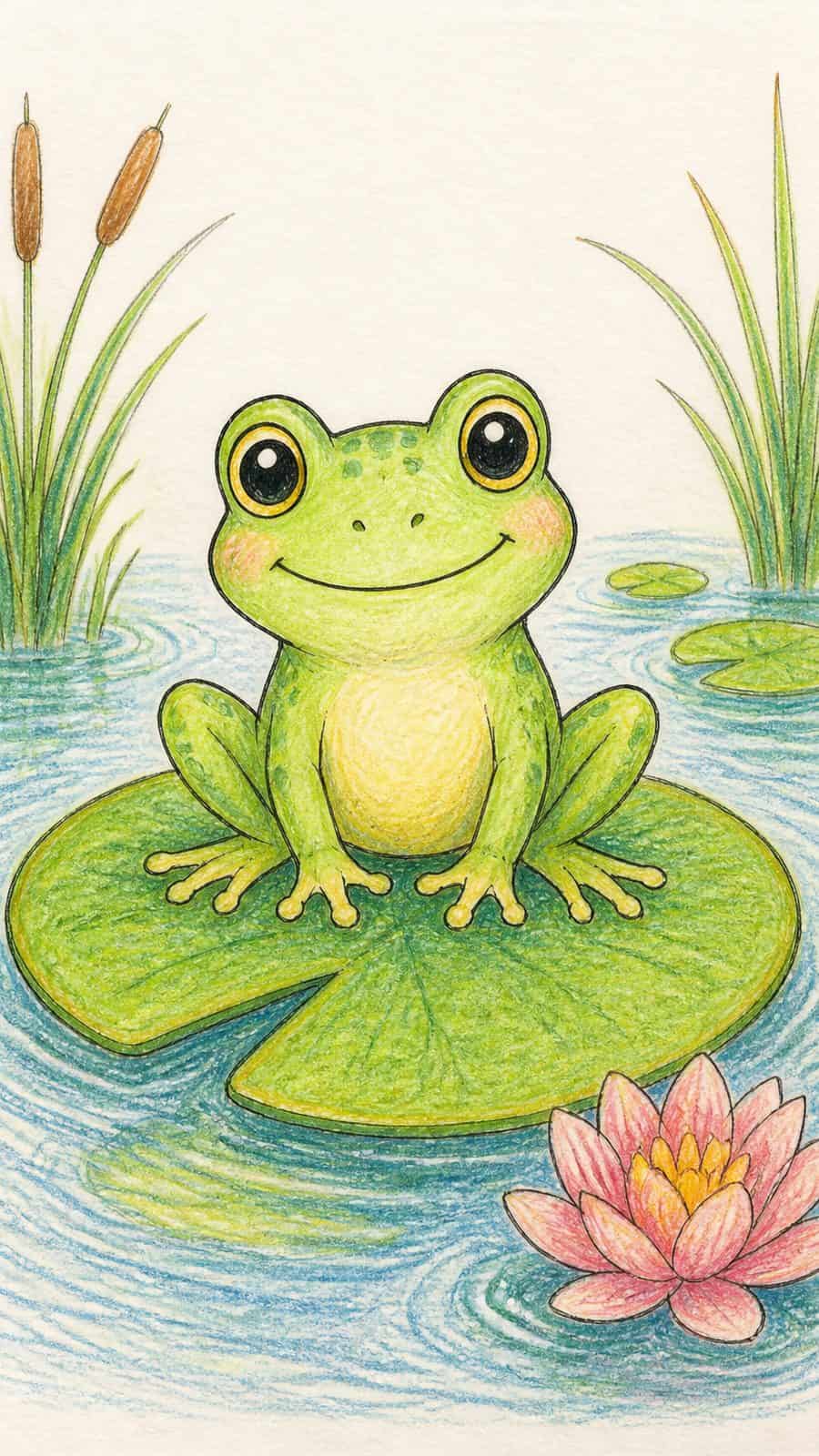
I draw the frog with a rounded body, wide eyes, and folded back legs to show its relaxed pose. I place it near the center of the lily pad, then add a few simple lines around the edges to suggest its shape and texture.
I use curved strokes for the frog’s toes and keep its front feet resting on the pad. For color, I choose two shades of green for the frog, a lighter green for the pad, and small pink or white accents for the eyes.
I add gentle ripples beneath the lily pad to place the frog in calm water. A few tiny insects, reeds, or floating leaves can fill the background without taking attention away from the main subject.
21) Chibi Dragon with Tiny Wings
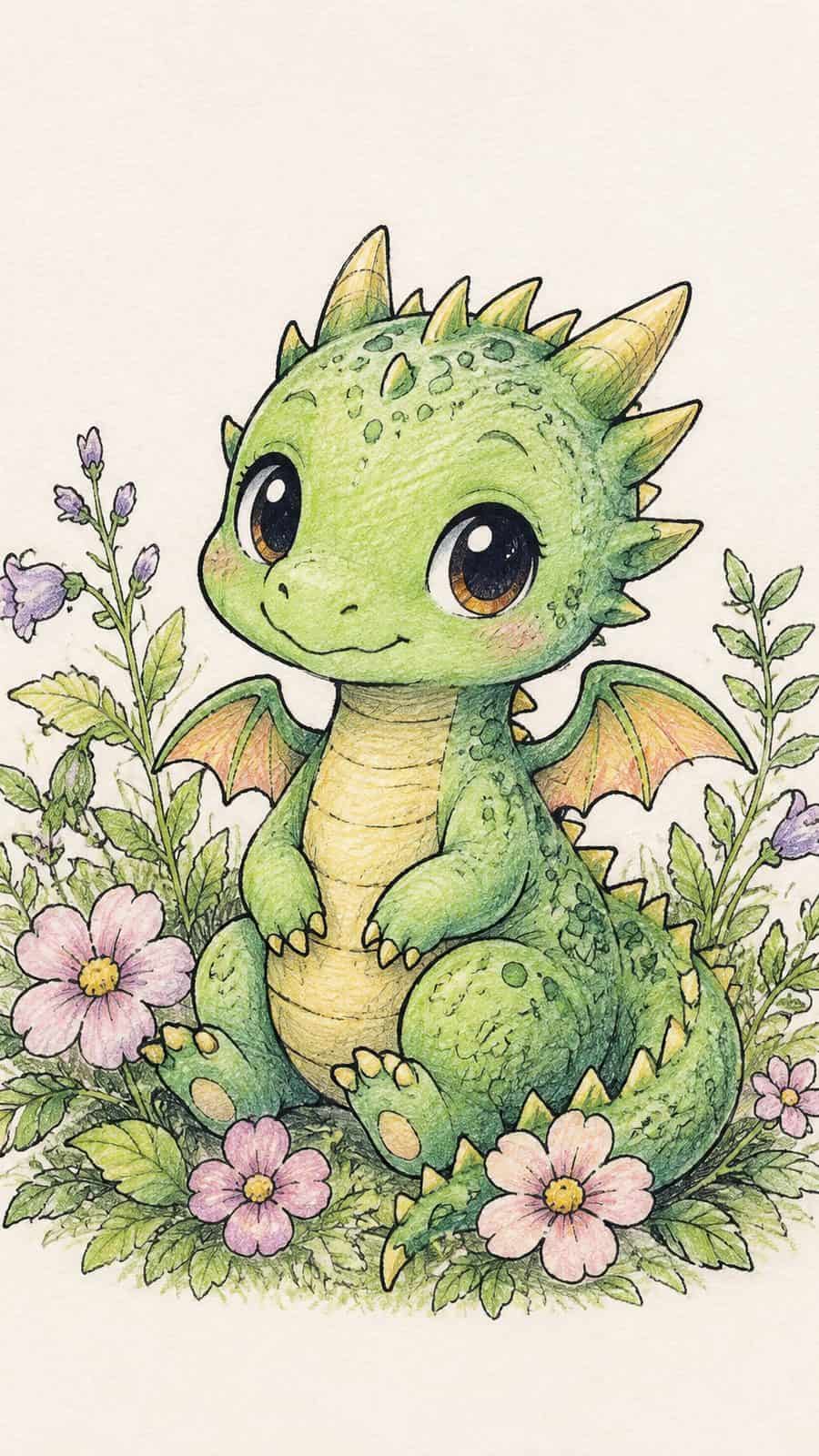
I draw this friendly dragon with a rounded head, large eyes, and a small snout. I keep the body compact and add tiny wings that look slightly too small to lift it. Short legs, curved claws, and a thick tail give the character a balanced, playful shape.
I use simple scales along the forehead and back, then add a few soft spikes for definition. For color, I choose one main shade and a lighter belly, while small cheek marks or nostril dots add personality without crowding the drawing.
22) Hot Chocolate with Marshmallows
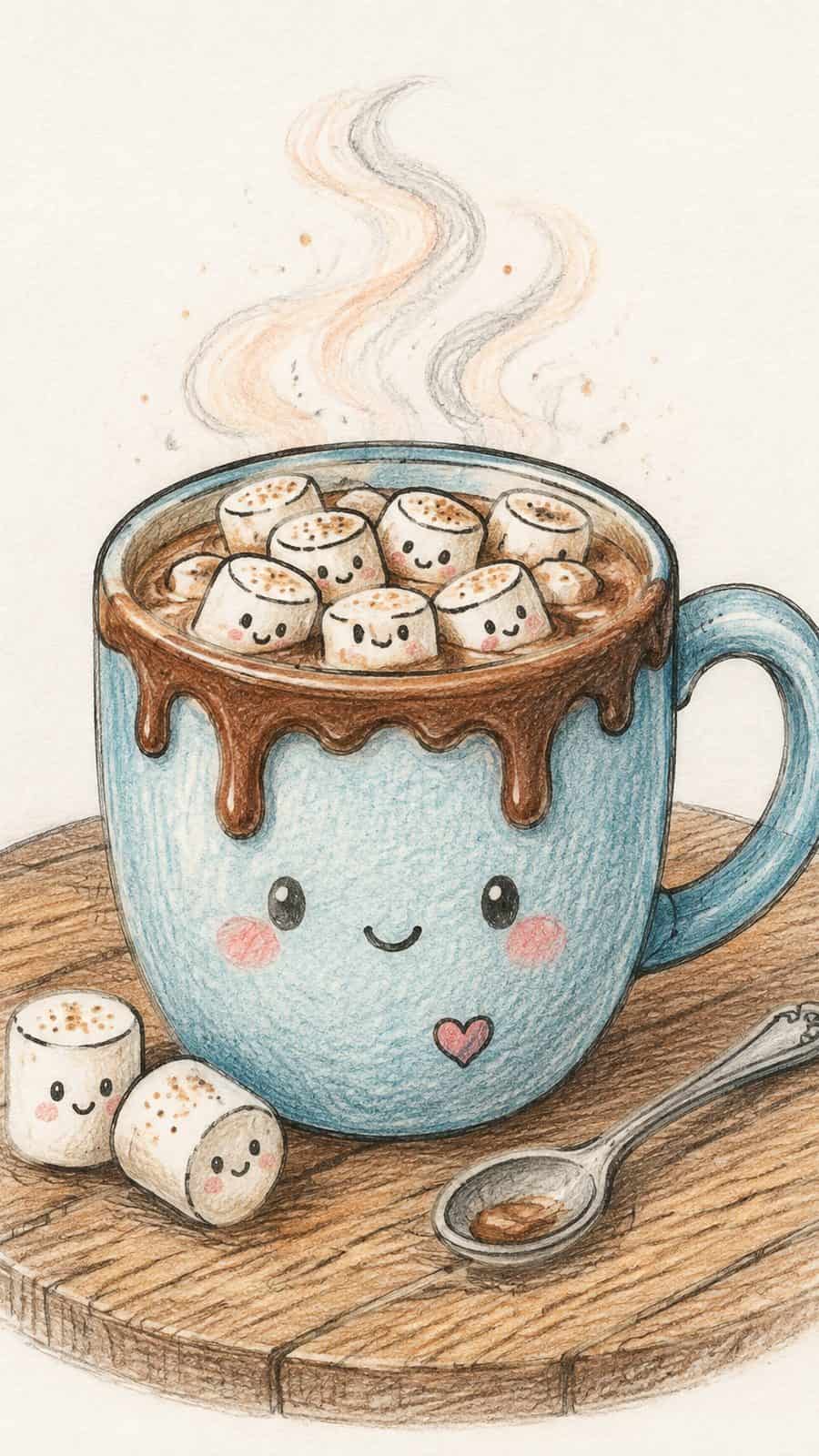
I draw a rounded mug with a slightly uneven rim, then add a handle on one side. I fill the cup with dark, curved lines to suggest warm cocoa without shading every area.
For the topping, I sketch small marshmallows in different sizes so they overlap naturally. I use soft corners and simple oval shapes, adding tiny curved marks where they touch the drink.
I finish with steam rising in loose, winding lines. A few dots, a spoon, or a striped scarf around the mug can add detail while keeping the drawing simple.
23) Cat Inside a Cardboard Box
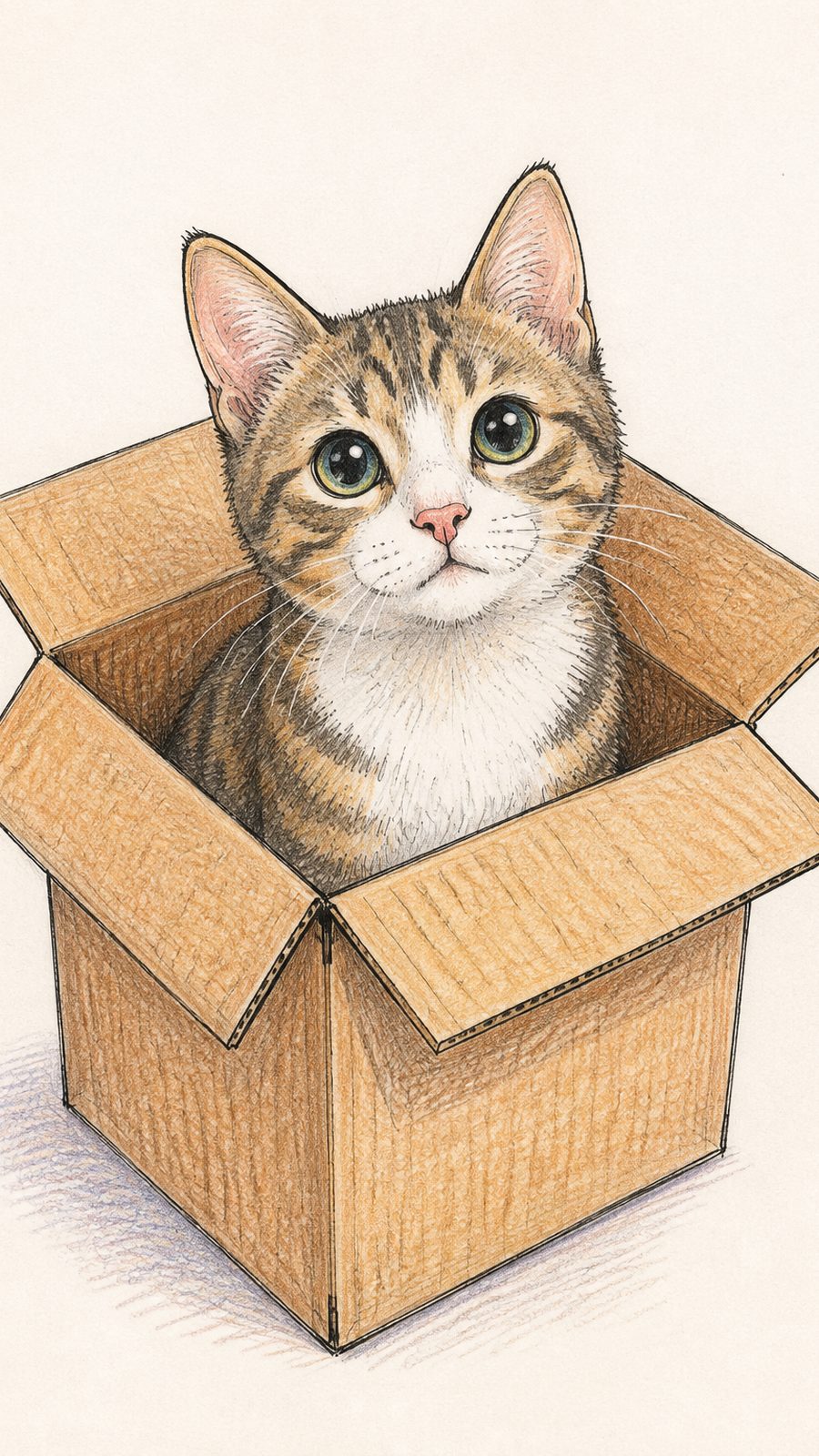
I draw a simple open box first, using slightly uneven lines to suggest soft cardboard. Then I add the cat’s head rising above the edge, with alert ears, round eyes, and only part of its body visible.
I use curved lines to show folded flaps, creases, and the box’s thickness. Small details such as whiskers, paw tips, or a curling tail can make the pose feel lively without adding much complexity.
For a cozy look, I shade the inside of the box and place the cat in front of a plain background. I can vary the expression by changing the eyes and ear position, from curious and alert to sleepy and relaxed.
24) Otter Holding a Shell
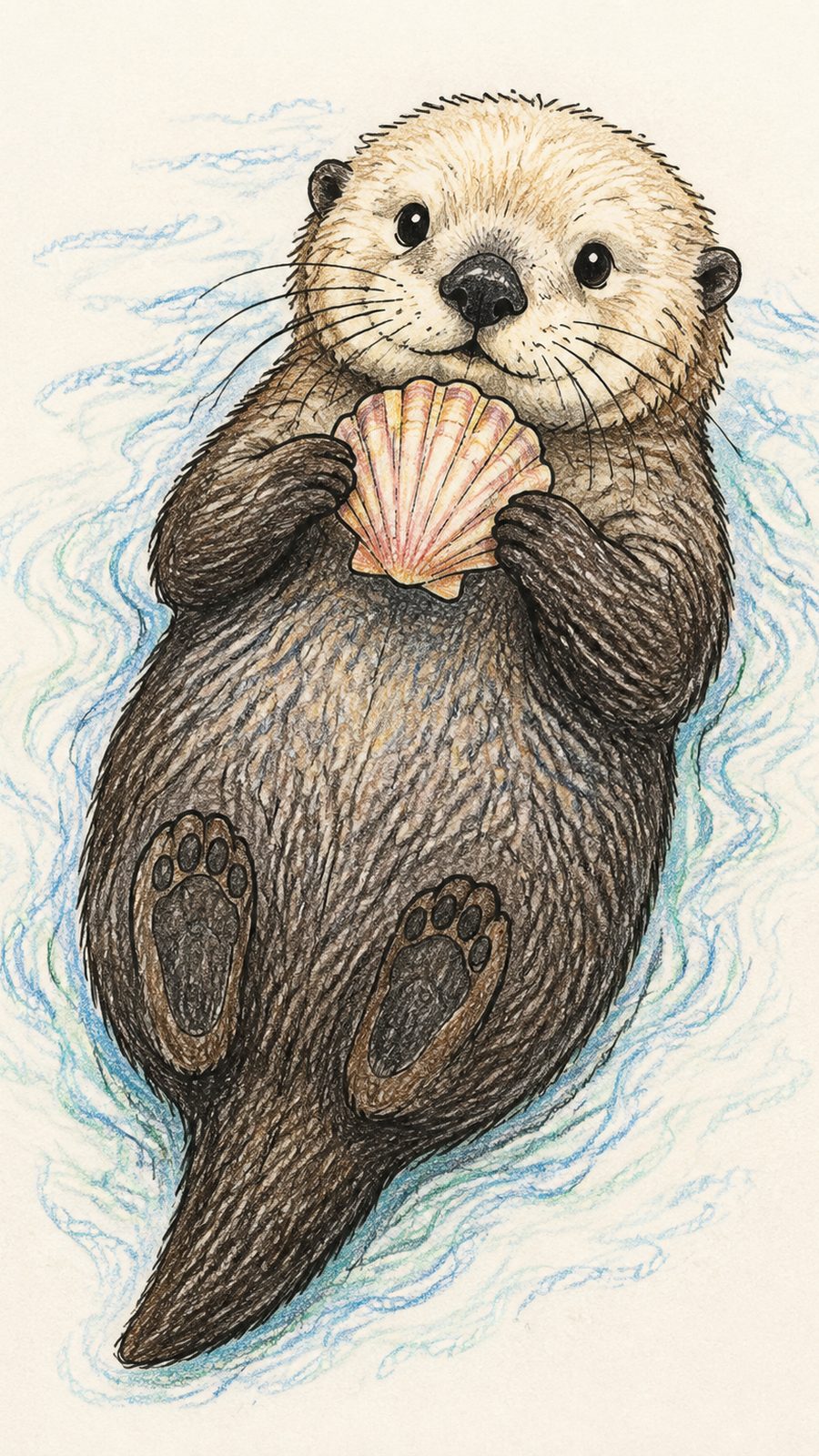
I start with a rounded head, small ears, and a plump body floating upright. I add short paws wrapped around a scallop shell, keeping the grip gentle and centered.
I use curved lines to suggest wet fur around the face and neck, then give the otter bright eyes, whiskers, and a small nose. A few ripples beneath the body place it in the water without adding much detail.
I vary the shell’s ridges and add subtle shading under the paws. Soft gray-brown fur and a pale shell create a simple, natural color palette.
25) Bear-Shaped Backpack
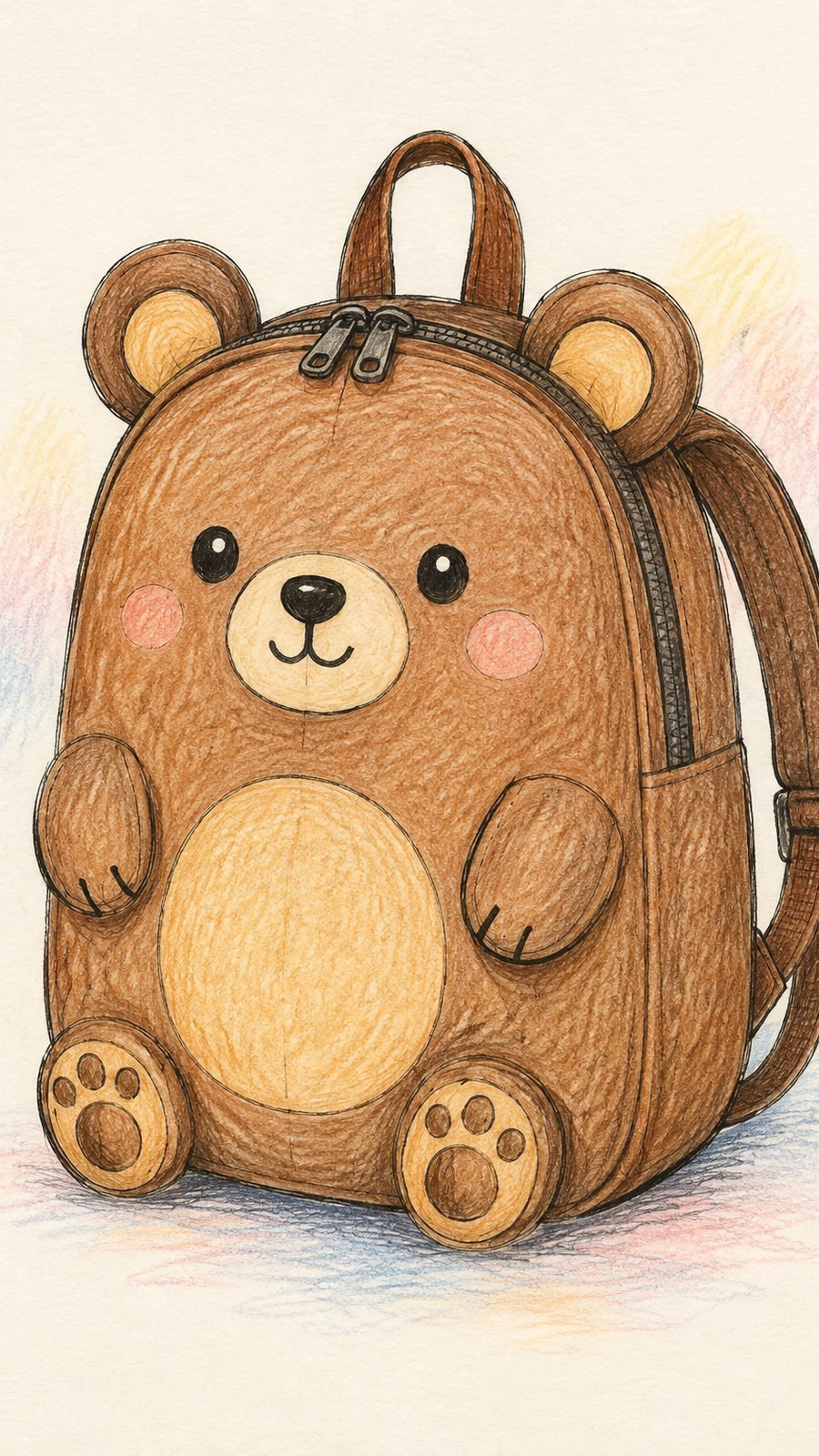
I draw a rounded backpack with two small ears, a simple face, and short straps behind it. I keep the body symmetrical, then add a front pocket shaped like a lighter-colored muzzle or belly. Small seam lines and a zipper give the design useful structure without making it too detailed.
I use soft browns, cream, or muted pink for the main colors, but I can adapt the palette to match any mood. Tiny paws gripping the straps, a keychain, or a patterned pocket adds personality while keeping the drawing approachable.
Getting Started With Simple Drawing Supplies
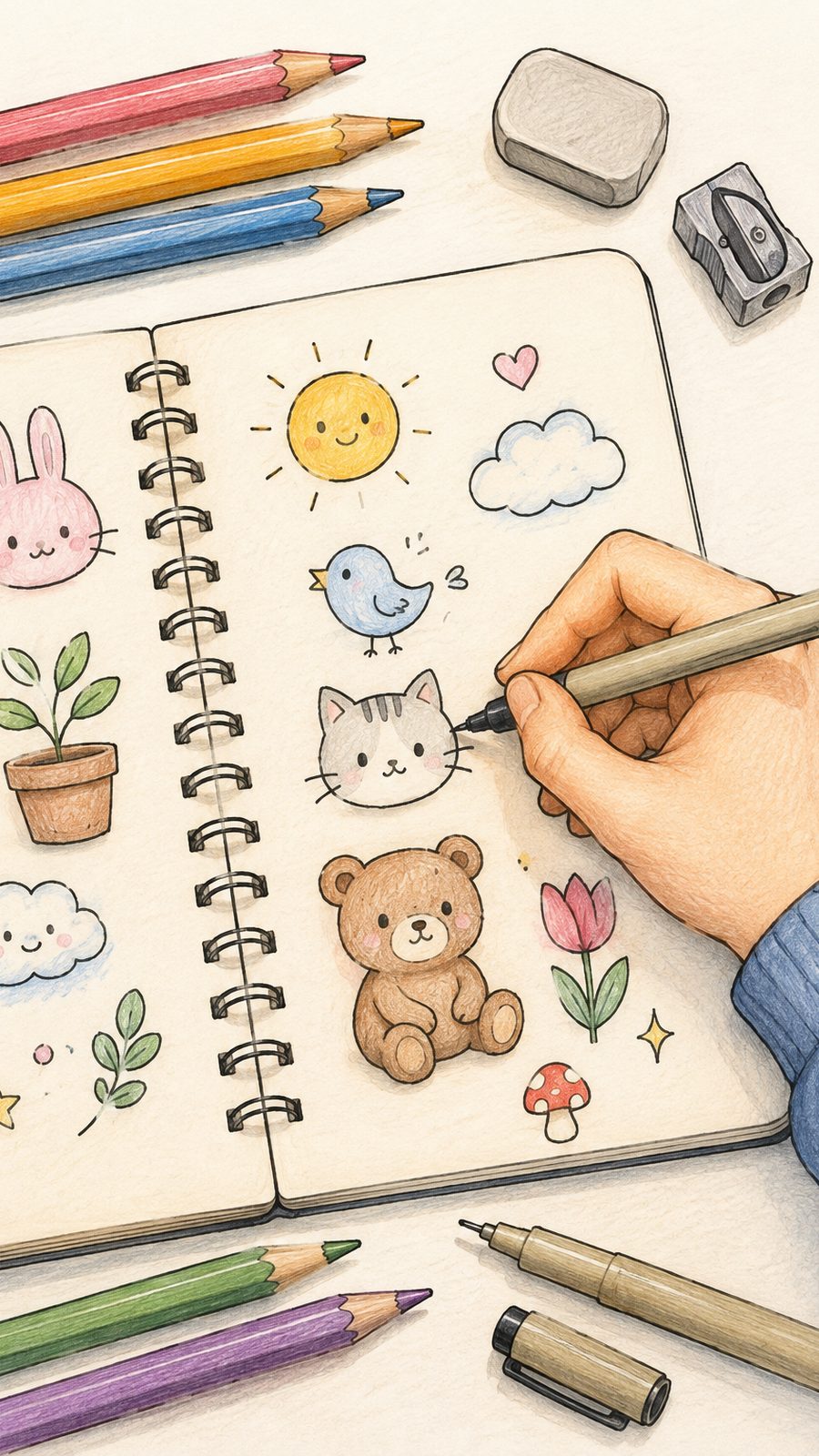
I can create most cute drawings with a few reliable tools rather than a large art kit. Smooth paper, pencils with different hardness levels, and a good eraser give me enough control to sketch, refine, and add clean details.
Essential Tools for Beginners
I start with a graphite pencil, such as an HB, for outlines and everyday sketching. A 2B pencil creates darker marks for shadows, while an H pencil makes lighter construction lines that I can erase easily. I keep a soft, white vinyl eraser nearby for precise corrections and a kneaded eraser for gently lifting graphite without damaging the paper.
A small pencil sharpener helps me maintain thin points for eyes, fur, leaves, and other details. I also use a black fineliner in sizes such as 0.3 mm and 0.5 mm when I want crisp outlines. Colored pencils, markers, or a compact watercolor set can add color, but I introduce them after I feel comfortable with basic shapes.
Choosing Paper and Pencils
I choose paper based on the medium I plan to use. For graphite and colored pencils, smooth sketch paper between 90 and 120 gsm works well because it accepts fine lines without creating a rough texture. If I plan to use markers or watercolor, I select heavier paper, usually 180 gsm or more, to reduce buckling and bleed-through.
I test pencils on a spare sheet before starting a drawing. The test shows how dark each grade appears and helps me avoid pressing too hard, which can leave grooves that remain visible after erasing. A basic pencil set with H, HB, 2B, and 4B grades gives me a practical range for light guides, outlines, and shading.
Building Drawing Confidence
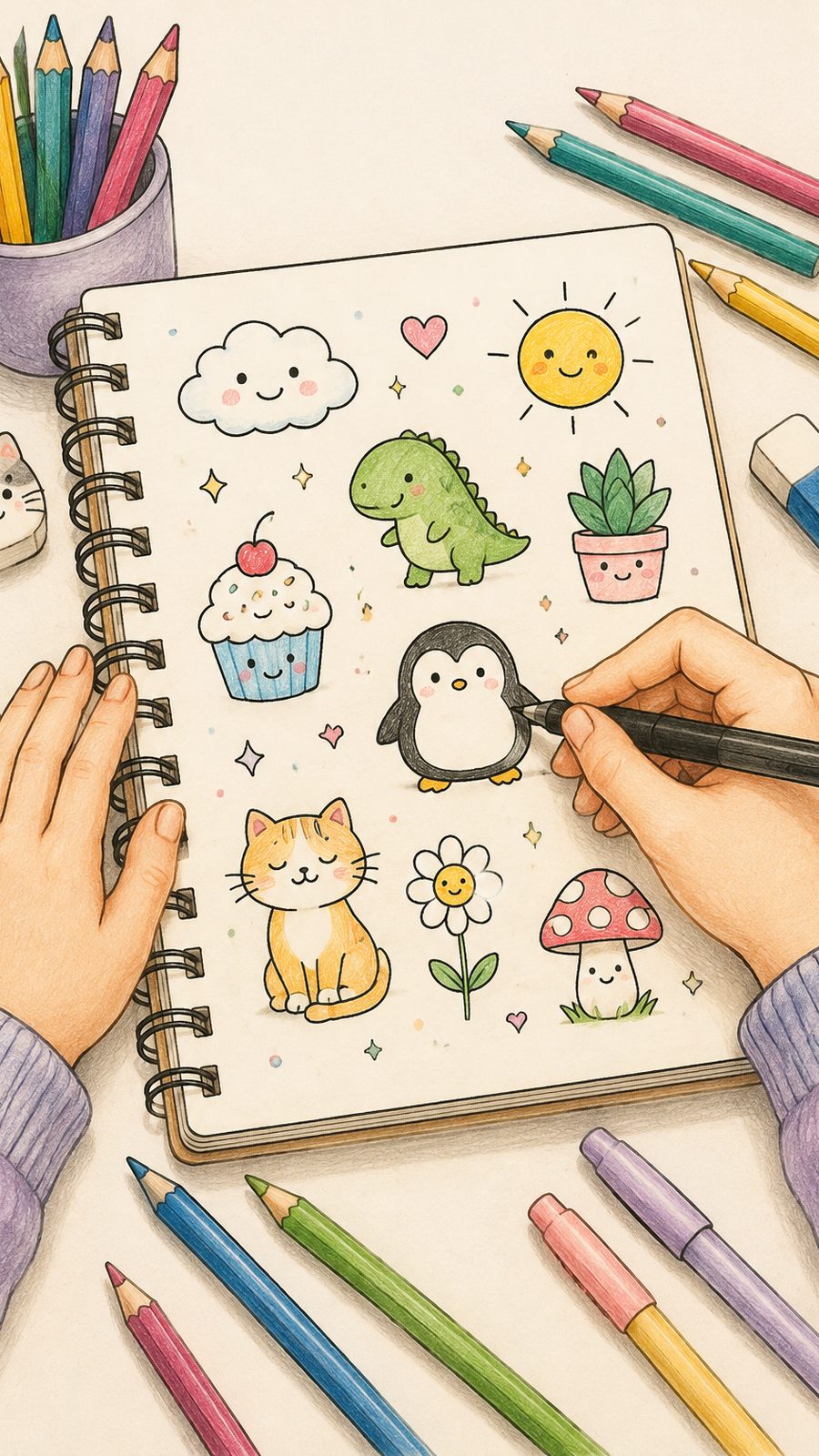
I build confidence by simplifying subjects before adding details and by treating each attempt as useful practice. Small, repeatable exercises make it easier to notice progress without relying on a perfect final drawing.
Using Basic Shapes and Guidelines
I start cute drawings with circles, ovals, rectangles, and soft triangles. A round shape can define a head, while smaller circles can mark cheeks, paws, or eyes. I lightly sketch a center line across the face and a vertical line down the middle to place features evenly.
Guidelines also help me check proportions before I commit to darker lines. For example, I can divide a character’s face into thirds to position the eyes, nose, and mouth. I keep these marks faint so I can adjust them without damaging the drawing.
Useful starting sequence:
- Draw the largest shape.
- Add guidelines for balance.
- Place the main features.
- Refine the outline.
- Erase unnecessary marks.
Practicing Without Perfectionism
I focus on completing small drawings instead of correcting every line. A five-minute sketch of a smiling mushroom, sleepy cat, or tiny plant gives me a clear task and limits the time I spend judging the result.
When a drawing looks uneven, I identify one specific improvement, such as widening the eyes or simplifying the paws. I then start another version rather than repeatedly repairing the first. Comparing several attempts shows which changes help most.
I also keep early sketches beside newer ones. This makes progress visible and reminds me that confident lines usually develop through repetition, not through a single successful drawing.
Adding Your Own Creative Style
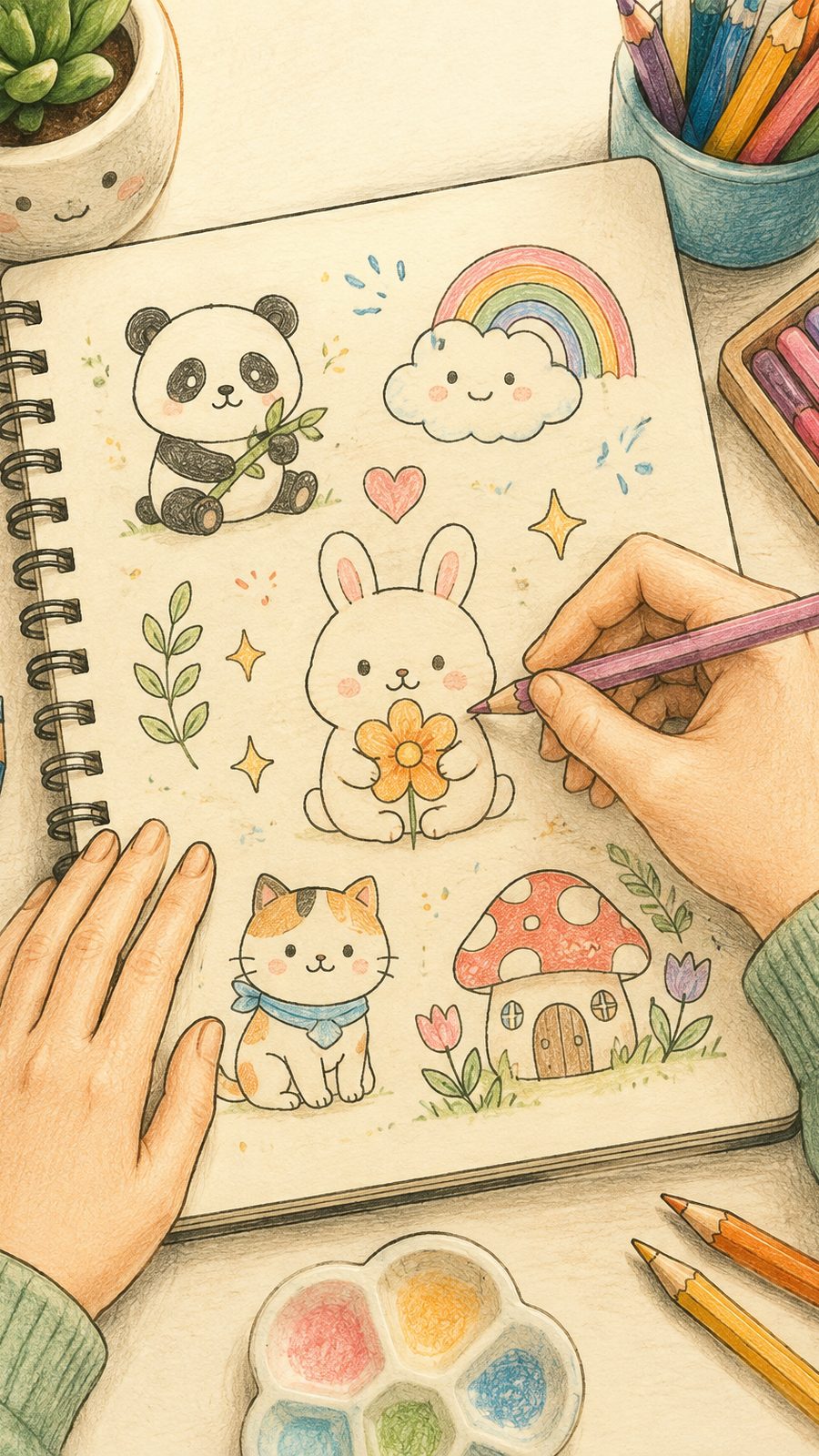
I make cute drawings feel personal by choosing colors, textures, and details that reflect my preferences. A manageable routine helps me test those choices regularly, notice improvement, and develop techniques that suit my skill level.
Exploring Color and Texture
I start with a limited palette of three to five colors so my drawing stays cohesive. Soft pastels can create a gentle look, while bright complementary colors add energy. I test combinations in small swatches before applying them to the main drawing, especially when working with markers or colored pencils.
Texture gives simple shapes more character. I use short pencil strokes for fur, dotted marks for fabric, and uneven lines for wood or leaves. I vary pressure to create lighter and darker areas, then leave some sections plain so the textured details remain noticeable. Mixing smooth and textured surfaces also helps separate objects visually.
Creating a Consistent Practice Routine
I choose a realistic schedule, such as 15 minutes three times a week, rather than waiting for a long block of free time. Each session has one clear focus: drawing facial expressions, practicing rounded forms, testing patterns, or adding shadows.
I keep finished sketches and brief notes in the same notebook or folder. I record the tools I used and what I want to adjust next time, such as making outlines thinner or placing highlights more consistently. Repeating a subject at different sizes also shows me which techniques work reliably.
A small weekly challenge keeps practice specific. I might draw the same cat as a sticker, a character, and a simple pattern, while preserving one signature detail across all three versions.