Boy oh boy, does this take me back! Growing up in the 1950s, we didn’t have video games or smartphones, but let me tell you, we had some of the most imaginative and entertaining toys ever created. From the simple joy of a Slinky walking down the stairs to the thrill of getting your first Mr. Potato Head, these treasured playthings shaped our childhood memories in ways that today’s kids might find hard to believe. Let’s take a nostalgic trip back to the toys that made the fabulous fifties so special.
Table of Contents
- 1 1. The Original Mr. Potato Head (1952)
- 2 2. PF Flyers (1937-1950s)
- 3 3. Colorforms (1951)
- 4 4. Roy Rogers Lunch Box (1953)
- 5 5. Silly Putty (1950)
- 6 6. Davy Crockett Coonskin Cap (1955)
- 7 7. View-Master (1950s)
- 8 8. Lincoln Logs (1950s Sets)
- 9 9. Gumby (1956)
- 10 10. Hula Hoop (1958)
- 11 11. Lionel Trains (1950s Golden Era)
- 12 12. Candy Land (1949-1950s)
- 13 13. Pogo Stick (1950s Craze)
1. The Original Mr. Potato Head (1952)
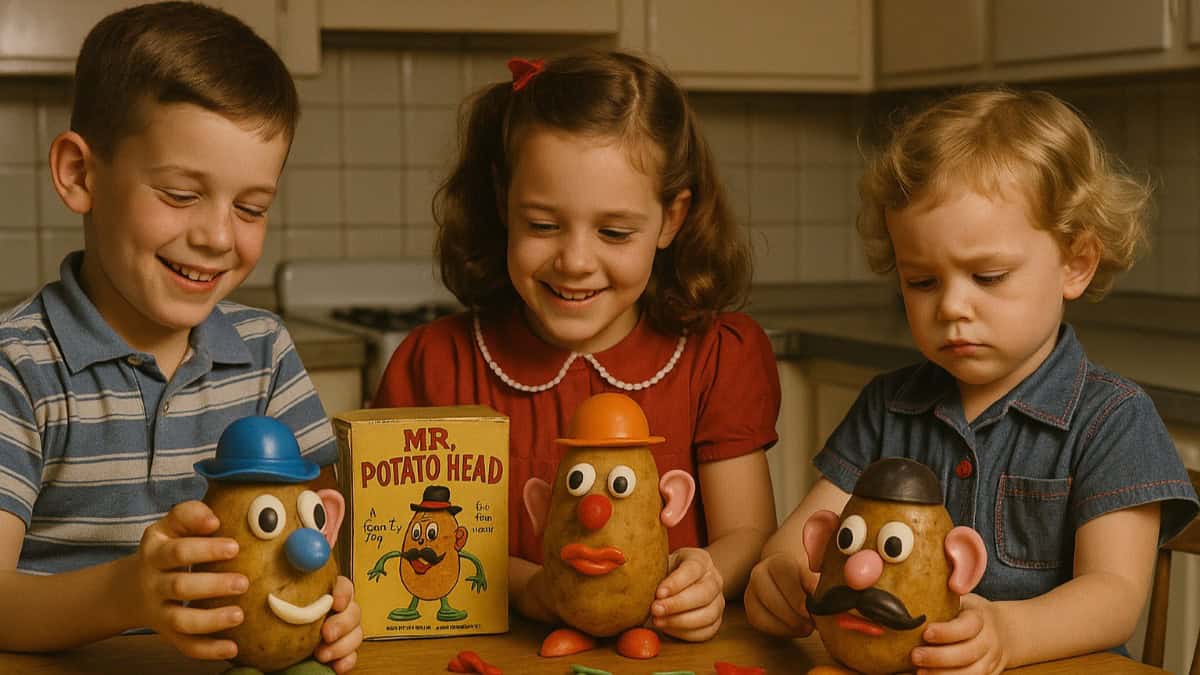
Unlike today’s plastic spud, the original Mr. Potato Head came with sharp plastic pieces that you stuck into a real potato! Invented by George Lerner and first distributed by Hasbro in 1952, this revolutionary toy was the first ever advertised on television. We’d raid our mothers’ vegetable bins for the perfect potato canvas, and sometimes even use other vegetables for variety. The cleanup was a mess, but boy, was it fun!
Save for later
Want to come back to this story? Save it with your email so it is easy to find again.
2. PF Flyers (1937-1950s)
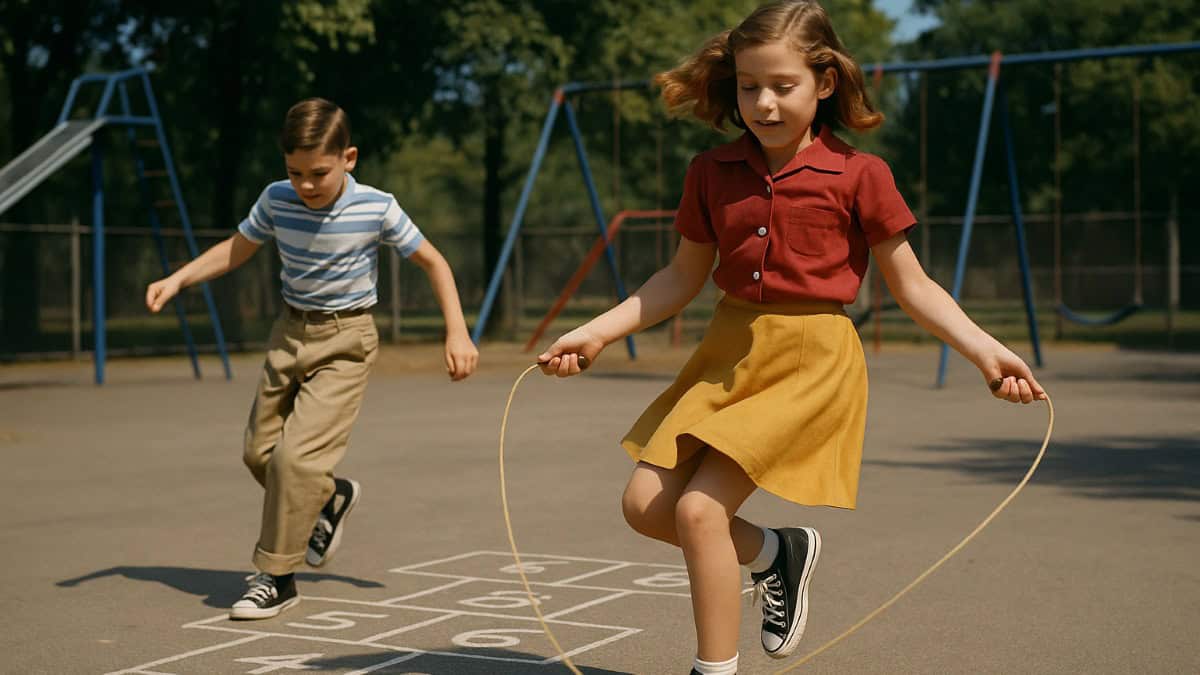
These weren’t just shoes – they were magical devices that made you “run faster and jump higher!” Launched by B.F. Goodrich in 1937 and peaking in popularity during the 1950s, every kid believed that slipping on a pair of PF Flyers gave them superpowers. The distinctive black and white design became a status symbol on playgrounds across America, and that center ankle patch made us feel like we could conquer the world.
3. Colorforms (1951)

These simple vinyl stick-ons provided hours of creative play. You could create endless scenes on the glossy cardboard background, and the pieces could be used over and over again. The original basic geometric shapes eventually gave way to licensed characters, but there was something special about those first sets that sparked pure imagination.
4. Roy Rogers Lunch Box (1953)

The Roy Rogers lunch box wasn’t just for carrying sandwiches – it was a status symbol. This lithographed metal box featuring the “King of the Cowboys” sparked the character lunch box craze of the 1950s. Carrying one of these to school meant you were the coolest kid in the cafeteria, and the matching thermos was the cherry on top.
5. Silly Putty (1950)

This amazing substance could bounce, stretch, and best of all, transfer comic strip images from the Sunday papers! Originally discovered as a failed attempt at synthetic rubber during WWII, Silly Putty became one of the most beloved toys of our generation. That distinctive plastic egg container became a familiar sight in toy boxes across America.
6. Davy Crockett Coonskin Cap (1955)

When Disney’s Davy Crockett series hit television, every kid had to have this faux fur cap with a raccoon tail. The craze was so intense that manufacturers could barely keep up with demand. We’d wear these everywhere, imagining ourselves as frontier heroes, much to our mothers’ dismay when we tried to wear them to church!
7. View-Master (1950s)

Before virtual reality, we had the View-Master. Those circular cardboard disks filled with stereoscopic images transported us to exotic locations and fantastic stories. The distinctive click of advancing to the next image became a familiar sound in quiet living rooms across America, as we explored the world through those magical red viewers.
8. Lincoln Logs (1950s Sets)
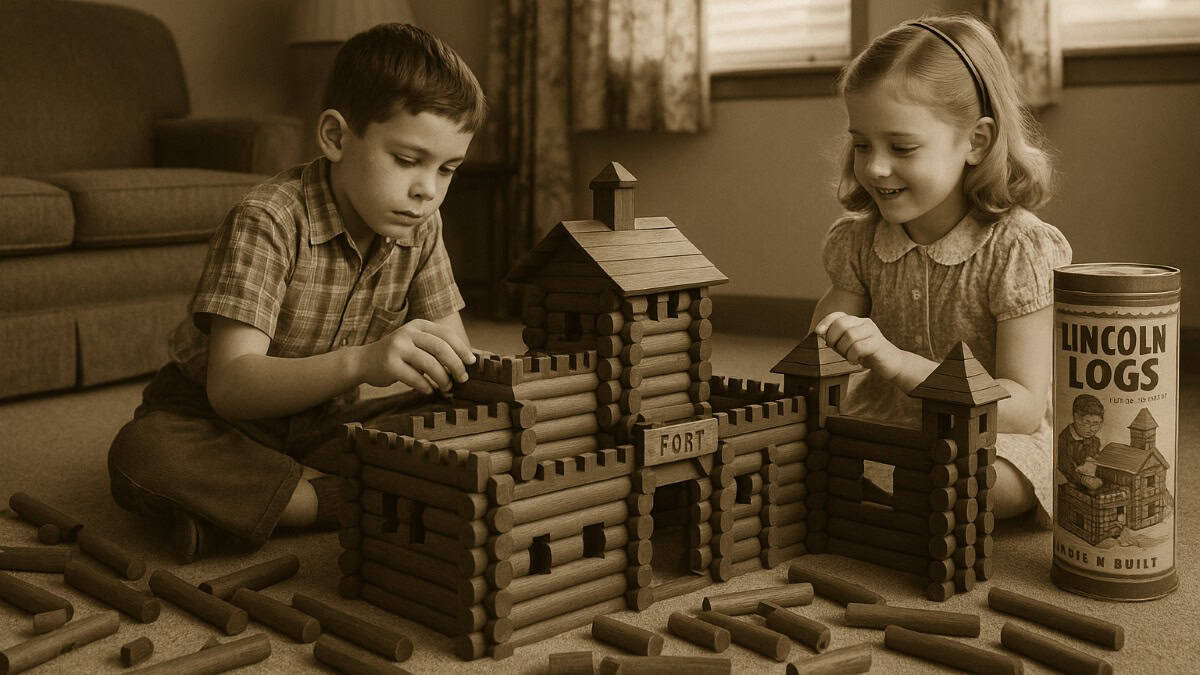
Though invented earlier, Lincoln Logs reached peak popularity in the 1950s when Western TV shows inspired countless frontier adventures. These simple wooden pieces let us build everything from simple cabins to elaborate frontier forts. The smell of the wood and the satisfying way the pieces fit together created hours of constructive play.
9. Gumby (1956)

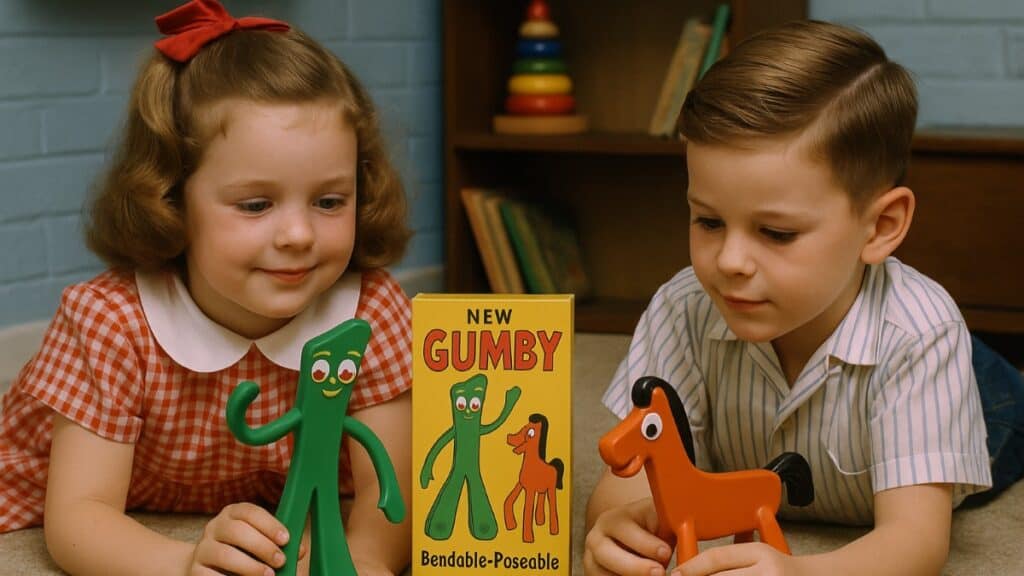
This flexible green guy and his pony pal Pokey captured our hearts when they debuted on the Howdy Doody Show. The bendable clay animation character became a must-have toy, and his simple design let us pose him in endless positions. The rubber smell of a new Gumby figure is something no ’50s kid will ever forget.
10. Hula Hoop (1958)

When Wham-O introduced the Hula Hoop, it became an instant phenomenon. Within four months, 25 million hoops were sold! Every sidewalk and playground was filled with kids trying to master the hip-swinging motion. Those colorful plastic rings taught us coordination and gave us quite a workout – though we were having too much fun to notice.
11. Lionel Trains (1950s Golden Era)

The 1950s marked the golden age of Lionel electric trains, with their detailed craftsmanship and realistic operation. These weren’t just toys – they were miniature engineering marvels that could puff real smoke and couple cars automatically. Many a basement or attic was transformed into an elaborate railway system, complete with tunnels, bridges, and tiny towns. The smell of the electrical components and oil still brings back memories.
12. Candy Land (1949-1950s)

Created by Eleanor Abbott while recovering from polio, Candy Land became a beloved board game sensation in the 1950s. The colorful path through Peppermint Stick Forest and past Lollipop Woods captured children’s imaginations, and since no reading was required, even the youngest players could join in. Milton Bradley’s simple yet engaging game taught us colors, taking turns, and dealing with disappointment when we hit that dreaded slide!
13. Pogo Stick (1950s Craze)

Though invented earlier, the pogo stick reached its peak popularity in the 1950s when improved designs made it more stable and bouncy. Every kid wanted to master the art of consecutive jumps, and neighborhood competitions would spring up to see who could hop the longest. The distinctive squeak of the spring and the thrill of finally maintaining balance made this simple toy a suburban phenomenon.