
Choosing a chest tattoo lets you use a broad, visible canvas to express personal meaning, style, or heritage. I’ll explore designs ranging from detailed animal portraits and traditional symbols to geometric, cultural, and minimalist concepts.
Save for later
Want to come back to this story? Save it with your email so it is easy to find again.
You’ll find ideas that help you compare visual impact, symbolism, placement, and the planning each chest tattoo requires. I’ll also cover practical preparation and aftercare so you can approach your preferred design with clear expectations.
Table of Contents
- 1 1) Realistic Lion Chest Tattoo
- 2 2) American Traditional Eagle Chest Tattoo
- 3 3) Geometric Wolf Sternum Tattoo
- 4 4) Blackwork Mandala Chest Tattoo
- 5 5) Japanese Dragon Chest Tattoo
- 6 6) Roman Numeral Chest Tattoo
- 7 7) Realistic Phoenix Chest Tattoo
- 8 8) Neo-Traditional Bear Chest Tattoo
- 9 9) Sacred Heart Chest Tattoo
- 10 10) Viking Rune Chest Tattoo
- 11 11) Compass and Map Chest Tattoo
- 12 12) Minimalist Mountain Range Chest Tattoo
- 13 13) Polynesian Tribal Chest Tattoo
- 14 14) Mechanical Steampunk Chest Tattoo
- 15 15) Snake and Dagger Chest Tattoo
- 16 16) Gothic Cathedral Chest Tattoo
- 17 17) Realistic Tiger Chest Tattoo
- 18 18) Angel Wings Chest Tattoo
1) Realistic Lion Chest Tattoo
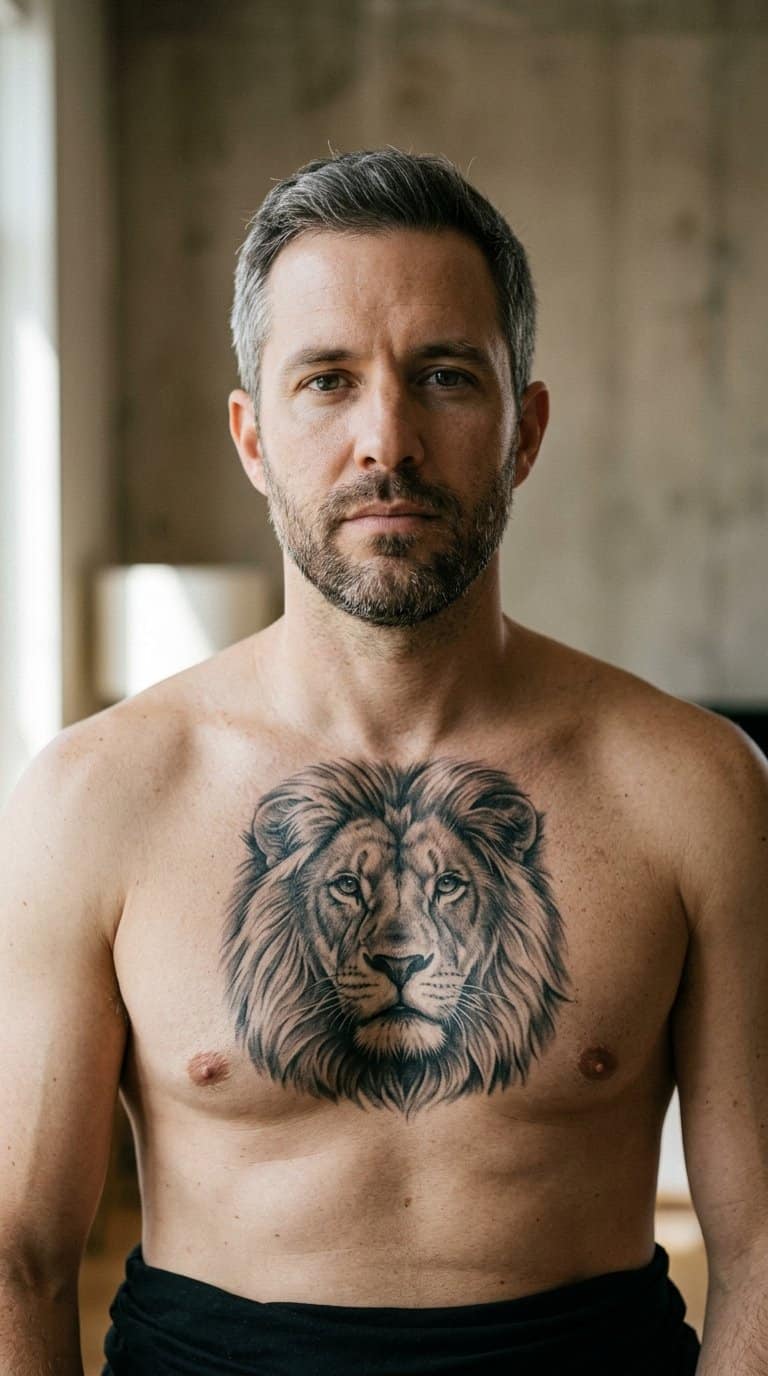
I would choose a realistic lion portrait for its strong facial detail and natural symmetry. Placing the face at the center of my chest creates a clear focal point, while the mane can extend toward my shoulders and upper ribs.
I prefer black-and-gray shading for a lifelike effect, with careful contrast around the eyes, nose, and muzzle. A skilled tattoo artist can use fine lines and layered tones to give the mane texture without making the design look crowded.
I would leave enough open space around the portrait so each detail remains readable as the tattoo ages. My artist could add subtle geometric shapes, leaves, or a short date without competing with the lion’s expression.
2) American Traditional Eagle Chest Tattoo
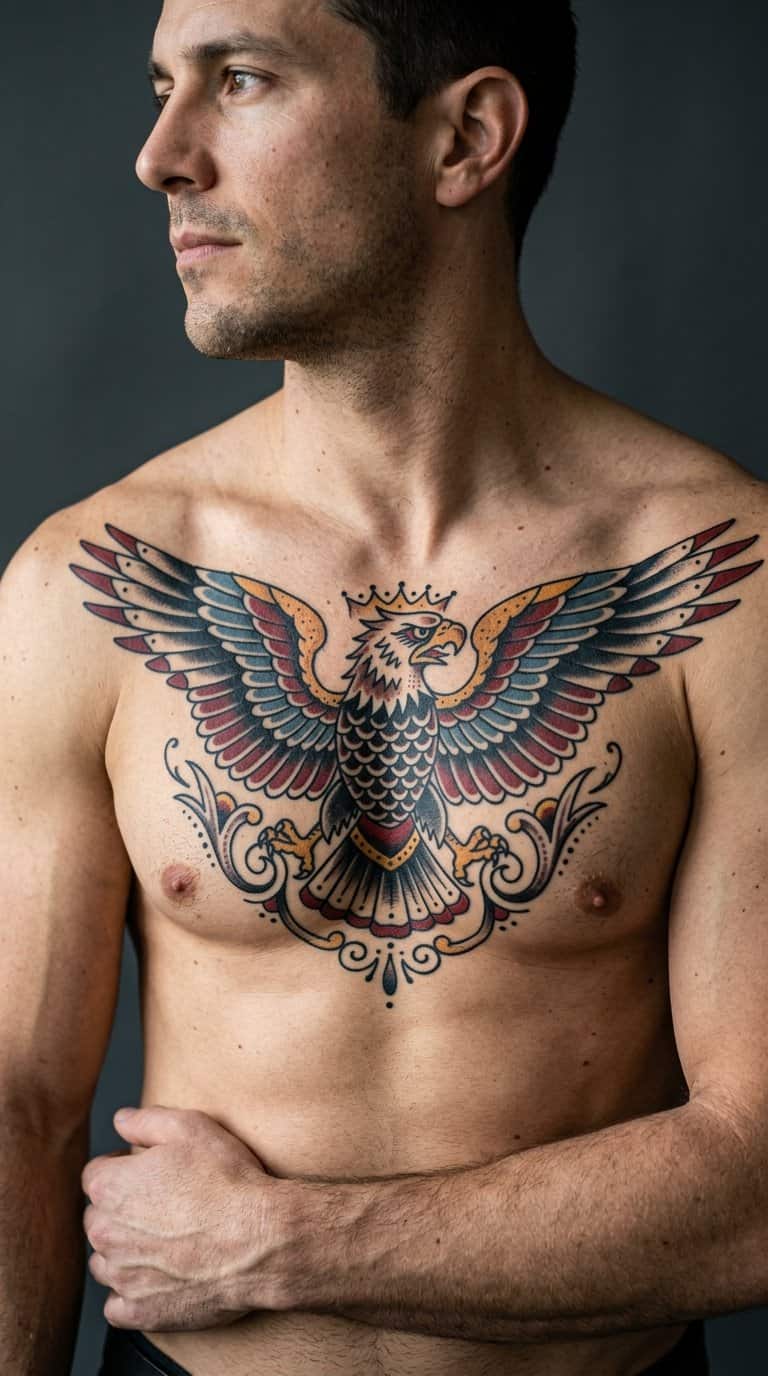
I like an American traditional eagle across the chest because its broad wings suit the body’s natural width. Bold outlines, limited colors, and strong contrast keep the design readable, while red, yellow, blue, and black create its classic appearance.
I would position the eagle with its head turned slightly to one side and its talons extended below. Adding a banner, shield, or small stars can personalize the piece without crowding the composition.
The chest offers enough space for detailed feathers and symmetrical placement, but I would work with an experienced tattoo artist to maintain clean lines across the curved surface. A centered design can also extend toward the shoulders for a wider, more connected layout.
3) Geometric Wolf Sternum Tattoo

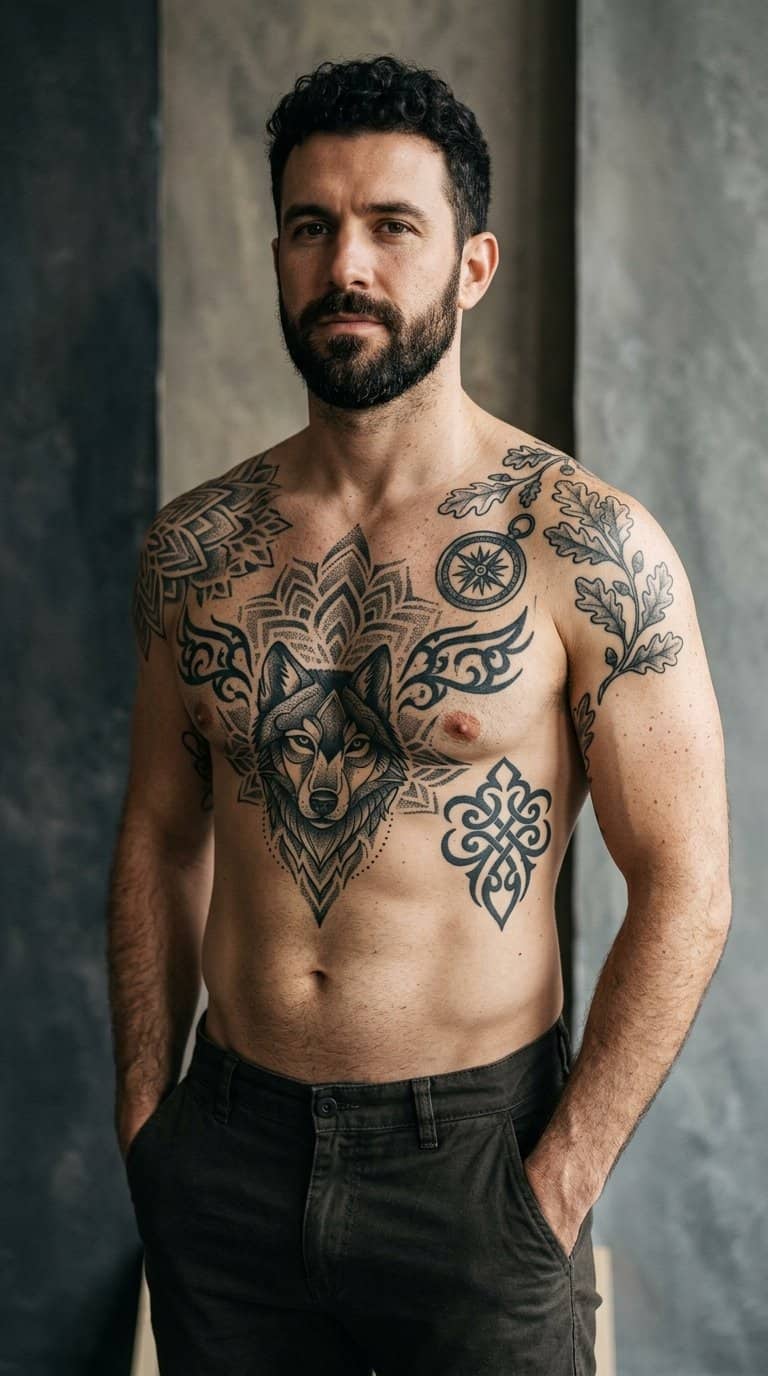
I like this design for its balance of natural imagery and precise structure. Angular lines can shape the wolf’s face, while the sternum placement gives the tattoo a centered, symmetrical appearance.
I would keep the details controlled so the geometry remains readable as the tattoo ages. Black ink, fine linework, and subtle dot shading can create contrast without making the design feel crowded. Its vertical layout also works well with the chest’s natural proportions.
4) Blackwork Mandala Chest Tattoo
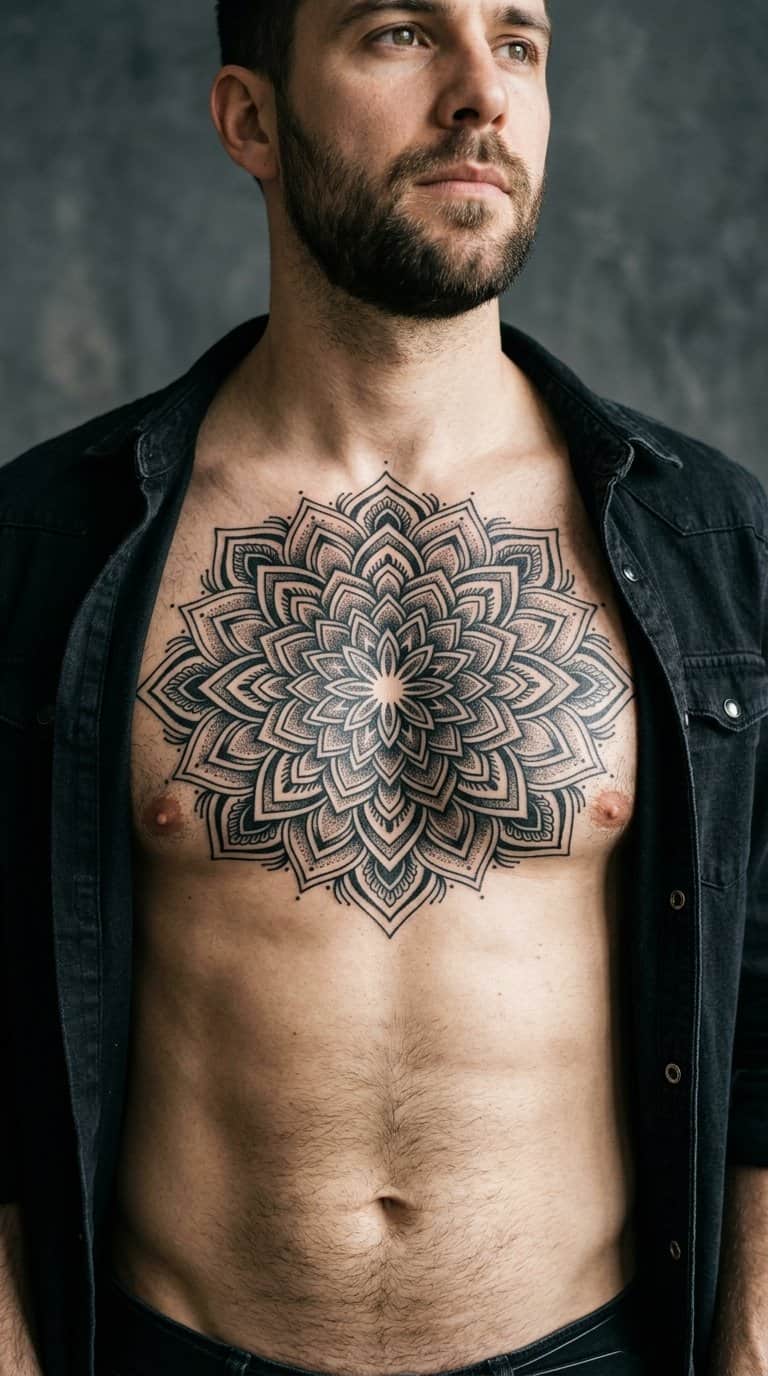
I like blackwork mandalas for their precise geometry and strong contrast. I would center the design over the sternum, then extend its layered petals across the chest to follow the natural width of the pectorals.
Dense dotwork, solid black sections, and clean negative space can create depth without adding color. I would keep the outer edges symmetrical while allowing small details to reflect my preferred style, such as pointed petals, geometric bands, or subtle ornamental elements.
5) Japanese Dragon Chest Tattoo
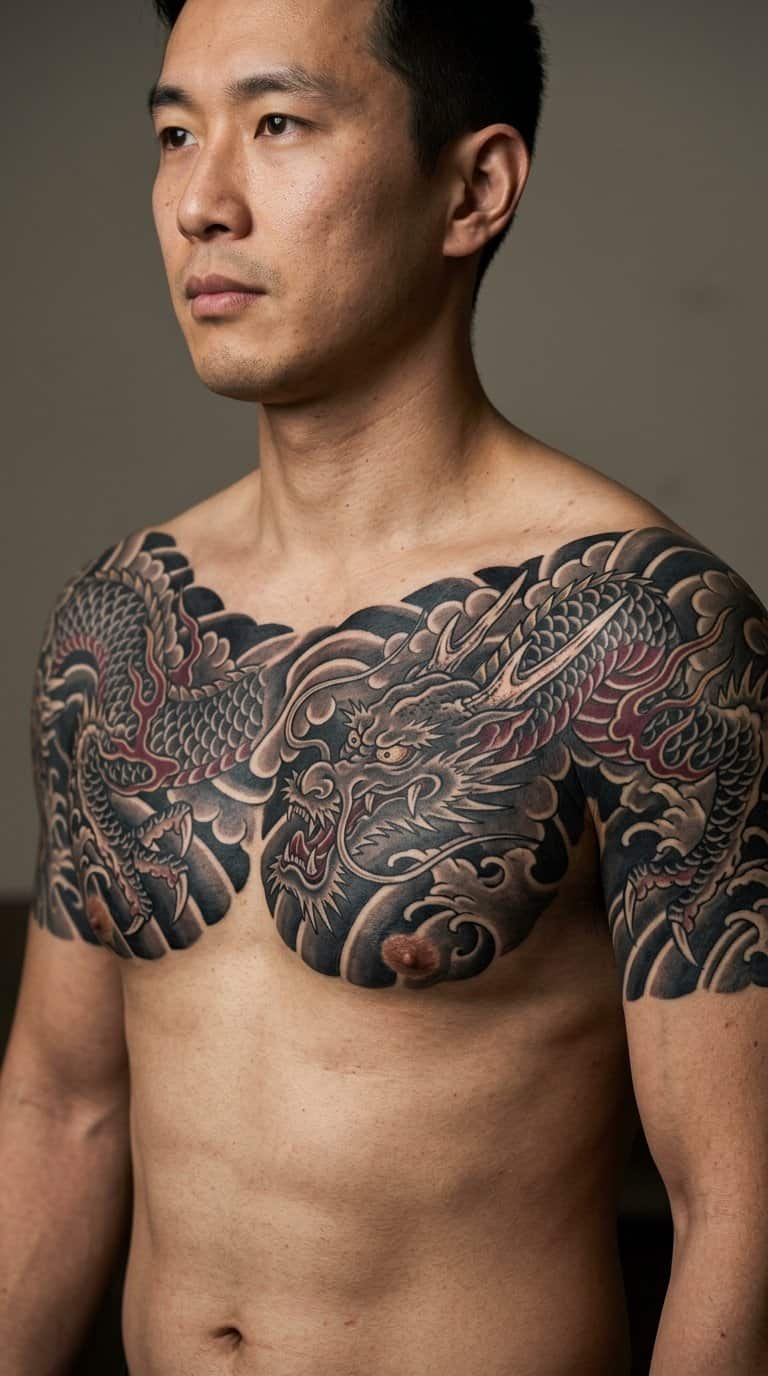
I like Japanese dragon chest tattoos for their flowing movement and detailed structure. I would use the chest’s width to spread the dragon’s body across the pectorals, while the head, claws, and whiskers create a clear focal point near the sternum or shoulder.
Traditional elements such as waves, clouds, wind bars, and peonies can fill the surrounding space without competing with the dragon. I would choose bold outlines and controlled shading to preserve the design’s clarity as it ages.
Color can add emphasis, with blue, green, red, or black-and-gray palettes each creating a different effect. I would work with an artist experienced in Japanese tattoo composition so the scales, background motifs, and body proportions remain consistent across the chest.
6) Roman Numeral Chest Tattoo
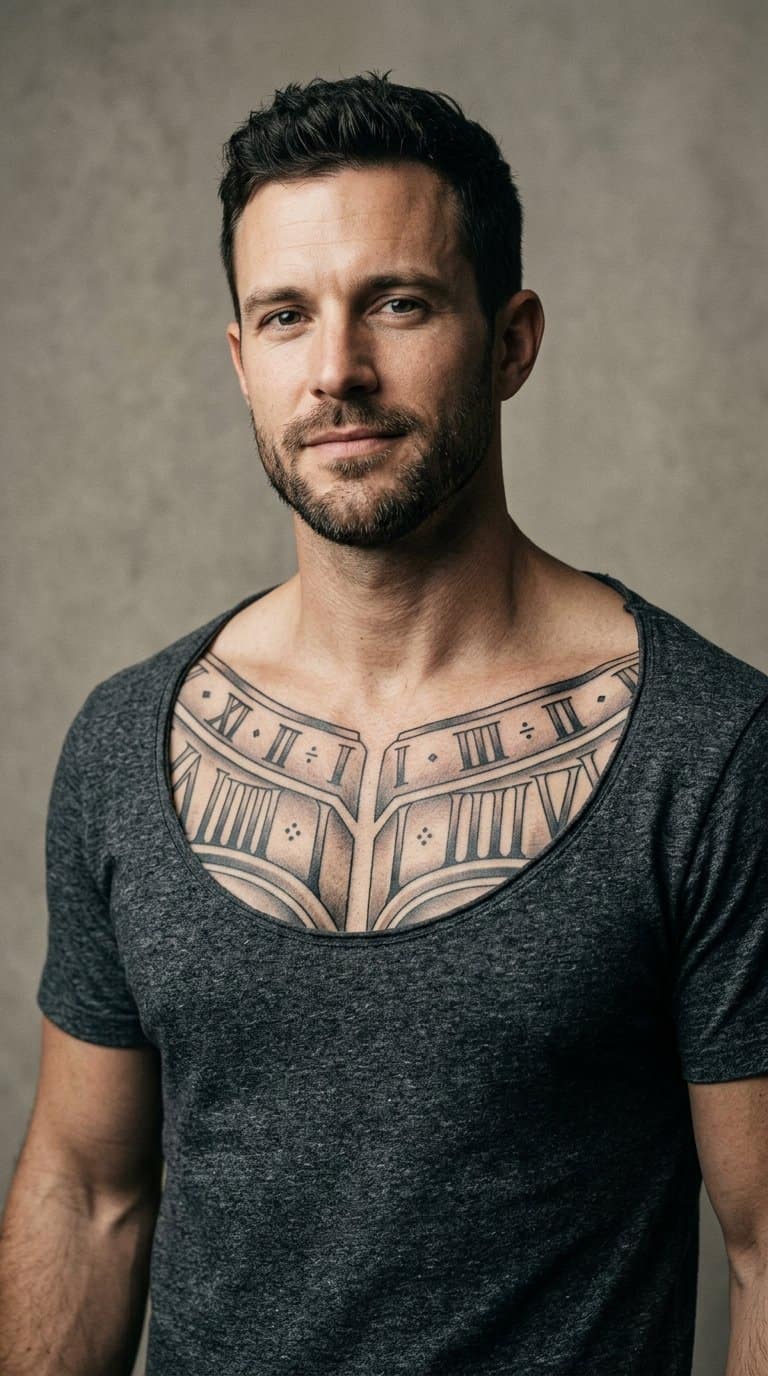
I use Roman numerals to mark a date with personal meaning, such as a birthday, anniversary, or major achievement. Their structured appearance suits the chest, where a horizontal design can follow the natural line beneath the collarbone.
I prefer clean spacing and a simple typeface because ornate details can make the numerals harder to read. I can place the tattoo at the center of my chest for symmetry or position it over one side for a more understated look.
A short date works well on its own, while small elements such as fine lines or a laurel branch can add context without competing with the numbers.
7) Realistic Phoenix Chest Tattoo
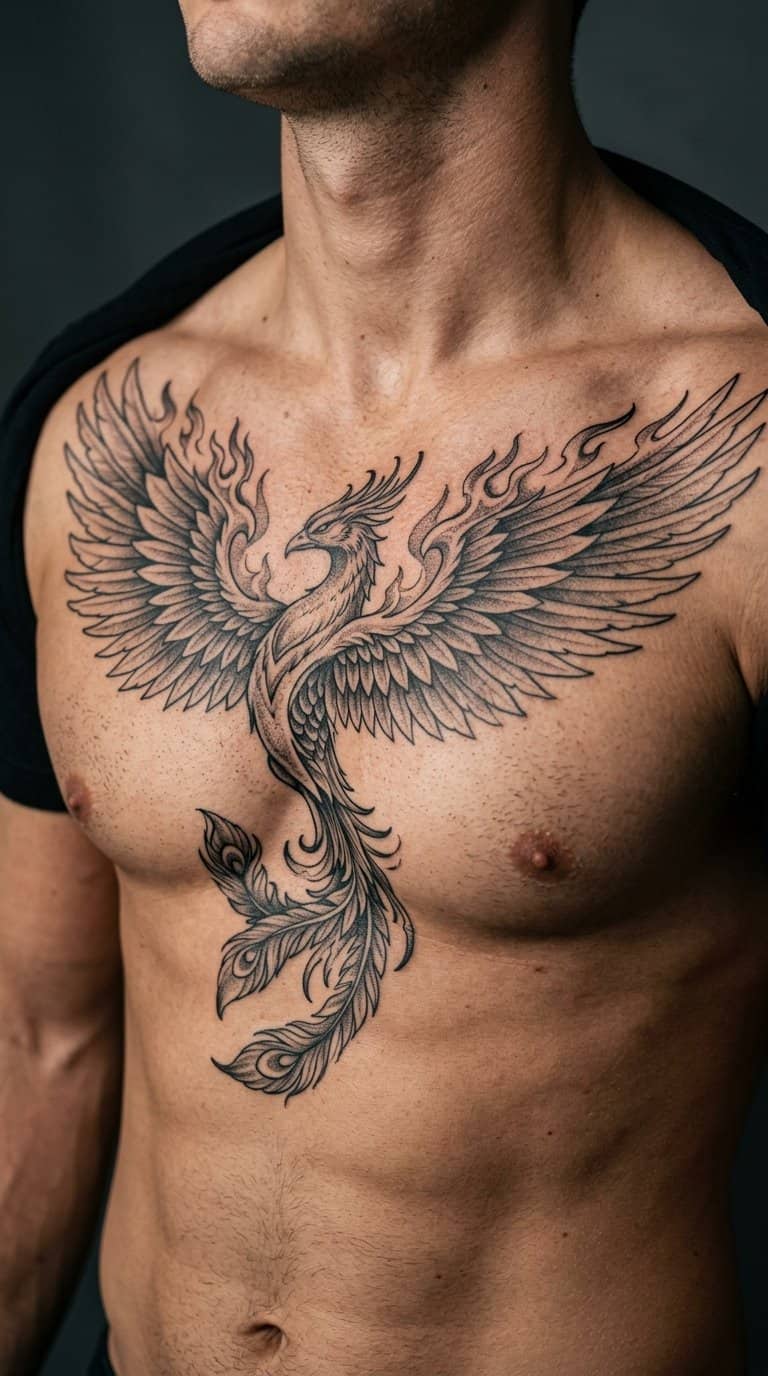
I like a realistic phoenix chest tattoo for its detailed feathers, layered wings, and controlled use of shading. I would position the head near one shoulder and let the wings spread across the chest, creating a balanced composition that follows the body’s natural shape.
Warm reds, oranges, and golds can suggest fire, while black-and-gray work gives the design a more subdued appearance. I would add fine feather textures and gradual shadows to create depth without making the tattoo look crowded.
The phoenix’s posture also changes its character. I might choose raised wings for an expansive design or a forward-facing bird for a more direct, symmetrical look.
8) Neo-Traditional Bear Chest Tattoo
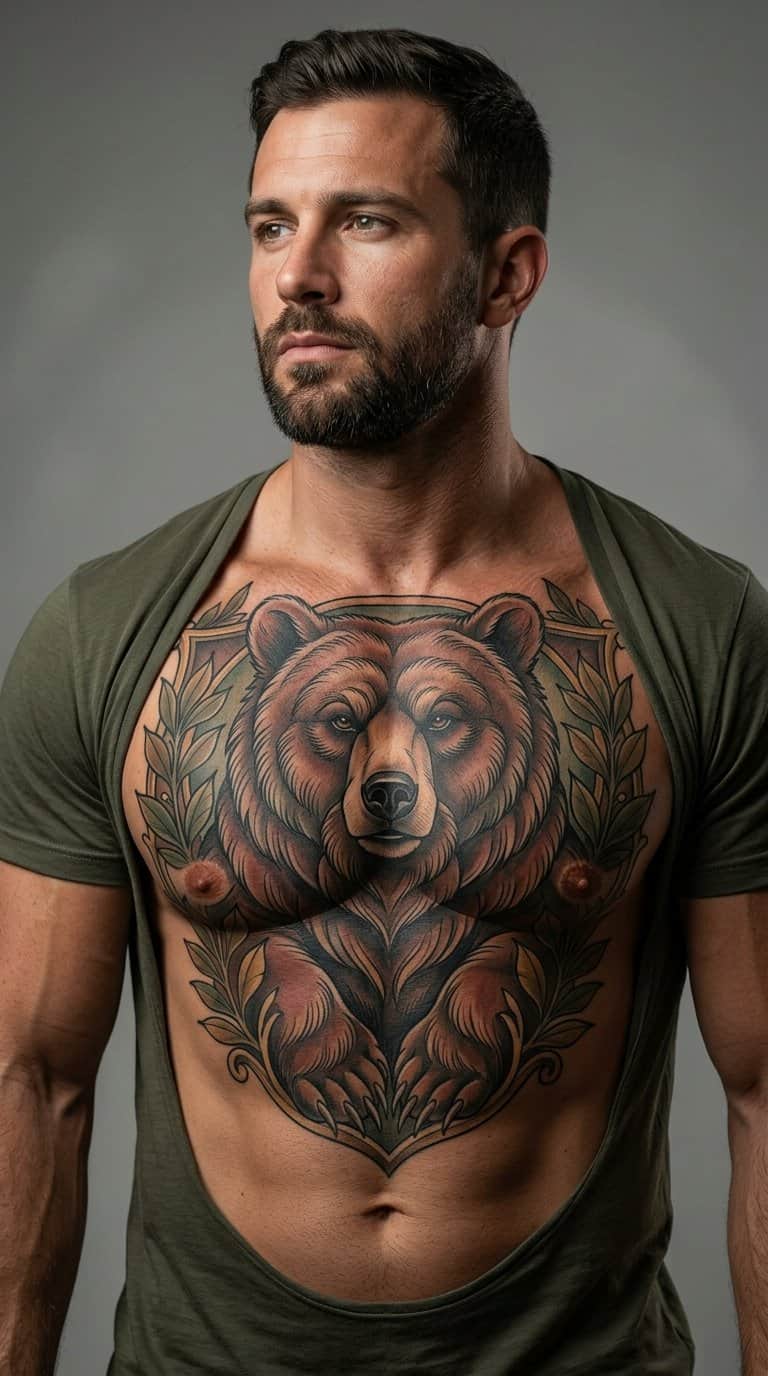
I like a neo-traditional bear design for its bold outlines, layered shading, and controlled use of color. I would place the bear across the chest, with its head centered over the sternum and the shoulders extending toward each pectoral.
I would use warm browns, muted reds, deep greens, and golden highlights to create contrast without overcrowding the composition. Flowers, leaves, or ornamental shapes can frame the animal and help the tattoo follow the chest’s natural width.
I would ask the artist to balance the bear’s expression with the surrounding details. A calm face gives the piece a composed character, while visible teeth and raised fur create a more forceful look.
9) Sacred Heart Chest Tattoo
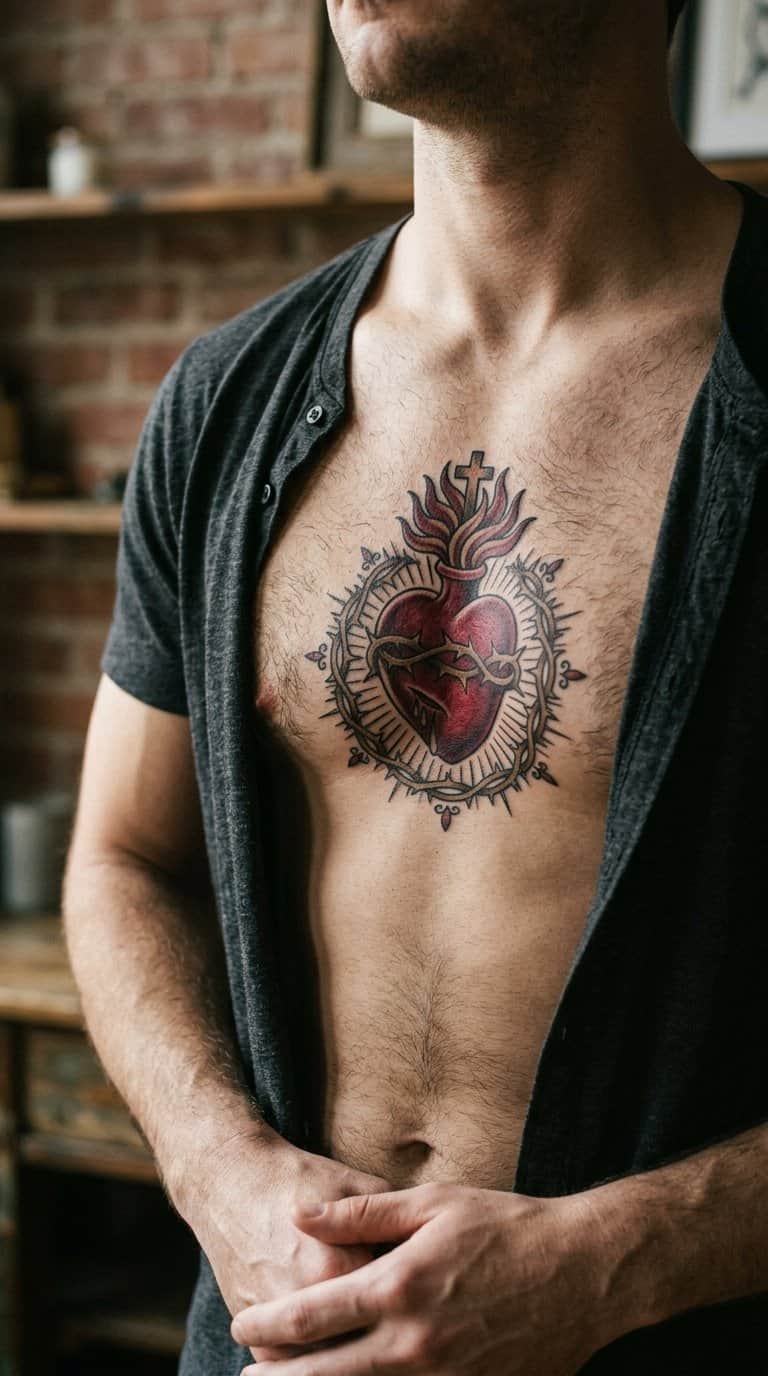
I see the Sacred Heart as a strong choice for expressing faith, devotion, or personal resilience. Its central heart, surrounding flames, crown of thorns, and rays create a detailed design that naturally suits the chest.
I prefer bold blackwork for a traditional appearance, while selective red ink can emphasize the heart and flames. I can also adapt the design with banners, initials, dates, or subtle ornamental details to give it personal meaning.
I would place the heart over the sternum or slightly to one side, depending on the desired balance. The chest provides enough space for fine linework, shading, and symmetrical elements without making the tattoo feel crowded.
10) Viking Rune Chest Tattoo
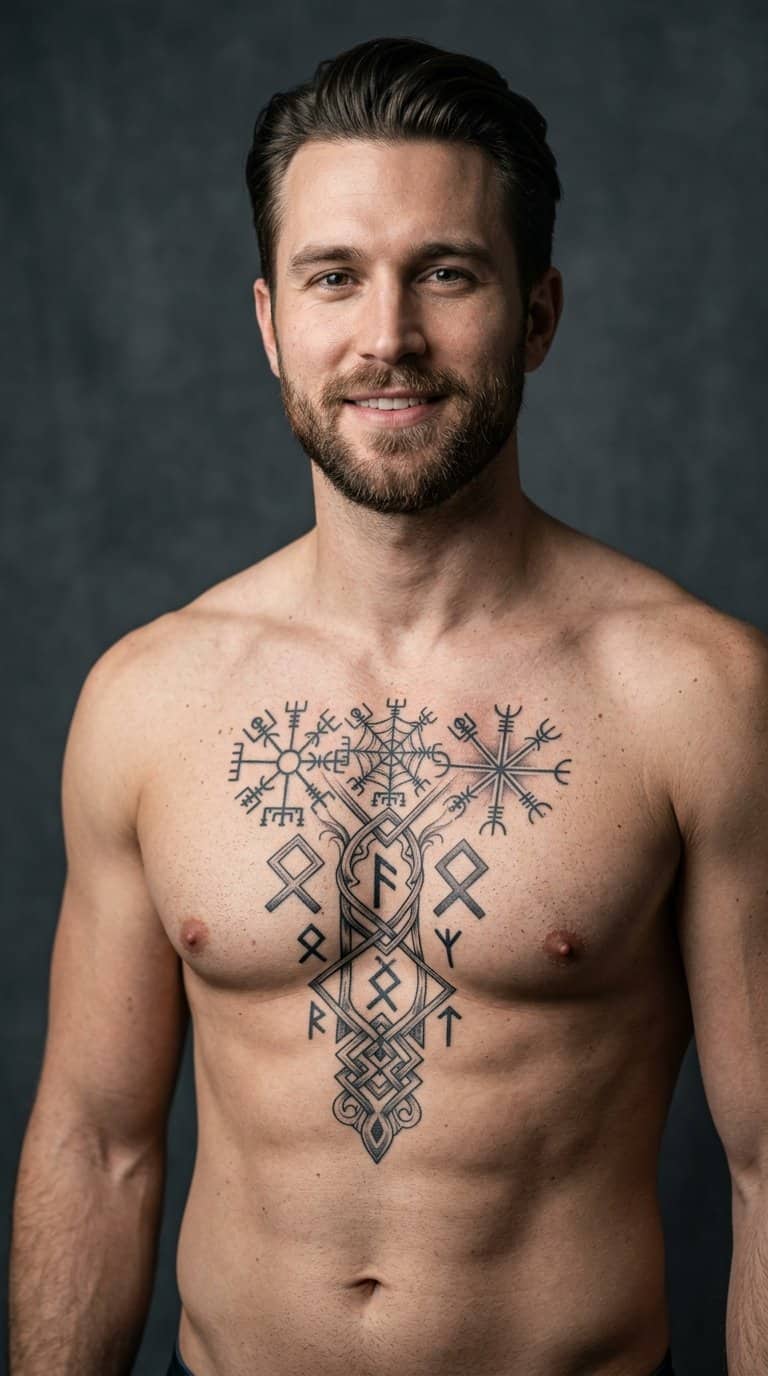
I see Viking runes as a strong choice for a compact chest design with personal meaning. I would choose a rune based on its historical association, then verify the inscription with a reliable source before committing it to skin.
I might place a single large symbol near the sternum or arrange several runes across the upper chest. Angular lines suit the body’s natural structure and remain readable when the design uses clear spacing and consistent stroke weight.
I would keep the surrounding elements restrained, such as a simple border, knotwork, or small geometric accents. Black ink gives the symbols a direct appearance, while limited shading can add depth without competing with the inscription.
11) Compass and Map Chest Tattoo
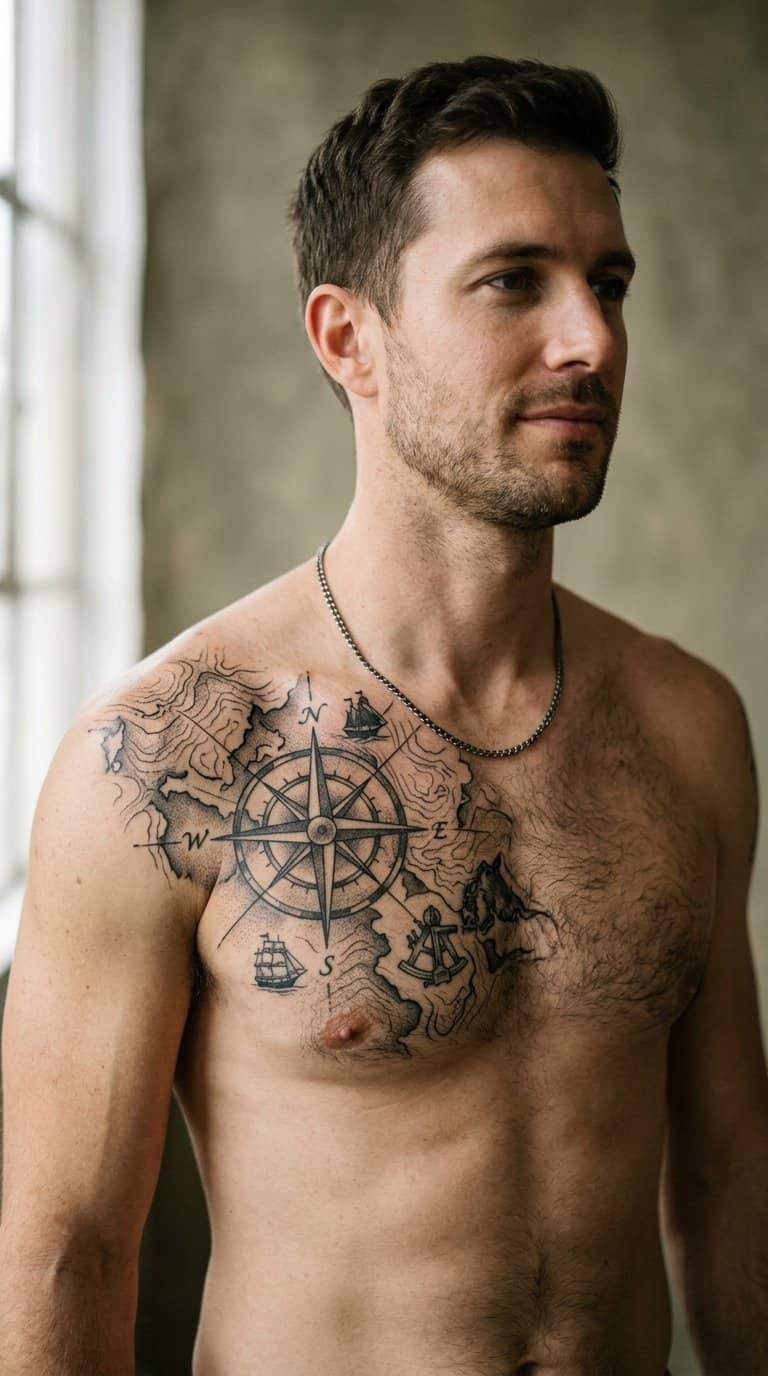
I see a compass and map chest tattoo as a practical design with personal meaning. I can use fine lines for coastlines, coordinates, and compass markings, then place the compass over the center of the chest for balanced structure.
I might connect the map to a meaningful location, such as my hometown, a travel destination, or a place tied to my family. Subtle shading can add depth without making the design look crowded.
I would choose a broad chest placement if I want room for geographic detail. A simplified map works better for a smaller tattoo, while bold outlines and restrained color can keep the image readable as it ages.
12) Minimalist Mountain Range Chest Tattoo

I like a minimalist mountain range across the chest because it creates a clean, balanced outline without overwhelming the torso. Thin black lines can show layered peaks, while subtle spacing keeps the design easy to read.
I would place it below the collarbones or center it across the upper chest, depending on the desired width. A single continuous line gives the tattoo a modern look, while small details such as a rising sun, pine trees, or a river add personal meaning.
This design works well for me if I want something understated but connected to hiking, travel, resilience, or a specific landscape. Its simple structure also makes future additions, such as coordinates or a small compass, easier to incorporate.
13) Polynesian Tribal Chest Tattoo

I like Polynesian tribal designs for their structured geometry and cultural symbolism. Bold bands, spearhead shapes, waves, and repetition can follow the chest muscles, creating a balanced design that feels intentional rather than random.
I would work with an artist who understands Polynesian tattoo traditions and can explain the meaning behind selected patterns. Placement also matters: a design can span one pectoral, cross the sternum, or extend toward the shoulder and upper arm.
I would choose the scale carefully because dense blackwork requires strong contrast and consistent spacing. Clear reference images and an experienced artist can help preserve the design’s details as the tattoo heals.
14) Mechanical Steampunk Chest Tattoo

I like mechanical steampunk designs because they combine industrial detail with an imaginative Victorian style. Gears, pipes, gauges, rivets, and clockwork parts can spread across the chest in a structured composition, while shading gives the machinery depth and weight.
I would use the sternum as the central axis and let the design extend toward each pectoral muscle. Sepia, bronze, black, and muted brass tones support the aged-metal effect, while small highlights can make glass, polished edges, or exposed mechanisms appear more dimensional.
I would keep the main shapes clearly defined so the tattoo remains readable as it ages. Fine ornamental details work best when balanced with larger gear forms and open skin, preventing the chest piece from becoming visually crowded.
15) Snake and Dagger Chest Tattoo
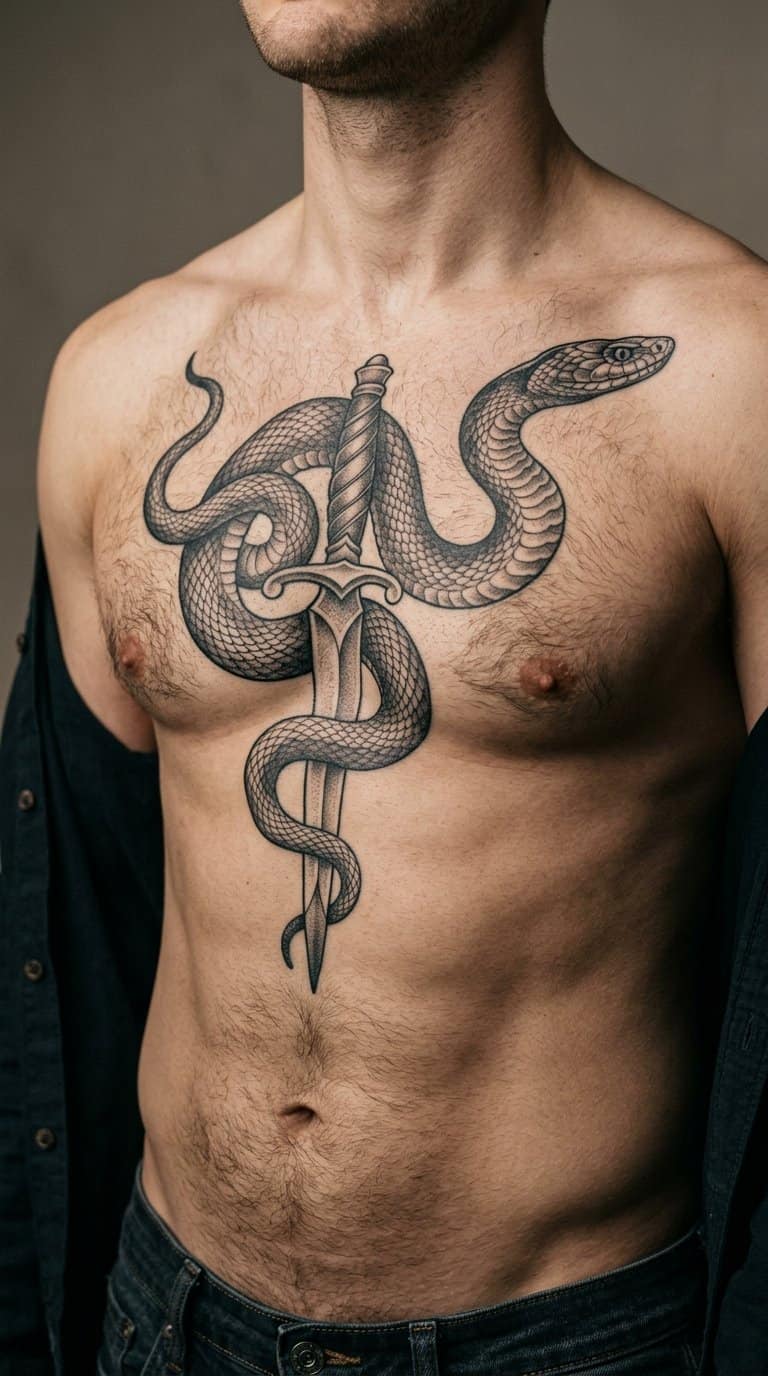
I like how this design combines the snake’s curved movement with the dagger’s straight, deliberate lines. Across the chest, I can position the blade vertically or angle it through the coils, depending on how much symmetry I want.
I would use shading to separate the scales, metal, and handle without overcrowding the image. Black and gray ink suits the subject well, while a small amount of color can highlight the snake’s eyes, the dagger’s grip, or a drop of blood. The design can suggest danger, resilience, or personal transformation without relying on excessive detail.
16) Gothic Cathedral Chest Tattoo

I would use the chest’s broad surface to frame a Gothic cathedral with pointed arches, tall windows, stone tracery, and layered shadows. I prefer a centered design that follows the sternum, while the outer walls extend naturally toward the pectorals.
Black and gray ink suits the architecture because it creates depth through contrast rather than color. I might add subtle red or muted blue in the stained-glass windows, but restrained shading keeps the tattoo readable as it ages.
I would choose fine detail only if I can commit to a large enough scale. Small architectural elements can blur over time, so strong outlines and careful spacing help preserve the structure.
17) Realistic Tiger Chest Tattoo
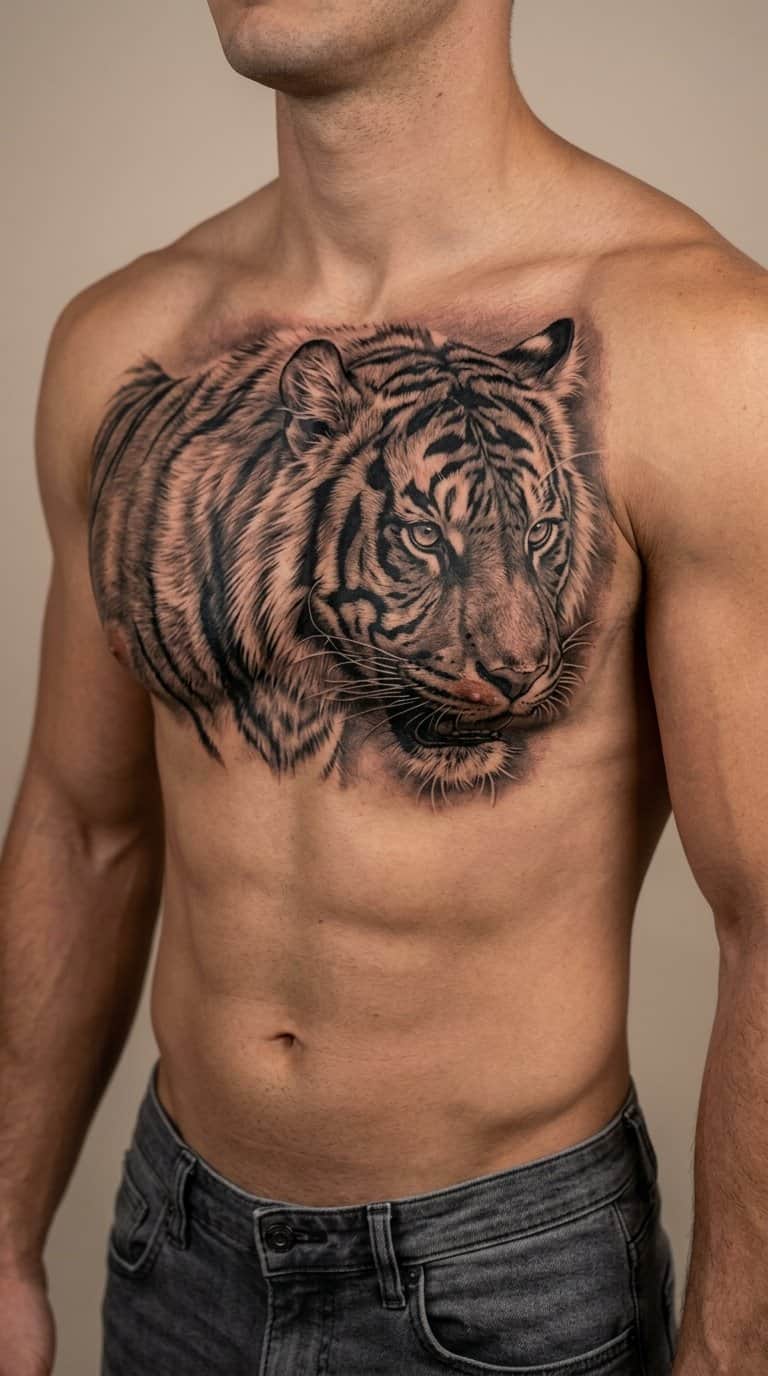
I would choose a realistic tiger chest tattoo for its detailed fur, focused eyes, and strong facial structure. Placing the head at the center of the chest creates a balanced design, while the stripes can follow the natural shape of the pectoral muscles.
I prefer black-and-gray shading for a more lifelike appearance, with careful contrast around the eyes, nose, and cheekbones. A color version can add warmer orange tones, but it requires thoughtful shading to keep the details clear as the tattoo ages.
I would work with an artist experienced in animal realism, since accurate proportions and layered texture matter more than excessive background elements. Small additions, such as leaves or smoke, can frame the tiger without distracting from its expression.
18) Angel Wings Chest Tattoo
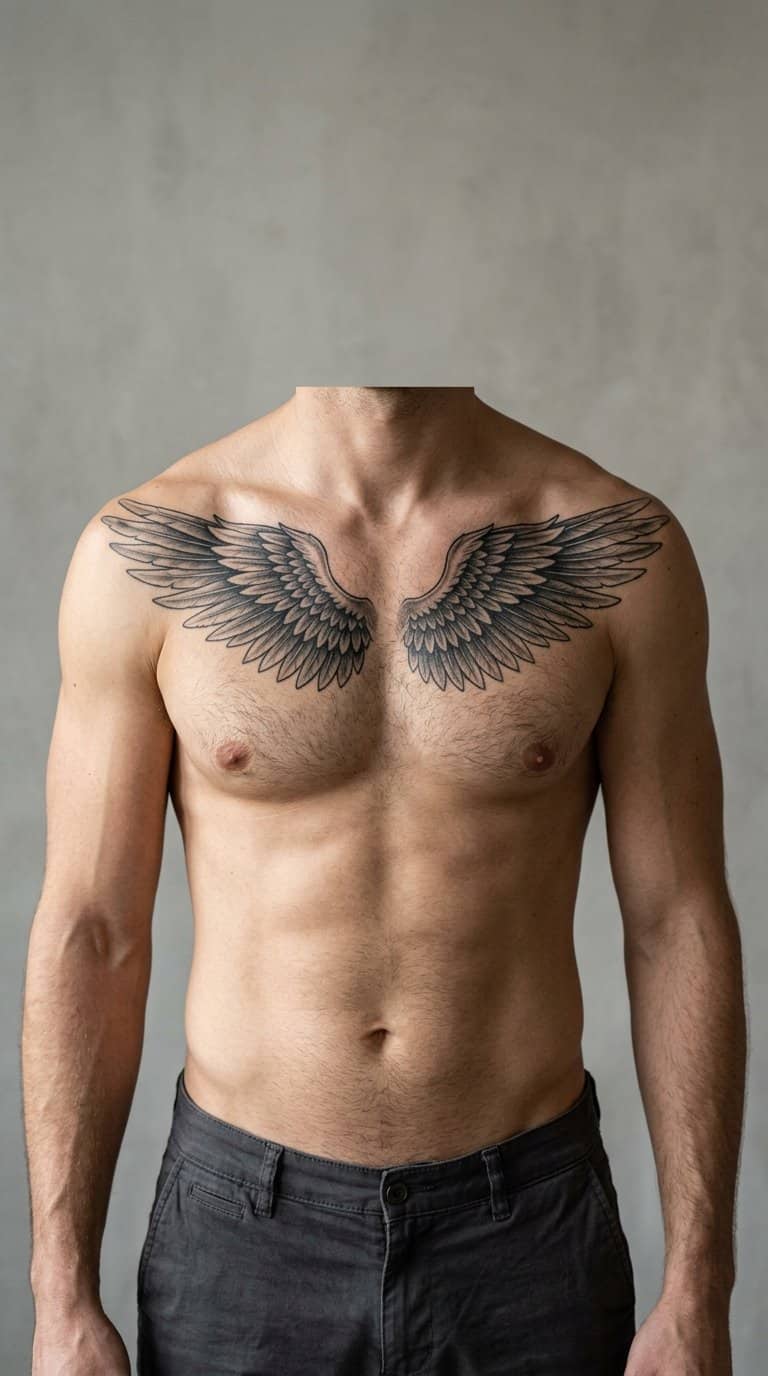
I see angel wings as a strong choice when I want a chest tattoo centered on protection, faith, or remembrance. I can place the wings across both pectorals for a balanced design, or use a narrower layout that follows the sternum.
I would choose feather detail carefully because dense shading can make the tattoo look heavy as it ages. Fine linework creates a lighter appearance, while black and gray shading gives the wings more depth and definition.
I can personalize the design with a date, initials, halo, cross, or small quote beneath the wings. Symmetry usually suits this placement, but slight differences in feather direction can give the tattoo a more natural appearance.