
School rules from the 1960s were so extreme they’d spark lawsuits today. From public humiliation to physical punishment, these practices shaped an entire generation—and explain a lot about how older adults view discipline. Wait until you see what schools did about smoking and chemical safety.
Table of Contents
- 1 1. Mandatory Skirt Length Checks
- 2 2. Enforced Hair Length for Boys
- 3 3. Public Weight Checks
- 4 4. Forced Right-Hand Writing
- 5 5. Smoking Areas for Students
- 6 6. Mandatory Shower Inspections
- 7 7. Corporal Punishment for Grades
- 8 8. Gender-Separated Entrances
- 9 9. Dress Code Paddle Boards
- 10 10. Forced Food Consumption
- 11 11. Public Grade Posting
- 12 12. Mandatory Prayer
- 13 13. Chemical Exposure in Class
- 14 14. Segregated Physical Education
- 15 15. Dunce Cap Punishment
- 16 16. Collective Punishment
- 17 17. No Water Bottle Policy
- 18 18. Mandatory Flag Salute
1. Mandatory Skirt Length Checks

Girls had to kneel on the floor while teachers measured the distance between their hemlines and the ground. If your skirt didn’t touch the floor while kneeling, you’d be sent home to change. Some schools even kept spare “appropriate-length” skirts in the office, forcing girls to wear these oversized replacements for the day.
Save for later
Want to come back to this story? Save it with your email so it is easy to find again.
2. Enforced Hair Length for Boys

Boys’ hair couldn’t touch their shirt collars or cover their ears. Administrators would actually measure hair length with rulers, and some schools kept barbers on call. Students who refused to comply were sent home until they got a proper haircut, no matter how far behind in their studies they fell.
3. Public Weight Checks

During physical education class, students were weighed in front of their classmates, with results announced aloud. Teachers would often comment on weight gains or losses, and some schools even sent report cards home with weight statistics alongside grades. This practice contributed to body image issues and eating disorders among students.
4. Forced Right-Hand Writing
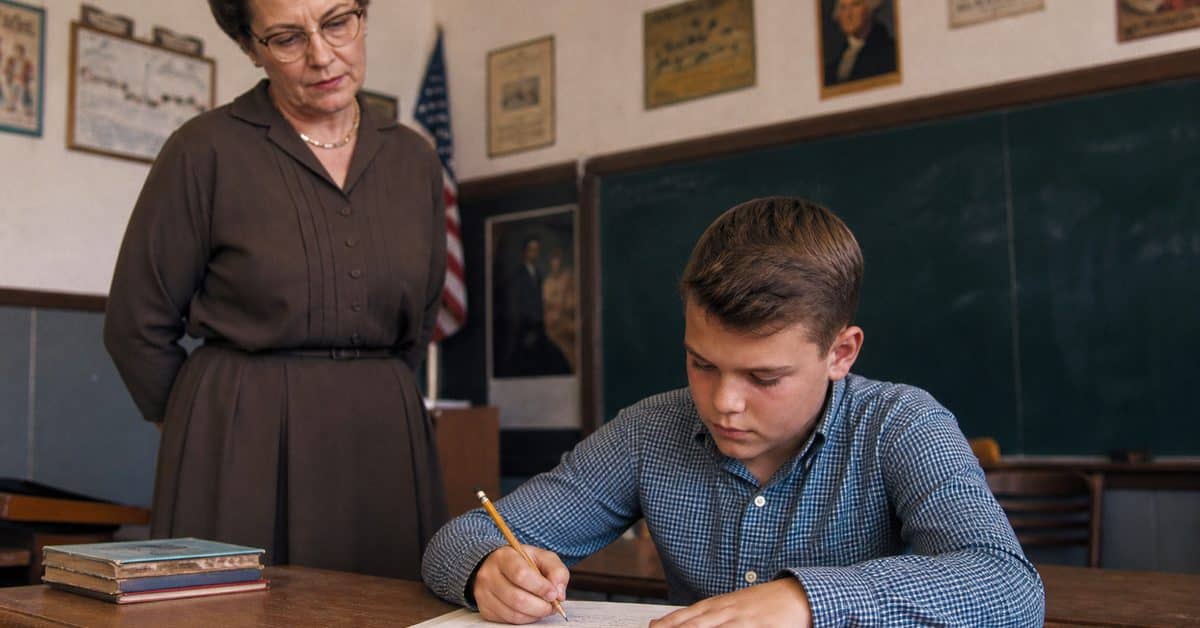
Left-handed students were forced to write with their right hands, often having their left hands tied down or slapped with rulers when they attempted to use them. This practice was based on outdated beliefs that left-handedness was abnormal or even sinful. Many students developed learning difficulties, poor handwriting, and lasting psychological effects from this forced change.
5. Smoking Areas for Students

Many high schools had designated smoking areas where students (with parental permission) could smoke during breaks. These areas were usually supervised by teachers, who sometimes joined the students for a cigarette. Permission slips for smoking privileges were actually a thing. This was before the health risks of smoking were widely understood and accepted.
6. Mandatory Shower Inspections

After physical education, teachers would stand at shower entrances checking off names as students entered and exited, ensuring everyone showered. No exceptions were made for personal or religious preferences, and some schools even had soap inspections. This complete disregard for privacy and personal boundaries would be considered a serious violation of student rights today.
7. Corporal Punishment for Grades
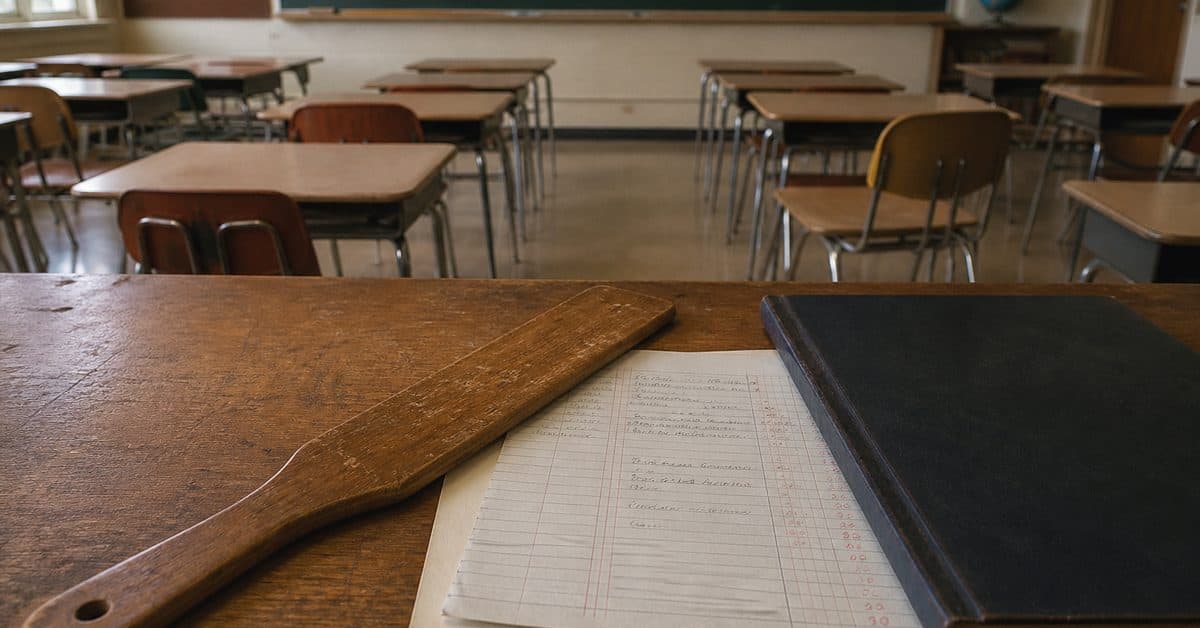
Students could receive paddling not just for behavioral issues, but for poor academic performance. Failing a test might result in a trip to the principal’s office for physical punishment, believed to motivate better study habits. This practice ignored learning disabilities, different learning styles, and the fact that fear doesn’t improve academic performance.
8. Gender-Separated Entrances

Many schools had separate entrances for boys and girls, with strict penalties for using the wrong door. These gendered entrances were monitored by teachers, and mixing between boys and girls before entering the building was often prohibited. The goal was to maintain “proper” behavior and prevent any interaction between genders before the school day officially began.
9. Dress Code Paddle Boards

Schools displayed paddle boards with holes drilled through them to reduce air resistance during swinging. These were prominently displayed as warnings for dress code violations, with some even listing the number of swats given for specific infractions. The holes made the paddles more aerodynamic and increased the pain they caused, which was considered an effective deterrent.
10. Forced Food Consumption

Students were required to eat everything on their lunch trays, regardless of allergies or personal preferences. Teachers would stand over students until they finished, sometimes keeping them through recess or even into the next class period. This “clean plate club” mentality ignored food allergies, dietary restrictions, and contributed to unhealthy eating habits.
11. Public Grade Posting

Test scores and grades were posted publicly on classroom walls with full names visible. Students were often required to announce their grades aloud in class, and some teachers would rank students from highest to lowest performers. This public shaming approach ignored student privacy and created intense anxiety and competition among classmates.
12. Mandatory Prayer

Daily prayer and Bible readings were standard in many public schools, regardless of students’ religious backgrounds. Non-participation could result in disciplinary action, and some schools required memorization of religious texts for grades. This changed in 1963 when the Supreme Court ruled that mandatory school prayer violated the First Amendment’s establishment clause.
13. Chemical Exposure in Class

Science classes regularly handled mercury, asbestos, and other dangerous substances without proper safety equipment. Students would pass around samples of hazardous materials and conduct experiments that would be unthinkable in today’s classrooms. Mercury thermometers were routinely broken, and students would play with the liquid metal on their desks without understanding the serious health risks.
14. Segregated Physical Education

Girls and boys had completely different physical education curricula, with girls limited to activities deemed “ladylike.” Boys were required to participate in contact sports and rigorous exercises, while girls often just practiced posture and light calisthenics. This reinforced gender stereotypes and denied girls opportunities to develop athletic skills and physical fitness.
15. Dunce Cap Punishment

Students who performed poorly or misbehaved might be forced to wear a dunce cap and sit in a corner facing the wall. This public humiliation was considered an effective deterrent, often lasting for entire class periods. The practice ignored learning disabilities and different learning paces, instead branding struggling students as stupid in front of their peers.
16. Collective Punishment

When one student misbehaved, entire classes would be punished through lost recess, extra homework, or after-school detention. This practice was believed to encourage peer pressure for good behavior. However, it often created resentment among students and violated basic principles of individual accountability and fairness.
17. No Water Bottle Policy

Students were only allowed to drink water during designated breaks at drinking fountains. Having water at your desk was considered a disruption, even during hot weather or after physical activity. This policy ignored basic health needs and contributed to dehydration, especially during long class periods or on warm days.
18. Mandatory Flag Salute

Students were required to stand and salute the flag regardless of religious or personal beliefs. Refusal could result in suspension or expulsion, and some schools required written explanations from parents for non-participation. While the Pledge of Allegiance is still common today, the Supreme Court ruled in 1943 that schools cannot force students to participate.