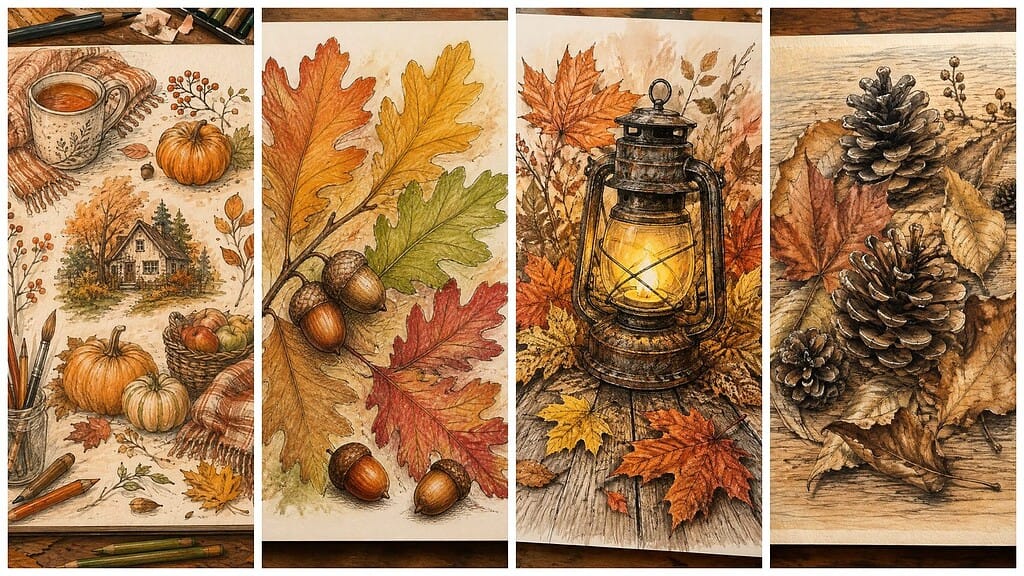
Fall gives me a natural setting for relaxed sketching, from warm drinks and layered blankets to changing trees and quiet woodland animals. These familiar subjects help me explore texture, shape, light, and seasonal atmosphere without needing a complicated setup.

Save for later
Want to come back to this story? Save it with your email so it is easy to find again.
You can find inviting fall drawing subjects for every skill level, whether you prefer cozy interiors, rustic outdoor scenes, or wildlife in colorful landscapes. The ideas also guide me toward techniques that make autumn details feel warm, balanced, and visually engaging.
Table of Contents
- 1 1) Pumpkin Spice Latte in a Ceramic Mug
- 2 2) Maple Leaves Scattered on a Table
- 3 3) Cozy Window Seat with Plaid Blanket
- 4 4) Acorns and Oak Leaves
- 5 5) Stack of Autumn-Themed Books
- 6 6) Rustic Lantern with Fall Foliage
- 7 7) Mug of Apple Cider with Cinnamon Stick
- 8 8) Sweater Sleeve Holding a Warm Drink
- 9 9) Cottage Porch with Pumpkins
- 10 10) Pinecones and Dried Leaves
- 11 11) Fox in an Autumn Forest
- 12 12) Owl Perched on a Bare Branch
- 13 13) Deer Among Colorful Trees
- 14 14) Squirrel Gathering Acorns
- 15 15) Hedgehog in a Leaf Pile
- 16 16) Autumn Mushroom Cluster
- 17 17) Covered Bridge in Fall
- 18 18) Cabin Surrounded by Changing Trees
- 19 19) Winding Forest Path at Sunset
- 20 20) Lake Reflection with Fall Trees
- 21 21) Mountain Ridge in Autumn
- 22 22) Rainy Street with Umbrellas and Leaves
- 23 23) Bicycle Beneath Golden Trees
- 24 24) Cozy Reading Nook with Candles
1) Pumpkin Spice Latte in a Ceramic Mug

I sketch the mug with a rounded shape, a thick rim, and a small handle that balances the composition. I add a light foam layer on top, then suggest cinnamon with a few uneven specks rather than drawing every detail.
For a cozy fall mood, I place the mug on a wooden table beside two scattered leaves. I use darker shading beneath the mug and along the handle to show its weight, while softer lines around the steam keep the upper area light.
I finish with subtle texture: a knitted coaster, faint wood grain, and a small highlight on the ceramic glaze. This subject works well in graphite, colored pencil, or warm-toned markers.
2) Maple Leaves Scattered on a Table

I arrange several maple leaves across a wooden table, overlapping a few to create natural depth. I vary their sizes, angles, and stem directions, then add small gaps between them so the composition feels unplanned rather than repetitive.
I begin with the leaf veins, using the central vein to guide each section. From there, I outline the lobed edges with slightly uneven lines and add soft shadows beneath the leaves. A mug, pencil, or folded scarf can complete the cozy tabletop setting without competing with the leaves.
For color, I use muted reds, ochres, and brown-gold tones, leaving some areas lighter where the leaves catch the window light. I can also draw the scene in graphite, emphasizing texture through careful hatching along the veins and curled edges.
3) Cozy Window Seat with Plaid Blanket

I draw the window seat from a slightly angled view, using the frame to guide the composition. I sketch the plaid blanket in loose folds across the cushion, then add simple lines for its repeating pattern without making every square identical.
Soft daylight helps me show the contrast between the bright glass and the darker interior. I include a mug, a small stack of books, or a potted plant to make the seat feel used. For an autumn touch, I draw a few leaves outside and shade them lightly through the window.
4) Acorns and Oak Leaves

I sketch a small group of acorns beside overlapping oak leaves, using their varied shapes to create a natural arrangement. I draw the acorn caps with short, repeating scales and add subtle shadows beneath each form. For the leaves, I trace the central veins first, then build the pointed lobes around them.
I use light hatching to show curled edges, raised veins, and the uneven texture of the caps. A few broken stems and scattered leaf fragments make the composition feel observed rather than perfectly arranged. Warm pencil tones, such as ochre and muted brown, suit the seasonal subject while preserving clear line detail.
5) Stack of Autumn-Themed Books

I draw three or four books in a slightly uneven stack, using their varying widths to create a natural shape. I add a knitted bookmark, a few fallen leaves, or a small mug beside them to suggest a quiet fall reading spot. Warm browns, muted oranges, and deep red help establish the seasonal palette without overwhelming the sketch.
I focus on the book spines and page edges, since those details give the stack structure. I might label one spine with a simple word such as “October” or add tiny acorns and maple leaves to the covers. Soft pencil shading beneath the books makes them feel grounded, while loose linework keeps the drawing relaxed and suitable for a cozy sketch night.
6) Rustic Lantern with Fall Foliage

I sketch a small metal lantern with a square frame, glass panels, and a simple handle. I place it on a wooden surface, then add fallen maple and oak leaves around its base to create a seasonal setting.
For warm contrast, I shade the inside with a soft golden glow and keep the outer frame darker. I use short, uneven pencil strokes to show worn metal, wood grain, and curled leaf edges without making the drawing too detailed.
I often add a few acorns or thin twigs beside the lantern. These small elements help fill empty space while keeping the composition grounded and natural.
7) Mug of Apple Cider with Cinnamon Stick

I start with the mug’s rounded rim and taper the body slightly toward the base. The warm cider surface gives me a simple curved shape to shade, while a cinnamon stick adds a narrow, textured detail across the top. I use short, uneven lines to suggest its ridged bark.
Steam helps me create movement without adding much complexity. I draw two or three thin, curling lines above the drink, keeping them light so they do not compete with the mug. A few tiny highlights on the rim and cider make the sketch feel warmer and more dimensional.
8) Sweater Sleeve Holding a Warm Drink

I draw the sleeve first, using soft, uneven folds to suggest a thick knitted sweater. I vary the line weight around the cuff and let a few loose threads add texture without cluttering the sketch.
Next, I place a simple mug inside the hand’s loose grip. I focus on the contrast between the rounded ceramic shape and the ribbed fabric, then add a small curl of steam above the drink.
For color, I use muted rust, cream, or forest green for the sweater and a warm brown or ochre for the beverage. I leave small highlights on the mug and deepen the shadows beneath the sleeve to create a cozy fall mood.
9) Cottage Porch with Pumpkins

I sketch the porch from a slightly angled view, using the steps and railing to create depth. I place pumpkins along the entrance in varied sizes, then add a woven basket, fallen leaves, and a simple doormat to make the setting feel lived-in.
For a cozy evening mood, I shade the porch roof and doorway more heavily than the yard. I use short, curved strokes for pumpkins and overlapping lines for wood grain, while leaving small areas of paper unshaded to suggest soft autumn light.
I might include a rocking chair, a lantern, or a folded blanket without crowding the composition. Muted oranges, warm browns, and dusty greens work well if I add color.
10) Pinecones and Dried Leaves

I arrange a pinecone beside curled maple or oak leaves, then sketch the objects from a low angle so their overlapping forms create depth. I use light lines to map the scales and veins before adding darker marks in the recessed areas.
For a cozy fall study, I place the arrangement near a window and observe how soft light creates small shadows beneath each piece. I vary my pencil pressure to show the pinecone’s rough texture and the leaves’ thinner, more delicate surfaces.
I leave a few edges unfinished rather than outlining every shape. This keeps the drawing natural and lets the paper suggest pale, dry areas.
11) Fox in an Autumn Forest

I sketch the fox in profile, placing its alert ears and narrow muzzle against a background of layered tree trunks. Warm russet fur stands out against muted browns, ochre leaves, and cool gray shadows. I keep the eyes and nose dark, then use short pencil strokes to suggest a soft, textured coat.
I build depth with overlapping branches and scattered leaves rather than drawing every tree in detail. A few curved lines can show the forest floor, while stronger shadows beneath the fox anchor it to the scene. I leave small areas of white paper between leaves to create a crisp, autumnal glow.
12) Owl Perched on a Bare Branch

I sketch the owl’s rounded body first, then place its feet firmly around a thin, leafless branch. I use overlapping feather shapes to suggest texture without drawing every feather. A few uneven twigs can frame the bird and create a quiet autumn setting.
I keep the face symmetrical, using large eyes, a short beak, and small ear tufts to define the species. Soft shading beneath the wings and around the branch adds depth. I may include sparse falling leaves or a pale moon, leaving enough open space to keep the drawing calm.
13) Deer Among Colorful Trees

I sketch the deer in profile, placing it slightly off-center so the surrounding forest has room to breathe. I use thin, steady lines for the antlers, ears, and legs, then add darker shading beneath the body to anchor it on the ground.
Behind the deer, I draw overlapping tree trunks with irregular spacing. I fill the canopy with red, orange, yellow, and muted green leaves, varying the shapes and leaving small gaps where the background can show through. A few fallen leaves near the hooves connect the foreground to the trees.
I soften the distant trunks with lighter pencil pressure and reserve stronger contrast for the deer. This simple value change creates depth while keeping the animal as my main focal point.
14) Squirrel Gathering Acorns

I sketch the squirrel in a crouched pose, placing its front paws around a single acorn. I keep the body rounded and the tail raised behind it, using curved lines to suggest soft fur without drawing every strand.
For a natural scene, I add fallen oak leaves, scattered acorns, and a few exposed roots beneath the squirrel. I use overlapping shapes to show depth, then shade the underside of the body and the spaces between leaves.
I like using warm browns, muted reds, and ochre for this autumn drawing. A small highlight in the eye and lighter marks along the tail help the subject stand out while preserving the quiet woodland setting.
15) Hedgehog in a Leaf Pile

I sketch the hedgehog from a low side view, keeping its rounded body partly hidden beneath overlapping leaves. Short, directional strokes define the spines, while a small dark nose and bright eye give the face focus.
I use curled oak and maple leaves to frame the animal without covering its main features. Warm browns, muted reds, and ochre create an autumn palette, and I leave small gaps between the leaves so the pile feels layered rather than flat.
I add a few scattered leaves in the foreground to suggest depth. Light pencil shading beneath the hedgehog anchors it to the ground and helps separate its body from the pile.
16) Autumn Mushroom Cluster

I sketch a small cluster of mushrooms beneath fallen leaves, varying the cap shapes and stem heights to create a natural arrangement. I use soft, rounded lines for the caps and add darker grooves underneath to suggest gills without overworking the details.
I place the cluster on damp-looking soil with scattered acorns, pine needles, and curled leaves around it. Warm browns, muted oranges, and deep reds suit the autumn setting, while a touch of pale cream on the caps adds contrast.
I keep the background simple so the mushrooms remain the focus. A few light pencil marks can suggest shade beneath the caps and give the drawing a grounded, woodland feel.
17) Covered Bridge in Fall

I sketch the bridge from a low viewpoint so its dark entrance anchors the scene. I use the roof’s angled lines to guide the eye toward the far opening, then add warm leaves along the road and riverbank.
For texture, I vary my marks across the wooden boards, roof shingles, and damp ground. I keep the bridge mostly muted, allowing red, ochre, and amber foliage to create contrast without overpowering the structure.
I place a few fallen leaves on the bridge floor and reflect its shape in the water below. Soft shadows beneath the roof and between the trees help me suggest depth while preserving the quiet, enclosed feeling of a fall evening.
18) Cabin Surrounded by Changing Trees

I sketch a small cabin at the center of the scene, using simple lines for the walls, roof, windows, and porch. I frame it with trees in different stages of fall color, including muted green, yellow, orange, and red leaves.
I add depth by drawing larger trunks and branches in the foreground, then placing thinner trees behind the cabin. A winding path, scattered leaves, and a few woodpiles give the setting practical details without crowding the composition.
I use darker shading beneath the roof, around the windows, and between the trees to suggest a cloudy autumn afternoon. For a cozy effect, I leave a small warm glow in the windows and soften the distant tree line.
19) Winding Forest Path at Sunset

I sketch the path as a gentle curve that narrows toward the horizon, using lighter lines to suggest distance. Tall tree trunks frame both sides, while uneven ground, exposed roots, and scattered leaves add texture without crowding the composition.
I place the setting sun low between the trees and soften the surrounding sky with warm shading. Longer shadows stretch across the path, helping guide the eye inward. I keep the foreground darker and add a few broken highlights along the trail to suggest fading autumn light.
20) Lake Reflection with Fall Trees

I draw a quiet lake bordered by maples, birches, and oaks in rusty red, gold, and muted green. I place the shoreline slightly above the center of the page, then sketch the reflected trees with softer edges and broken vertical strokes.
I keep the water darker near the foreground and add thin horizontal lines to suggest gentle movement. Rather than copying every branch, I simplify the reflection into layered shapes, leaving small gaps where the sky appears between the trees.
I use colored pencils or watercolor washes to build the warm foliage gradually. A few crisp leaves near the shore contrast with the blurred reflections and help establish depth.
21) Mountain Ridge in Autumn

I sketch the mountain ridge with a light pencil line, keeping the highest peaks uneven and natural. Behind it, I add a pale sky and a few thin clouds, leaving enough open space to make the landscape feel quiet.
For the foreground, I use layered slopes covered with autumn trees. I vary the shapes and colors, placing muted red, gold, orange, and brown patches along the ridges instead of drawing every individual tree.
I deepen the nearest ridge with darker values and add a narrow path or small cabin for scale. Soft shading beneath the peaks suggests distance while preserving the crisp, cool feeling of a fall evening.
22) Rainy Street with Umbrellas and Leaves

I sketch the street at a slight angle, letting the sidewalk lead toward distant buildings. Umbrellas create rounded shapes across the scene, while wet pavement reflects their muted colors and the blurred glow of windows.
I add fallen leaves along the curb and scatter a few across the road, varying their size to suggest distance. Short, broken lines can show rain without covering the main forms, and darker marks beneath the umbrellas help anchor each figure.
For a cozy autumn mood, I use warm browns, ochre, and rust against cool gray pavement. I keep some edges soft, especially in reflections, while sharper lines define nearby shoes, umbrella handles, and leaf shapes.
23) Bicycle Beneath Golden Trees

I sketch the bicycle at a slight angle, letting its frame lead the eye toward a tree-lined path. I use clean, elliptical shapes for the wheels and keep the spokes light so the autumn setting remains the focus.
For the trees, I layer clusters of yellow and ochre leaves above the bicycle, leaving small gaps for branches and sky. I add fallen leaves along the path with varied sizes and loose outlines, then use soft shadows beneath the tires to anchor the scene.
24) Cozy Reading Nook with Candles

I sketch a cushioned chair beside a small table, then add a folded blanket, an open book, and a mug. I use curved lines for the chair and layered strokes for the fabric to create a soft, lived-in setting.
For the candles, I draw simple glass jars with short flames and place them at different heights. Their warm light creates gentle shadows beneath the chair, table, and book, while darker areas around the corners add contrast.
I keep the background quiet with a window, curtain, or stack of books. A few autumn leaves near the chair can connect the indoor scene to the season without crowding the composition.