
Rainy Sundays create a calm setting for drawing, whether you prefer quiet interiors, misty landscapes, or small details shaped by water and soft light. This collection explores approachable ways to turn the weather outside into focused creative practice.
Save for later
Want to come back to this story? Save it with your email so it is easy to find again.
You can use these aesthetic drawing ideas to find a relaxing subject, experiment with different media, and make a rainy day feel more purposeful. I’ll also share simple ways to arrange a comfortable art setup and build a consistent drawing routine.
Table of Contents
- 1 1) Rainy Window Watercolor Study
- 2 2) Cozy Umbrella on a Quiet Street
- 3 3) Misty Landscape in Graphite
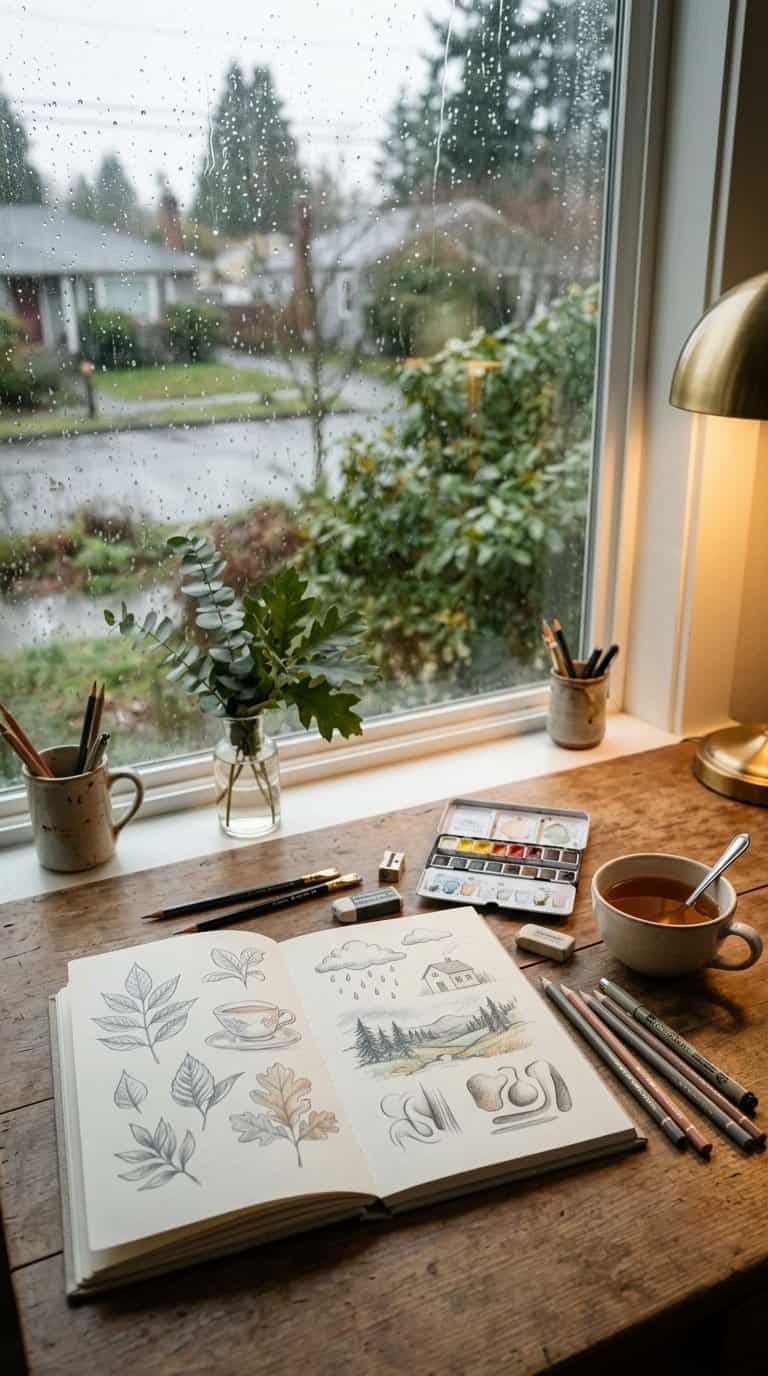
- 4 4) Tea Cup Beside a Rain-Streaked Window
- 5 5) Botanical Leaves with Raindrops
- 6 6) Puddle Reflection of City Lights
- 7 7) Cottage Under Heavy Rain
- 8 8) Rain Boots by the Door
- 9 9) Cloudy Sky in Soft Pastels
- 10 10) Open Book and a Warm Blanket
- 11 11) Dancing Figures Beneath Umbrellas
- 12 12) Wet Cobblestone Alley
- 13 13) Monochrome Rainy-Day Street Scene
- 14 14) Mug of Cocoa with Steam Swirls
- 15 15) Dewy Mushroom Cluster
- 16 16) Raincoat Hanging in an Entryway
- 17 17) Lone Tree in a Foggy Field
- 18 18) Window Seat with Indoor Plants
- 19 19) Ink Illustration of Falling Rain
- 20 20) Cat Watching Rain from a Windowsill
- 21 21) Lantern Glowing on a Stormy Porch
- 22 22) Watercolor Raincloud with Gold Accents
- 23 23) Bicycle Resting Against a Wet Wall
- 24 24) Cozy Bedroom During a Downpour
- 25 25) Raindrops on a Spiderweb
1) Rainy Window Watercolor Study
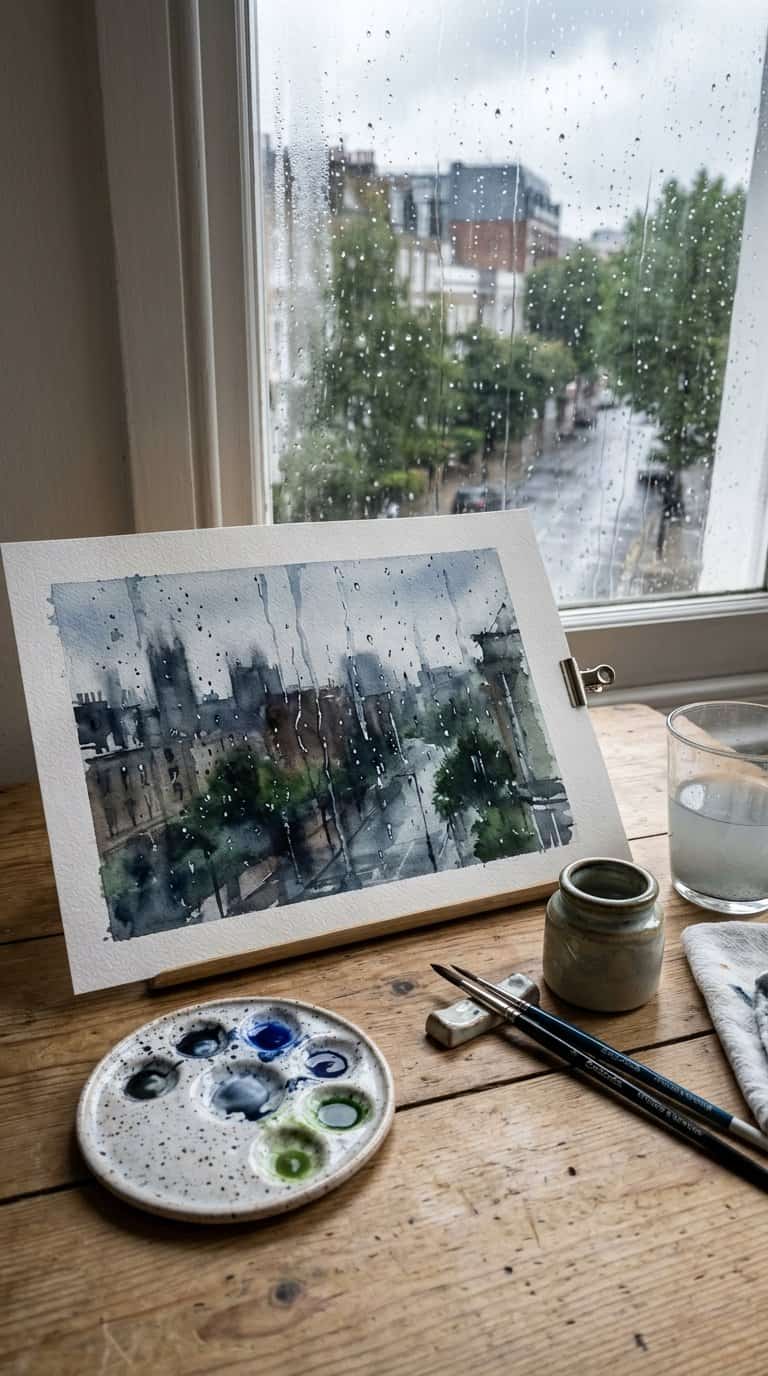
I paint a simple window frame first, then observe how rain changes the view beyond the glass. Soft gray washes suggest clouds, while muted greens or browns define trees, rooftops, or nearby buildings without sharp detail.
I use clean water to soften selected edges and leave a few darker drops intact. This contrast helps me show which marks sit on the glass and which belong to the distant scene.
I keep the palette restrained: blue-gray, warm gray, and one subdued accent color. A dry brush adds faint streaks beneath larger droplets, creating texture without making the study feel crowded.
2) Cozy Umbrella on a Quiet Street

I draw a single umbrella resting against a lamppost or held by a distant figure. Wet pavement reflects the muted shapes of windows, parked bicycles, and soft streetlights, while light rain creates fine diagonal lines across the scene.
I keep the palette restrained with slate blue, warm gray, and a small accent of muted yellow. I use loose pencil strokes for rain and sharper lines for the umbrella ribs, balancing texture with simple structure.
I add small details, such as puddle rings, dripping gutters, and blurred footprints. These observations make the street feel lived-in without crowding the composition.
3) Misty Landscape in Graphite

I sketch a distant hillside with soft graphite, keeping the outlines faint where rain and fog would obscure them. I build the foreground with darker values, then lighten each receding layer to create depth without relying on sharp detail.
I use a blending stump sparingly, leaving some visible pencil texture in the clouds and wet ground. Short, horizontal strokes suggest rain, while a few dark tree trunks give the quiet scene a clear focal point.
I keep the palette limited to gray tones and reserve the cleanest paper for misty openings in the sky. This contrast helps the landscape feel damp, spacious, and still.
4) Tea Cup Beside a Rain-Streaked Window

I place a simple tea cup near the lower edge of the window, leaving enough space to show the rain beyond it. I sketch the glass with vertical, uneven lines and soften the background so the cup remains the clearest object.
For the cup, I use an oval rim, a curved handle, and a few gentle shadows beneath the base. I add small details such as steam, a tea bag tag, or a folded napkin to make the scene feel lived-in without overcrowding the page.
I keep the palette muted with gray, beige, soft blue, and warm brown. A slightly darker reflection on the window connects the indoor cup with the rainy view outside.
5) Botanical Leaves with Raindrops

I sketch overlapping leaves with varied shapes, such as rounded monstera sections, narrow fern fronds, or pointed ivy. I keep the outlines light at first, then add darker veins to give each leaf structure without making the drawing feel heavy.
For the raindrops, I use small oval shapes along the leaf edges and surfaces. I leave a bright highlight inside each one and add a soft shadow beneath it, which helps the drops appear raised. I use muted greens, gray-blue shadows, and a pale background to create a quiet rainy-day mood.
6) Puddle Reflection of City Lights

I sketch a shallow puddle after rain, placing its uneven edges near the bottom of the page. I add loose vertical reflections of windows, traffic signals, and storefronts, allowing each color to break apart across the rippled water.
I keep the reflected lights softer than the buildings above them. Short horizontal strokes suggest movement, while darker gaps between colors preserve the wet pavement’s depth. I use muted grays, deep blue, amber, and red to create a restrained evening palette.
For extra detail, I draw a passing figure or umbrella as a blurred shape beside the puddle. I avoid outlining every reflection, since small omissions make the water appear less still and more natural.
7) Cottage Under Heavy Rain

I draw a small cottage with a steep roof, dark windows, and a chimney softened by mist. Heavy rain slants across the scene in layered lines, while puddles reflect the warm light from inside.
I use darker graphite around the roof, tree trunks, and foreground grass to create contrast. For the sky, I leave uneven white space between shaded clouds so the rain appears dense without hiding the background completely.
I add a narrow path leading toward the door, bordered by wet stones and drooping plants. A few blurred branches in the foreground make the cottage feel sheltered and distant.
8) Rain Boots by the Door

I draw a pair of rain boots resting beside a doorway, with their toes angled in slightly different directions. I use simple vertical lines to suggest wet rubber, then add small puddles beneath them for context.
I place a folded umbrella or lightweight jacket nearby to build a quiet entryway scene. A muted palette of olive, navy, cream, and gray keeps the drawing soft, while a few darker marks define the soles, seams, and water droplets.
9) Cloudy Sky in Soft Pastels

I use muted blues, lavender, gray, and pale peach to build a quiet sky with gentle color transitions. I keep the clouds loose rather than outlining every edge, allowing the pastel texture to suggest their soft, uneven forms.
I begin with the lightest colors and layer darker strokes beneath the cloud bases. A tissue or blending stump helps soften selected areas, while a few visible marks preserve the drawing’s handmade quality. I add a narrow horizon line or distant rooftops to give the sky a sense of place.
10) Open Book and a Warm Blanket

I sketch an open book resting beneath a loosely folded blanket, using overlapping pages and soft fabric creases to create depth. A mug near the edge adds a small, familiar detail without distracting from the main subject.
For a calm rainy-day mood, I keep the lines delicate and use gentle shading beneath the book, along the blanket’s folds, and around the mug. I might add a window reflection in the background or leave the setting mostly blank to keep attention on the cozy arrangement.
11) Dancing Figures Beneath Umbrellas

I sketch two figures moving through rain, using curved lines to suggest loose, unplanned motion. One person can lift an arm while the other turns beneath a shared umbrella. I keep their faces simple and let posture, clothing, and spacing communicate the scene.
For contrast, I draw the umbrella as a firm geometric shape above softer bodies and flowing coats. Small puddles reflect broken silhouettes, while diagonal rain lines add direction without covering the main forms. Muted blues, gray-greens, and one warm accent create a quiet rainy-Sunday palette.
12) Wet Cobblestone Alley

I sketch the alley from a low viewpoint, letting the uneven cobblestones lead toward a distant doorway or streetlamp. I keep the buildings slightly irregular so the scene feels observed rather than perfectly constructed.
For the rainy surface, I use dark, broken shapes between the stones and add thin highlights where the pavement catches the light. Reflections should remain incomplete; softened patches of yellow, gray, or blue suggest wetness without making the ground look glassy.
I draw narrow window shapes, drainpipes, and hanging signs along the walls to give the alley scale. A few blurred figures under umbrellas can add quiet movement while keeping the focus on texture, perspective, and muted rainy-day color.
13) Monochrome Rainy-Day Street Scene

I draw a quiet street using one dark tone, leaving the paper white for rain, windows, and reflected light. I simplify buildings into clean shapes, then add a few umbrellas, parked cars, and blurred figures to suggest movement without crowding the scene.
I vary pressure to create depth: light strokes recede into the distance, while darker edges define nearby doors, signs, and pavement. I place broken reflections beneath the streetlights and soften their edges so the wet ground feels convincing.
I often choose graphite, charcoal, or a black brush pen for this study. Limiting the palette helps me focus on contrast, spacing, and the subtle patterns formed by falling rain.
14) Mug of Cocoa with Steam Swirls

I sketch a rounded mug filled with cocoa, giving the rim a slightly uneven line for a handmade feel. I add a few small marshmallows or a dusting of powder on top, then shade the liquid with soft, curved strokes.
For the steam, I draw thin lines that twist upward in loose S-shapes. I keep them irregular rather than perfectly symmetrical, using lighter marks as they rise. A folded napkin, spoon, or cinnamon stick can add context without overcrowding the page.
I use warm browns for the mug and drink, then add muted cream or pale gray to the steam. A rainy window, scattered droplets, or a small pool of reflected light can complete the quiet indoor setting.
15) Dewy Mushroom Cluster

I sketch three or four mushrooms growing close together, varying their cap sizes and angles to create a natural arrangement. I use rounded caps, slender stems, and small overlaps to give the cluster depth without making the drawing feel crowded.
I add tiny dew drops along the caps and stems, leaving small areas unshaded so they appear glossy. Soft pencil shading beneath each cap helps define the folds and creates a gentle rainy-day mood.
I finish with moss, damp leaves, and a few irregular blades of grass around the base. Muted browns, olive greens, and pale grays keep the palette quiet, while a white gel pen adds restrained highlights.
16) Raincoat Hanging in an Entryway

I sketch the raincoat from a slightly low angle, letting its shoulders, sleeves, and hood define the composition. I use soft, uneven lines to show damp fabric, then add darker marks beneath the collar and along the folds.
I place the coat on a simple hook beside an umbrella and a pair of wet shoes. Small puddles, scattered droplets, and a narrow strip of floor establish the rainy setting without overcrowding the drawing.
For color, I choose muted yellow, olive, or blue-gray, then balance the coat with warm wood tones around the doorway. I leave parts of the background lightly shaded so the hanging garment remains the main focus.
17) Lone Tree in a Foggy Field

I sketch a single tree slightly off-center, leaving generous space around its uneven branches. A pale fog softens the field behind it, so I use lighter lines and fewer details as the distance increases.
I build the ground with short, horizontal strokes, then add a narrow path or faint grass marks to suggest depth. For a muted aesthetic, I choose gray, sage green, and warm brown, keeping the tree’s trunk as the darkest element. A small bird or distant fence can add scale without distracting from the quiet setting.
18) Window Seat with Indoor Plants

I sketch a cushioned window seat during a steady rain, using the glass to frame blurred rooftops and soft gray light. I place a few indoor plants along the sill, varying their leaf shapes to create natural rhythm without overcrowding the scene.
I use loose lines for rain streaks and sharper details for the plant pots, window frame, and folded blanket. A muted palette of sage green, warm beige, and cool blue-gray helps me capture the quiet contrast between the sheltered room and the wet view outside.
19) Ink Illustration of Falling Rain
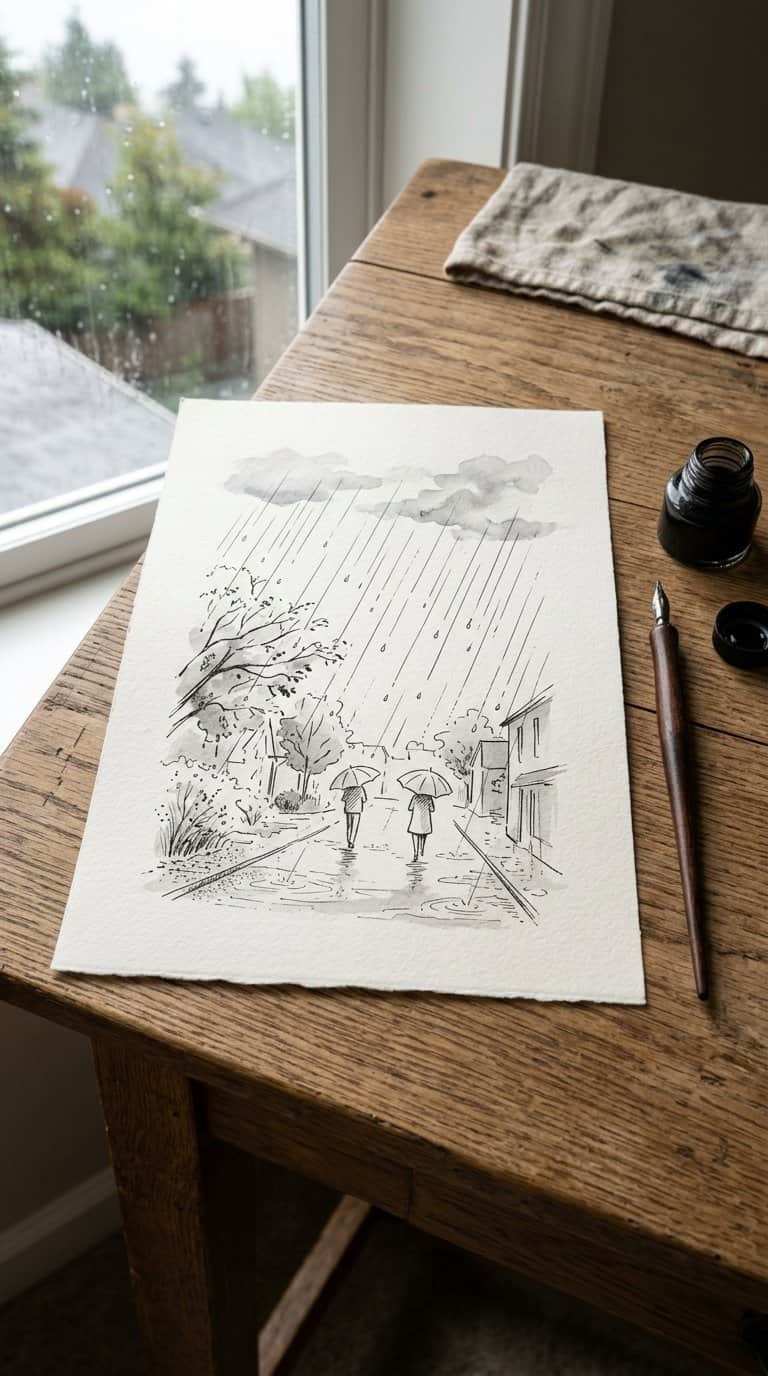
I draw falling rain with thin, slightly uneven ink lines to create a natural rhythm. I vary their length, angle, and spacing rather than arranging them in a uniform pattern. A few darker strokes suggest heavier drops closer to the viewer.
I keep the background simple, using soft crosshatching for a cloudy sky and reflective ground. I outline umbrellas, window frames, or distant trees with lighter pressure so the rain remains the main focus.
For contrast, I add small pools beneath rooftops and short ripples around scattered drops. I leave selected areas of white paper untouched, which gives the illustration a clean, airy quality while emphasizing the darker ink marks.
20) Cat Watching Rain from a Windowsill

I sketch my cat in profile, emphasizing the upright ears, rounded back, and paws tucked beneath its chest. Beyond the glass, I add thin rain trails and blurred rooftops to create depth without crowding the scene.
I keep the interior lines soft and use darker shading under the sill, around the cat’s body, and behind the window frame. A small reflection on the glass can suggest indoor light while preserving the quiet, observant mood.
21) Lantern Glowing on a Stormy Porch

I sketch the porch in loose, uneven lines to suggest wind and rain. A small lantern becomes the focal point, with its warm light spreading across the wet floor and catching the edges of nearby objects.
I use darker values beneath the roof, around the doorway, and along the storm clouds. For contrast, I leave a soft glow around the lantern and add thin diagonal strokes for rainfall. Reflections on the boards can remain slightly broken rather than perfectly mirrored.
I might include a rocking chair, a pair of boots, or a few windblown leaves to give the scene a lived-in quality. Muted blue-gray tones suit the storm, while amber, ochre, or pale yellow define the lantern’s light.
22) Watercolor Raincloud with Gold Accents
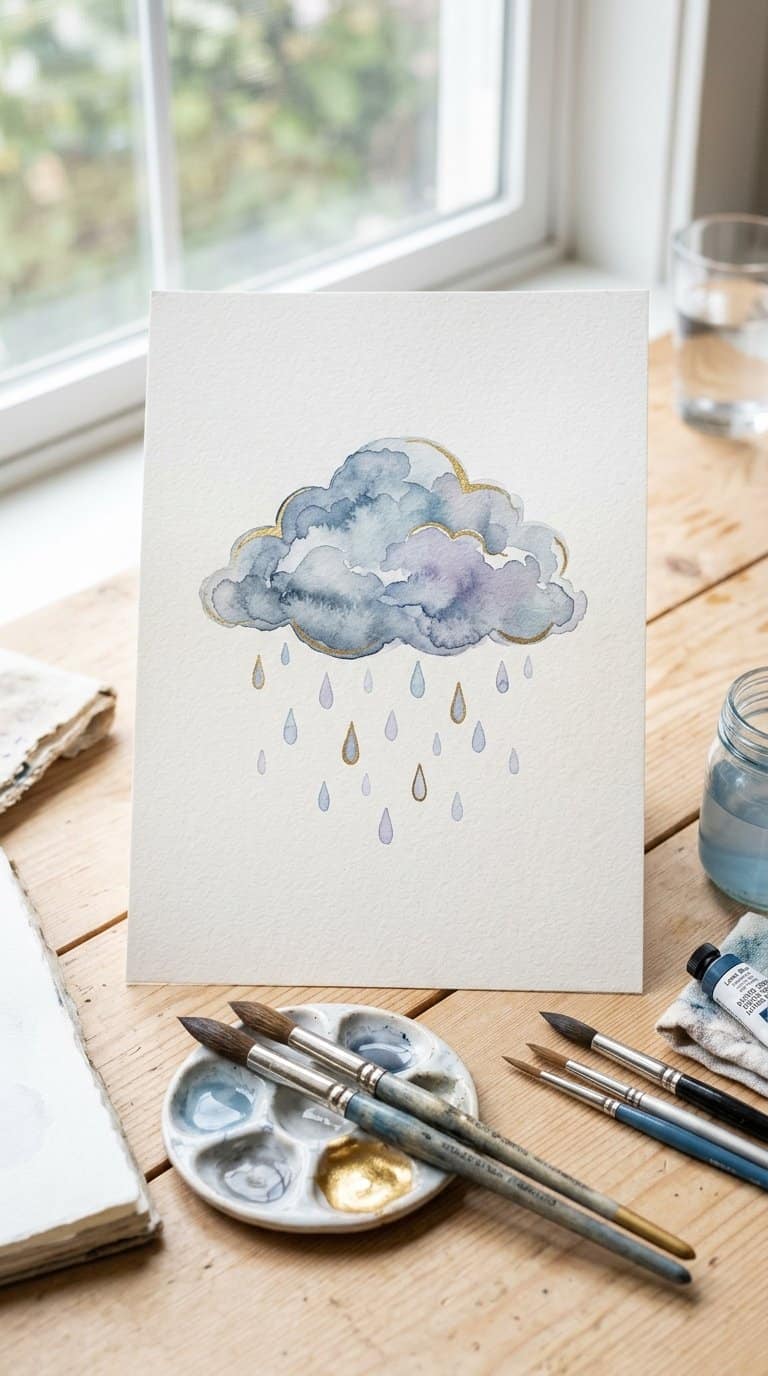
I paint a soft raincloud with diluted blue-gray watercolor, letting the pigment fade unevenly at the edges. I add a few pale lavender washes beneath it to suggest depth without making the image look heavy.
After the paper dries, I use a fine brush and metallic gold watercolor to outline selected cloud contours. I also place small gold marks among the falling raindrops, varying their size and spacing for a natural rhythm.
I keep the background mostly white or add a faint wash of cool gray. This simple contrast lets the gold details stand out while preserving the quiet mood of a rainy Sunday.
23) Bicycle Resting Against a Wet Wall

I sketch the bicycle at a slight angle, letting its frame create strong diagonal lines against the wall. I keep the wheels as clean circles, then add thin spokes and a dark chain to show structure without overcrowding the drawing.
For the wet wall, I use uneven vertical strokes and soft patches of gray. Small reflections beneath the tires suggest shallow puddles, while darker marks around the contact points make the bicycle feel grounded.
I add a few rain droplets on the frame and a faint shadow behind the handlebars. A muted palette of graphite, blue-gray, and olive green gives the scene a quiet, overcast character.
24) Cozy Bedroom During a Downpour

I draw the bedroom from a low viewpoint, framing the rain-streaked window as the main light source. Soft shadows fall across the bed, while a rumpled blanket, stacked books, and slippers add ordinary details that make the scene feel lived-in.
I use cool gray and blue tones near the glass, then add warmer browns and muted creams around the bed. For texture, I sketch uneven fabric folds, blurred droplets, and a small lamp casting a narrow pool of light.
I keep the composition quiet by leaving some wall space unmarked. A steaming mug on the bedside table or a cat curled near the pillows gives me a simple focal point without distracting from the weather outside.
25) Raindrops on a Spiderweb

I begin with a light pencil arc for the web, then add radial lines that meet at the center. I keep the structure uneven because real webs rarely form perfect circles.
Next, I place small raindrops along the threads, varying their size and spacing. I leave tiny gaps between some drops so the web remains visible instead of becoming a solid pattern.
I use a fine liner for the strands and a soft gray pencil for the background. Small white highlights on the drops suggest reflected light, while a muted blue or green wash can create a cool, rainy atmosphere.