Boredom can make class feel longer, but a small doodle gives your hands a quiet creative outlet. Simple drawings of familiar objects, animals, places, and patterns can turn spare moments into a low-pressure opportunity to practice observation and design.

Save for later
Want to come back to this story? Save it with your email so it is easy to find again.
You can use these easy doodle ideas to stay creatively engaged while keeping your drawings simple, discreet, and manageable. I’ll also cover respectful classroom habits and ways I use doodling to support focus without letting it interfere with learning.
Table of Contents
- 1 1) Tiny classroom desk with stacked books
- 2 2) Smiling coffee cup with steam swirls
- 3 3) Simple leafy houseplant
- 4 4) Doodle-style rainbow
- 5 5) Moon and stars in a night sky
- 6 6) Cute sleeping cat
- 7 7) Tiny envelope with a heart seal
- 8 8) Stack of pancakes with syrup
- 9 9) Patterned hot-air balloon
- 10 10) Small cactus in a pot
- 11 11) Friendly ghost holding a pencil
- 12 12) Open book with floating stars
- 13 13) Simple mountain landscape
- 14 14) Rocket ship launching upward
- 15 15) Doodle headphones with music notes
- 16 16) Smiling cloud with raindrops
- 17 17) Miniature library bookshelf
- 18 18) Cartoon pencil with a face
- 19 19) Decorative teacup and saucer
- 20 20) Cute fox head
- 21 21) Simple ocean wave
- 22 22) Hanging planet with rings
- 23 23) Doodle sneakers
- 24 24) Small treasure chest
- 25 25) Butterfly with patterned wings
- 26 26) Hot-air balloon over hills
- 27 27) Tiny bakery storefront
- 28 28) Simple camera with a strap
- 29 29) Smiling sun behind clouds
- 30 30) Doodle bicycle with a basket
- 31 Making Classroom Doodles Discreetly And Respectfully
- 32 Choosing Low-Distraction Moments
- 33 Keeping Doodles Within My Own Materials
- 34 Using Doodling To Support Focus And Creativity
- 35 Simple Ways To Turn Notes Into Sketches
- 36 Building A Low-Pressure Drawing Habit
1) Tiny classroom desk with stacked books

I start with a small rectangle for the desktop, then add two slim legs beneath it. A few uneven lines suggest wood grain without taking up much space.
I draw three books in a loose stack, using slightly different angles for each cover. A tiny pencil, eraser, or coffee cup adds scale and gives the desk a lived-in appearance.
I keep the outlines light and use short hatching marks under the books and desk edge. This simple shading makes the objects look grounded while leaving plenty of room for notes or small details.
2) Smiling coffee cup with steam swirls

I draw a simple cup with a curved rim, a small handle, and two dots for eyes beneath a curved smile. I add a few short lines near the top to suggest coffee without filling in every detail.
Above the cup, I sketch three loose steam swirls. I vary their height and spacing so they look natural, then add tiny accents such as a heart, star, or saucer line. I use a darker outline for the face and lighter shading along one side to create depth.
3) Simple leafy houseplant

I start with a small pot, then draw a slender stem rising from the center. I add rounded leaves in pairs, varying their sizes and angles so the plant looks natural without requiring detailed shading.
For texture, I sketch a few light lines along the leaves and add a narrow rim around the pot. I might decorate the container with dots, stripes, or a tiny geometric pattern while keeping the design simple enough for quick class-time drawing.
I use soft curves for the leaves and darker lines where stems meet the pot. A small saucer, hanging tag, or nearby pebble gives the doodle extra detail without making the page feel crowded.
4) Doodle-style rainbow

I draw a simple arc across the page, then add several curved lines beneath it to create the bands. Instead of using neat blocks of color, I fill each section with small patterns such as dots, stars, waves, or diagonal stripes.
I often give the rainbow a playful setting by adding clouds, raindrops, or a small sun at the edges. I can keep the outline light and use only one pen, or add colored pencils after finishing the patterns. The repeated curves make this doodle easy to continue while I listen in class.
5) Moon and stars in a night sky
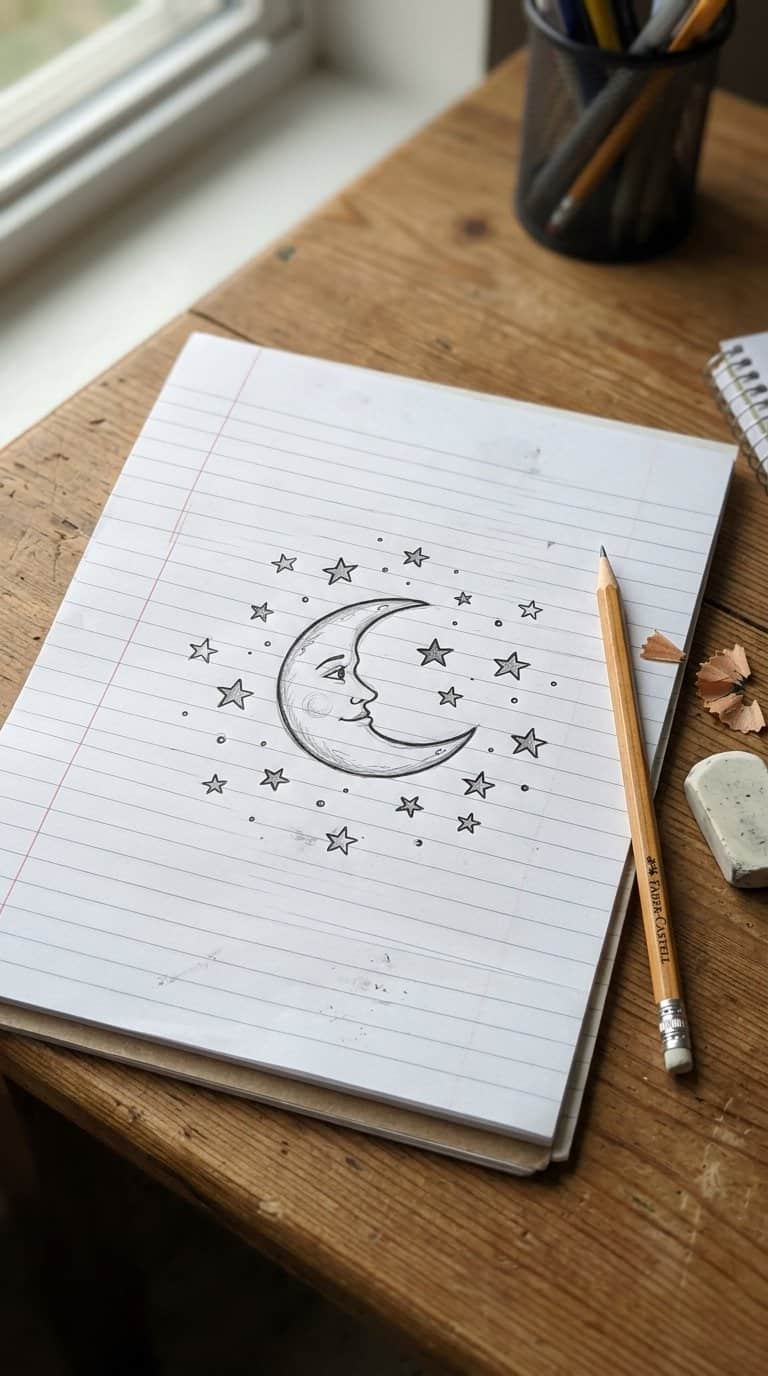
I start with a curved crescent moon, then scatter small stars around it at different heights. I vary their shapes by mixing four-point stars, dots, and tiny diamonds. This keeps the sky balanced without making the drawing feel crowded.
I add a few thin clouds across the lower part of the scene and shade the moon lightly along one edge. For extra detail, I draw a simple skyline, hill, or rooftop beneath it. I use short, controlled strokes so the doodle stays neat in the margins of my notes.
6) Cute sleeping cat

I draw a small curled shape for the body, then add a round head resting on its paws. Closed eyes, two triangular ears, and a tiny nose make the sleeping pose easy to recognize.
I usually add a curved tail around the body and a few short whiskers. Small “Z” marks above the cat suggest sleep, while a simple blanket or cushion gives the doodle more detail without taking much time.
For a softer look, I use rounded lines instead of sharp corners and add light stripes on the tail or back. This design fits neatly in a notebook margin or the corner of a class page.
7) Tiny envelope with a heart seal

I start with a small rectangle and add a triangular flap to give it a clear envelope shape. I draw a tiny heart where the flap meets the front, then add a few short lines around the edges to suggest folds.
I keep the design simple by using one dark outline and a small amount of shading beneath the flap. If I have space, I add a miniature address line or three dots, but I avoid filling the envelope with too many details.
I can vary the idea by drawing several envelopes at different angles or adding small wings to one. These changes keep the doodle recognizable while giving me room to experiment with size, patterns, and lettering.
8) Stack of pancakes with syrup

I sketch three or four uneven pancake circles, making each layer slightly different to create a natural stack. A small pat of butter on top adds a simple focal point.
I draw syrup as narrow lines that follow the pancake edges before dripping down the sides. I use light shading beneath each layer and add a few dots for texture. A tiny plate, fork, or mug can fill the space without making the doodle too detailed.
9) Patterned hot-air balloon
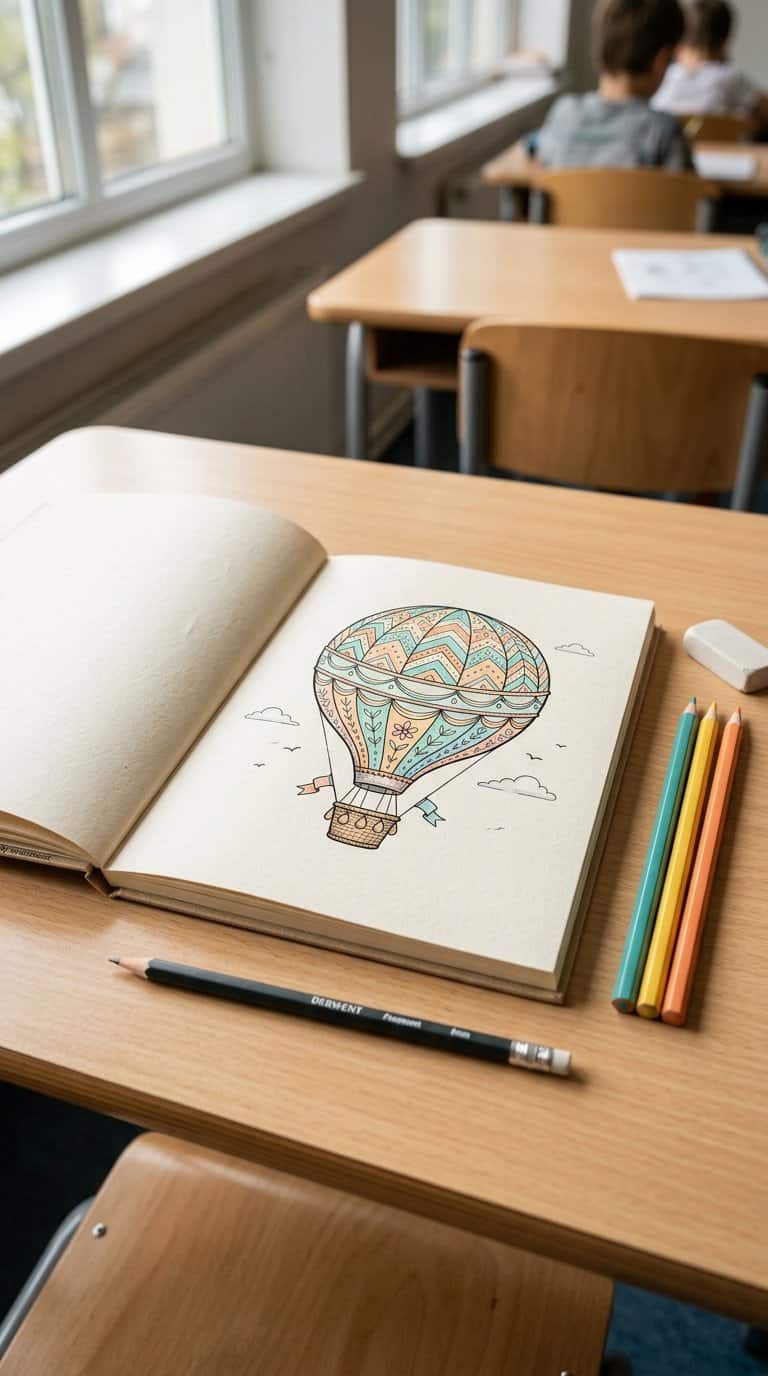
I sketch a rounded balloon with a narrow basket underneath, then divide the balloon into curved vertical panels. I fill each panel with a different simple pattern, such as dots, stripes, checks, waves, or tiny stars.
I keep the patterns small enough to fit neatly inside the outline. Adding a few short lines around the balloon suggests movement without requiring detailed scenery.
I vary the panel designs as I work, using alternating dark and light areas for contrast. For a cleaner look, I trace the final outline with a darker pen and leave the basket lightly shaded.
10) Small cactus in a pot

I draw a small rounded pot first, then add a simple cactus with two short arms. I use curved lines for the plant and a few tiny marks to suggest spines without making the sketch too detailed.
To add character, I give the pot a stripe, dot pattern, or slightly uneven rim. I keep the shapes compact, so the doodle fits neatly in a notebook margin or beside class notes.
I sometimes place the cactus on a tiny saucer or add a small label on the pot. Varying the cactus shape—round, tall, or branching—gives me several designs without changing the basic structure.
11) Friendly ghost holding a pencil

I draw a simple rounded ghost with a wavy lower edge, then add two oval eyes and a small smile. I place a pencil in one raised hand, angling it toward an imaginary notebook.
I keep the outline light and use short strokes to show the ghost’s fingers around the pencil. A few tiny motion lines can suggest writing without filling the page with detail.
I add a small bow, glasses, or a pocket on the ghost’s sheet-like body. These details give my doodle personality while keeping it quick enough to sketch during a short break.
12) Open book with floating stars
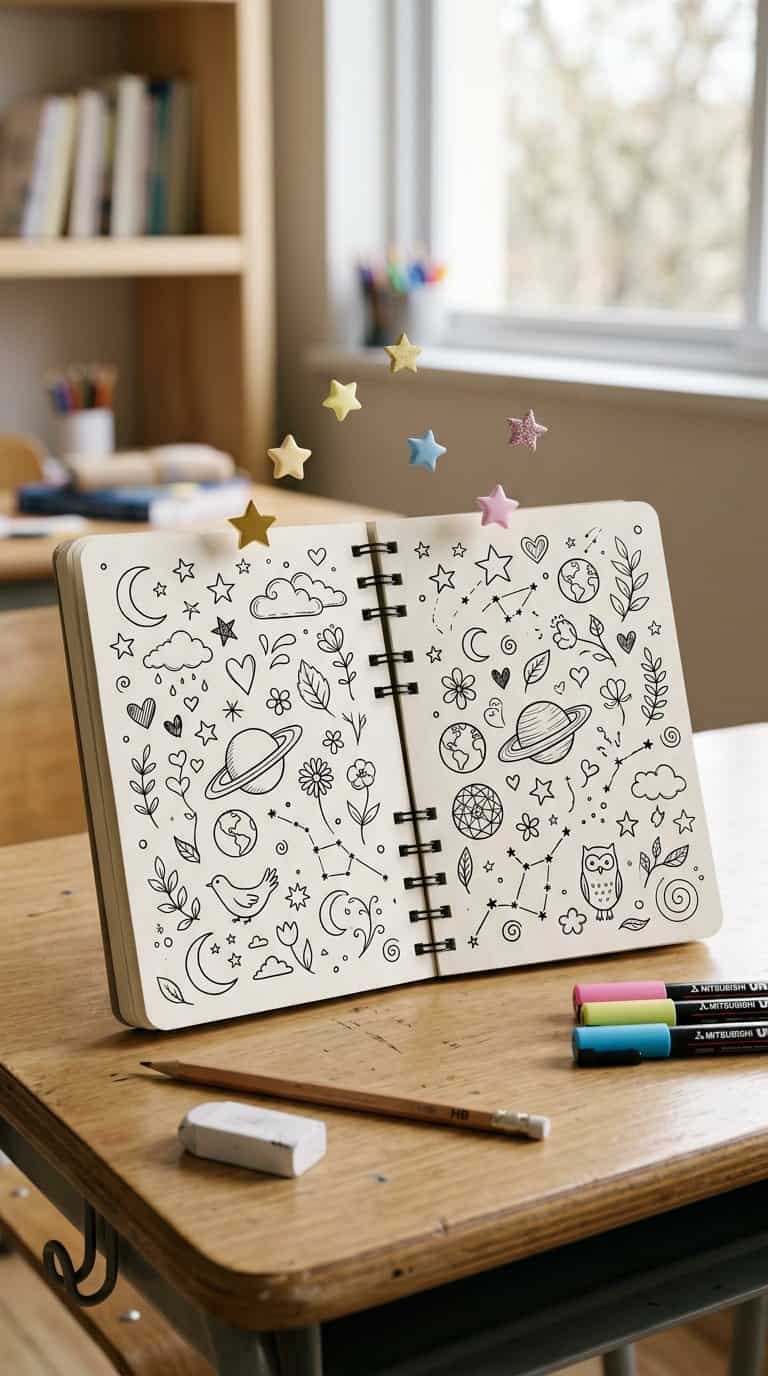
I sketch two curved pages meeting at the center, then add short lines to suggest text. I keep the page edges slightly uneven so the book looks hand-drawn rather than perfectly geometric.
Above the book, I scatter small stars at different heights and sizes. I vary the star shapes by mixing four-pointed sparkles with simple five-pointed forms, leaving enough space between them to keep the design clear.
I can add a bookmark, tiny dots, or a few curved motion lines around the stars. Light shading beneath the pages gives the book dimension without requiring detailed coloring.
13) Simple mountain landscape

I sketch two or three uneven peaks across the page, using light lines so I can adjust their shapes easily. I add a smaller ridge in front to create depth without filling the drawing with details.
I place a low sun behind one peak and shade a few triangular areas to show rocky slopes. Short, angled strokes suggest texture while leaving enough blank space to keep the scene quick and neat.
I finish with a curved line for a lake or a few simple trees along the foreground. Changing the peak heights, sun position, or shading pattern gives me several versions without starting a complicated drawing.
14) Rocket ship launching upward
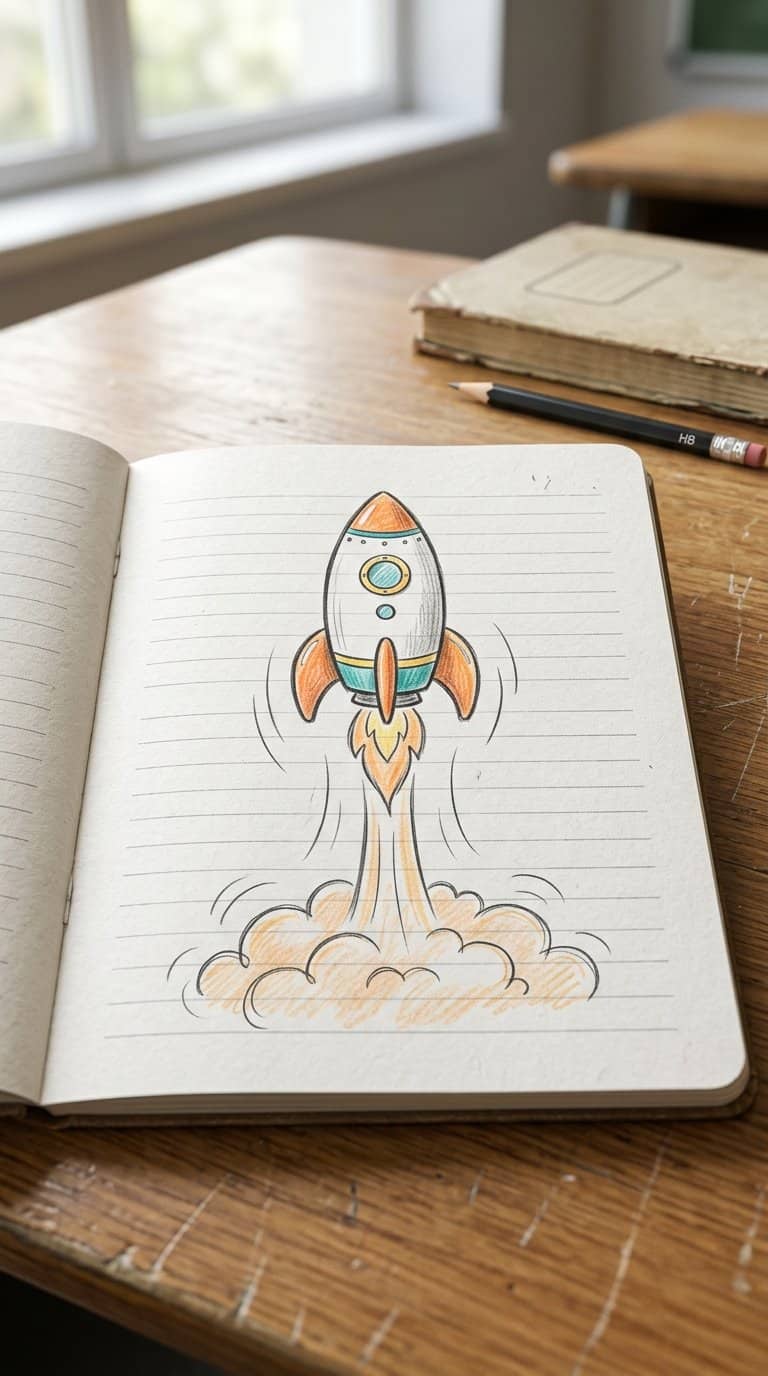
I sketch a narrow rocket with a rounded nose, two small fins, and a circular window. I add a few curved lines beneath it to show smoke and upward motion without filling the page.
I give the smoke uneven edges so it looks soft rather than mechanical. Small stars, a crescent moon, or a distant planet can fill the surrounding space while keeping the drawing simple.
For a playful detail, I draw a tiny astronaut waving from the window. I use short diagonal lines behind the rocket to suggest speed and vary their lengths to create depth.
15) Doodle headphones with music notes
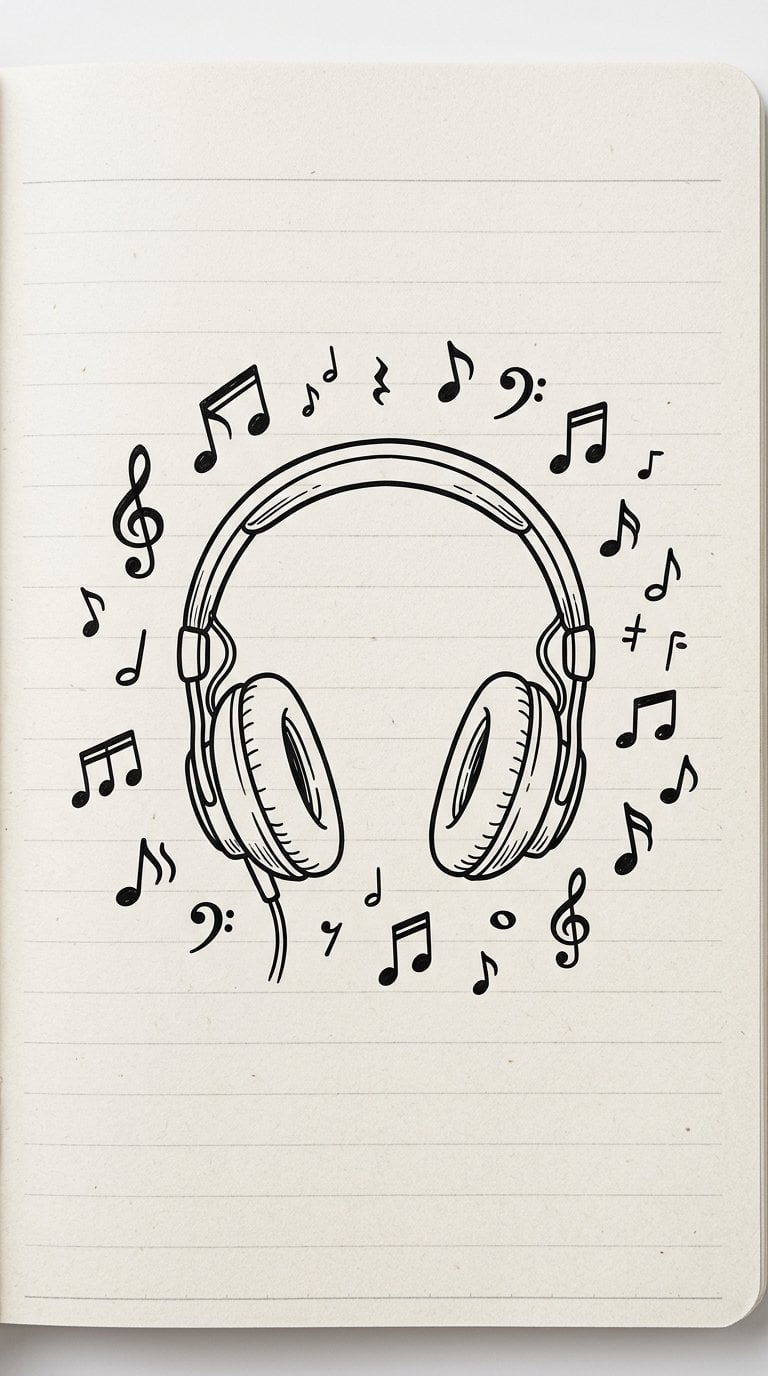
I draw two rounded ear cups connected by a curved headband, then add small details such as padding, buttons, or a short cord. I vary the shapes slightly to create over-ear, on-ear, or wireless headphones.
Next, I place music notes around the headphones at different heights and angles. I use simple eighth notes, beamed notes, and tiny sound lines to suggest movement without filling the page.
I add light shading inside the ear cups and along the headband for depth. When I want a cleaner design, I keep the headphones bold and use only a few notes as accents.
16) Smiling cloud with raindrops
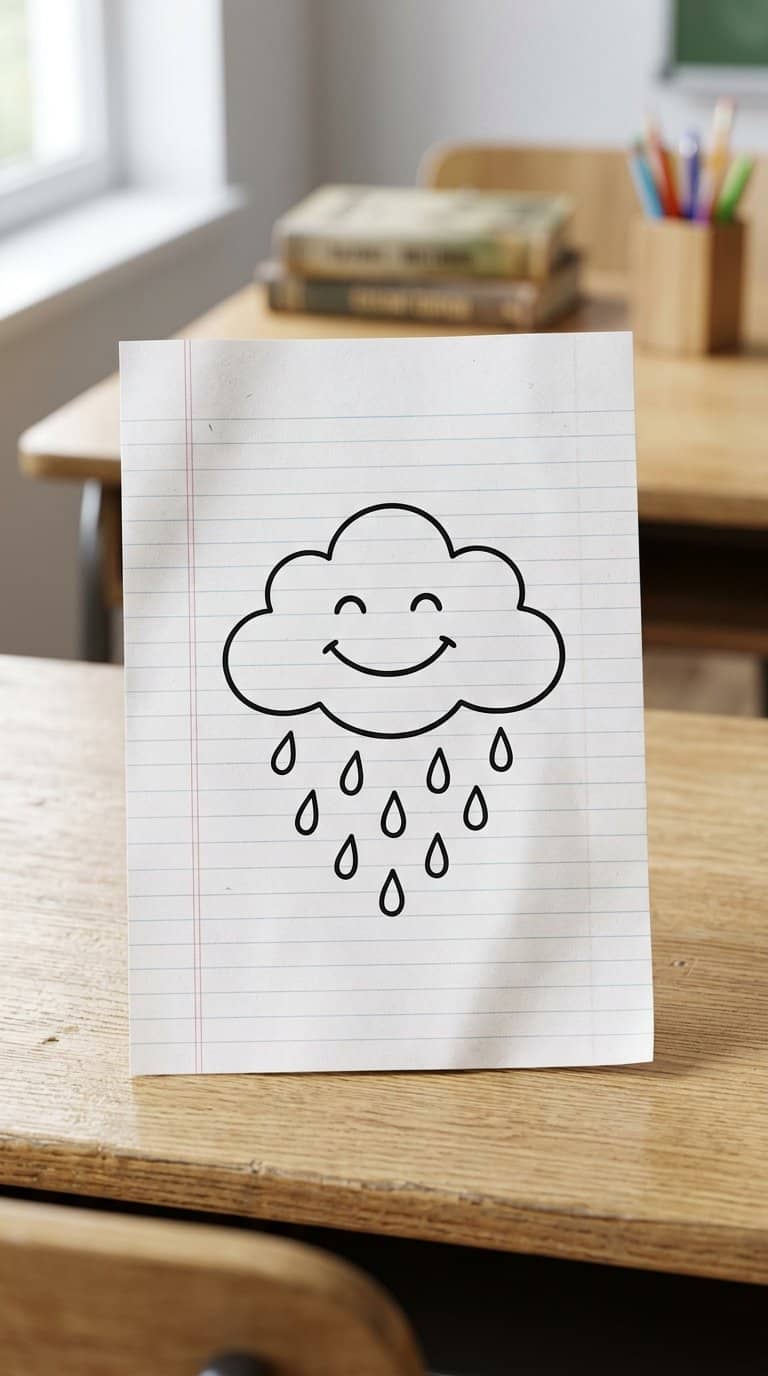
I draw a rounded cloud with a simple smiling face, then add several raindrops beneath it. I vary the drops by making some narrow, some wide, and some slightly tilted. This small change gives the doodle a more natural rhythm.
I use short curved lines for the cloud’s outline and keep the facial features centered. For extra detail, I add tiny cheeks, a small rainbow, or a puddle below the rain. I can shade one side of the cloud with light diagonal lines while leaving the rest unfilled.
17) Miniature library bookshelf

I draw a narrow bookcase with three or four shelves, then fill it with tiny books in different widths. I vary their heights and angles so the arrangement looks naturally uneven rather than perfectly measured.
I add small details such as a reading lamp, a potted plant, or a rolling ladder. For texture, I use simple lines for book spines and repeat a few colors across the shelves. The compact design fits easily in a notebook margin.
18) Cartoon pencil with a face

I draw a simple pencil with a pointed tip, a rectangular body, and a small eraser. Then I add two eyes, eyebrows, and a curved mouth to give it personality.
I vary the expression to make the character look focused, confused, sleepy, or surprised. A tiny hand holding another pencil can add movement without making the sketch too detailed.
I use light lines first, then darken the outline and add stripes, a label, or a few marks on the eraser. This doodle works well in the corner of a notebook page.
19) Decorative teacup and saucer

I start with a shallow oval for the saucer, then sketch the teacup above it using a curved rim and a rounded base. A small handle on the side gives the design its recognizable shape without requiring much space.
I add simple decorations such as stripes, dots, flowers, or tiny leaves. I use repeated patterns around the rim and saucer edge to keep the drawing balanced. Light diagonal lines can suggest tea inside the cup.
For a more polished doodle, I add a teaspoon beside the saucer and draw short curved lines to show steam. I vary the pressure of my pencil to create darker edges beneath the cup and saucer.
20) Cute fox head
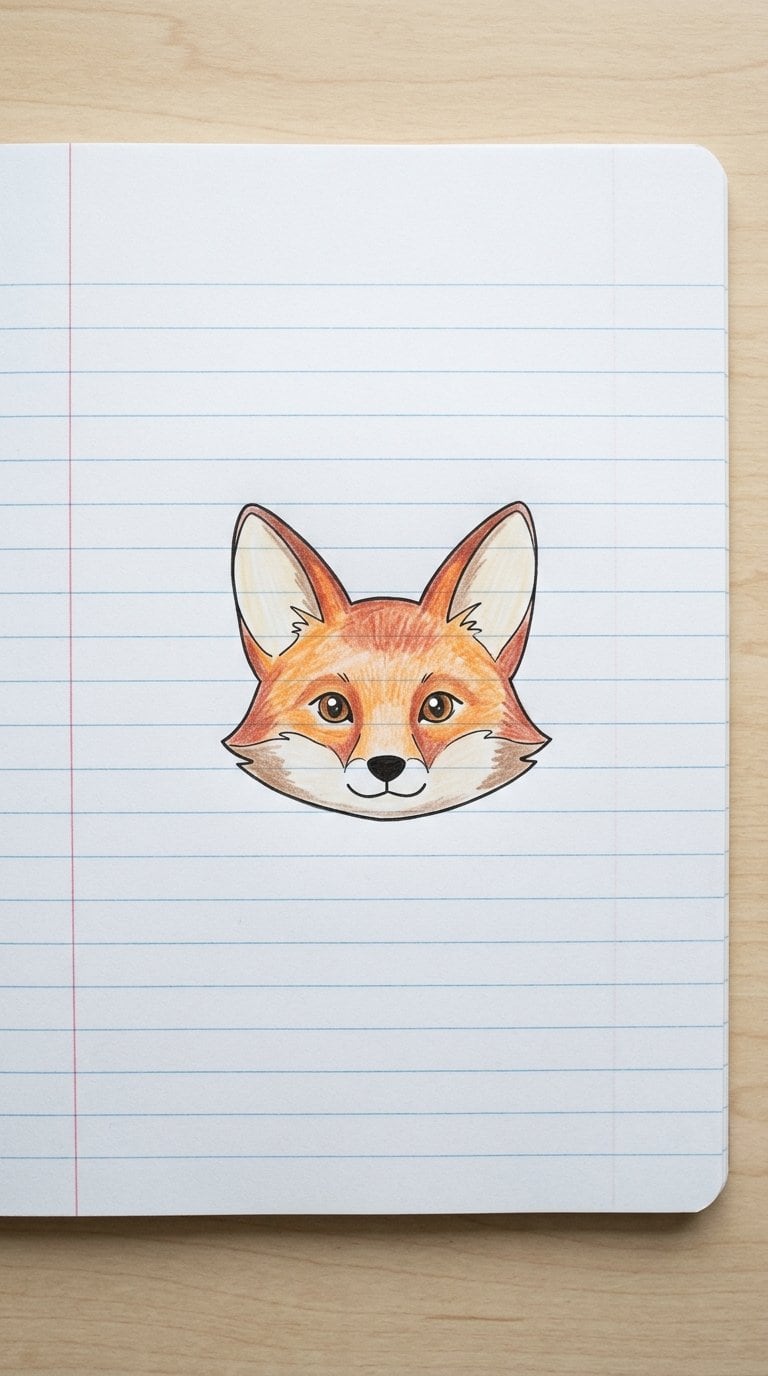
I start with a rounded shape for the head, then add two tall ears with slightly pointed tips. I place the eyes low on the face and draw a small triangular nose between them. Two curved lines create the muzzle and cheeks.
I use simple zigzags or short curves inside the ears to suggest fur. A few lines along the cheeks add texture without making the drawing crowded. I usually leave the face mostly open so the expression stays clear.
I can make the fox look curious by raising one eyebrow or tilting the head slightly. Orange, red, or brown pencil adds color, while a black pen keeps the doodle quick and clean.
21) Simple ocean wave

I draw a smooth, curved line that rises and dips like a gentle wave. Then I add a smaller line inside the curve to suggest the water folding over itself.
I use short horizontal strokes beneath the wave for texture and leave plenty of open space around it. A few dots can represent sea spray without making the design crowded.
I outline the wave with a dark pen or shade one side lightly with a pencil. This simple shape fits neatly in a notebook margin and takes only a few minutes to complete.
22) Hanging planet with rings
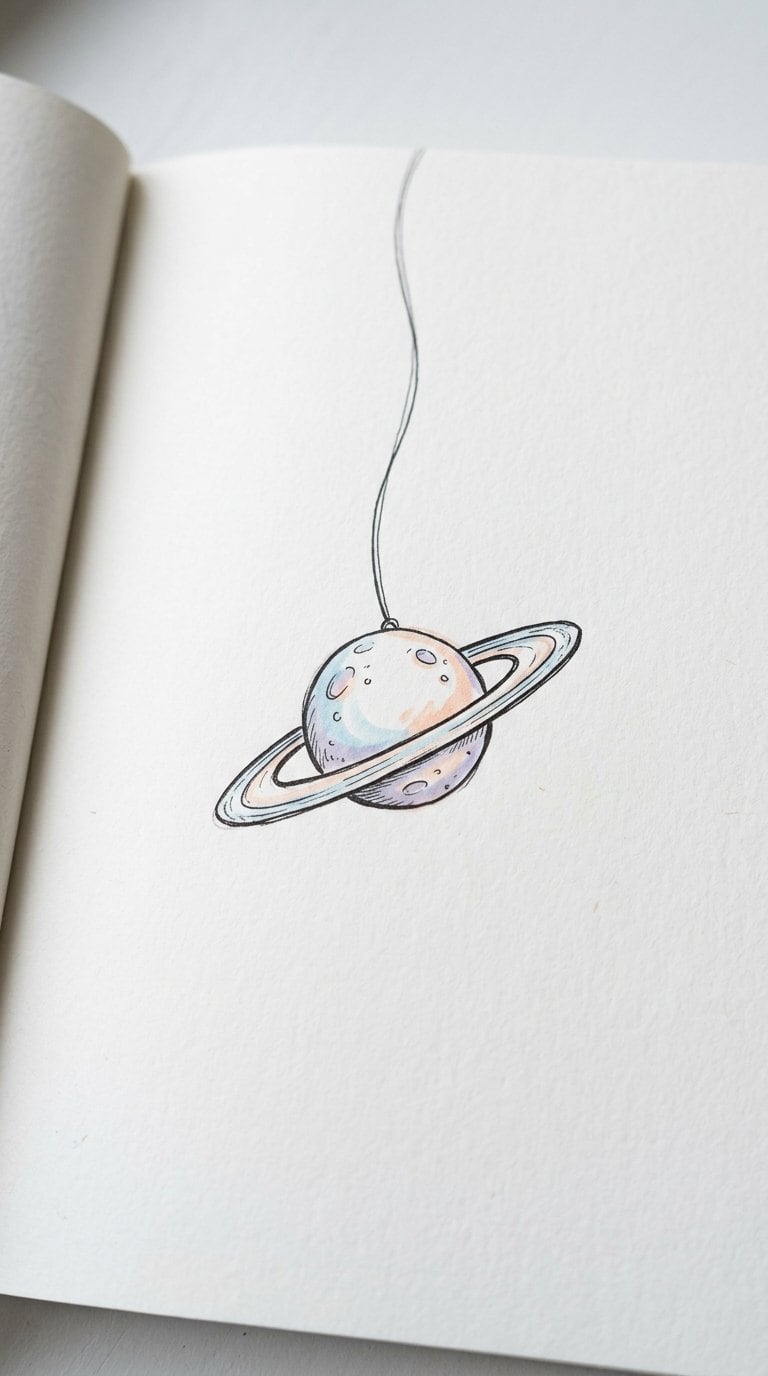
I draw a small planet near the top of the page, then add curved rings that pass behind and in front of it. A thin string connects the planet to the page’s upper edge, making it look suspended.
I use simple stripes, dots, or small craters to add surface detail without taking much time. I shade one side lightly and leave the other side clear, which gives the planet a modest sense of depth.
I vary the ring angle to change the planet’s appearance. A tilted ring creates more movement, while a nearly horizontal ring gives the doodle a calmer look.
23) Doodle sneakers
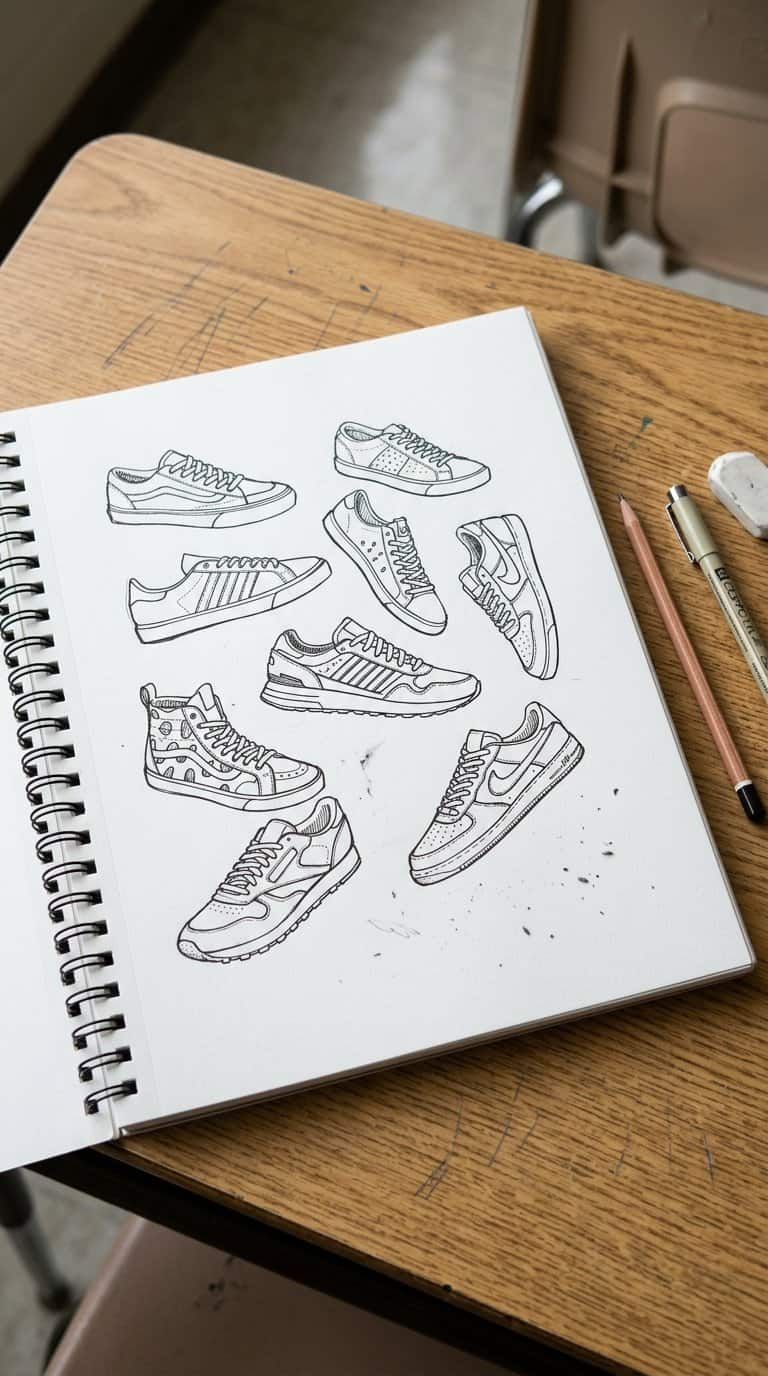
I start with a simple side profile, then add the sole, tongue, laces, and stitching. I vary the shape of each shoe to create a pair with personality: one can look sporty, while the other has a high-top design.
Small details make the drawing more interesting. I add panel lines, fabric texture, logos made from simple shapes, or patterns such as checks and stripes. I use light shading beneath the sole to give the sneakers a grounded appearance.
24) Small treasure chest

I draw a small box with a curved lid, then add metal bands, a keyhole, and short wood-grain lines. I use simple rectangles and arcs so the shape stays quick to sketch.
I like opening the lid slightly and adding a few coins, gems, or folded notes inside. Small dots and sharp angles suggest different materials without requiring detailed shading.
For extra character, I place the chest on a short patch of sand or beside a tiny map. I add a few loose marks around it to make the scene feel connected while keeping the doodle compact.
25) Butterfly with patterned wings

I start with a narrow body and two pairs of rounded wings. I keep the outline light so I can adjust the shape while adding details.
I divide each wing into curved sections, then fill them with simple patterns such as dots, stripes, checks, or small loops. I repeat a few motifs on both sides to create balance without making the drawing too detailed.
I use different patterns in each section and leave some spaces blank. This gives the butterfly a clear structure and lets me finish the doodle quickly when class moves on.
26) Hot-air balloon over hills

I sketch the balloon as a rounded shape near the top of the page, then add a small basket beneath it. A few curved bands across the balloon create simple panels without requiring detailed patterns.
Below it, I draw overlapping hills with gentle slopes. I vary their sizes to create distance, using lighter lines for the farther hills and darker outlines for the foreground.
I add small clouds, birds, or flowers to fill open spaces. Soft horizontal lines on the hills suggest fields, while short curved marks can indicate trees or shrubs.
27) Tiny bakery storefront

I draw a narrow shop with a striped awning, a glass display window, and a tiny door. I add a sign above the entrance, then sketch bread loaves, cupcakes, or a pie inside the window.
I use simple rectangles and curved lines to keep the design quick during class. A few flower boxes, hanging lights, or sidewalk tiles give the storefront more detail without making the doodle crowded.
I shade the awning in alternating stripes and use small marks to suggest reflections on the glass. A bicycle, chalkboard sign, or cat beside the door can add a small story to the scene.
28) Simple camera with a strap

I sketch a compact camera using a rectangle with slightly rounded corners, then add a small lens in the center. A narrow viewfinder, shutter button, and a few simple controls make the shape recognizable without adding much detail.
I draw the strap as two curved lines extending from opposite sides. I let it loop loosely around the camera, adding small folds where the strap bends. Light shading beneath the lens and along one edge gives my doodle a little depth while keeping it quick to finish.
29) Smiling sun behind clouds
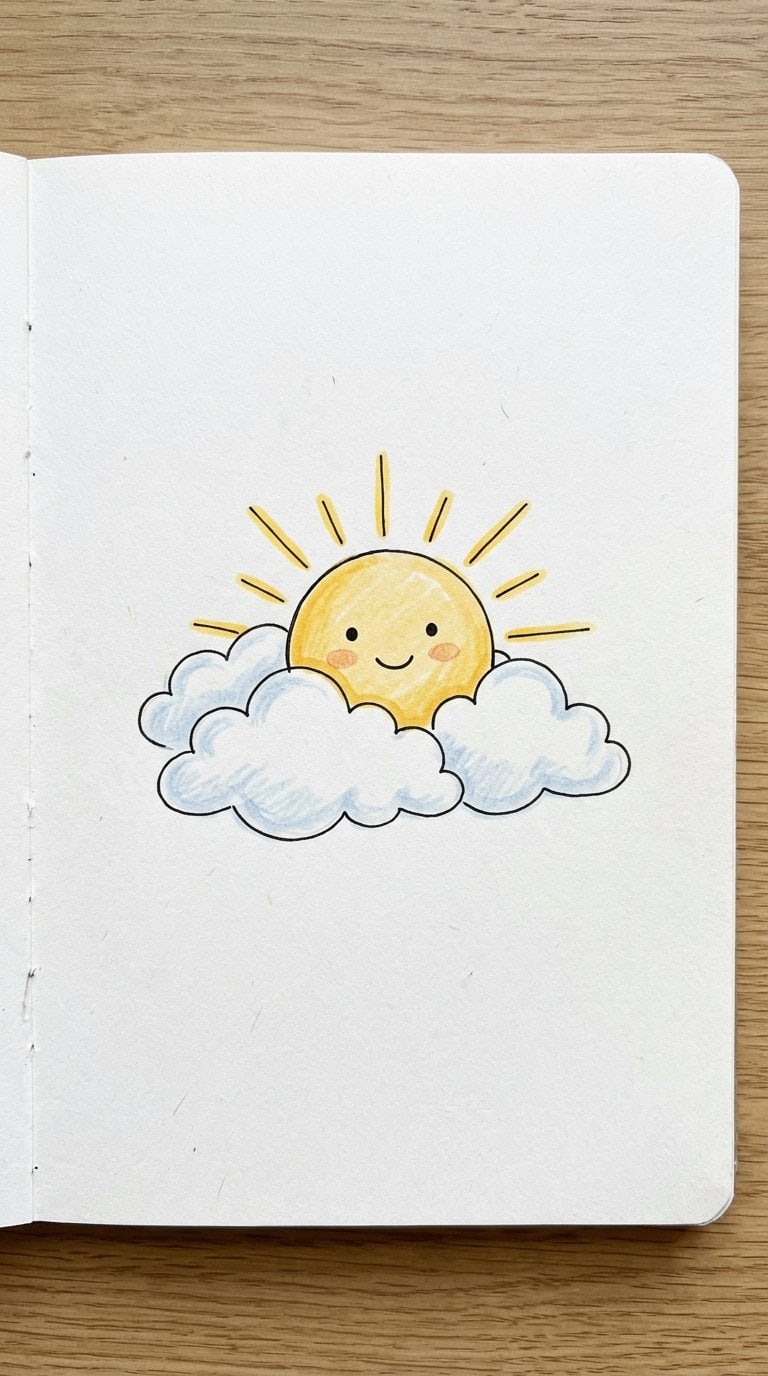
I draw a small sun peeking from behind two rounded clouds, then add simple rays around its visible edge. A curved smile and two dot eyes give the sun a friendly expression without making the design crowded.
I vary the cloud shapes so they do not look identical, using short, curved lines for their edges. I can add light shading beneath the clouds or fill the background with tiny dots, keeping the details small enough to sketch during class.
30) Doodle bicycle with a basket
I start with two evenly sized circles for the wheels, then connect them with a simple triangular frame. Adding the handlebars, seat, pedals, and spokes gives the bicycle a recognizable shape without requiring much detail.
I draw a small basket above the front wheel and fill it with flowers, books, or a folded scarf. I use short, curved lines to suggest woven material and add light ground lines beneath the tires to make the doodle feel balanced on the page.
Making Classroom Doodles Discreetly And Respectfully
I keep my drawings small, quiet, and separate from classwork so they do not distract me or others. I also choose appropriate moments and follow each teacher’s expectations.
Choosing Low-Distraction Moments
I doodle only when I can still follow the lesson, such as during independent work, a review period, or a brief transition between activities. I avoid drawing during instructions, demonstrations, discussions, tests, and safety-related announcements.
I keep my pen movements quiet and use simple designs that require little attention. If I notice that I am missing information, I stop immediately and return my focus to the lesson. I also watch for classroom signals, such as a teacher beginning to speak or asking everyone to look up.
When a teacher does not allow doodling, I respect that rule. I can save ideas for lunch, study breaks, or time at home instead of risking a distraction or misunderstanding.
Keeping Doodles Within My Own Materials
I draw in the margin of my notebook, on a separate sketch page, or in a small personal doodle pad. I leave worksheets, textbooks, desks, walls, and shared supplies untouched unless the teacher gives clear permission.
I keep my designs modest in size and avoid images that could offend, disturb, or distract classmates. I use pencils or quiet pens, keep my supplies organized, and avoid borrowing materials while someone else works.
I also protect private notes and other students’ work. If a classmate asks me to stop, move, or give them space, I do so without argument. When the period ends, I close my notebook and clear away any scraps or eraser debris.
Using Doodling To Support Focus And Creativity
I use small sketches to process information without turning my notes into a separate art project. Simple visual cues help me organize ideas, while a regular, low-pressure practice keeps drawing accessible during short breaks or quiet moments.
Simple Ways To Turn Notes Into Sketches
I convert key terms into quick visual symbols. A lightbulb can represent an idea, arrows can show cause and effect, and a small calendar can mark a date or deadline. I keep each symbol simple enough to draw in a few seconds.
For definitions, I place the word inside a box and add a tiny example beside it. I can show sequences with numbered panels, connect related concepts with lines, or replace repeated phrases with initials and icons. Color helps when I use it sparingly: one shade for important terms and another for questions prevents my page from becoming distracting.
When a lesson includes a process, I draw three or four rough steps instead of copying every sentence. I label each sketch with only the details I need to remember.
Building A Low-Pressure Drawing Habit
I start with a small goal, such as drawing one margin icon during each class or making three sketches before bed. Limiting the task makes it easier to practice without waiting for extra time or creative motivation.
I keep a reliable pen and a pocket notebook within reach. During a short break, I draw ordinary objects around me—a key, shoe, coffee cup, or backpack—using basic shapes rather than erasing every mistake.
I also review my sketches once a week and notice which subjects hold my attention. I do not grade artistic quality; I look for consistency, useful visual notes, and ideas I may want to develop later.