A spine tattoo can combine strong placement with a design that follows your body’s natural line. I’ll explore ideas across botanical, celestial, geometric, traditional, and symbolic styles to help you compare different visual directions.
Save for later
Want to come back to this story? Save it with your email so it is easy to find again.
You can choose a spine tattoo by considering your preferred style, pain tolerance, placement, size, and how the design will flow with your back. I’ll also cover practical planning, appointment preparation, and healing so you can approach the decision with clear expectations.
Table of Contents
- 1 1) Fine-line botanical spine tattoo
- 2 2) Vertical lotus flower spine tattoo
- 3 3) Ornamental mandala spine tattoo
- 4 4) Blackwork serpent spine tattoo
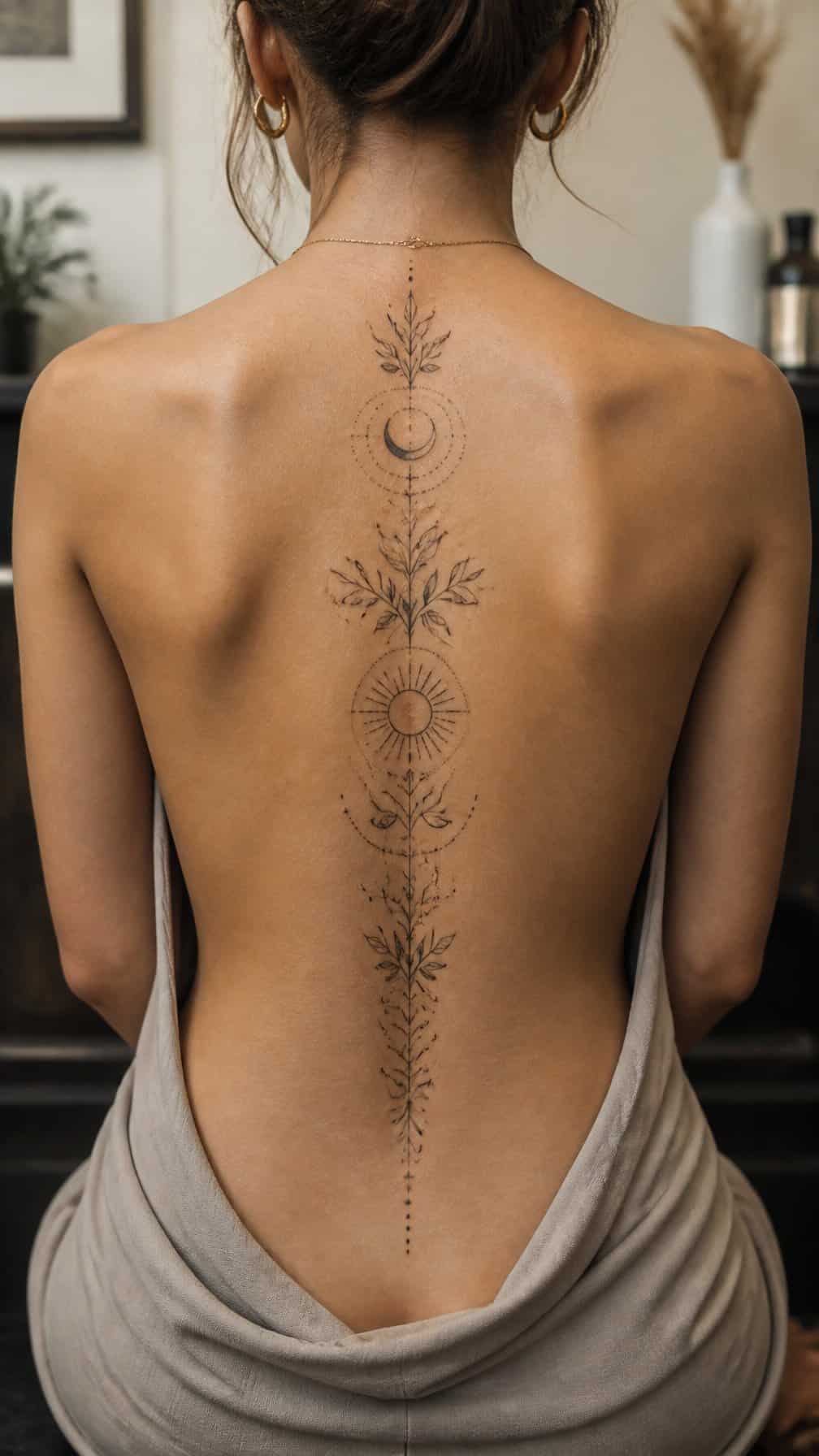
- 5 5) Delicate moon-phase spine tattoo
- 6 6) Japanese dragon spine tattoo
- 7 7) Geometric sun spine tattoo
- 8 8) Wildflower stem spine tattoo
- 9 9) Minimalist mountain range spine tattoo
- 10 10) Koi fish spine tattoo
- 11 11) Gothic cross spine tattoo
- 12 12) Celestial stars and constellations spine tattoo
- 13 13) Peony flower spine tattoo
- 14 14) Sacred geometry spine tattoo
- 15 15) Roman numeral date spine tattoo
- 16 16) Fern frond spine tattoo
- 17 17) Phoenix rising spine tattoo
- 18 18) Butterfly spine tattoo
- 19 19) Watercolor hummingbird spine tattoo
- 20 20) Snake and dagger spine tattoo
- 21 21) Abstract wave spine tattoo
- 22 22) Vine with thorns spine tattoo
- 23 Planning Placement, Size, And Design Flow
- 24 Understanding Spine Anatomy And Natural Lines
- 25 Choosing A Size That Ages Well
- 26 Working With Existing Tattoos
- 27 Preparing For The Appointment And Healing Well
- 28 Managing Pain And Session Length
- 29 Pre-Appointment Skin Care
- 30 Aftercare For A High-Movement Area
1) Fine-line botanical spine tattoo
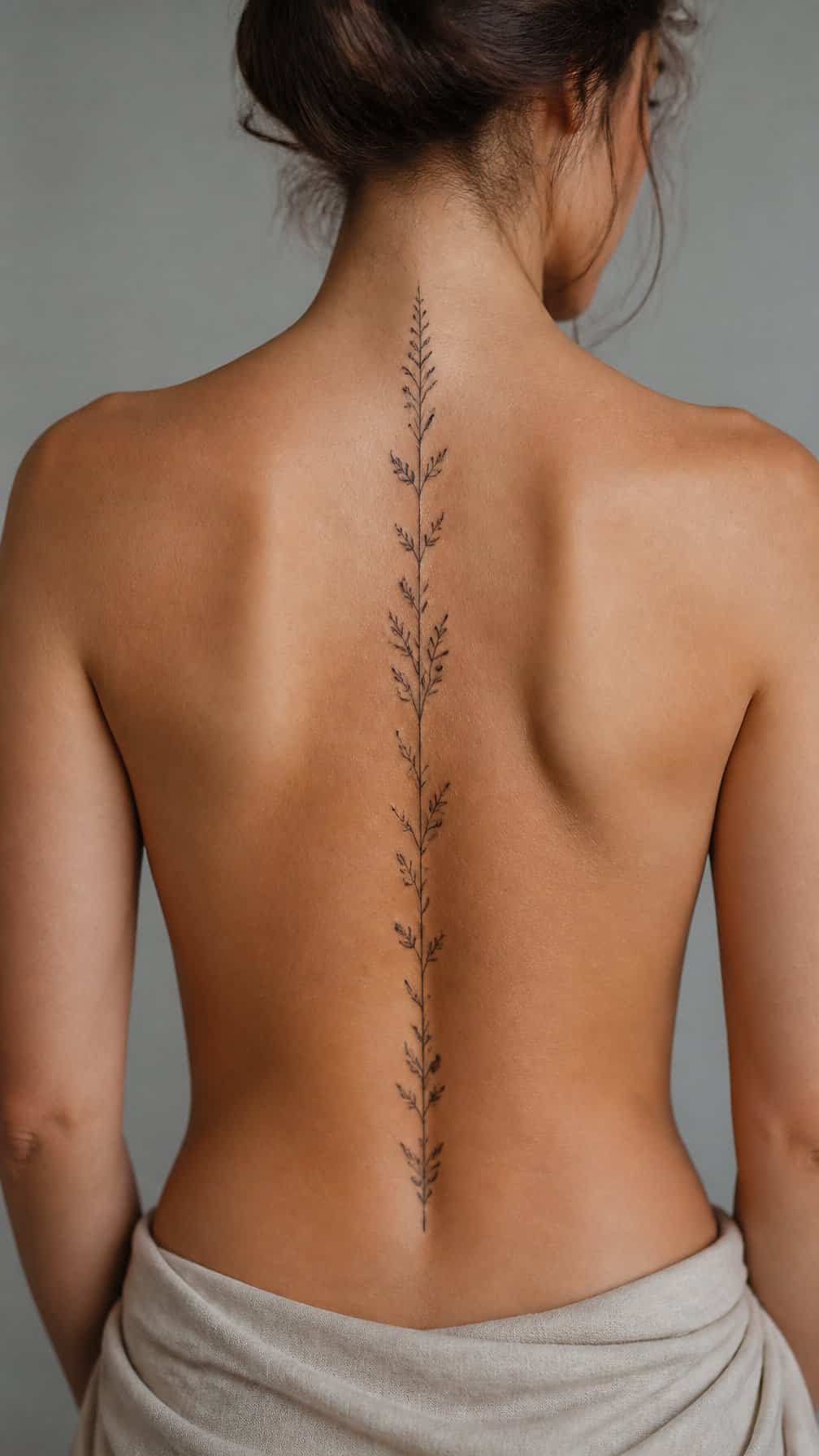
I like fine-line botanical designs for their quiet detail and vertical flow. I can follow the spine with a single stem, a chain of leaves, or several small flowers, keeping the composition balanced without making it feel crowded.
I would choose a plant with personal meaning, such as lavender, olive branches, or wildflowers. Thin outlines create a delicate appearance, while limited shading adds depth without overpowering the design.
I would also consider how the tattoo follows the body’s movement. A centered layout looks structured, while a slightly winding stem creates a more organic shape. Fine lines require an experienced tattoo artist and careful aftercare to support clean healing.
2) Vertical lotus flower spine tattoo
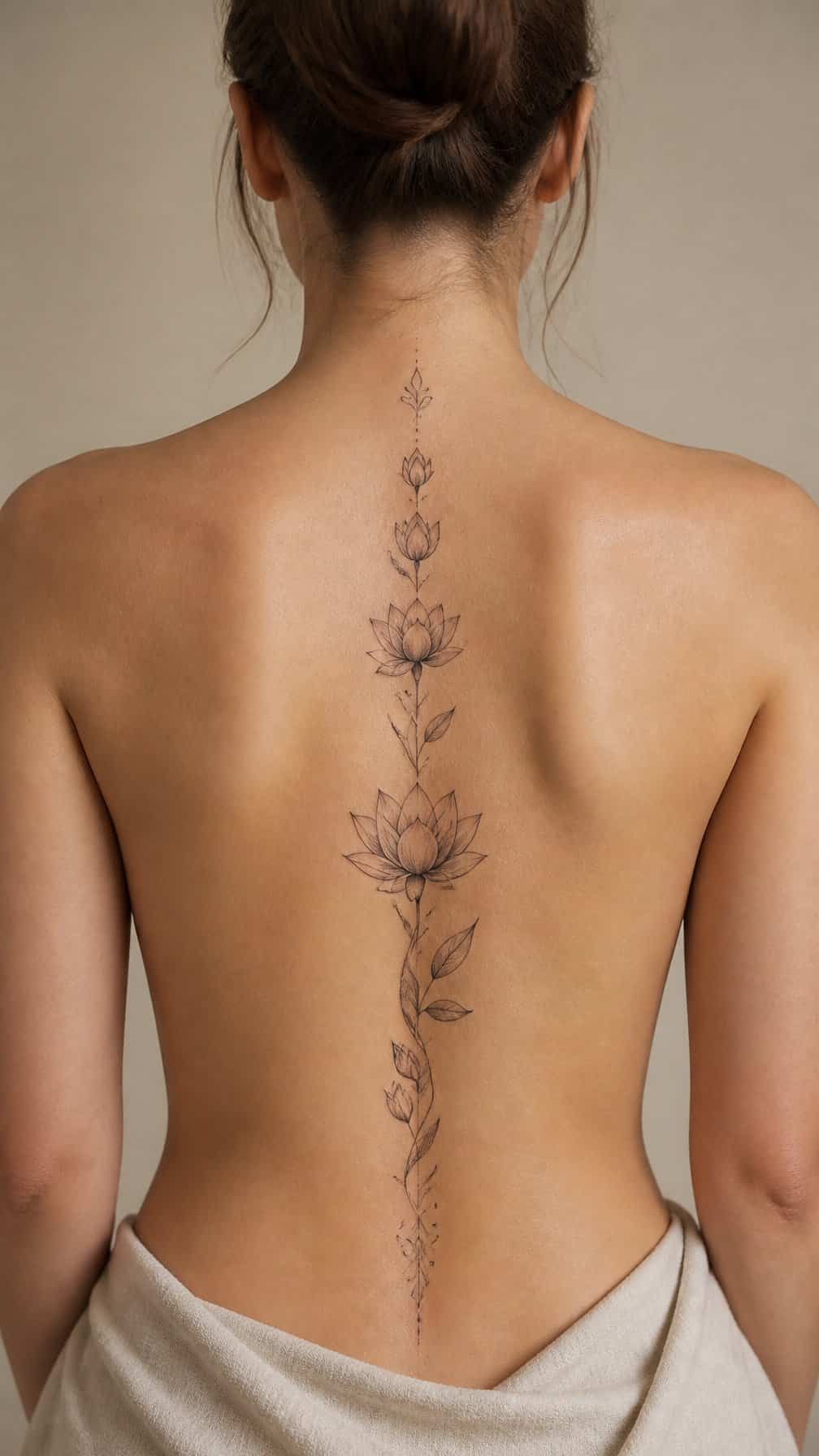
I like a vertical lotus design because its layered petals naturally follow the spine’s length. I would keep the flower centered, with the stem aligned to the vertebrae and enough spacing to preserve each petal’s shape.
Fine lines can create a delicate look, while darker outlines give the tattoo stronger definition as it heals. I might add small leaves, dots, or short ornamental lines, but I would avoid overcrowding the narrow area.
I would also consider how the lotus opens across the upper or middle back. A larger bloom can sit between the shoulder blades, while a smaller sequence of lotus flowers can extend toward the lower spine.
3) Ornamental mandala spine tattoo
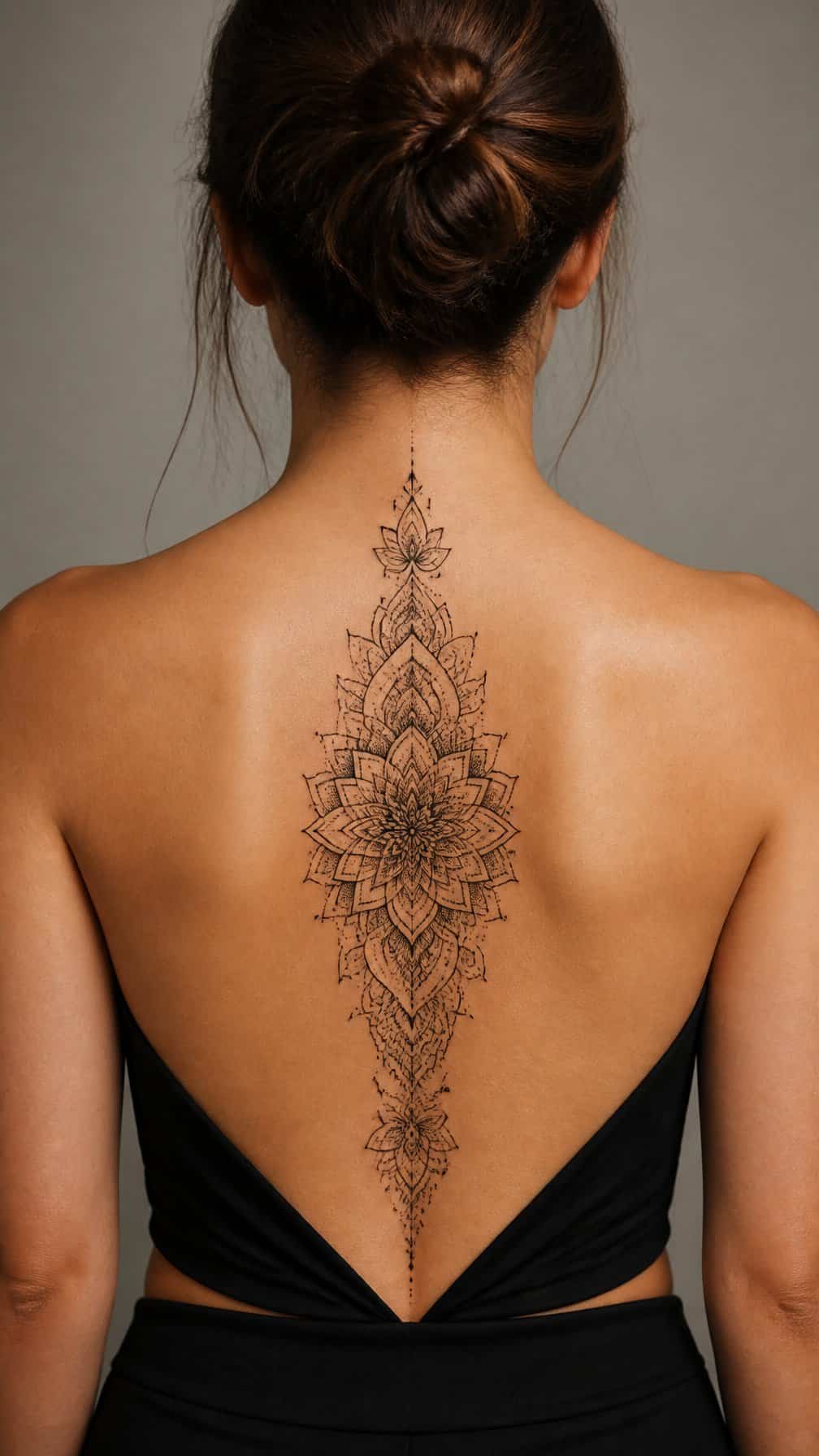
I like ornamental mandalas along the spine because their symmetry works naturally with the body’s central line. I would place the smallest details near the neck and gradually enlarge the design toward the lower back, creating a balanced vertical arrangement without making it feel crowded.
Fine lines, repeating petals, and small geometric accents can give the tattoo a precise appearance. I would discuss spacing carefully with the artist, since details placed too close together may blur over time, especially in densely shaded areas.
I might choose black ink for a crisp, traditional look or add restrained color to selected petals. The design can remain symmetrical, or I could introduce slight changes in the lower elements to make the piece feel more personal.
4) Blackwork serpent spine tattoo
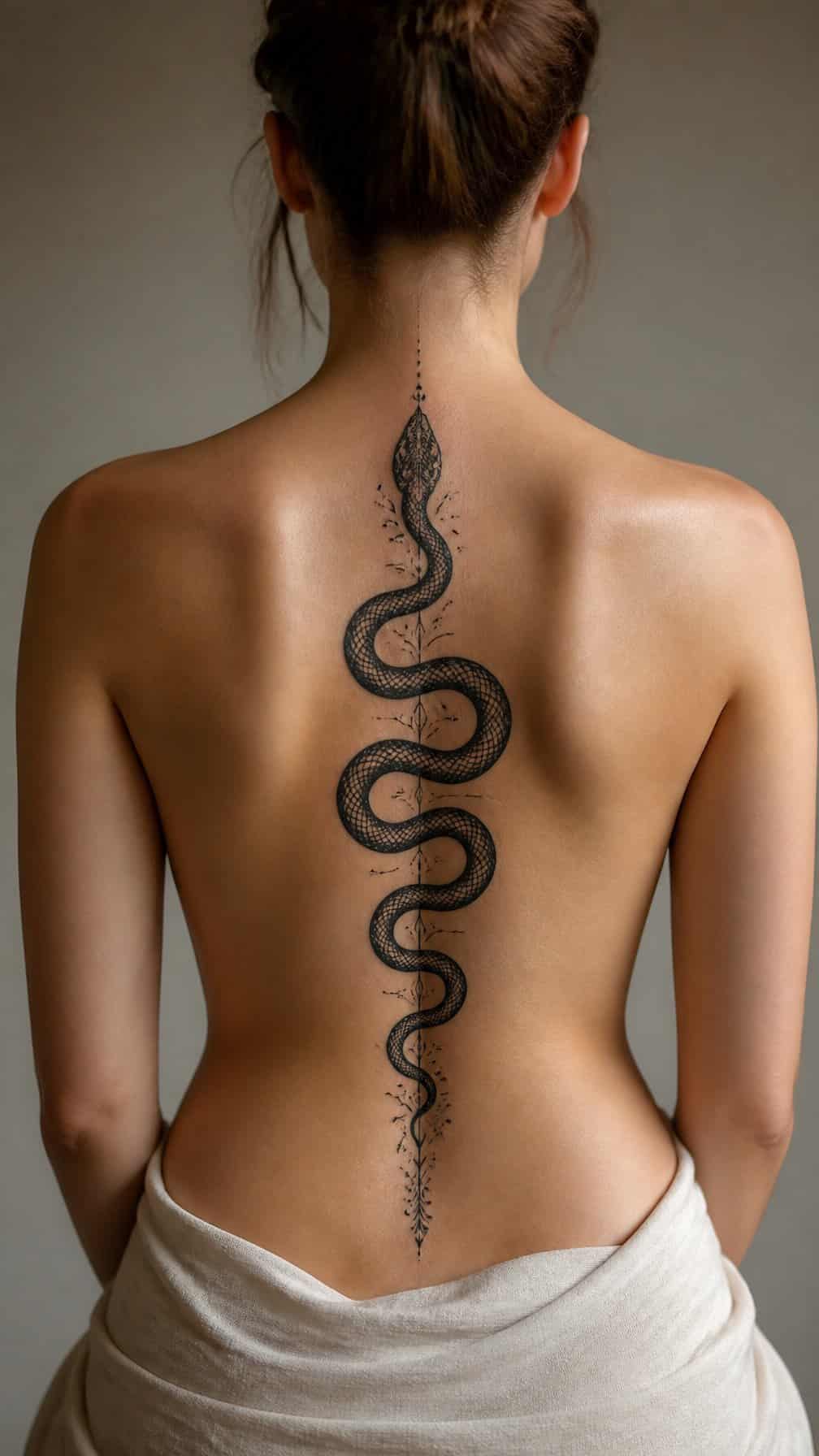
I like blackwork serpents for the way their narrow, winding form follows the spine naturally. I would use solid black sections, crisp outlines, and controlled negative space to define the scales without making the design look crowded.
I might position the head between the shoulder blades and let the body taper toward the lower back. A forward-facing head creates a more direct focal point, while a side profile gives the composition a quieter, more graphic appearance.
I would keep the curves aligned with the body’s movement and consider how the tattoo will look when I bend or twist. Because dense black ink can appear especially bold on this placement, I would choose a size that leaves breathing room around each major section.
5) Delicate moon-phase spine tattoo
I like a delicate moon-phase tattoo for its measured rhythm and quiet symbolism. I would arrange the phases vertically along the spine, using fine lines and small gaps to keep the design light rather than crowded.
I would place the full moon near the center and taper the sequence with crescent shapes toward the upper and lower ends. A tattoo artist can adjust the spacing to follow my anatomy, while subtle dots or tiny stars can add detail without competing with the lunar forms. Fine-line work requires careful aftercare because delicate details may soften over time.
6) Japanese dragon spine tattoo
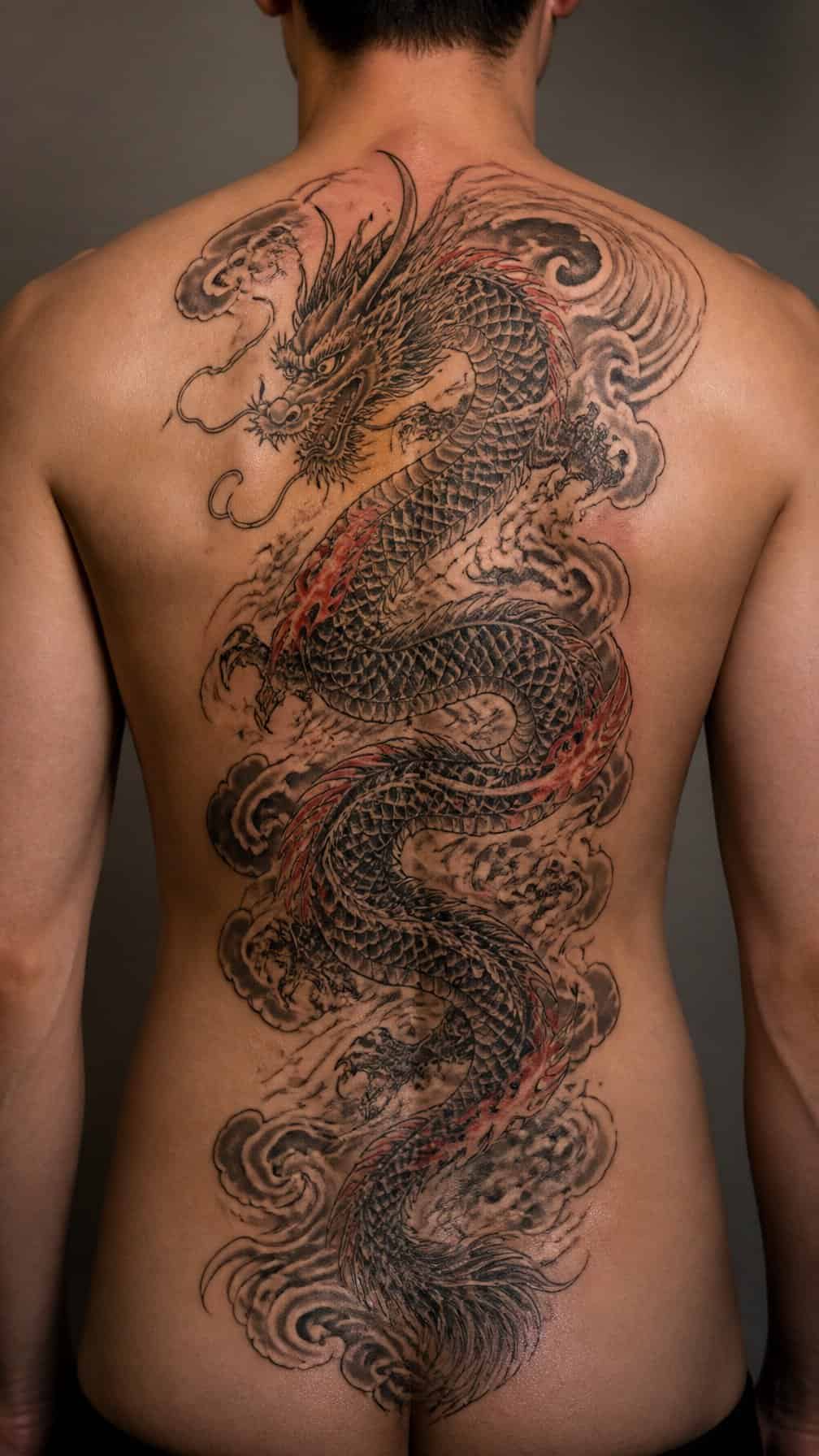
I like how a Japanese dragon can follow the spine in a long, controlled composition. I would use its head near the shoulder blades, then let the body coil downward through clouds, waves, or maple leaves. The central placement gives the design balance while leaving room for detailed scales and expressive claws.
I would choose black and gray for a restrained look, or add traditional colors such as red, green, and gold to emphasize the dragon’s features. Because the spine has limited width, I would ask the artist to simplify crowded details and plan the design around natural body movement.
7) Geometric sun spine tattoo
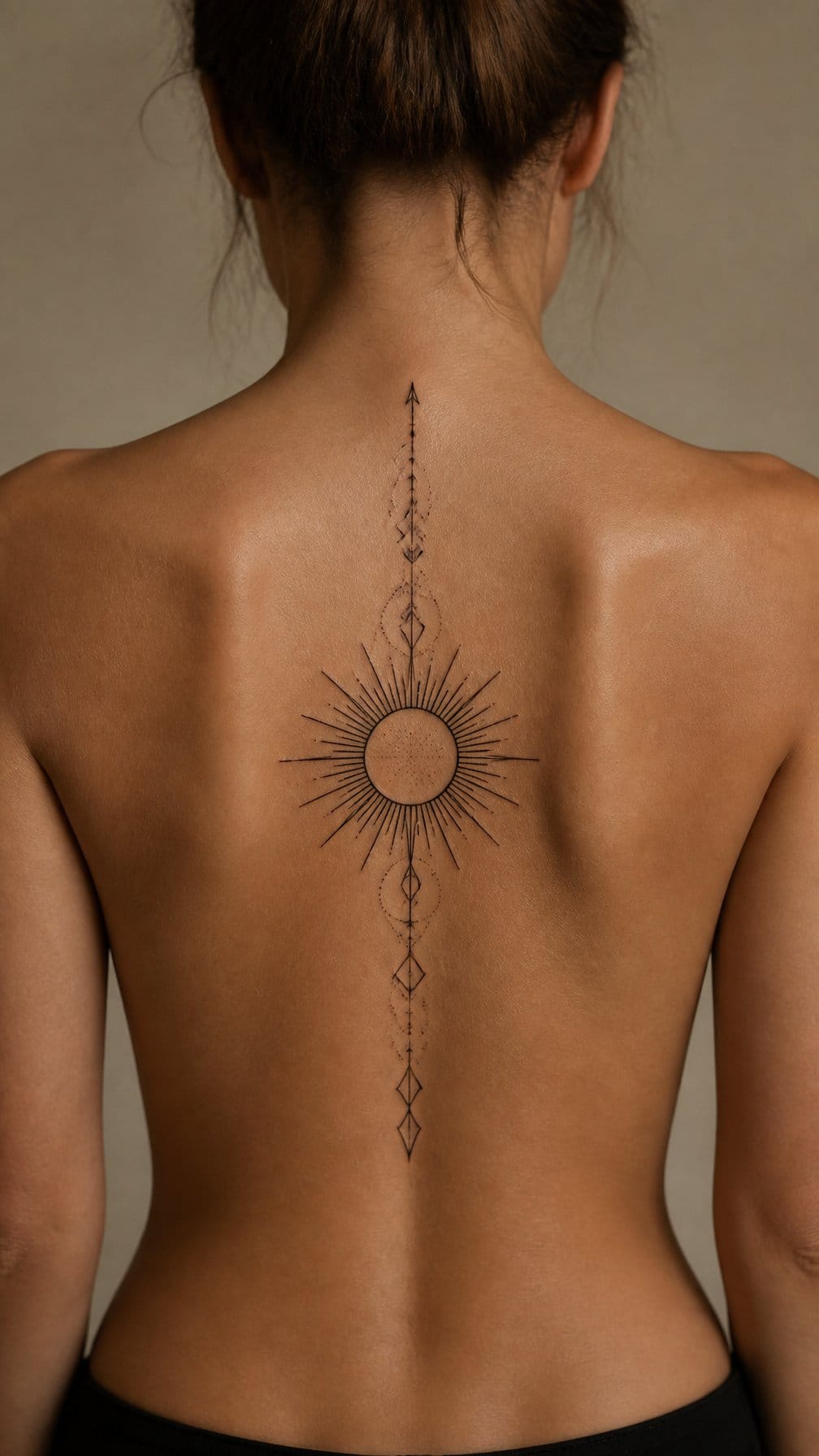
I like how a geometric sun uses clean rays, circles, and precise angles to create structure along the spine. I would center the design between the shoulder blades or place a smaller version at the mid-back for a balanced look.
I would choose fine lines for a subtle effect or heavier outlines for stronger definition. Symmetry matters with this design, so I would work with an artist who can align the central shape carefully with the spine and keep each ray evenly spaced.
8) Wildflower stem spine tattoo
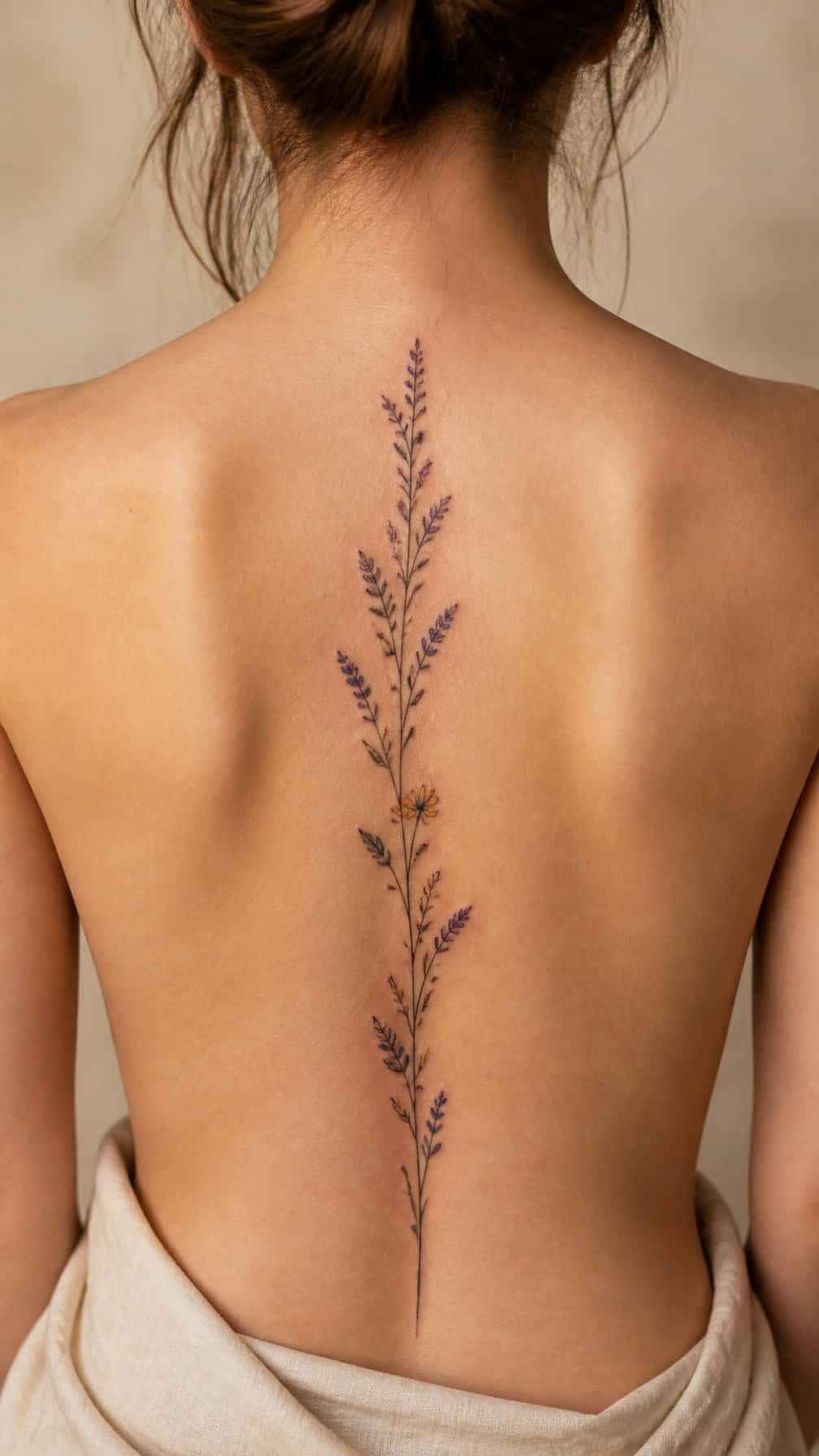
I like a wildflower stem design for its natural, understated shape. A thin line can follow the spine from the upper back toward the waist, with small leaves and uneven blossoms creating a relaxed botanical look.
I would choose flowers with personal meaning, such as lavender, poppies, daisies, or forget-me-nots. A fine-line style keeps the design light, while muted color adds definition without making the tattoo feel heavy.
The stem can remain mostly vertical, or I can add a slight curve to match the body’s movement. I would ask the artist to balance spacing carefully, since delicate details need enough room to stay clear as the tattoo ages.
9) Minimalist mountain range spine tattoo
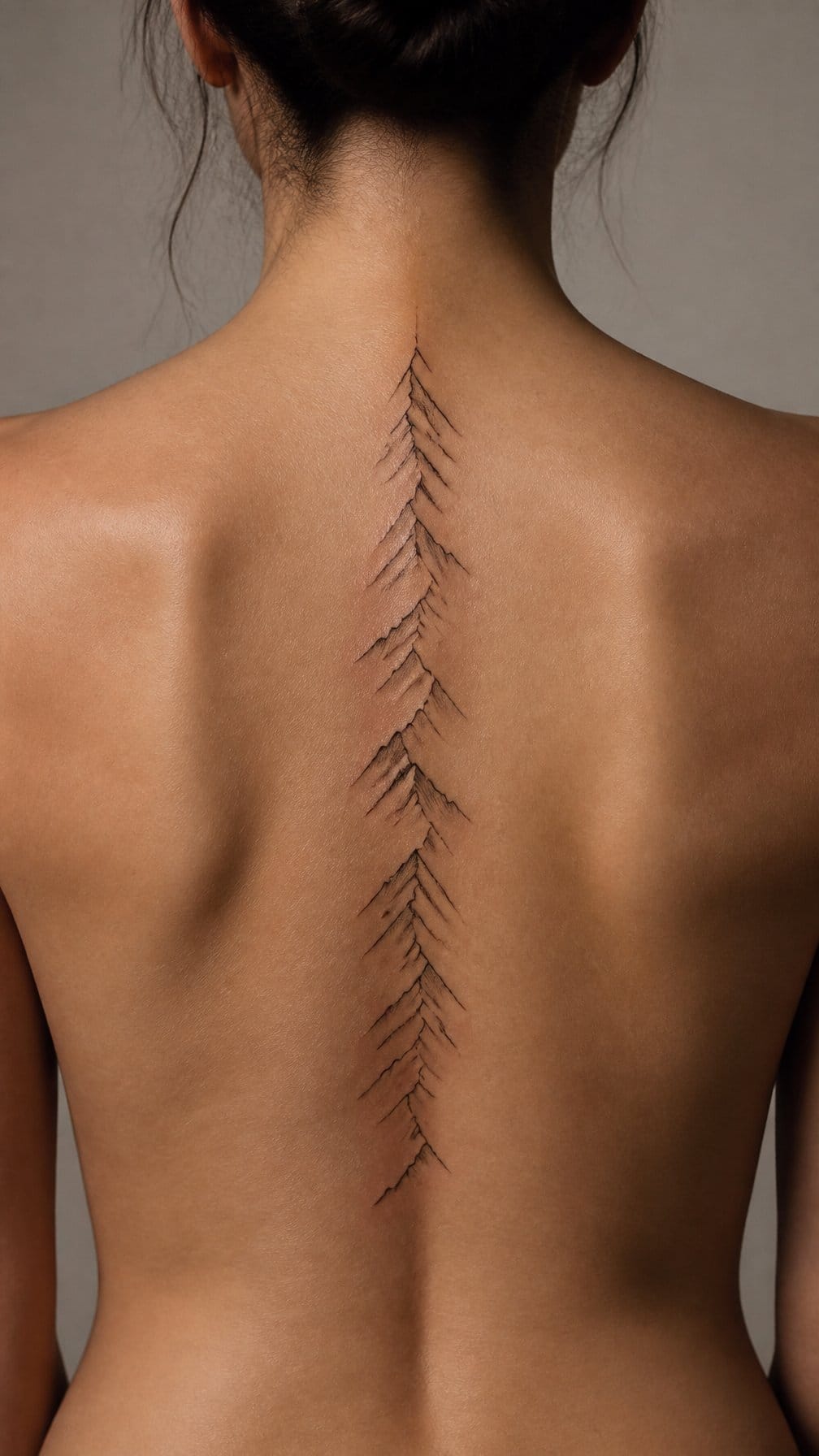
I like a minimalist mountain range because its clean, horizontal lines follow the spine without overwhelming it. I would choose a narrow design with varied peaks, subtle spacing, and limited shading to keep the image crisp as it moves down the back.
I might place the range between the shoulder blades or extend it along most of the spine for a stronger vertical composition. Fine-line work suits this concept, while small details such as a moon, pine trees, or a single snowcap can add meaning without making the tattoo feel crowded.
10) Koi fish spine tattoo
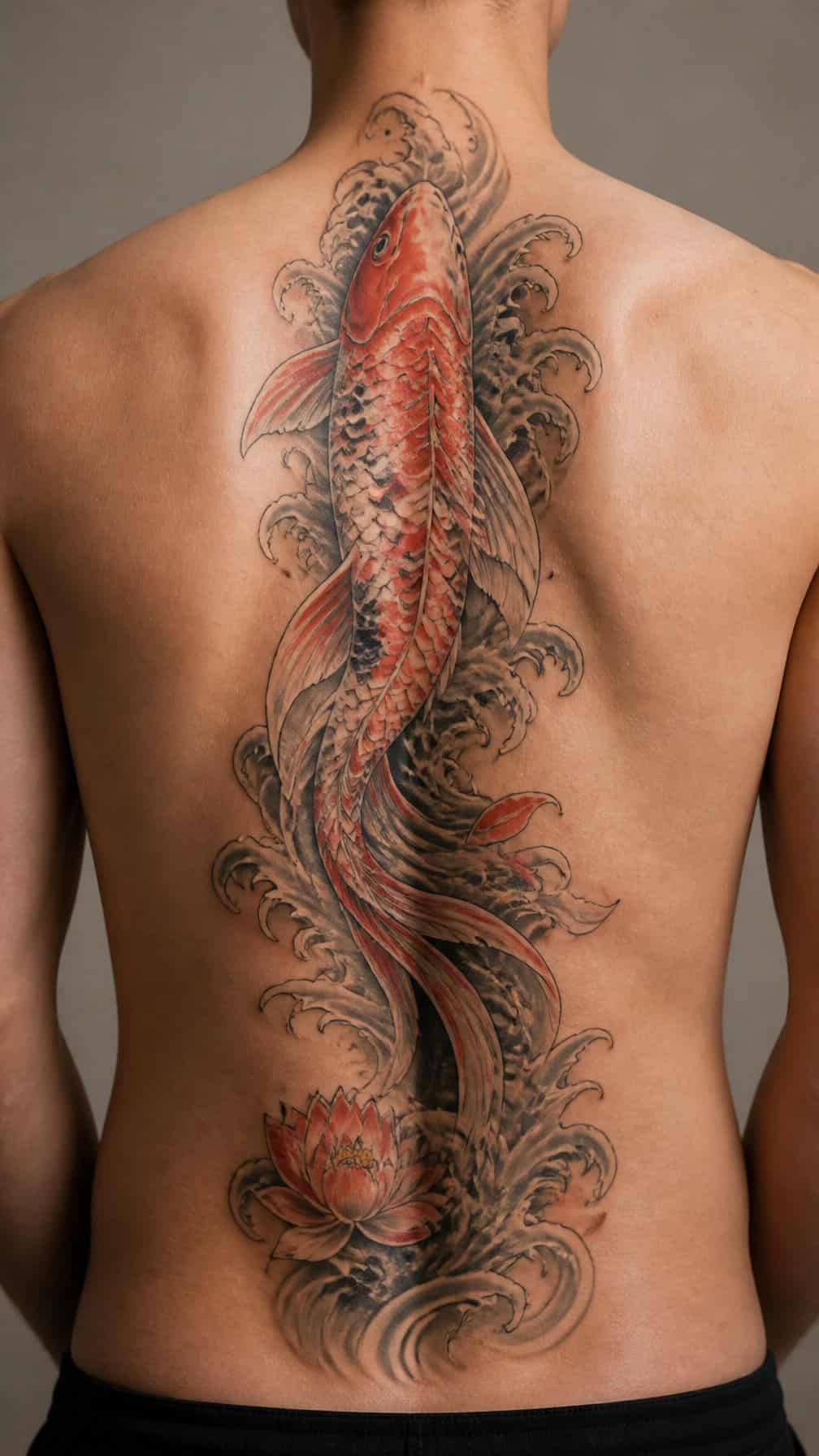
I like a koi fish design along the spine because its curved body follows the back’s natural line without looking rigid. I would choose flowing fins, layered scales, and restrained shading to keep the tattoo readable as it moves between the shoulder blades and lower back.
I might use one koi for a cleaner composition or two fish moving in opposite directions for balance. Black and gray create a calm, detailed effect, while muted red, orange, or blue can define the fish without overwhelming the central placement. The artist should account for the spine’s contours when positioning the head, fins, and tail.
11) Gothic cross spine tattoo
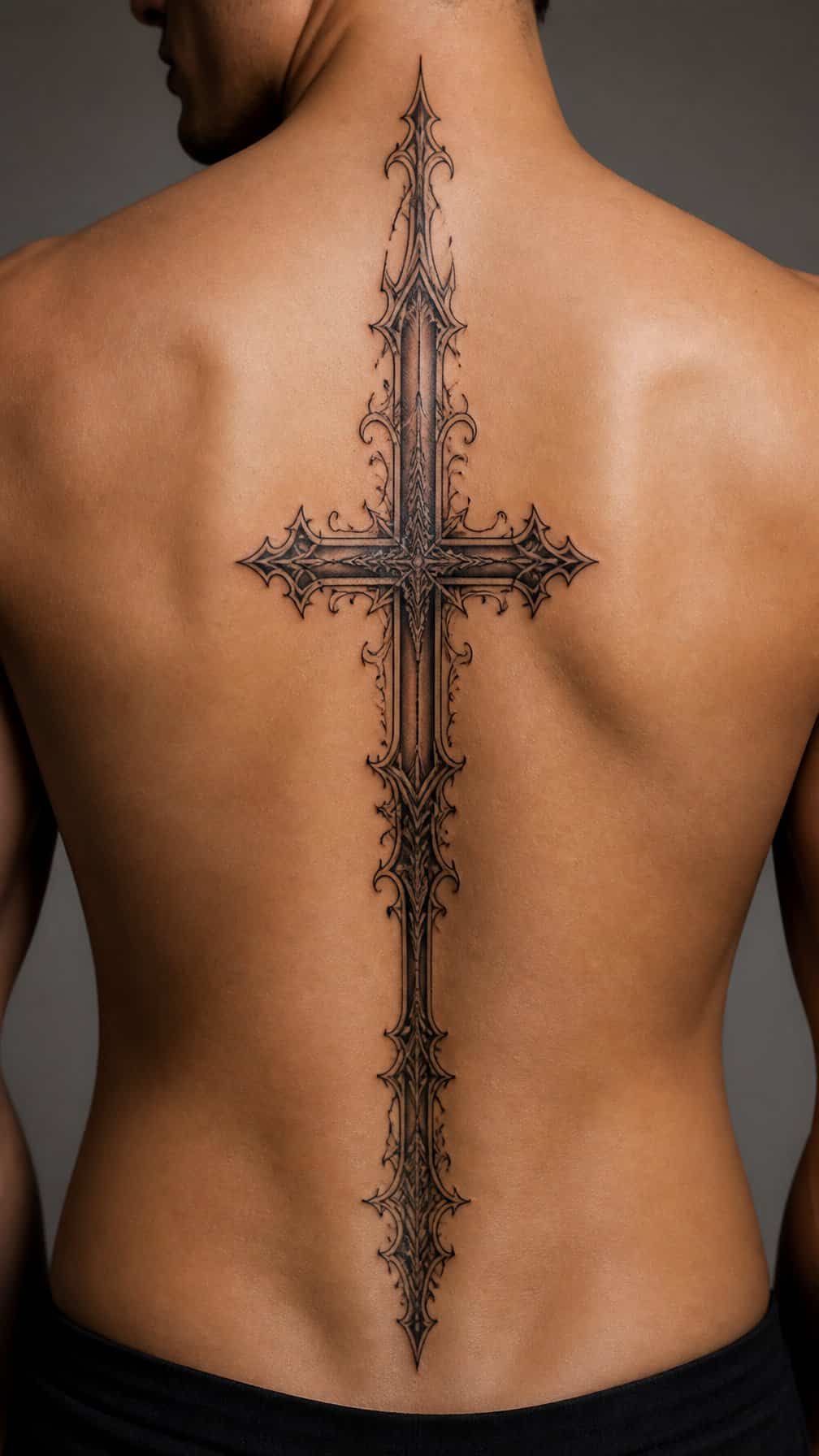
I like a gothic cross placed along the spine because its vertical structure follows the body’s natural line. Blackwork, pointed ends, and narrow proportions can create a defined design without requiring excessive width.
I would consider adding small ornamental details, such as filigree, thorn-like edges, or subtle shading. These elements can give the cross an antique appearance while keeping the central shape easy to recognize.
For placement, I prefer the cross to begin below the neck and extend toward the mid-back. I would discuss spacing with my tattoo artist, since the spine’s movement and curvature can affect how evenly the design settles.
12) Celestial stars and constellations spine tattoo
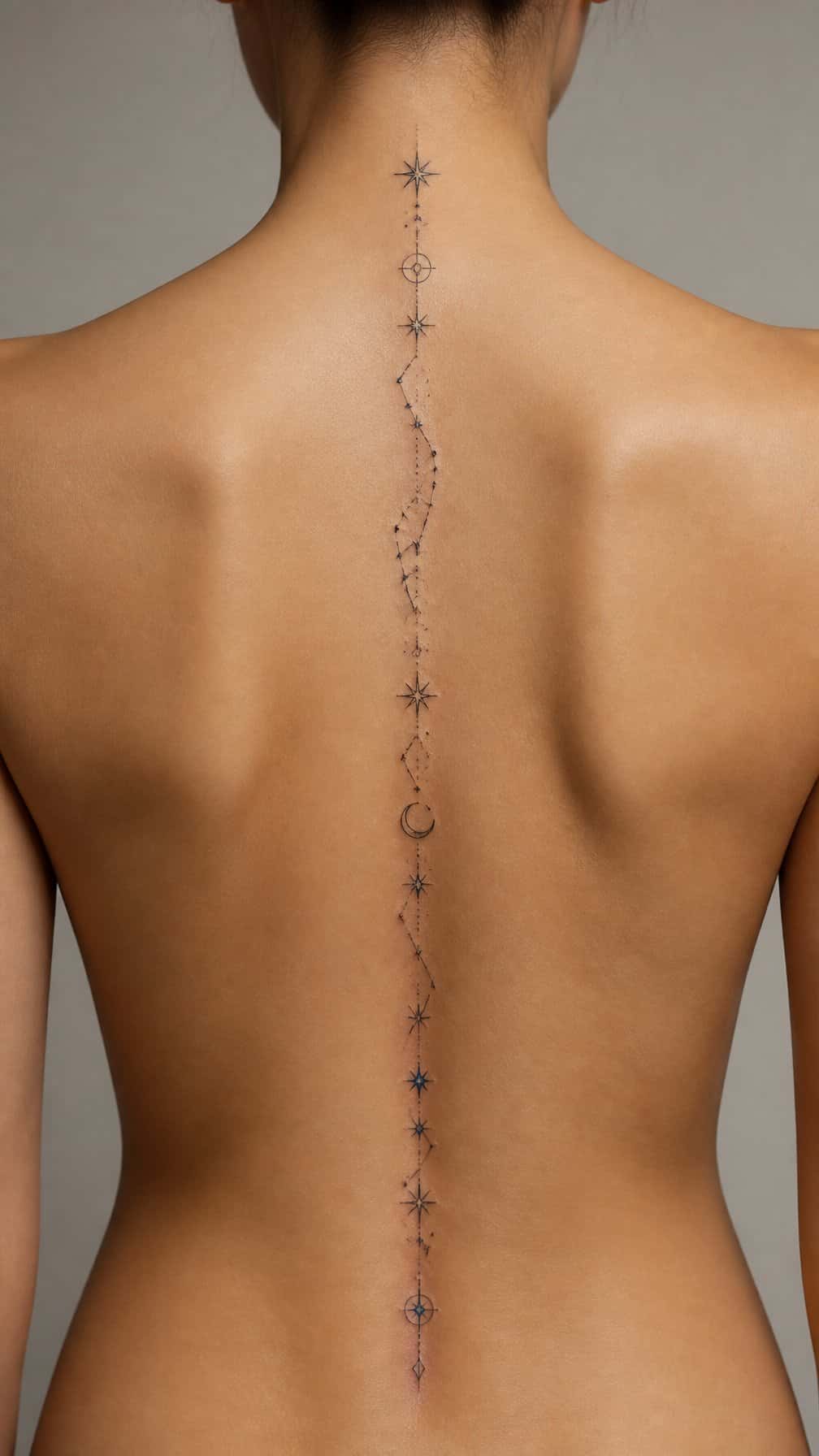
I like celestial designs because they can follow the spine without looking rigid. I would place small stars and connected constellation lines along the vertebrae, using fine blackwork for a clean, understated effect. The narrow format keeps the composition vertical while allowing each symbol to remain distinct.
I might add a crescent moon, a meaningful constellation, or tiny dots that represent important dates or people. I would keep the spacing deliberate so the design does not become crowded as it moves from the upper back toward the lower spine.
A tattoo artist can adjust the scale to suit my anatomy and account for the spine’s natural movement. I would also discuss line weight carefully, since very fine details may soften as the tattoo ages.
13) Peony flower spine tattoo
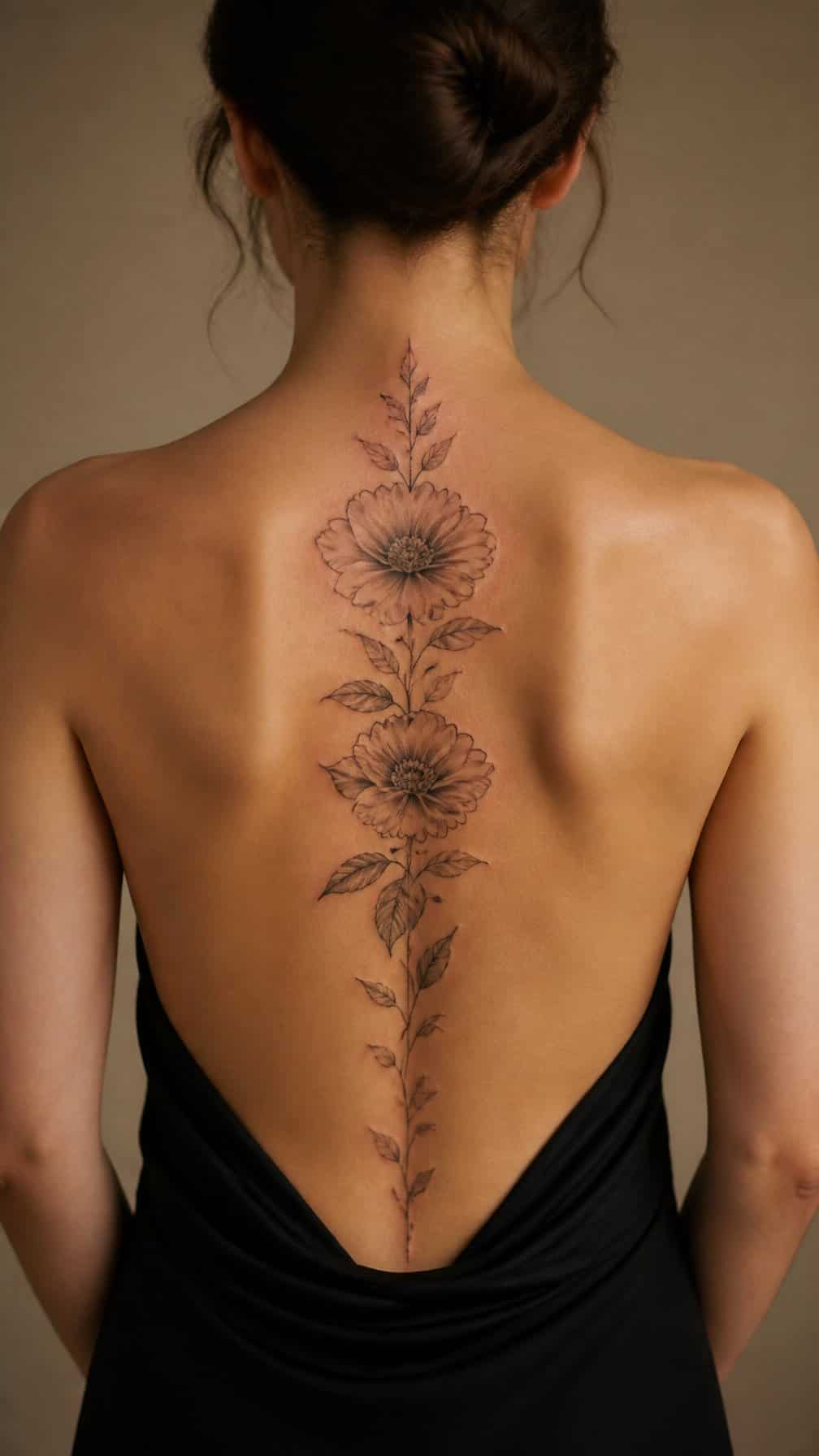
I would place a peony design along the spine to create a balanced, vertical composition. Its layered petals give the tattoo plenty of texture, while the narrow placement keeps the arrangement graceful rather than crowded.
I could choose one large bloom between the shoulder blades or connect several flowers down the back. Fine lines suit a delicate look, while heavier outlines and shaded petals create stronger definition. I would also consider adding leaves, stems, or small buds to guide the eye along the spine.
14) Sacred geometry spine tattoo
I like sacred geometry designs for the spine because their repeated lines and balanced shapes create a structured vertical composition. I can center a mandala, flower-of-life pattern, or interlocking polygon between the shoulder blades and lower back, then adjust its scale to follow the body’s natural length.
Fine lines keep the tattoo precise and lightweight, while dotwork adds gradual shading without obscuring the geometry. I would discuss symmetry, spacing, and placement with the tattoo artist, since small shifts can affect how the design aligns along the spine.
I can also personalize the pattern with subtle botanical details, celestial symbols, or meaningful coordinates. A narrow design suits a discreet look; a wider arrangement creates more visual presence across the back.
15) Roman numeral date spine tattoo
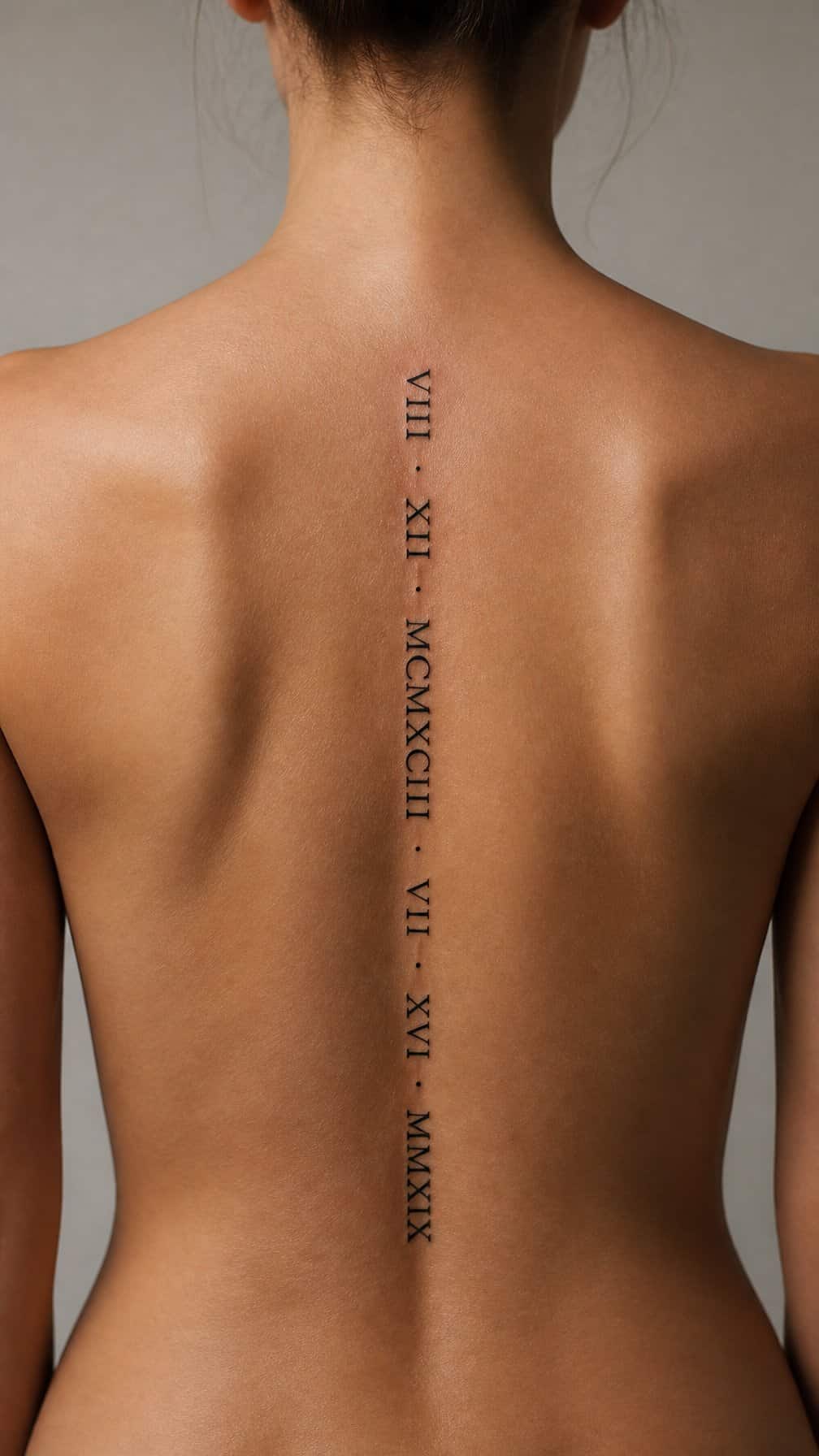
I like Roman numerals for a spine tattoo because they give a meaningful date a clean, understated appearance. I would place the numbers vertically along the spine or arrange them in one horizontal line at the upper back, depending on how much space I want to use.
I might choose a birth date, wedding date, or another personally important moment. A fine-line style keeps the design refined, while slightly heavier lettering improves readability as the tattoo ages.
I would check the numeral conversion carefully before the appointment and consider adding small separators between the month, day, and year. Black ink suits the classic look, while subtle spacing can make the design feel more balanced against the spine’s natural line.
16) Fern frond spine tattoo
I like a fern frond for its narrow shape and naturally repeating leaflets. Its central stem can follow the spine closely, while the fronds angle outward in a balanced pattern without making the design feel heavy.
I would choose fine lines for a delicate look or slightly thicker outlines for better definition over time. A black-ink version keeps the botanical structure clear, while muted green shading can add color without overpowering the form.
I would also consider a single frond, a paired arrangement, or a gently curved design that follows the body’s movement. The upper, middle, or lower spine each creates a different visual emphasis, so placement should match the intended length and scale.
17) Phoenix rising spine tattoo
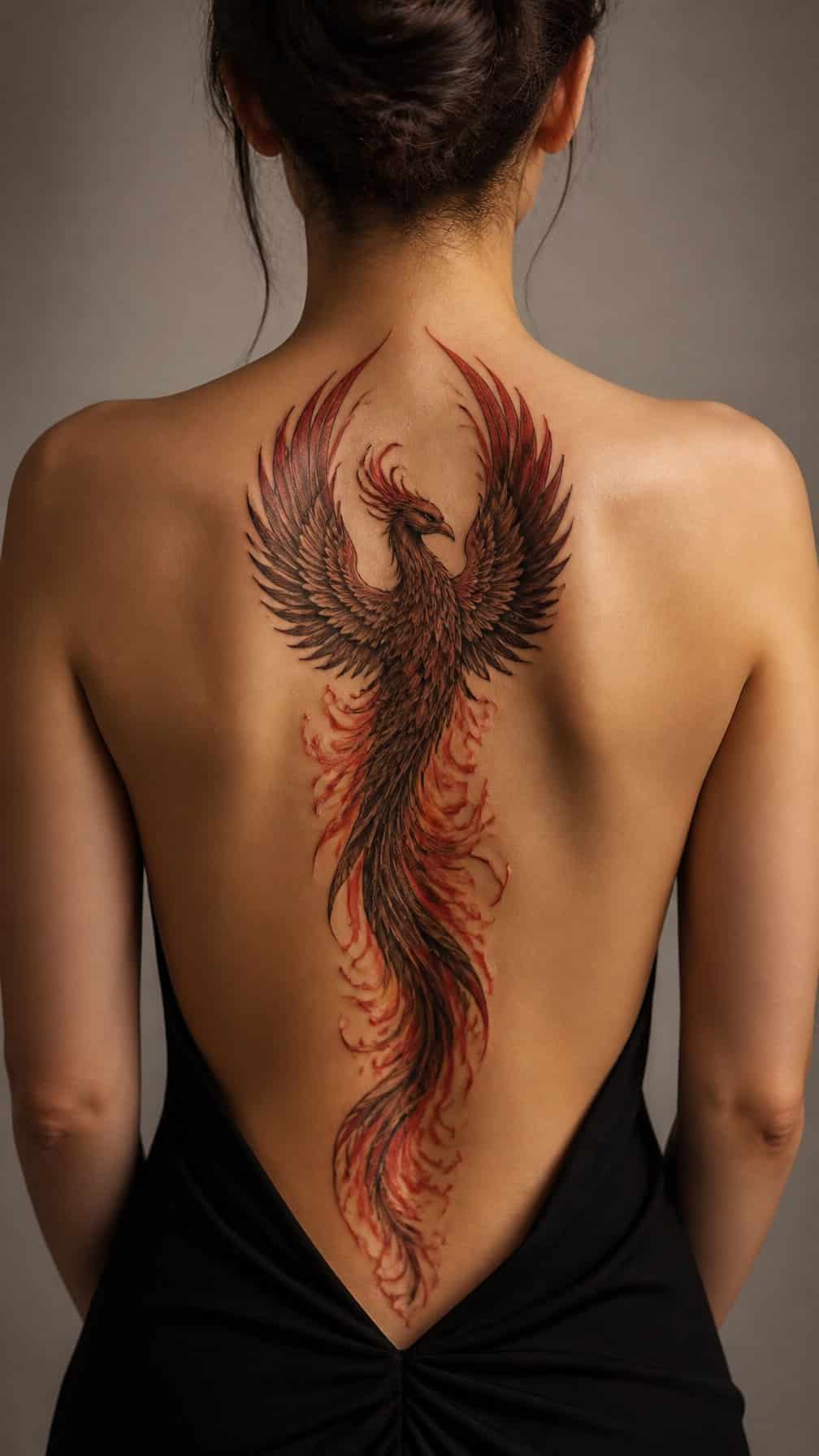
I would place the phoenix’s body along the spine, with its head near the upper back and its tail feathers tapering toward the lower back. This vertical arrangement gives the design a natural sense of movement while keeping the anatomy easy to follow.
I would use fine lines for the feathers, then add selective shading beneath the wings to create depth without making the tattoo look crowded. Warm red, orange, and gold accents can suggest fire, while black and gray work well for a more restrained design.
I might include small flames around the lower body or let the wings extend across the shoulder blades. I would keep the central spine area balanced so the tattoo remains readable from different angles.
18) Butterfly spine tattoo
I like butterfly designs along the spine because their wings can follow the body’s natural symmetry. I would place a larger butterfly between the shoulder blades, then taper smaller butterflies toward the lower back for a balanced vertical layout.
Fine-line wings create a light, delicate effect, while blackwork or shaded details give the design more visual weight. I would keep the central body aligned with the spine and leave enough space between each element so the pattern remains clear as it moves downward.
I also consider color carefully. Soft blues, muted pinks, or warm oranges can highlight the wings, while black and gray create a more understated result.
19) Watercolor hummingbird spine tattoo
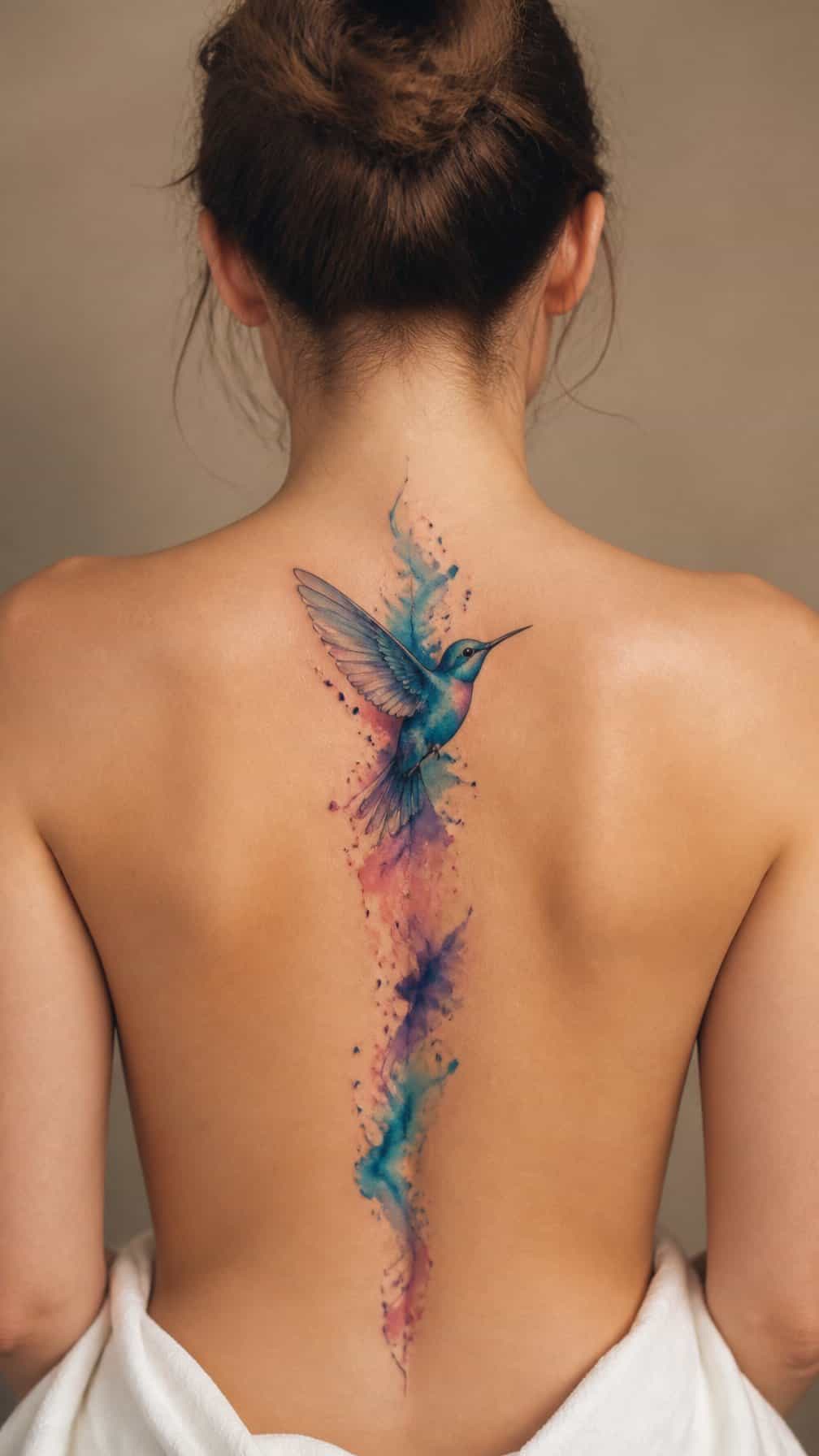
I like a watercolor hummingbird design for its compact shape and lively color placement. I would position the bird along the upper or mid-spine, with translucent blues, greens, or pinks spreading gently around its wings.
I would keep the outline light and let the color create most of the form. Small flowers, leaves, or paint-like flecks can extend vertically without making the tattoo feel crowded. Because watercolor effects may soften as the tattoo ages, I would ask my artist about subtle linework and suitable aftercare.
20) Snake and dagger spine tattoo
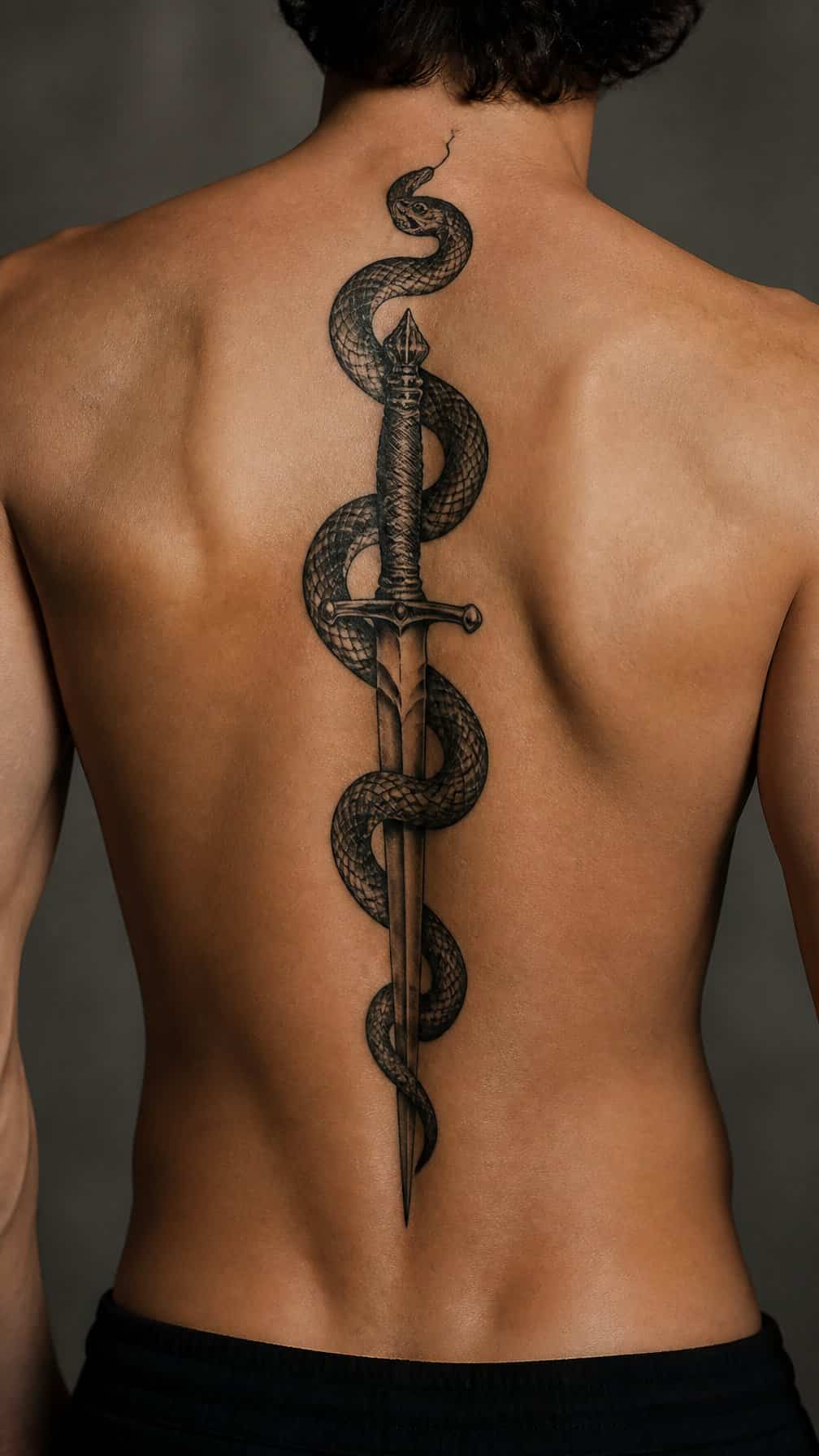
I like how a snake wrapped around a dagger creates a strong vertical design that follows the spine naturally. I would keep the blade aligned with the backbone and let the snake’s curves add movement without making the tattoo feel crowded.
Black-and-gray shading can define the scales, handle, and blade while keeping the composition cohesive. I might add small botanical details or restrained red accents, but I would avoid excessive ornament because the central pairing already provides enough visual structure. Its narrow shape also works well with gradual tapering near the neck and lower back.
21) Abstract wave spine tattoo
I like this design for its loose, fluid structure. An abstract wave can follow the spine in a narrow vertical line, or spread outward with uneven curves for a more expressive look. I would keep the composition balanced without making both sides perfectly symmetrical.
Black ink suits the clean movement of the design, while fine shading can add depth without making it look heavy. I might choose soft gray washes, broken lines, or small geometric details to create contrast.
I would place the strongest curve near the upper or lower back, depending on where I want the tattoo to draw attention. A skilled artist can adjust the line weight and spacing to suit my anatomy.
22) Vine with thorns spine tattoo
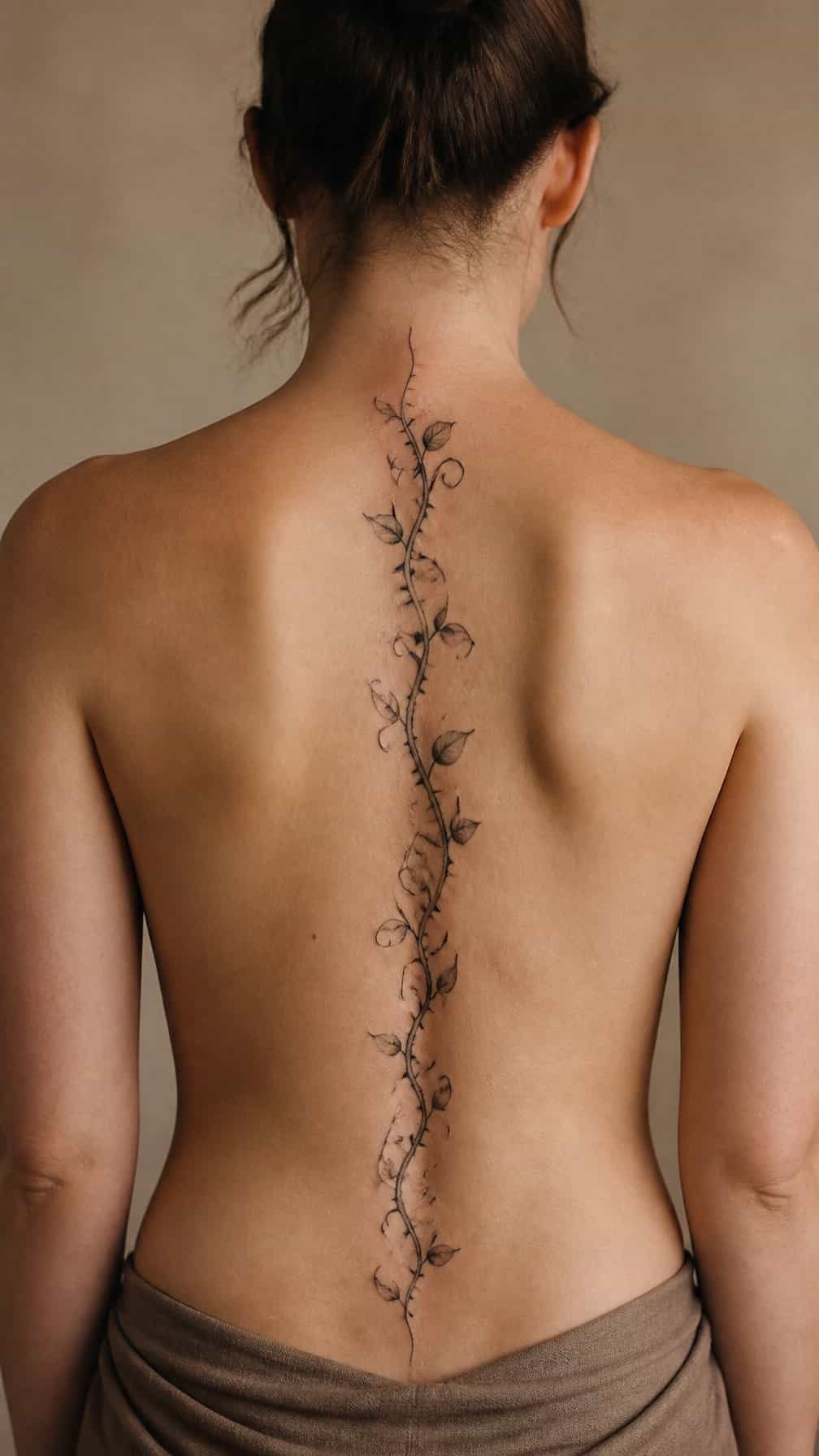
I like how a thorned vine can follow the spine’s natural line while keeping the design narrow and balanced. I would choose slender stems, pointed leaves, and carefully spaced thorns to create definition without making the tattoo feel crowded.
I might keep the vine in black and gray for a botanical, understated appearance, or add muted green for subtle contrast. The placement also lets me adjust the composition: a short design can sit between the shoulder blades, while a longer vine can extend toward the lower back. I would discuss thorn direction and line weight with my tattoo artist before booking.
Planning Placement, Size, And Design Flow
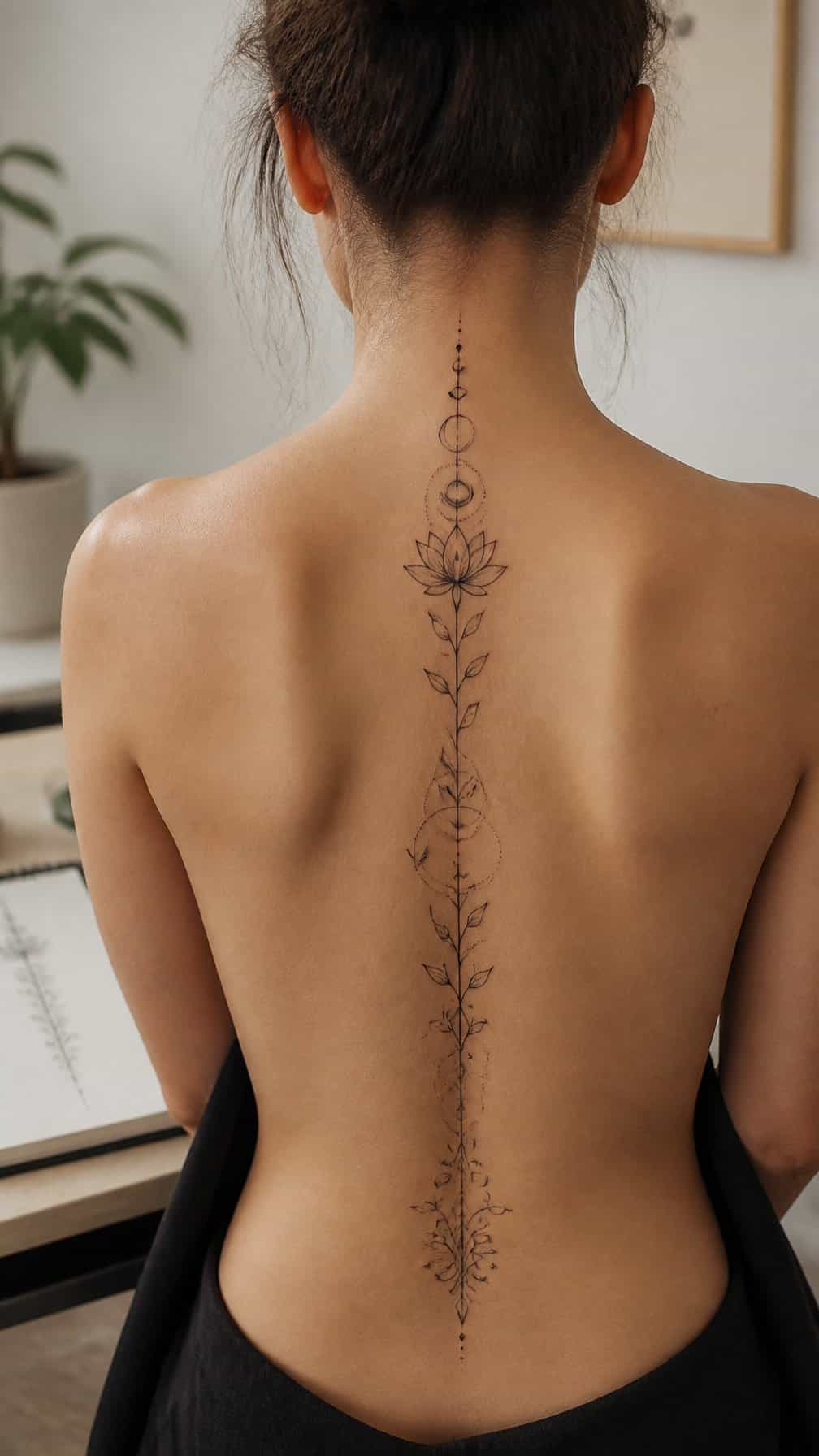
I plan spine tattoos around the body’s centerline, the movement of the vertebrae, and how the design will look from different distances. I also account for aging, healing, posture, existing ink, and the amount of detail the skin can support.
Understanding Spine Anatomy And Natural Lines
I treat the spine as a narrow, slightly curved path rather than a perfectly straight ruler. A design can follow the centerline, sit between the shoulder blades, or extend from the upper back toward the lower back. I check how the skin shifts when you bend, twist, and stand naturally before finalizing the stencil.
The vertebrae create a visible rhythm, especially on leaner bodies. I use that spacing to position repeated elements such as flowers, symbols, beads, or small script. I avoid placing important details directly over prominent bones if pressure during sitting or lying down could make healing uncomfortable.
I also consider the neck, shoulder blades, ribs, and waist. A narrow design may emphasize the spine, while a wider composition can connect naturally with the back’s surrounding anatomy.
Choosing A Size That Ages Well
I match the tattoo’s size to its detail level. Fine lettering, thin linework, and small gaps need enough space to remain readable as the ink softens over time. If a design includes several symbols, I leave visible spacing between them instead of compressing everything into one narrow column.
For a short tattoo, I usually place the strongest visual element near the upper or middle back. Longer designs need consistent proportions from top to bottom, with the width adjusted gradually so the composition does not look abruptly cut off at the waist.
I also consider daily movement and sun exposure. Larger designs require more healing time, while very small details may lose clarity sooner. A tattoo artist can test several stencil lengths and widths before the needle touches the skin.
Working With Existing Tattoos
I map nearby tattoos before choosing a spine design. Existing ink on the shoulders, ribs, lower back, or neck can affect the new tattoo’s spacing, contrast, and visual direction. I use matching line weights or repeated shapes when I want the pieces to feel connected.
When the surrounding tattoos have bold color or heavy shading, I may keep the spine design simpler and use stronger outlines for separation. If the existing work is delicate, a dense central piece could overpower it, so I adjust the scale and detail accordingly.
I also check whether an older tattoo needs touch-up work. Uneven fading, blurred edges, or an unfinished section can influence placement, and a consultation lets the artist create one stencil that respects both the new design and the ink already on the skin.
Preparing For The Appointment And Healing Well
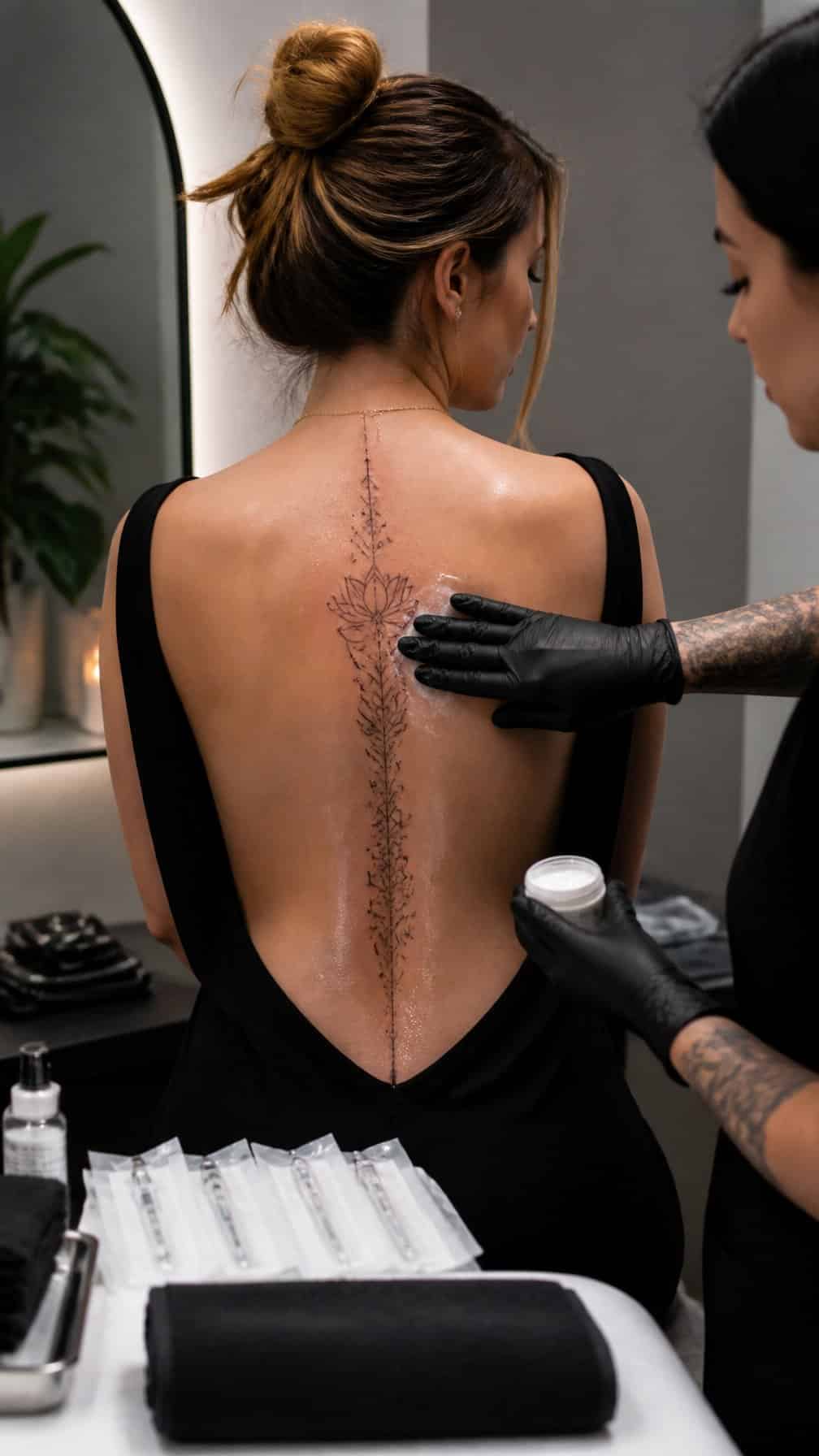
I plan for the spine’s narrow, sensitive placement by allowing enough time, protecting the skin, and following aftercare consistently. Good preparation helps me manage discomfort, while careful healing reduces friction, stretching, and irritation along the back.
Managing Pain And Session Length
I expect discomfort to vary with the design, line density, shading, and the position along my spine. Areas over bone can feel sharper, while sections with more tissue may feel less intense. I tell my artist about my pain tolerance and request short breaks before discomfort affects my ability to stay still.
A long spine tattoo may require multiple sessions, especially if it includes heavy shading or detailed imagery. I eat a balanced meal beforehand, drink water, and bring a light snack. I avoid alcohol and recreational drugs, and I do not apply numbing cream unless my artist approves a specific product and use.
Pre-Appointment Skin Care
I keep the area clean and moisturized during the week before my appointment, but I avoid applying lotion on the day unless my artist instructs me to do so. I do not shave the spine myself immediately beforehand because razor irritation or small cuts can interfere with the session.
I avoid tanning, sunburn, harsh exfoliants, and intense back treatments before the appointment. I wear a loose, clean shirt that lets the artist reach my back without repeated fabric friction. I also tell the artist about allergies, skin conditions, medications, and any healing problems that could affect the procedure.
Aftercare For A High-Movement Area
I follow my artist’s instructions for removing the bandage and washing the tattoo. I use lukewarm water, clean hands, and a mild fragrance-free cleanser, then pat the area dry with a fresh paper towel. I apply only a thin layer of the recommended aftercare product.
For the first several days, I choose loose clothing and avoid backpacks, tight waistbands, vigorous exercise, swimming, hot tubs, and prolonged sun exposure. I avoid scratching or peeling flakes, even when itching increases. If redness spreads, swelling worsens, pain intensifies, or drainage looks unusual, I contact a healthcare professional.