Heart tattoos keep turning up as one of the most requested shapes in any tattoo shop sketchbook, and it’s not hard to see why. The outline bends toward almost any style, from a single fine line on a finger to a fully shaded anatomical piece across a forearm. The ideas below sketch out nineteen starting points for a heart tattoo, with notes on placement, linework, and composition worth bringing to a first consultation.
Table of Contents
- 1 Tiny Outline Heart on a Finger
- 2 Fine-Line Heart on the Wrist
- 3 Anatomical Heart
- 4 Heart with Fingerprint Lines
- 5 Double Linked Hearts
- 6 Heartbeat Line Through Heart
- 7 Mended Broken Heart
- 8 Floral Heart
- 9 Heart Behind the Ear
- 10 Heart Constellation
- 11 Sacred Heart
- 12 Winged Heart
- 13 Watercolor Heart
- 14 Heart Lock and Key
- 15 Heart on the Hand
- 16 Blackwork Heart
- 17 Heart of Thorns
- 18 Matching Wrist Hearts
- 19 Cheekbone Heart
Tiny Outline Heart on a Finger
Save for later
Want to come back to this story? Save it with your email so it is easy to find again.
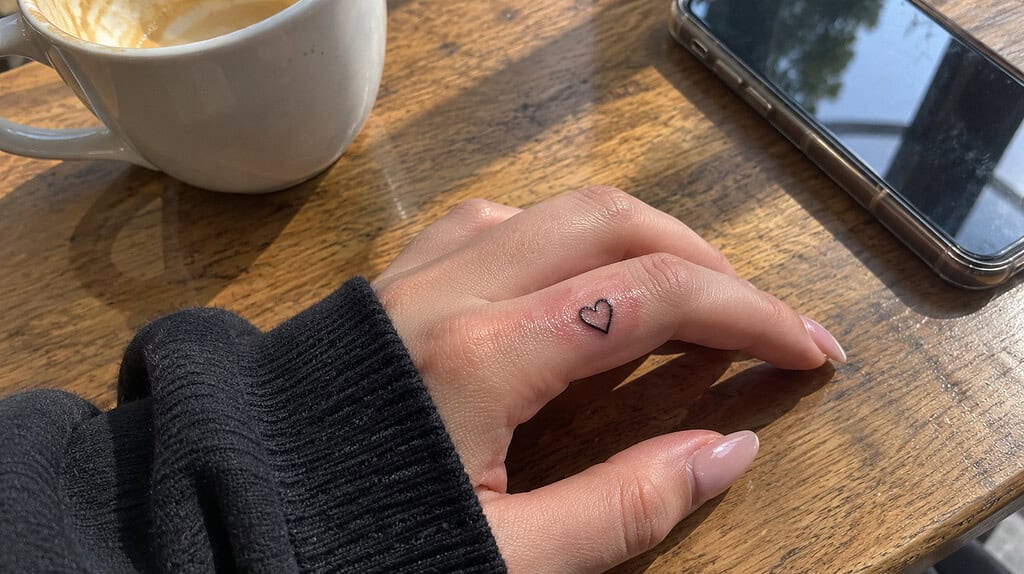
A fine black line traces a small heart along the side of an index finger. Its open center keeps the design light, while the narrow placement gives the shape a subtle profile.
Fingers curve more than most people realize, and that curve affects how an outline reads from different angles. A simple, well-spaced shape helps the heart stay recognizable no matter how the hand turns. Its small scale also makes it easy to cover when needed.
Fine-Line Heart on the Wrist
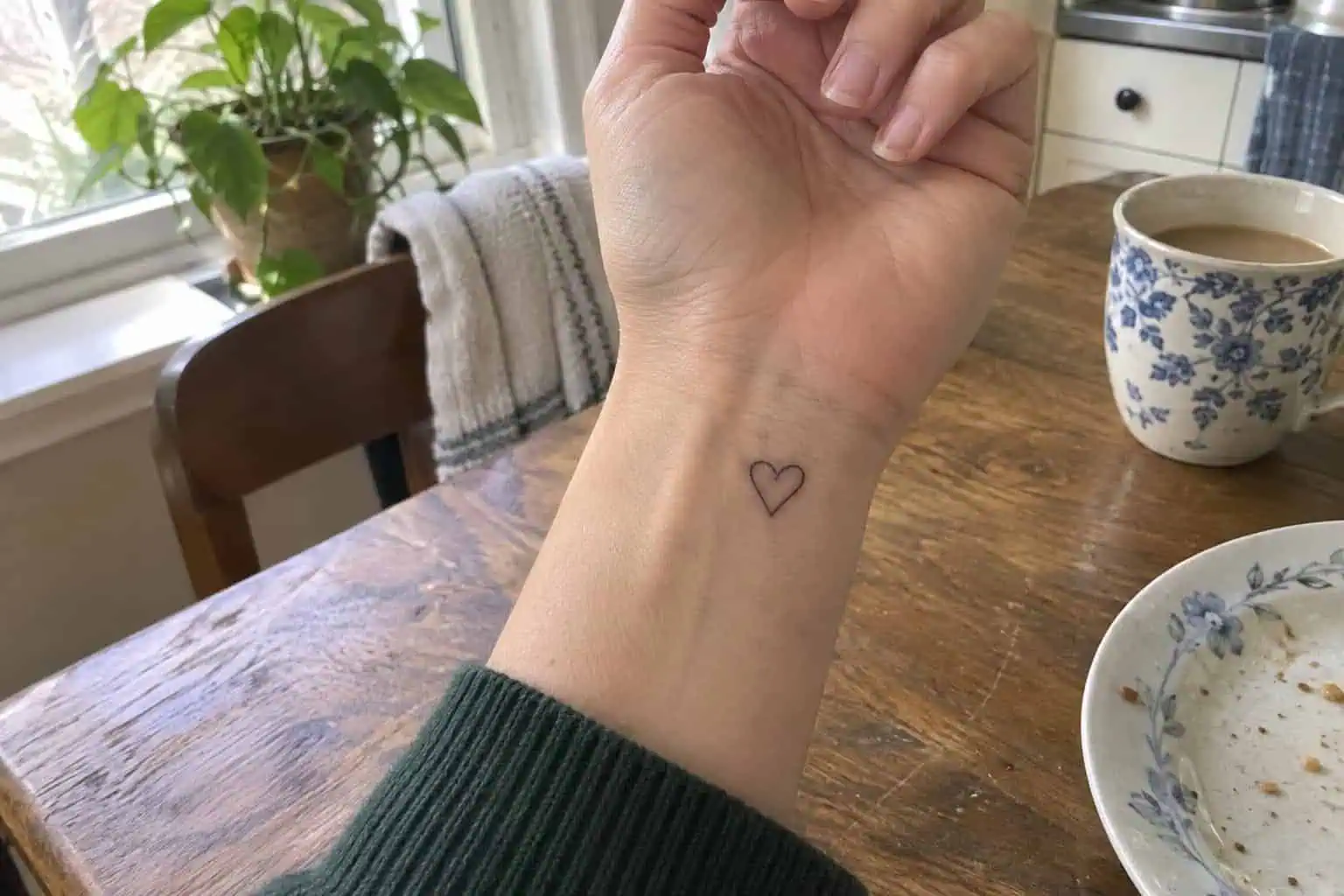
On the inside of the wrist, a thin black outline gives a small heart a clean, delicate shape. Its simple contour keeps the design legible while leaving plenty of bare skin around it.
This placement puts the motif in view whenever the hand turns palm-up. A centered design follows the wrist’s natural lines, while a slight tilt gives the heart a more personal feel. Keeping the outline crisp and uncluttered preserves its light, almost weightless appearance.
Anatomical Heart
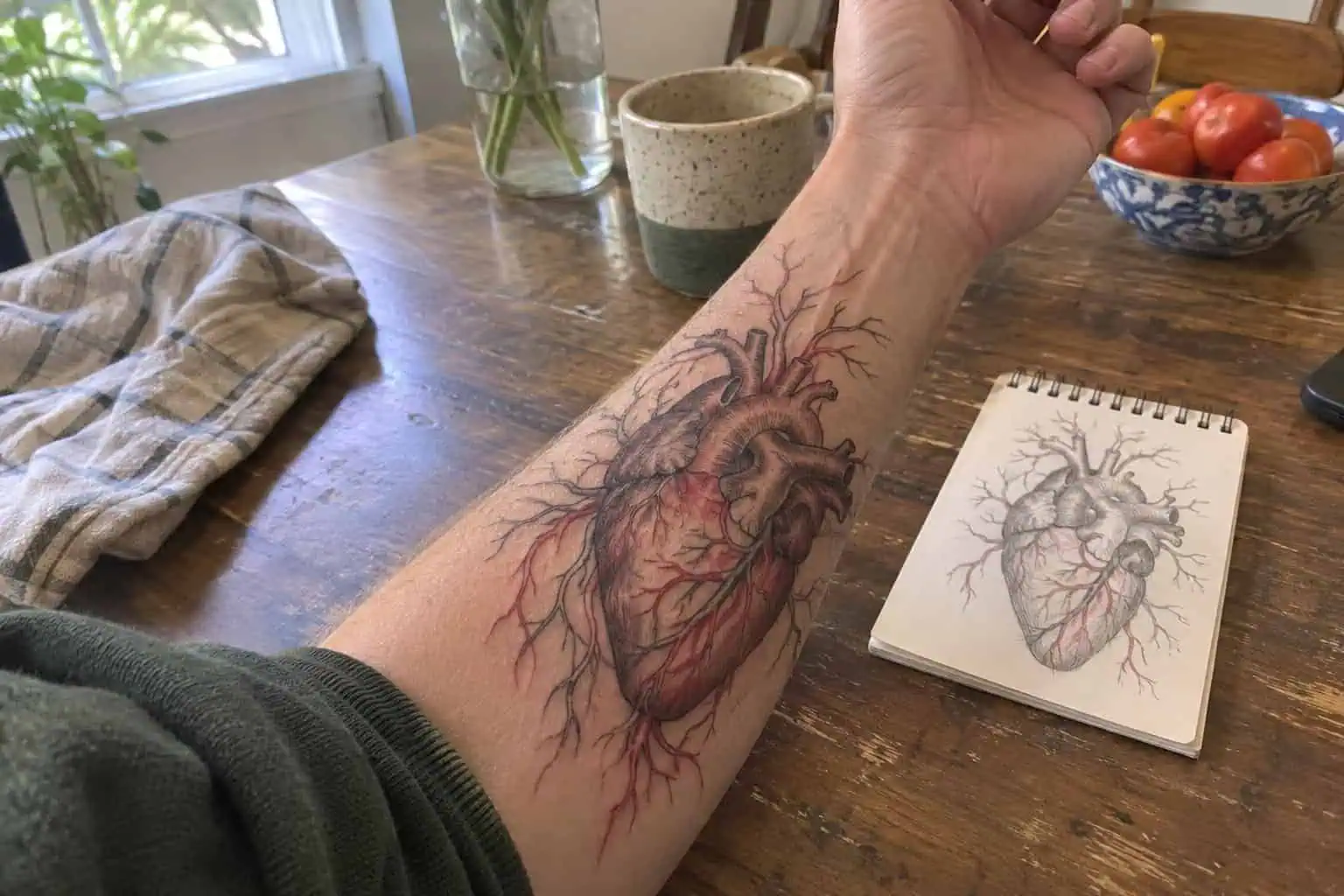
A realistic anatomical heart turns the familiar symbol into a study of form. The artist can define the chambers, vessels, and branching lines with fine black detail, then use red ink to draw attention to the heart’s central shape.
On a forearm, the design follows a long, visible space. Careful shading gives the folds and vessels depth, while crisp outlines keep the details readable. This piece rewards a steady session and suits an artist confident with intricate linework.
Composition cues: keep the main heart shape clear, vary line weight across the vessels, and place red accents where they guide the eye. The finished tattoo should hold up on bare skin alone, with nothing competing against the anatomical detail.
Heart with Fingerprint Lines
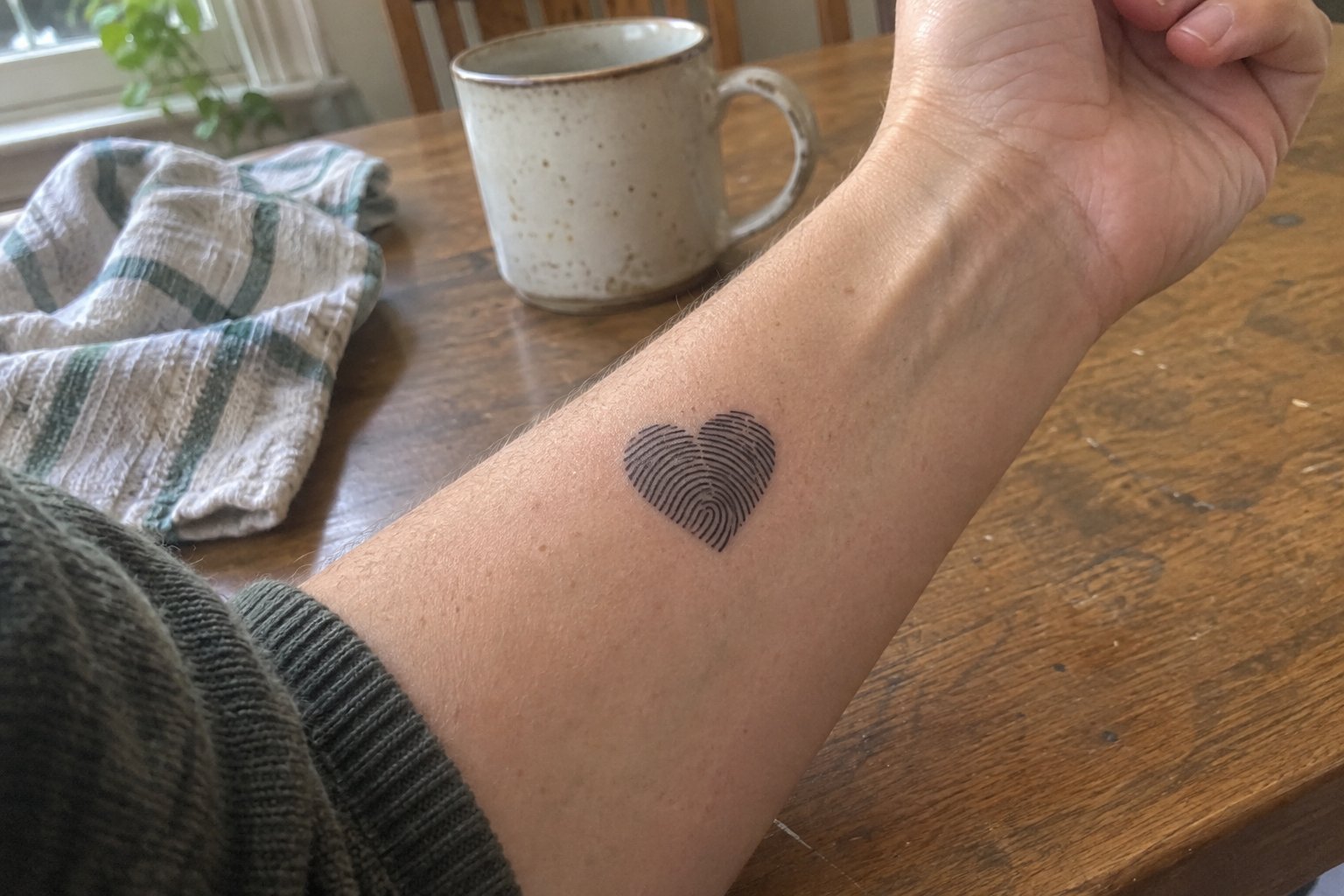
Concentric fingerprint ridges fill the heart’s silhouette, giving its familiar outline a distinct, personal pattern. A loved one’s actual fingerprint can guide the linework, with the ridges curved and cropped to follow the heart’s shape.
On the upper arm, the design reads clearly against bare skin. Fine, consistent lines preserve the fingerprint’s whorls, while a clean outer edge keeps the heart easy to recognize. A tattoo artist can use a fingerprint image as reference when planning the pattern.
Double Linked Hearts
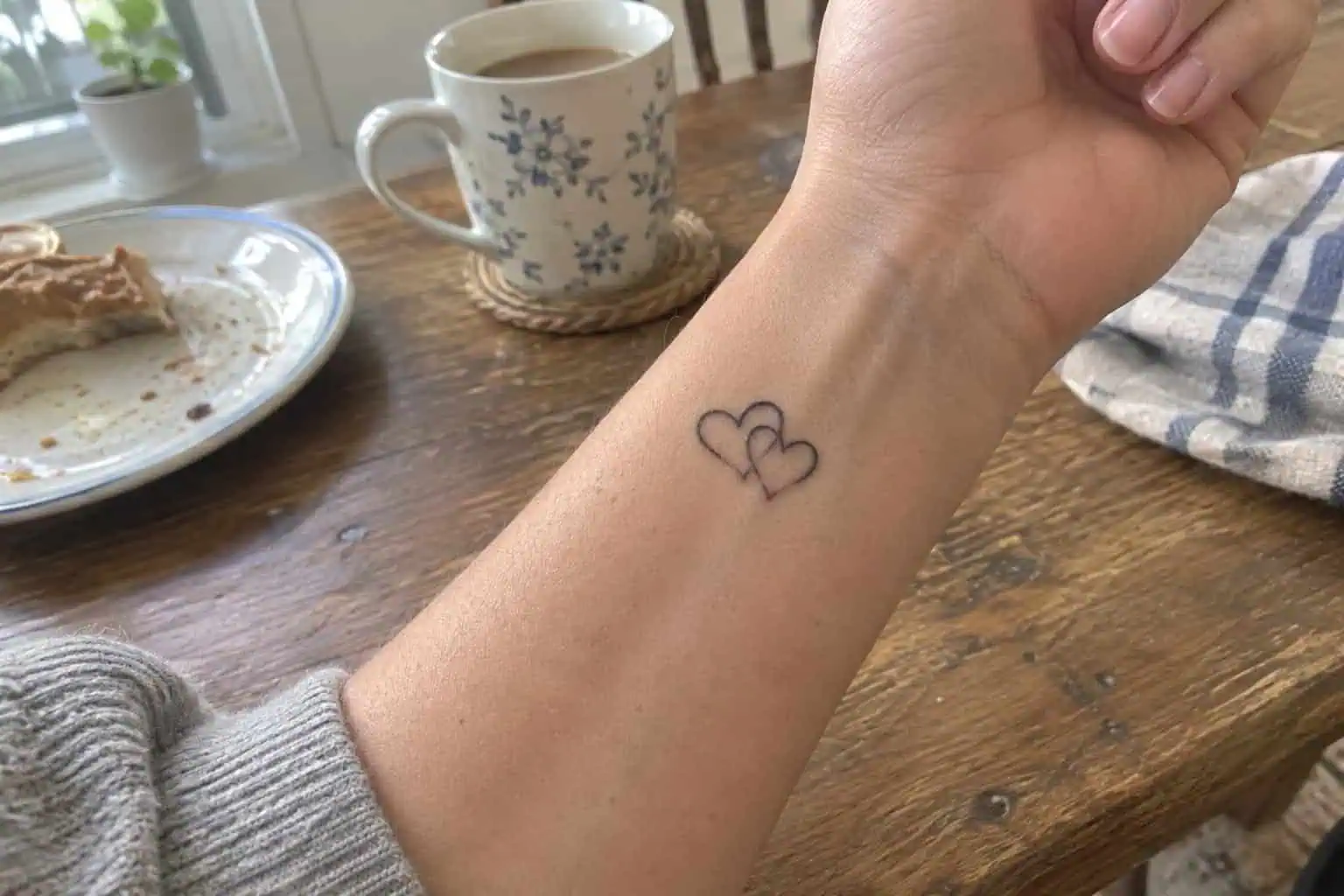
Two outlined hearts overlap at their sides, creating a compact motif that reads clearly at ankle scale. Their shared contour gives the design a paired feel, while the open centers keep the composition light and uncluttered.
Fine, even lines preserve the shape of each heart and make the crossing point easy to follow. Partners can use matching versions, with the same proportions and placement, or let each tattoo reflect small differences in line weight.
On the ankle, the design sits neatly above the foot or along the outer ankle bone. Sketching it out first helps test how the hearts angle together and how much space to leave between their curves.
Heartbeat Line Through Heart
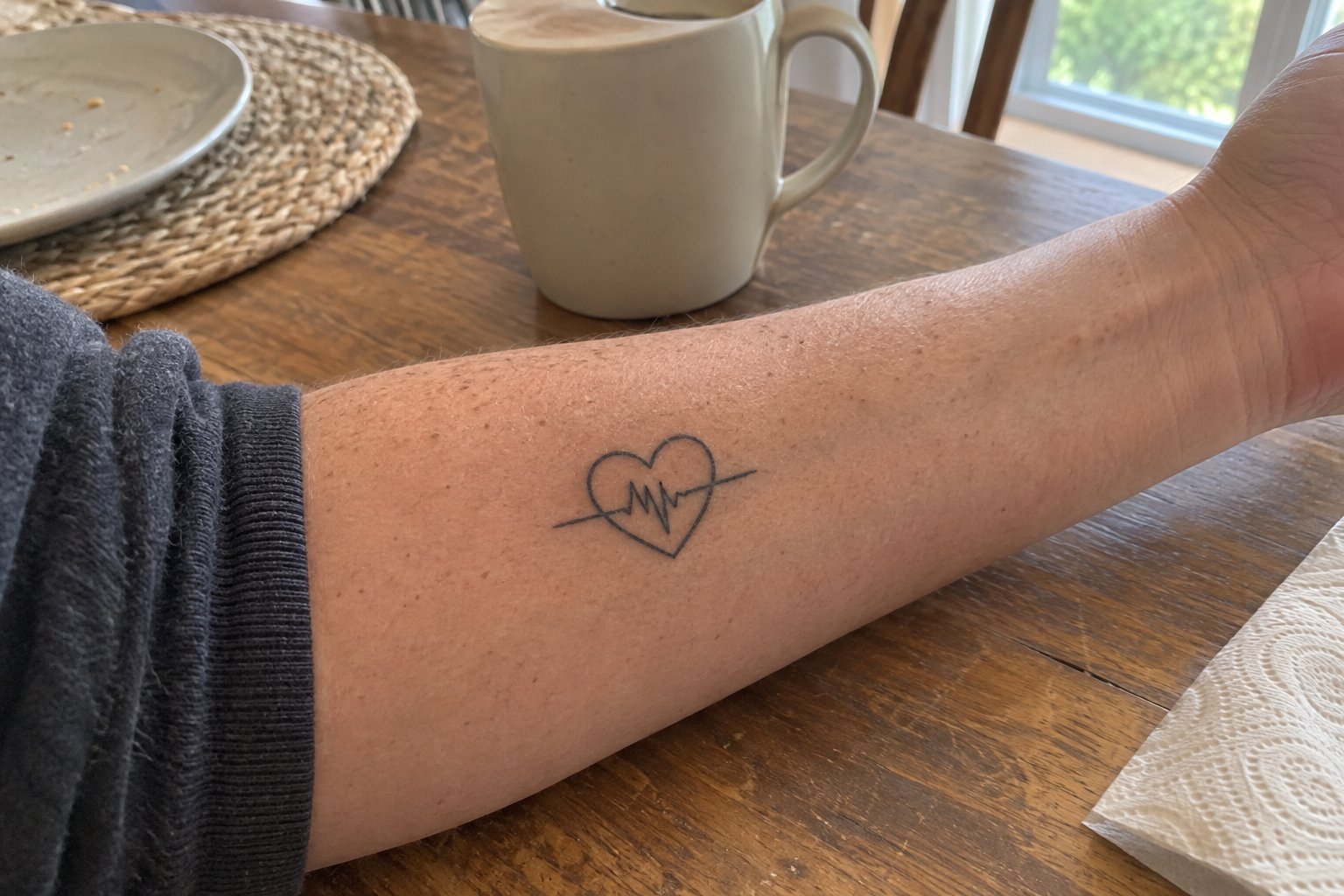
A clean pulse line cuts across the heart’s silhouette, giving the design a sense of movement while keeping its central shape easy to read. On the inner forearm, the long, narrow placement lets the line follow the arm’s length, with the heart serving as its focal point.
Fine, even strokes keep the composition crisp. The pulse peaks can sit on either side of the heart, or pass through its center, where a small shift in line weight draws the eye inward. Most of the design’s meaning comes through that pairing, a familiar heart shape set against the rhythm of a line that reads instantly as a heartbeat.
Mended Broken Heart
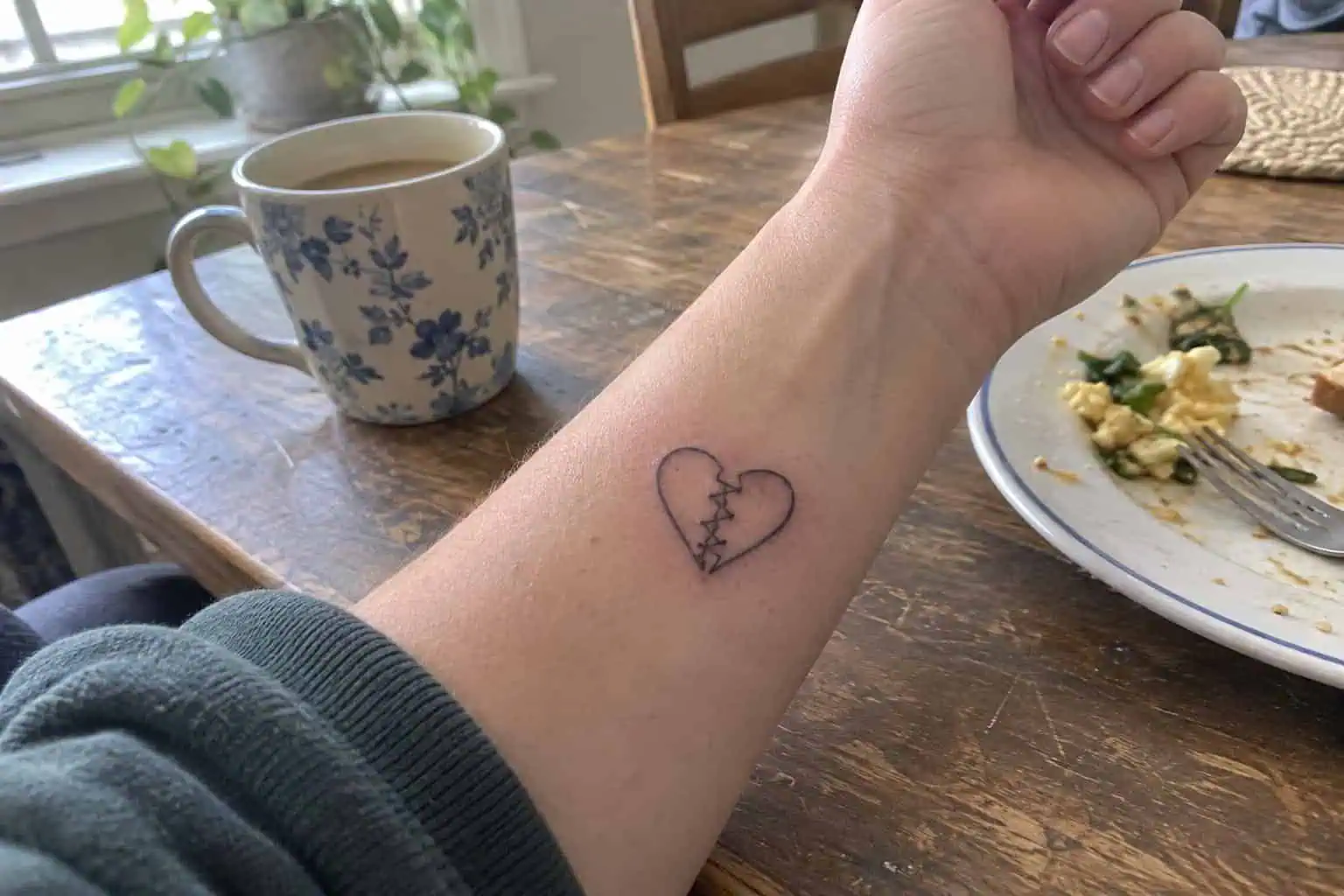
Small stitches bridge the crack in this broken-heart tattoo, turning the split into the design’s main detail. Fine, evenly spaced lines keep the mark legible, while a simple heart outline gives the stitches room to stand out.
Placed on the shoulder, the tattoo follows the body’s natural curve and remains easy to view on bare skin. Its compact composition makes recovery and moving forward the focus, with the stitched seam working as a quiet visual cue rather than a literal wound.
Floral Heart
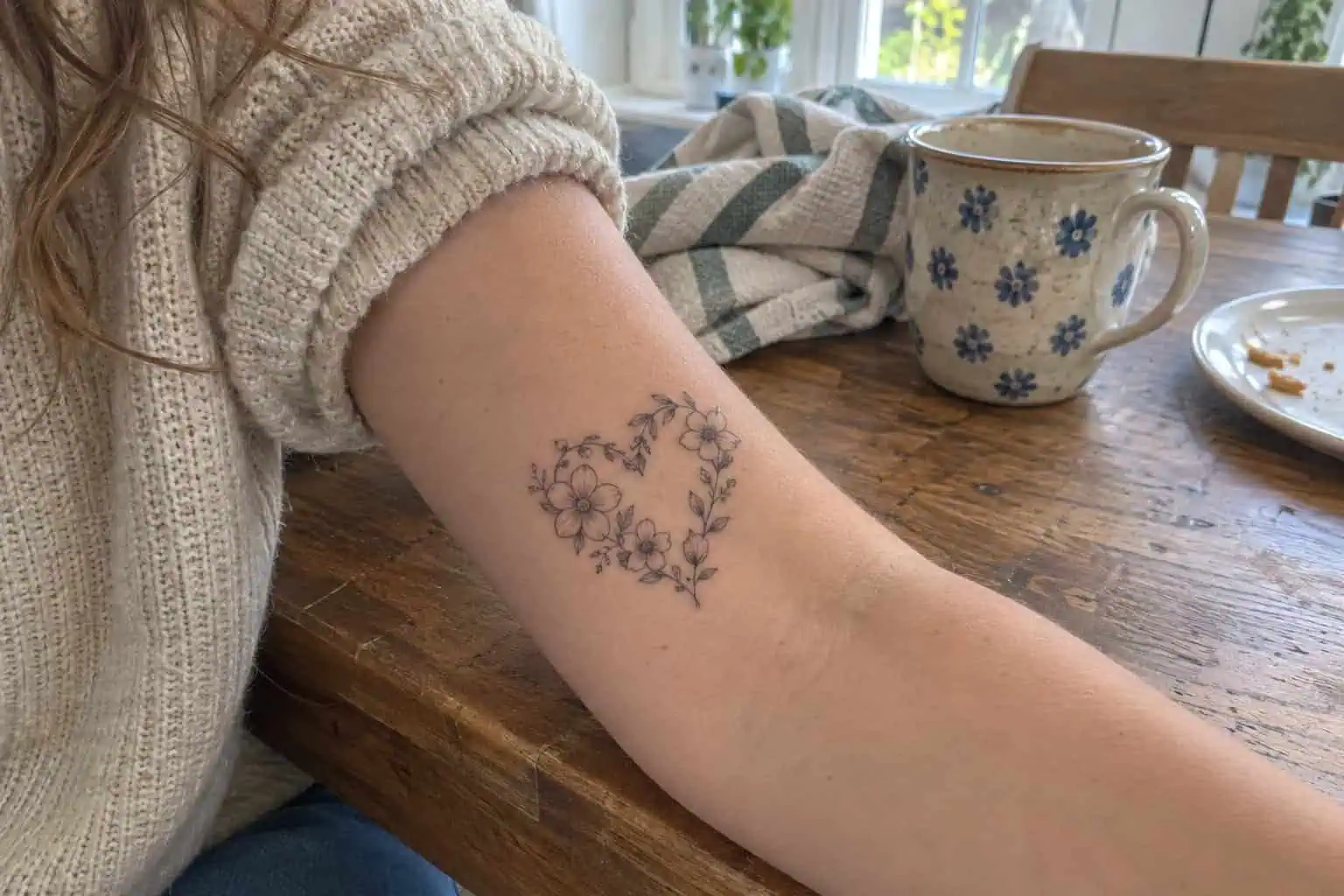
Small blossoms and curved leaves trace the outline of a heart, giving the motif a light, organic shape. On the outer thigh, the design follows the leg’s natural curve and leaves room for each flower to stay distinct.
Fine outlines keep the petals readable, while a few darker centers add contrast. Varying flower sizes and leaf angles creates gentle movement without crowding the heart’s silhouette.
Floral hearts age better when the petals vary slightly in size. A perfectly symmetrical cluster can start to look stiff once the skin settles, while small irregularities read as natural even years later.
Heart Behind the Ear
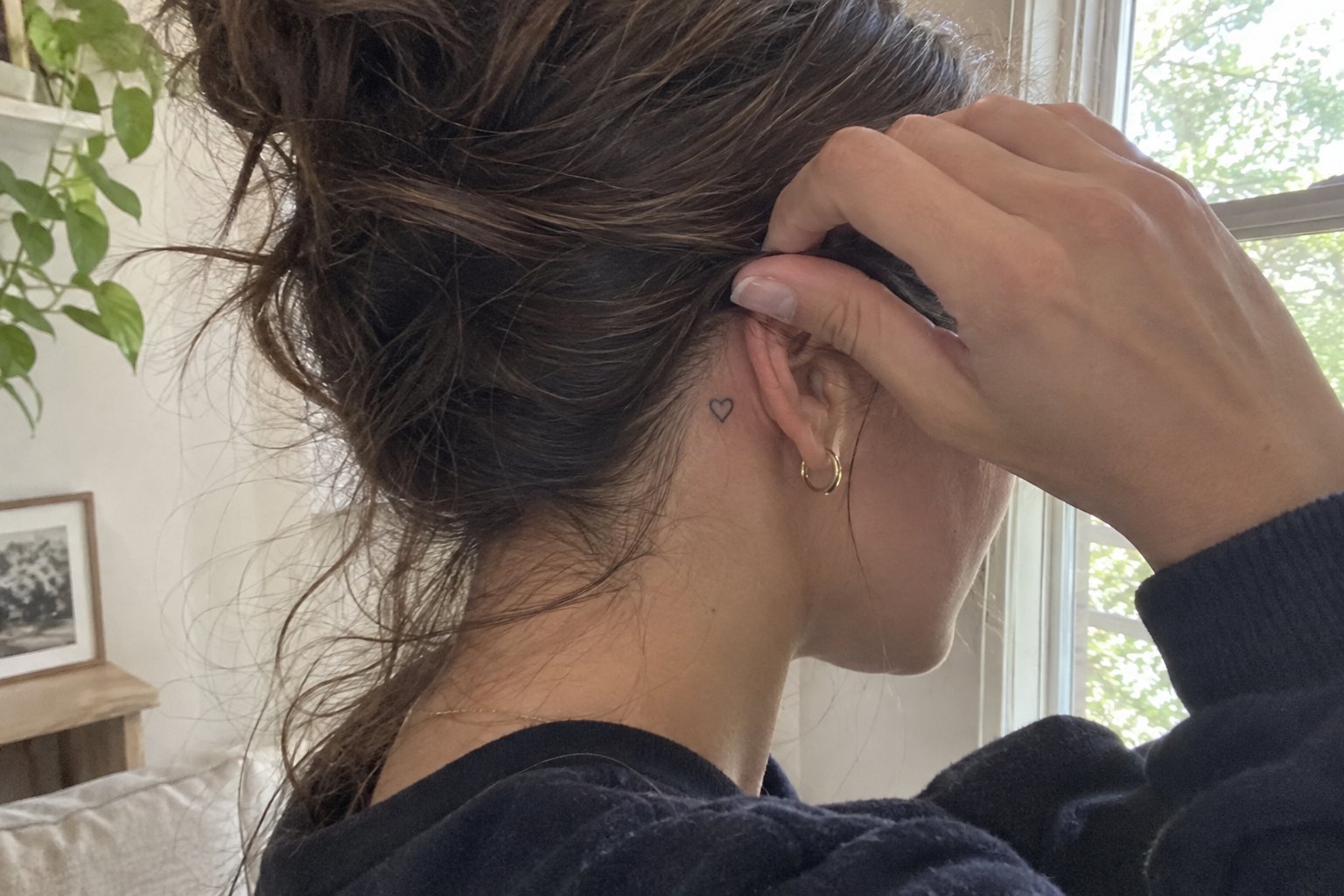
A small solid-black heart sits close to the curve behind the ear, where its compact shape follows the contours of the skin. Its filled silhouette keeps the design crisp and easy to recognize, even at a modest size.
The placement gives the heart a discreet feel. Hair can cover the area when desired, while swept-back styles bring the tattoo into view. For a clean composition, keeping the heart’s edges smooth and its proportions balanced with the space behind the ear matters more than size.
Heart Constellation
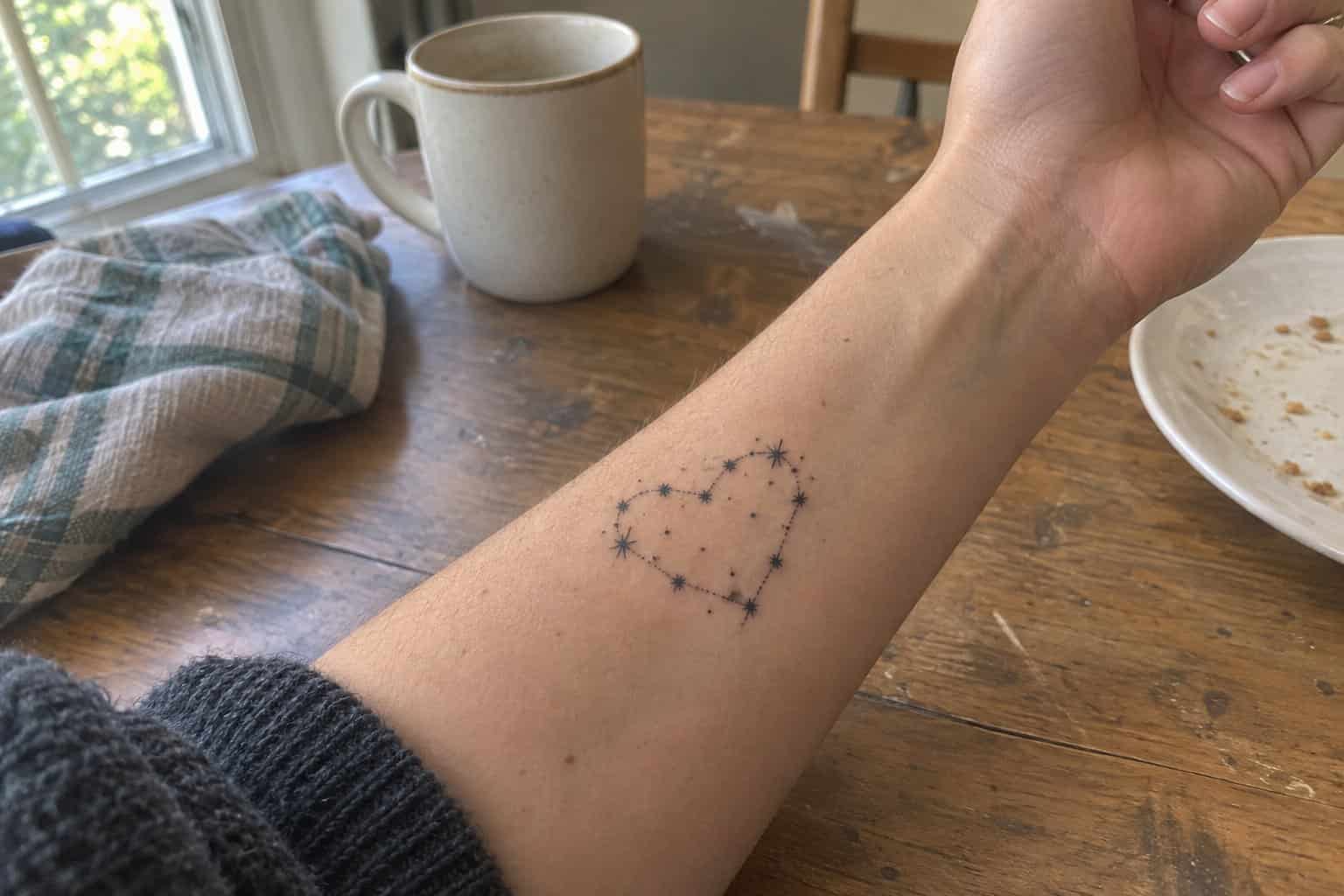
Tiny stars trace a heart outline across the shoulder, with fine lines connecting each point. The open space inside keeps the shape light and easy to read against bare skin. Its night-sky feel comes from the star pattern, while the familiar heart silhouette gives the design a clear focal point.
A close-set cluster can define the curves, with slightly wider spacing near the center to preserve the outline. Varying the stars’ sizes subtly, then keeping the connecting lines delicate, lets the pattern support the shape instead of competing with it. On the shoulder, the curve follows the body’s natural slope.
Sacred Heart
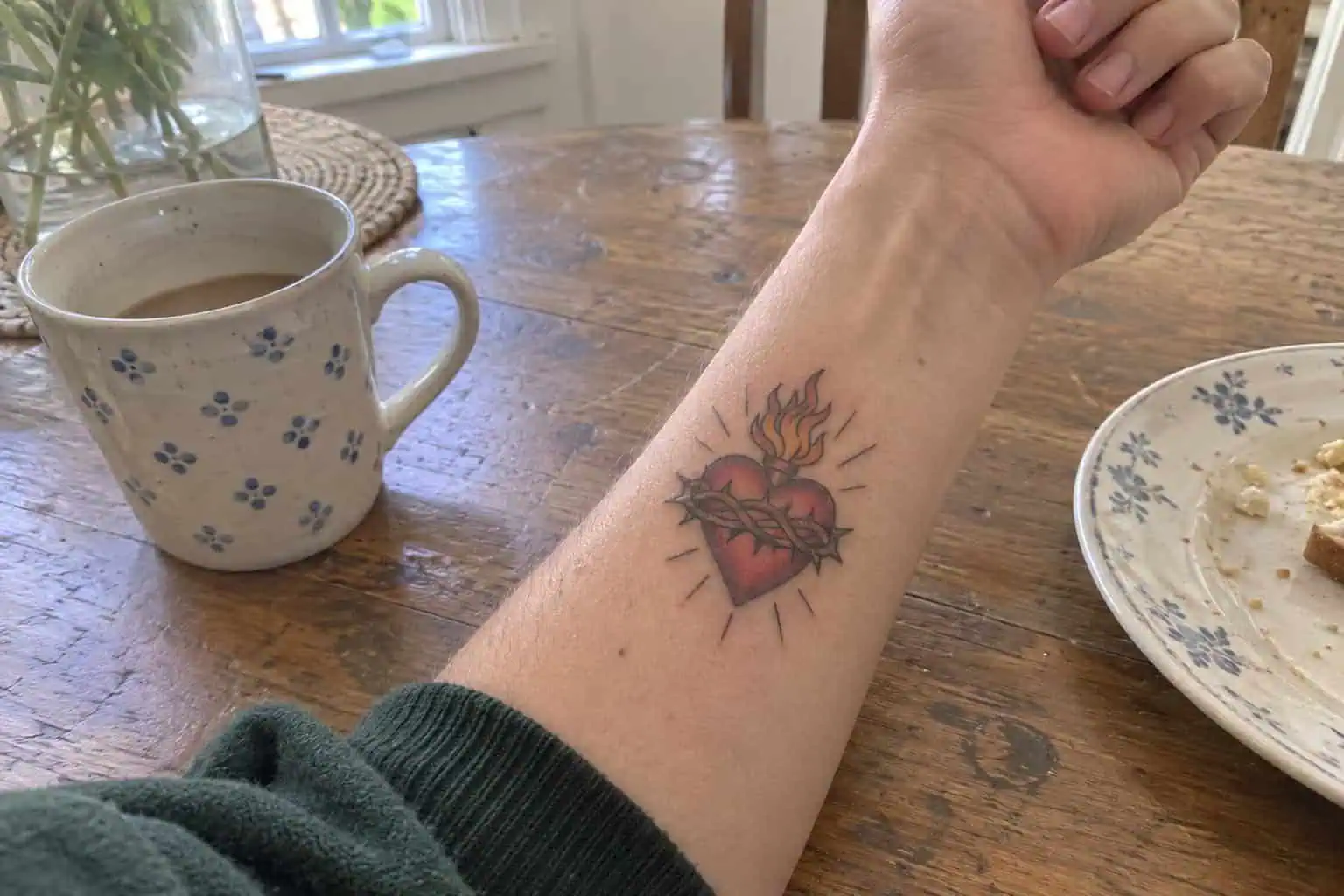
A Sacred Heart tattoo pairs a heart with a crown of thorns and rising flames, creating a compact image with strong visual movement. Traditional linework gives the heart a clear outline, while bold color separates the red flesh, dark wreath, and warm fire.
On the outer thigh, the design can follow the body’s curve, with the flames extending upward and the thorn wreath framing the heart. Sketching the shape and spacing beforehand helps, especially where the heart’s point meets the thigh’s natural contour.
Winged Heart
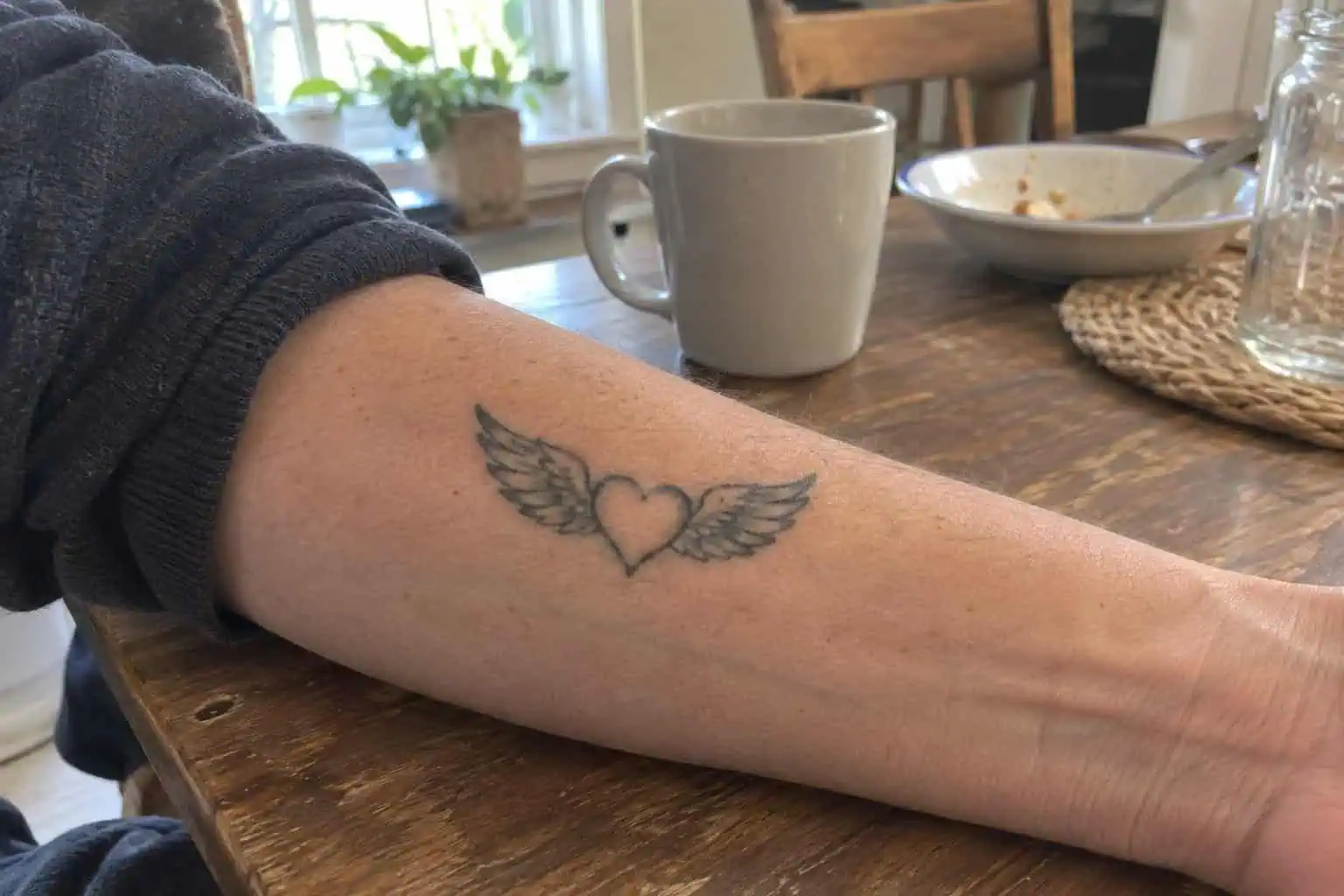
Feathered wings stretch from either side of the heart, giving the design a broad, balanced shape across the upper back. Fine lines can define individual feathers, while darker shading around the heart creates a clear center.
Personal meaning here tends to settle into the details: the heart’s placement, the wings’ span, or the contrast between soft feather texture and bold outlines. A larger design leaves room for layered feathers that follow the shoulder blades and the natural curve of the back.
Watercolor Heart
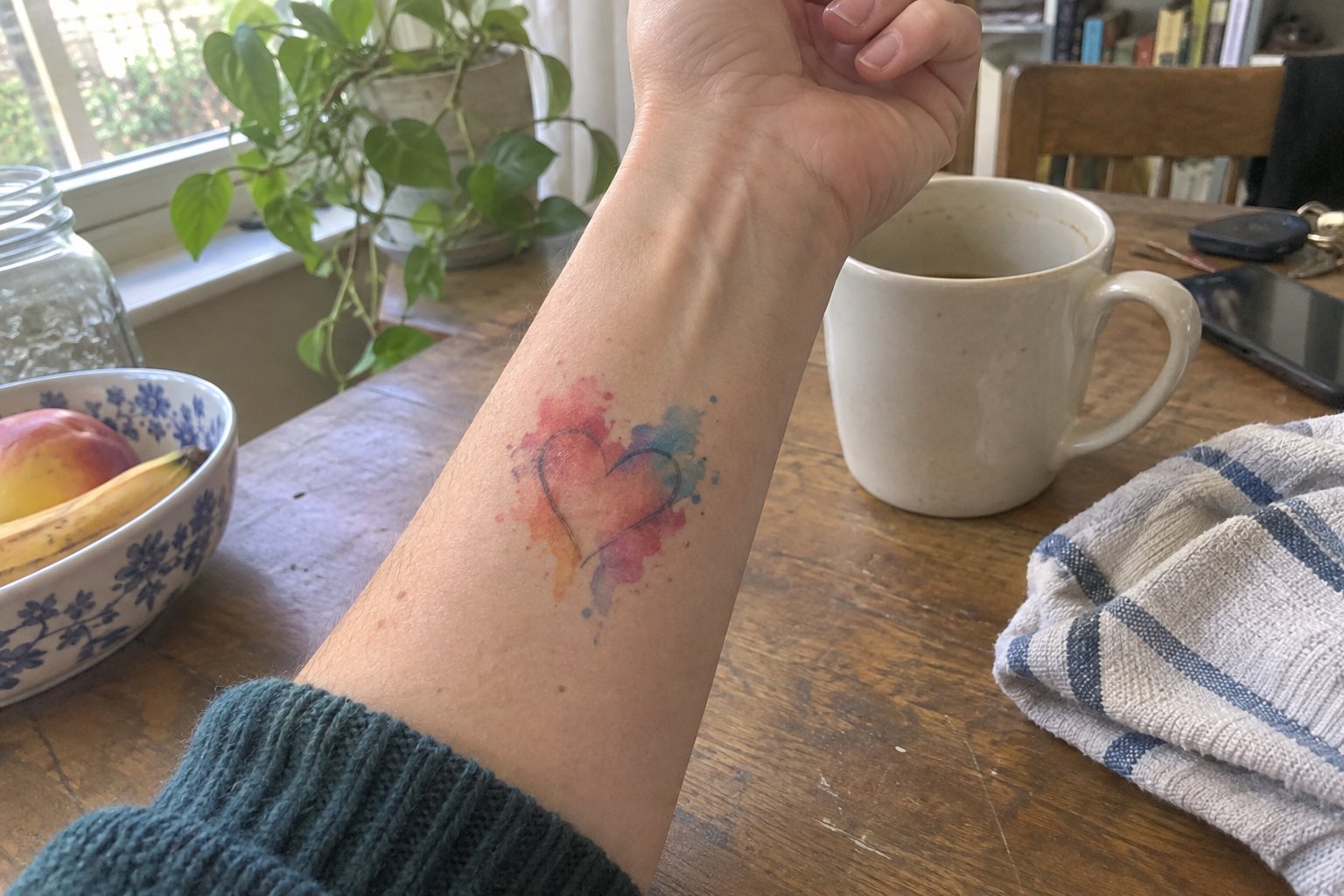
Pink and purple pigment gives this heart a soft, shifting appearance. The washes meet and overlap without an outline, letting the shape emerge through color alone.
Placed along the ribs, the design follows the body’s natural curve. Its loose edges create gentle variation in the silhouette, while the two-color palette adds depth to a collection of black-ink tattoos. A sketch can explore how much the hues blend and where each wash gathers before the final placement gets set.
Outline-free watercolor pieces rely on the eye’s tendency to fill in a shape from color boundaries alone. A heart doesn’t need a crisp edge to read as a heart, the brain supplies the missing contour, which is part of why these pieces feel soft rather than vague.
Heart Lock and Key
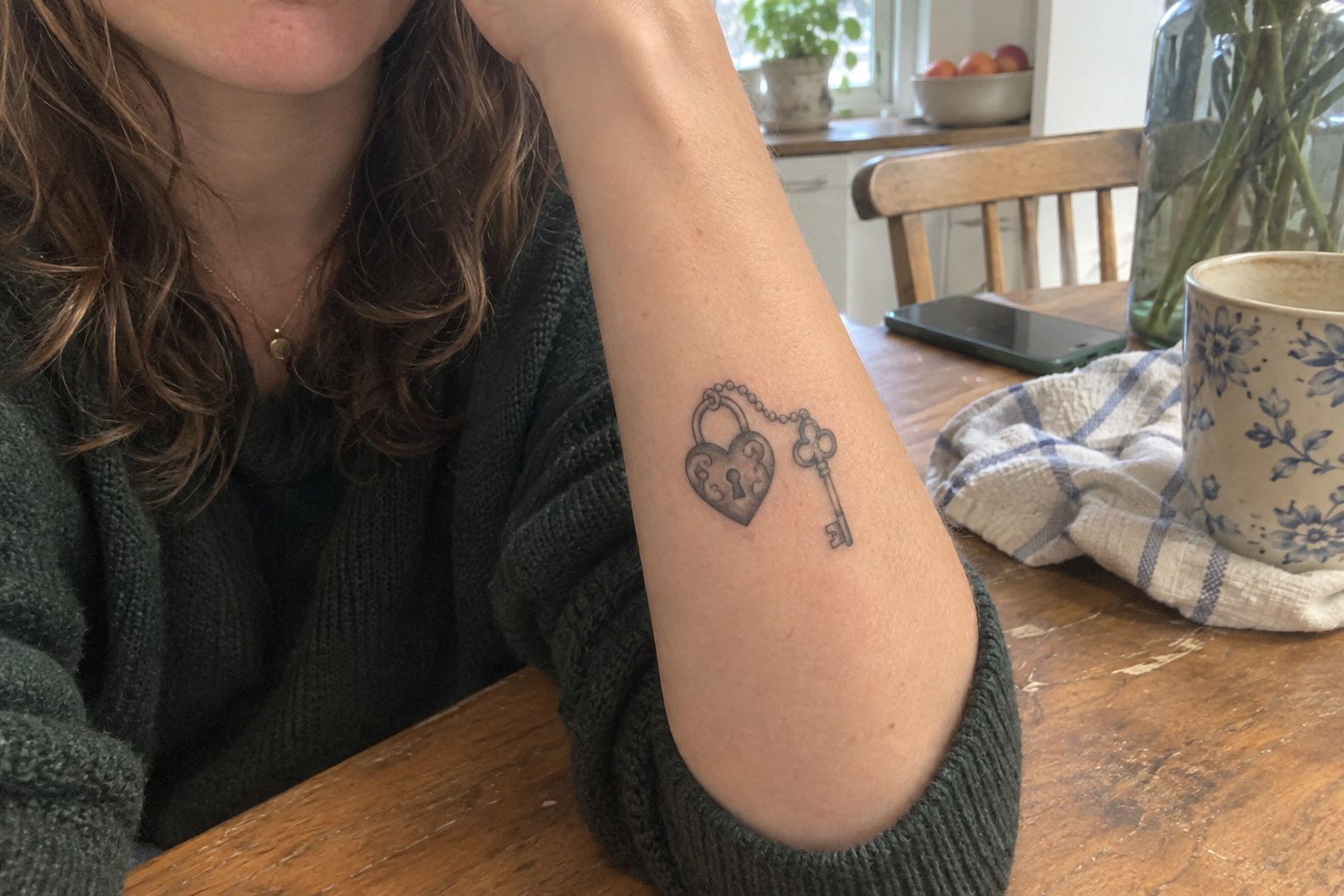
A small heart-shaped padlock sits neatly along the collarbone, where its curved outline follows the body’s natural line. Fine black strokes define the heart, shackle, and keyhole, keeping the design legible at a compact scale.
The motif carries a sweet, romantic feel through its familiar lock-and-heart pairing. Keeping the details delicate, with a clean keyhole and restrained shading, preserves the padlock’s shape on bare skin.
Heart on the Hand
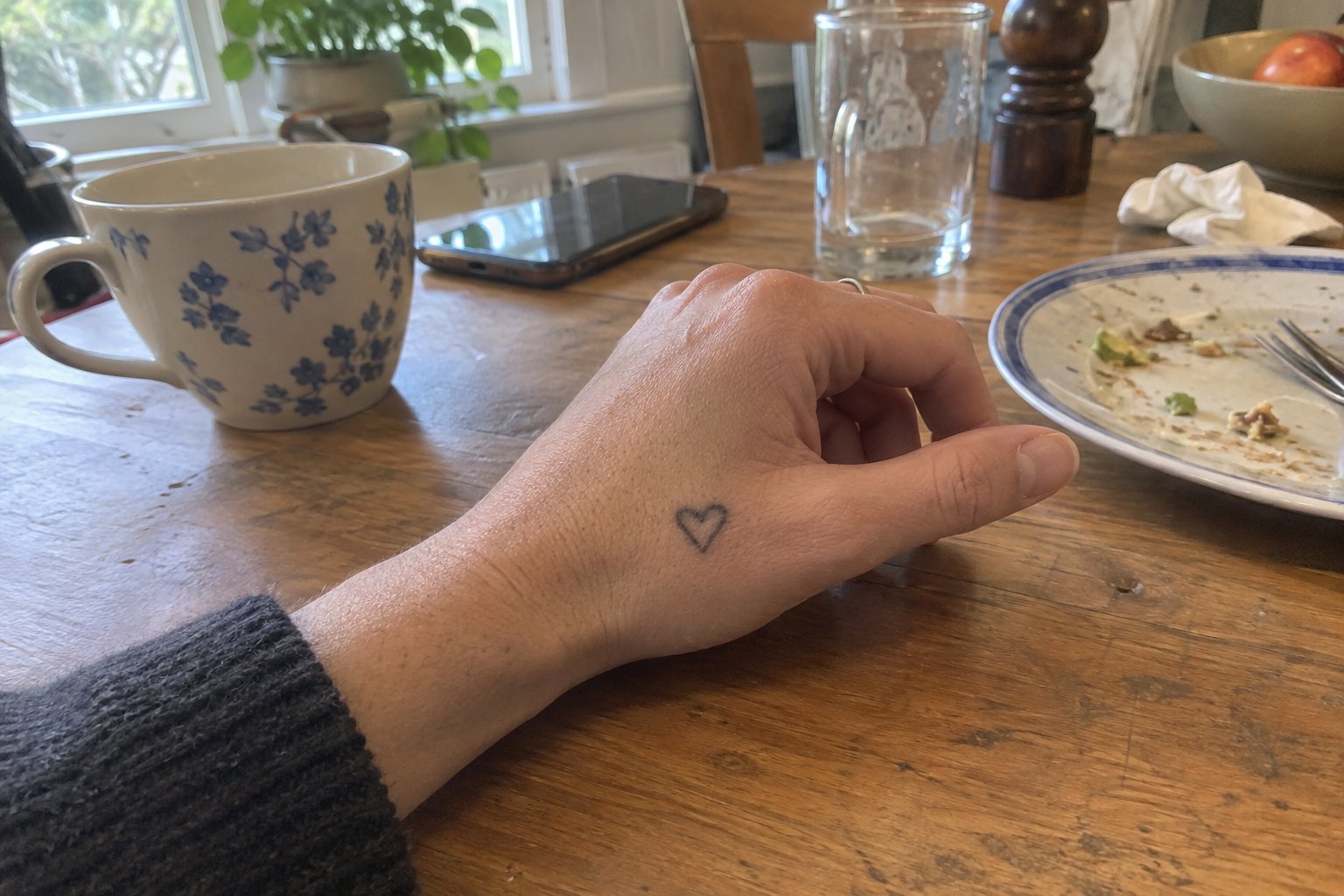
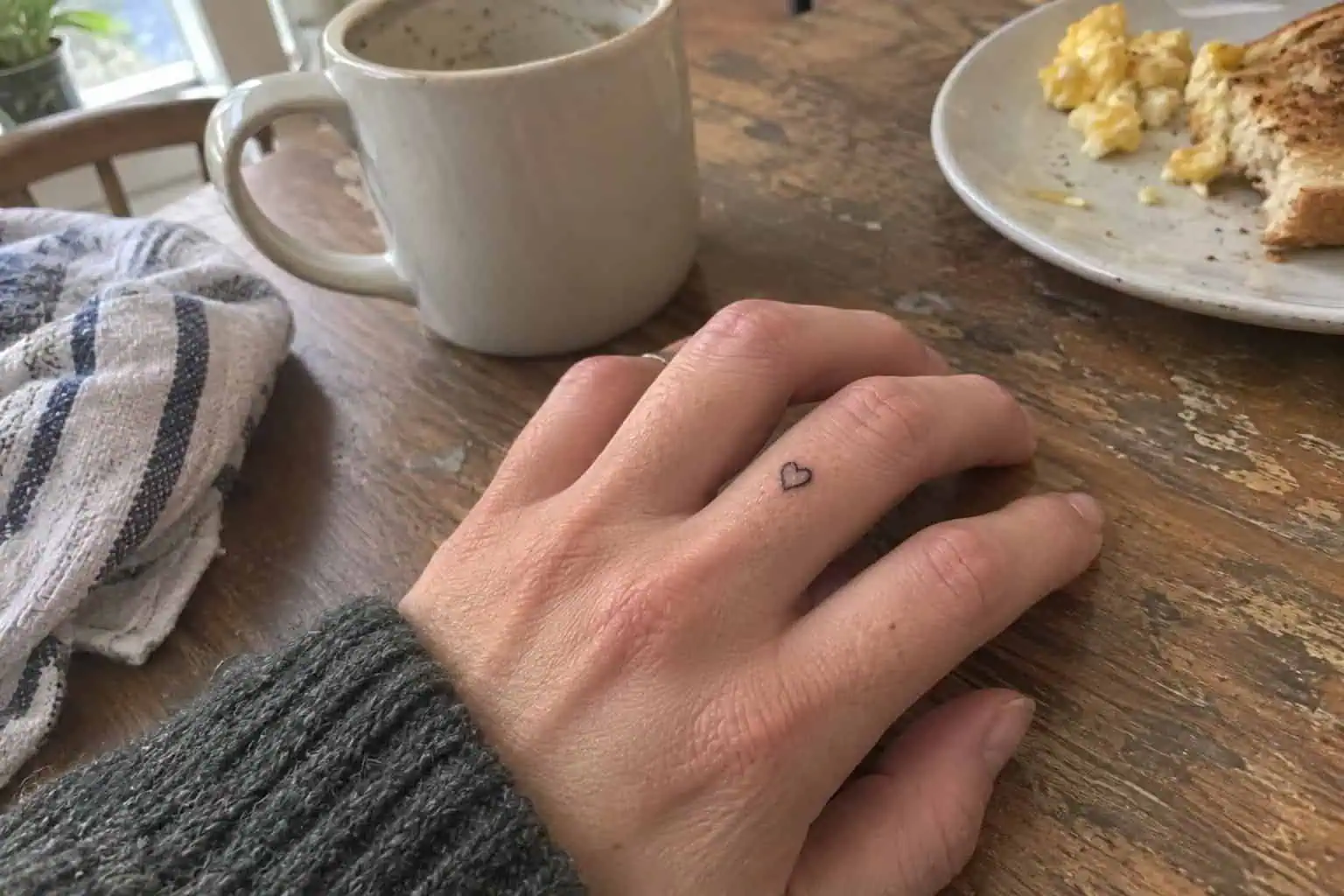
A small black heart sits on the back of the hand, where its simple outline stays in view through the day. Its compact shape leaves the surrounding skin open, giving the motif a clean, direct presence.
Fine, even lines keep the heart readable at a small scale. Adjusting the curve of the lobes and the point at the base gives the familiar silhouette a personal touch while keeping the design unmistakable.
This placement makes hand movement part of the composition. The heart shifts with the skin as fingers flex, and its position can be planned around the hand’s natural contours for a balanced look.
Blackwork Heart
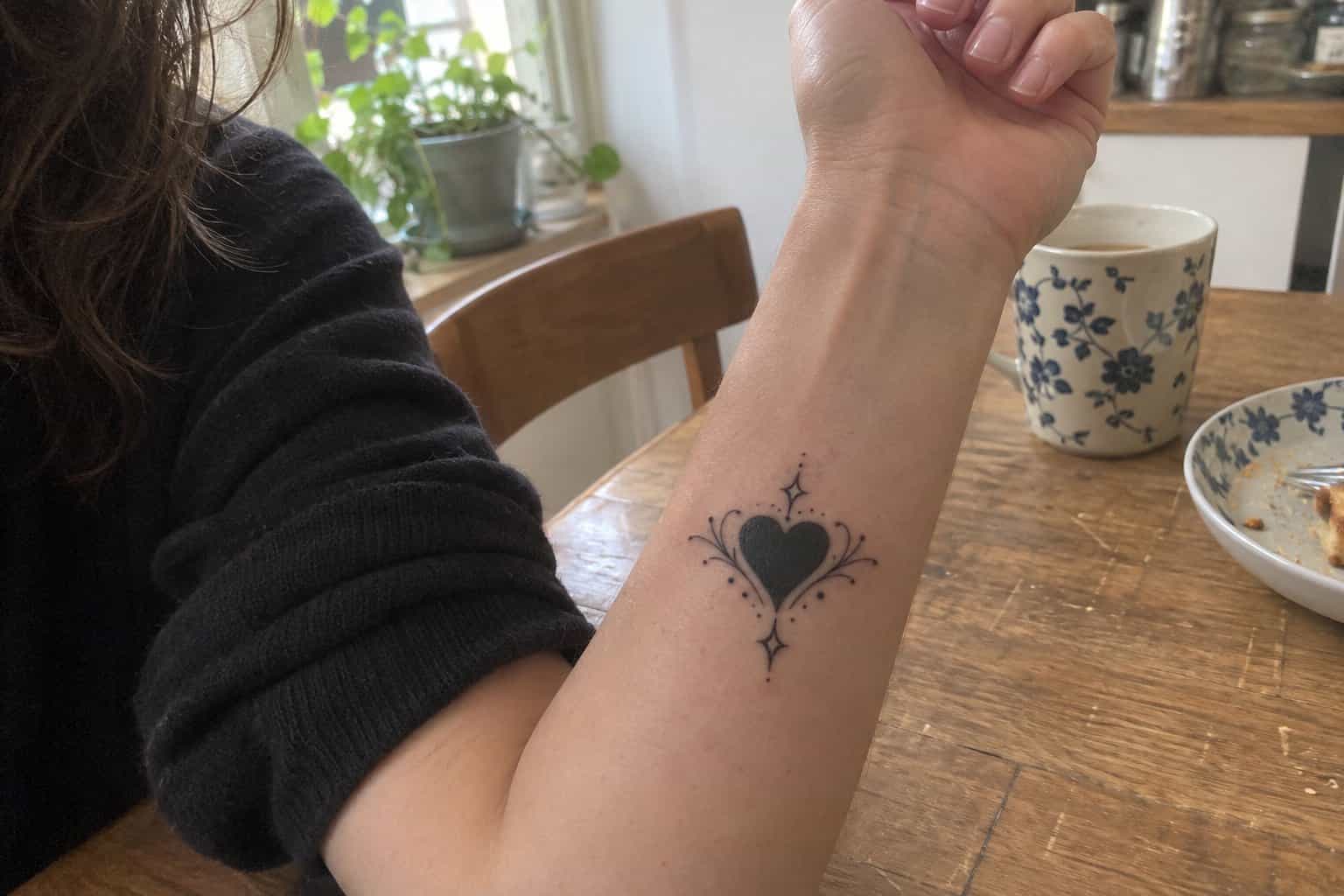
A solid black heart places the motif’s shape at the center of the design. Its filled silhouette creates a crisp edge against bare skin, giving the tattoo a strong, graphic presence.
On the upper arm, the rounded lobes and tapered point follow a compact outline that reads clearly at a glance. The smooth fill keeps attention on the heart’s proportions, while the placement leaves room around the shape to breathe.
Heart of Thorns
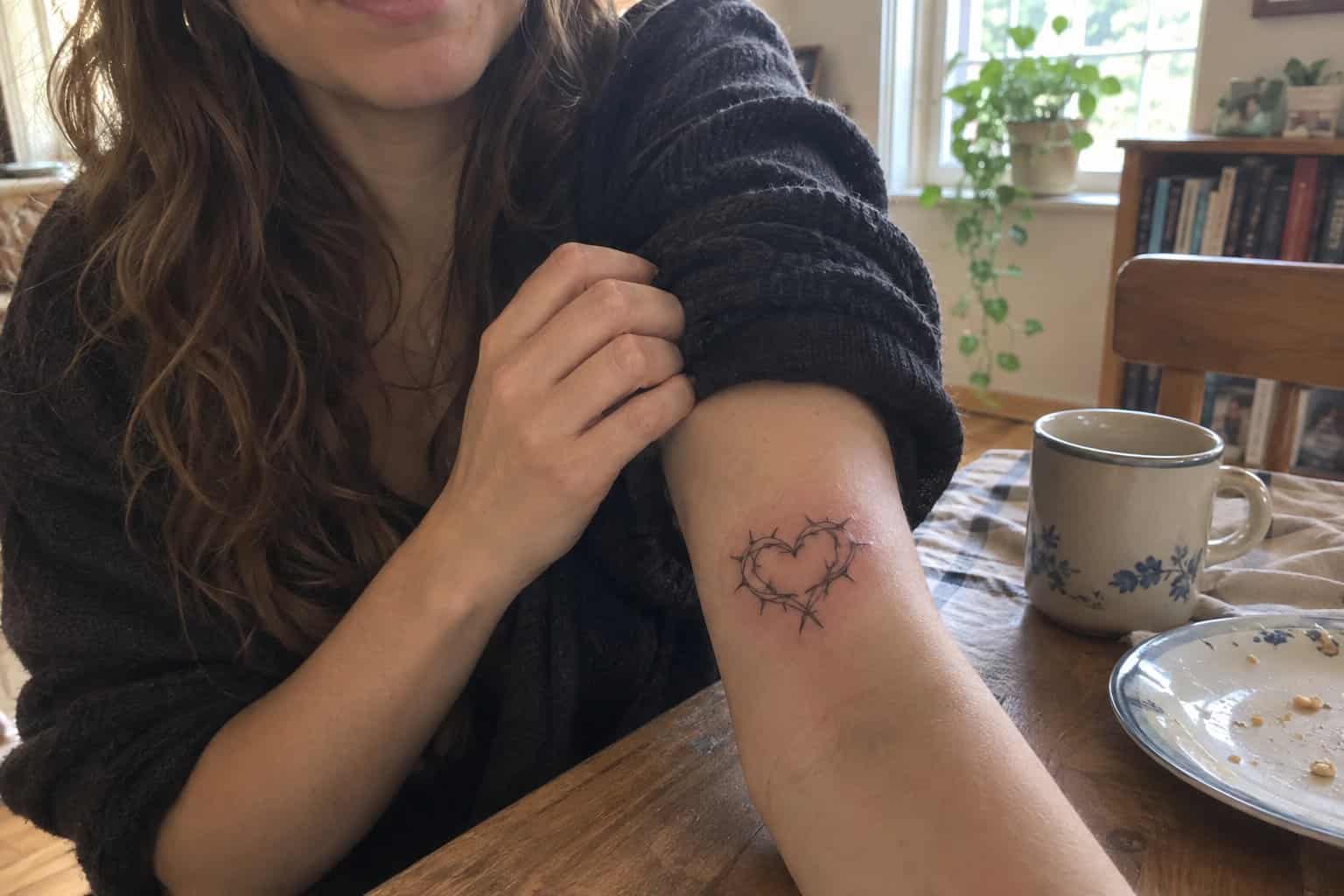
Twisting stems trace a heart shape on the calf, with pointed thorns branching along the curves. The outline feels bold and slightly unruly, while small gaps between the stems keep the design readable on bare skin.
Fine lines can define the stems, with darker marks at each thorn to sharpen their silhouette. A few overlapping loops give the heart an organic rhythm, and keeping the center open preserves its shape.
Matching Wrist Hearts
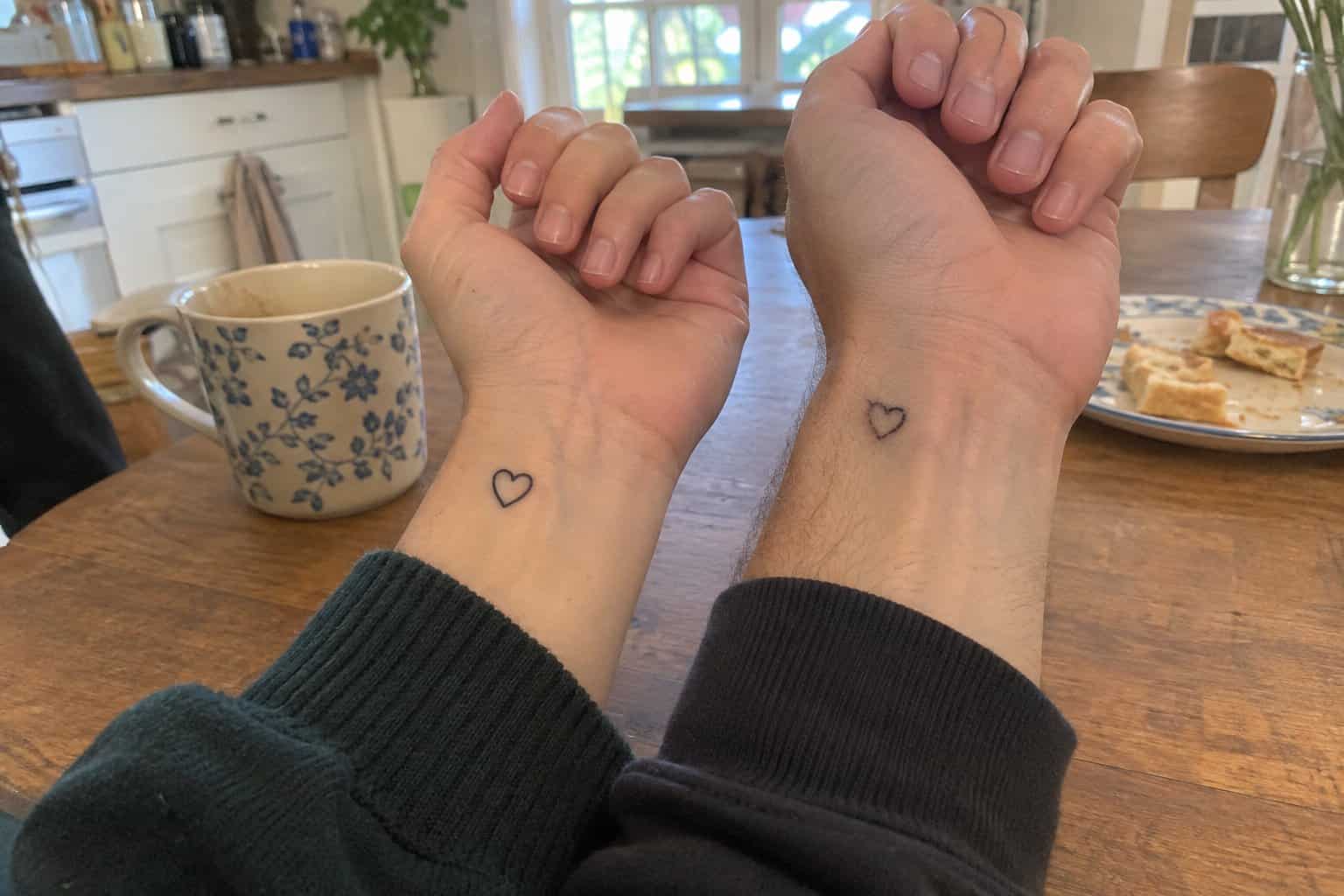
A pair of identical tiny black hearts sits on the inner wrists, one on each person. Their small scale keeps the design understated, while the shared placement makes the connection easy to spot when the wrists meet.
Clean outlines give each heart a crisp shape against bare skin. The matching set can mark a bond between family members or friends, with the repeated motif carrying the meaning through its simple, nearly identical form.
Cheekbone Heart
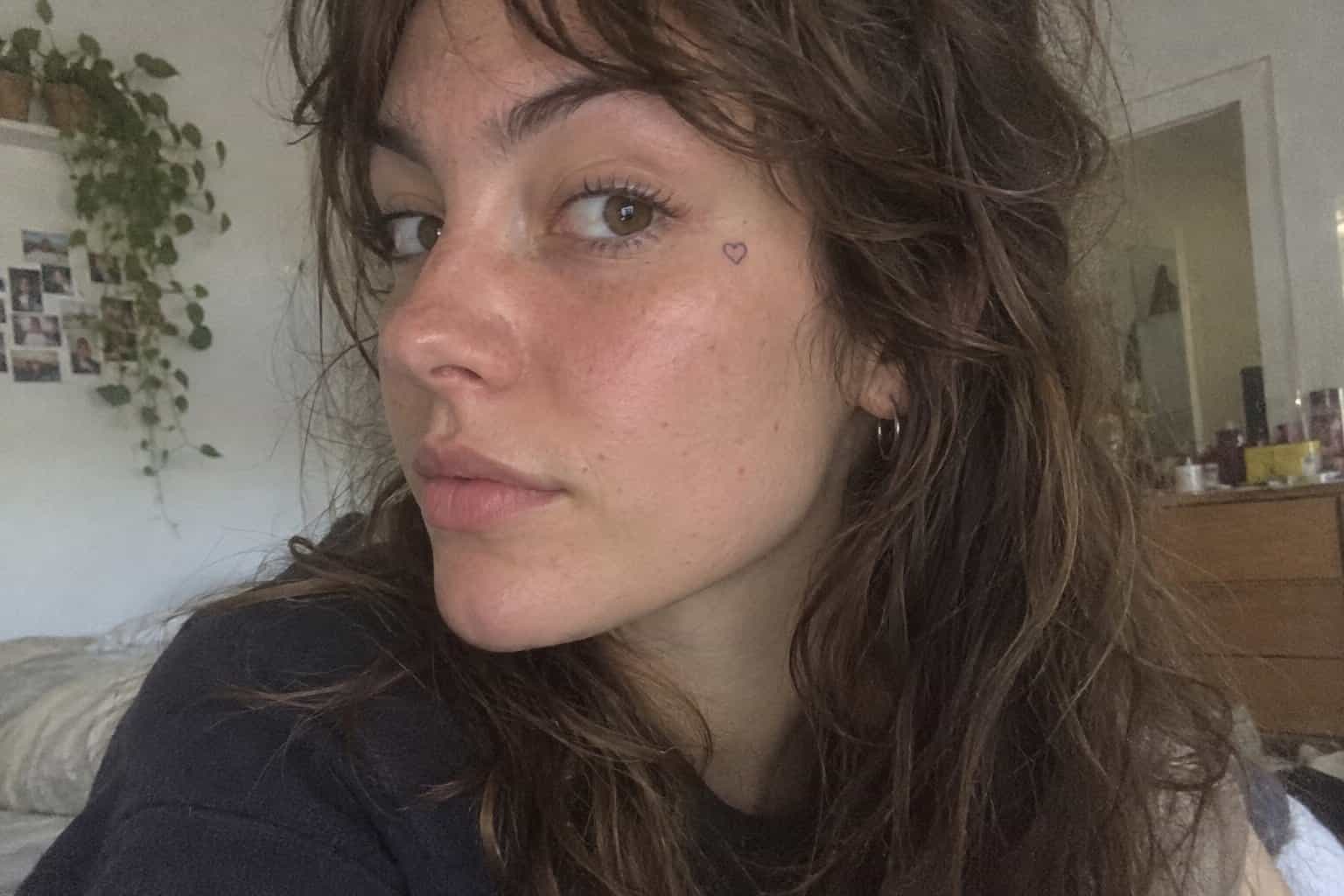
A tiny black heart sits high on the cheekbone, where its simple shape reads clearly against bare skin. Fine, even lines keep the design crisp, while the small scale lets the natural contours of the face remain prominent.
This placement stays visible in everyday settings, so the heart becomes a defining detail in the wearer’s look. Sketching out the size and position along the cheekbone beforehand helps settle on a shape that feels balanced with the rest of the face.