Cupid rarely gets much credit as a drawing subject. The figure gets reduced to a greeting-card cherub with a bow, but there’s more range hiding in that motif than people expect: marble busts, chibi versions, a sunset silhouette, even a cat in tiny wings. The eleven ideas below move from classical statue work to loose watercolor, with notes on linework, shading, and composition for anyone sketching Cupid for the first time or the fifteenth.
Table of Contents
Cartoon Baby Cupid
Save for later
Want to come back to this story? Save it with your email so it is easy to find again.
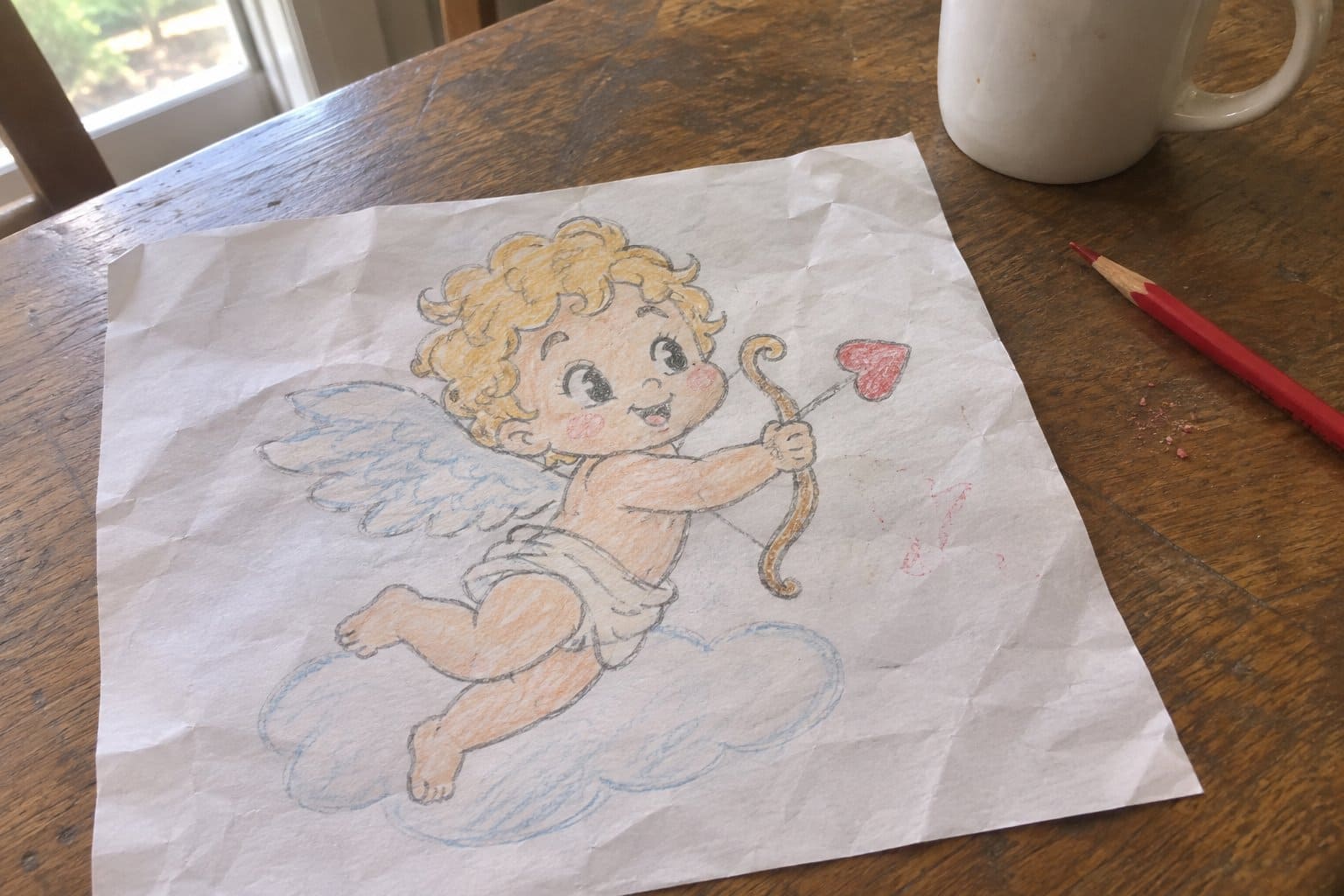
Soft curves do most of the work in this version of Cupid. A rounded belly, puffed cheeks, and tiny feathered wings give the figure a clear, friendly silhouette that reads instantly even at a small scale. The small bow rests in one hand, its curved outline kept simple so it stays legible against the rest of the body.
On white paper, marker lines define the face, curls, wings, and bow, while colored pencil adds gentle shading to the cheeks, hair, and feathers. Keeping the color blocks compact helps the chubby shape stay the focal point, and a slight tilt to the bow gives the whole drawing a lively, caught-mid-motion feel.
Marble Cupid Statue
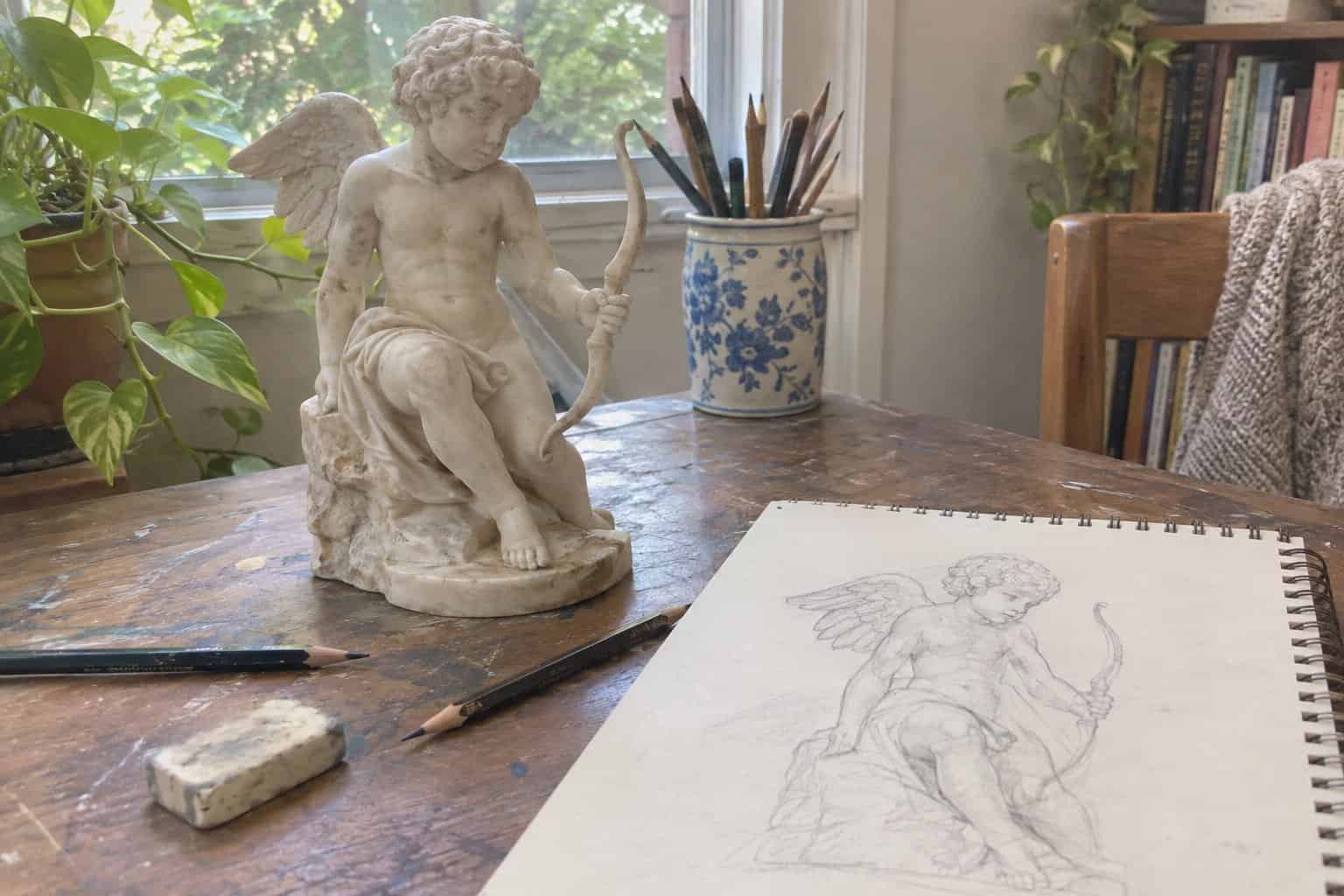
Stone textures ask for a different kind of mark-making. Rounded cheeks, curled hair, and small wings give this Cupid a clean silhouette, while a stone base anchors the composition on the page. A slight turn of the head adds dimension without crowding anything else in frame.
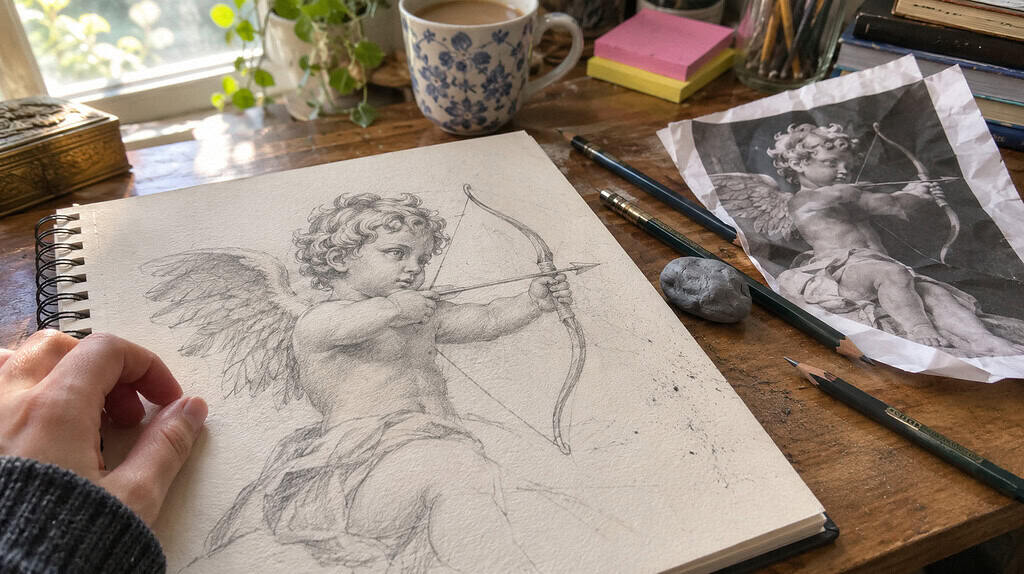
Pencil shading carries the marble effect from start to finish. Light strokes define the face and wings, and darker tones settle beneath the curls, around the limbs, and along the base. Soft shadows on cream paper make the finished piece feel sculptural rather than flat. This one suits anyone comfortable building form through gradual tonal shifts instead of hard outlines.
Girl Cupid
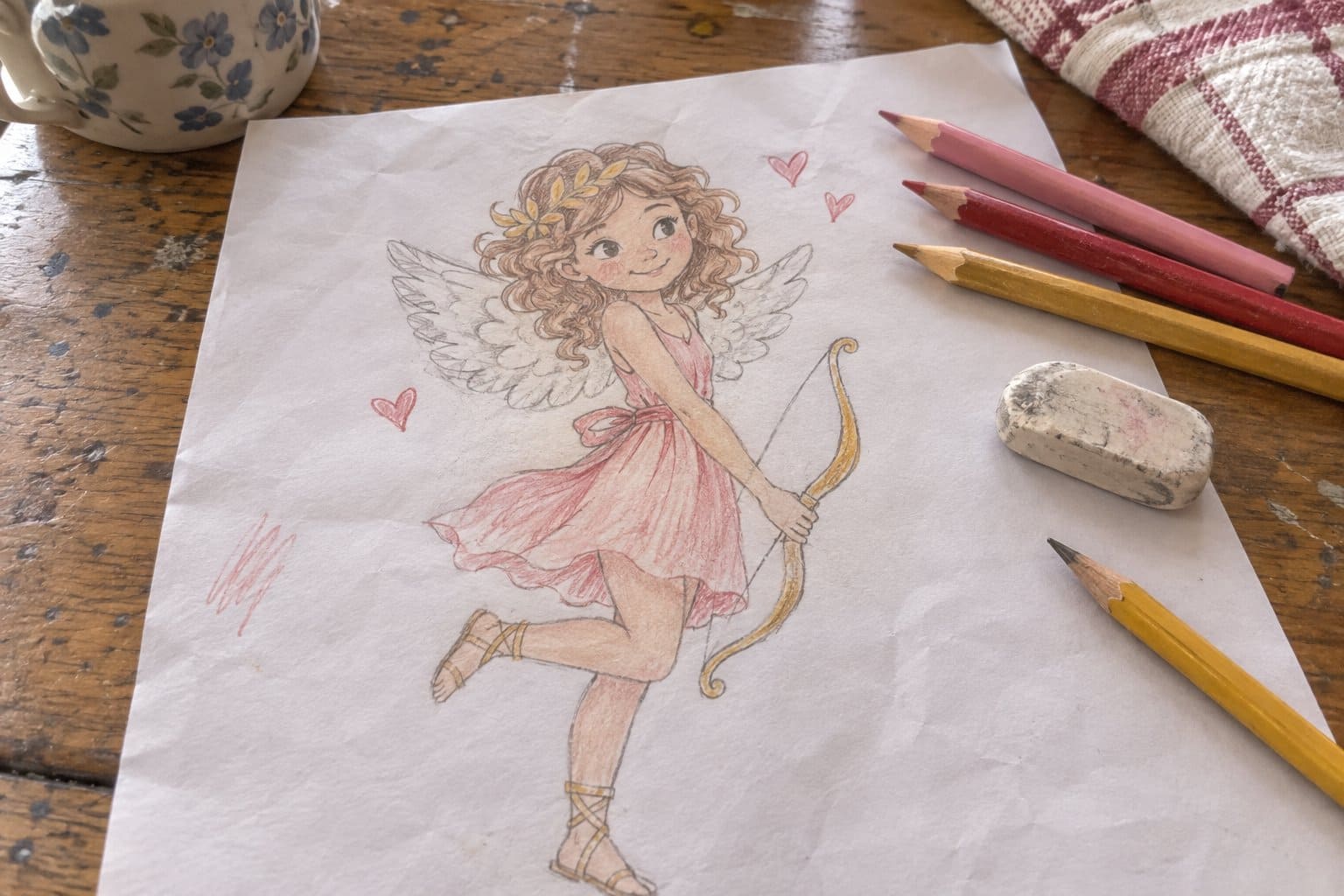
Braided hair gives this Cupid a clear silhouette before a single color goes down, and small feather details make the wings easy to read from across the room. She holds a simple bow across her body, creating a strong diagonal line that adds movement to an otherwise still pose.
Colored pencils on white paper build soft color through light, layered strokes rather than heavy saturation. Keep the face and hands small but well-defined, and add gentle shading beneath the wings and along the folds of her dress to give the finished drawing some real dimension.
Arrow with Heart Tip
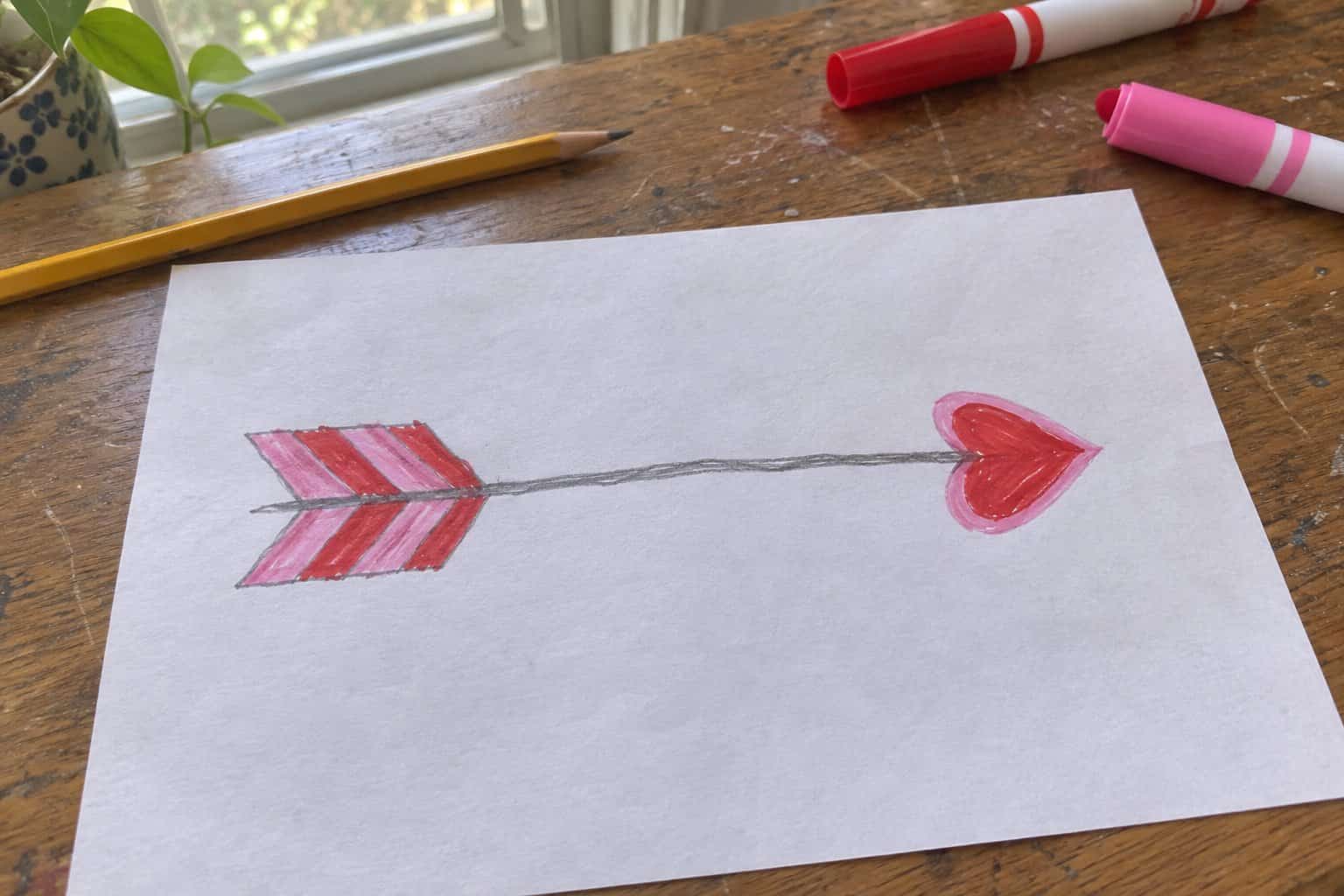
One arrow, one heart, one clean line to follow. This design gives the drawing a simple, easy-to-follow shape: a pointed shaft leads the eye toward a heart-shaped tip, while feather details at the opposite end balance the composition visually.
On white paper, marker lines keep the silhouette crisp and readable from a distance. The heart can sit directly at the arrowhead, with a small notch at its center and rounded lobes on either side. Short strokes define the feathers without crowding the shaft below them.
For a polished sketchbook page, keep the arrow centered and leave open space around it. A steady outline paired with a few solid marker accents is usually enough to make both the heart and feather shapes distinct.
Draw the heart shape first, before the arrow shaft. Sketching the heart off the shaft can throw off its proportions, but building the shaft around an already-placed heart keeps the whole arrow balanced.
Bow and Quiver
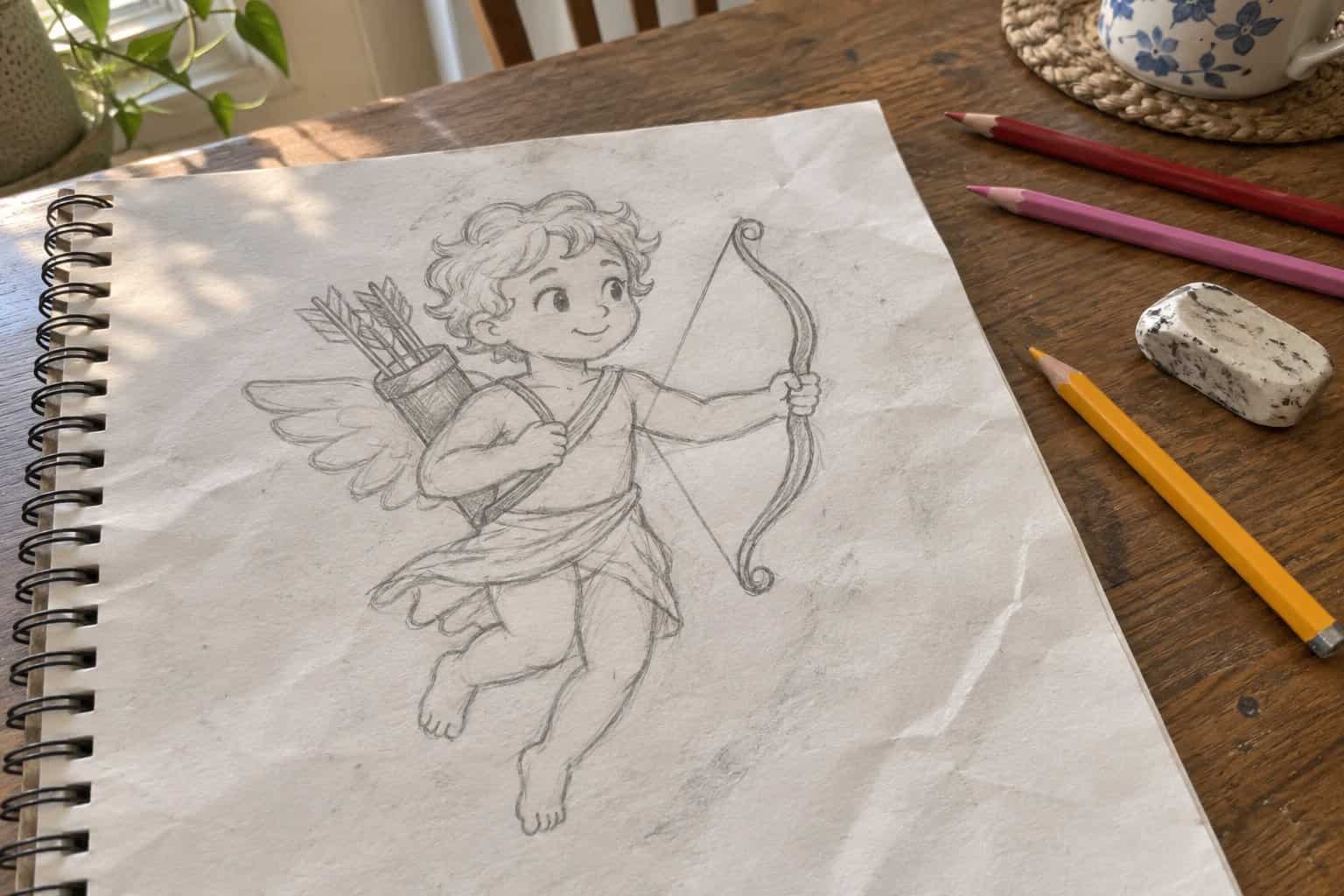
Pairing the bow with its quiver turns the drawing into a small still life, with clear shapes to study one at a time. The curved bow can lead the eye toward the quiver’s straight sides, while a few arrow shafts add fine lines across the overall composition.
Keep the drawing grounded in visible details: the bow’s wrapped grip, the quiver’s rim, the small arrowheads. Light shading beneath the objects gives them weight on the paper. A sharp pencil point helps keep the narrow shafts and fletching distinct from one another.
- Composition: Place the bow diagonally beside the quiver, with the arrows angled slightly upward.
- Detail: Use short strokes for the grip and feathers, then softer shading along the bow’s curve.
- Finish: Leave the white paper open around the objects so their outlines stay easy to read.
Cupid Sunset Silhouette
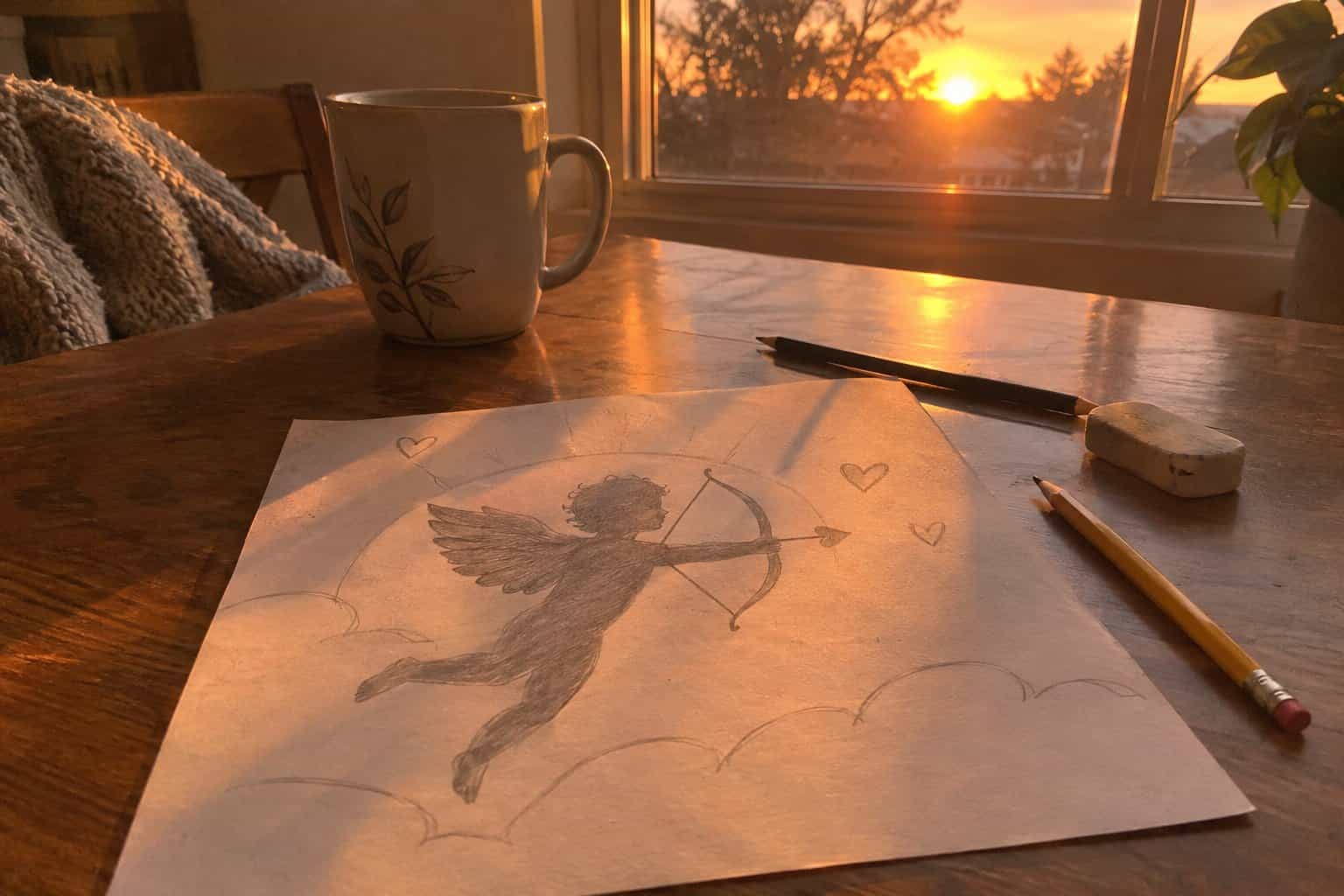
Watercolor washes behind a solid black silhouette create instant contrast with almost no technical risk. A black cupid figure draws its bow against a wash of orange and pink, and the dark shape gives the scene a clear focal point while the sunset color spreads softly across the white paper around it.
Keep the body and wings readable with a few clean contours rather than a lot of fussy detail. A curved bow and taut string create a strong diagonal, and the arrow can point toward the open sky to preserve breathing room around the figure.
Let the watercolor edges stay loose, with orange near the horizon blending into pink above. Once the paint dries, crisp black linework defines Cupid’s profile, wings, and bow. The finished piece should feel balanced on the page, with the silhouette standing out clearly against the warm color field behind it.
Warm, saturated backgrounds like orange and pink make a black silhouette pop almost automatically, since the eye is drawn to the highest-contrast area of any composition first. Cooler backgrounds, like dusky blues, soften that effect and give the silhouette a quieter, more wistful mood instead.
Chibi Cupid
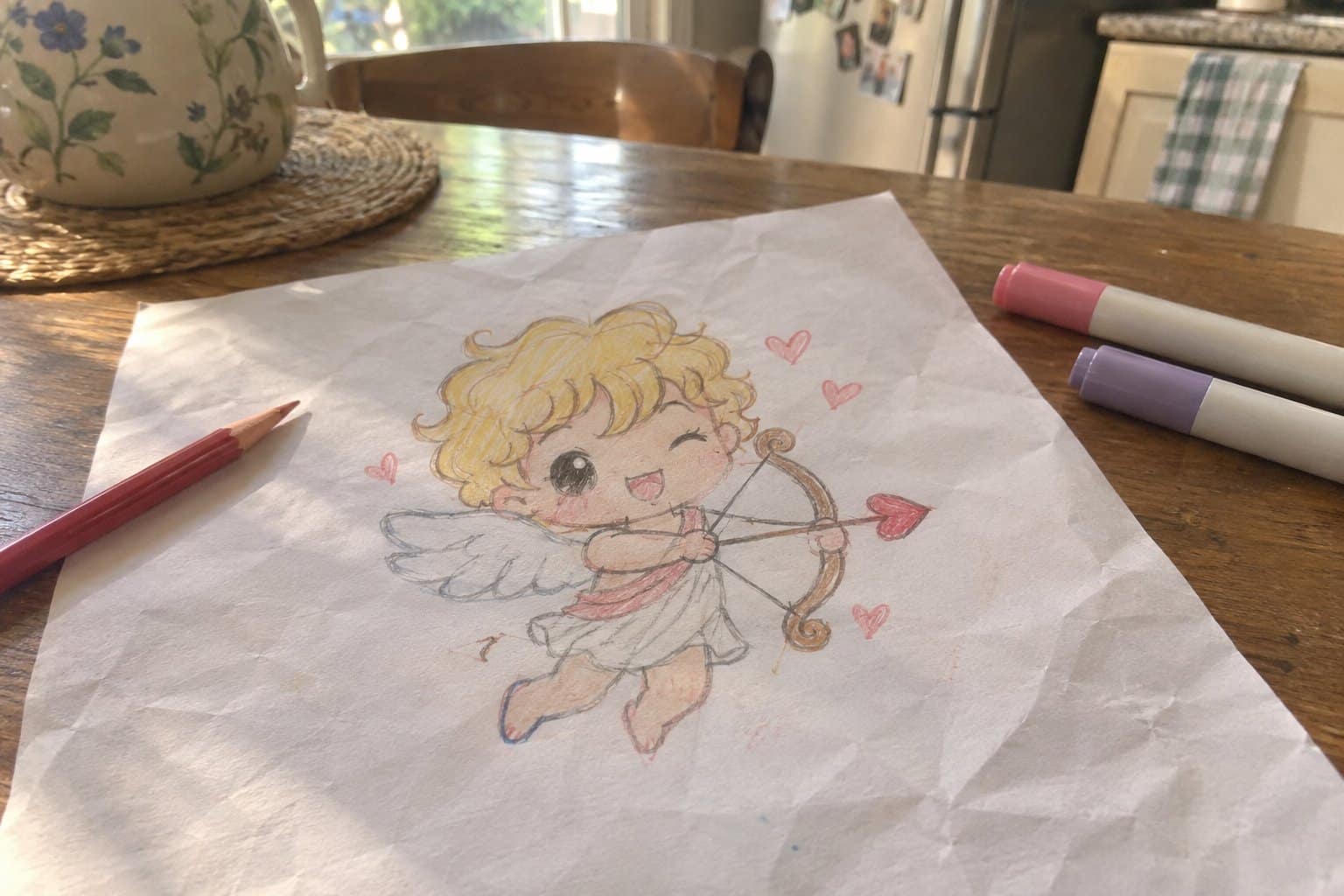
Shrinking Cupid down to chibi proportions removes most of the technical difficulty while keeping all the charm. A large, rounded head gives this version its friendly shape, while oversized eyes draw attention straight to the face. Keep the body compact and the limbs simple so the tiny figure stays quick to sketch. A small bow held in both hands adds a recognizable Cupid detail without crowding the silhouette.
For a finished marker drawing, use clean outlines on white paper and fill the shapes with just a few soft colors. Small touches, rosy cheeks or simple wing shapes, go a long way here, as long as there’s enough open space around the figure to keep its features distinct.
Cupid Flying Through Clouds
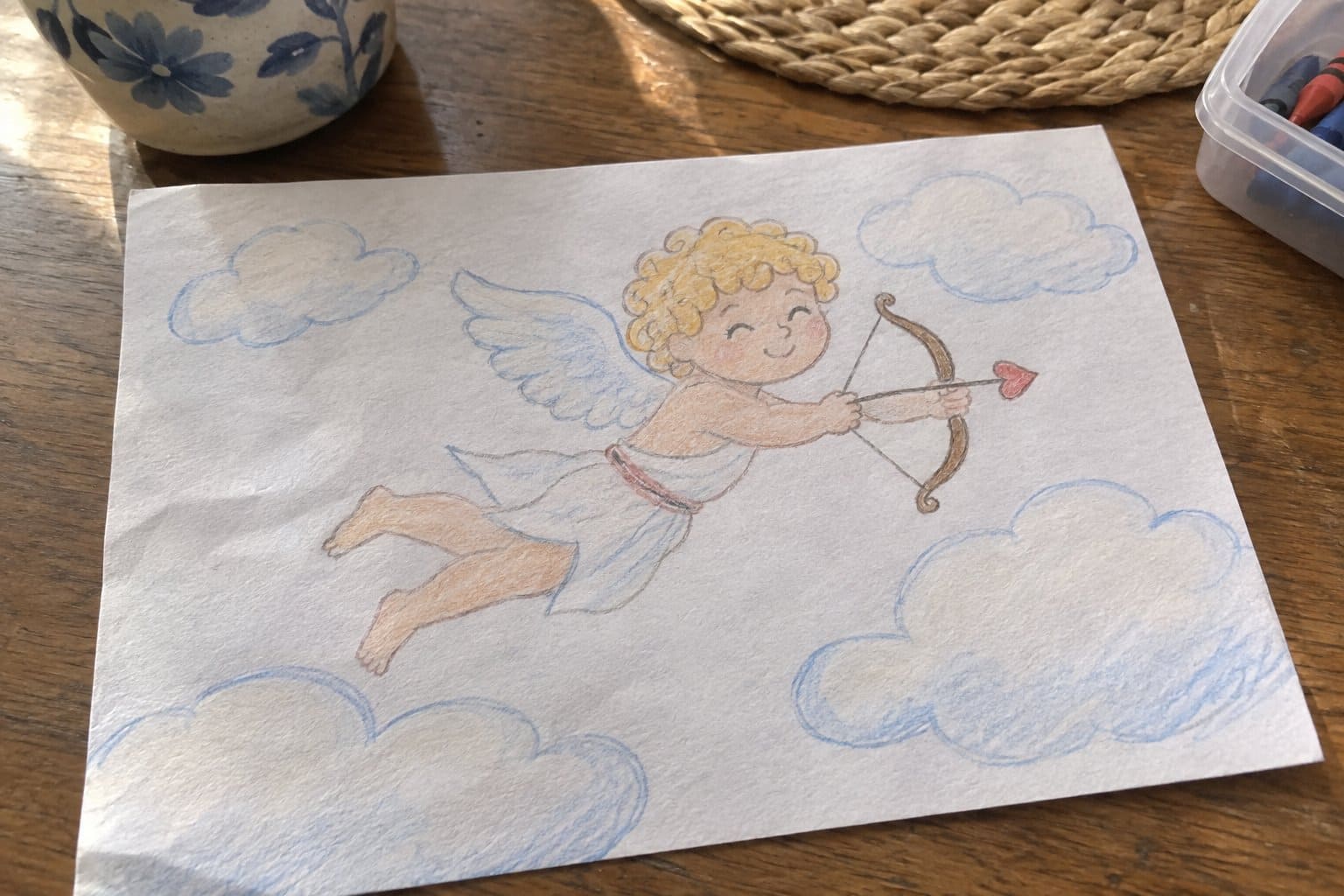
Give Cupid somewhere to go and the whole composition gains direction. A watercolor Cupid crosses the sheet with wings spread wide, soft clouds gathered beneath and around the figure. The lifted posture gives the piece a clear sense of travel, while the cloud edges keep the scene light and open rather than busy.
Fine lines can define Cupid’s face, curls, and feathers, with pale washes shaping the clouds around them. Gentle blue and warm peach accents add depth without crowding the paper. Keeping the background mostly white draws attention straight to the figure in flight.
Cupid Face Close-Up
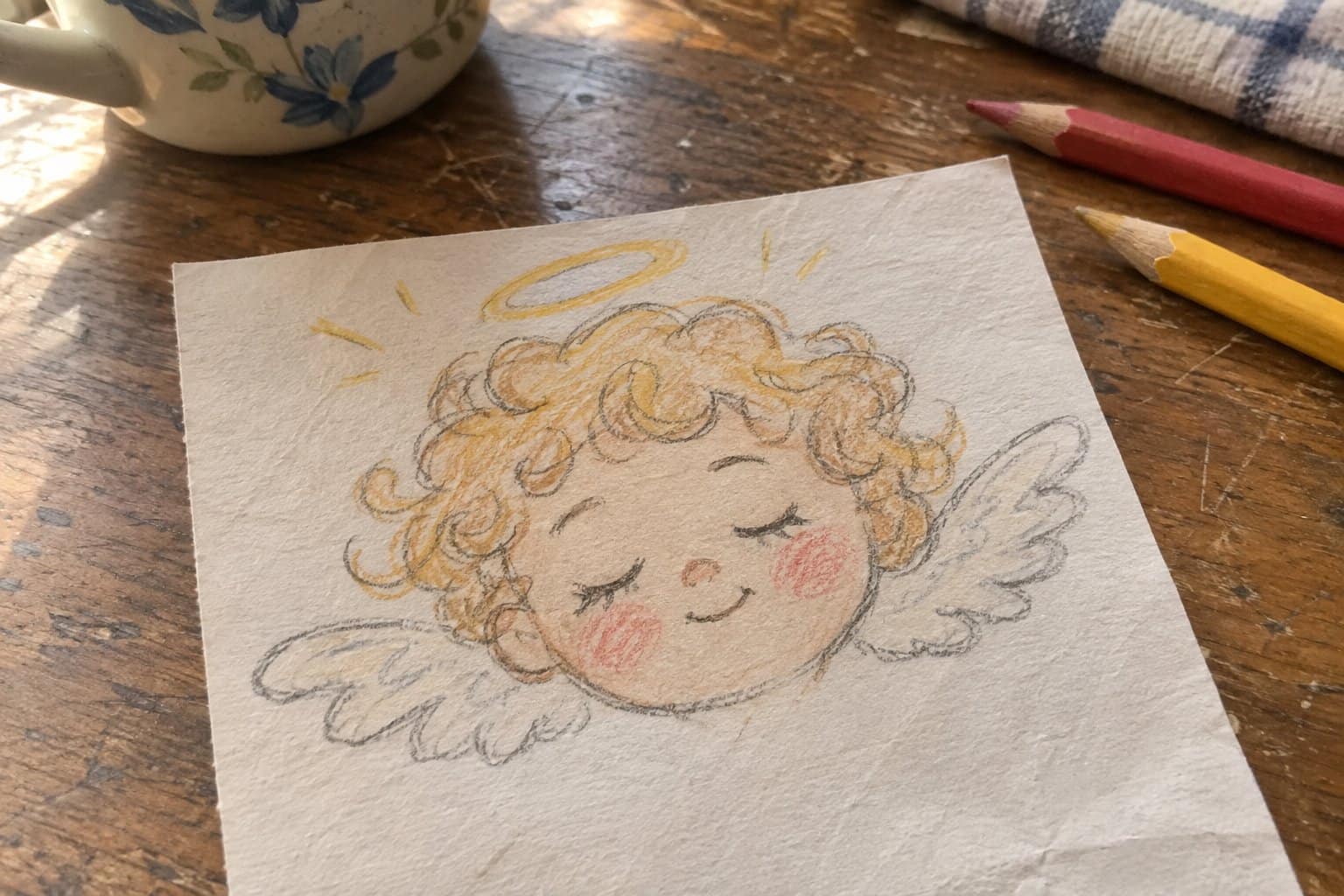
Cropping in tight forces every decision onto the face itself. A close crop gives Cupid’s features the full focus, from rounded cheeks to loose curls framing the forehead. The pencil drawing sits on white paper, with soft shading around the eyes and under the chin to give the cherubic features some gentle depth.
Light outlines keep the expression open and easy to read at a glance. Small curls can vary in size and direction, while a few darker pencil strokes add definition near the hairline and brows. The finished drawing stays centered on the face alone, with no text or extra elements competing for attention.
Classical Oil-Style Cupid
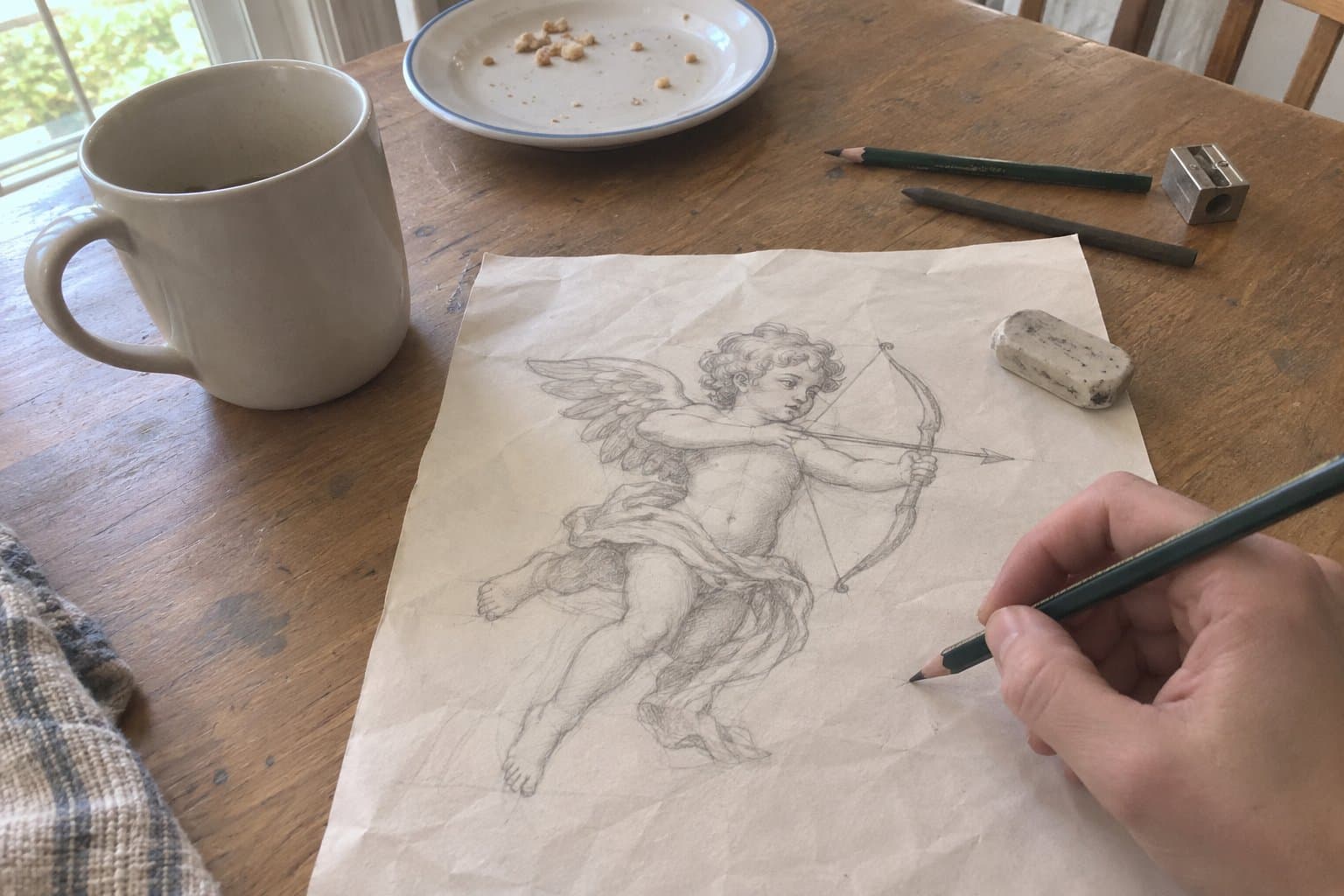
Charcoal and chalk can fake the depth of an oil painting surprisingly well. Soft charcoal shadows and chalk highlights give this Cupid the modeled, rounded look of a classical painting rather than a flat sketch. On toned paper, the warm ground becomes part of the image itself, showing through between the marks and helping the figure feel settled instead of sharply outlined.
A turned pose adds gentle movement: one shoulder sits forward while the face angles toward the viewer. Feathered wings, loose curls, and a small bow provide clear details to draw, while blended shading shapes the body and the folds of fabric around it.
Keep the paper visible around the figure for a finished, gallery-like presentation. Fine charcoal lines define the eyes and feathers; chalk catches the cheek, shoulder, and wing edges where the light would naturally land.
“Toned paper does half the modeling for you before a single mark goes down.”
Cat Dressed as Cupid
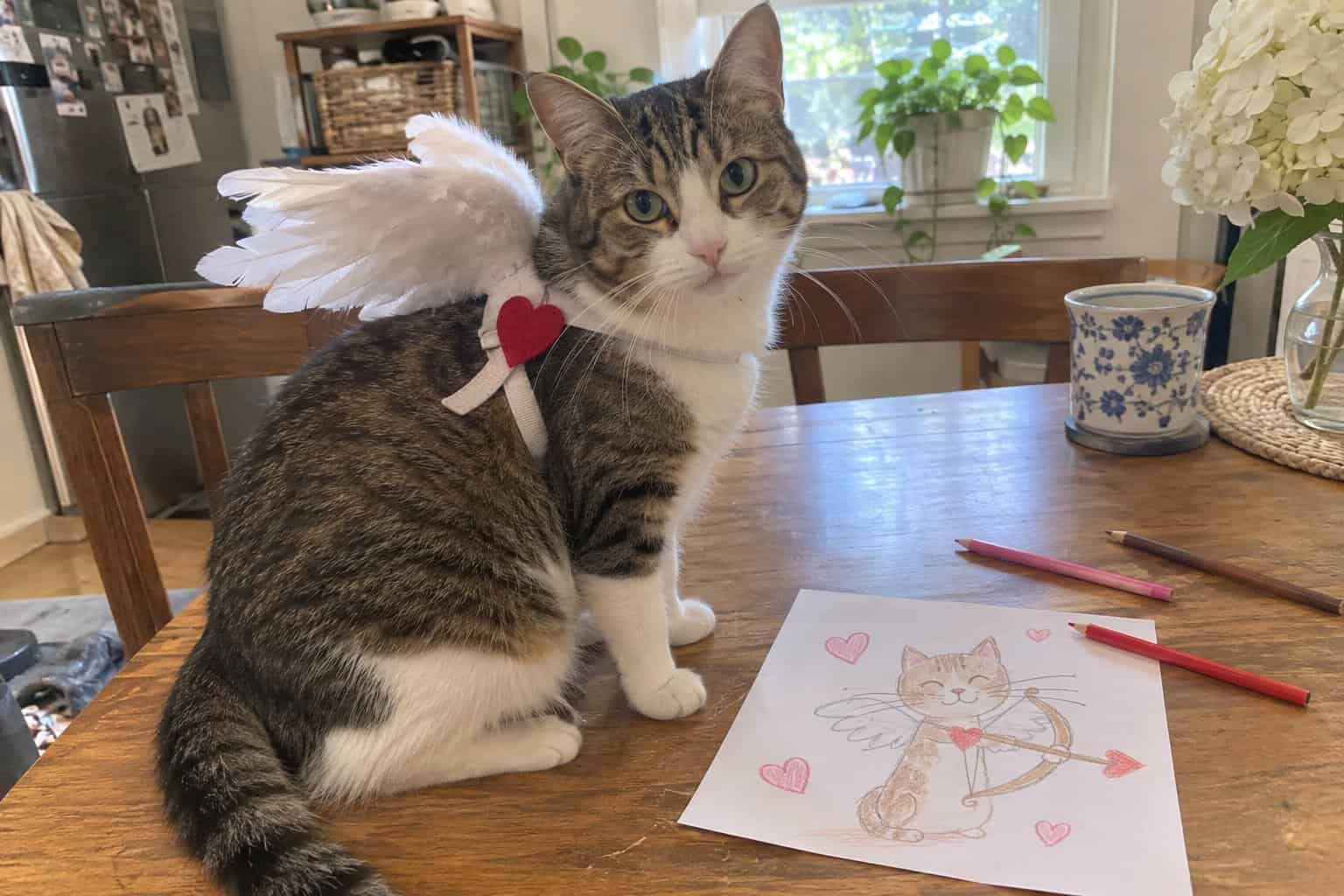
Not every Cupid has to be human. A cat with tiny angel wings and a bow gives the classic look a playful twist, and it works precisely because the mismatch between the regal costume and the cat’s blank expression is funny on its own. Set the finished colored-pencil drawing on white paper, with the cat centered and its full silhouette easy to read.
Keep the wings small against the cat’s body, using soft feather lines and light shading for shape. Give the bow a clear curve and a fine string, then add a tiny arrow as a recognizable detail. Pencil strokes can show the cat’s fur texture and give the costume some weight without crowding the face.
Of the eleven, this is the one most likely to make someone smile before they notice the linework at all, which is its own kind of success for a sketchbook page.