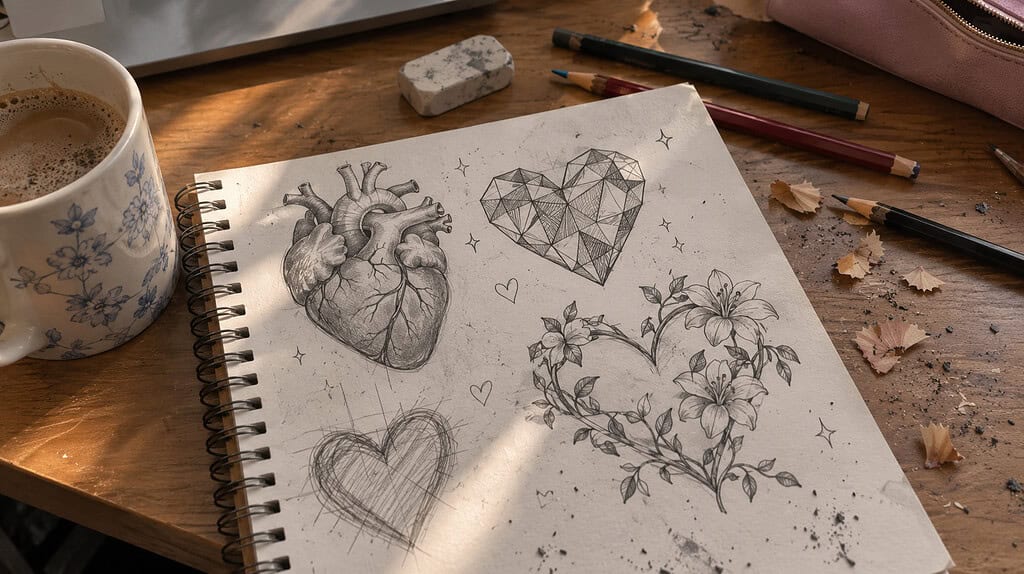
Hearts show up in nearly every sketchbook at some point, usually as a quick doodle in the margin before anyone decides to take the shape seriously. But a heart can carry a lot more visual weight than the classic symmetrical outline suggests. Shading, pattern, color, and composition can push the motif into anatomy, botany, geometry, or quiet symbolism. The fifteen ideas below give an artist a lot of room to move past the basic Valentine shape and into something more deliberate.
Table of Contents
- 1 Doodle Hearts Pattern
- 2 3D Heart with Shading
- 3 Heart Made of Flowers
- 4 Anatomical Heart Sketch
- 5 Heart in a Jar
- 6 Watercolor Heart Wash
- 7 Geometric Heart
- 8 Heart Balloon
- 9 Heart Tree
- 10 Winged Heart Sketch
- 11 Heart Mandala
- 12 Heart Cracked Open
- 13 Stained Glass Heart
- 14 Hands Holding a Heart
- 15 Heart Padlock and Key
Doodle Hearts Pattern
Save for later
Want to come back to this story? Save it with your email so it is easy to find again.
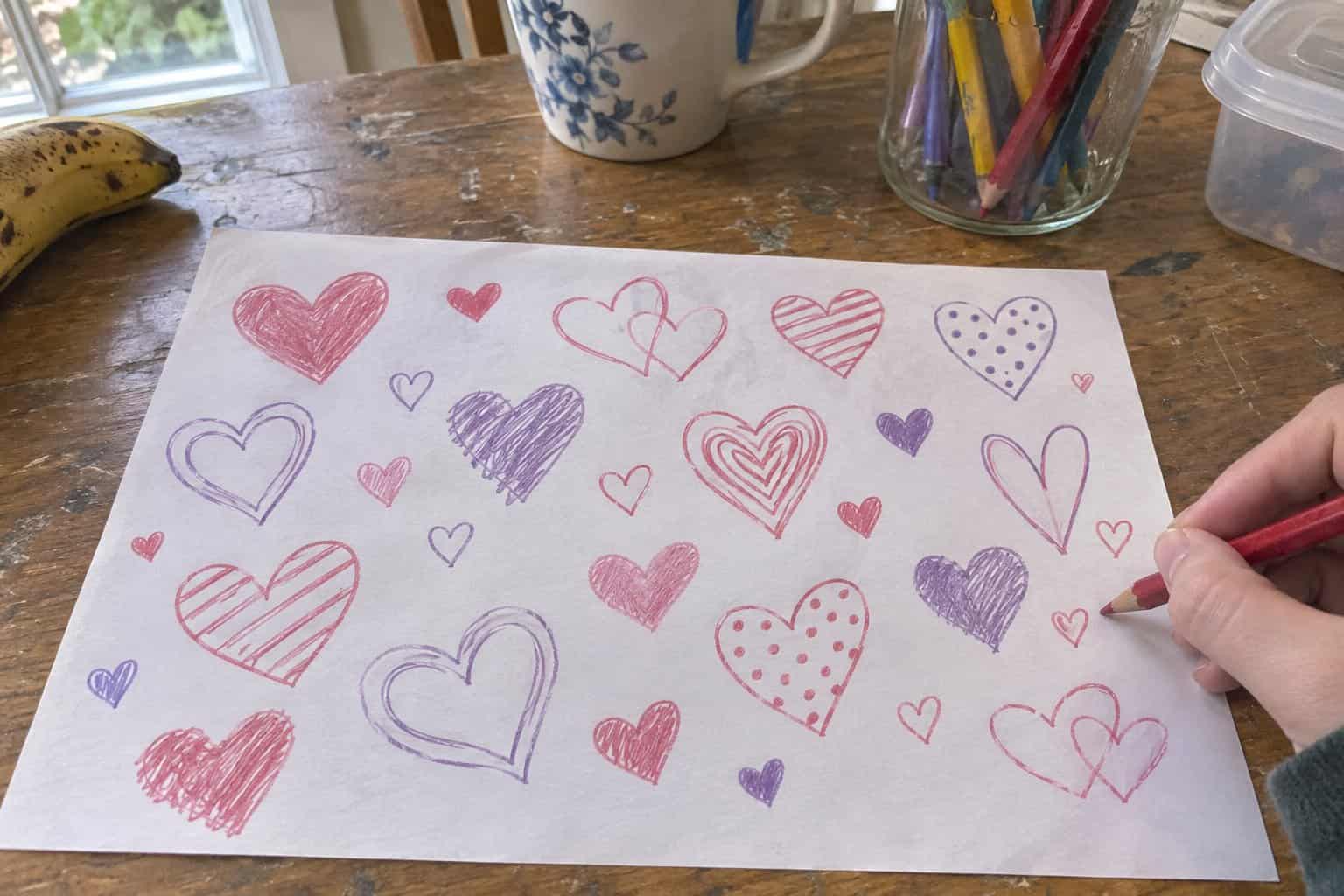
A black pen gives this page a clean, graphic look. Hearts in varied sizes fill the white paper, with some drawn as simple outlines and others built from doubled lines, small curves, or loose hatch marks. The finished pattern feels cohesive while each heart keeps its own shape.
A beginner can start with a few larger hearts, then tuck smaller ones into the open spaces. Keeping the pen strokes simple helps the page feel balanced, and slight differences in the curves give the doodles a hand-drawn rhythm.
3D Heart with Shading
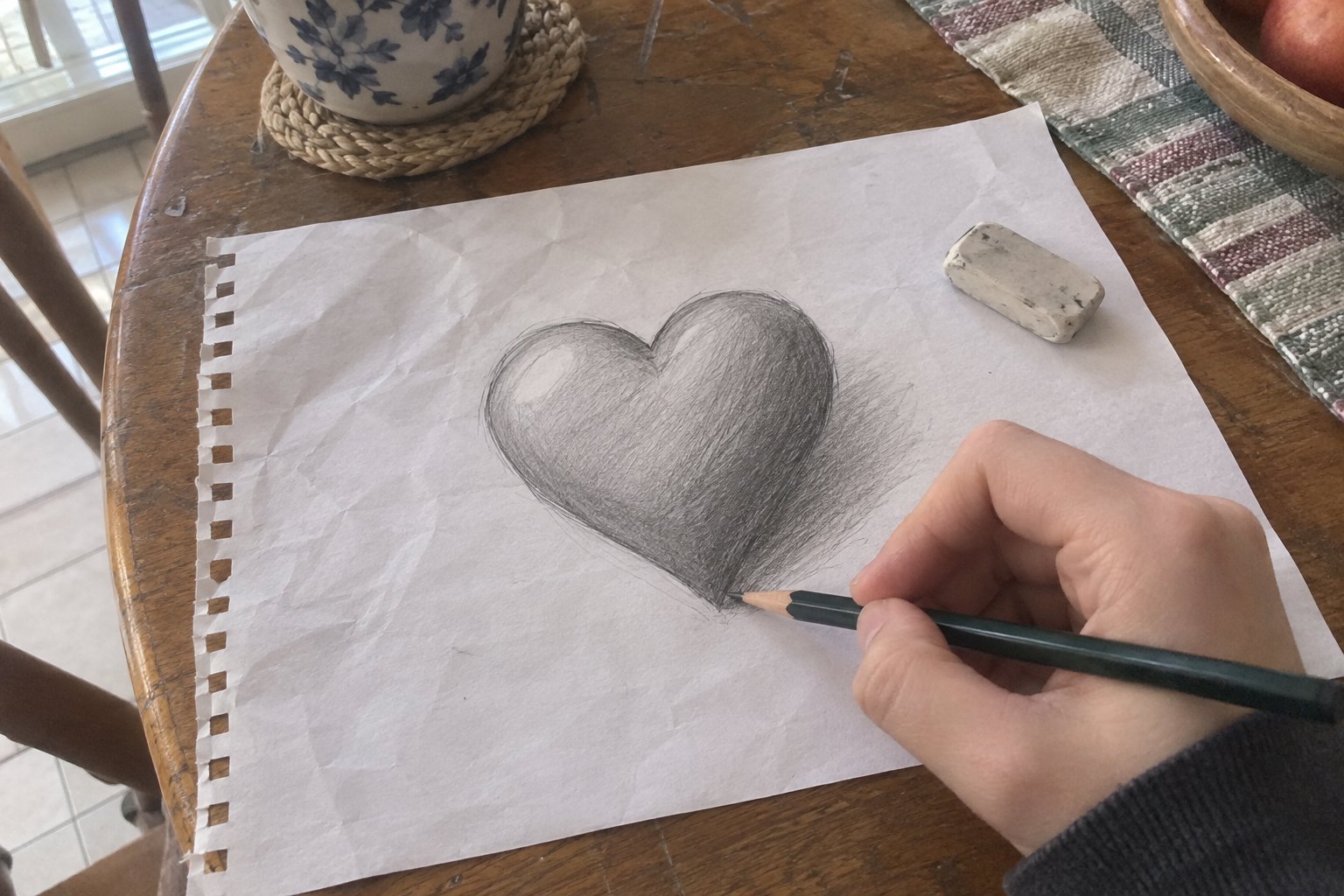
A smooth outline gives the heart a rounded, dimensional shape. On white paper, the pencil shading darkens along the lower curves and near the center crease, while a narrow highlight on each upper lobe suggests a glossy surface.
The shadows build up with light, even strokes, then deepen in selected areas with a softer pencil. A cast shadow beneath the heart anchors it to the page; keeping its edge soft helps the finished drawing feel grounded rather than pasted on top of the paper.
Heart Made of Flowers
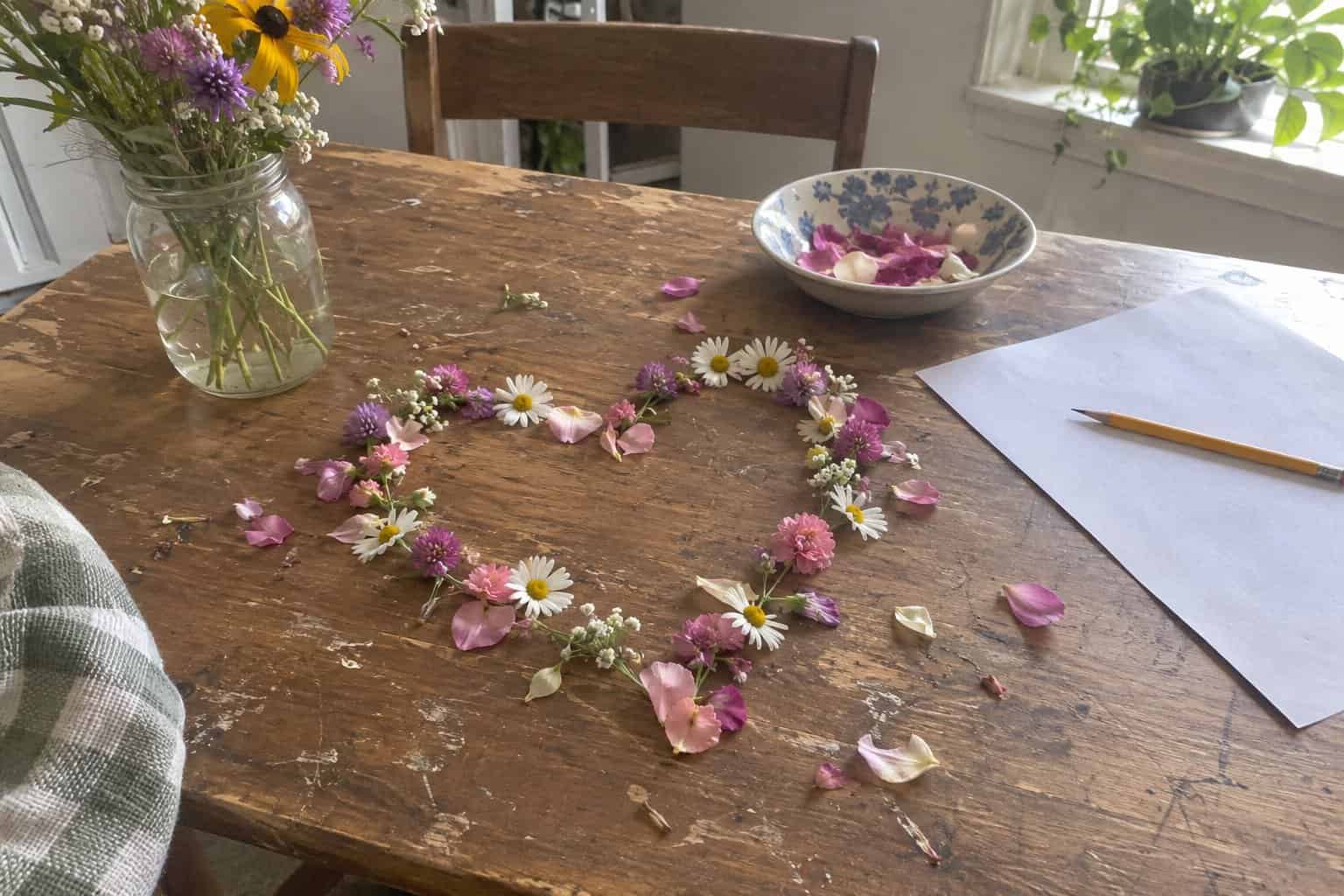
Small flowers trace the outline of a heart, with leaves filling the spaces between blooms. Colored pencil gives each petal a soft, distinct edge, while light shading keeps the cluster readable on white paper.
The composition works best when the flower shapes stay compact and follow the heart’s curve. A few darker centers add definition, and varied leaf angles keep the border from looking too uniform. This one offers focused practice in small petals, simple overlaps, and gentle color blending.
Anatomical Heart Sketch
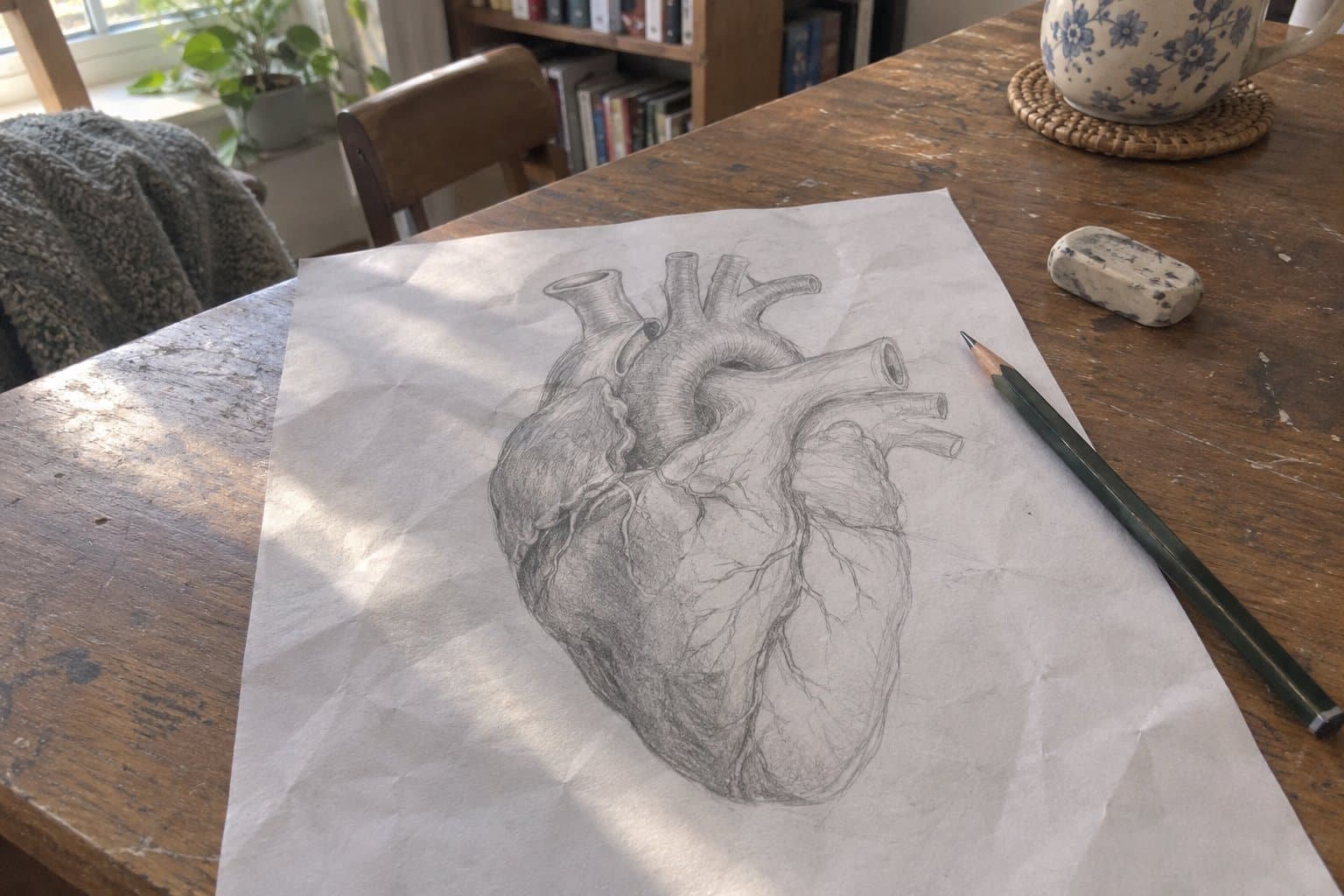
On cream paper, the anatomical heart takes shape through a firm pencil outline, layered curves, and branching veins and arteries. Its rounded lower chambers anchor the composition, while the vessels rise from the top and guide the eye across the page.
Fine hatching gives the surface depth, with darker strokes tucked beneath overlapping forms. A confident hand can keep the structure readable while adding small, patient details along the vessel edges. The finished sketch feels grounded in careful linework, with the warm paper showing through around the heart.
From clinical precision to something much softer, the next idea trades anatomy for atmosphere.
Heart in a Jar
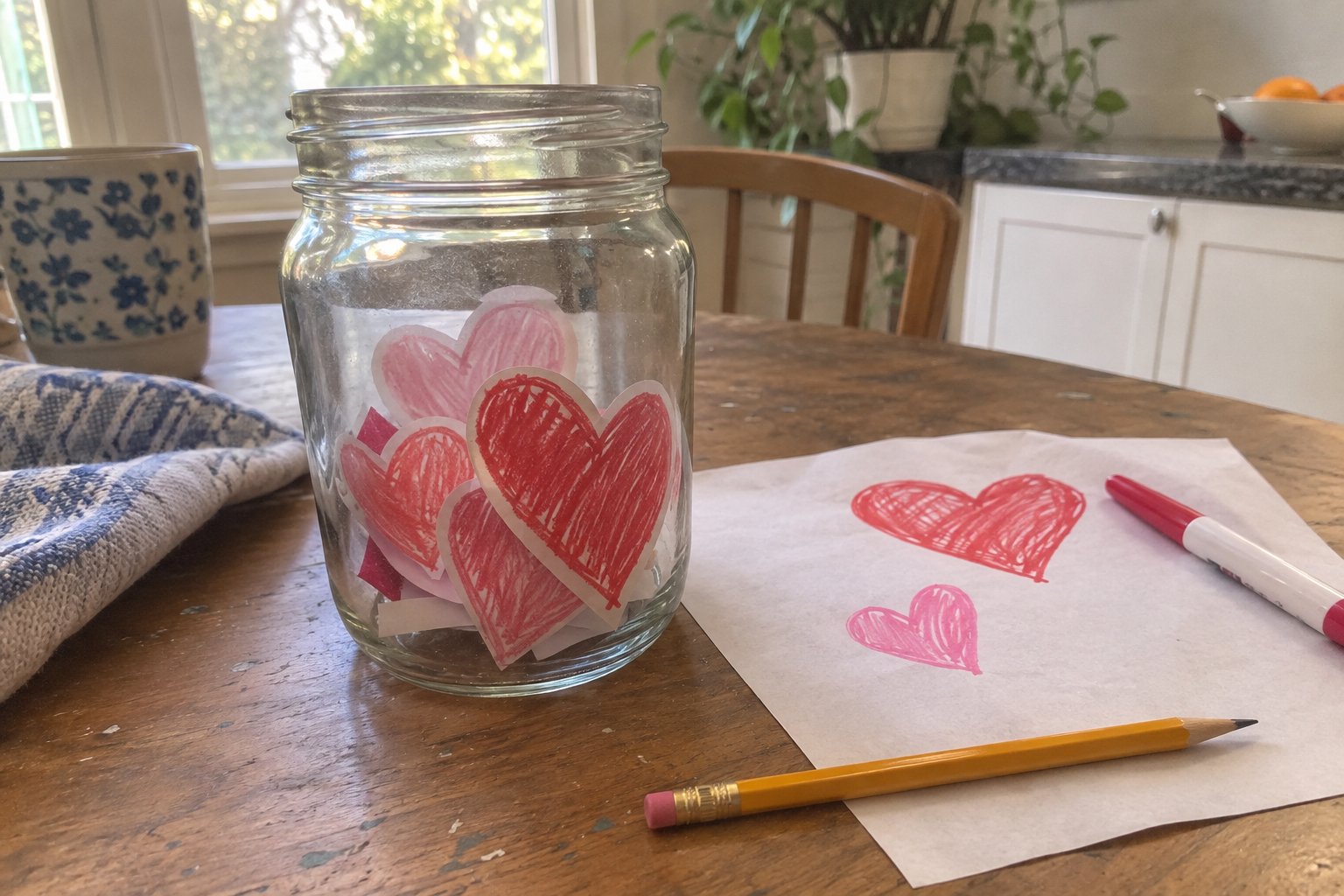
A red heart floats inside a clear glass jar, its rounded lobes sitting just above the vessel’s midpoint. A small gap between the heart and the glass gives the shape room to read clearly, while the cork lid adds a warm, simple accent.
Watercolor suits the design’s soft edges. The artist can layer red pigment near the heart’s center, then leave lighter patches to suggest shine. Pale gray-blue strokes along the jar’s sides and base hint at glass reflection without crowding the white paper.
The jar’s narrow neck and curved shoulders create a compact frame around the heart. Fine contour lines keep the glass recognizable, while restrained shading gives the finished drawing a light, airy feel.
Watercolor Heart Wash
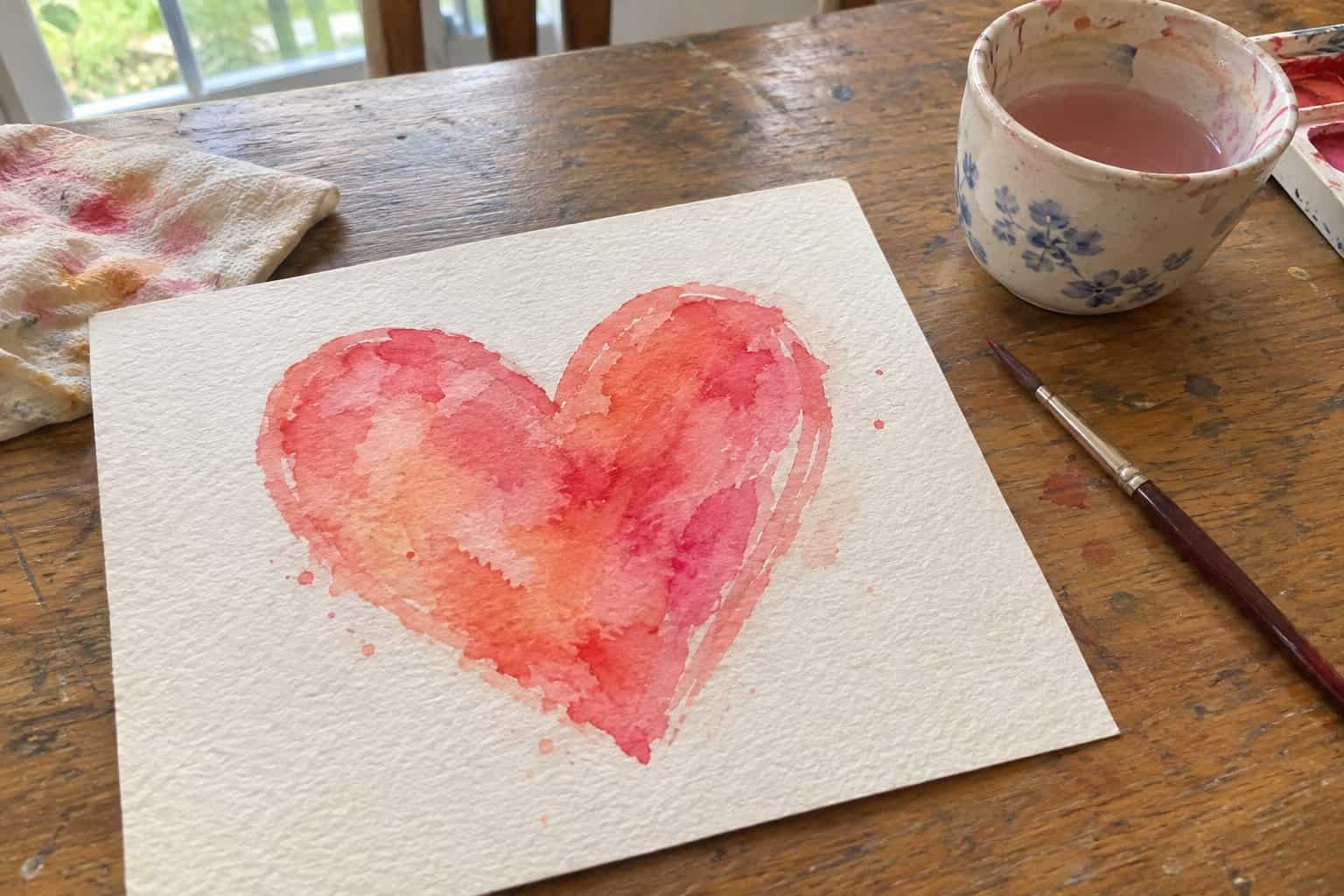
A single soft pink heart sits at the center of the white paper, its edges feathered into the background. The wash varies gently in tone, with a slightly deeper blush near the middle and paler color toward the rim. No outline interrupts the soft shape.
The artist wets the heart area lightly, then spreads diluted pink pigment with a brush. The heart’s familiar silhouette keeps the composition clear while the blurred perimeter gives the color room to breathe. A few uneven shifts in the wash preserve the feel of watercolor on paper.
A wash heart with zero outline reads as calmer and more deliberate than a hard-edged one. Eyes naturally soften their focus on blurred shapes, which is part of why unbounded washes feel more relaxed to look at than crisp linework.
Geometric Heart
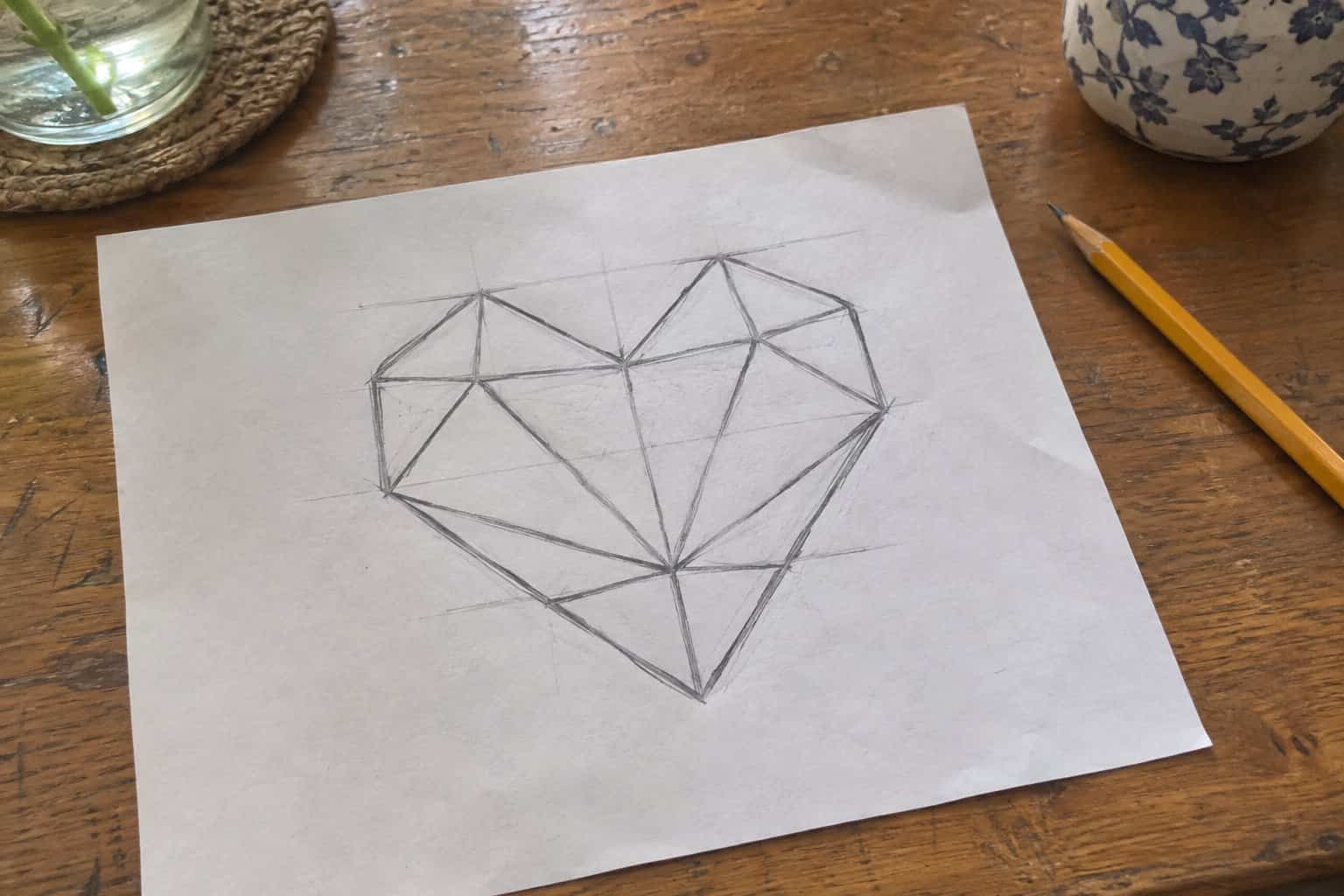
A geometric heart takes shape through crisp, connected triangles, with pink and red sections creating a clear color pattern. A ruler helps keep the edges straight, while marker gives each line a firm, even finish. On white paper, the clean outline makes the heart easy to read.
The triangles can vary in size to create a lively arrangement, with smaller shapes near the center and broader ones along the outer curves. Alternating pink and red across neighboring sections adds rhythm without crowding the design. Keeping the point at the bottom centered helps the finished heart feel balanced.
Heart Balloon
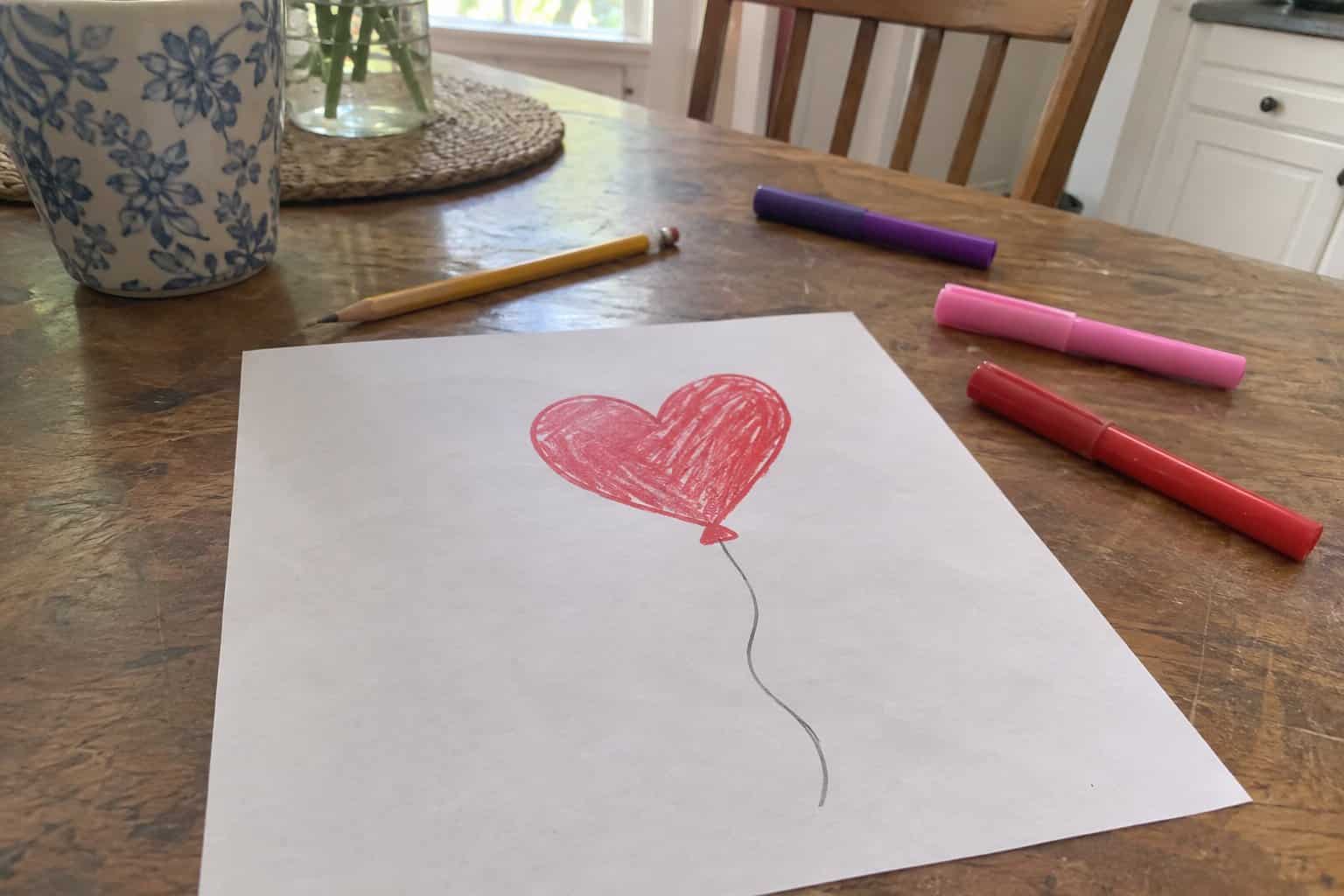
A red heart-shaped balloon gives the drawing a light, buoyant feel. Its rounded lobes and tapered base create a clear silhouette, while a small white highlight near the upper curve suggests a glossy surface.
Colored pencil suits this look: layered red strokes add gentle variation, and a fine outline keeps the heart crisp against the white paper. A thin string can trail from the knot, curling into a loose loop near the bottom of the page.
Keep the balloon as the focal point, with open space around it. Varying the string’s curves brings movement into the composition without crowding the heart.
Heart Tree
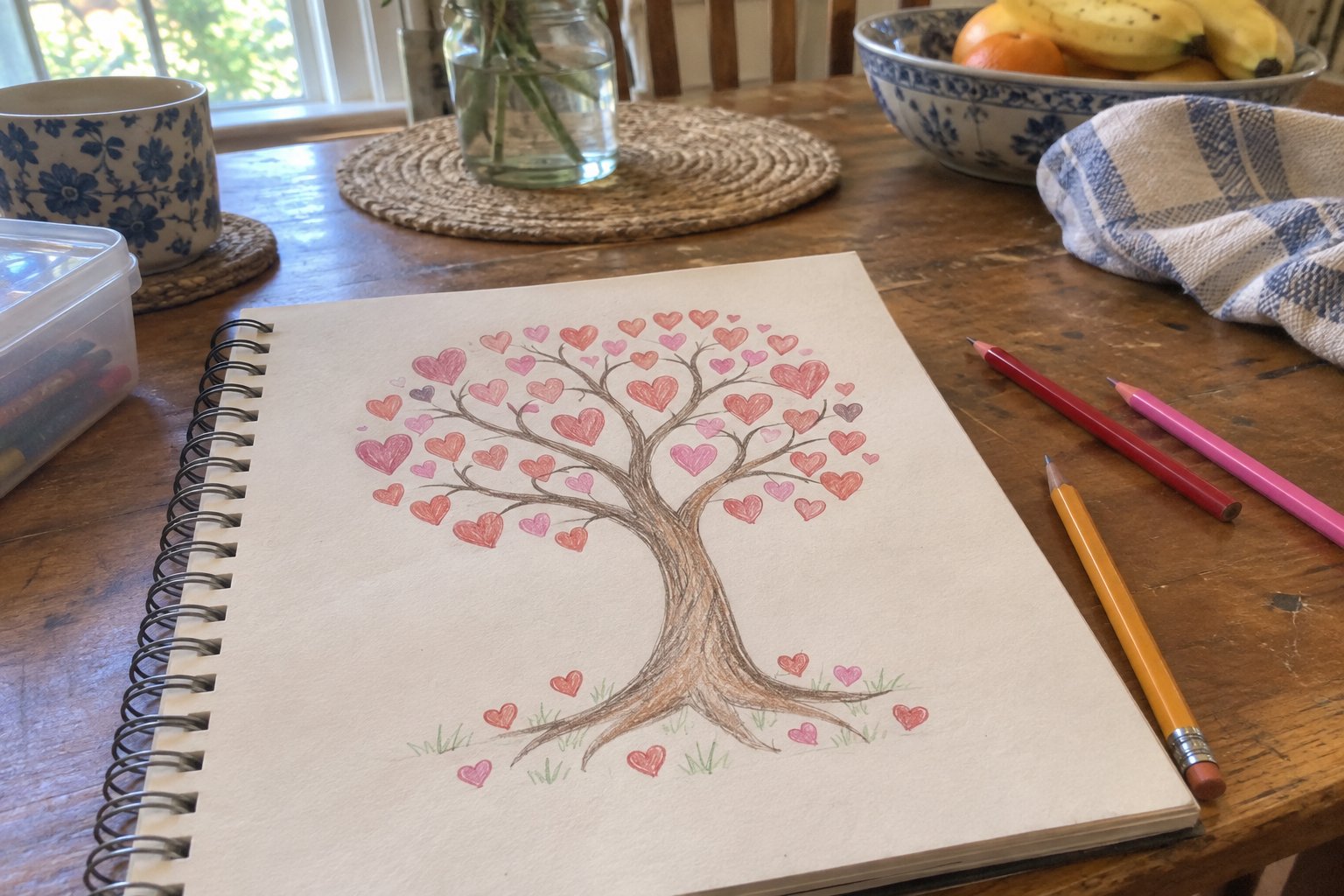
A bare tree with red heart-shaped leaves gives the drawing a storybook feel. Pencil lines define the slender trunk and branching limbs, while watercolor adds soft red washes to the heart forms.
The tree sits on white paper, with the finished drawing visible edge to edge. Heart leaves cluster along the branches, creating a clear silhouette and leaving open space around the trunk.
For a balanced composition, the artist can vary the hearts’ size and angle while keeping their pointed ends attached to the twigs. Light pencil shading in the bark adds texture without competing with the watercolor.
Winged Heart Sketch
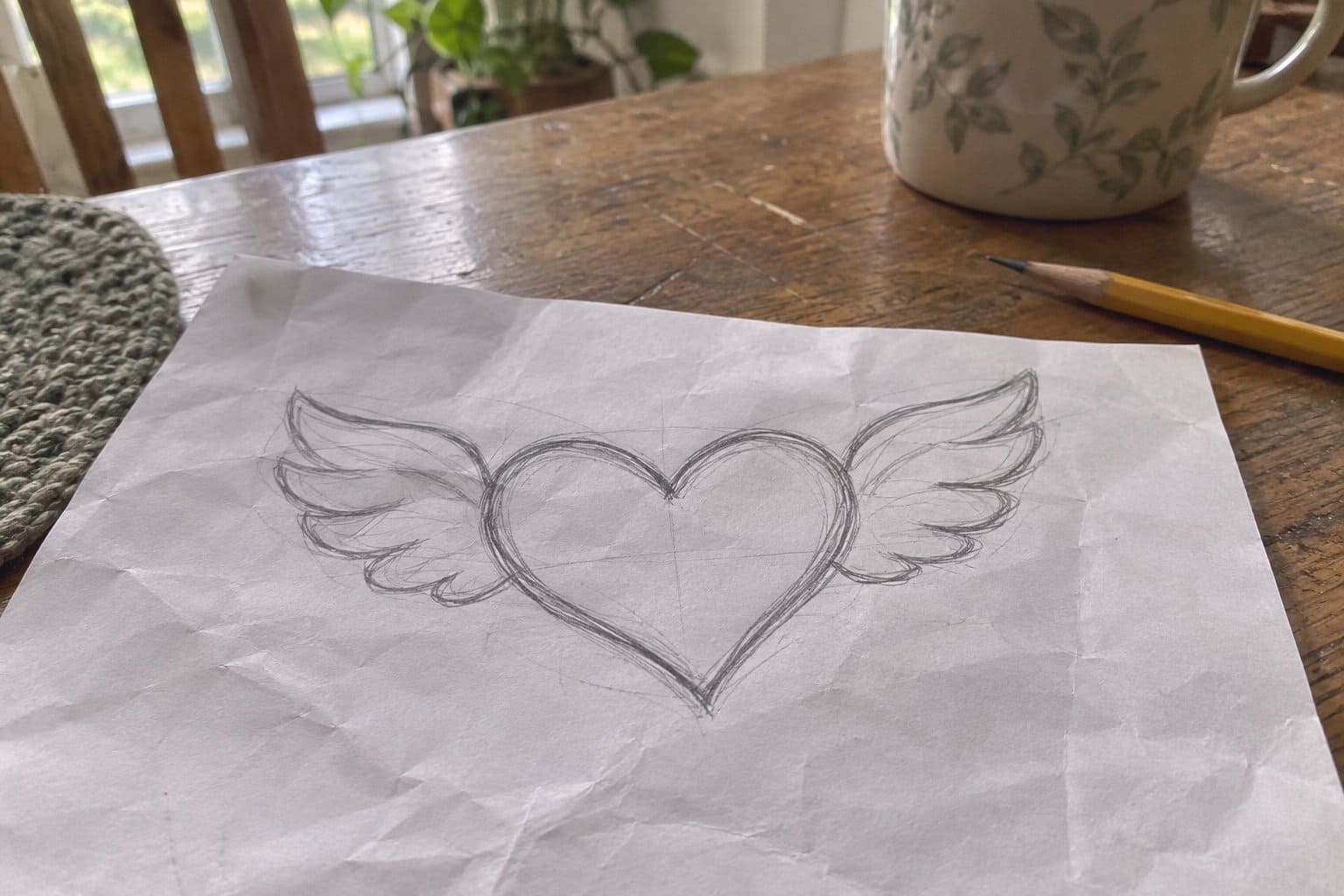
A pencil heart sits at the center of the page, with two feathered wings extending from its sides. The heart’s curved outline gives the drawing a clear focal point, while the wings add movement across the white paper.
Each wing builds from overlapping feather shapes, with shorter feathers close to the heart and longer ones along the outer edge. Light pencil strokes help define the layers; darker lines can sharpen the heart’s outline and the feather tips.
The wings look balanced when they follow a similar curve, with small differences in feather length keeping the sketch natural. Keeping the finished drawing focused on the heart and its paired wings leaves open paper around the silhouette.
Heart Mandala
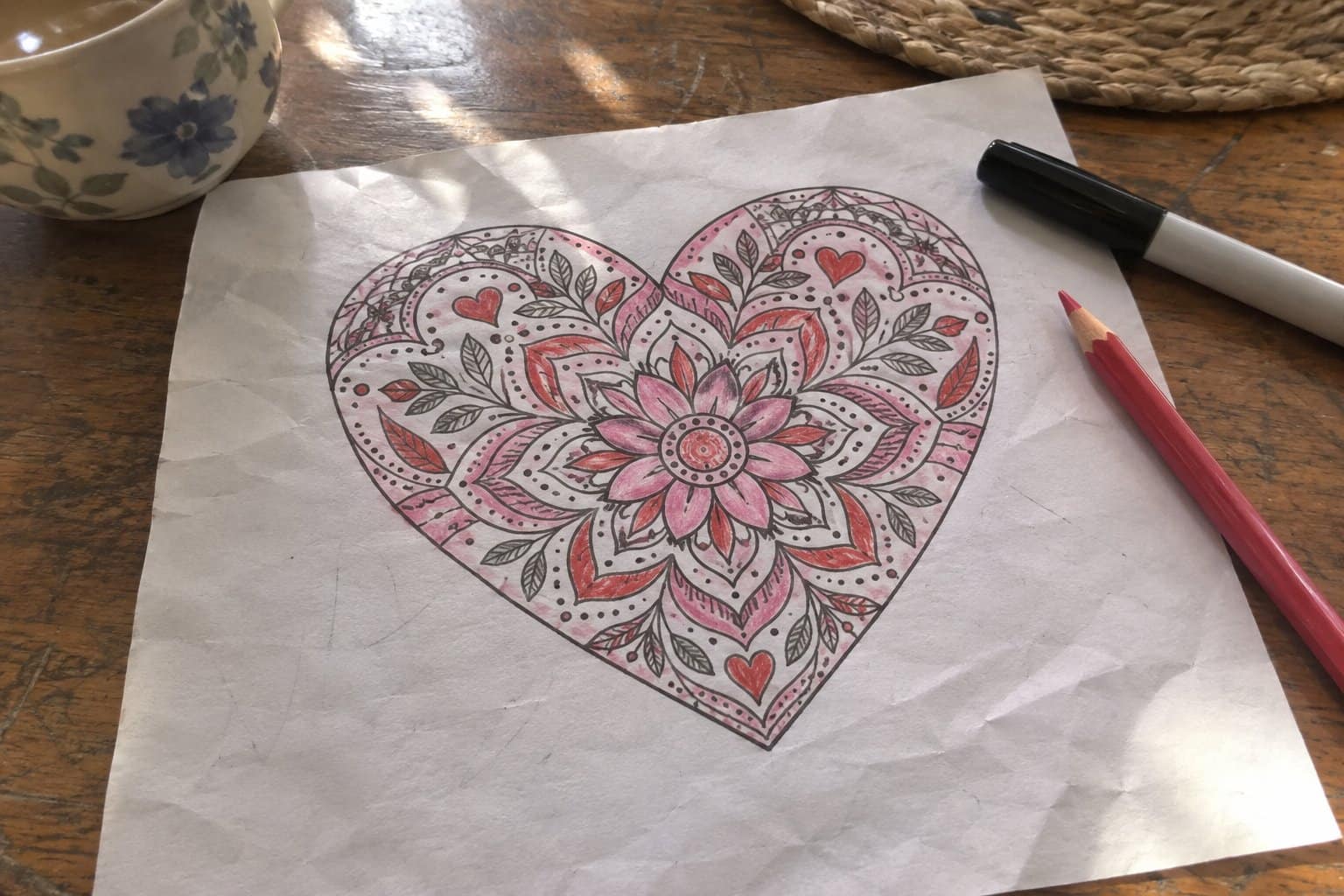
A heart mandala builds its outline from balanced, repeating shapes. Black pen lines radiate from the center, with small petals, dots, and curved bands following the heart’s two lobes and tapered point. The finished pattern feels orderly, while each layer gives the eye a new detail to follow.
Starting with a light heart shape and a marked vertical centerline keeps the design even. Matching curves go on each side, then the spaces fill with repeated motifs. Slow, deliberate strokes help the pattern stay consistent as it grows outward.
Mandala patterns rely on repetition, not perfection. A slightly uneven petal on one side reads as handmade rather than mistaken, especially once the whole pattern fills in and the eye stops tracking individual shapes.
Heart Cracked Open
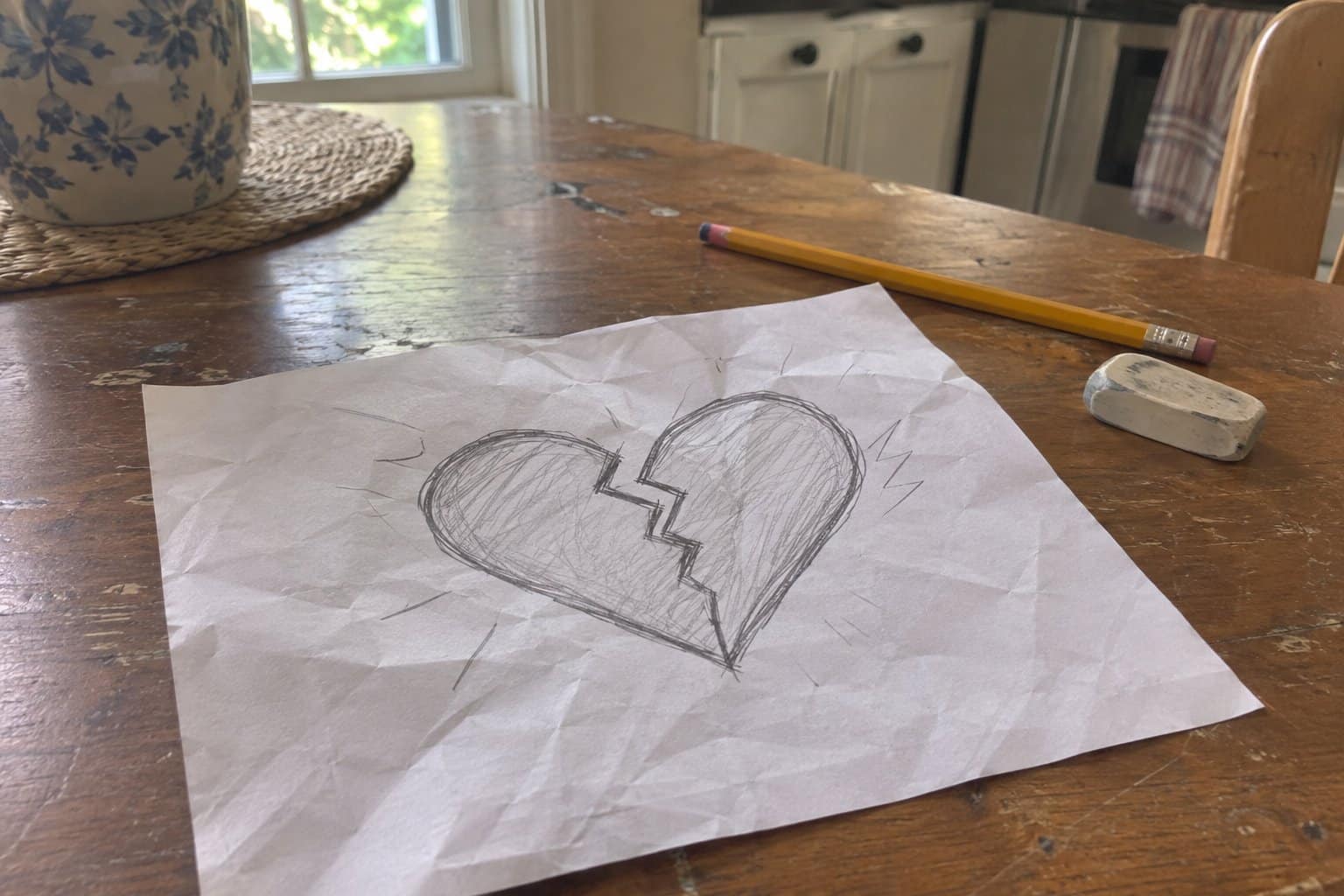
A jagged split gives the heart its central detail, with warm light spilling through the narrow opening. On white paper, colored pencil layers create a finished drawing with soft gradients and visible strokes. The glow draws the eye toward the fracture.
The heart’s rounded outline keeps the composition easy to read, while uneven crack edges add movement. Amber and pale yellow near the opening can fade into deeper orange along the inner edges. Gentle shading across the heart adds dimension without crowding the bright center.
Stained Glass Heart
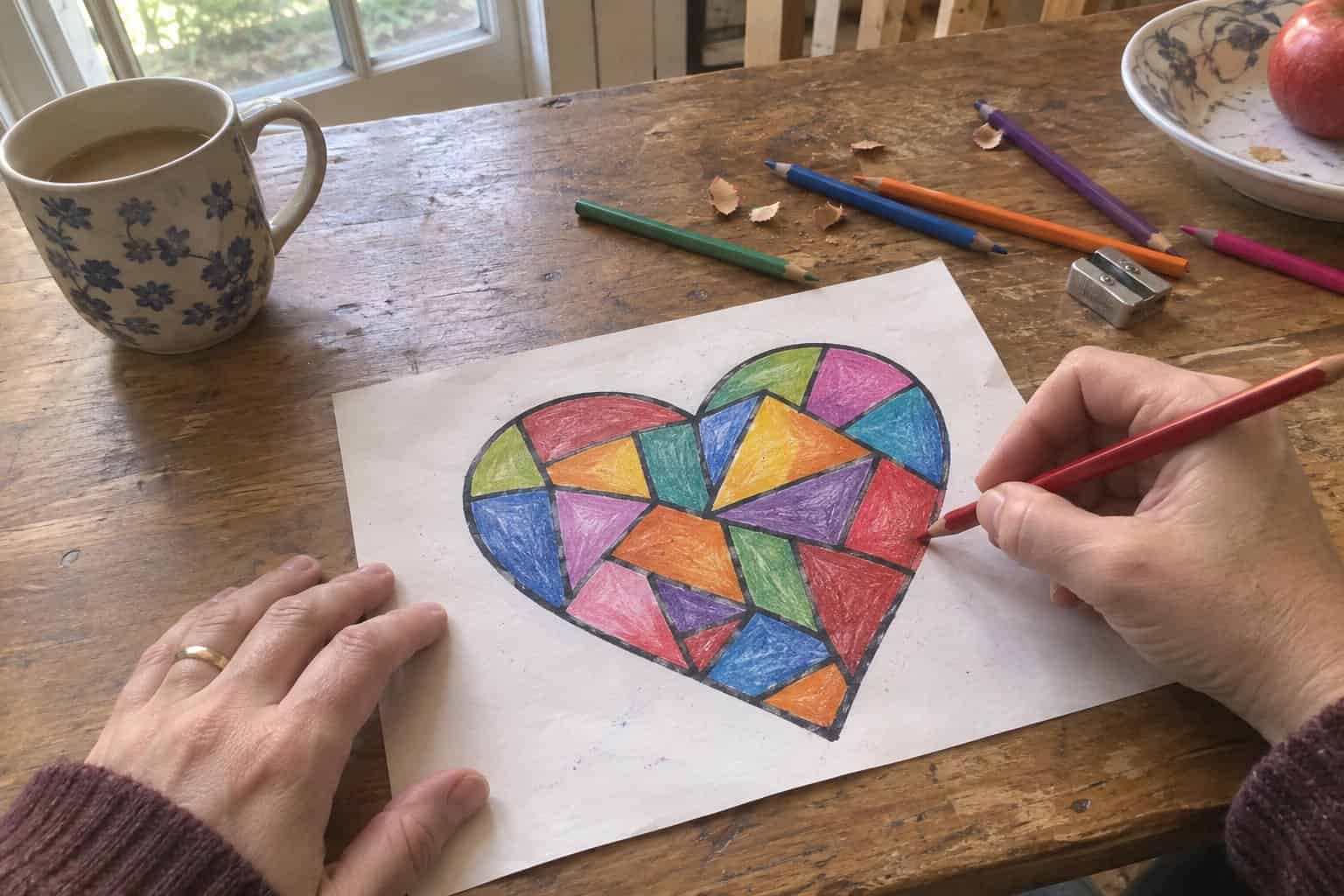
A bold heart outline gives this drawing a clear frame. Inside, thick black lines divide the shape into irregular panels, like pieces of glass held in lead. Varying the panel sizes creates a lively rhythm, keeping each section large enough for an even coat of marker.
Filling the panels with distinct colors, such as red, blue, yellow, and green, makes the piece pop. The dark dividers keep the colors visually separate and help cover small slips where marker strokes cross an edge. On white paper, the bright fills stand out against the strong black linework.
Hands Holding a Heart
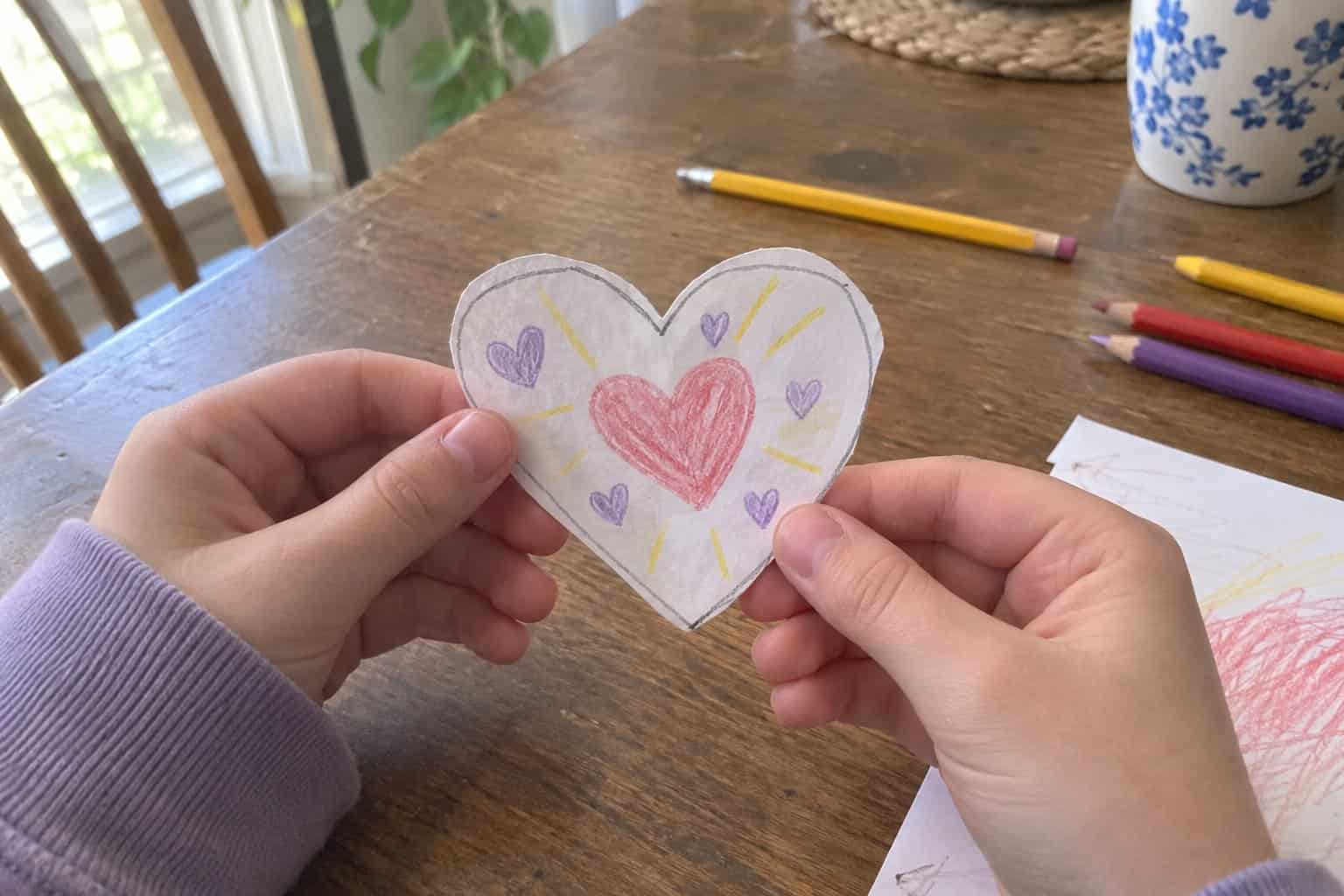
Two cupped hands cradle a single heart at the center of a white sheet. The finished pencil drawing keeps the composition simple: the fingers curve inward, the thumbs frame the heart, and light shading gives the forms dimension.
Careful hand studies help the pose feel balanced. The knuckles, fingernails, and overlapping fingers each need clear outlines, while soft graphite shadows beneath the heart suggest its weight. Subtle hatching along the palms adds texture without crowding the central shape.
As a sketchbook starting point, blocking in the heart first and drawing the hands around it keeps the heart visible and gives the fingers a natural path toward its center.
“The hands in this kind of drawing aren’t the subject. They’re the frame that makes the small shape in the middle feel important.”
Heart Padlock and Key
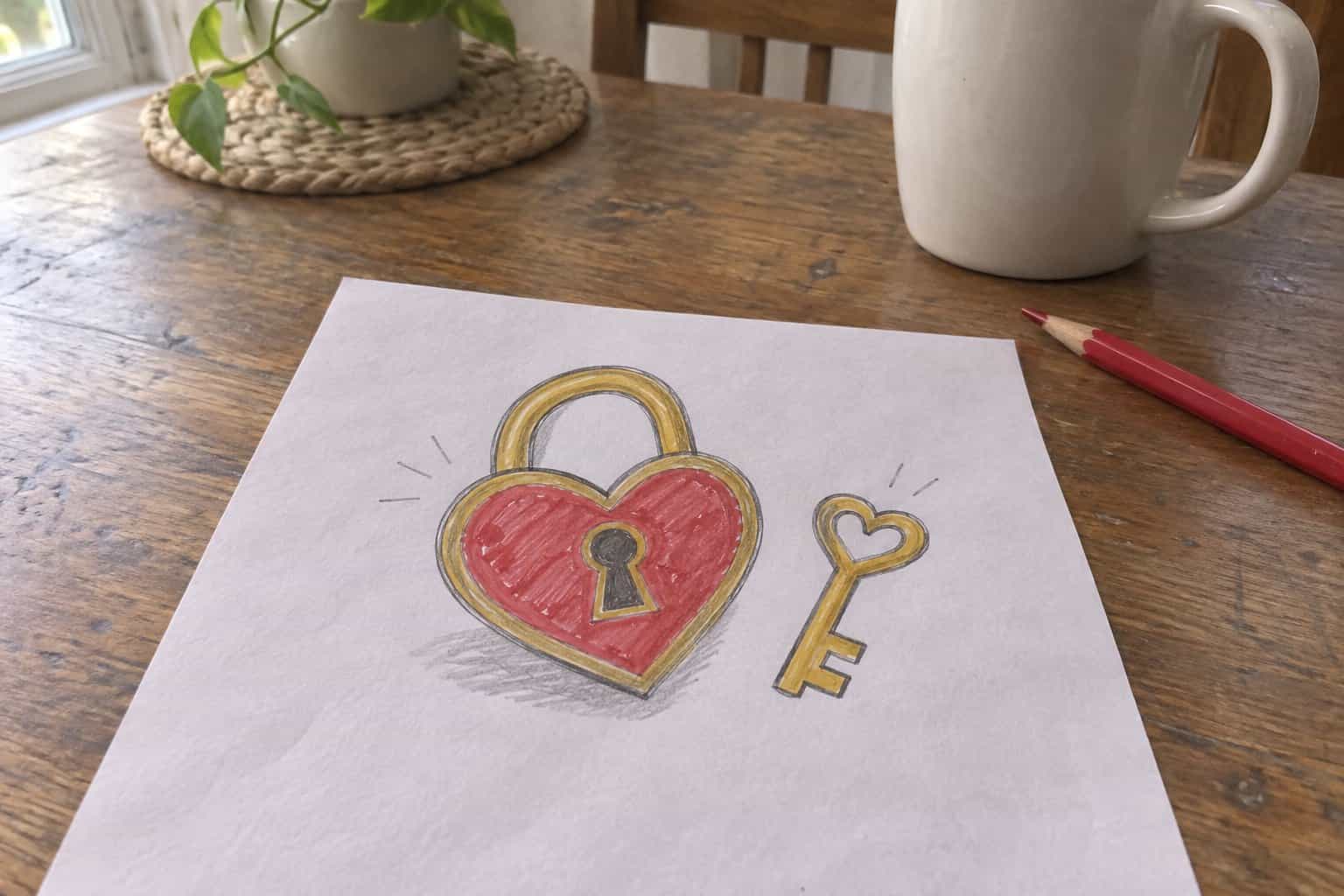
The heart-shaped padlock gives this pencil drawing a clear focal point, while the small key beside it adds a second point of interest. Setting both objects on white paper, with a slight angle between them, keeps the composition from feeling rigid.
A firm outline works for the lock’s heart-shaped body, while a lighter touch suits its curved shackle. A metallic look comes together through narrow highlights, soft graphite shading, and darker tones along the edges. A few carefully placed marks can suggest shine without crowding the shape.
Keeping the key compact, with a simple bow and fine teeth, lets it stay readable at a small scale. The contrast between smooth shaded surfaces and crisp details gives the finished drawing depth.
None of these need to be copied exactly. A heart tucked into a jar, split by a crack, or caged in stained-glass panels is really just a starting line, and the most interesting sketchbook pages tend to show up after an artist bends one of these ideas a little further than planned.