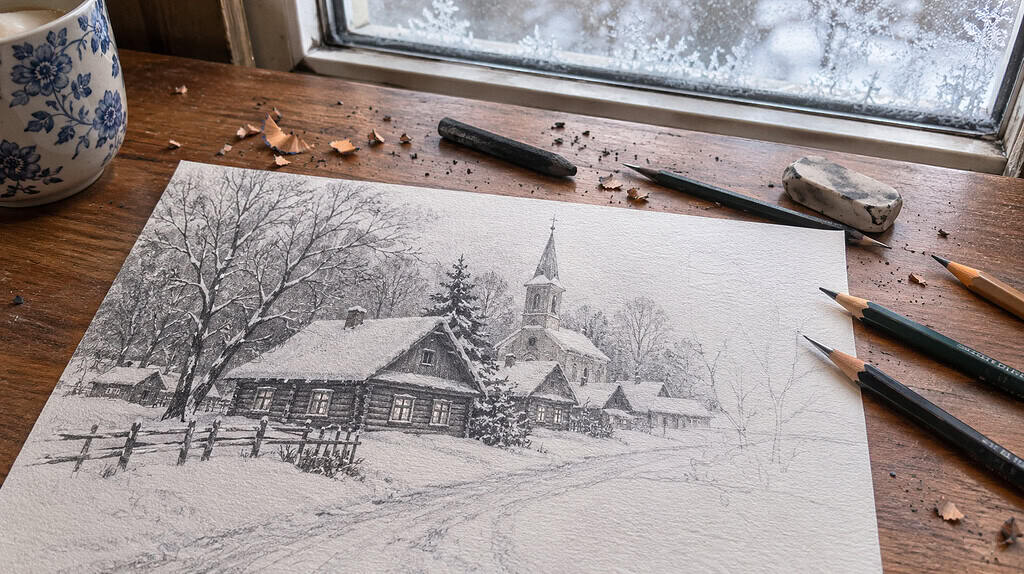
Snow has a way of simplifying a drawing before a single mark gets made. The white of the page already does half the work, leaving negative space to define snowbanks, drifts, and rooftops without any shading at all. The eighteen ideas below move through pencil, marker, charcoal, colored pencil, and watercolor, each one built around a different way of letting that blank paper carry the cold.
Table of Contents
- 1 Snowy Village at Dusk
- 2 Snowman with Striped Scarf
- 3 Snow-Covered Pine Forest
- 4 Falling Snowflakes Pattern
- 5 Snowy Mountain Peak
- 6 Footprints in Snow
- 7 Frozen Lake Reflection
- 8 Snow Globe
- 9 Winter Cabin with Chimney Smoke
- 10 Snowy Owl on a Branch
- 11 Arctic Fox in Snow
- 12 Icicles on a Roof Edge
- 13 Window Frost Pattern
- 14 Snowy Street Lamp
- 15 Snow Angel
- 16 Sledding Hill
- 17 Snowshoe Hare
- 18 Cardinal on a Snowy Feeder
Snowy Village at Dusk
Save for later
Want to come back to this story? Save it with your email so it is easy to find again.
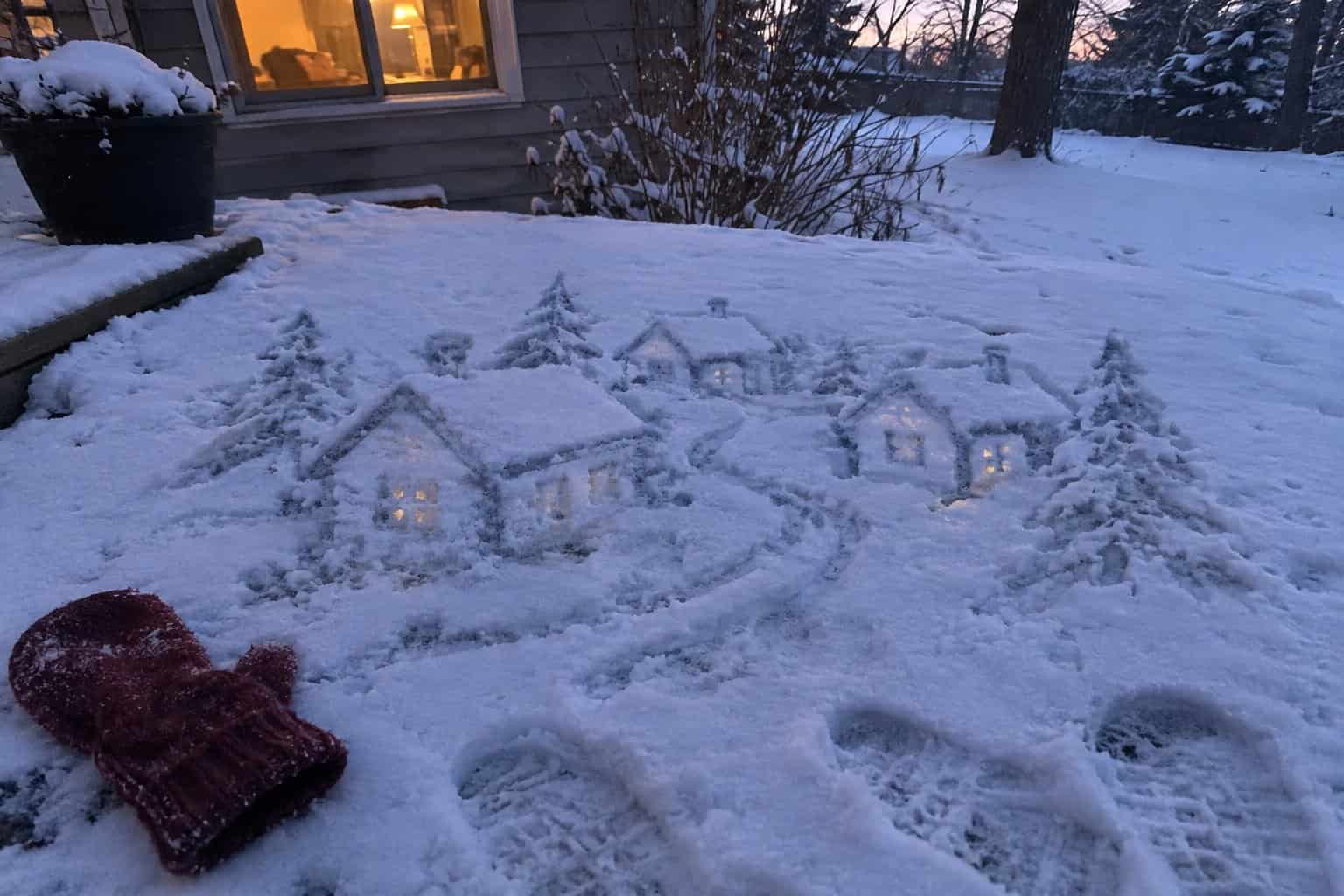
A row of small houses anchors the scene, their rooftops softened by heavy snow. The buildings shrink slightly toward one edge of the paper, giving the street a clear sense of distance. Pencil lines define rooflines, chimneys, and doorways while watercolor washes build the deep blue evening sky.
Small yellow windows bring warmth to the cool palette. Leaving the white paper untouched across roofs and along the ground creates crisp snow, and a few pale blue shadows beneath eaves and around the houses add just enough depth. Keeping the window shapes simple helps each glow read clearly from across the room.
Letting the sky wash dry before adding fine pencil details keeps everything from bleeding together. A narrow strip of snowy foreground gives the row somewhere to sit, while a few soft footprints can lead the eye toward the distant homes.
Snowman with Striped Scarf
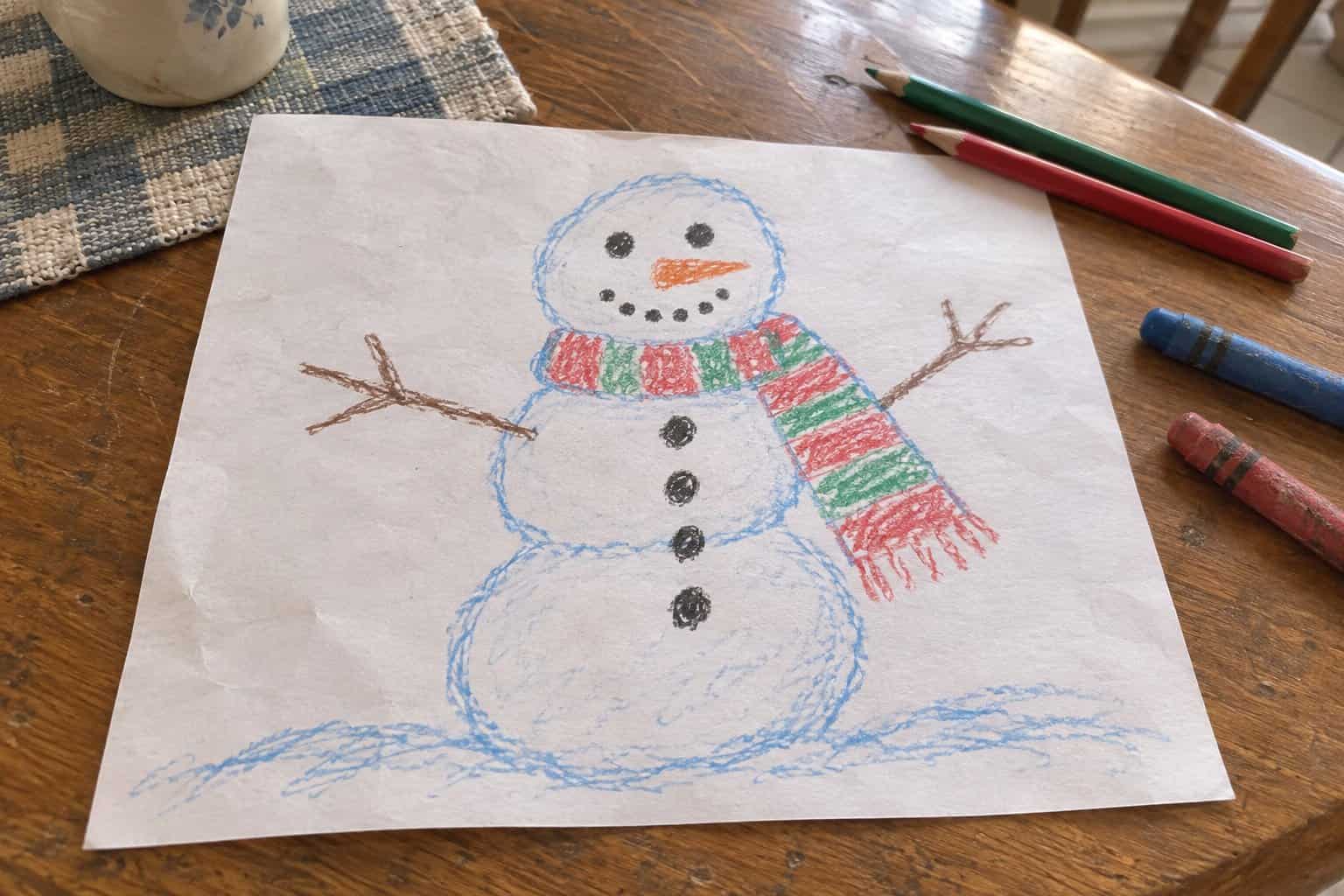
A round head and two stacked snowballs give this marker drawing its simple shape. Centering the snowman on white paper, then adding a carrot nose, small eyes, and a curved smile keeps the figure friendly rather than fussy. A few snow dots around the figure create a light winter setting without crowding the page.
Wrapping a scarf around the neck and drawing clear stripes across its hanging ends adds the one real pattern in the piece. Alternating marker colors helps each band stand out, and a few short fringe lines finish the edges. The broad forms and easy details make this a solid starting point for kids and beginners alike.
Snow-Covered Pine Forest
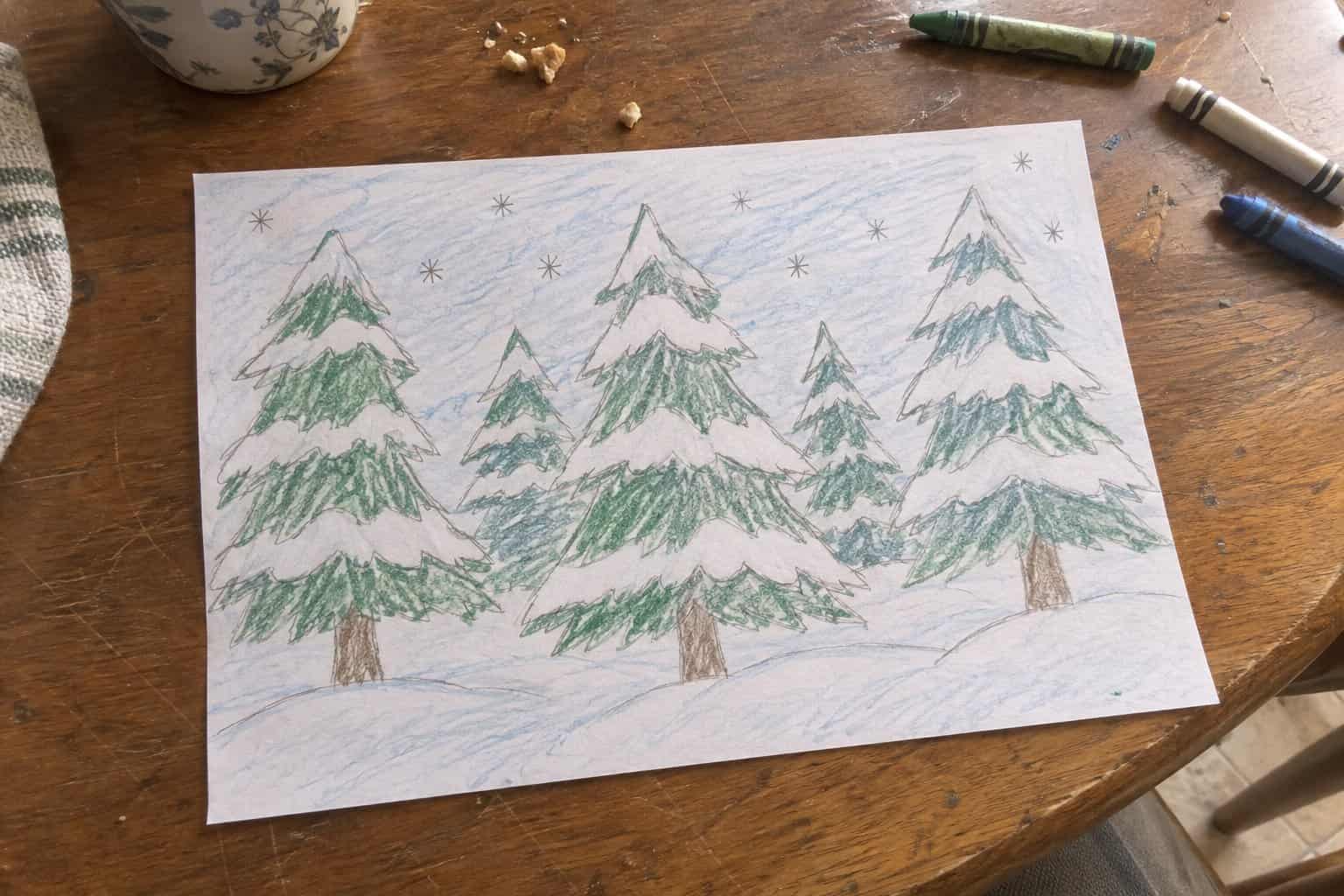
Tall pines rise across cream paper, their snow-laden branches marked with charcoal strokes. Three layers of trees give the forest a clear sense of distance: pale, fine-lined pines recede in back, while the nearest trunks carry darker outlines and denser shading.
The front trees anchor the composition. Heavier charcoal along their trunks and lower branches separates them from the lighter middle layer, and small gaps in the shading leave room for snow to read as bright shapes.
Varying the branch angles and spacing keeps each pine with its own silhouette. Soft charcoal behind the trees suggests a quiet, hazy distance, while crisp marks on the closest boughs bring their snowy edges into focus.
Falling Snowflakes Pattern
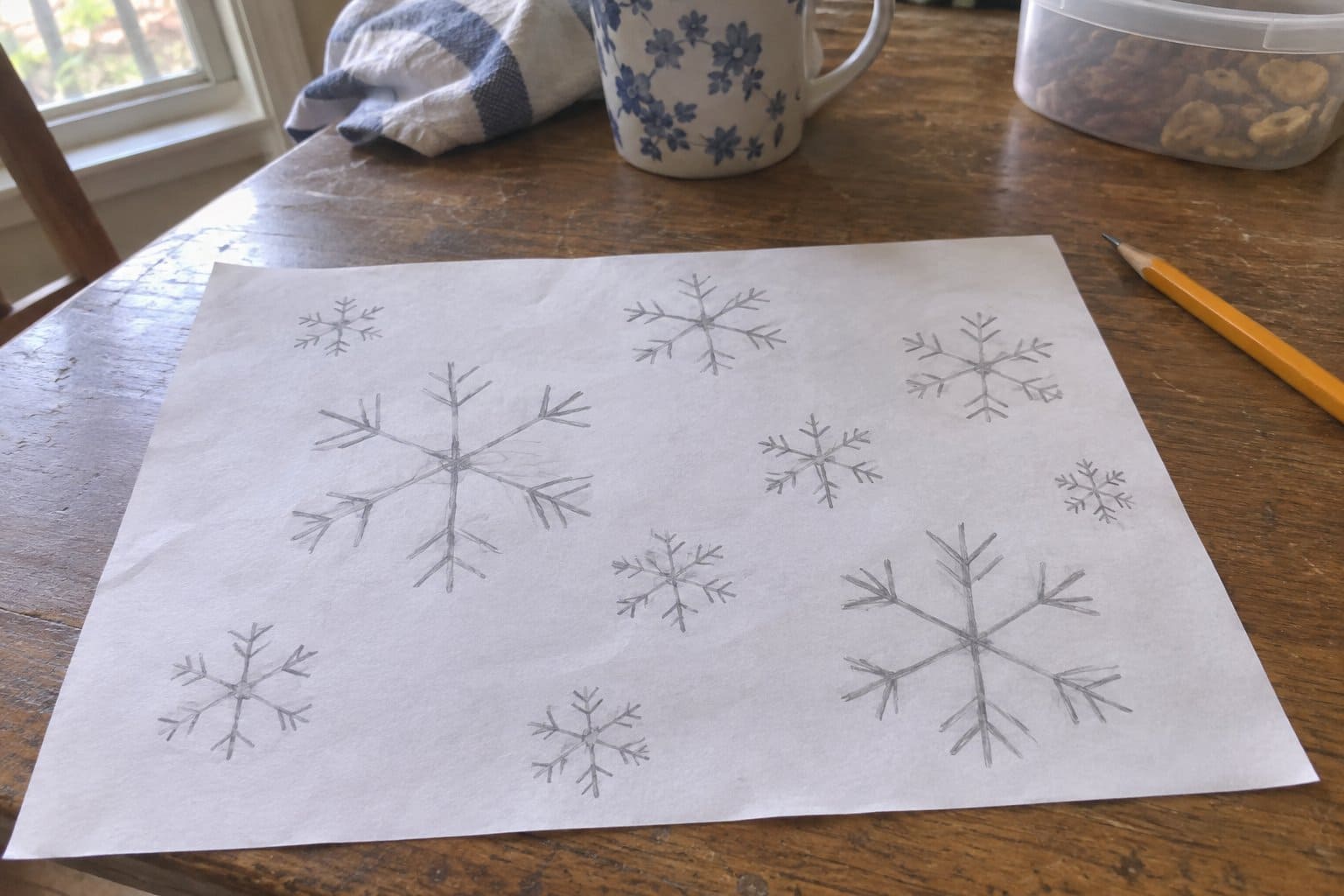
A white gel pen gives each flake a crisp edge against black paper. The finished drawing fills the page with varied six-sided snowflakes, mixing large, open forms with smaller, finely branched marks. Their spacing suggests flakes drifting across the dark surface.
Building each snowflake around a clear center, then repeating its main branches evenly across six directions, keeps the pattern balanced. Small changes in branch length, tip shape, and inner detail give each flake its own character while preserving the shared geometry underneath.
Larger flakes near the edges and smaller ones scattered through the gaps hold the composition together. A few light dots can suggest falling snow and connect the shapes without crowding the paper.
Snowy Mountain Peak
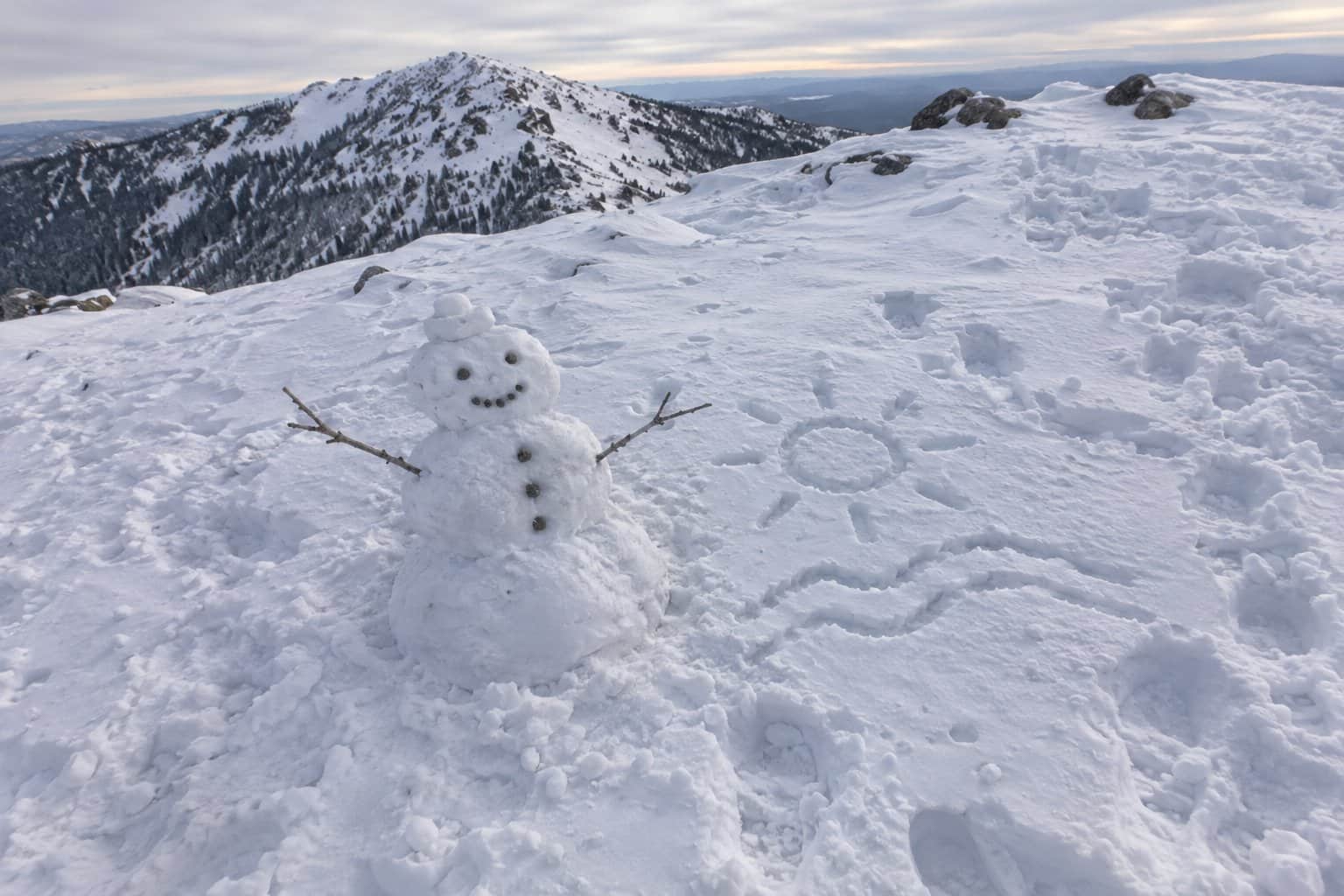
A sharp summit gives this graphite drawing its focal point, with sloping ridgelines leading the eye down toward shaded rock faces. White paper forms the snow, while darker pencil marks define exposed stone and the mountain’s depth.
Layered strokes build the rocky planes, with the darkest values kept beneath ledges and along narrow creases. Softer shading across the slopes helps the peak feel solid without crowding the clean sky.
- Composition: Place the summit slightly off center and let the ridges angle toward the lower corners.
- Value: Keep snow areas pale, then deepen the graphite in crevices and on shadowed faces.
- Finish: Leave the sky unmarked so the crisp outline of the peak stays clear.
Footprints in Snow
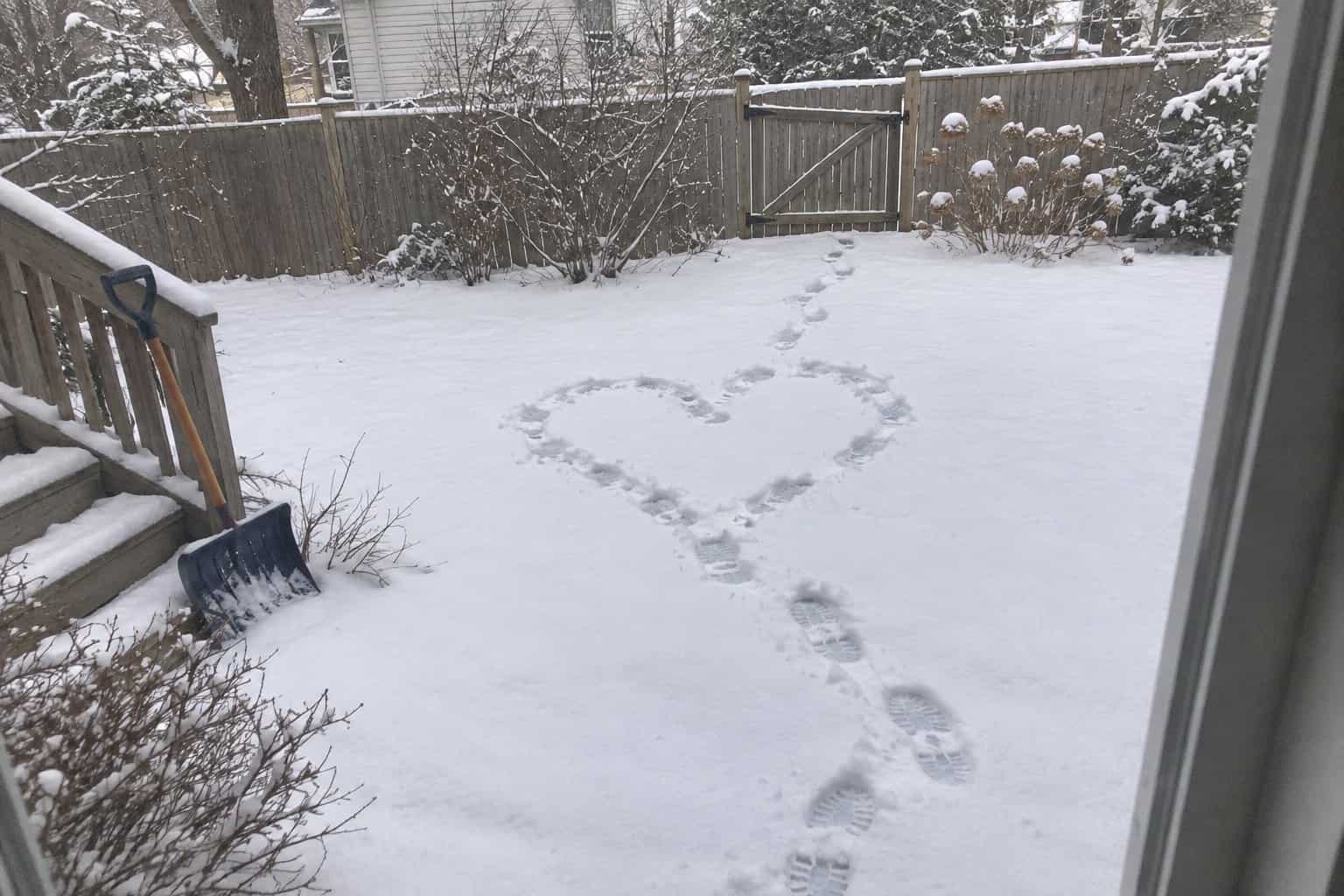
A single trail of boot prints gives a snowy field a clear sense of distance. The marks begin large in the foreground, then shrink and draw closer together as they curve toward the horizon. That change in scale turns a simple path into a study of perspective.
Light pencil strokes on white paper can suggest the shallow depressions around each print. Keeping the surrounding field smooth, with only faint shading near the footprints, preserves the open space. A gentle curve adds movement while leaving the destination out of view.
The drawing feels finished when each print follows the same path but varies slightly in angle and depth. Crisp edges near the viewer and softer marks in the distance help carry the eye across the page.
A single trail of footprints is one of the easiest ways to teach one-point perspective by hand. The shrinking gaps between prints do the math for you, no vanishing-point grid required.
Frozen Lake Reflection
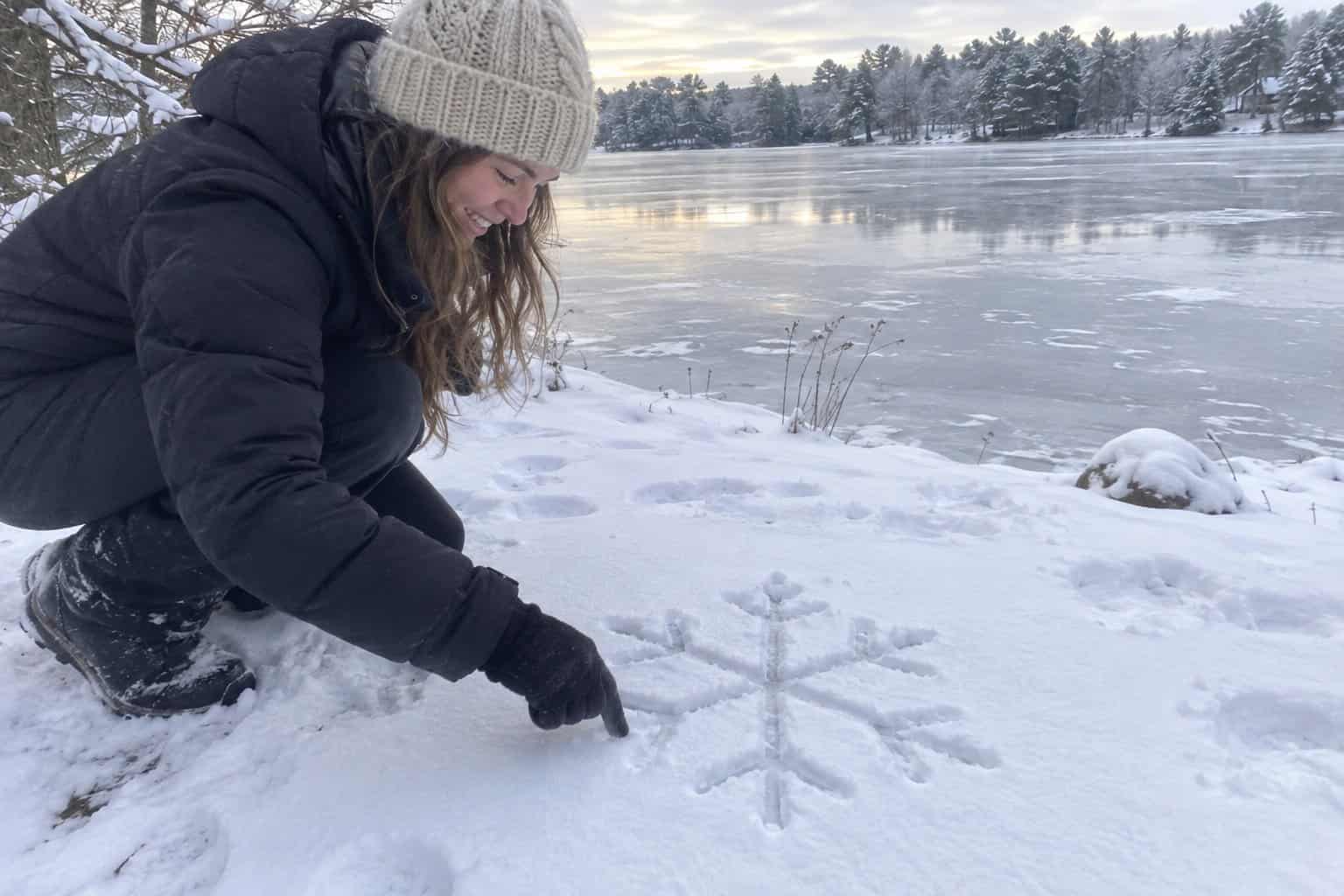
A band of dark pines anchors the far shore, their vertical forms softened where they meet the ice. Above them, a pale pink sky fades gently into cooler tones, then returns as a blurred reflection across the frozen lake. That quiet symmetry gives the scene its focus.
Watercolor washes can flow into one another on white paper to soften the sky and its mirrored color. Keeping the pine silhouettes crisp against those blended areas, and adding a few broken horizontal marks, suggests subtle texture in the ice.
Snow Globe
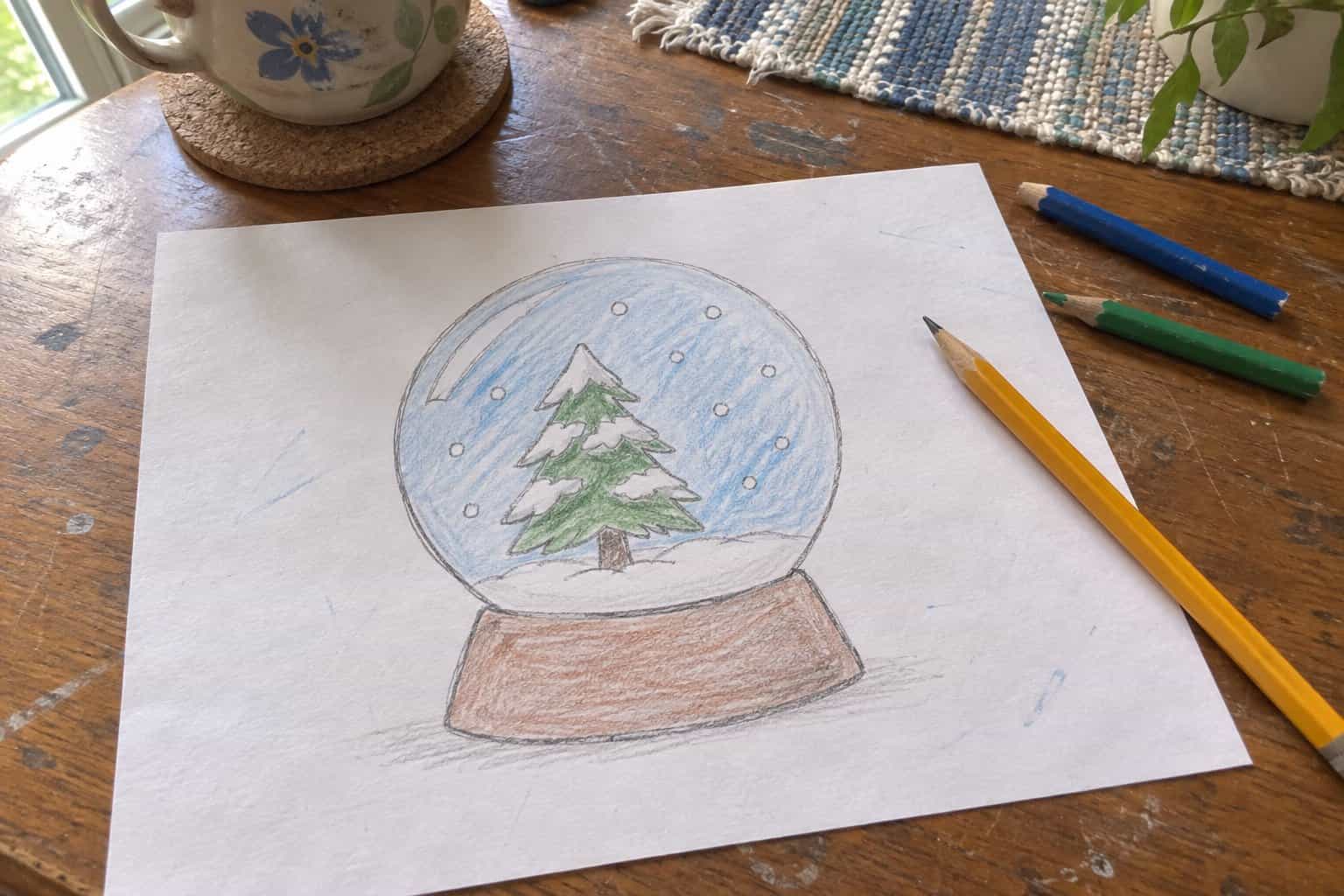
A glass dome gives this drawing a clear focal point. Inside, a tiny cabin sits among swirling flakes, while a small wooden base anchors the shape on the page. Colored pencil suits the scene well: light, layered strokes suggest the glass, and fine lines bring out the cabin’s roof and windows.
The curved outline carries much of the composition. A narrow highlight along one side and a softer reflected line on the other make the dome feel rounded, and small white gaps among the flakes keep the interior crisp. Varying the flake sizes and directions creates a sense of motion around the still cabin at the center.
Winter Cabin with Chimney Smoke
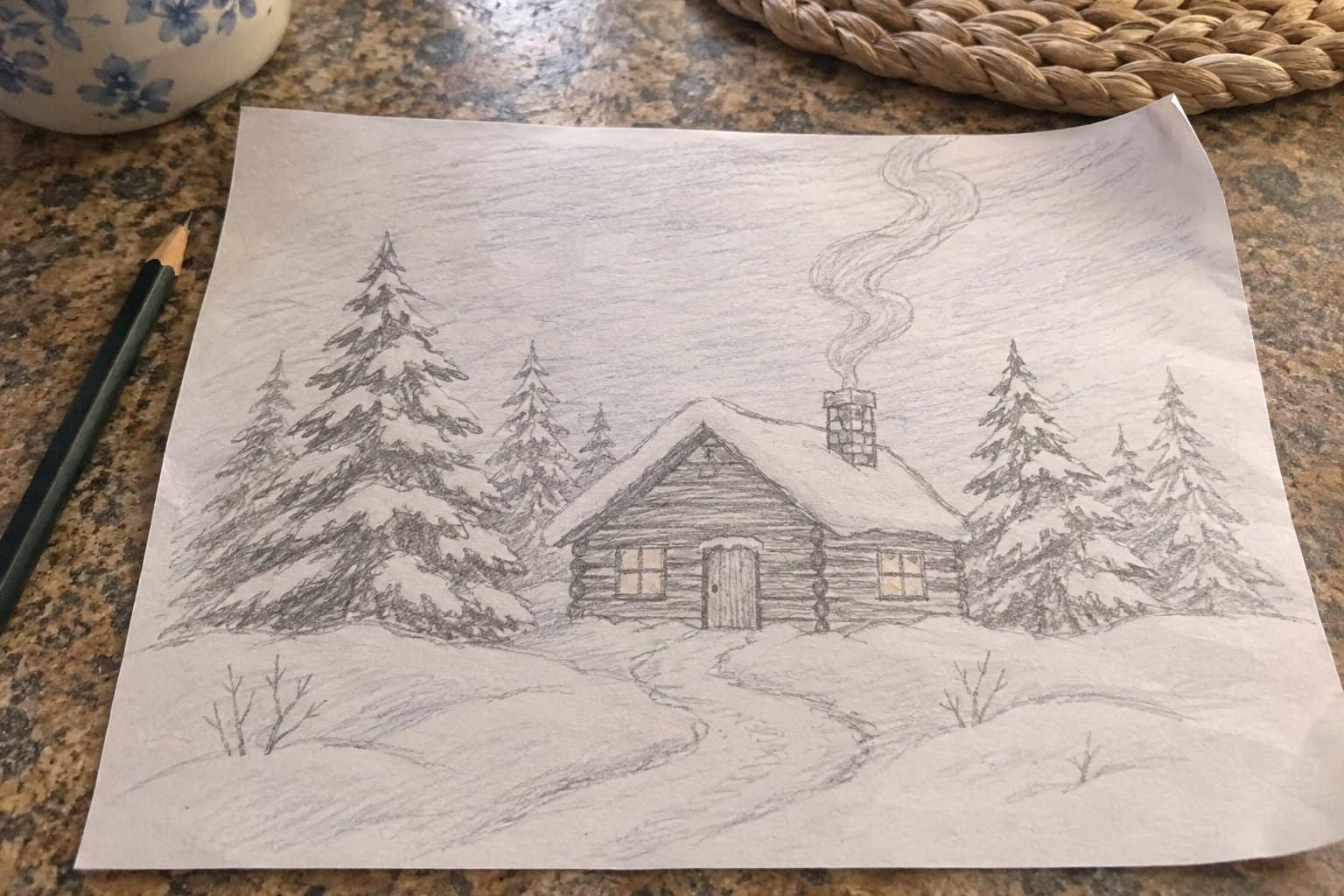
A pencil-drawn log cabin sits near the center of the white page, its roof thick with snow. Short, uneven strokes define the logs, while softer shading beneath the eaves gives the cabin a settled, sheltered feel.
The chimney sends a curling trail of smoke into the open sky. Light, looping lines keep the smoke airy and distinct from the cabin’s darker wood grain. Faint marks around the walls suggest snow gathered at the base, with clean paper left visible to preserve the wintry brightness.
Varying pencil pressure brings out the texture: firm strokes for log seams and the chimney, gentle shading across the roof. A few curved lines can show the snow’s soft surface without crowding the finished drawing.
Snowy Owl on a Branch
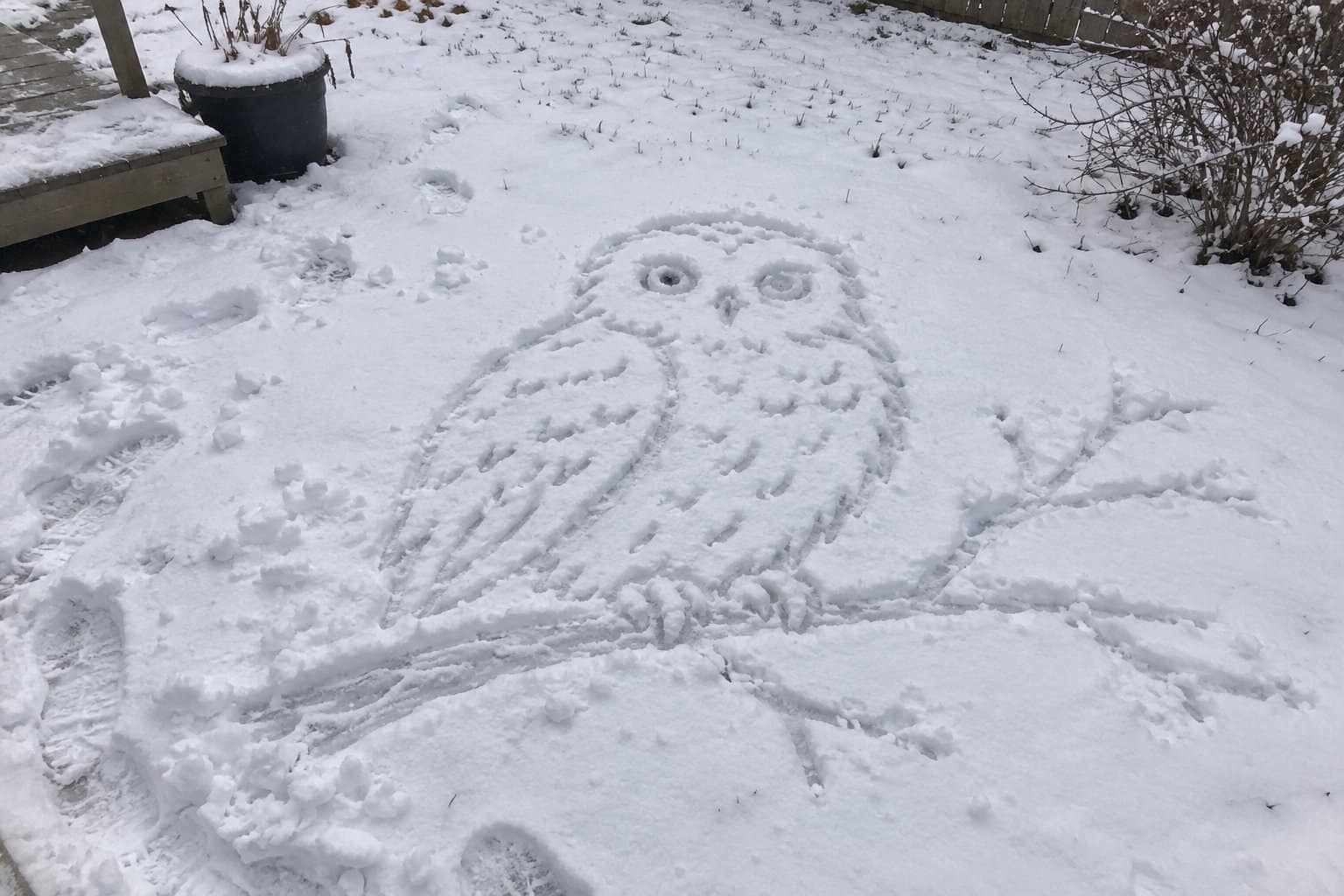
A snowy owl facing the viewer gives this pencil drawing a clear, centered focal point. Setting its rounded head above a compact body, with a bare branch running beneath its feet, anchors the composition on the page.
Light, short strokes build feather texture across the chest and wings. Marks stay close together around the face, then shift direction along the body to suggest overlapping plumage. Small areas of white paper left visible preserve the owl’s pale appearance.
Careful, firm lines darken the eyes and beak. A few narrow marks define the toes gripping the branch, with thinner strokes for the branch’s bark. The finished drawing holds up best on clean white paper, with no lettering or extra scenery competing for attention.
Arctic Fox in Snow
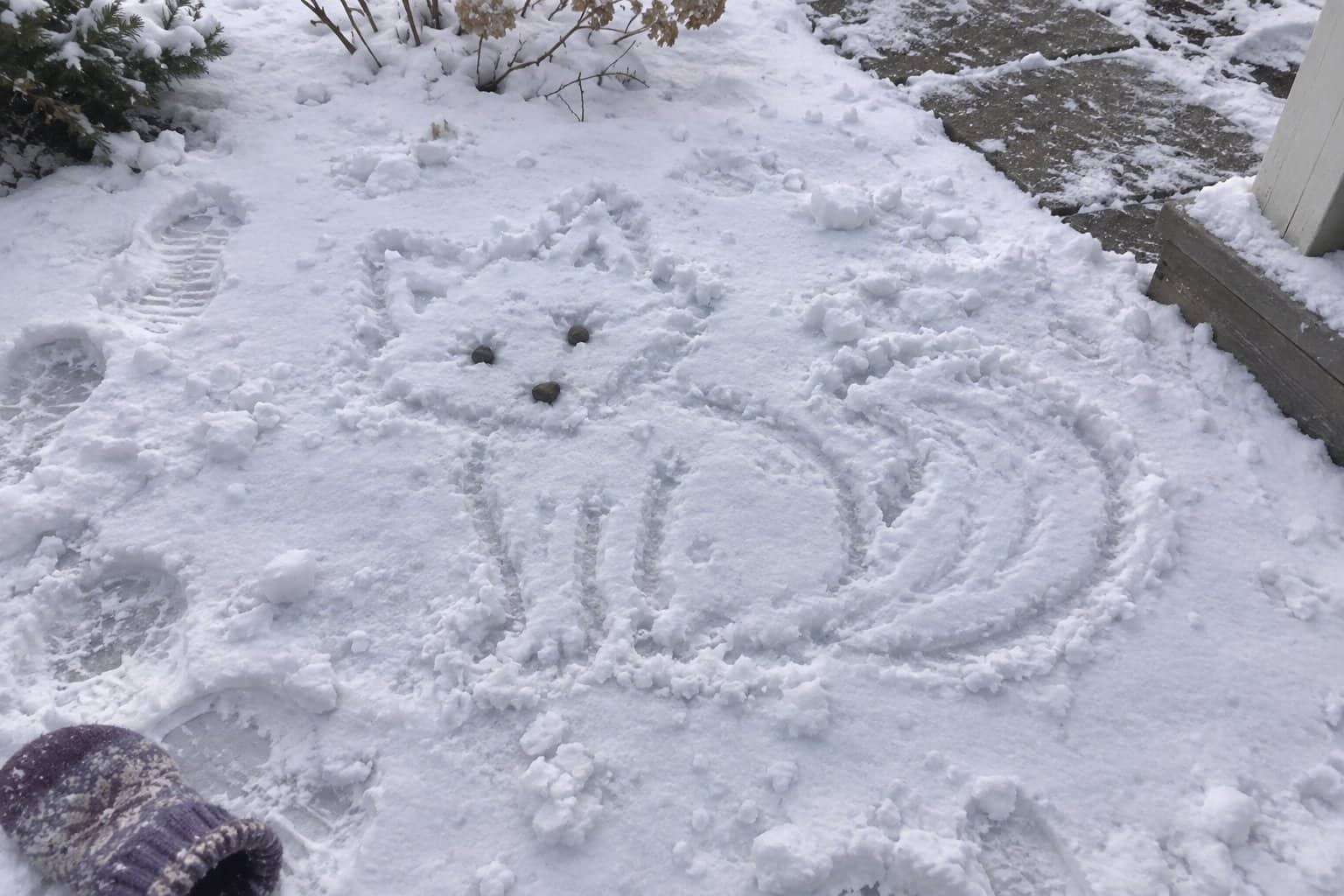
A white fox curled asleep in blue-shadowed snow gives the page a quiet, compact focal point. The fox’s rounded back and tucked muzzle create a simple silhouette, while a small ear and closed eye keep the face readable.
Colored pencil suits the soft transitions in the fur and snow. Light strokes can follow the curve of the body, with pale gray accents defining the tail and paws. Blue shadows beneath the fox anchor the form against the white paper, and small areas of untouched paper give the fur crisp highlights.
A beginner study can stay close and uncluttered. A few curved marks in the snow suggest drifts without competing with the resting figure.
“In most snow drawings, the blank paper isn’t empty. It’s doing the work a brush or pencil never has to.”
Icicles on a Roof Edge
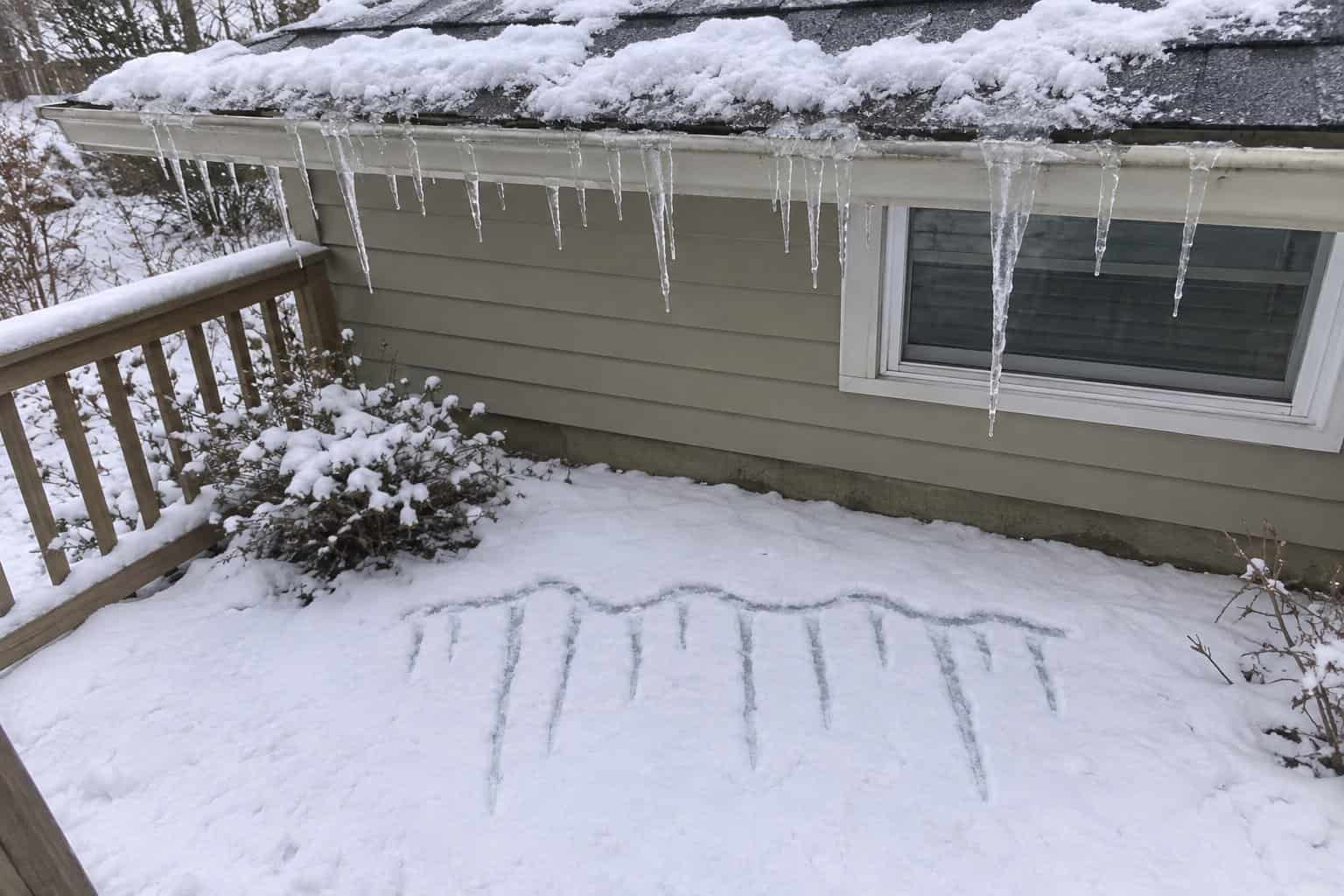
Long icicles make a crisp study in transparent shapes and reflected light. A pen can define the roofline and trace each tapering form, while a light wash adds a pale sky behind them. Varying the icicles’ lengths and spacing gives the edge a natural rhythm rather than a row of matching spikes.
The darkest marks stay near the roof and at a few overlap points. Small, clean highlights along the icicles suggest shine, so the paper should stay white there. The finished drawing feels airy overall, with the roof edge anchoring the composition and the pale sky keeping the forms distinct.
Window Frost Pattern
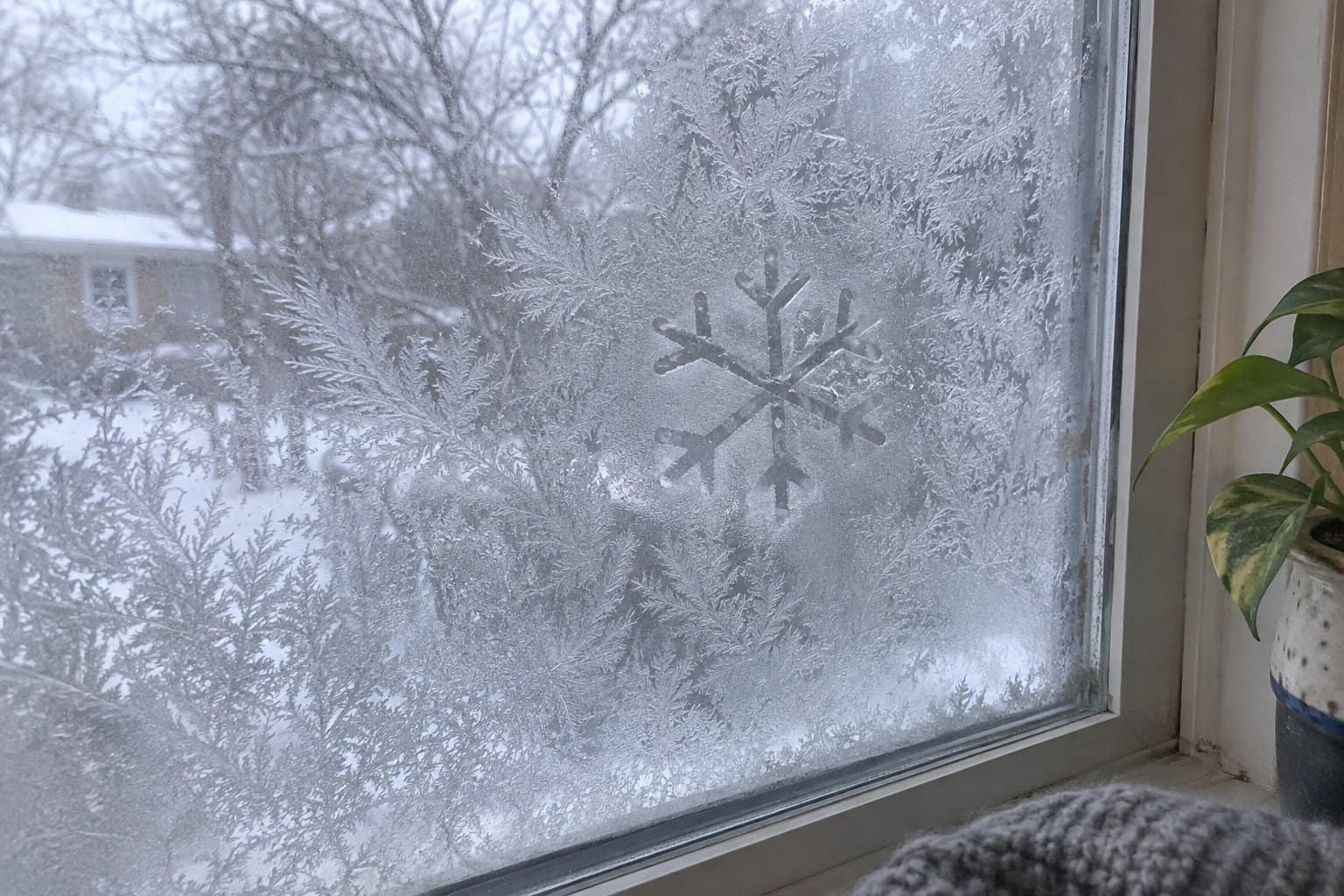
Branching frost ferns spread across the pane, each frond dividing into finer, tapered lines. On black paper, a white pencil makes the pattern read like a finished winter window drawing, with dark gaps defining the delicate branches.
A few long, gently curving stems radiating from the lower edges and corners make a good starting point. Short paired branches come next, with select tips split into smaller forks. Varying the spacing and length keeps the frost feeling naturally irregular while the overall composition stays balanced.
Light strokes work best for the first pass, with a handful of branch tips sharpened afterward using firmer lines. Open black areas left between the fronds give each white line room to stand out on its own.
White pencil on black paper tends to look chalky if pressed too hard early on. Build frost patterns in thin layers, saving the firmest pressure for just a few branch tips at the very end.
Snowy Street Lamp
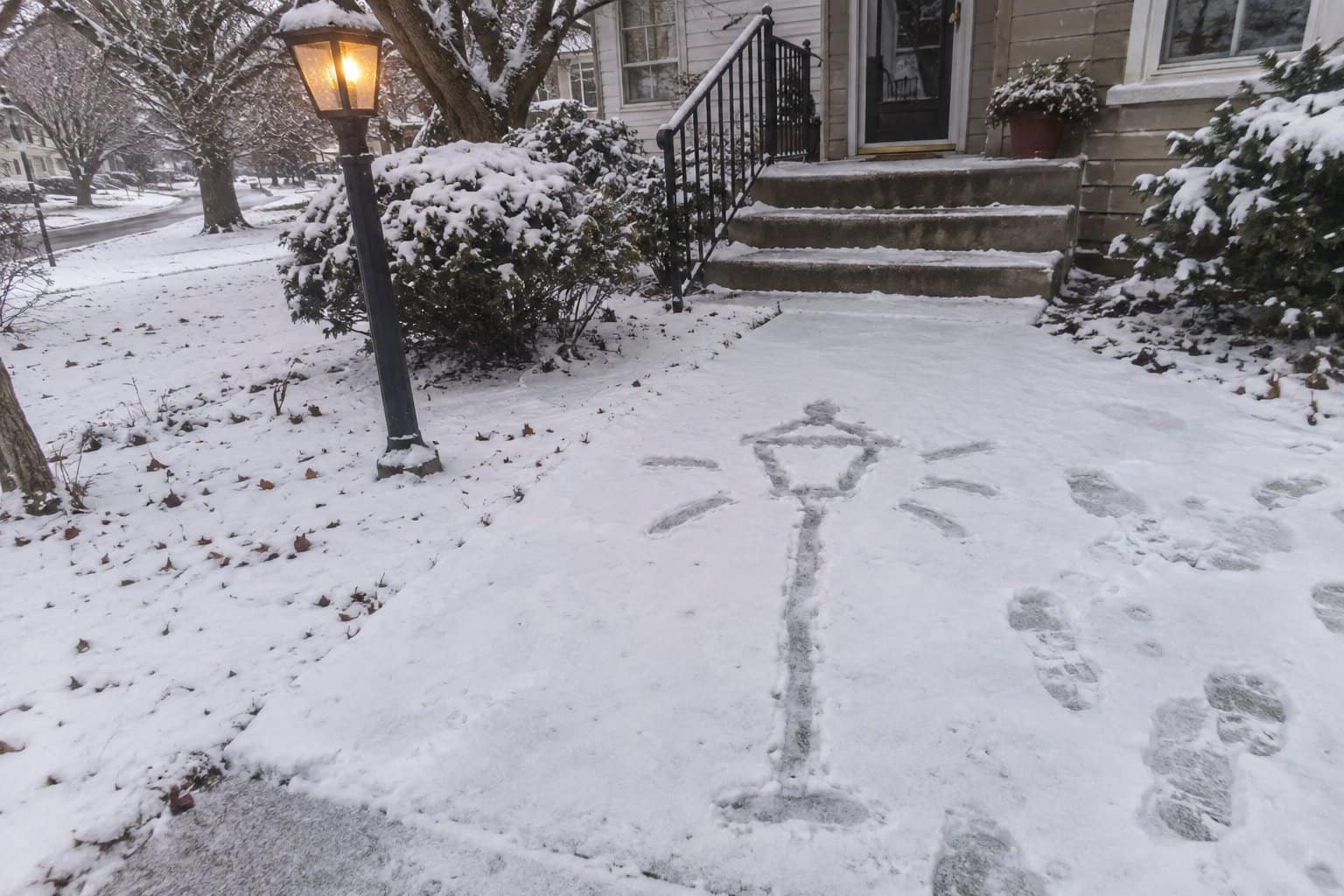
A narrow iron post anchors the scene, its lantern casting a warm yellow pool through the cold blue-gray storm. Watercolor suits the contrast: soft washes blur the snowy air, while a few darker strokes define the lamp’s frame and base.
Flakes left loosely scattered on white paper, their edges softened as they cross the glow, sell the sense of weather. A darker wash behind the lantern makes its light feel brighter, and keeping the snow near the post pale, with faint shadows, suggests drifting accumulation. The finished image reads quiet and wintry, with the old lamp as its clear focal point.
Snow Angel
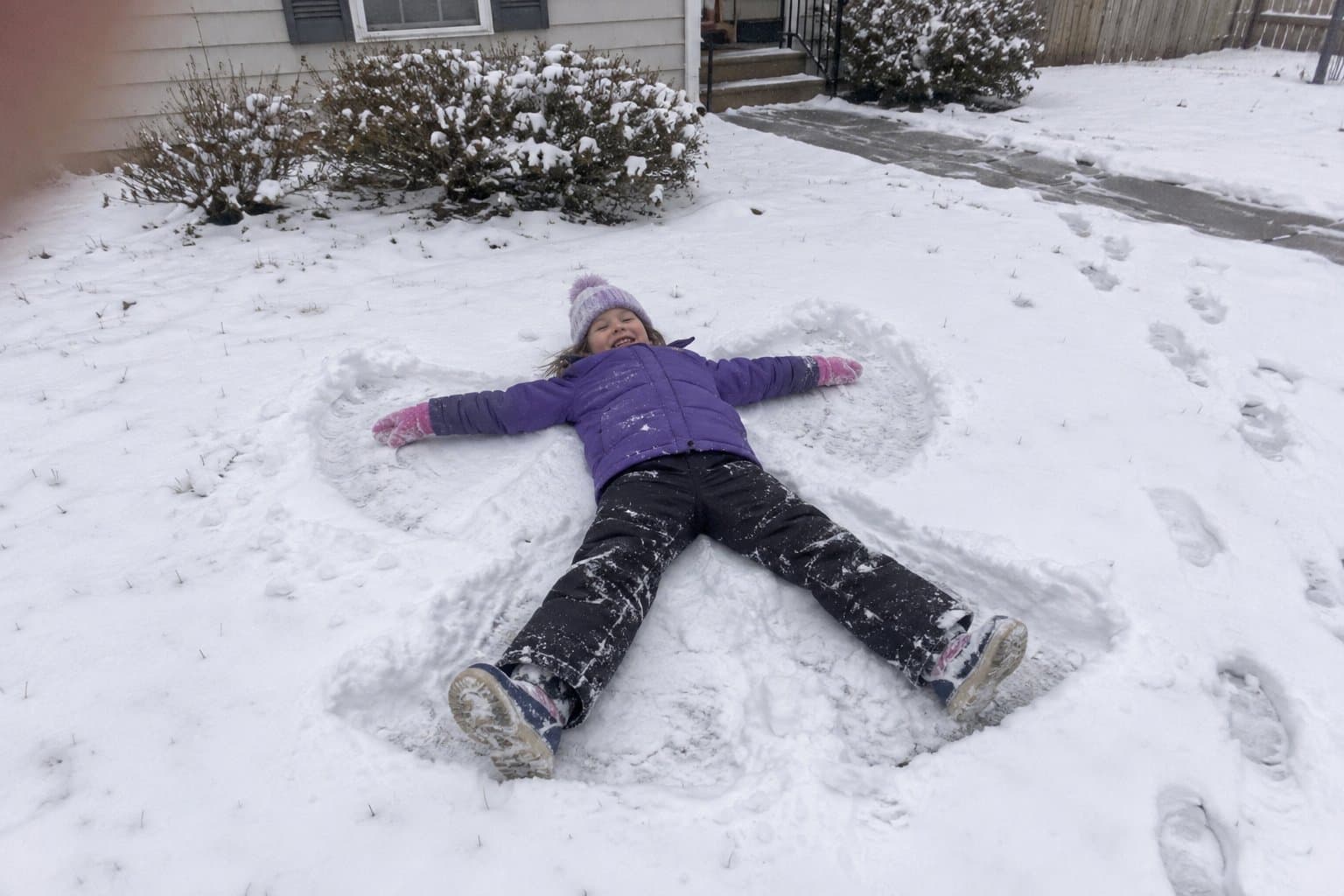
A child’s body forms the center of this snow angel, with arms angled outward and legs slightly apart. Wide sweeps in the snow create the familiar feathered outline around the figure. The composition reads clearly from above, making the shape easy for young drawers to plan on white paper.
For a crayon version, pale blue or gray strokes can mark the pressed snow first, with the figure’s coat, hat, and boots added afterward in brighter colors. Keeping the arm and leg sweeps broad and curved frames the body without crowding it. The finished drawing should feel like a simple overhead view of a child lying in fresh snow.
Sledding Hill
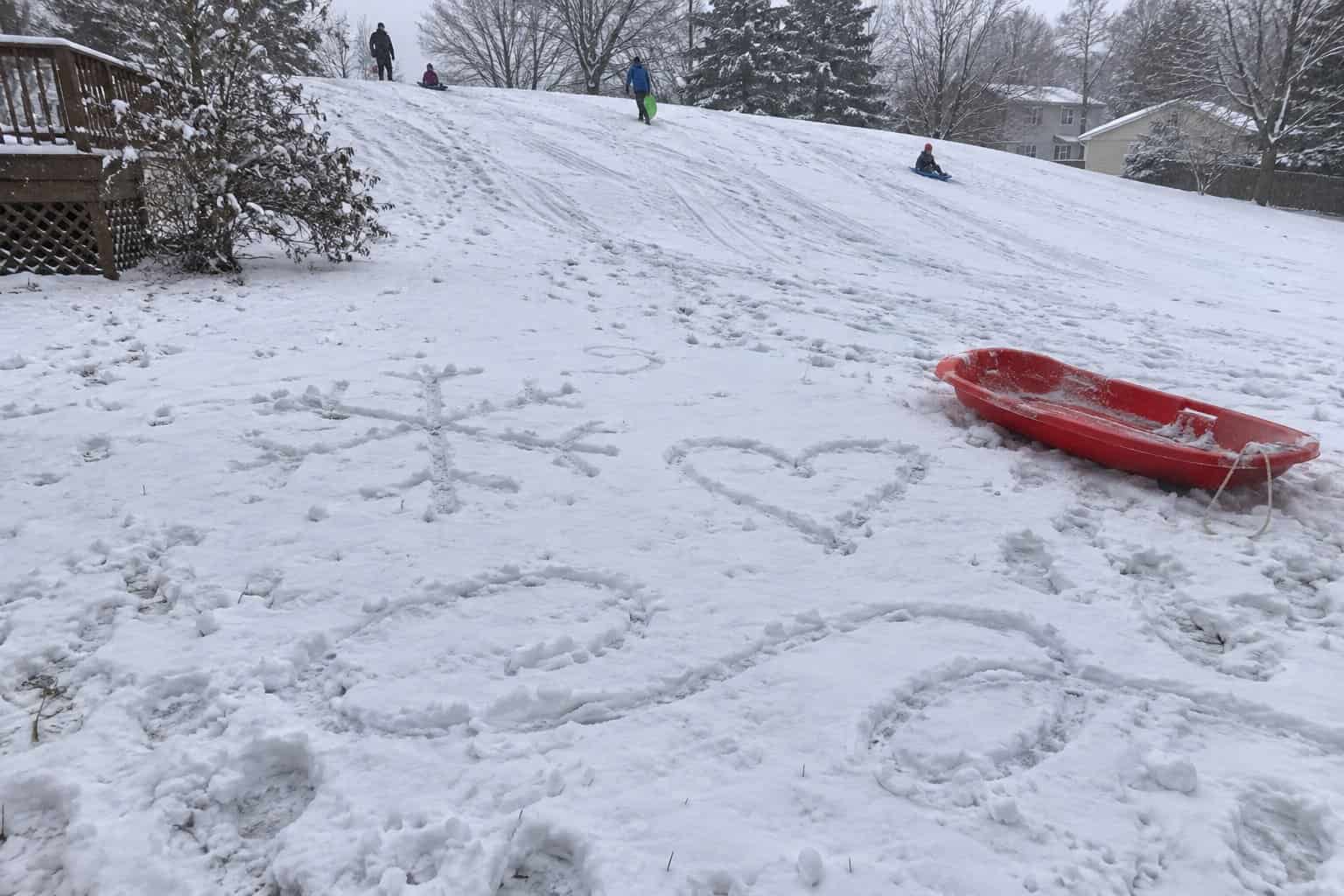
A child leans forward on a sled as it cuts down a snowy slope, with a long scarf streaming behind. The hill’s diagonal edge gives the scene its speed, while a few short marker strokes can suggest packed snow beneath the runners.
The child’s rounded coat and bent knees make a clear focal point on white paper. The scarf echoes the hill’s slant, tying the figure to the motion, and scattered snow marks keep the open space lively without crowding the finished drawing.
Snowshoe Hare
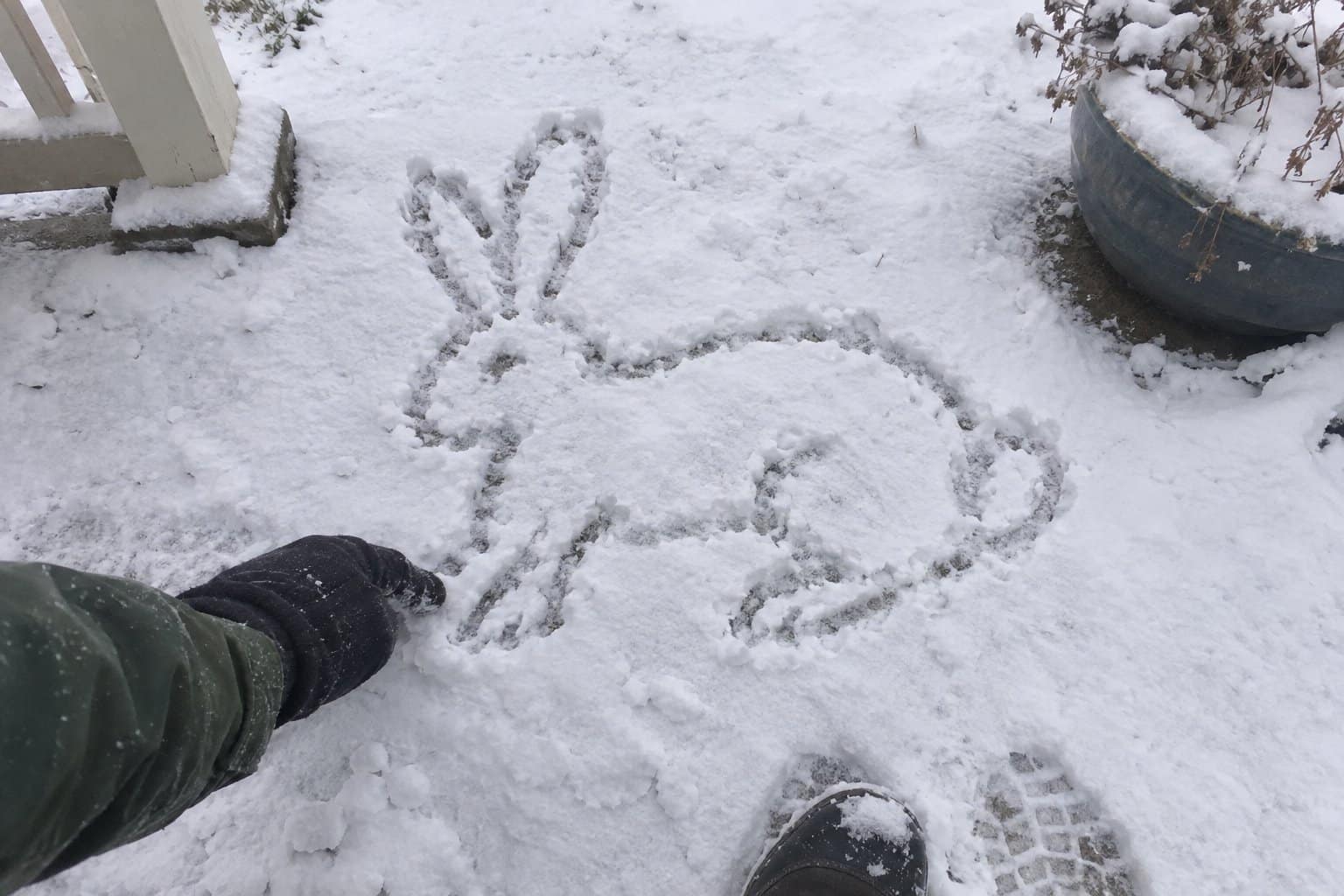
A snowshoe hare sitting upright gives the drawing a clear, compact silhouette. Its raised ears lead the eye upward, while tucked paws and a rounded body settle it into the snow. Light pencil lines can shape the white fur without making the animal disappear against the white paper.
A delicate outline, followed by short strokes around the cheeks, chest, and haunches, builds the suggestion of fur. Soft gray shading beneath the body and beside the paws adds depth. A few curved marks in the snow anchor the hare while leaving plenty of open space around its ears and face.
Cardinal on a Snowy Feeder
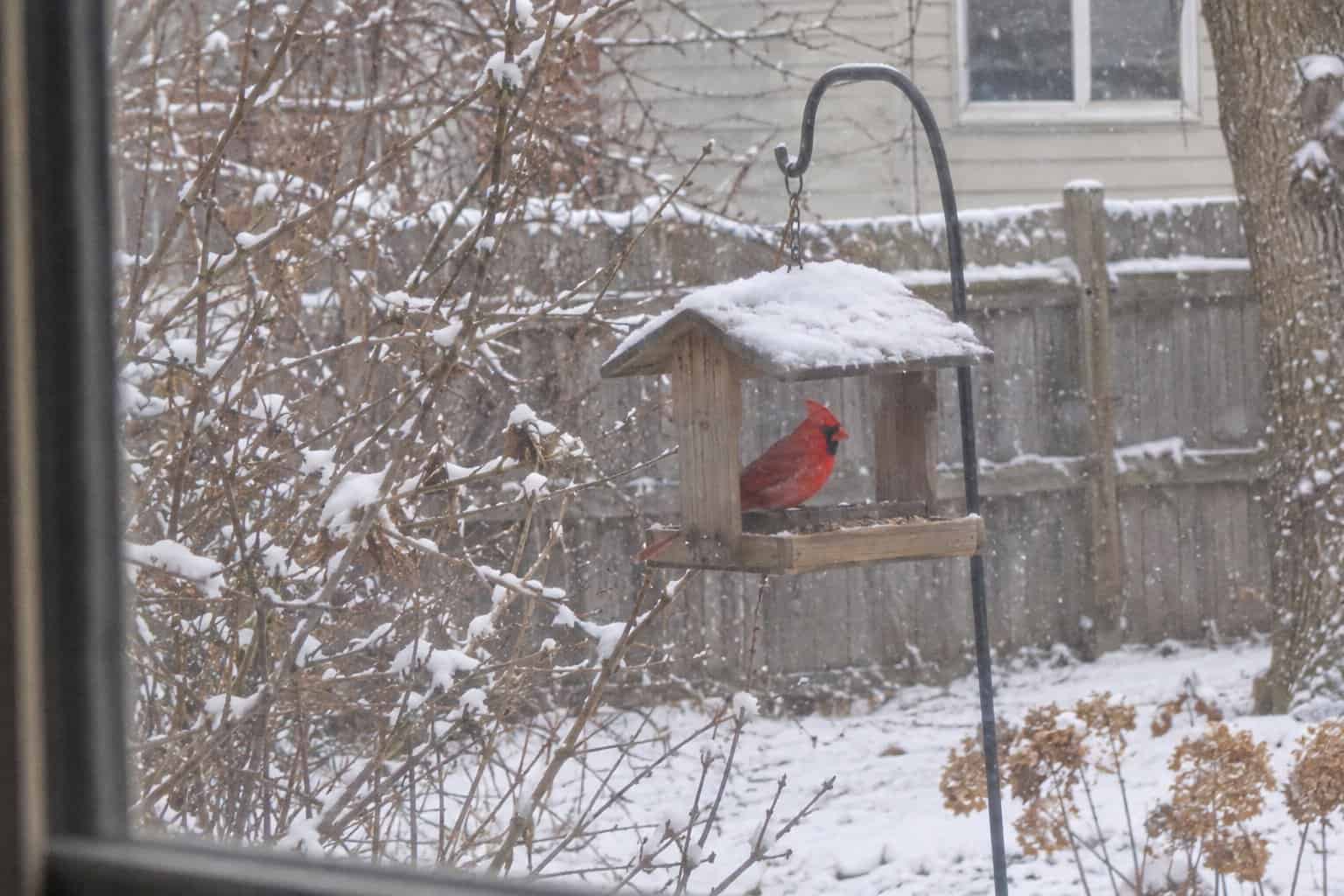
A bright red cardinal gives the composition a clear focal point against the white page. Perched on a feeder capped with snow, the bird’s rounded body and upright crest create a strong silhouette. Colored pencils let the artist layer crimson and darker red along the wings, then add fine strokes for feather texture.
The feeder grounds the scene with straight rails and a simple roofline. Soft gray pencil marks can suggest snow’s shadow and the feeder’s wooden edges, while small white gaps keep the snow cap crisp. A few dark details around the eye, beak, and feet sharpen the cardinal’s profile, and it’s that single hit of saturated red against so much white that makes the whole piece work before the eye even registers why.