
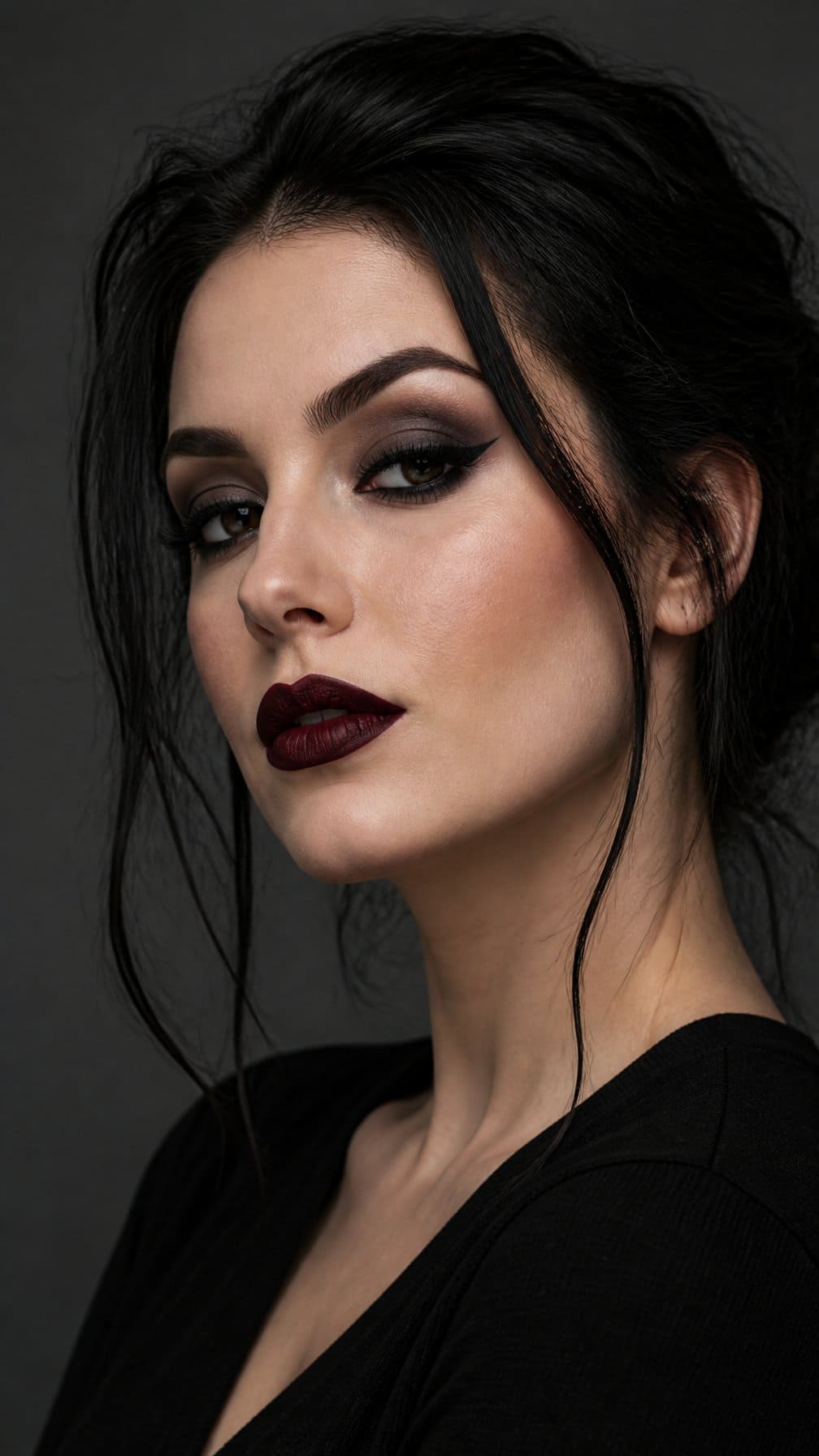
Trad goth makeup can look polished, wearable, and unmistakably dark without feeling like stage makeup. I’ll explore balanced ways to use black, gray, plum, berry, and cool-toned shades while keeping the finish intentional and suited to everyday styling.
Save for later
Want to come back to this story? Save it with your email so it is easy to find again.
You can create a convincing trad goth look by balancing defined eyes and dark tones with softened edges, natural skin texture, and controlled color placement. I’ll also cover the base, brows, blush, lips, and subtle adjustments that help each look feel cohesive rather than costume-like.
Table of Contents
- 1 1) Soft black smoked-out liner with blurred edges
- 2 2) Taupe and charcoal eyeshadow instead of stark black
- 3 3) Matte berry lips with softly diffused borders
- 4 4) Thin black wing paired with bare-looking skin
- 5 5) Cool-toned contour beneath the cheekbones
- 6 6) Smudged lower lash line kept close to the lashes
- 7 7) Satin-finish foundation with minimal powder
- 8 8) Muted mauve blush for a subtle Victorian effect
- 9 9) Black mascara focused on separated, defined lashes
- 10 10) Charcoal halo eye with a clean inner corner
- 11 11) Deep plum eyeshadow blended into the crease
- 12 12) Bare lips with a cool brown lip liner
- 13 13) Brushed-up brows with softly filled gaps
- 14 14) Soft gray eyeshadow and black tightlining
- 15 15) Burgundy eyeliner for a less severe gothic look
- 16 16) Matte porcelain base with natural skin texture
- 17 17) Black lipstick softened with a sheer balm
- 18 18) Monochromatic plum makeup across eyes, cheeks, and lips
- 19 19) Subtle under-eye shadow for understated intensity
- 20 20) Cool rose blush placed high on the cheeks
1) Soft black smoked-out liner with blurred edges
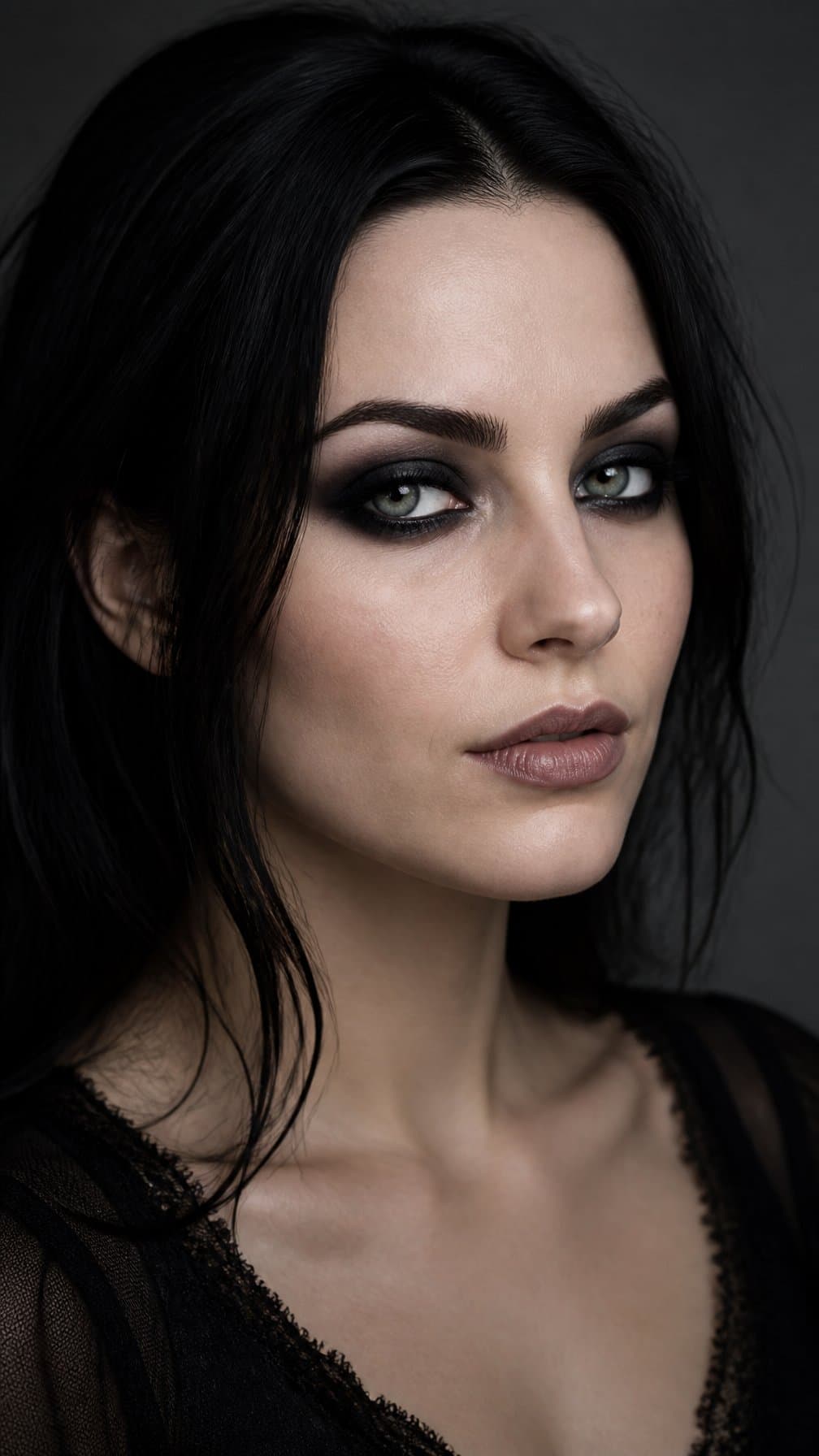
I apply a soft black pencil along the upper lash line, keeping the shape close to my lashes rather than extending it into a sharp wing. I smudge the edges with a small brush or cotton swab before the liner sets, creating a worn-in finish without making the eyes look heavily drawn.
I add a muted gray or taupe shadow through the crease to soften the contrast. A light coat of mascara keeps my lashes defined while preserving the diffused, understated effect.
2) Taupe and charcoal eyeshadow instead of stark black

I use taupe through the crease and charcoal along the lash line to create definition without the flatness of solid black. These softer tones keep the eye look dimensional, especially when I blend the edges carefully and leave a small amount of natural skin visible near the brow.
I deepen the outer corner with a cool gray-brown shade, then press charcoal shadow close to the upper and lower lashes. A matte finish keeps the look grounded, while a subtle satin taupe on the lid adds light without making the makeup look glossy or theatrical.
3) Matte berry lips with softly diffused borders

I use a muted berry lipstick with a flat finish, choosing shades that lean plum, wine, or dried rose rather than bright red. I soften the outline with a small brush or fingertip, keeping the color strongest at the center and slightly blurred at the edges.
To keep the look polished, I apply concealer sparingly around the mouth and leave the rest of the makeup restrained. Softly smudged charcoal liner, brushed brows, and a touch of cool-toned blush support the lip without making it look theatrical.
I blot once, then add a thin second layer where I want more depth. This technique gives the mouth definition while preserving the lived-in texture that makes the look feel intentional rather than costume-like.
4) Thin black wing paired with bare-looking skin

I keep the eye makeup precise: a narrow black wing follows the upper lash line and extends just past the outer corner. I skip heavy shadow and thick lower-lash liner, which keeps the shape sharp without making the look feel theatrical.
I use a light layer of sheer foundation or spot concealer, leaving natural skin texture visible. A touch of muted blush can add quiet dimension, while softly groomed brows frame the wing without competing with it.
I finish with clear balm, muted rose lipstick, or a cool-toned nude. The contrast between defined liner and restrained skin creates a traditional goth reference that still feels practical for daytime.
5) Cool-toned contour beneath the cheekbones

I place a muted taupe or gray-brown contour just beneath my cheekbones, keeping the color close to my natural shadow rather than choosing a warm bronzer. I blend it upward and slightly back toward my ears, leaving the apples of my cheeks mostly bare.
A narrow brush gives me more control than a large fluffy brush. I build the shade gradually, soften the lower edge, and check it in natural light so the definition stays subtle instead of looking like a painted stripe.
I pair the contour with cool pink, mauve, or muted plum blush placed slightly higher on the cheeks. A satin or matte finish keeps the structure crisp, while a small amount of pale highlight on the cheekbones adds dimension without making the makeup look theatrical.
6) Smudged lower lash line kept close to the lashes

I smudge a soft black or charcoal pencil directly beneath my lower lashes, keeping the color narrow and controlled. This adds definition without creating a heavy shadow that can make the makeup look theatrical.
I use a small brush to blur the pencil slightly, then leave the outer edge less precise than the inner corner. I balance it with minimal eyeshadow, groomed brows, and muted lips so the eye makeup stays intentional and wearable.
7) Satin-finish foundation with minimal powder

I choose a satin-finish foundation that evens my complexion while keeping some natural skin texture visible. The finish looks polished under strong lighting without creating the flat, overly perfected effect that can make gothic makeup feel costume-like.
I apply powder only where I need it, usually around my nose, between my brows, and beneath my eyes. Leaving my cheeks and forehead lightly set preserves a subtle skin-like sheen and gives the rest of my makeup a cleaner, more modern contrast.
I pair the base with controlled contour, defined brows, and a deep lip rather than adding extra coverage. This keeps the focus on shape and color while allowing my complexion to remain understated.
8) Muted mauve blush for a subtle Victorian effect

I sweep a muted mauve blush lightly across my cheeks, keeping the color close to the natural flush beneath the cheekbones. The grayish undertone creates a restrained Victorian impression without looking theatrical or overly sweet.
I place most of the pigment toward the center of my cheeks and blend the edges until they appear soft. A satin or matte finish works best; heavy shimmer can make the look feel modern in a way that competes with the rest of the makeup.
I pair the blush with softly defined eyes, cool-toned lipstick, and an even complexion. I build the color gradually, since a sheer veil keeps the result wearable while still adding the slightly faded, period-inspired character I want.
9) Black mascara focused on separated, defined lashes

I keep the focus on clean separation rather than heavy volume. I curl my lashes, remove excess product from the wand, and apply one careful coat from root to tip. This creates defined, slightly sharp lashes that frame the eyes without making the makeup look theatrical.
For a stronger traditional goth effect, I add a second coat only to the outer lashes and lower lash line. I use a slim brush or the wand tip to reach individual hairs, then comb through any clumps while the mascara remains workable.
I pair the lashes with a softly smoked lash line, muted skin, and a controlled lip shade. The result stays graphic and polished, while the visible separation keeps it suitable for everyday styling.
10) Charcoal halo eye with a clean inner corner

I place deep charcoal shadow on the inner and outer thirds of my lids, leaving the center lighter for a soft halo effect. I blend the edges upward without extending the shape too far, which keeps the look defined rather than theatrical.
I sharpen the inner corner with a small amount of pale beige or satin ivory shadow. That contrast brightens my eyes while the charcoal keeps the finish grounded. I pair it with softly smudged lower-lash shadow, brushed brows, and muted berry or gray-beige lipstick.
11) Deep plum eyeshadow blended into the crease

I use deep plum shadow to add color without the starkness of solid black. I place it through the crease and outer corner, then blend the edges until they look soft rather than smoky and heavy.
I keep the lid slightly lighter, using a muted mauve or satin plum to create contrast. A thin black liner, curled lashes, and softly defined brows anchor the look while preserving its everyday finish.
For balance, I pair the eyes with cool-toned foundation, muted blush, and a berry or brown-plum lip. I avoid glitter and sharply drawn edges, which can make the makeup look more theatrical than traditionally goth.
12) Bare lips with a cool brown lip liner

I keep the lips understated by tracing their natural shape with a cool brown liner, then lightly filling in the edges. I leave the center bare or add a thin layer of neutral balm, which keeps the finish soft rather than glossy.
I pair this look with matte, softly blended eye makeup and a restrained base. The gray-brown tone adds definition without the sharp contrast of black liner or bright lipstick, so the makeup feels intentional and wearable.
13) Brushed-up brows with softly filled gaps

I brush my brows upward with a clear or tinted gel, then fill only the sparse areas with a fine pencil or angled brush. I keep the strokes short and hairlike, matching my natural direction rather than creating a solid block.
This restrained shape frames the eyes without making the makeup feel theatrical. I soften the front edge with a clean spoolie and leave the skin beneath the brow mostly bare, which keeps the look polished and wearable with dark liner or muted shadow.
14) Soft gray eyeshadow and black tightlining

I sweep a soft gray shadow across the lids and blend it slightly above the crease. The muted shade adds depth without creating the heavy, theatrical effect that stronger black shadow can produce.
I tightline the upper waterline with black pencil, keeping the visible lid space clean. This darkens the lash roots and defines the eyes while preserving the understated finish.
I pair the look with curled lashes, minimal mascara, and softly shaped brows. A cool-toned gray works well with pale skin, while charcoal or slate can add more contrast on deeper complexions.
15) Burgundy eyeliner for a less severe gothic look

I use burgundy eyeliner when I want gothic definition without the stark contrast of black. Its muted red tone adds depth around my eyes while keeping the overall look softer and more wearable.
I trace a thin line along my upper lashes, then extend the outer corner slightly for shape. Smudging the edge with a small brush creates a blurred finish that works well with cool-toned foundation, taupe shadow, and softly defined brows.
For more intensity, I layer the pencil with burgundy liquid liner or deepen the outer corner with a matching eyeshadow. I keep the lower lash line lighter so the color frames my eyes without making the makeup feel heavy.
16) Matte porcelain base with natural skin texture

I use a sheer-to-medium foundation in a cool, pale shade, keeping the finish matte without flattening the face. I leave freckles, pores, and small variations visible rather than covering them with heavy layers.
I press translucent powder through the center of my face, around the nose, and over the forehead, then keep the cheeks less powdered. This preserves a dry, porcelain effect while allowing natural texture to remain noticeable.
I add muted gray-mauve contour beneath the cheekbones and along the temples, blending it softly into the base. A restrained wash of cool blush can bring definition without making the makeup look theatrical.
17) Black lipstick softened with a sheer balm

I apply a precise layer of black lipstick, then tap a clear or lightly tinted balm over the center of my lips. The added slip diffuses the edges and reduces the flat, opaque effect without removing the dark color.
I keep the rest of my makeup controlled: softly smudged black liner, muted blush, and brushed brows. A satin or balm finish looks more lived-in than high shine, while lightly blotting prevents the lips from appearing wet or overly styled.
18) Monochromatic plum makeup across eyes, cheeks, and lips

I use one plum color family across the face, adjusting the depth and finish instead of matching every product exactly. A softly smoked plum shadow defines the eyes, while a muted plum blush adds structure without creating a theatrical effect.
I keep the skin lightly powdered so the color remains clean and controlled. On the lips, I choose a satin or softly blurred plum stain, then deepen the outer corners with a matching pencil for definition.
To keep the look grounded, I apply the eye color close to the lash line and blend the edges carefully. My brows stay natural, and I avoid heavy contouring so the coordinated shades provide the visual focus.
19) Subtle under-eye shadow for understated intensity

I keep the focus low and controlled by smudging a charcoal or cool brown shadow along the lower lash line. I start with a narrow brush, then soften the edge with a small pencil brush so the color looks worn in rather than sharply drawn.
I connect the shadow lightly to the outer corner, leaving the inner corner mostly clean. This shape adds depth without creating a theatrical mask, especially when I pair it with softly defined upper lashes and a muted complexion.
I choose matte formulas and build them gradually. A touch of gray-brown creates a softer effect than solid black, while a small amount of black pencil pressed between the lashes keeps the eyes defined without making the makeup look costume-like.
20) Cool rose blush placed high on the cheeks

I place a muted cool rose blush high on my cheekbones, keeping it slightly below the outer corner of my eyes. This position lifts the face while maintaining the structured, shadowed effect that suits trad goth makeup.
I choose a matte or softly satin formula rather than a bright, glossy finish. A small, tapered brush gives me control, so I can build the color gradually and keep the edges diffused instead of theatrical.
I balance the blush with cool-toned contour, defined brows, and a dark lip. If my base looks very pale, I sheer out the rose shade first; concentrated pigment can make the look read as costume makeup rather than intentional styling.