
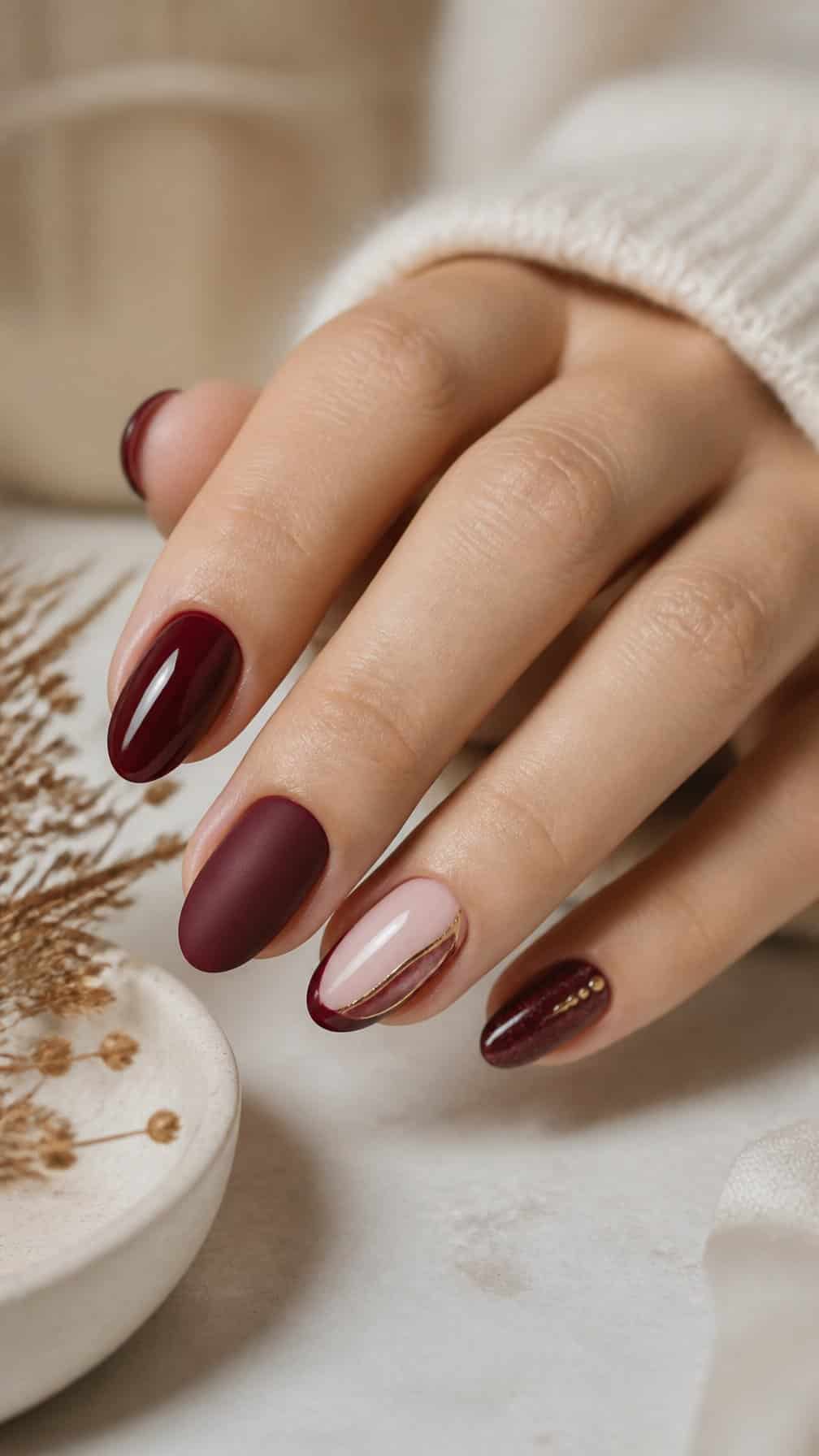
Burgundy nails give you a polished way to refresh your manicure in any season. This rich shade adapts easily to different lengths, shapes, finishes, and levels of detail, making it suitable for everyday styling and special occasions.
Save for later
Want to come back to this story? Save it with your email so it is easy to find again.
You can explore year-round burgundy nail ideas that match your personal style, from understated solid color to detailed designs with metallic accents, texture, and contrast. I’ll also cover how to choose flattering shades, finishes, nail shapes, and care routines for a lasting manicure.
Table of Contents
- 1 1) Classic Burgundy Cream Nails
- 2 2) Burgundy French Tips
- 3 3) Burgundy Micro-French Tips
- 4 4) Burgundy Chrome Nails
- 5 5) Burgundy Velvet Cat-Eye Nails
- 6 6) Burgundy Glitter Accent Nails
- 7 7) Burgundy Ombré Nails
- 8 8) Burgundy Aura Nails
- 9 9) Burgundy Marble Nails
- 10 10) Burgundy Tortoiseshell Nails
- 11 11) Burgundy Gold-Foil Nails
- 12 12) Burgundy Silver-Foil Nails
- 13 13) Burgundy Matte Nails
- 14 14) Glossy Burgundy Coffin Nails
- 15 15) Burgundy Almond Nails
- 16 16) Burgundy Square Nails
- 17 17) Burgundy Stiletto Nails
- 18 18) Burgundy Short Round Nails
- 19 19) Burgundy Negative-Space Nails
- 20 20) Burgundy Half-Moon Nails
- 21 21) Burgundy Checkerboard Nails
- 22 22) Burgundy Plaid Nails
- 23 23) Burgundy Floral Nail Art
- 24 24) Burgundy Leaf Nail Art
1) Classic Burgundy Cream Nails
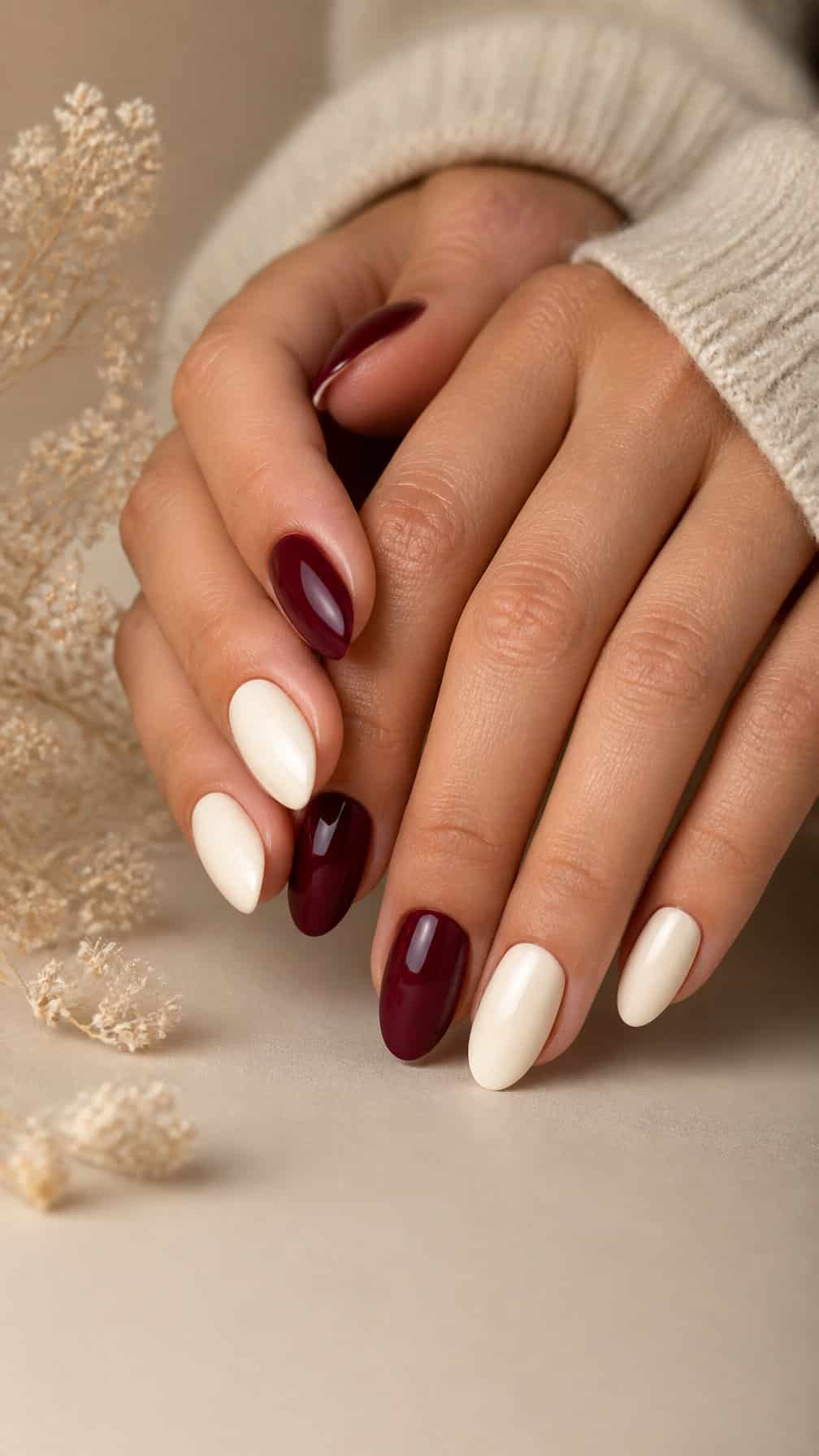
I like this pairing for its clean contrast: a deep burgundy shade adds definition, while creamy polish softens the look. I would paint most nails burgundy and reserve one or two accent nails for the lighter color.
A glossy finish keeps the design polished without adding extra detail. For a more refined result, I would match the nail lengths and shape, then apply thin layers to prevent the darker polish from looking heavy.
This combination suits short, medium, and long nails. I would choose a rounded shape for a softer appearance or a square shape when I want sharper, more structured edges.
2) Burgundy French Tips
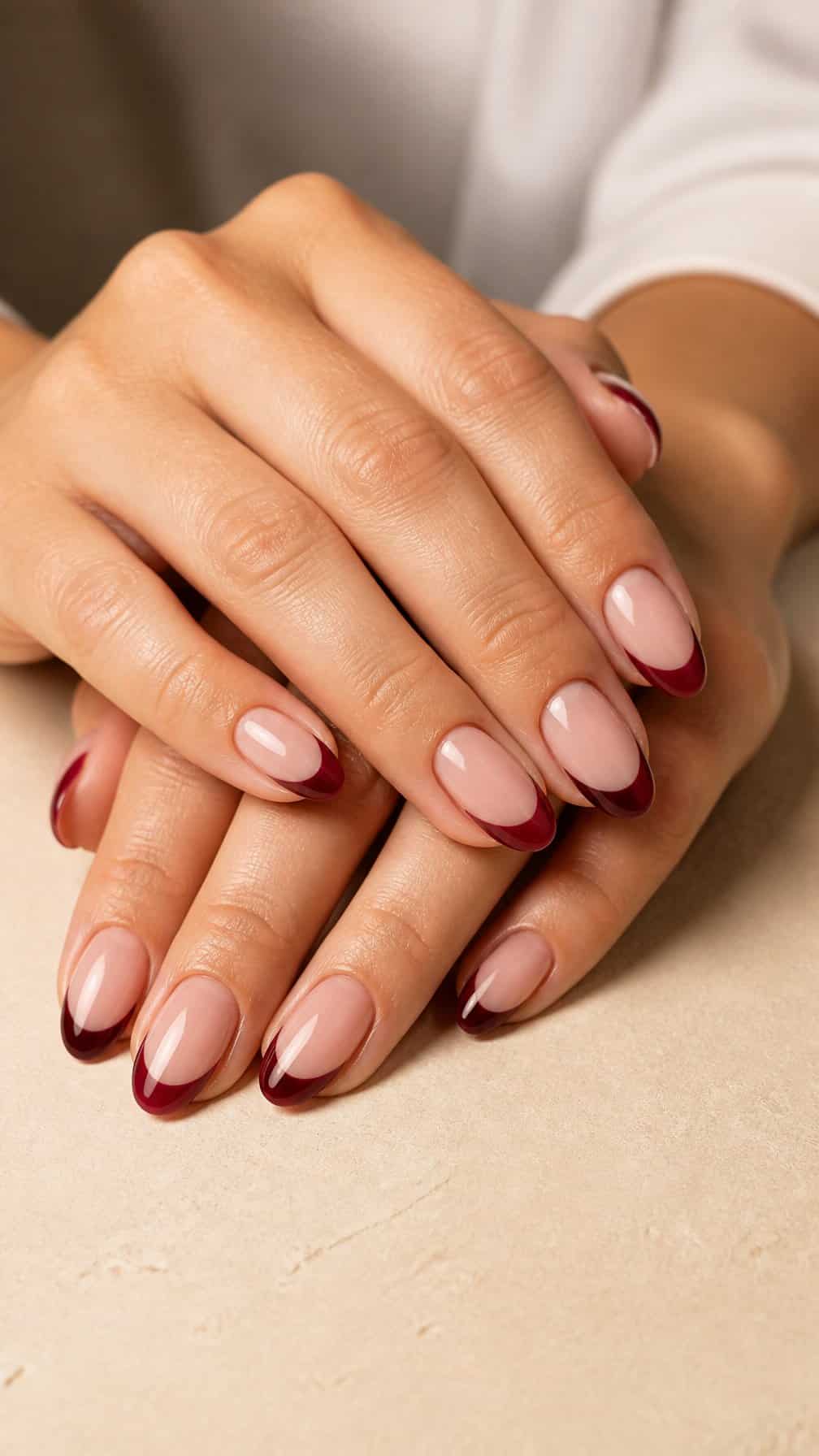
I use burgundy for the tips when I want a French manicure with more depth than classic white. A sheer nude or milky pink base keeps the design balanced, while a fine burgundy line gives each nail a polished finish without feeling too formal.
For a softer look, I choose a rounded tip that follows the natural curve of the nail. On square or almond shapes, I prefer a slightly thicker line because it makes the burgundy color more visible and adds definition to the silhouette.
I also like pairing glossy burgundy tips with a matte neutral base for subtle contrast. This design works across seasons because the rich red tone suits autumn and winter palettes, while the clean French structure keeps it light enough for spring and summer.
3) Burgundy Micro-French Tips
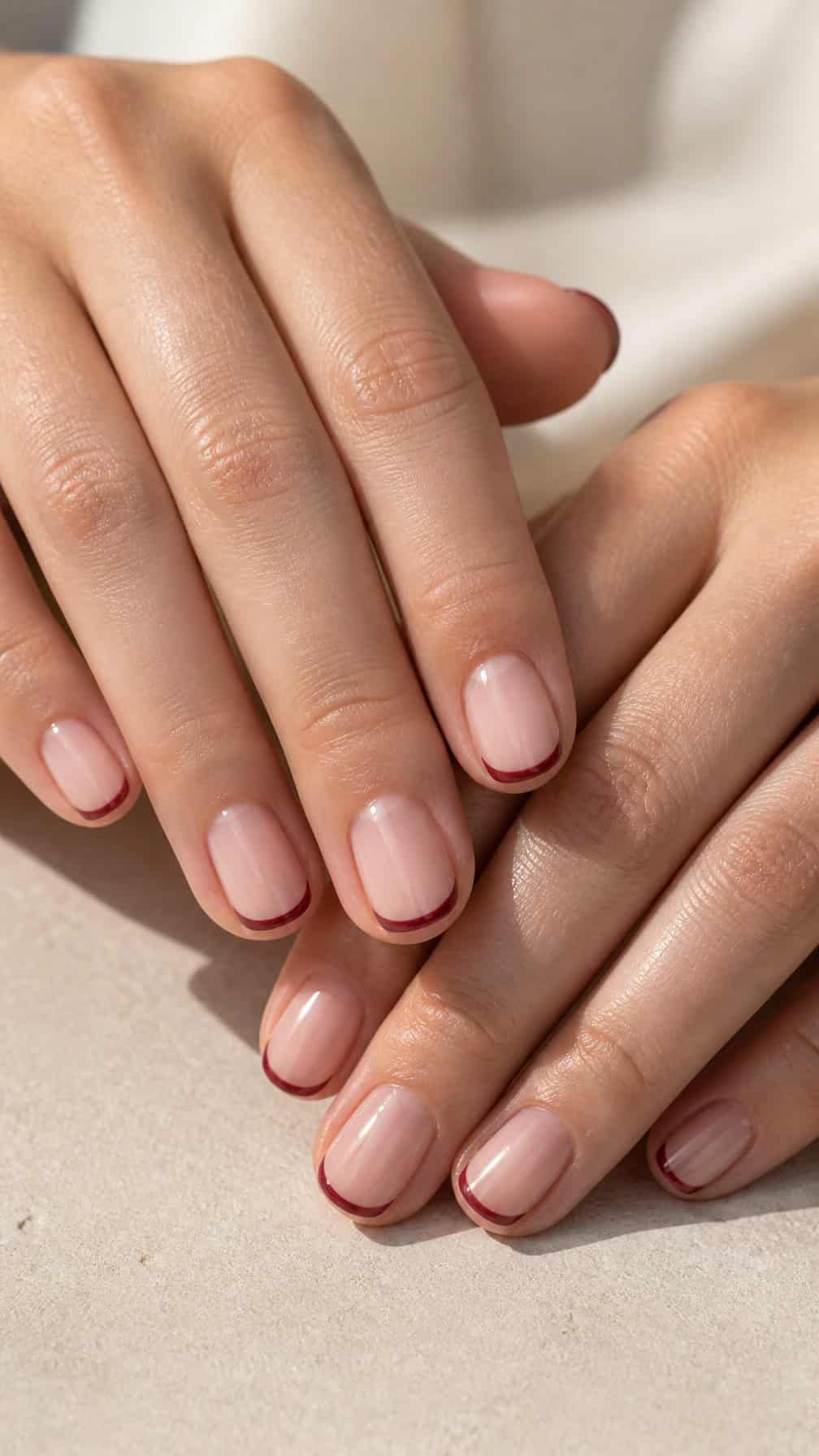
I keep the base sheer, milky, or nude so the narrow burgundy line stays crisp without overpowering the nail. I place the color only along the free edge, creating a refined French tip that suits short, medium, and almond-shaped nails.
For a softer look, I choose a rounded tip that follows the natural curve of each nail. A squared shape gives the design a sharper finish, while a glossy top coat intensifies the wine-toned polish and protects the thin detail.
I wear this style year-round because burgundy adds depth without relying on seasonal decorations. I pair it with simple jewelry and neutral clothing for a polished manicure that works at the office, for events, or with everyday outfits.
4) Burgundy Chrome Nails
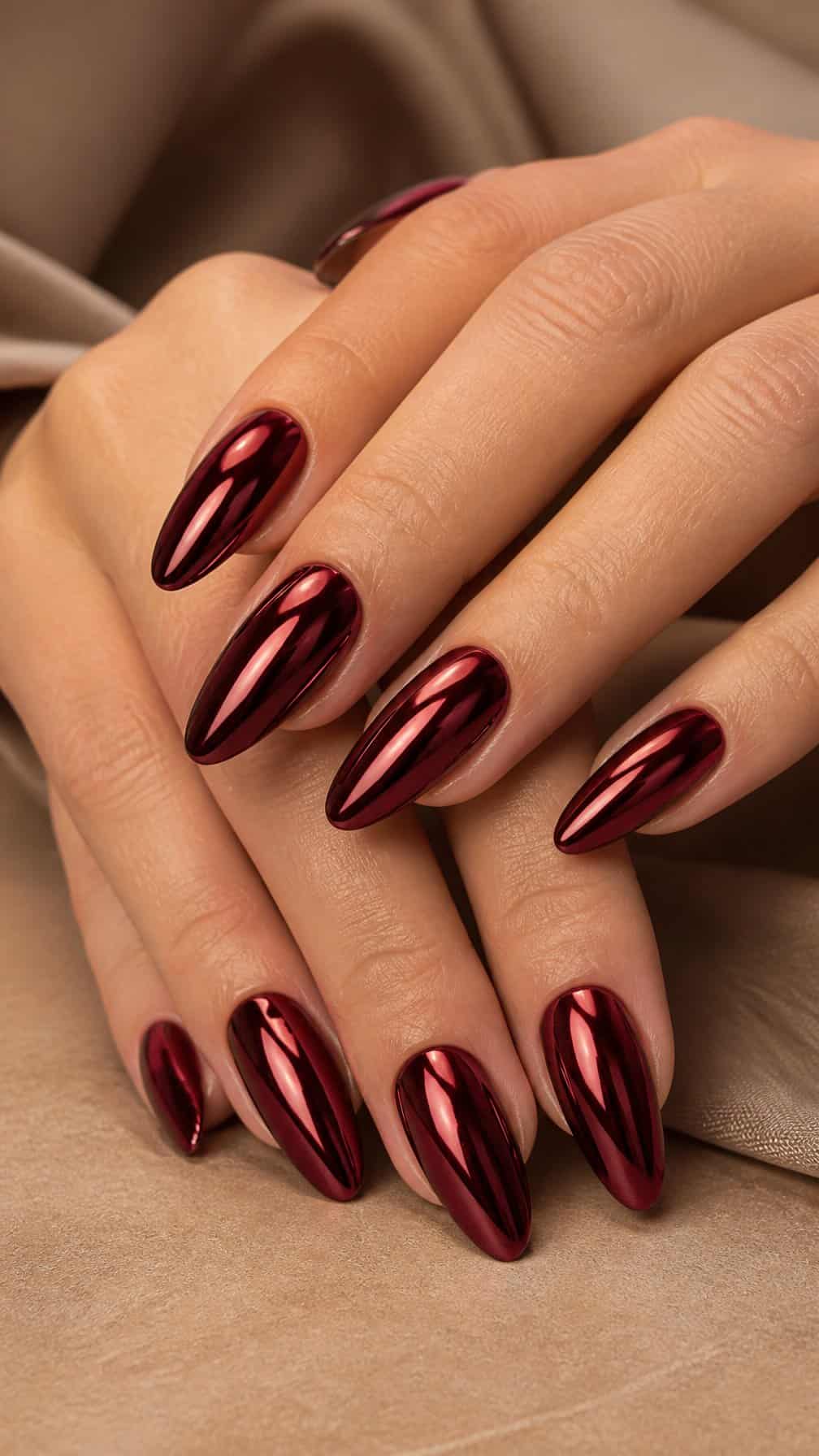
I like burgundy chrome nails for their smooth, reflective finish and rich red-brown color. The metallic surface catches light without losing the depth that makes burgundy wearable in every season.
I would pair this design with a short almond or squoval shape for a polished look. A fine chrome powder over burgundy gel creates an even sheen, while a glossy topcoat helps maintain the mirror-like effect.
For a softer version, I choose a sheer burgundy base beneath the chrome layer. This keeps the color lighter and lets the reflective finish stand out without looking too bold.
5) Burgundy Velvet Cat-Eye Nails
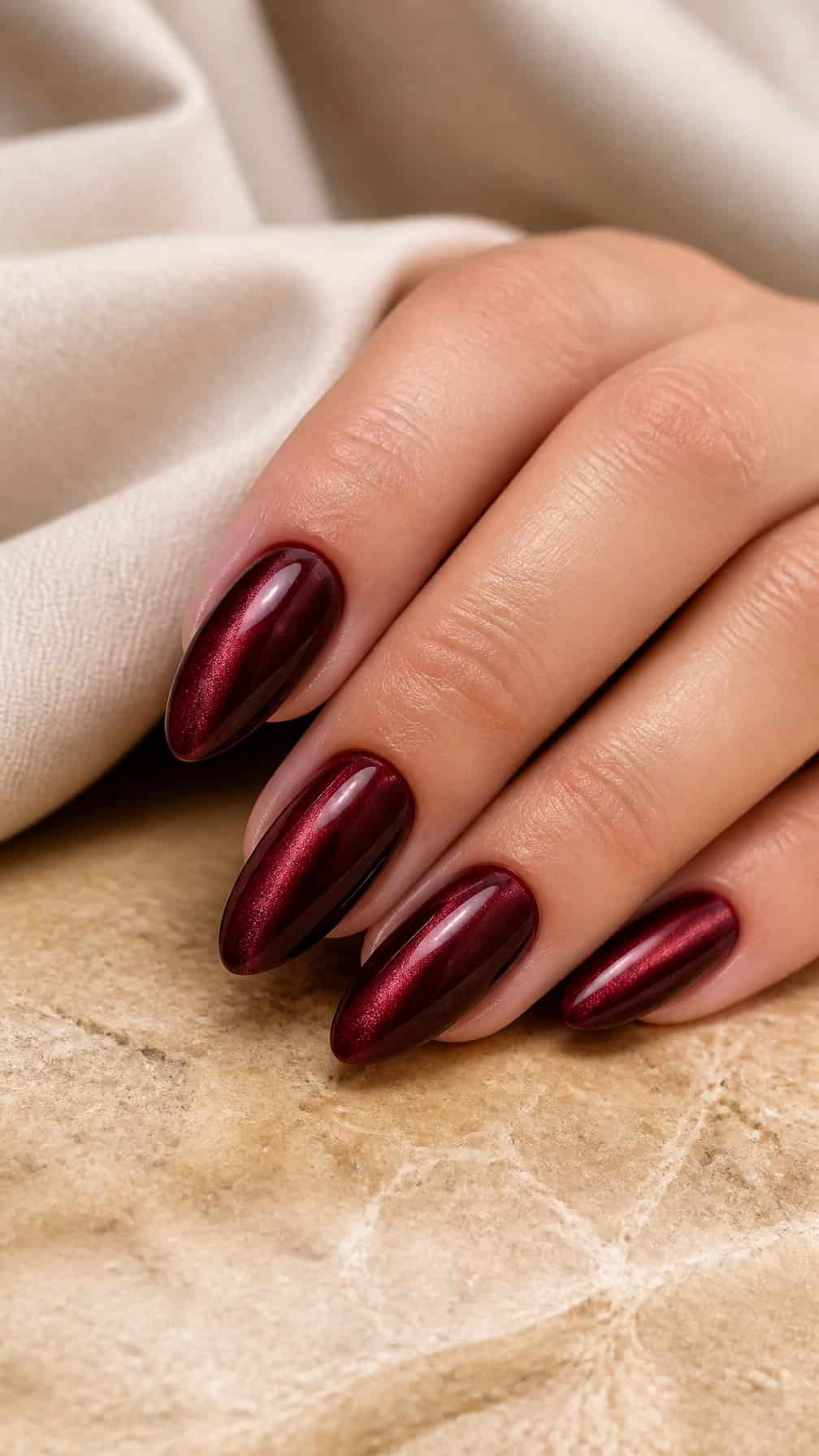
I use a magnetic cat-eye polish to create a shifting band of light across the burgundy base. The velvet effect looks soft in low light but shows a defined glow when my hands move. I prefer short to medium almond or oval nails for a balanced finish.
I keep the design unadorned when I want the reflective polish to stand out. A glossy top coat sharpens the color and protects the magnetic effect, while a thin coat around the edges helps prevent early chipping. This deep shade suits autumn outfits but also works with neutral, black, or denim clothing throughout the year.
6) Burgundy Glitter Accent Nails
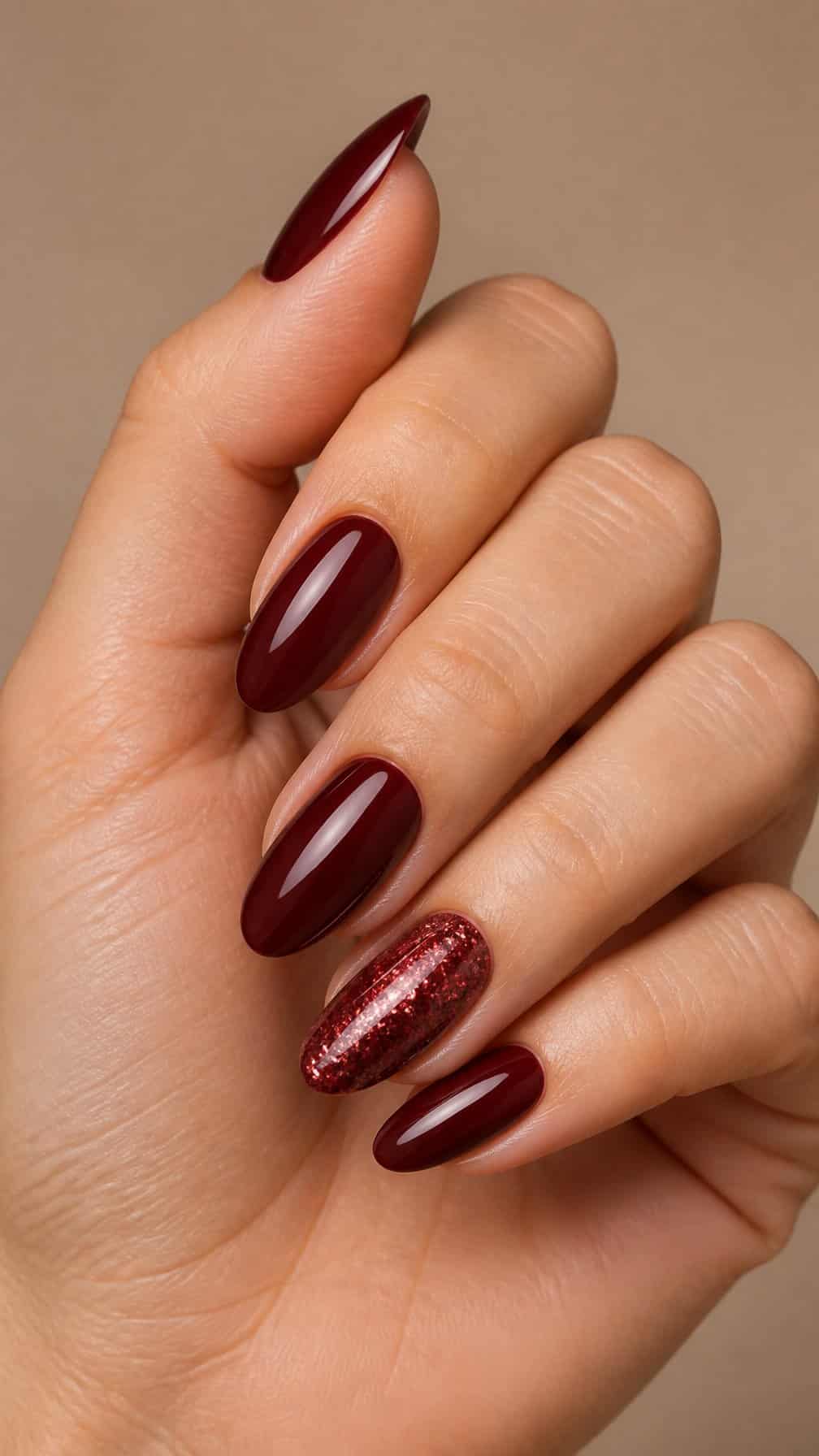
I keep most nails in a rich burgundy crème and add fine glitter to one or two accent nails. This balance lets the sparkle stand out without making the manicure feel busy. I prefer burgundy glitter with a similar undertone, such as red, wine, or muted plum.
For a softer finish, I apply glitter over a sheer nude base and use burgundy polish on the remaining nails. The contrast creates a clean, polished look that suits both casual outfits and evening clothing. A glossy topcoat helps smooth the texture and protect the design.
7) Burgundy Ombré Nails
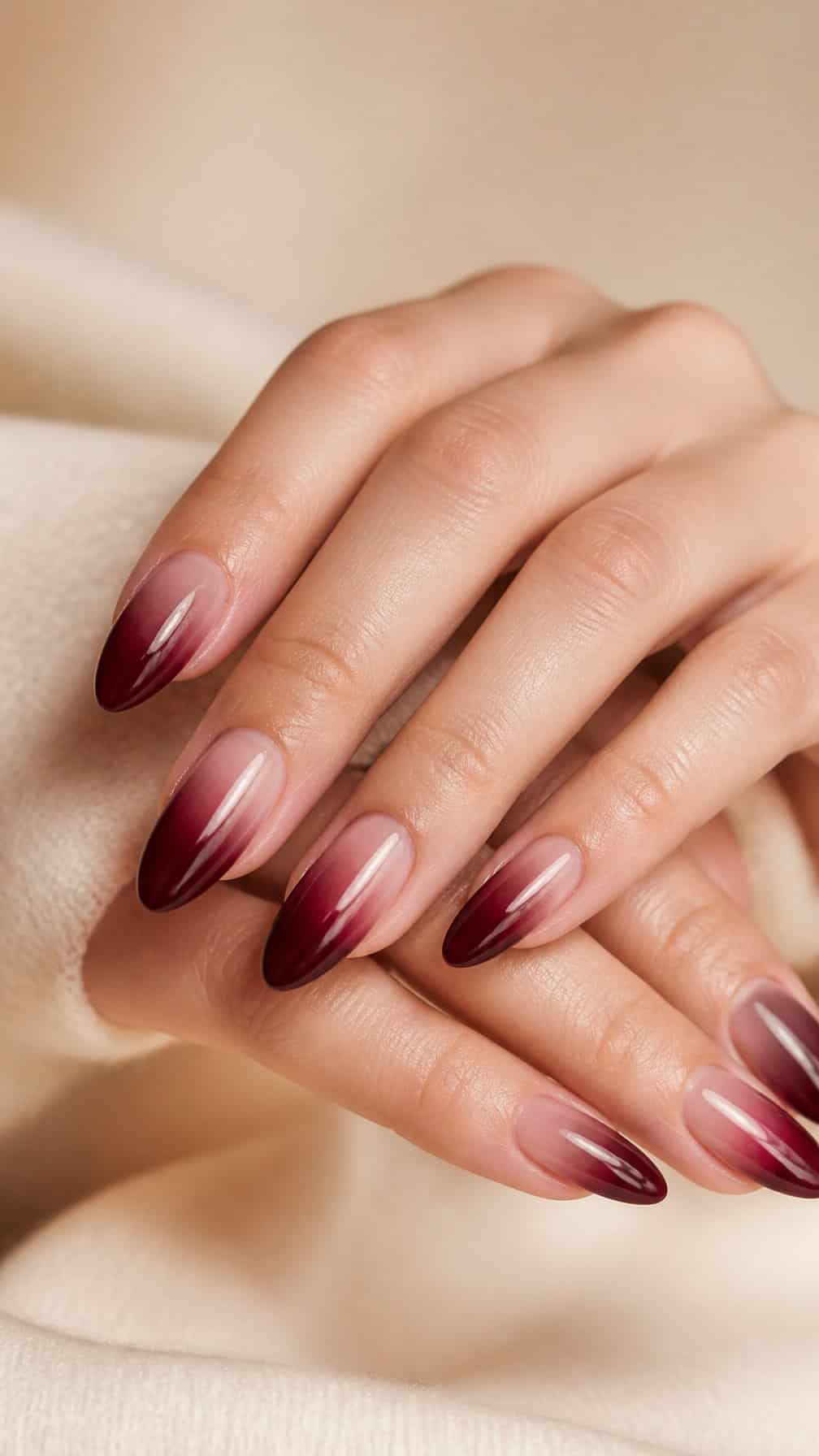
I create a smooth transition from deep burgundy at the tips to a soft wine, blush, or nude base. This gradient keeps the design polished while adding more dimension than a single-color manicure. I prefer a rounded or almond shape because it gives the color fade a clean, uninterrupted line.
For a year-round look, I choose a muted base and a glossy finish. I use richer burgundy tones in fall and winter, then lighten the gradient with sheer pink or mauve during spring and summer. A fine shimmer layered over the fade adds subtle interest without making the design feel seasonal.
8) Burgundy Aura Nails
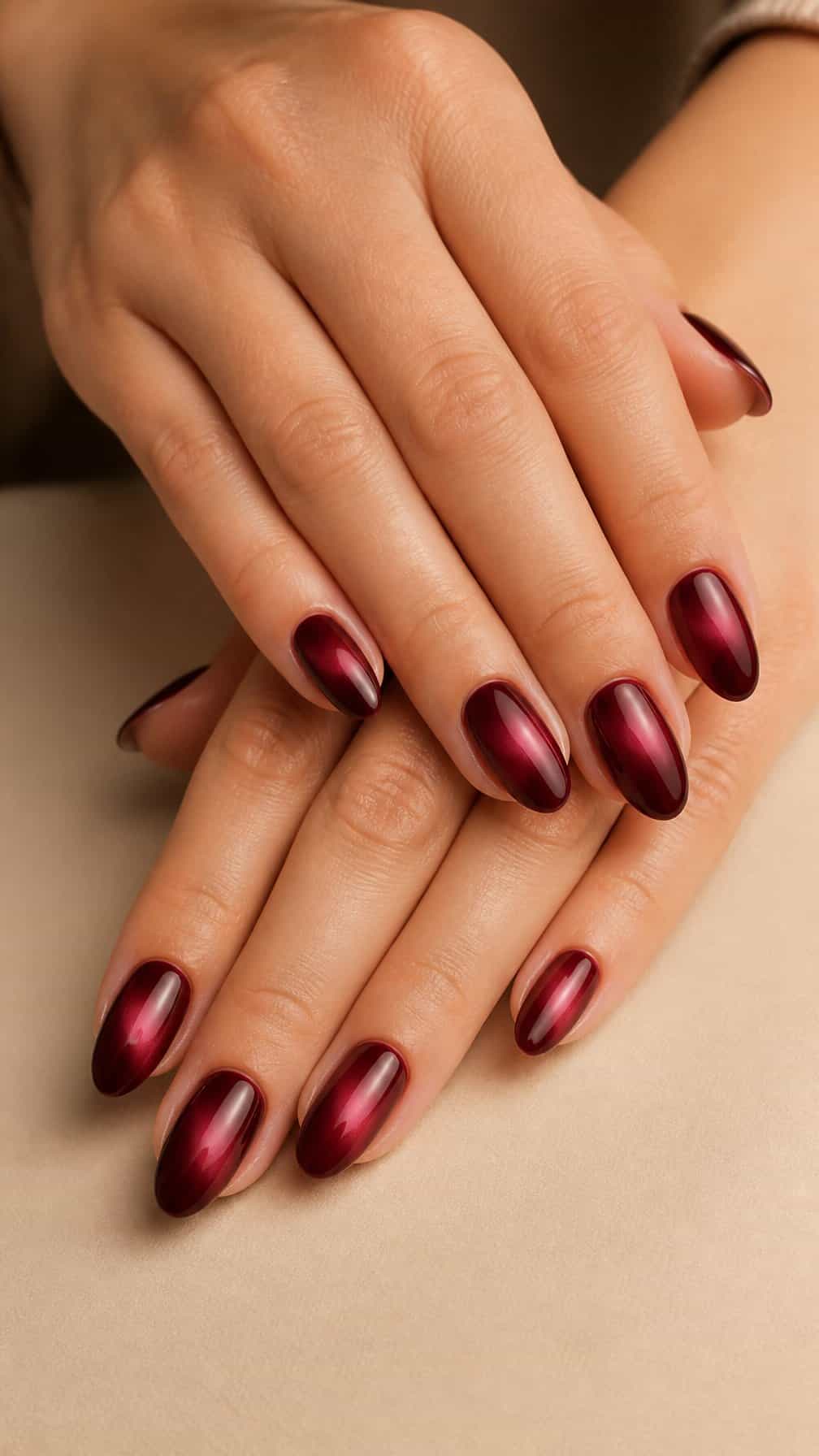
I like burgundy aura nails for their soft, diffused color placement. A deep burgundy center fades into sheer nude or blush at the edges, creating a rounded glow that suits both short and long nails. I usually choose a glossy topcoat to keep the gradient smooth and reflective.
I find this design easy to adapt throughout the year. I can pair it with warmer nude tones in autumn and winter, then switch to a sheer pink base for a lighter spring or summer finish. A fine chrome layer adds subtle dimension without hiding the aura effect.
9) Burgundy Marble Nails
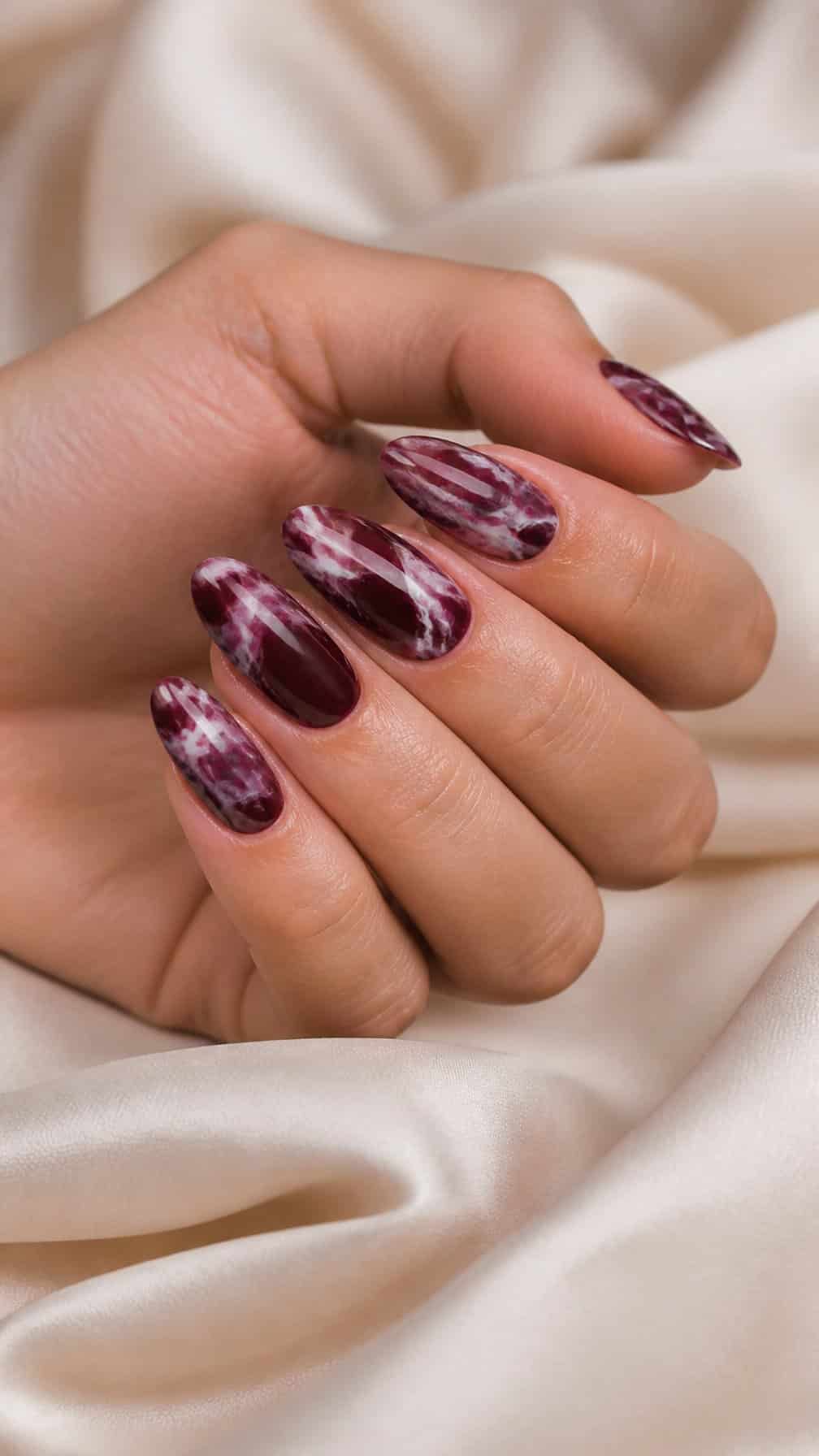
I like burgundy marble nails for their polished mix of depth and movement. I layer a rich wine base with thin swirls of cream, soft pink, or muted taupe, then add a glossy topcoat to sharpen the pattern.
I keep the marble effect subtle on shorter nails by using fine lines and leaving some of the base visible. On longer almond or coffin shapes, I can use broader veins for a stronger contrast without making the design feel too busy.
For a year-round finish, I pair burgundy with warm ivory in autumn and winter, then switch to blush or pale beige during spring and summer. I usually place the marble on two or three nails and keep the rest solid for balance.
10) Burgundy Tortoiseshell Nails
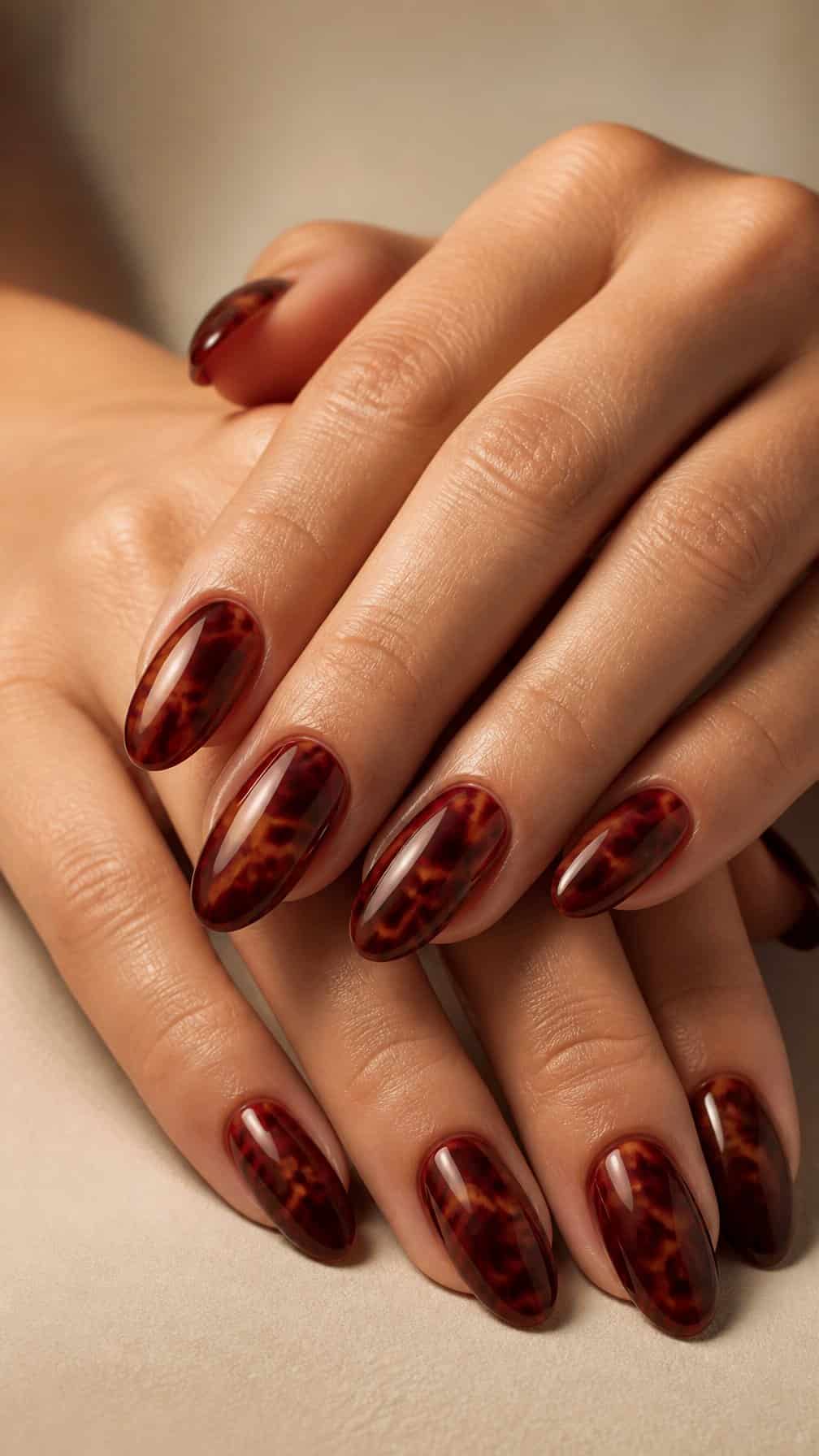
I like pairing deep burgundy with translucent amber, caramel, and brown patches to create a tortoiseshell effect that feels polished without looking uniform. The warm tones work across seasons, while the darker base keeps the design defined.
I would use tortoiseshell on two or three nails and paint the others in glossy burgundy. Short, rounded nails suit the pattern especially well, but almond and coffin shapes provide more space for layered details.
For a softer finish, I would choose a sheer nude base beneath the tortoiseshell pattern. A thin gold line or high-shine topcoat can add definition without competing with the organic color variation.
11) Burgundy Gold-Foil Nails
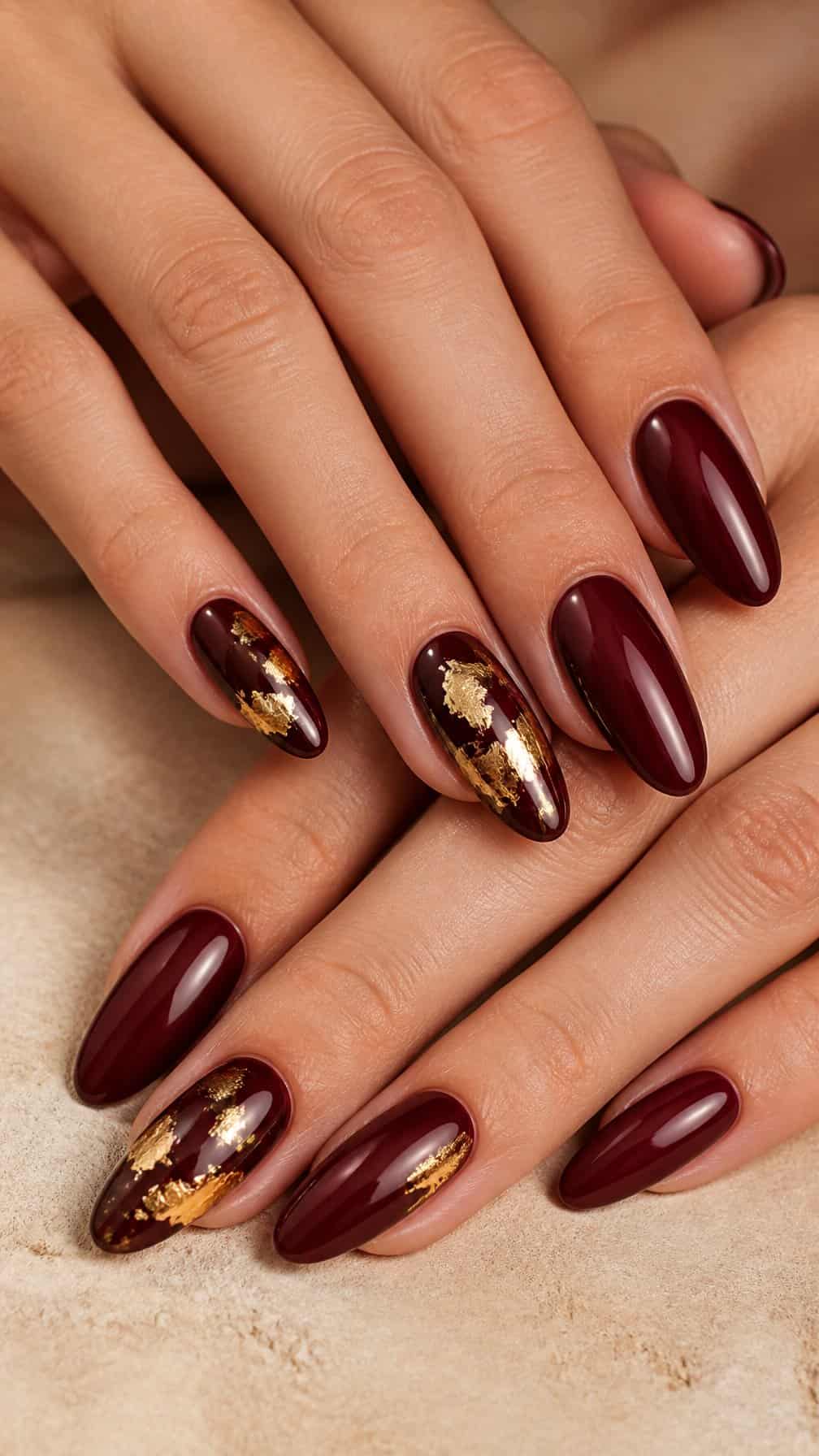
I pair a deep burgundy base with small pieces of gold foil for a polished contrast. I prefer irregular foil placement on one or two accent nails, while the remaining nails stay fully burgundy. This arrangement keeps the metallic detail noticeable without making the manicure feel busy.
I usually choose a glossy topcoat to sharpen the color difference and smooth the foil’s edges. For a softer look, I use a sheer burgundy layer over the foil, which gives the gold a muted, antique finish. Fine foil flakes suit short nails, while larger pieces create more visible texture on longer shapes.
12) Burgundy Silver-Foil Nails
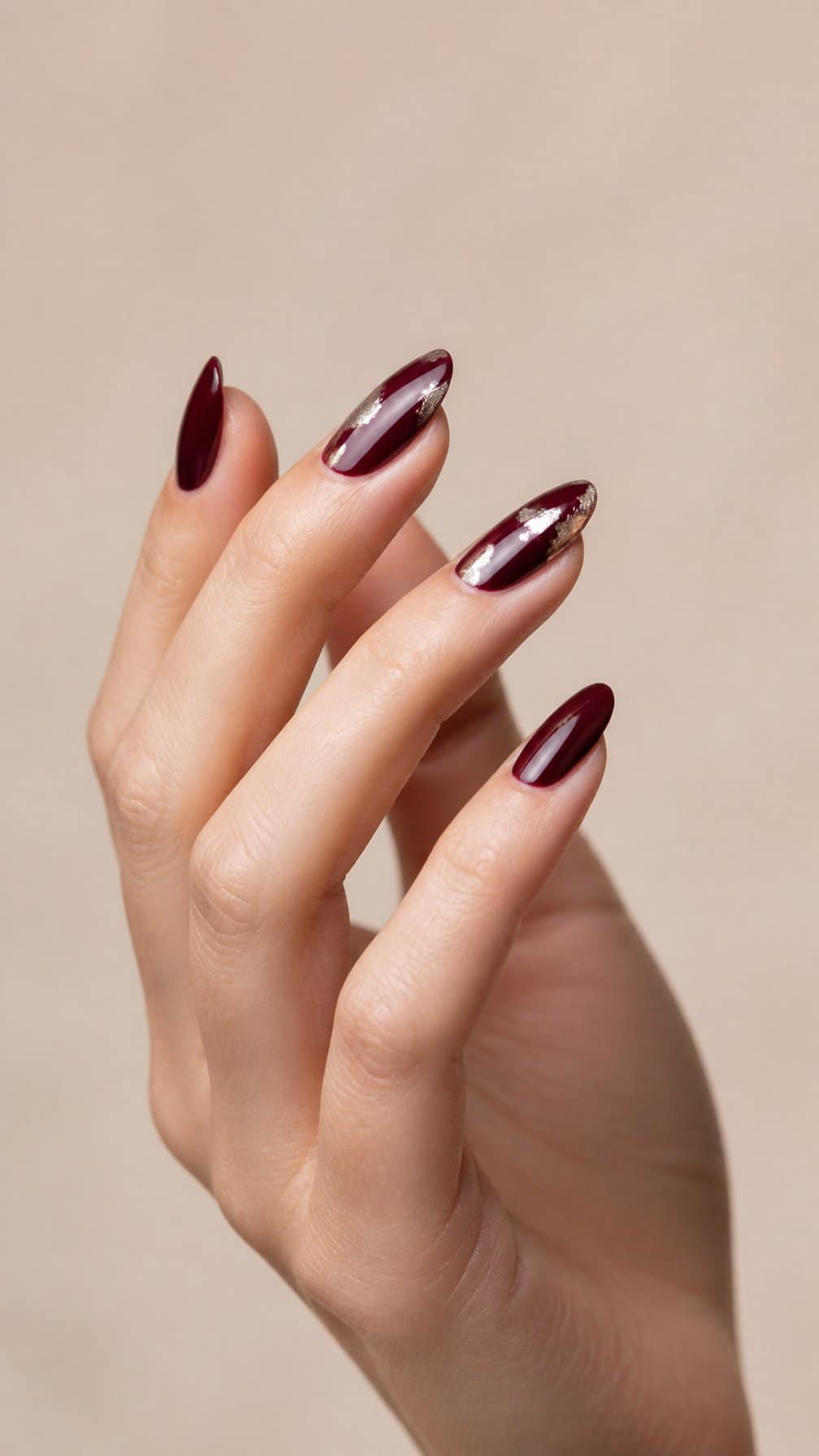
I like pairing a deep burgundy base with small pieces of silver foil for a balanced contrast. The metallic accents catch the light without competing with the rich polish, especially when I place them near the cuticle or across one accent nail.
I usually keep the foil uneven rather than arranging identical shapes. That slight variation gives the manicure a refined, handcrafted look while preserving a clean finish. A glossy top coat helps smooth the texture and protect the design.
For a softer result, I choose sheer foil fragments over a muted burgundy shade. When I want sharper definition, I use brighter silver foil against a creamier or blue-toned burgundy. Both versions suit short and medium-length nails.
13) Burgundy Matte Nails
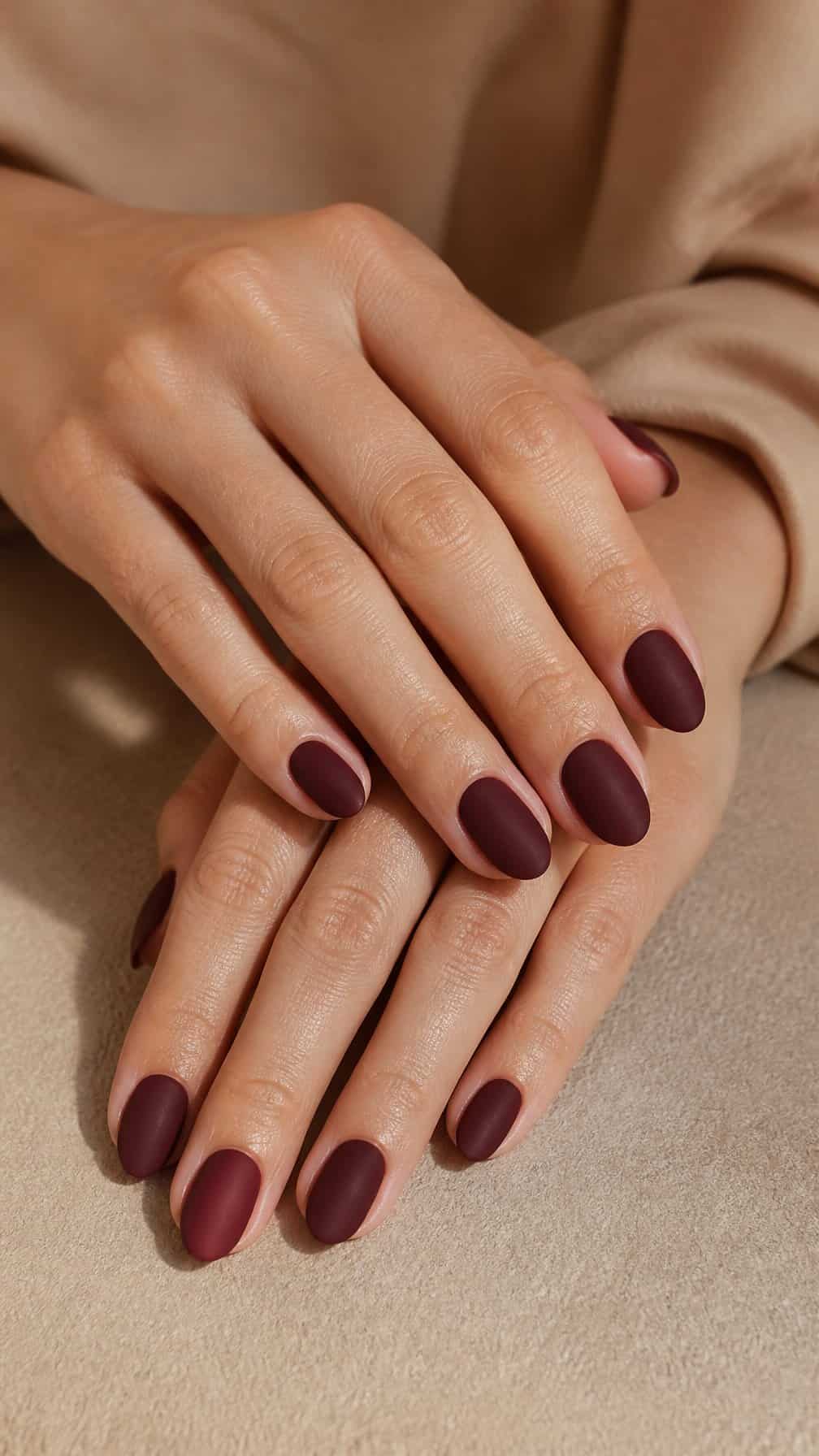
I like burgundy matte nails for their smooth, low-shine finish and rich color. The velvety surface gives this deep red shade a modern look without relying on glitter or heavy decoration. I usually pair the polish with short square or softly rounded nails for a neat, practical style.
I keep the design simple when I want the finish to stand out. A glossy burgundy detail on one nail, such as a thin French tip or small dot, creates subtle contrast while preserving the understated appearance. Matte polish can show oils and marks easily, so I apply a matte top coat evenly and refresh it when needed.
14) Glossy Burgundy Coffin Nails
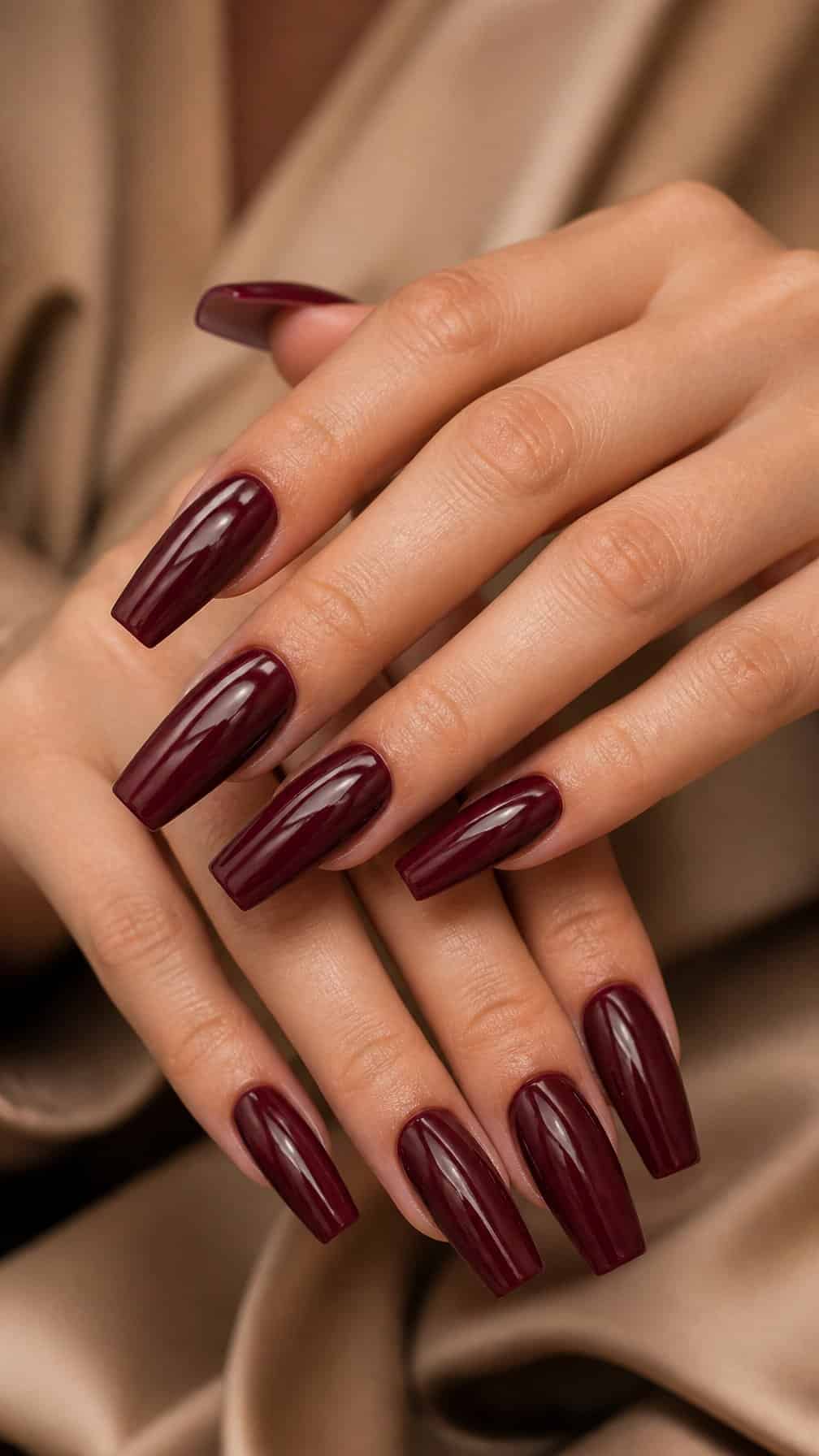
I like glossy burgundy polish on coffin-shaped nails because the tapered silhouette gives the deep red shade a clean, polished finish. The reflective topcoat emphasizes the color’s wine-toned depth without adding extra decoration.
I would keep the surface smooth and the length moderate for easier daily wear. This design suits professional outfits, evening clothing, and seasonal looks, making it practical throughout the year.
For a subtle variation, I might use a slightly darker burgundy on the tips or add one understated accent nail. A high-shine gel finish keeps the design crisp, while regular polish offers a simple option for changing the color at home.
15) Burgundy Almond Nails
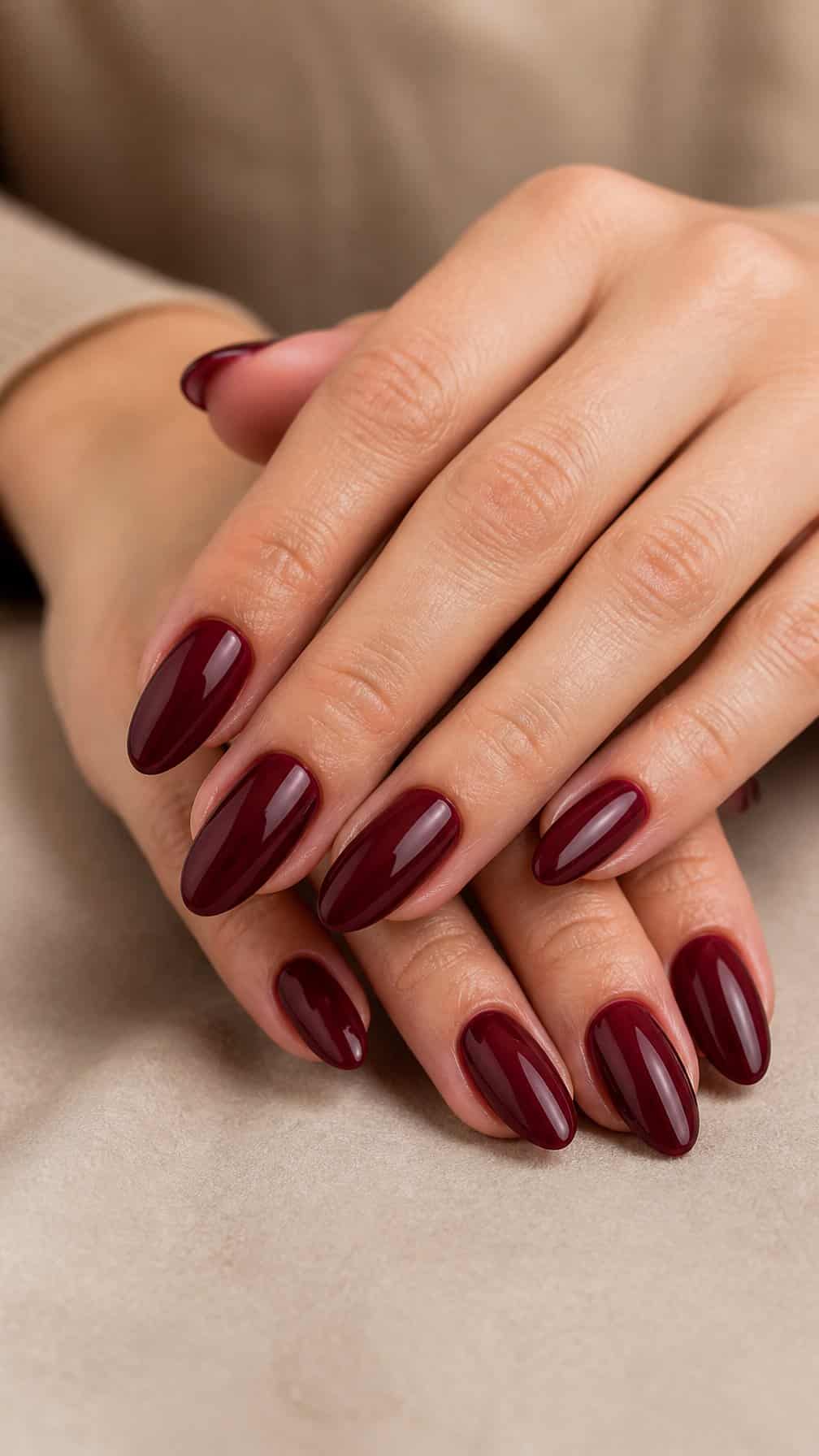
I like burgundy on almond-shaped nails because the tapered silhouette gives this deep shade a refined, balanced appearance. I usually choose a glossy finish for a classic look, while a sheer topcoat creates a softer effect that suits daytime outfits.
For added detail, I might place a thin metallic line near the cuticle or use a lighter burgundy on one accent nail. The elongated shape also leaves enough space for subtle ombré shading without making the design appear crowded.
I find this style easy to wear throughout the year. I pair it with neutral clothing in warmer months and richer textures, such as wool or leather, during fall and winter.
16) Burgundy Square Nails
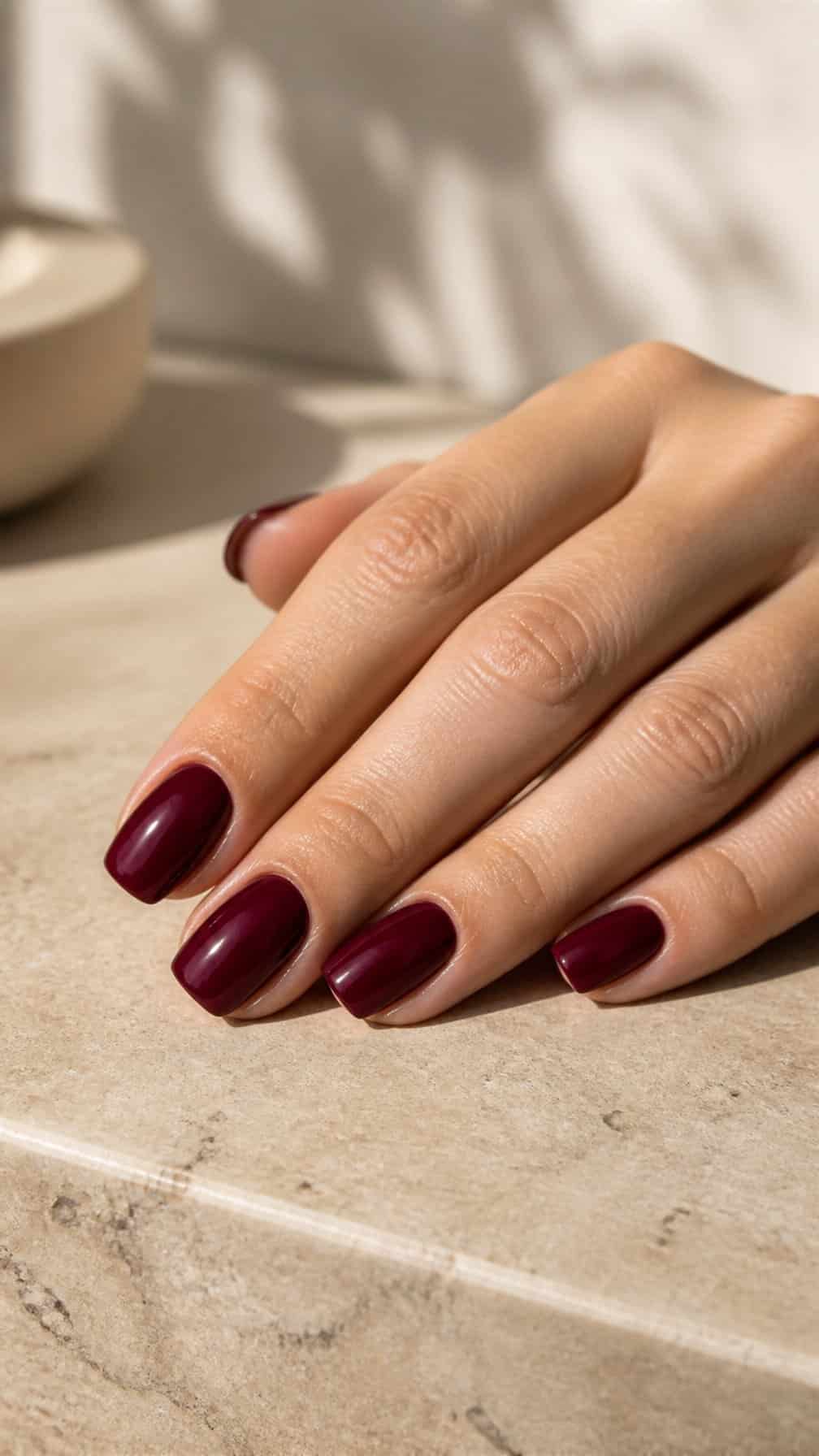
I like burgundy on square nails because the straight edges give this deep shade a clean, structured finish. I keep the length short to medium for a practical shape that suits workdays, dinners, and everyday wear.
A glossy topcoat makes the color look smooth and polished, while a matte finish creates a softer, more modern effect. I often choose a single burgundy shade for a refined manicure that works across seasons.
For added detail, I pair two burgundy tones on alternating nails or add a thin nude accent line. The square shape keeps these small design elements defined without making the manicure look busy.
17) Burgundy Stiletto Nails
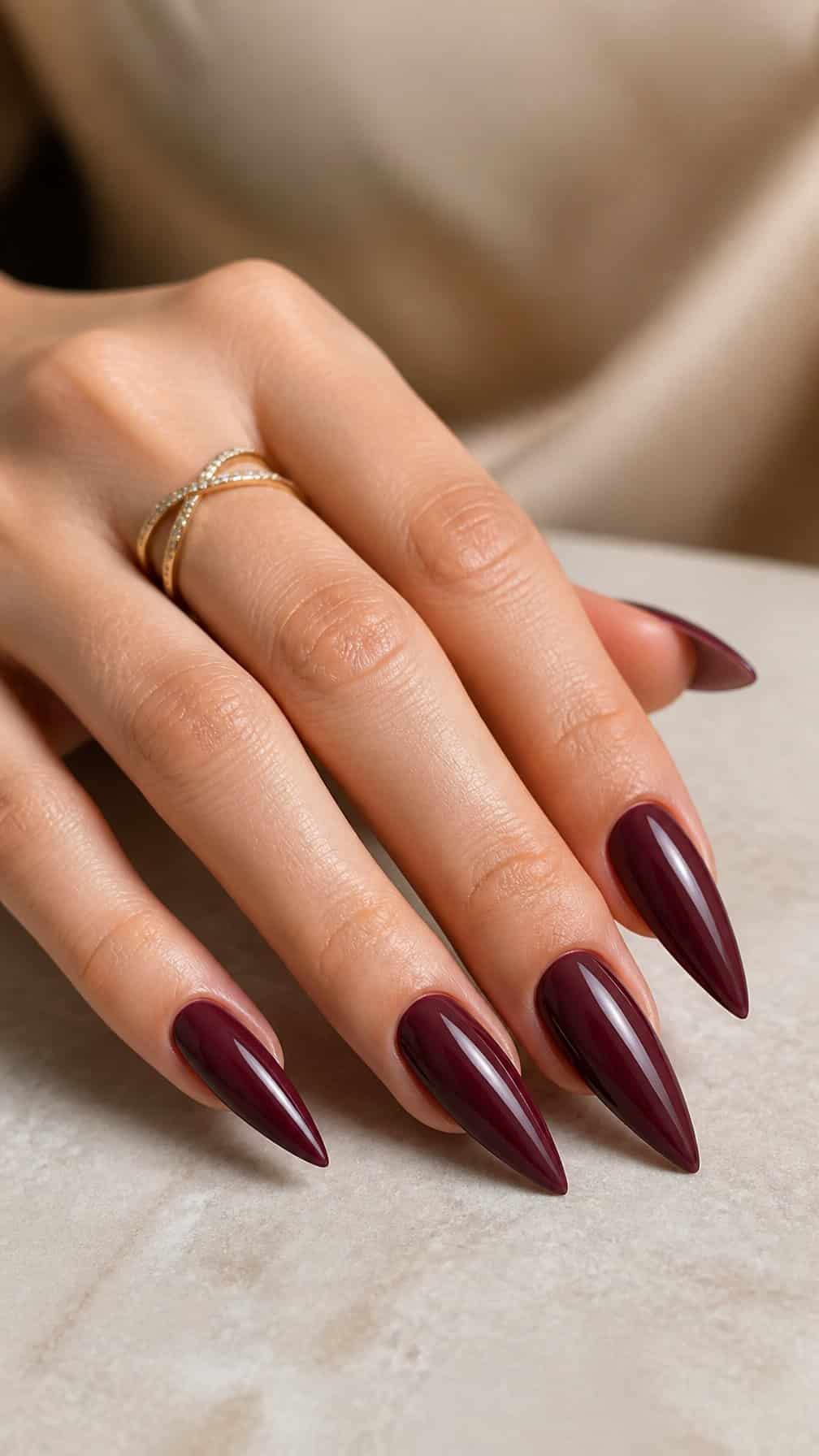
I like burgundy stiletto nails when I want a sharp, polished look with strong color impact. The tapered shape lengthens my fingers, while the deep red tone keeps the design refined rather than overly bright. A high-gloss finish suits evening outfits, and a velvet or matte topcoat creates a softer effect.
I usually keep the surface solid because the pointed silhouette already draws attention. For added detail, I might place a small metallic accent near the cuticle or use a sheer nude base beneath a burgundy French tip. This design works year-round because I can pair it with winter knits, neutral tailoring, or lighter seasonal clothing.
18) Burgundy Short Round Nails
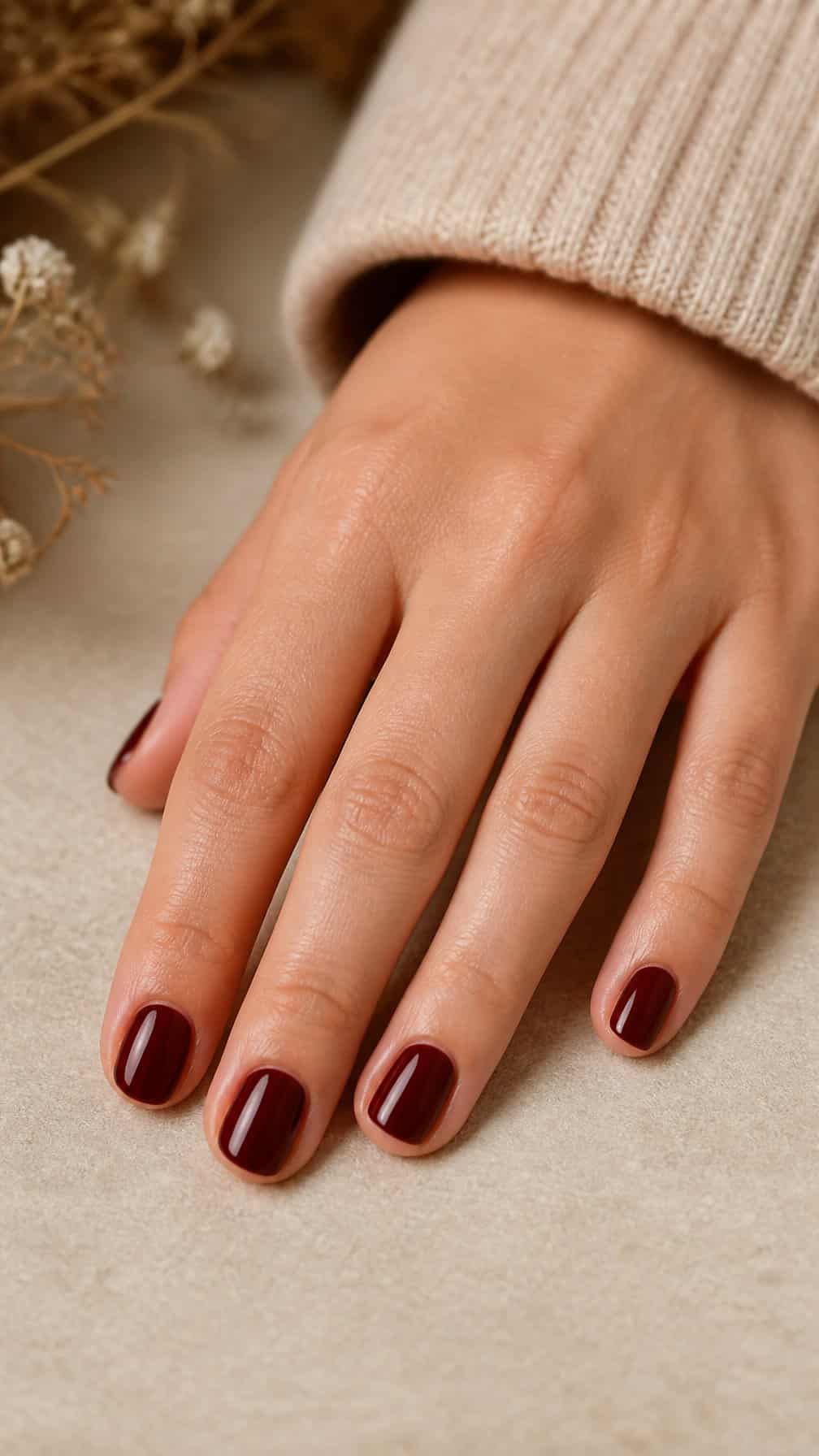
I like burgundy on short, round nails because the curved shape keeps the deep color polished without looking severe. I would choose a glossy finish for a classic manicure that suits workdays, dinners, and seasonal events.
For added detail, I might place a thin gold line near the cuticle on one or two nails. The small accent gives the design definition while keeping the rounded silhouette neat and practical.
I would pair this manicure with a sheer base under the burgundy if I wanted a softer result. That approach creates subtle depth and lets the natural shape remain visible between appointments.
19) Burgundy Negative-Space Nails
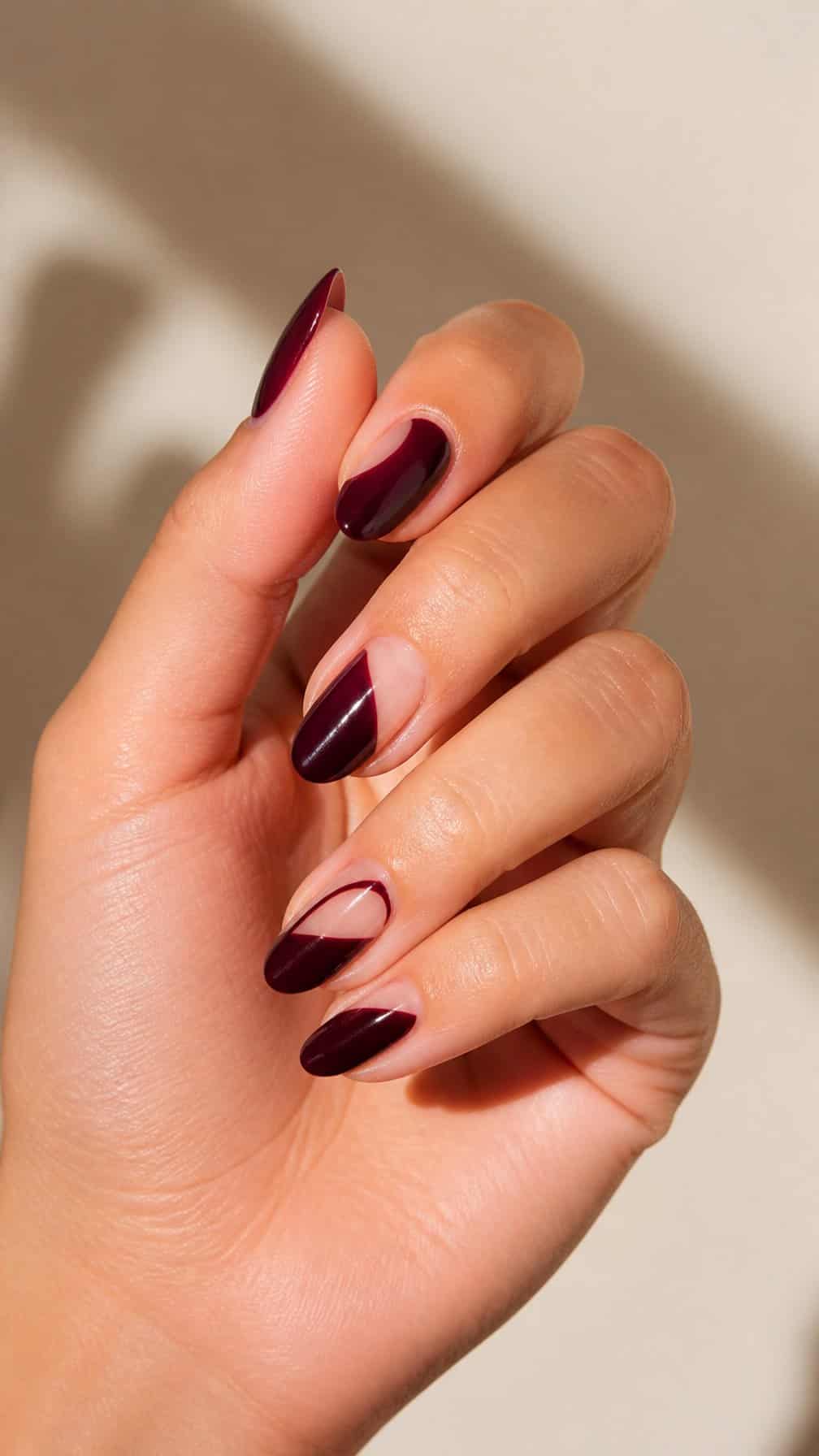
I like negative-space designs because they keep burgundy polish from feeling too heavy. I would use a sheer nude base with curved burgundy sections along the tips or sides, leaving slim gaps of natural nail visible. A glossy finish sharpens the contrast while keeping the look polished.
For a more graphic style, I would pair one burgundy block with thin nude lines on each nail. I might vary the placement across the set—side panels on one finger, an angled tip on another, and a small crescent elsewhere. This arrangement adds interest without relying on extra colors.
I would choose short almond or squoval nails for this design because both shapes support clean, deliberate lines. A fine detail brush helps create even edges, while a ridge-filling base coat can smooth the exposed areas before adding top coat.
20) Burgundy Half-Moon Nails
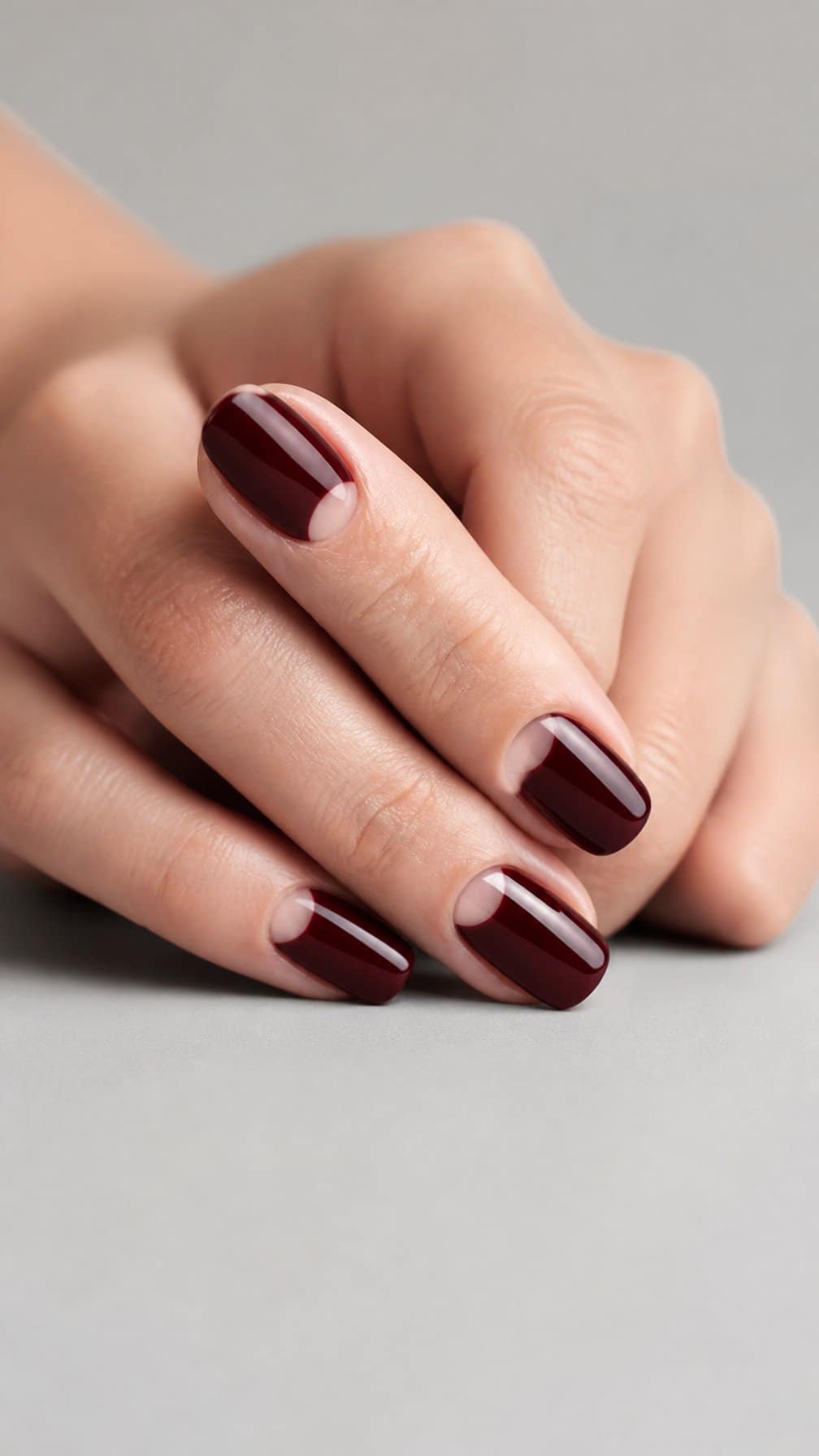
I like burgundy half-moon nails because the exposed area near the cuticle creates a clean contrast without overwhelming the design. I would pair a deep burgundy polish with a natural, pale pink, or soft beige base for a balanced look.
For sharper definition, I would outline the half-moon with a fine gold or black line. A rounded shape suits shorter nails, while a slightly elongated curve complements almond or oval tips.
I find this design easy to adapt across seasons. I can keep the finish glossy for a classic appearance, choose matte burgundy for a modern effect, or use a sheer base to make the color transition look softer.
21) Burgundy Checkerboard Nails
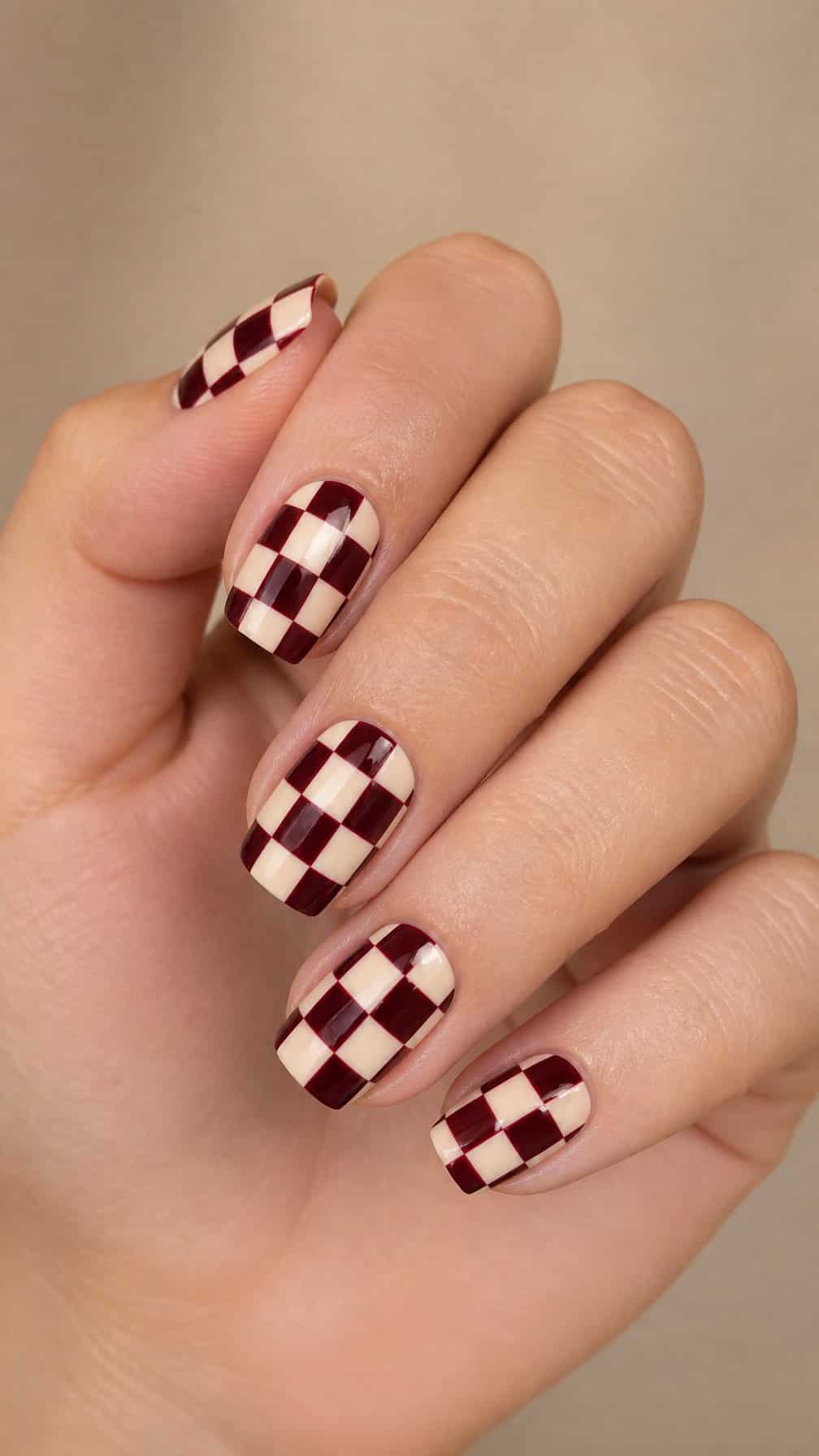
I like burgundy checkerboard nails for their clean geometry and easy color contrast. I alternate deep burgundy squares with a sheer nude, soft pink, or creamy white base to keep the pattern polished rather than heavy.
I usually place the checks across every nail for a coordinated look, or limit the design to two accent nails against a solid burgundy manicure. Short, rounded nails suit smaller squares, while longer almond or square shapes give the pattern more room to stand out.
A glossy topcoat sharpens the color and smooths the grid. For a softer finish, I pair burgundy with muted beige and choose a matte topcoat.
22) Burgundy Plaid Nails
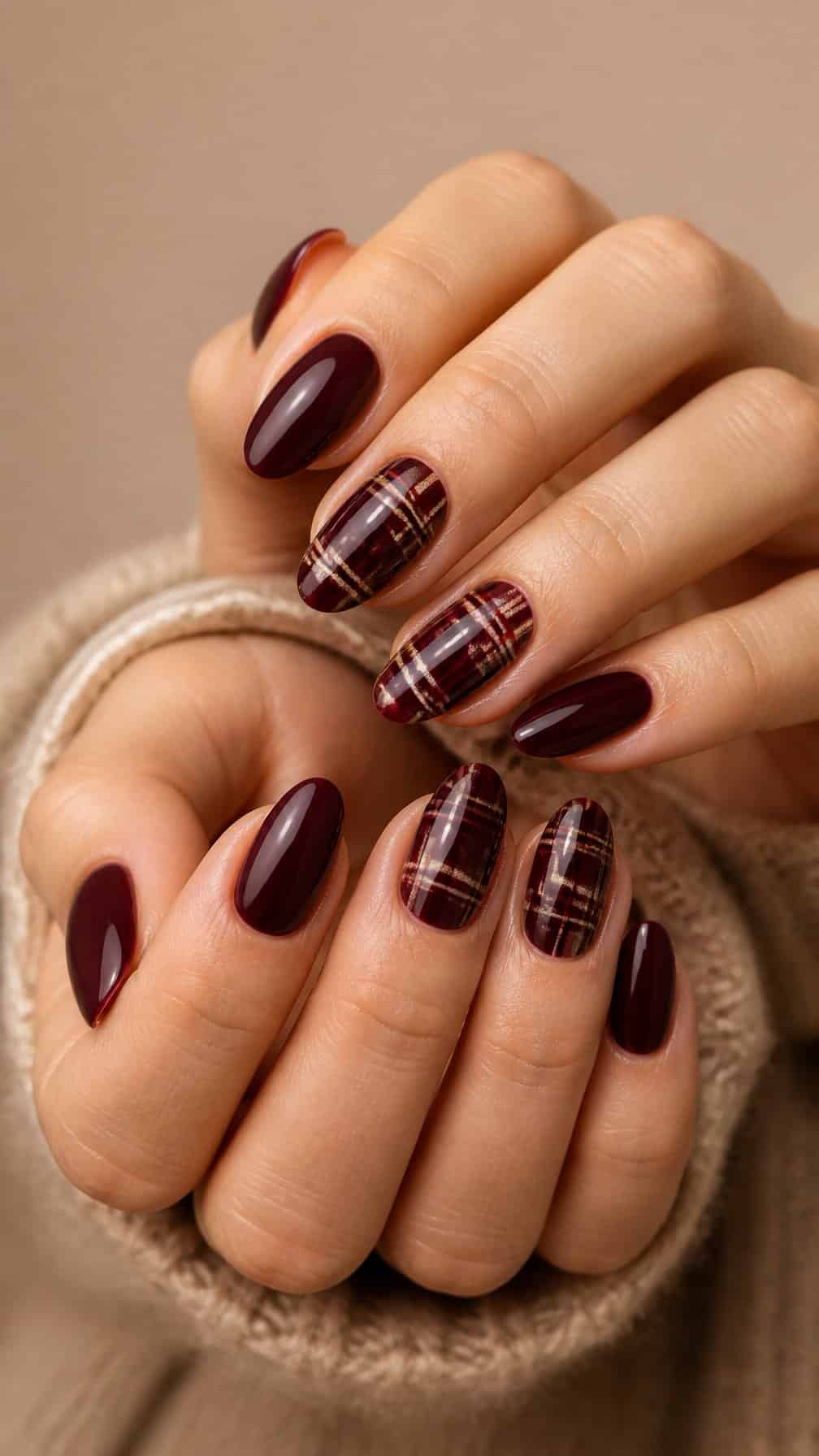
I like burgundy plaid nails for their structured pattern and seasonal flexibility. I would use a deep burgundy base with thin lines in cream, black, or muted gold, keeping the striping precise without making the design look crowded.
For a balanced manicure, I would place the plaid on two or three nails and leave the remaining nails solid burgundy. A matte finish gives the pattern a softer appearance, while glossy topcoat makes the lines look sharper and more defined.
I would choose narrow intersecting lines for shorter nails because they preserve visual space. On longer nails, wider plaid sections can create a clearer pattern and provide room for subtle metallic accents.
23) Burgundy Floral Nail Art
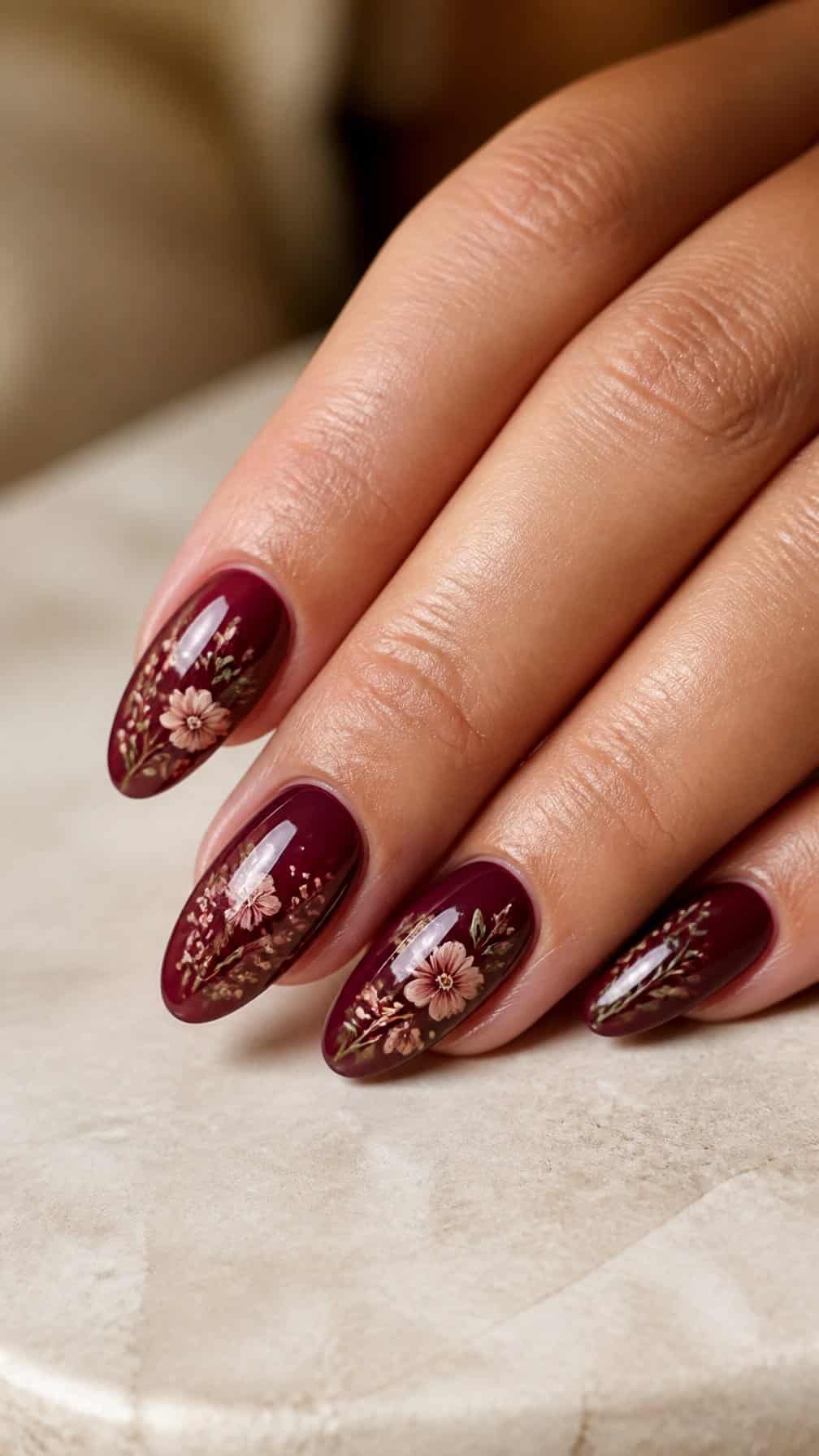
I like burgundy floral nail art for its balanced mix of rich color and delicate detail. I use a burgundy base on most nails, then add small cream, blush, or muted pink flowers to create contrast without making the design feel busy.
For a cleaner look, I place one floral accent on each ring finger and keep the remaining nails glossy burgundy. Fine green stems or tiny gold dots can define the petals while adding subtle detail.
I also pair the flowers with a sheer nude base when I want the design to feel lighter. This version suits every season and works well with short, rounded nails as well as longer almond shapes.
24) Burgundy Leaf Nail Art
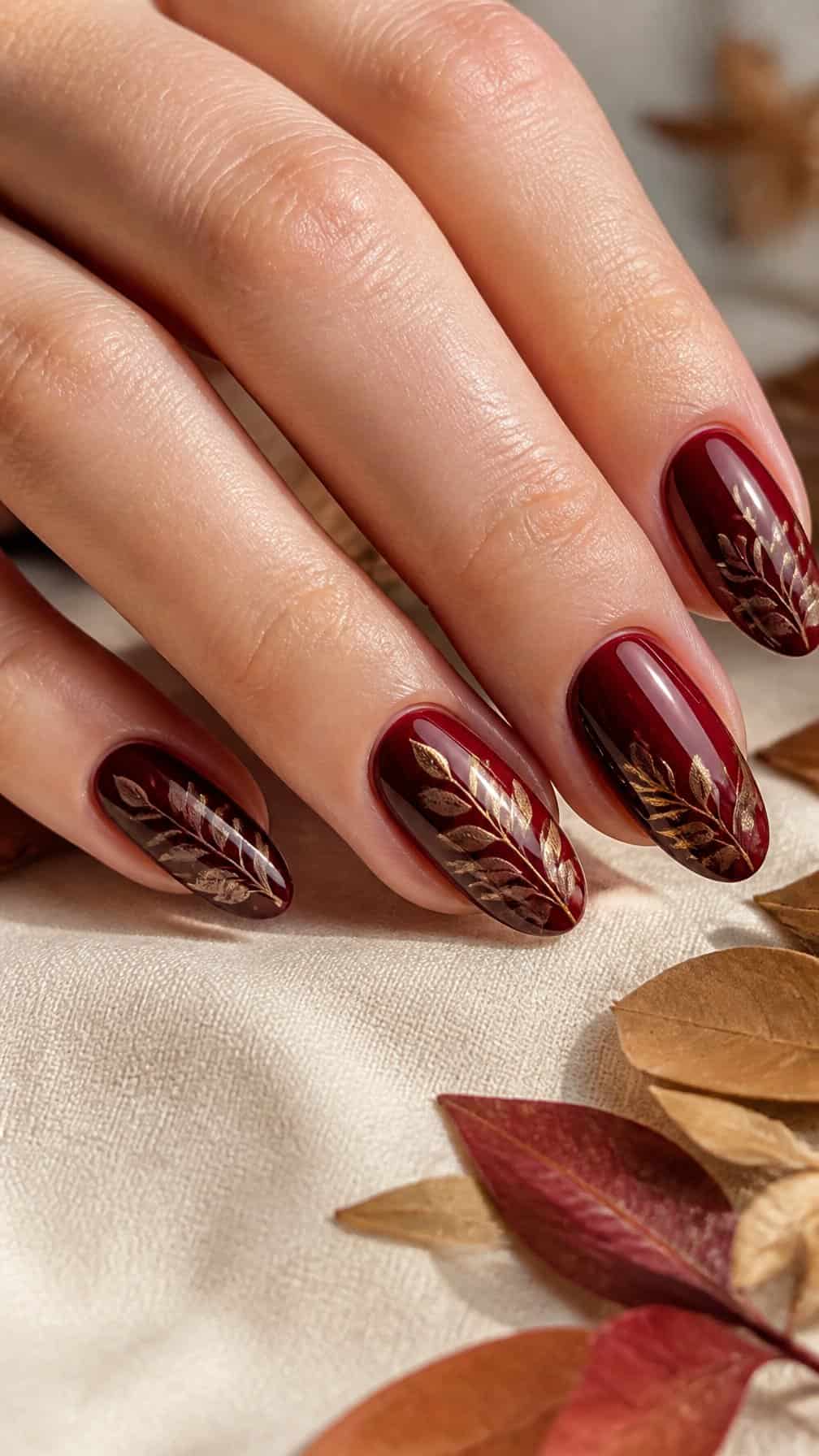
I use burgundy as the base for a polished leaf design that suits every season. Fine metallic-gold leaves add definition without overpowering the deep red shade, while a glossy topcoat keeps the pattern crisp.
For a softer look, I pair burgundy nails with two neutral accent nails and paint delicate leaves in burgundy, taupe, and muted olive. This combination feels balanced and works well on short, medium, or almond-shaped nails.
I prefer placing the leaves near the cuticle or along one side of the nail rather than covering the entire surface. A fine liner brush creates clean stems and veins, while a matte topcoat gives the finished design a modern, understated texture.