
Dark nail designs can add depth and polish without relying on classic black. You can explore rich color, soft contrast, metallic detail, and textured finishes to create a manicure that feels refined and distinctive.

Save for later
Want to come back to this story? Save it with your email so it is easy to find again.
You’ll find dark shades beyond black that suit different styles, skin tones, and occasions, along with practical ideas for maintaining their definition and shine. I’ll guide you through varied combinations, from deep jewel tones and earthy browns to smoky neutrals and subtle accents.
Table of Contents
- 1 1) Midnight Navy with Silver Chrome
- 2 2) Charcoal Ombre with Glossy Tips
- 3 3) Deep Burgundy with Gold Foil
- 4 4) Espresso Brown with Caramel Swirls
- 5 5) Blackberry Purple with Velvet Finish
- 6 6) Forest Green with Matte Accents
- 7 7) Slate Gray with Holographic Flakes
- 8 8) Dark Teal with Copper Details
- 9 9) Plum Nails with Black French Tips
- 10 10) Chocolate Brown with Tortoiseshell Art
- 11 11) Navy Blue with Celestial Stars
- 12 12) Oxblood Red with Gold French Tips
- 13 13) Smoky Gray with Marble Veining
- 14 14) Deep Emerald with Cat-Eye Shimmer
- 15 15) Aubergine with Metallic Half-Moons
- 16 16) Dark Olive with Cream Swirls
- 17 17) Raisin Purple with Chrome Lines
- 18 18) Cobalt Blue with Negative Space
- 19 19) Merlot Nails with Rhinestone Accents
- 20 20) Graphite Gray with Geometric Art
- 21 21) Dark Terracotta with Abstract Waves
- 22 22) Indigo Nails with Silver Glitter
- 23 23) Moss Green with Matte French Tips
- 24 24) Black Cherry with Velvet Shimmer
- 25 25) Deep Sapphire with Icy Blue Accents
- 26 26) Walnut Brown with Gold Leaf
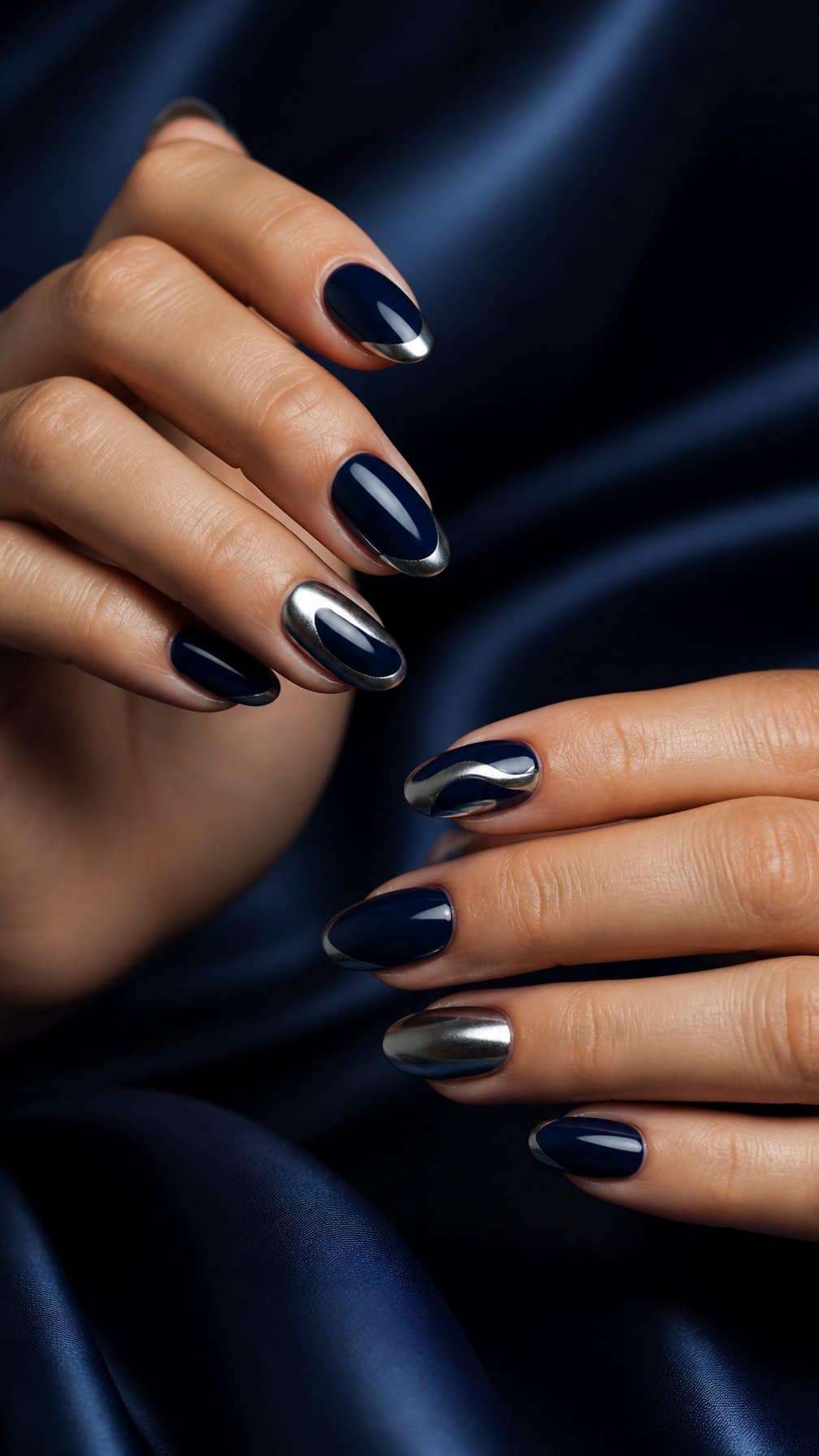
I use midnight navy as a softer alternative to black when I want a dark, polished base. Its blue undertone becomes more visible under bright light, while the deep finish keeps the design refined.
I add silver chrome to one or two nails, either as a full metallic accent or as thin curved lines over the navy. The contrast gives the manicure a clean, modern edge without making it look overly busy.
I prefer a short square or almond shape for this combination because both silhouettes keep the reflective details balanced. A glossy topcoat helps the navy look deeper and protects the chrome accents from losing their shine.
2) Charcoal Ombre with Glossy Tips
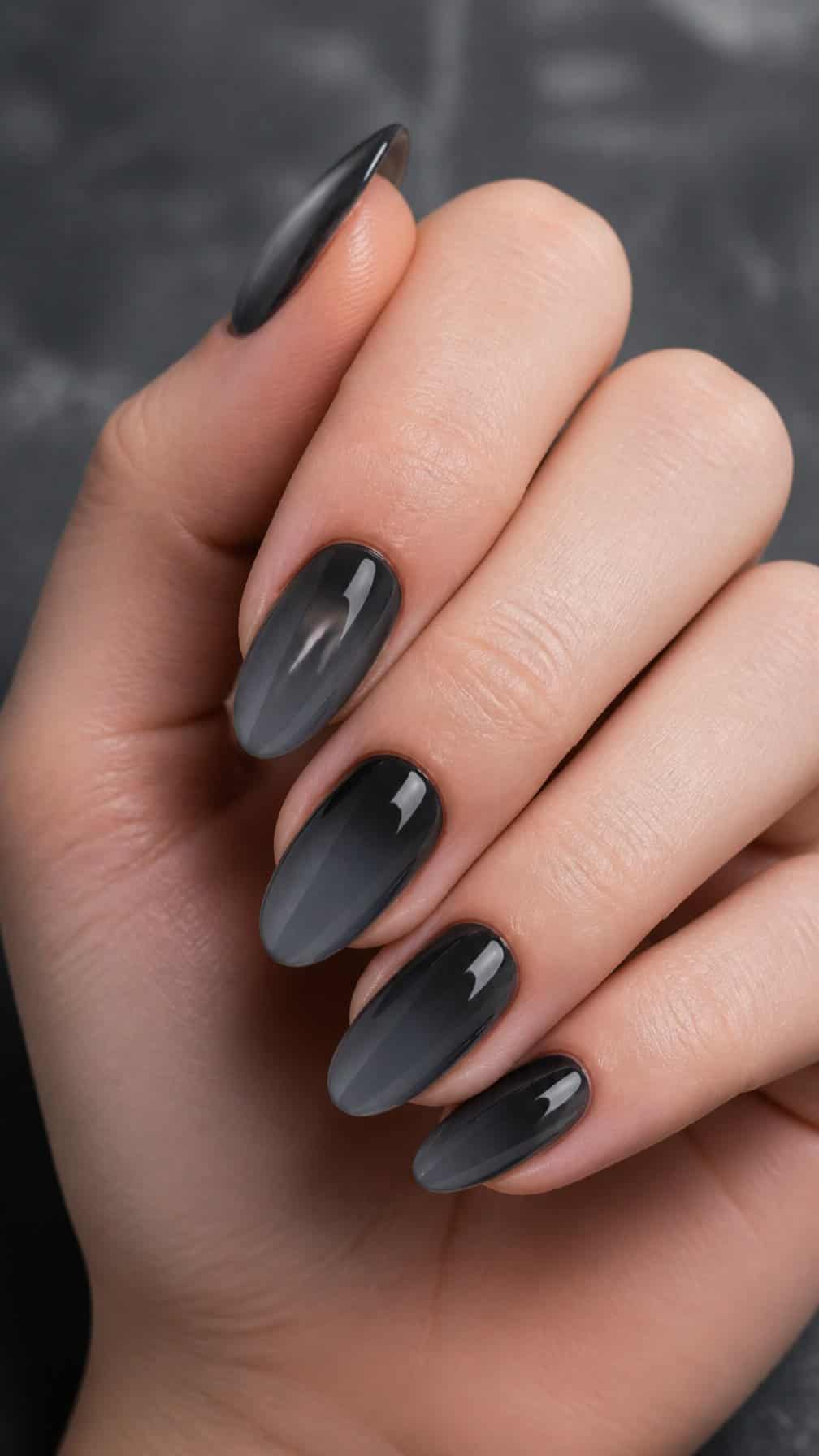
I like this design for its gradual shift from smoky gray near the cuticle to deeper charcoal at the tips. The glossy finish sharpens the fade and gives the nails a smooth, polished appearance without relying on solid black.
I would keep the shape medium length with a soft almond or squoval edge, allowing the gradient to remain visible. A sheer gray base helps blend the tones, while a high-shine topcoat emphasizes the darker tips and creates a clean contrast against the softer center.
3) Deep Burgundy with Gold Foil
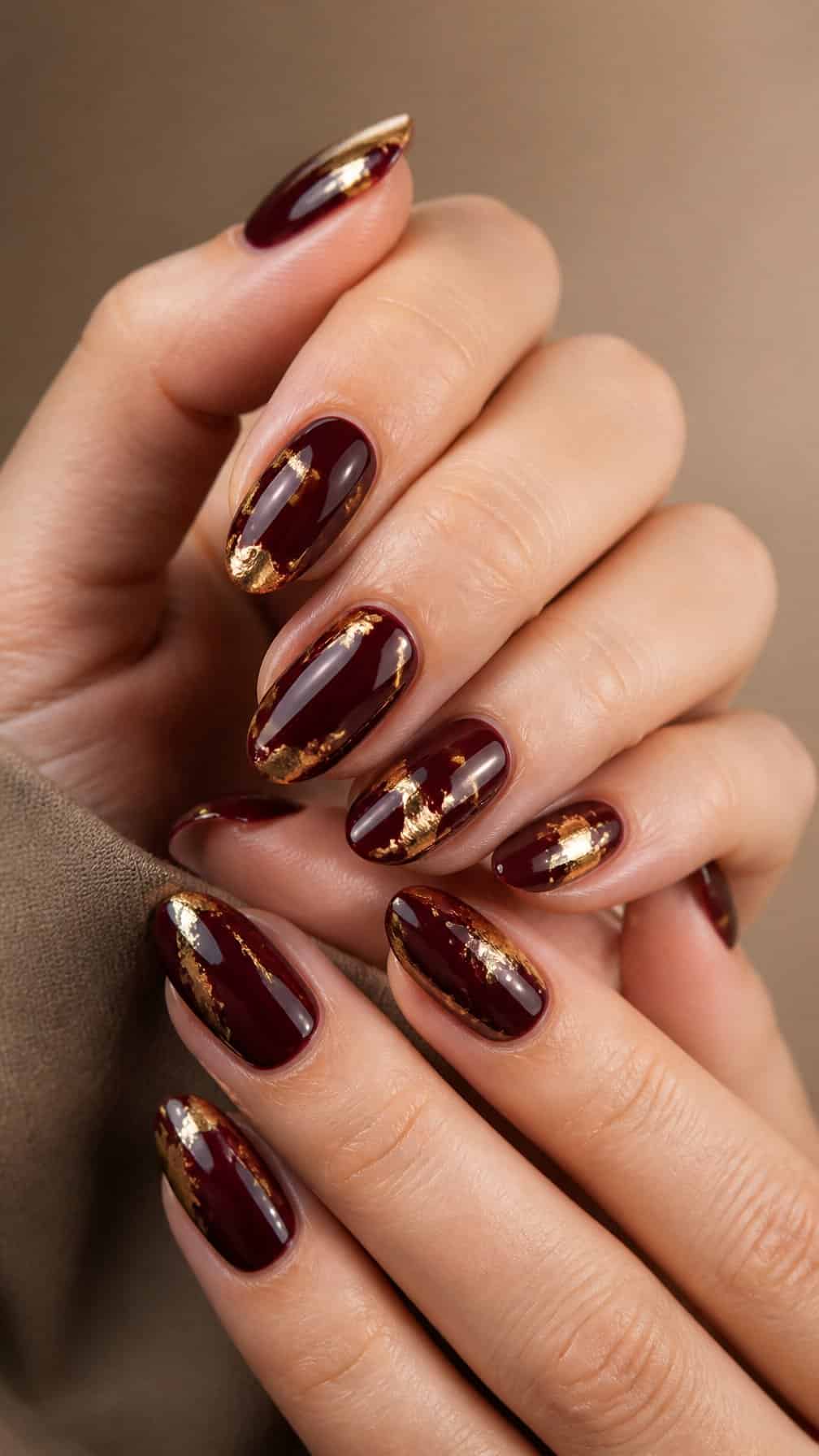
I use deep burgundy polish for a rich, wine-toned base that feels softer than pure black while still looking dramatic. Its red undertone adds warmth and works well on short, medium, or almond-shaped nails.
I place thin pieces of gold foil near the cuticle or across one corner of each nail rather than covering the entire surface. The irregular edges create contrast against the smooth polish, while a glossy topcoat secures the foil and keeps the design polished.
4) Espresso Brown with Caramel Swirls
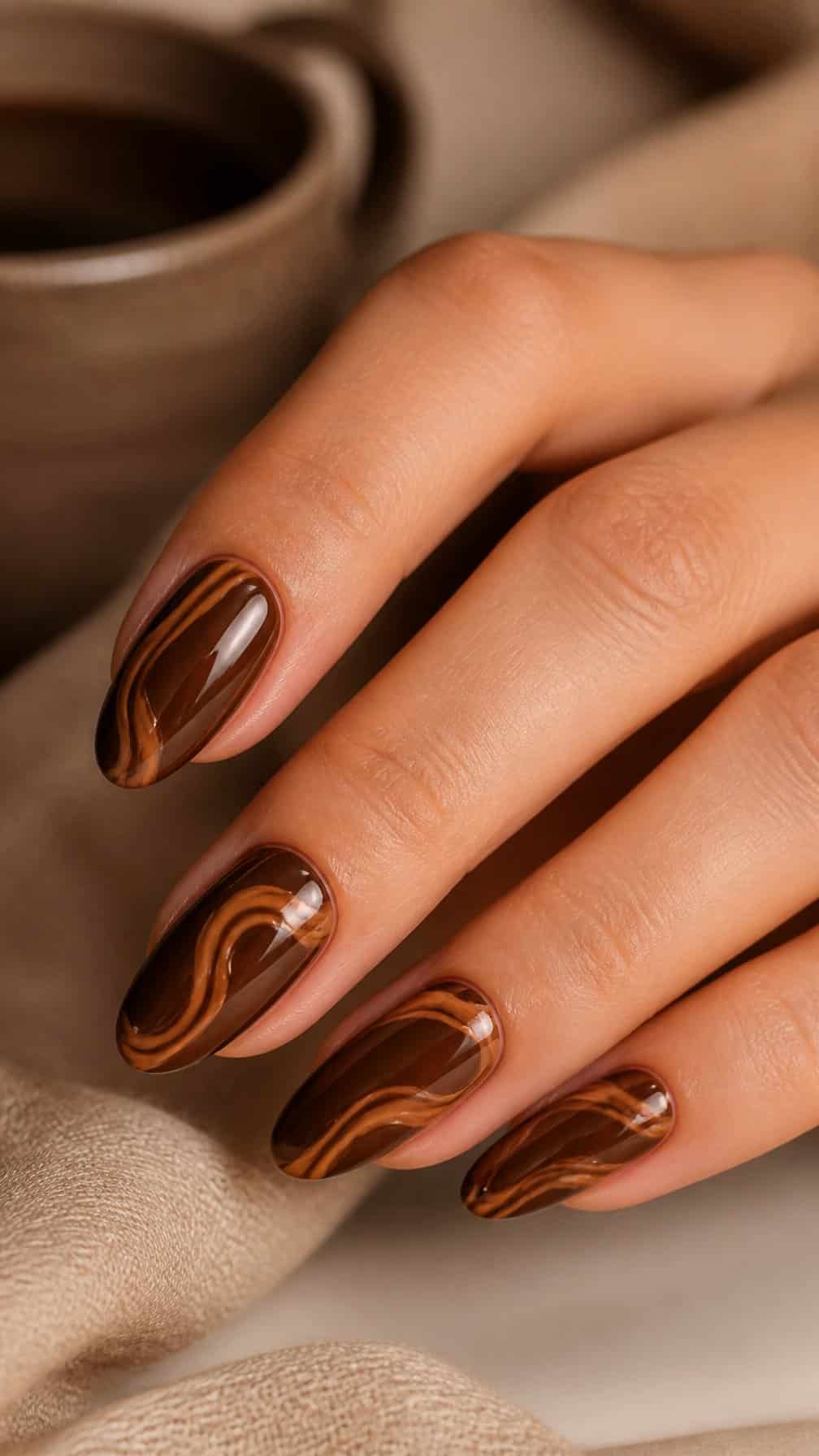
I like espresso brown as a softer alternative to black, especially when a glossy finish brings out its rich depth. I add thin caramel swirls across each nail, keeping the lines uneven so the design feels hand-painted rather than overly uniform.
The warm contrast works well on short or medium-length nails because the curved accents follow the natural shape without crowding it. I prefer a sheer caramel shade for subtle dimension, while an opaque polish creates a stronger graphic effect. A high-shine topcoat helps both colors look smooth and defined.
5) Blackberry Purple with Velvet Finish
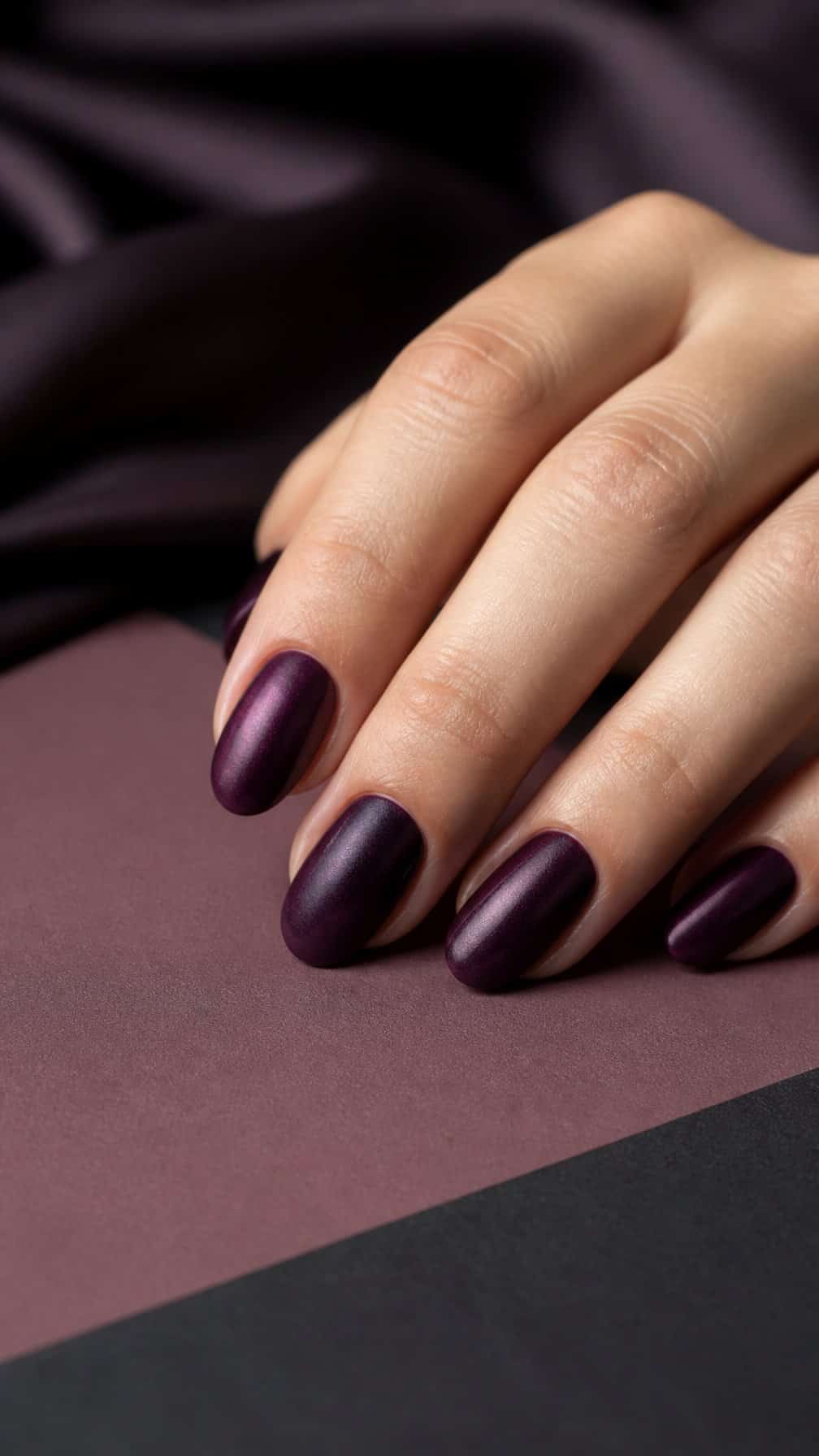
I use a deep blackberry-purple polish when I want a dark manicure with more color than standard black. Its rich berry undertone becomes especially noticeable under natural light, while the velvet finish adds a soft, reflective texture without looking glossy.
I prefer this design on medium-length almond or square nails, where the darker shade looks polished but not heavy. A magnetic velvet topcoat can create a subtle shifting effect, or I can keep the finish uniform for a cleaner result. This color pairs well with silver rings and cool-toned outfits.
6) Forest Green with Matte Accents

I like forest green when I want a dark manicure with more depth than plain black. I apply a glossy green finish to most nails, then use a matte topcoat on one or two accent nails for a subtle contrast.
The color works well on short, square nails and longer almond shapes. I keep the design simple by adding a thin glossy stripe, a small metallic detail, or a clean matte tip rather than layering several decorations. The result feels polished while retaining a muted, modern finish.
7) Slate Gray with Holographic Flakes
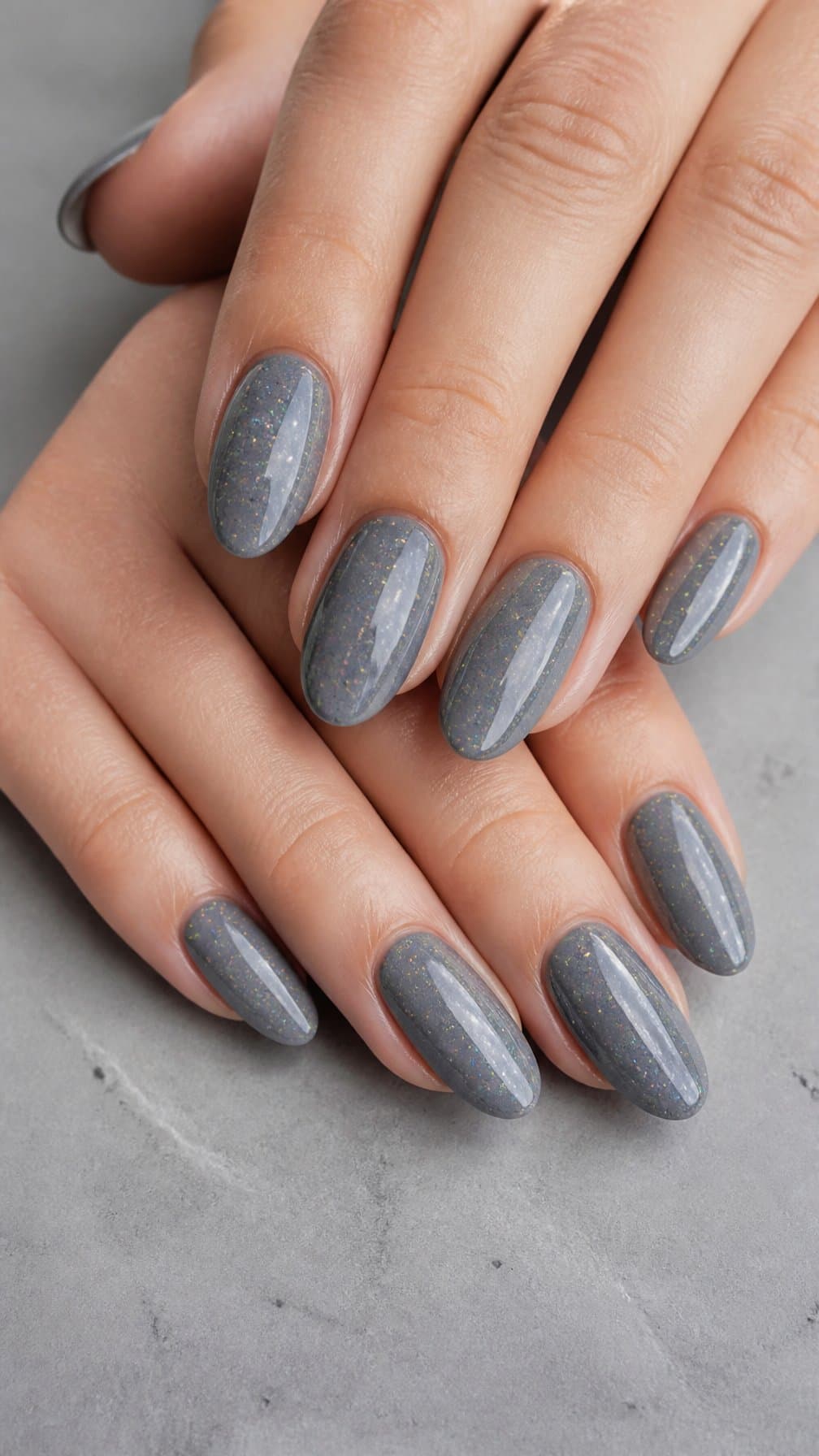
I like slate gray as a softer alternative to black because it keeps the manicure dark without looking flat. I would use a medium or charcoal gray base, then add fine holographic flakes over two or three nails for scattered flashes of color.
The flakes catch light differently as I move my hands, while the muted base keeps the design polished and wearable. I prefer a glossy topcoat to sharpen the contrast, though a matte finish on the gray can create a controlled mix of textures.
8) Dark Teal with Copper Details
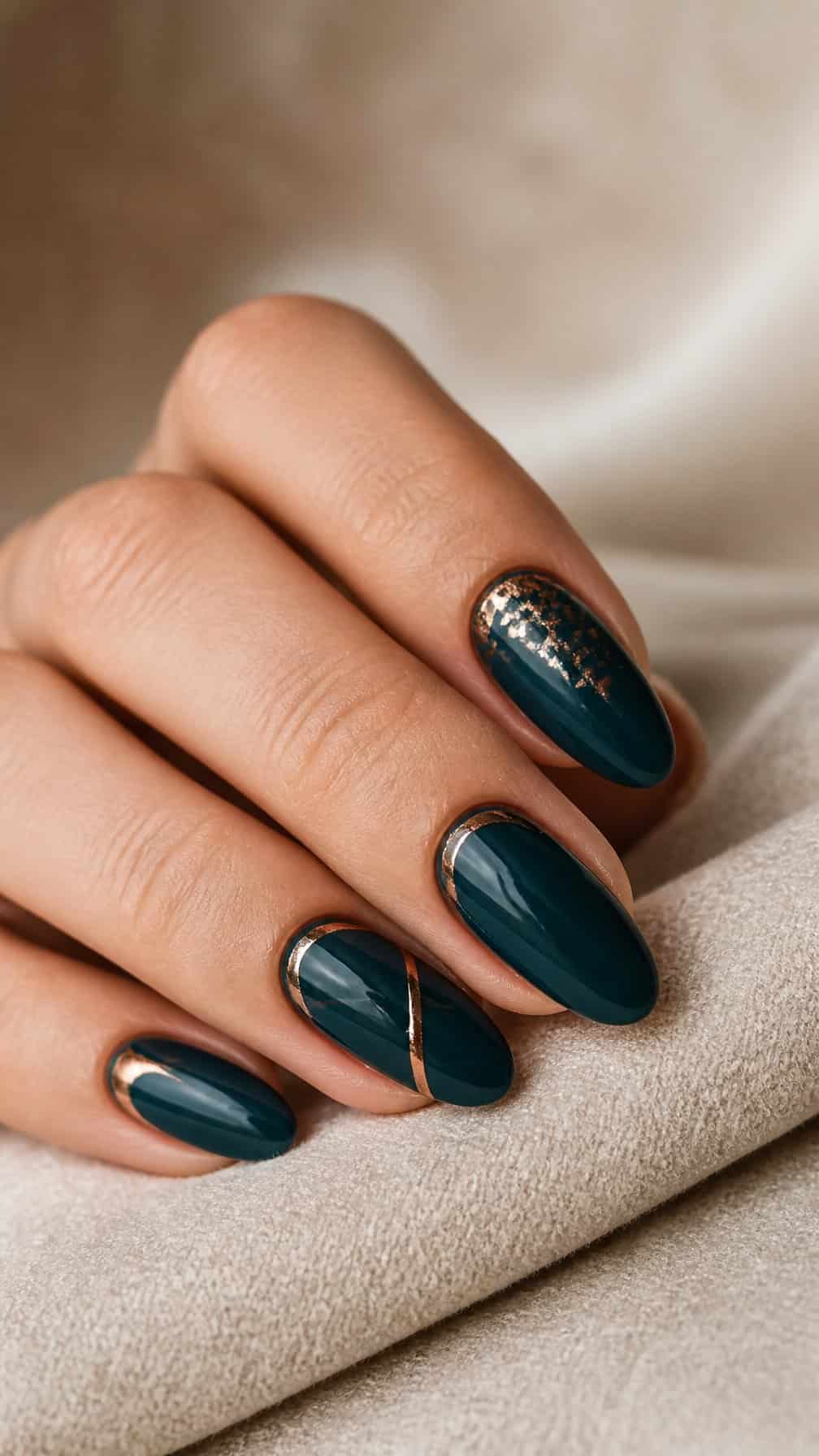
I like dark teal when I want a deep shade with more character than plain black. Its blue-green base looks polished on short, rounded nails or longer almond shapes, while copper accents add warmth without making the design feel overly bright.
I would use a glossy teal finish on most nails and add thin copper lines, small metallic dots, or a simple half-moon detail on one or two fingers. A matte teal base also works well, especially when paired with precise copper foil or narrow French tips for contrast.
9) Plum Nails with Black French Tips
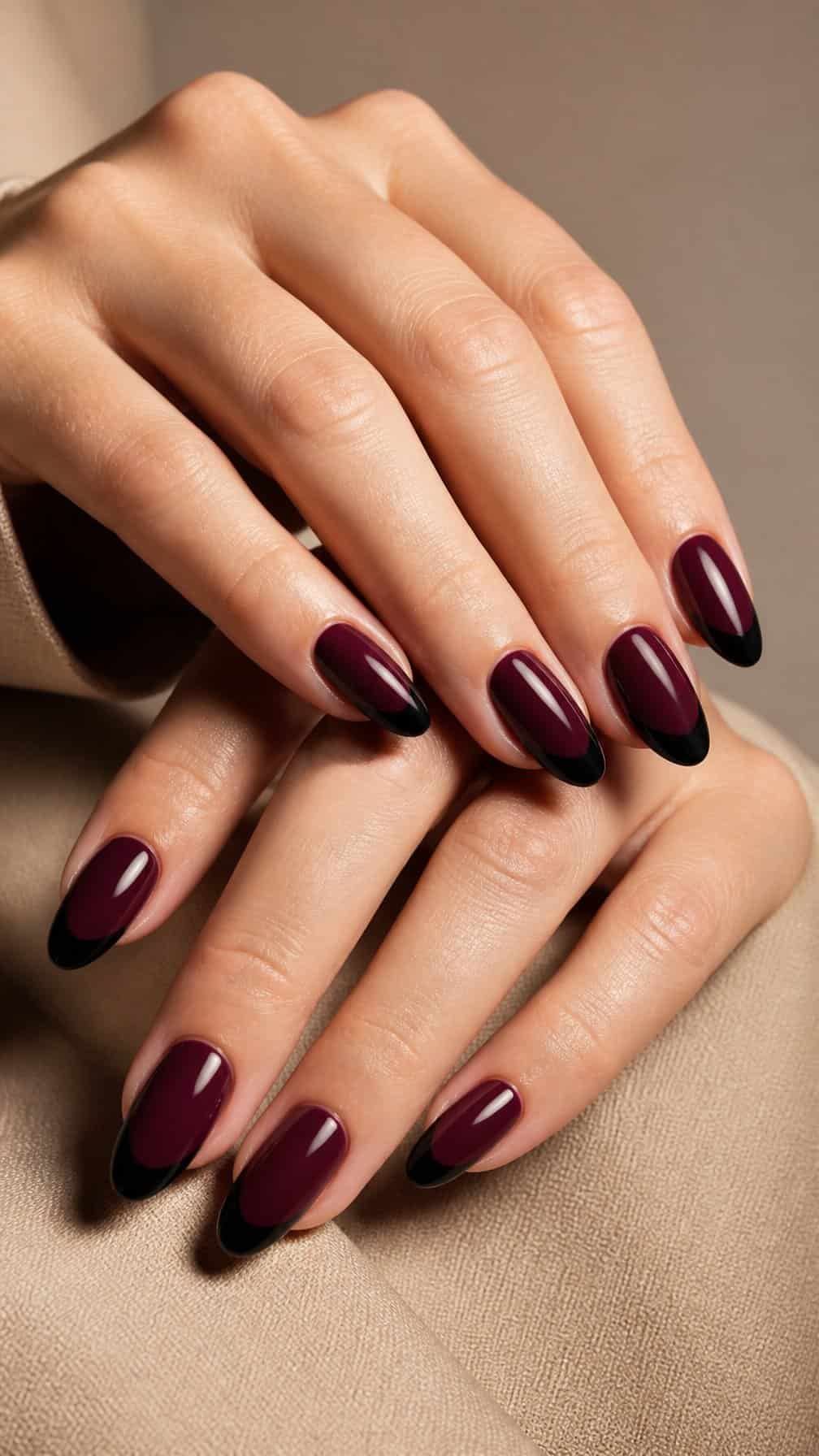
I like this pairing when I want a dark manicure with more color than a standard black set. The plum base adds a muted wine tone, while the black French tips create a clean, defined edge without overpowering the shade.
I would keep the plum polish smooth and opaque, then use a thin curved line for each tip. A glossy finish makes the colors look richer, while a matte base with glossy tips creates subtle contrast. Short square or almond nails both suit this design.
10) Chocolate Brown with Tortoiseshell Art

I pair a rich chocolate-brown base with tortoiseshell accents for a warm, polished design. The layered pattern uses amber, caramel, and deep brown patches, creating contrast without relying on solid black.
I usually place the tortoiseshell detail on one or two nails while keeping the remaining nails glossy brown. A thin gold line or French-tip edge can separate the patterns cleanly, but the design also works well without added decoration. I prefer short almond or rounded-square nails for a balanced finish.
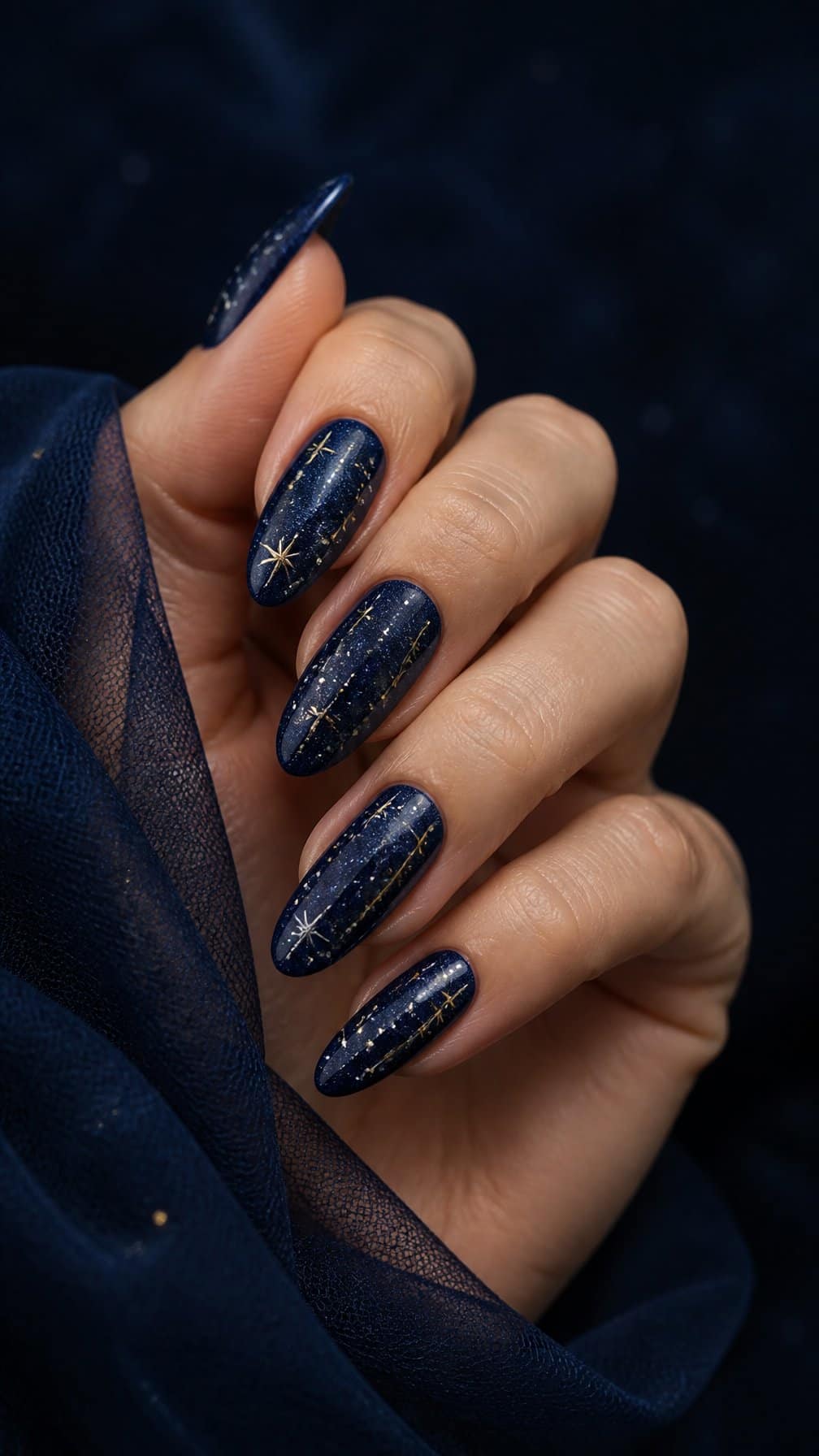
I use deep navy polish as a softer alternative to black, especially when I want a design with evening depth. I add small silver or pale-gold stars across one or two nails, keeping the placement spaced rather than crowded.
A glossy topcoat sharpens the contrast between the dark base and the metallic details. I often leave the remaining nails solid navy or add a single crescent moon for balance. Short nails suit this design well because the simple shapes remain visible without overwhelming the smaller surface.
12) Oxblood Red with Gold French Tips
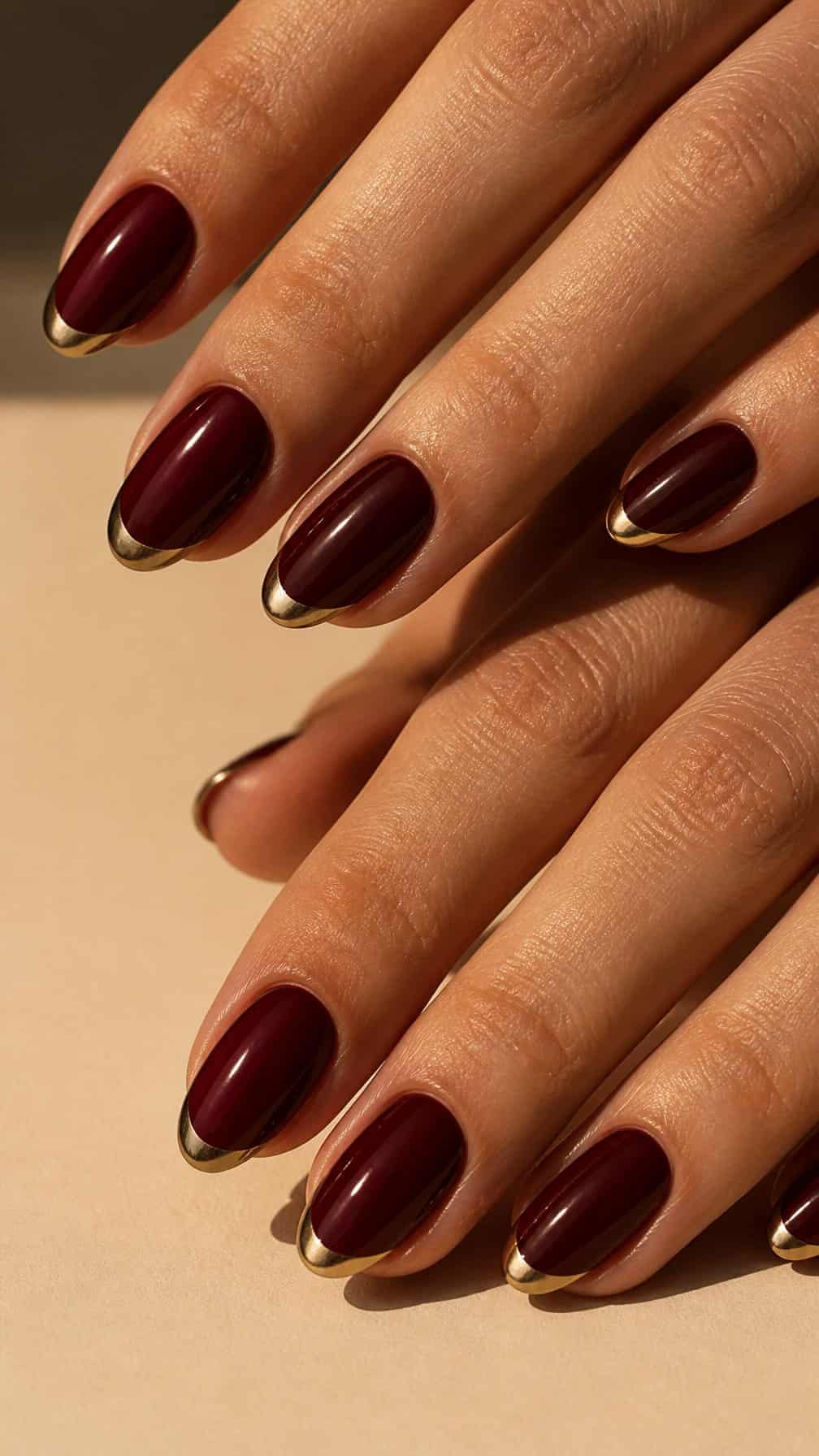
I use oxblood red as the base when I want a dark manicure with more warmth than black. Its deep burgundy tone looks polished on short, medium, or long nails, while thin gold French tips add a precise metallic accent without covering the rich color.
I prefer a sheer or glossy finish for this design because it keeps the surface clean and lets the gold stand out. I shape the tips with a fine brush or metallic striping polish, following each nail’s natural curve for an even result. A neutral outfit lets the red and gold details remain the focus.
13) Smoky Gray with Marble Veining
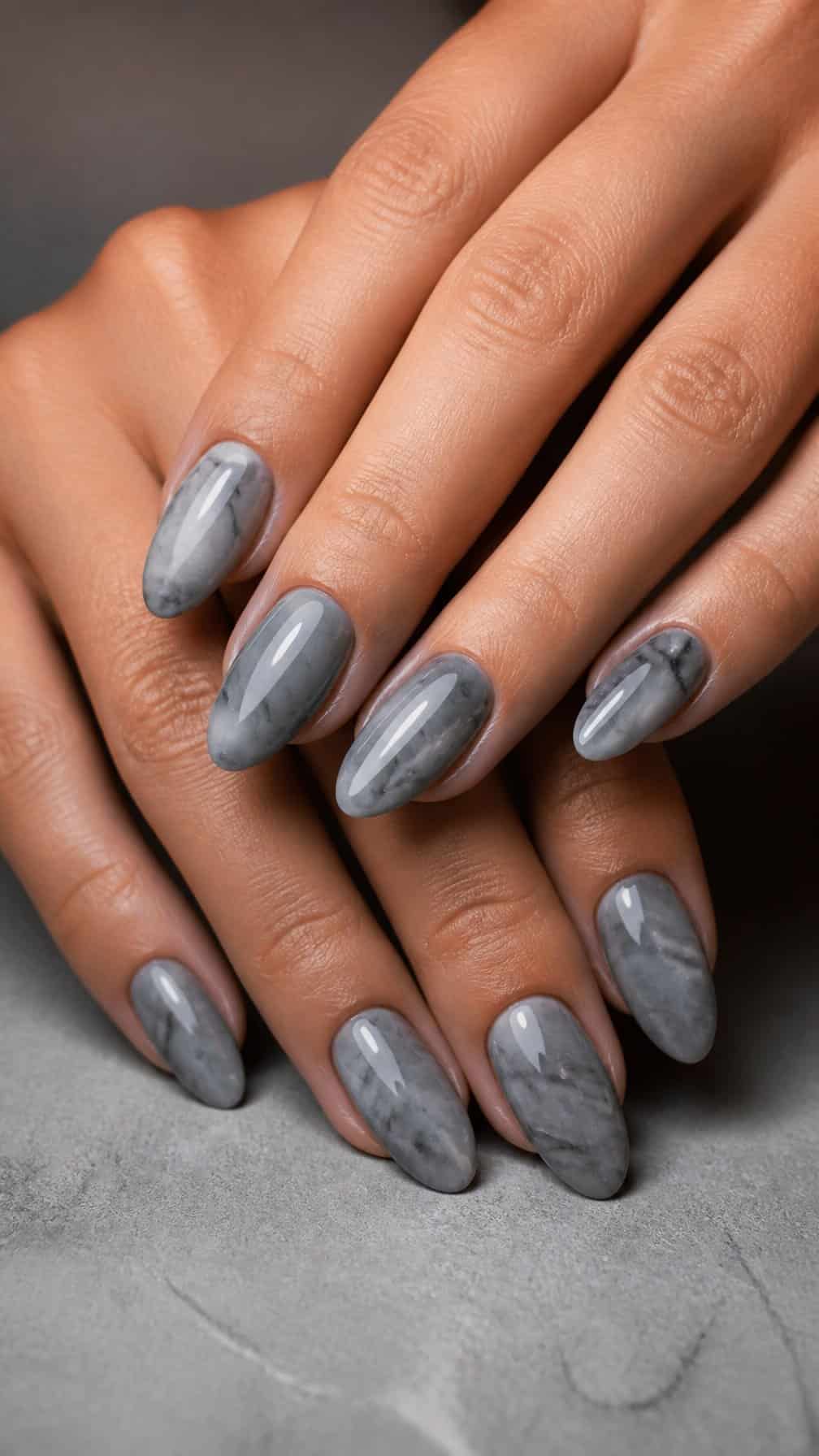
I like smoky gray as a softer alternative to solid black. Its muted tone creates a dark, polished base, while thin white or silver veins add the irregular detail associated with natural marble.
I would keep the veining fine and slightly uneven rather than drawing uniform lines. A glossy topcoat sharpens the contrast, while a matte finish gives the design a subdued, stone-like surface.
I find this style especially effective on medium or long almond nails, where the layered pattern has room to show. For a coordinated look, I would use smoky gray on accent nails and repeat the marble effect across the rest.
14) Deep Emerald with Cat-Eye Shimmer
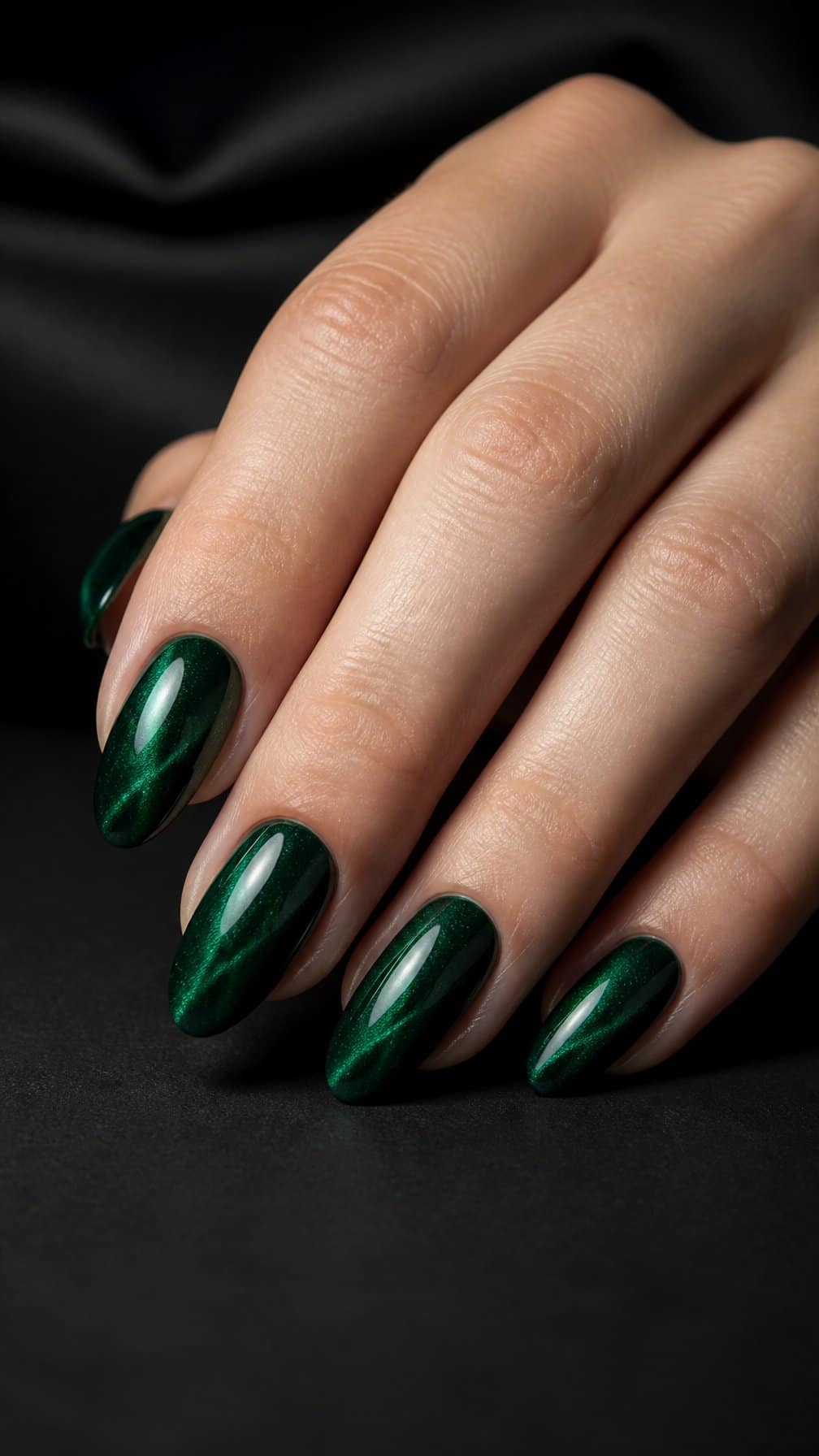
I like this design for its rich green base and narrow, reflective stripe. The cat-eye effect shifts as I move my hands, creating a subtle glow without adding glitter or metallic details.
I would use a deep emerald gel polish with magnetic pigment, then hold the magnet over each nail before curing. A glossy top coat sharpens the color and keeps the finish smooth. Short, rounded nails make the look neat, while almond or coffin shapes give the shimmer more space to show.
15) Aubergine with Metallic Half-Moons

I use a deep aubergine polish as the base for this refined design. Its muted purple undertone adds more dimension than plain black while keeping the look dark and polished.
For the accent, I place thin metallic half-moons along the base of each nail. I prefer silver for a cooler finish, though antique gold creates a warmer contrast against the purple.
I keep the half-moons narrow and evenly shaped so they frame the cuticles without overpowering the color. A glossy top coat sharpens the contrast and helps the metallic detail catch the light.
16) Dark Olive with Cream Swirls
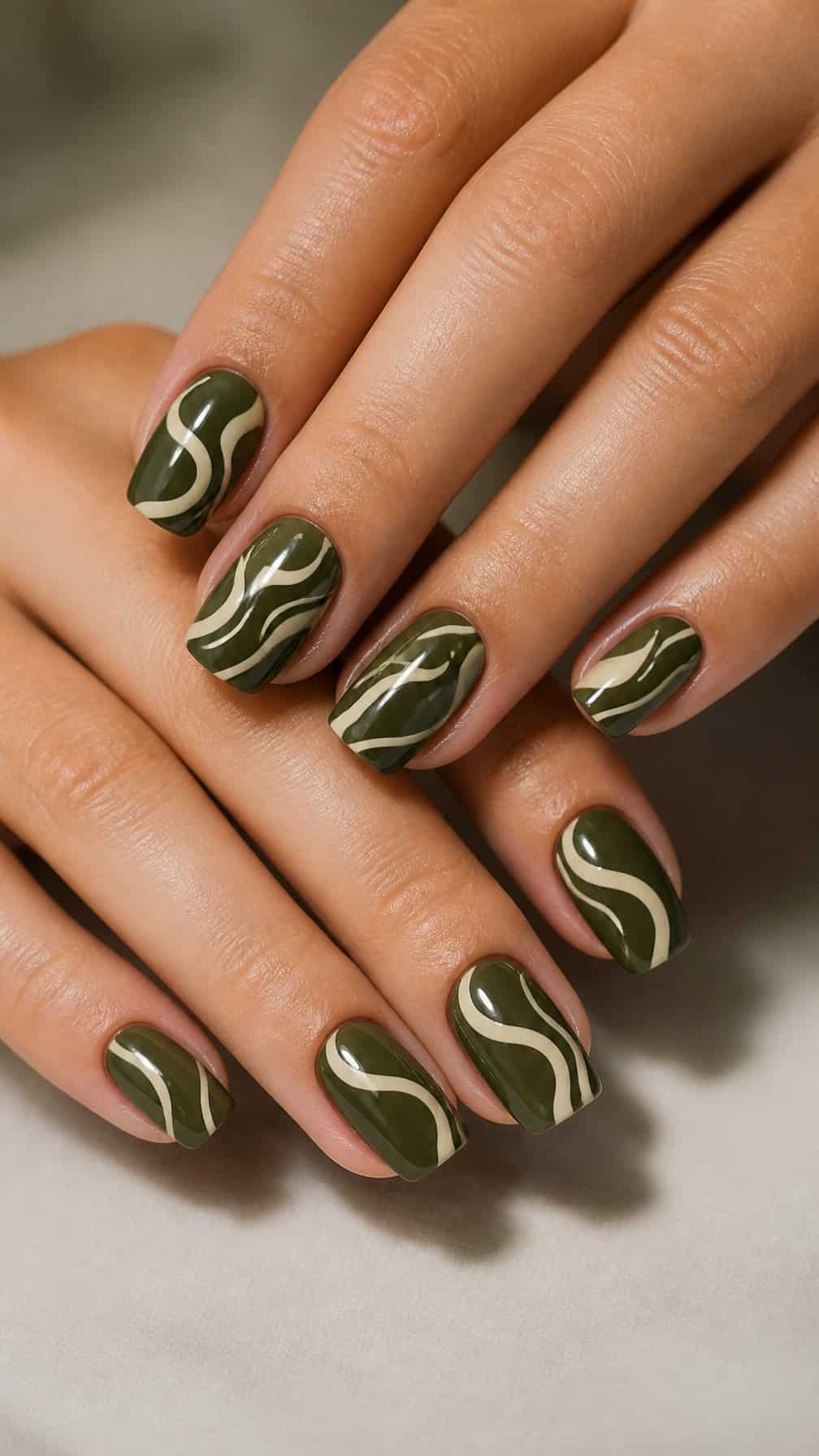
I like dark olive polish for its muted, earthy character, especially when black feels too stark. Cream swirls soften the deep base and create a fluid contrast without making the design look overly bright.
I would use a thin nail-art brush to draw loose, uneven curves across each nail, varying their placement for a natural finish. A glossy topcoat helps the olive and cream shades look smooth, while a matte finish gives the design a more modern, understated effect.
17) Raisin Purple with Chrome Lines
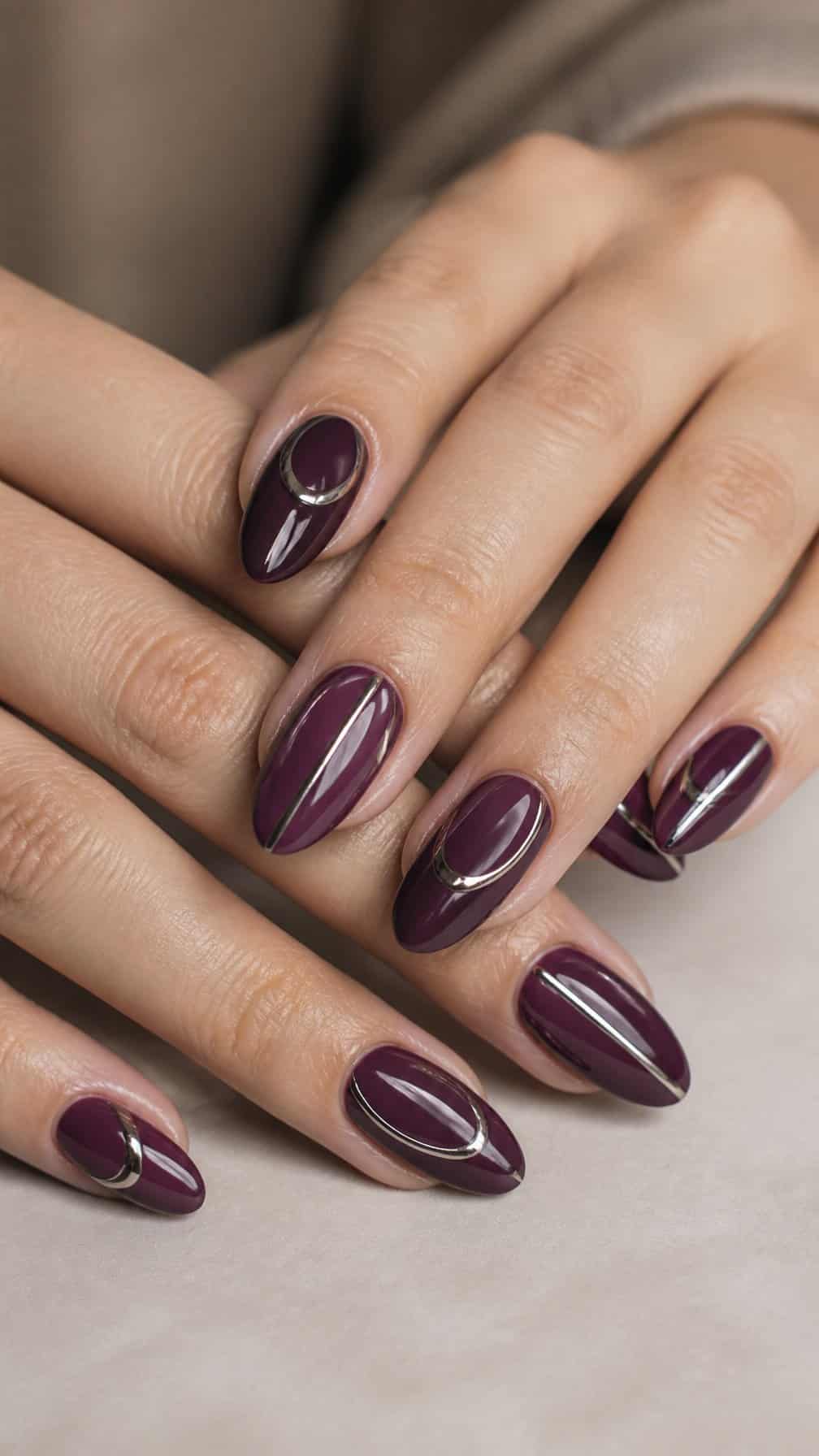
I like raisin purple because it gives dark nails more warmth than black while keeping a polished, moody appearance. Its muted red-brown undertone also adds depth without making the manicure look harsh.
I would use a glossy raisin-purple base and add thin chrome lines across two or three accent nails. I prefer curved or diagonal lines because they create movement, while a restrained design keeps the metallic finish from overpowering the color.
A fine liner brush or chrome striping tape can create clean edges. I would finish with a high-shine topcoat to smooth the surface and protect the reflective details.
18) Cobalt Blue with Negative Space
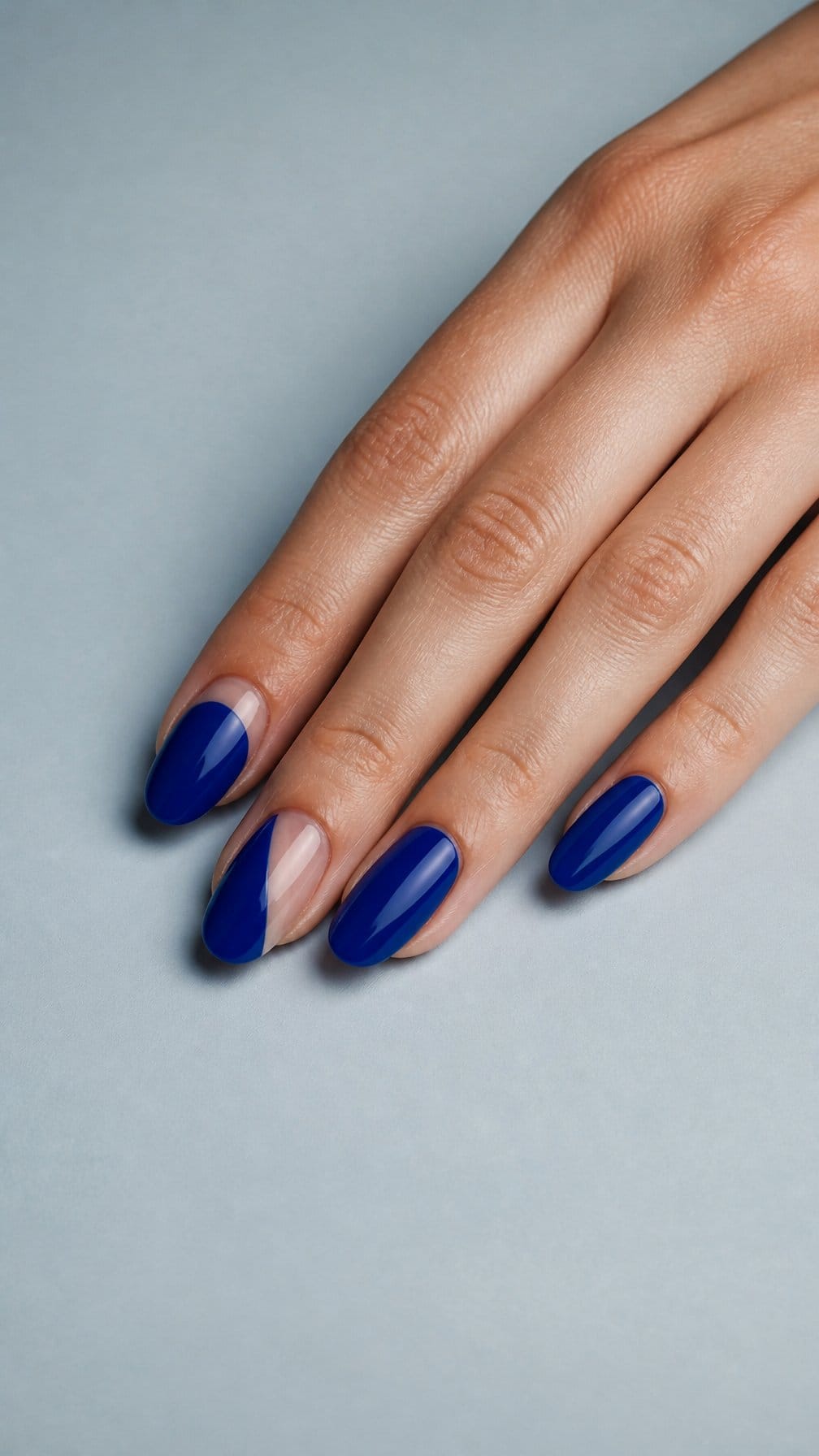
I use cobalt blue to create a strong accent without covering every part of the nail. Leaving narrow sections bare, especially near the cuticle or along one side, gives the manicure a clean contrast and keeps the saturated color from feeling too heavy.
I prefer a glossy cobalt finish with sharply defined negative-space shapes. A thin nude base can make the blue look more precise, while silver details or a single blue accent nail add interest without competing with the open areas.
19) Merlot Nails with Rhinestone Accents
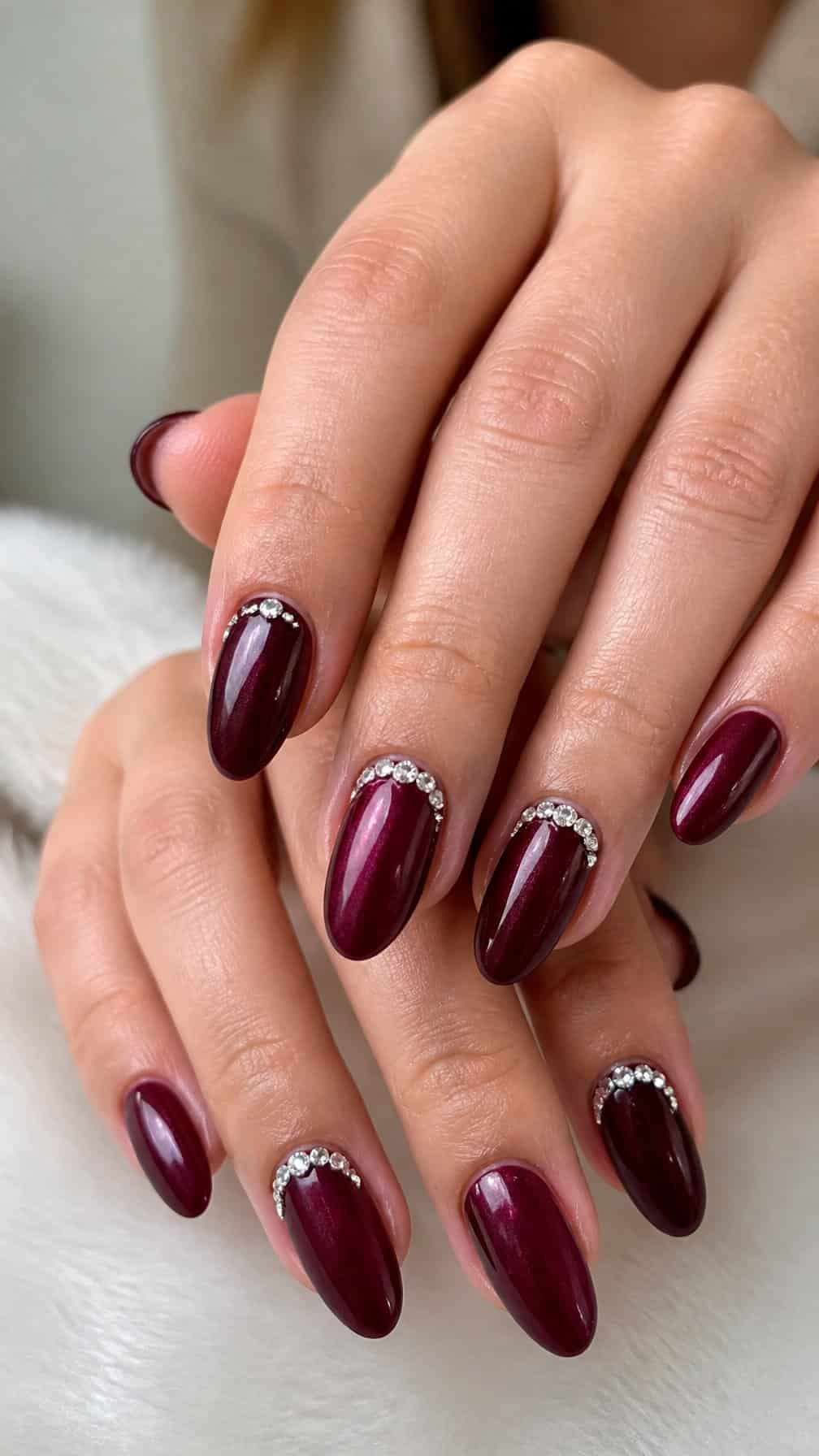
I like merlot nails for their deep red tone, which looks polished without the stark contrast of pure black. I would choose a glossy finish to bring out the wine-inspired color and keep the design sleek.
For the accents, I would place small clear rhinestones near the cuticle or along one side of a feature nail. This arrangement adds light without covering the rich base shade. I prefer using one or two decorated nails per hand to maintain a balanced look.
Short, rounded nails keep the style practical, while almond or coffin shapes give the color a more refined appearance. I would pair this manicure with simple jewelry so the rhinestones remain the main detail.
20) Graphite Gray with Geometric Art
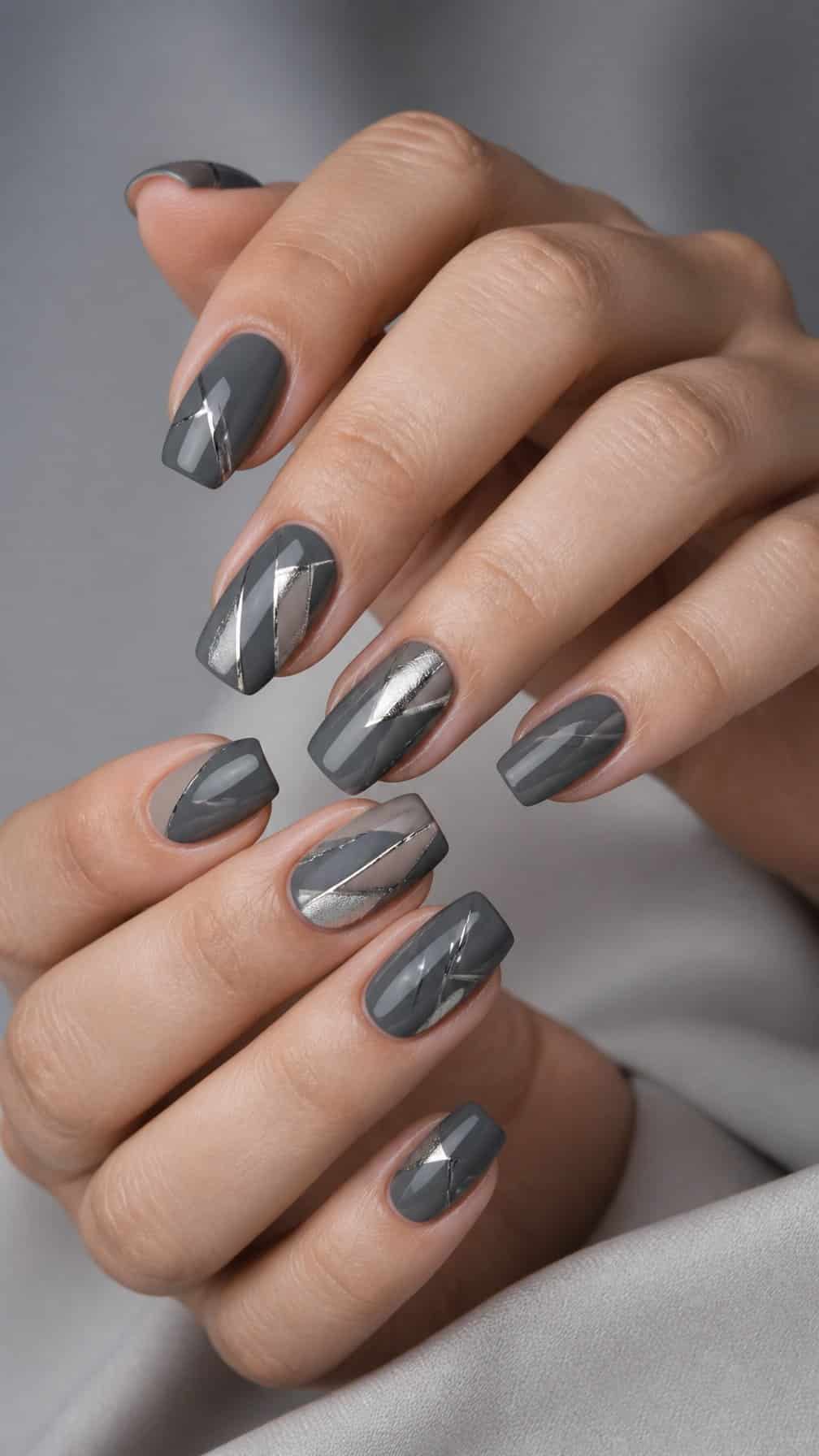
I like graphite gray when I want a dark manicure with more softness than pure black. Its muted finish gives geometric details room to stand out, especially with thin lines, angular blocks, or small negative-space triangles.
I would pair the base with silver, pale gray, or a clean white for clear contrast. A glossy topcoat sharpens the design, while a matte finish creates a quieter look and makes metallic accents appear more defined.
I find this style works well on short square or medium almond nails because the structured shapes stay balanced. I would repeat one motif across each nail rather than crowding the surface, keeping the pattern neat and intentional.
21) Dark Terracotta with Abstract Waves
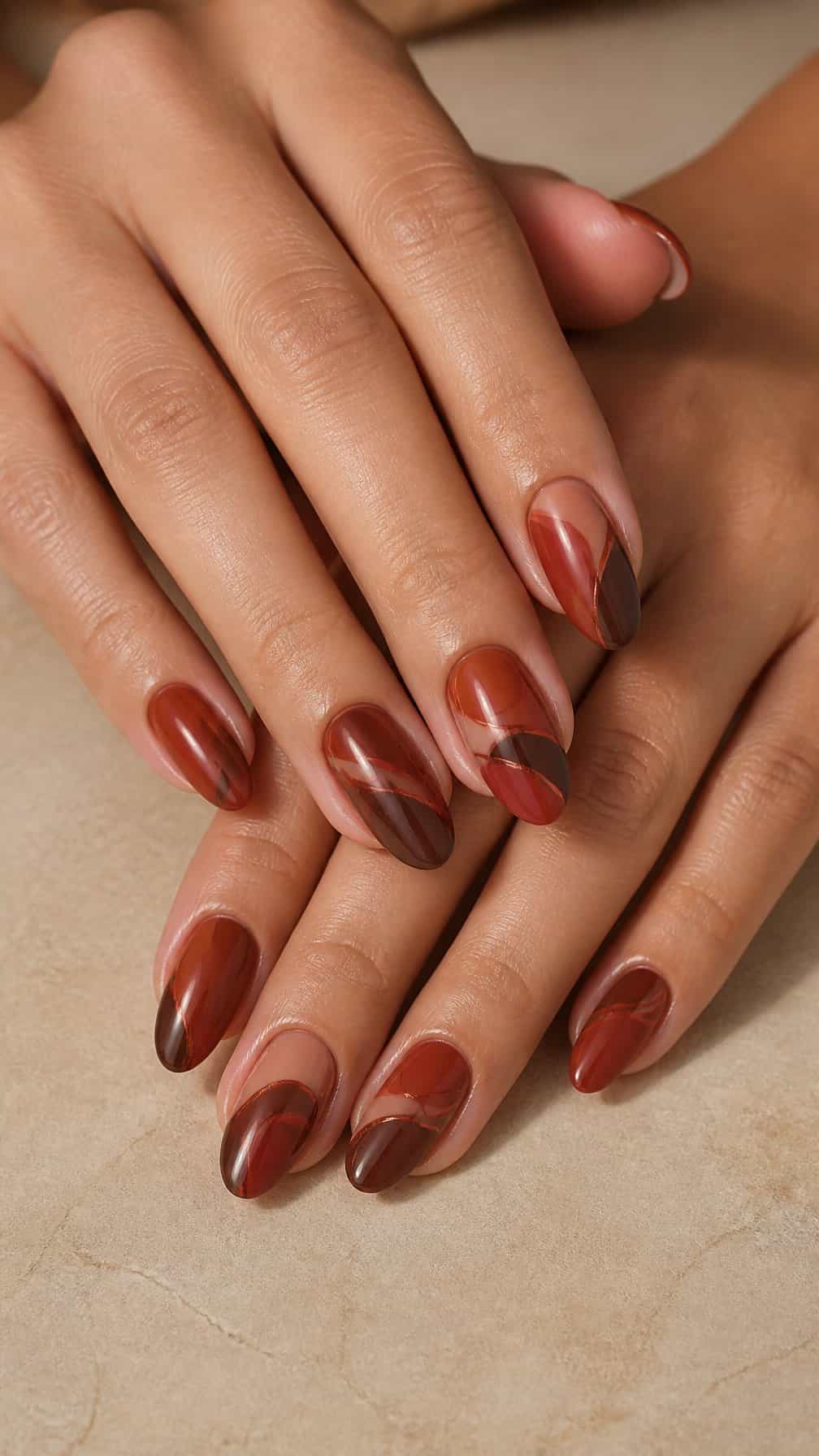
I like dark terracotta when I want warmth without using a bright shade. Its earthy red-brown base gives the manicure depth, while thin abstract waves in cream, muted peach, or chocolate brown add movement without making the design feel busy.
I would keep the wave patterns slightly different on each nail for a relaxed, hand-painted effect. A glossy finish emphasizes the curved lines, while a matte topcoat creates a softer, more modern look. Short square or almond nails both suit this color combination.
22) Indigo Nails with Silver Glitter
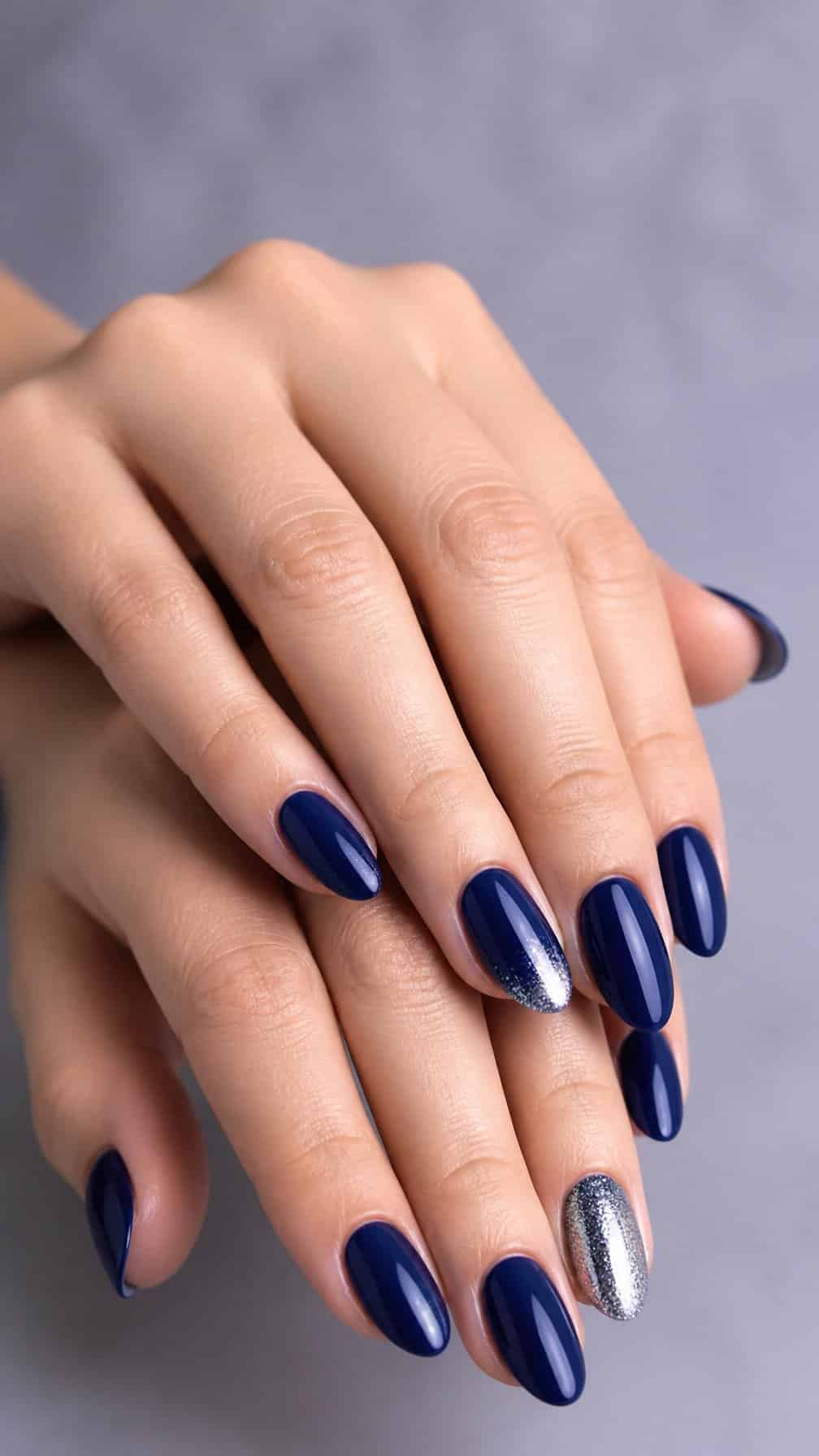
I like indigo polish when I want a dark manicure with more depth than plain black. Its blue-violet tone shifts subtly under different lighting, while the glossy finish keeps the look polished and defined.
I would apply silver glitter to one or two accent nails, or brush it across the tips for a soft gradient. The contrast highlights the indigo without covering its rich color, creating a balanced design that works for both evening outfits and everyday wear.
For sharper detail, I would add thin silver lines over the base or place a few glitter flakes near the cuticle. A blue-toned indigo pairs well with cool silver, while a warmer violet-indigo shade can support slightly softer metallic accents.
23) Moss Green with Matte French Tips
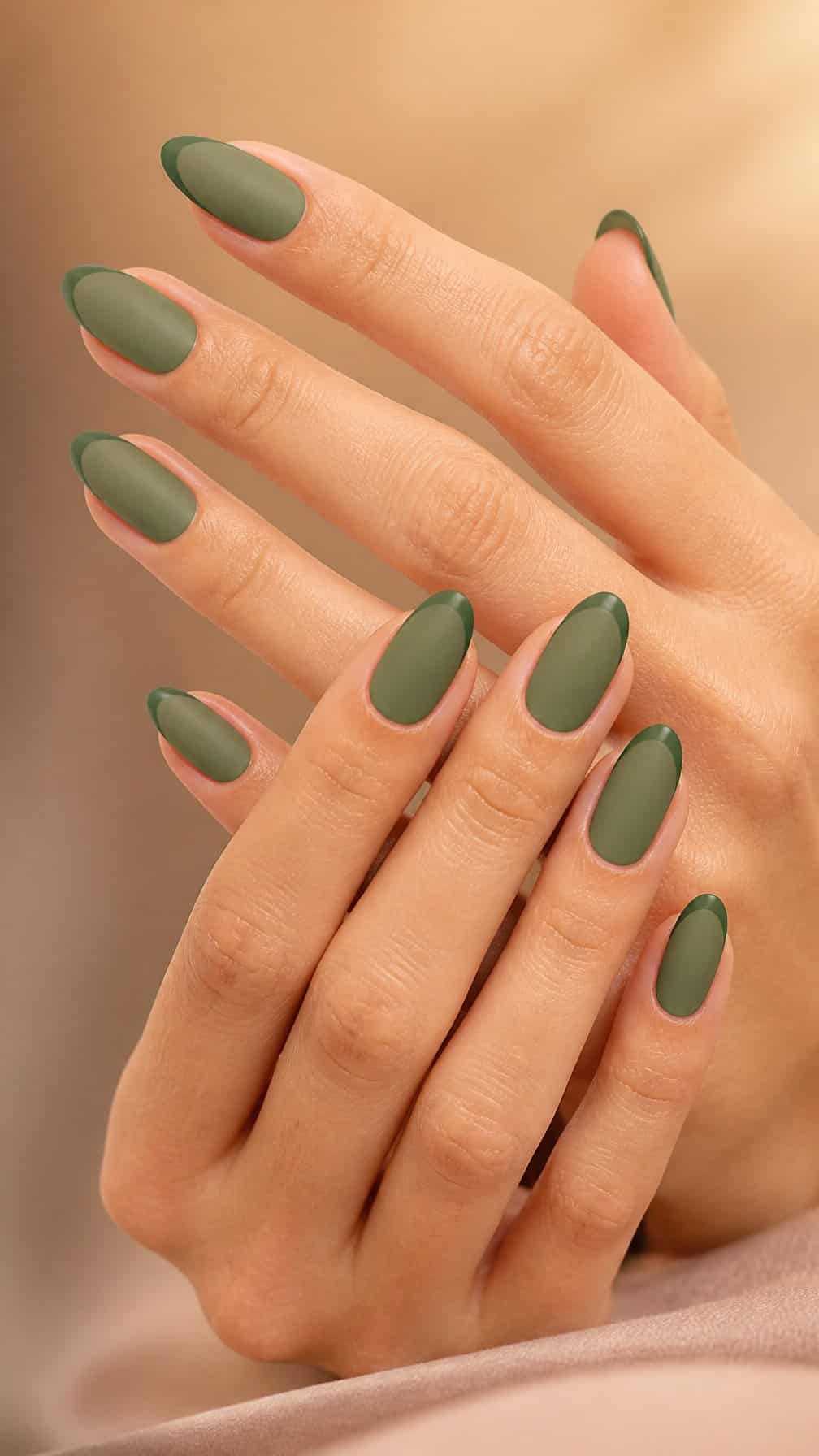
I like moss green for its muted, earthy depth. I would apply it across each nail, then add matte French tips in the same shade for a tonal finish that feels polished without looking glossy.
A short, rounded or squoval shape keeps the design practical, while longer almond nails give the French tips more space to stand out. I would use a thin, even tip line and seal the look with a matte topcoat.
24) Black Cherry with Velvet Shimmer
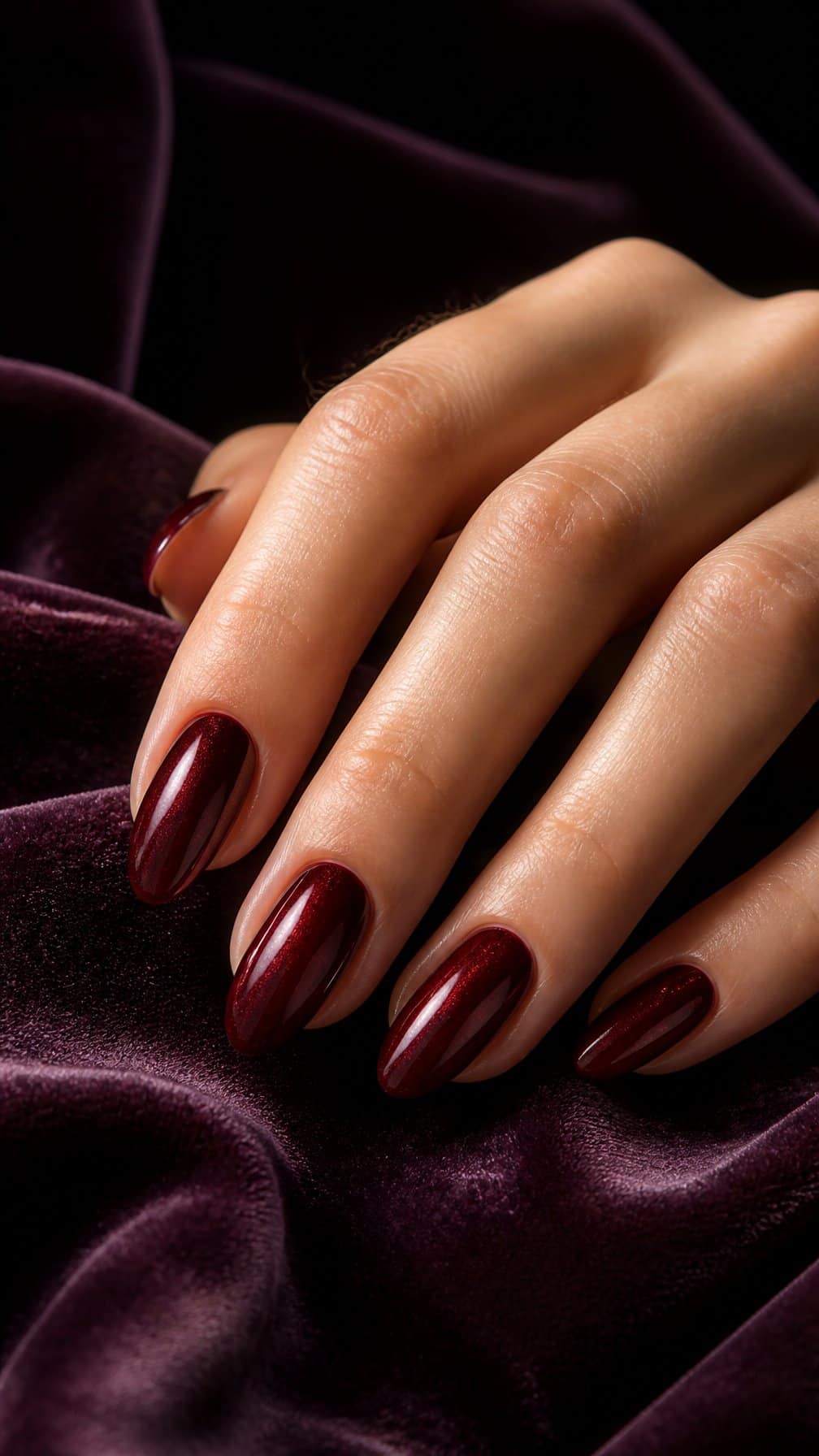
I use a deep black-cherry polish to create a dark red base with subtle warmth. The shade looks nearly black in low light, but its burgundy undertone becomes more visible as the nails catch the light.
A velvet shimmer topcoat adds a soft, reflective finish without covering the rich color. I prefer short almond or squoval nails for this design, keeping the shape neat so the shifting sheen remains the main detail.
For a sharper result, I apply thin layers and seal the edges with a glossy topcoat. The finish works well for evening outfits but remains polished enough for everyday wear.
25) Deep Sapphire with Icy Blue Accents
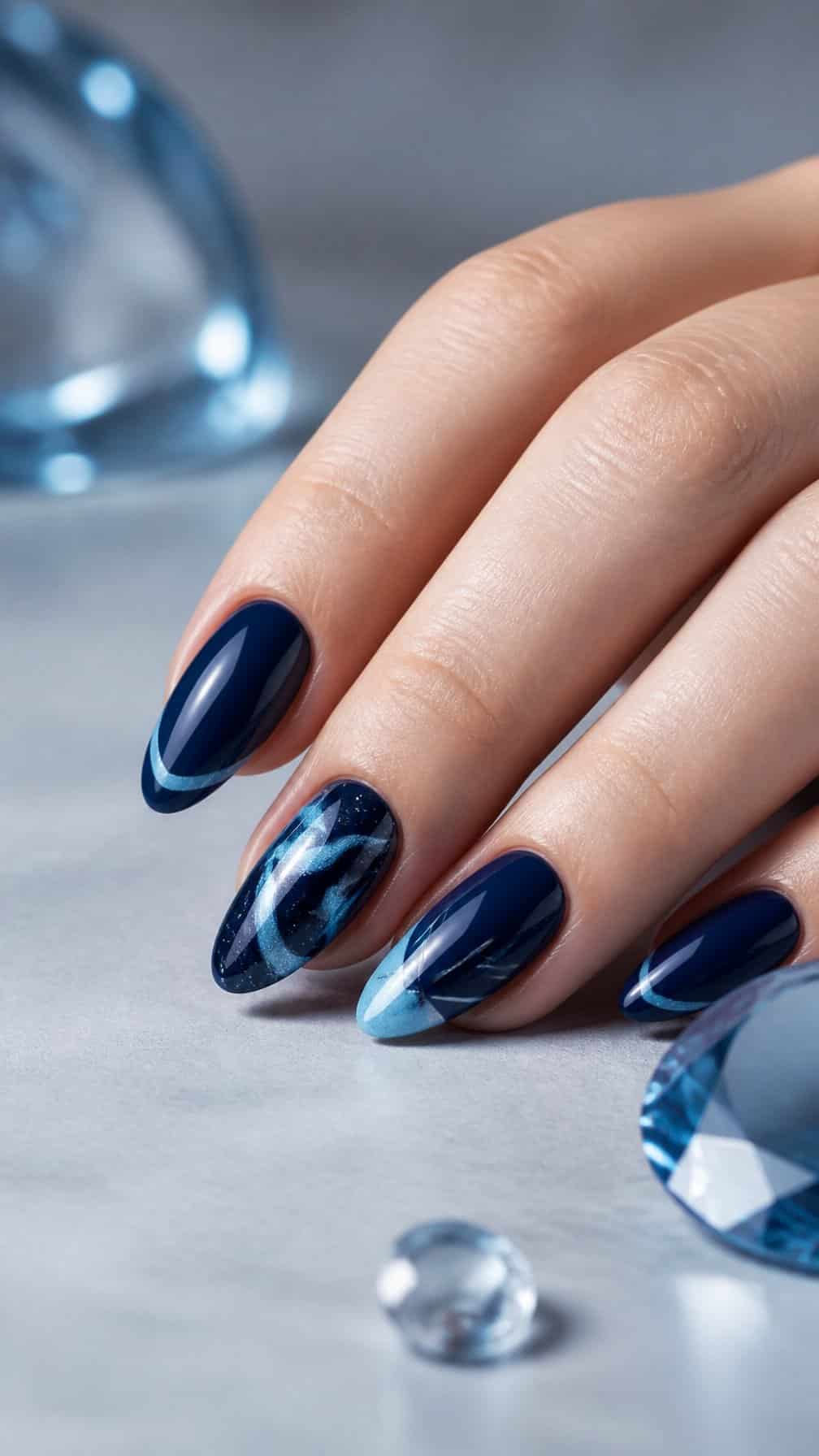
I use deep sapphire polish as the main shade, then add icy blue details to create contrast without relying on plain black. The cool combination suits short or long nails, especially with a glossy finish that sharpens the jewel-toned effect.
I like painting most nails sapphire and reserving one or two for icy blue French tips, thin diagonal lines, or small starbursts. A silver detail near the cuticle can connect both shades while keeping the design precise and balanced.
26) Walnut Brown with Gold Leaf
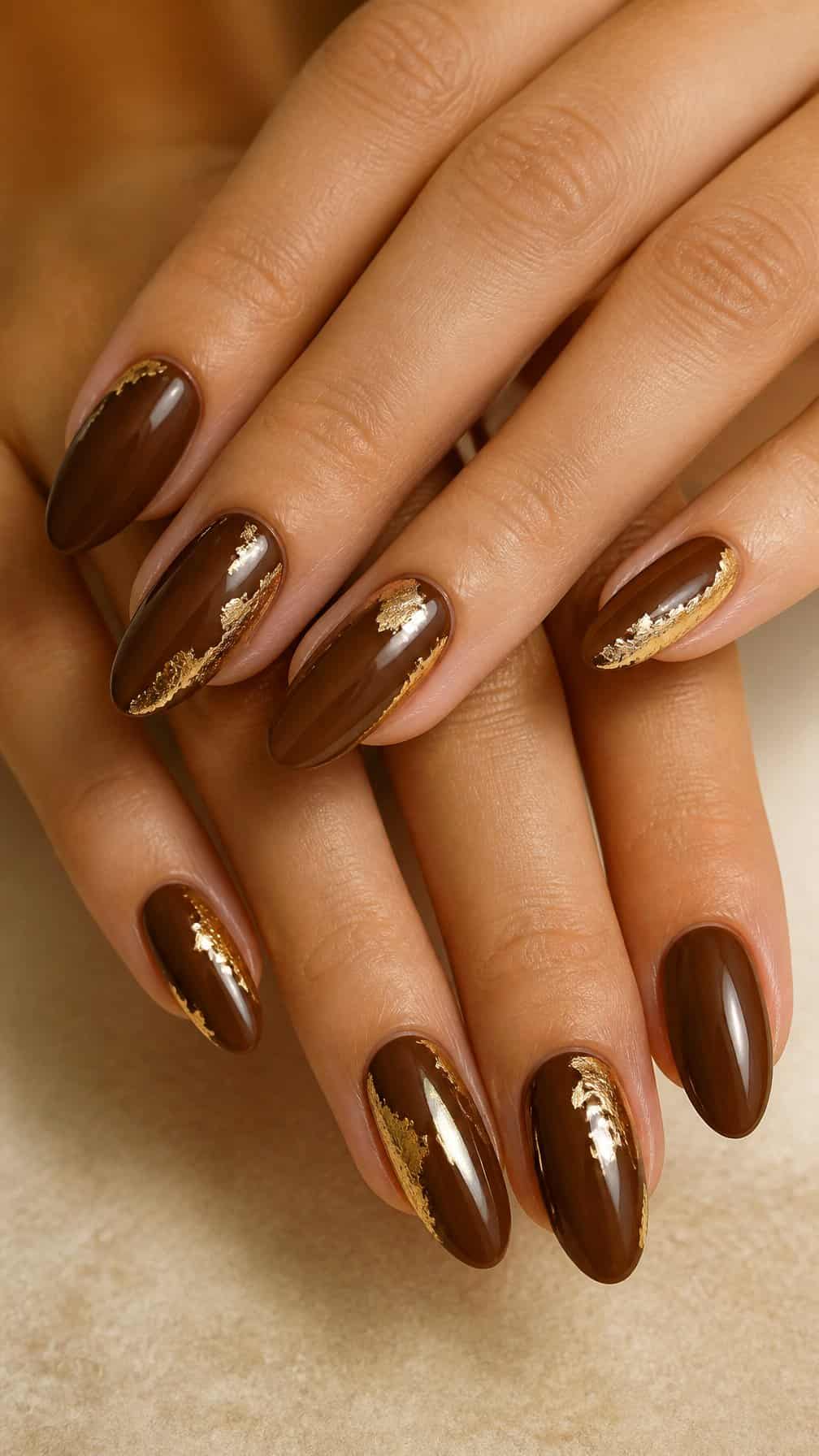
I like walnut brown when I want a dark manicure that feels softer than black. Its warm, medium-deep tone gives the nails a polished finish, while irregular gold-leaf accents add contrast without covering the base color.
I would apply two thin coats of walnut polish, then place small pieces of gold leaf near the cuticle, along one side, or across the tip. A glossy topcoat smooths the texture and helps the metallic details stay in place.