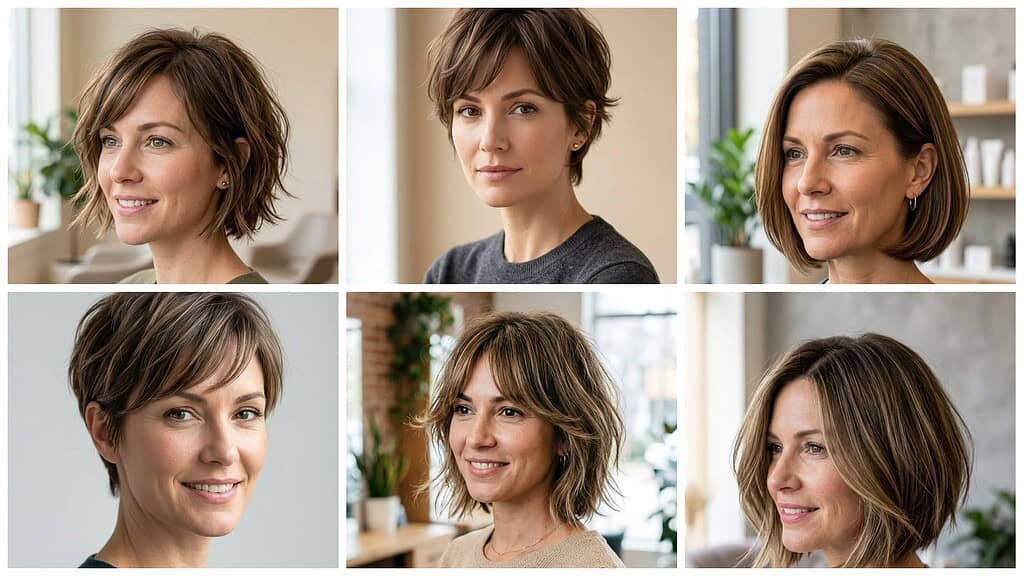
Short hair can look polished well beyond the first few weeks when you choose a shape that transitions naturally as it gains length. I’ll explore versatile cuts with balanced proportions, thoughtful layers, and texture that keep your style looking intentional between appointments.
![]()
Save for later
Want to come back to this story? Save it with your email so it is easy to find again.
You can make the grow-out phase easier by choosing a cut that adapts to added length and following simple maintenance habits. From sleek bobs and softly graduated shapes to textured pixies and layered cuts, I’ll cover options for different textures and styling preferences, along with practical ways to support smoother transitions.
Table of Contents
- 1 1) Textured French Bob
- 2 2) Softly Layered Pixie Cut
- 3 3) Classic Chin-Length Bob
- 4 4) Long Pixie with Side-Swept Bangs
- 5 5) Blunt Lob with Subtle Layers
- 6 6) Shaggy Bob with Curtain Bangs
- 7 7) Tapered Crop with a Textured Top
- 8 8) Jaw-Length A-Line Bob
- 9 9) Wavy Collarbone Bob
- 10 10) Bixie Cut with Feathered Layers
- 11 11) Modern Mullet with Soft Layers
- 12 12) Curly Pixie with Longer Top Layers
- 13 13) Side-Parted Graduated Bob
- 14 14) Layered Garçonne Cut
- 15 15) Choppy Chin-Length Shag
- 16 16) Blunt Bob with Face-Framing Layers
- 17 17) Short Wolf Cut with Subtle Graduation
- 18 18) Textured Crop with a Longer Fringe
- 19 How To Maintain Shape During the Grow-Out Phase
- 20 Scheduling Strategic Trims
- 21 Using Texture and Parting To Blend Lengths
- 22 Choosing Products for Flexible Hold
- 23 Healthy Hair Habits for Smoother Length Transitions
- 24 Preventing Breakage and Split Ends
- 25 Supporting Scalp and Hair Health
1) Textured French Bob
![]()
I like this chin-length bob for its soft, irregular shape. Light texture through the ends keeps the cut from looking too precise, while a subtle bend adds movement without requiring a polished finish. I find it works especially well with naturally straight or wavy hair.
As it grows, the length settles into a relaxed shape rather than creating an awkward gap. I ask for gentle internal layers and lightly tapered ends, avoiding heavy thinning that could make fine hair look sparse. A small amount of styling cream can define the texture while preserving natural volume.
2) Softly Layered Pixie Cut
![]()
I like a softly layered pixie because its uneven lengths maintain shape as they grow. The layers reduce the blunt, bulky stage that can make short hair look untidy, while a slightly longer top keeps styling flexible.
I would ask for tapered sides, a textured crown, and enough length around the fringe to move naturally. As the cut grows, I can sweep the front to one side, add definition with a light styling cream, or let the layers soften into a short crop.
Regular trims every six to eight weeks keep the outline controlled, but I can extend appointments when I prefer a more relaxed shape. This cut works best when my hair’s natural texture supports the layers rather than fighting them.
3) Classic Chin-Length Bob
![]()
I like a chin-length bob because its clean shape remains balanced as it grows. The blunt or lightly textured ends frame my jaw without requiring constant reshaping, while a center or side part lets me adjust the look between appointments.
When I wear subtle layers or soft face-framing pieces, the cut gains movement without losing its recognizable outline. I find that this approach helps new growth blend into the existing length instead of creating an uneven transition.
Regular trims keep the perimeter polished, but the style does not depend on precise daily styling. I can air-dry it for a relaxed finish or use a round brush to create more bend through the ends.
4) Long Pixie with Side-Swept Bangs
![]()
I like this cut for its balance of structure and softness. Longer layers on top create movement, while side-swept bangs frame the face without requiring a sharp, fixed shape.
As it grows, the top layers blend into a short bob-like silhouette instead of creating an abrupt transition. I would ask for tapered sides, a slightly longer nape, and bangs cut with enough length to redirect as they grow.
A lightweight styling cream can control flyaways while preserving texture. Regular trims keep the neckline neat, but the style remains workable between appointments because the uneven growth adds softness rather than disrupting the shape.
5) Blunt Lob with Subtle Layers
![]()
I like this collarbone-grazing cut because its clean perimeter keeps a polished shape as the length increases. Subtle layers through the ends reduce heaviness without creating an obvious choppy effect, so the haircut remains balanced between appointments.
As it grows, the lob gradually shifts into a longer, softer style rather than losing its structure. I would ask for minimal internal layering and a blunt finish, especially if my hair is fine or straight. A slight bend with a styling iron can highlight the layers, while air-drying keeps the shape relaxed.
6) Shaggy Bob with Curtain Bangs
![]()
I like this layered bob for its soft structure and easy grow-out. Choppy ends create movement, while curtain bangs blend into the sides instead of forming a blunt line as they lengthen.
I would ask for light, uneven layers and a slightly longer shape around the face. This keeps the haircut balanced during the transition and lets the bangs part naturally with minimal styling.
I usually recommend a texturizing spray or a small amount of styling cream to define the layers. As the cut grows, I can reshape the front pieces without removing much length from the bob.
7) Tapered Crop with a Textured Top
![]()
I keep the sides and back tapered while leaving enough length on top for choppy, piecey texture. This contrast gives the haircut a clean shape without making the style look overly precise.
As the cut grows, the tapered areas soften gradually and the textured top blends into a relaxed finish. I use a small amount of matte styling cream to separate the layers, while natural texture helps maintain movement between trims.
This style suits straight, wavy, and lightly curly hair. I usually refresh the outline every four to six weeks, but the softer taper allows extra growth without creating an uneven appearance.
8) Jaw-Length A-Line Bob
![]()
I like this cut for its clean shape and easy grow-out. The shorter back creates gentle lift, while the front angles toward the jaw and keeps its structure as the hair gains length.
I would ask for subtle graduation rather than a sharply stacked finish. That approach lets the layers soften naturally, so the bob can transition into a longer, more even shape without an awkward shelf at the neckline.
I find this style especially practical for straight to lightly wavy hair. A side part, tucked ends, or a small amount of smoothing cream can refresh the shape between trims.
9) Wavy Collarbone Bob
![]()
I like this length because it gives waves enough room to form without creating a bulky shape. The collarbone-grazing ends keep the cut balanced, while soft layers remove weight and help the hair move naturally.
As it grows, the style shifts into a longer wavy lob without losing its shape immediately. I would ask for lightly textured ends rather than heavy thinning, especially if my hair tends to frizz or lose definition. A side part or loose middle part also lets the haircut adapt between trims.
10) Bixie Cut with Feathered Layers
![]()
I like this hybrid cut for its balance of pixie structure and bob-length softness. Feathered layers around the crown and sides create movement without making the shape look overly styled. The lighter ends also help the haircut transition smoothly as it grows.
I would ask for soft, point-cut layers rather than sharply defined steps. This keeps the silhouette flexible while preserving enough length around the ears and neckline for a more relaxed shape between appointments. A lightweight styling cream can enhance the feathering without weighing down fine hair.
11) Modern Mullet with Soft Layers
![]()
I like a modern mullet with soft layers because its shape changes gradually as it grows. Shorter pieces around the face keep the cut defined, while the longer back develops texture instead of looking uneven.
I would ask for blended transitions and light, point-cut ends rather than sharp contrasts. This approach lets the crown retain lift and allows the sides to grow without creating a bulky outline.
I maintain the style with a small amount of lightweight styling cream or mousse. As the length increases, I can shift the part, tuck the sides behind my ears, or trim only the perimeter to extend the haircut between appointments.
12) Curly Pixie with Longer Top Layers
![]()
I like this cut for curls that need shape without frequent reshaping. Shorter sides and a tapered nape keep the outline neat, while longer layers on top preserve volume and let the curls move naturally as they grow.
I would ask for graduated layers rather than a blunt top, especially if my curls vary in density. As the cut grows, the extra length blends into the sides instead of creating a boxy silhouette. A lightweight curl cream can define the texture without making the hair feel heavy.
13) Side-Parted Graduated Bob
![]()
I like this bob for its clean shape and forgiving grow-out. Shorter layers at the back create gentle lift, while the longer front pieces maintain structure as they lengthen.
I usually recommend a defined side part to add direction and make the changing proportions look intentional. The angle also gives the style a polished profile without requiring sharp daily styling.
As the cut grows, I can soften the outline with a round brush or let the ends fall naturally. Light trimming around the neckline every few weeks keeps the graduation balanced without removing much length.
14) Layered Garçonne Cut
![]()
I like this cropped style for its tapered sides, softly layered crown, and longer fringe. The layers reduce bulk while keeping enough length for the cut to shift naturally as it grows.
I find that the shape remains balanced when the sides start extending, especially if the stylist leaves gentle texture around the ears and nape. I can wear the fringe forward for a neat finish or sweep it to one side as it lengthens.
A light styling cream helps define the layers without making the hair stiff. I usually schedule a trim when the outline loses its shape, but the gradual growth makes this cut less demanding between appointments.
15) Choppy Chin-Length Shag
![]()
I like this chin-length shag for its uneven layers, textured ends, and easy movement around the face. The shape creates soft volume without requiring a precise, freshly styled finish, while lightweight bangs or face-framing pieces can add definition.
As it grows, the layers blend into a relaxed bob-shag shape rather than forming a harsh outline. I would use a small amount of texturizing cream to separate the ends, then let the hair air-dry or finish it with a loose wave. Regular trims can maintain the chin-length shape, but the cut remains wearable between appointments.
16) Blunt Bob with Face-Framing Layers
![]()
I like this bob for its clean perimeter and softer movement around the face. The blunt ends create a defined shape, while lightly layered front pieces prevent the cut from looking too rigid as it grows.
I recommend keeping the length near the jaw or collarbone, depending on your hair texture and preferred styling routine. As the cut lengthens, the face-framing layers blend naturally into the rest of the hair, reducing the need for frequent reshaping.
I find this style especially practical for straight or slightly wavy hair. A smooth finish highlights the sharp outline, while natural texture adds flexibility between appointments.
17) Short Wolf Cut with Subtle Graduation
![]()
I like this shorter wolf cut for its controlled layers and easy grow-out. Subtle graduation around the crown creates lift without making the shape look choppy, while lightly textured ends keep the cut flexible as it gains length.
I would ask for soft layers that follow the head rather than sharply disconnected sections. This approach lets the cut settle naturally between appointments, with the sides gradually blending into the nape instead of forming an uneven shelf.
I can style it with a small amount of mousse or texture spray, then let it air-dry or use a diffuser. As the haircut grows, I can refresh the fringe and perimeter while leaving the internal layers mostly intact.
18) Textured Crop with a Longer Fringe
![]()
I keep the sides and back short while leaving extra length through the fringe and top. That contrast gives the cut shape as it grows, so I can move the front forward, sweep it aside, or let it fall naturally.
I use a light styling cream to separate the texture without making the hair stiff. As the sides gain length, the crop becomes softer rather than losing its structure, while the longer fringe continues to frame my forehead.
I ask for point-cut ends and a gradual taper instead of a sharp fade. This approach creates a less noticeable grow-out phase and lets me extend the time between haircuts.
How To Maintain Shape During the Grow-Out Phase
![]()
I preserve the haircut’s original structure by removing weight selectively rather than cutting away noticeable length. I also use parting, texture, and lightweight products to keep uneven stages controlled without making the hair look overly styled.
Scheduling Strategic Trims
I usually schedule a maintenance trim every six to eight weeks, adjusting the timing for faster-growing hair or a sharply defined cut. I ask my stylist to clean the neckline, around the ears, and any bulky areas while leaving the main length untouched.
For a pixie, I may trim the sides and nape while allowing the crown and fringe to grow. For a bob, I focus on balancing the perimeter and removing split ends instead of shortening the overall shape. Bringing a current photo helps me explain which areas I want to preserve.
I avoid trimming too frequently when the goal involves reaching a specific length. Small, targeted adjustments keep the haircut intentional while allowing steady growth.
Using Texture and Parting To Blend Lengths
I use texture to soften obvious gaps between shorter and longer sections. My stylist can add subtle point-cutting or internal layers, but I avoid excessive thinning because it may create frizz, wispy ends, or uneven density during the grow-out.
Changing my part can redistribute volume and disguise areas that have grown at different rates. A side part can add height to a flat crown, while a center part may make a growing bob appear more balanced. I test the part on damp hair before styling it into place.
I also direct the fringe diagonally or tuck longer side sections behind my ears. These small changes help connect different lengths without requiring a major cut.
Choosing Products for Flexible Hold
I choose products that control shape without making the hair stiff. A lightweight styling cream works well for smoothing short layers, while a small amount of mousse can add lift to fine hair without weighing down the roots.
For textured or wavy hair, I use a leave-in conditioner followed by a light curl cream. I apply both to damp hair, concentrating on the midlengths and ends rather than the roots. This keeps growing sections defined and reduces puffiness.
I avoid heavy waxes and strong gels when my haircut looks uneven, since they can separate layers and emphasize differences in length. A flexible hairspray or soft pomade provides enough hold for the neckline, fringe, and side sections while allowing natural movement.
Healthy Hair Habits for Smoother Length Transitions
![]()
I protect the ends from friction, heat, and chemical stress so a short cut can gain length without uneven breakage. I also keep my scalp clean and comfortable, since consistent scalp care supports stronger-looking new growth.
Preventing Breakage and Split Ends
I use a wide-tooth comb on damp hair and detangle from the ends upward, which limits pulling around fragile areas. I blot with a microfiber towel or soft T-shirt instead of twisting hair tightly, then apply a lightweight leave-in conditioner to reduce friction.
I keep hot tools below 185°C (365°F) when possible and apply heat protectant before blow-drying or styling. I avoid repeatedly passing a flat iron over the same section, especially at the tips. A satin pillowcase can also reduce overnight rubbing that contributes to frizz and snapped ends.
I schedule a small trim when the ends feel rough, catch on clothing, or show visible splitting. Trimming cannot repair a split, but removing damaged tips helps the haircut grow with a cleaner outline.
Supporting Scalp and Hair Health
I wash according to my scalp’s oil and product buildup rather than following a fixed schedule. I massage shampoo into the scalp with my fingertips, avoiding scratches, and rinse thoroughly so residue does not weigh down short layers or irritate the skin.
I condition the mid-lengths and ends after each wash, keeping heavier formulas away from the roots if my hair becomes flat or oily. Once a week, I use a clarifying shampoo if styling products accumulate, then follow with conditioner to prevent a dry, rough feel.
I support normal hair growth by eating enough protein and including iron- and zinc-containing foods in my diet. If I notice sudden shedding, scalp pain, persistent itching, or widening parts, I seek medical advice instead of relying on supplements without testing.