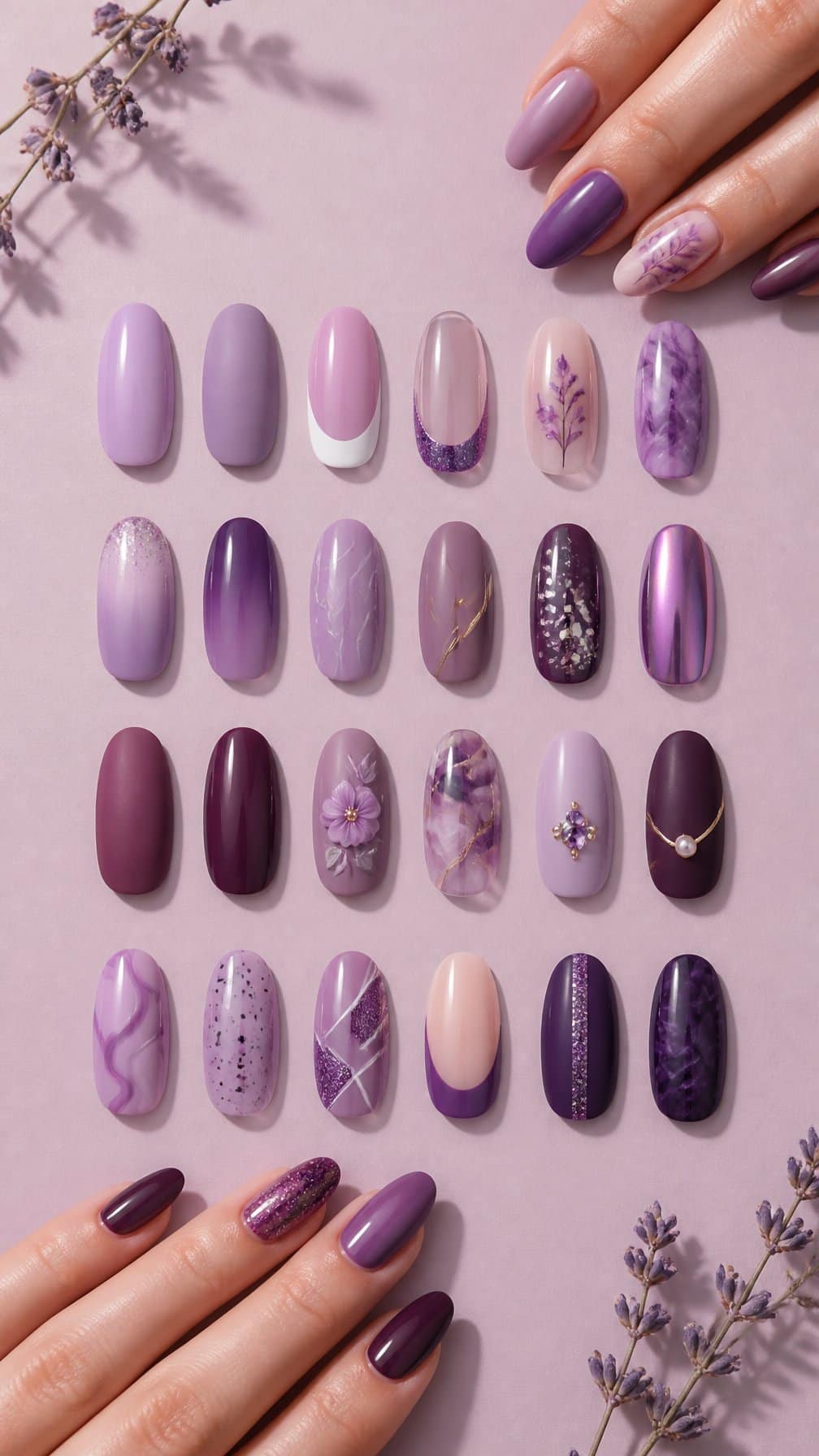
Purple nails give you a wide range of options, from soft, airy tones to rich, dramatic shades. This collection explores how different finishes, patterns, and color combinations can shape your manicure while keeping purple at the center.
Save for later
Want to come back to this story? Save it with your email so it is easy to find again.
You can find a purple nail design that suits your style, occasion, and preferred level of detail. I’ll guide you through ideas ranging from delicate lilac looks to bold plum manicures, along with practical advice for choosing the right shade and helping your manicure last.
Table of Contents
- 1 1) Soft Lilac Ombré Nails
- 2 2) Lilac French Tips
- 3 3) Lavender Chrome Nails
- 4 4) Pastel Purple Swirl Nails
- 5 5) Lilac and White Floral Nails
- 6 6) Purple Aura Nails
- 7 7) Lavender Marble Nails
- 8 8) Lilac Glitter Accent Nails
- 9 9) Violet Cat-Eye Nails
- 10 10) Purple Butterfly Nail Art
- 11 11) Plum French Tips
- 12 12) Deep Plum Glossy Nails
- 13 13) Plum Velvet Nails
- 14 14) Burgundy-Plum Ombre Nails
- 15 15) Plum Matte Nails
- 16 16) Plum and Gold Foil Nails
- 17 17) Dark Purple Tortoiseshell Nails
- 18 18) Eggplant Chrome Nails
- 19 19) Purple Jelly Nails
- 20 20) Amethyst Crystal Nail Art
- 21 21) Lilac-to-Plum Gradient Nails
- 22 22) Purple Checkerboard Nails
- 23 23) Lavender and Plum Color-Block Nails
- 24 24) Purple Dalmatian Print Nails
- 25 Choosing The Right Purple Shade
- 26 Matching Undertones To Skin Tone
- 27 Selecting Finishes For Different Occasions
- 28 Creating A Long-Lasting Manicure
- 29 Proper Nail Preparation
- 30 Protecting Color And Preventing Chips
1) Soft Lilac Ombré Nails
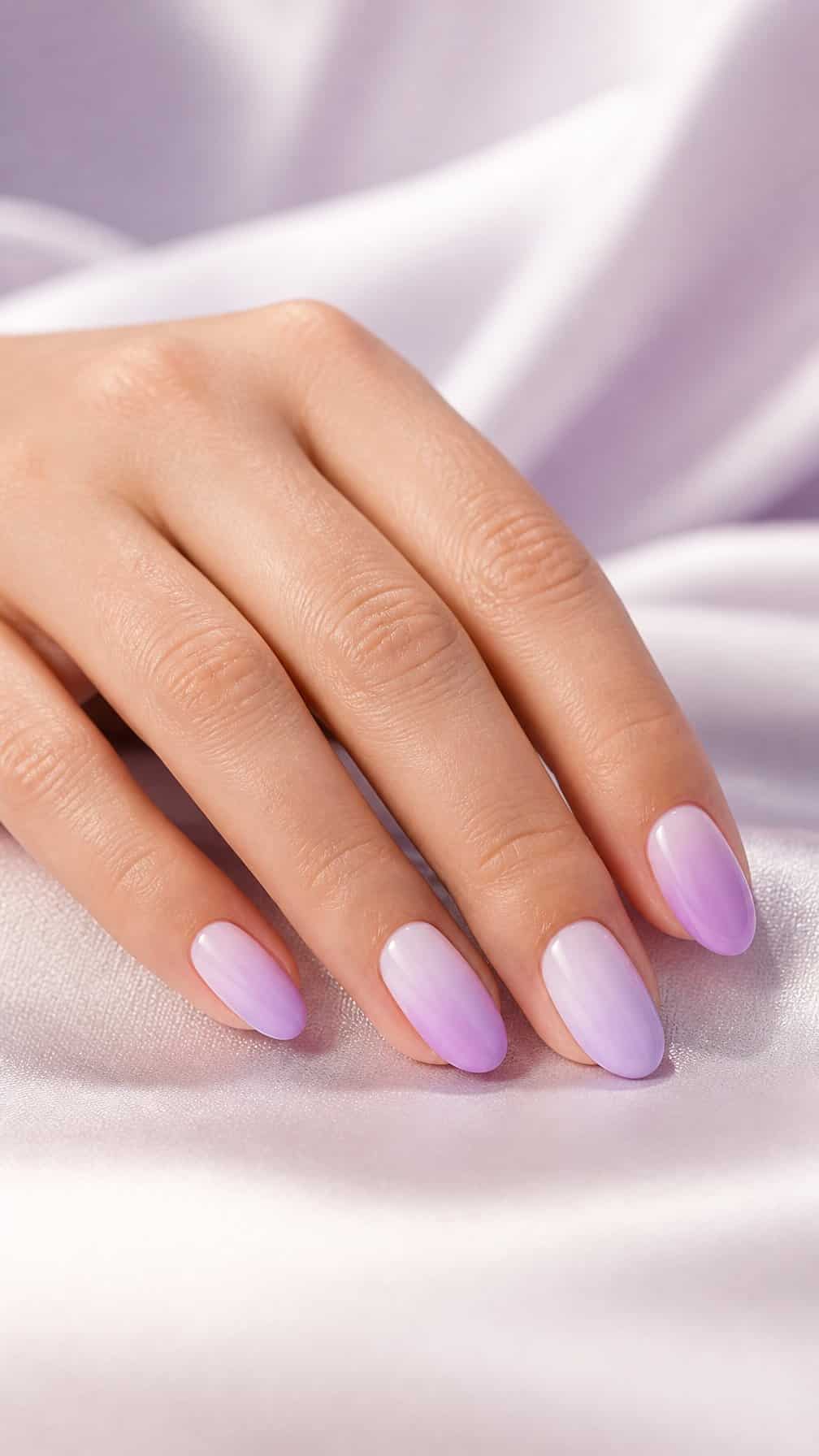
I start with a sheer pink or nude base, then blend pale lilac from the middle of each nail toward the tip. The gradual color shift keeps the design soft while giving the manicure more dimension than a single pastel shade.
I prefer a glossy finish because it smooths the transition between colors and makes the lilac look fresh. Short square, rounded, or almond-shaped nails all suit this style, while a fine layer of shimmer adds subtle light without overpowering the gradient.
2) Lilac French Tips
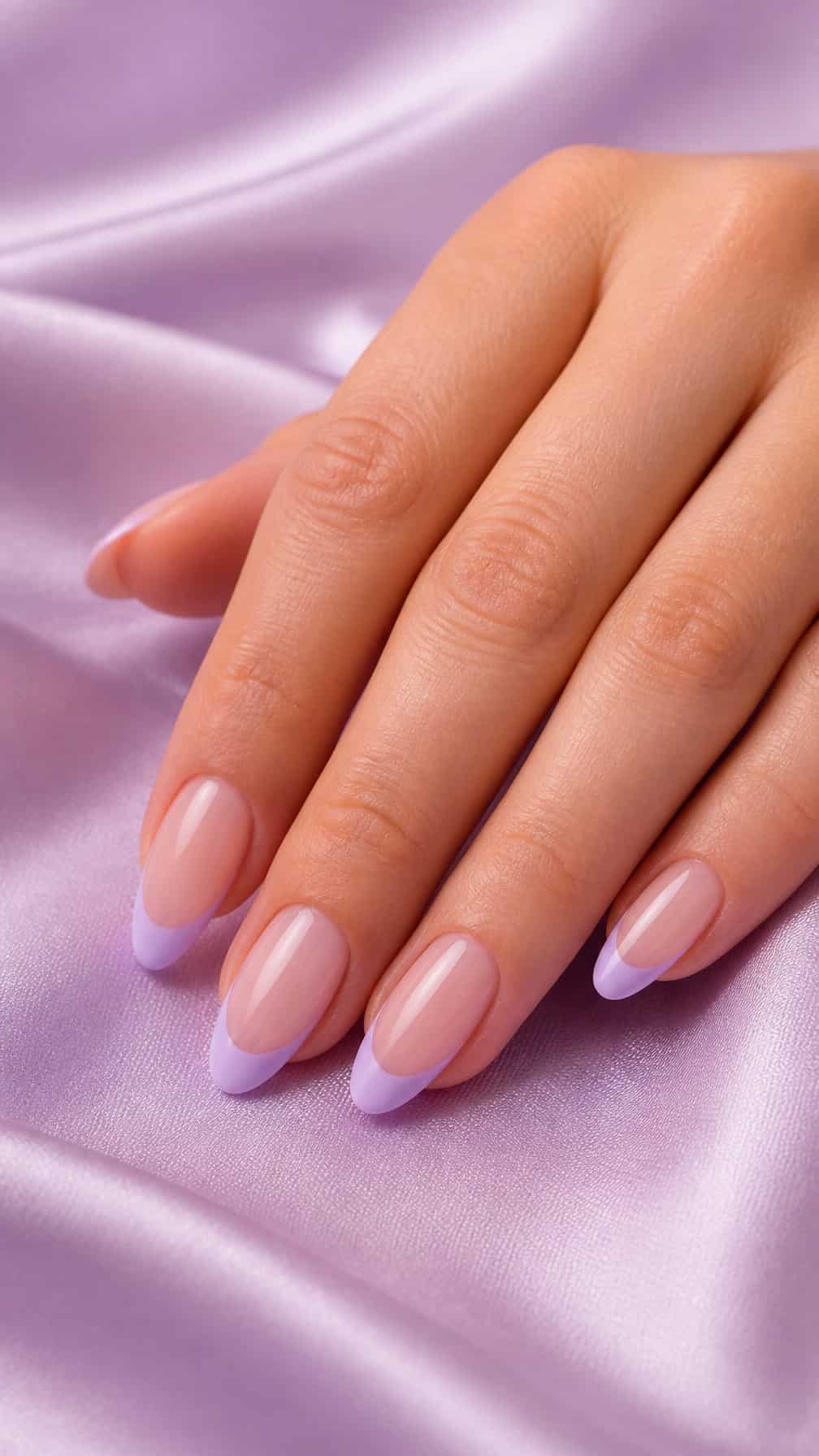
I use lilac polish to give the classic French manicure a softer, more playful finish. I keep the base sheer pink or nude, then paint slim purple tips that follow the natural curve of each nail. This combination works especially well on short, rounded, or almond-shaped nails.
For a cleaner design, I pair the pastel tips with a glossy topcoat and leave the base nearly transparent. I prefer matching the tip width across every nail, although a slightly thicker line can add definition to longer nails.
I sometimes add a tiny silver dot near the cuticle or one delicate accent nail. I keep the decoration minimal so the lilac remains the main feature.
3) Lavender Chrome Nails
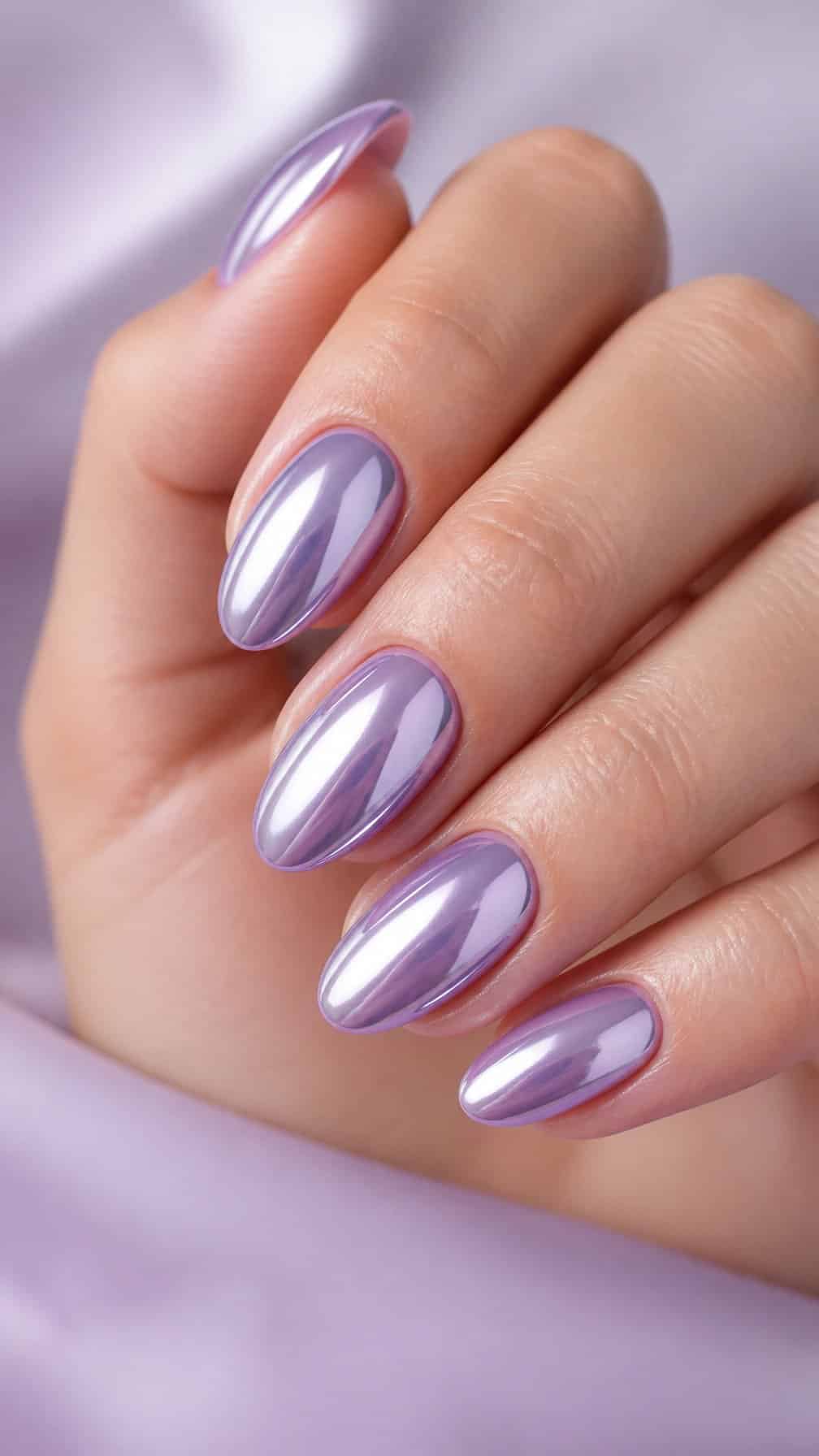
I use a soft lavender base to create a clean, cool-toned manicure, then add chrome powder for a reflective finish. The result shifts between pastel purple and silvery lilac as the light changes, while the smooth surface keeps the design polished rather than busy.
I prefer medium-length almond or oval nails for this look because their curved shape reflects the finish evenly. A glossy top coat helps protect the chrome effect and sharpens its shine. For a subtle variation, I apply the chrome only to the tips over a sheer lavender base.
4) Pastel Purple Swirl Nails
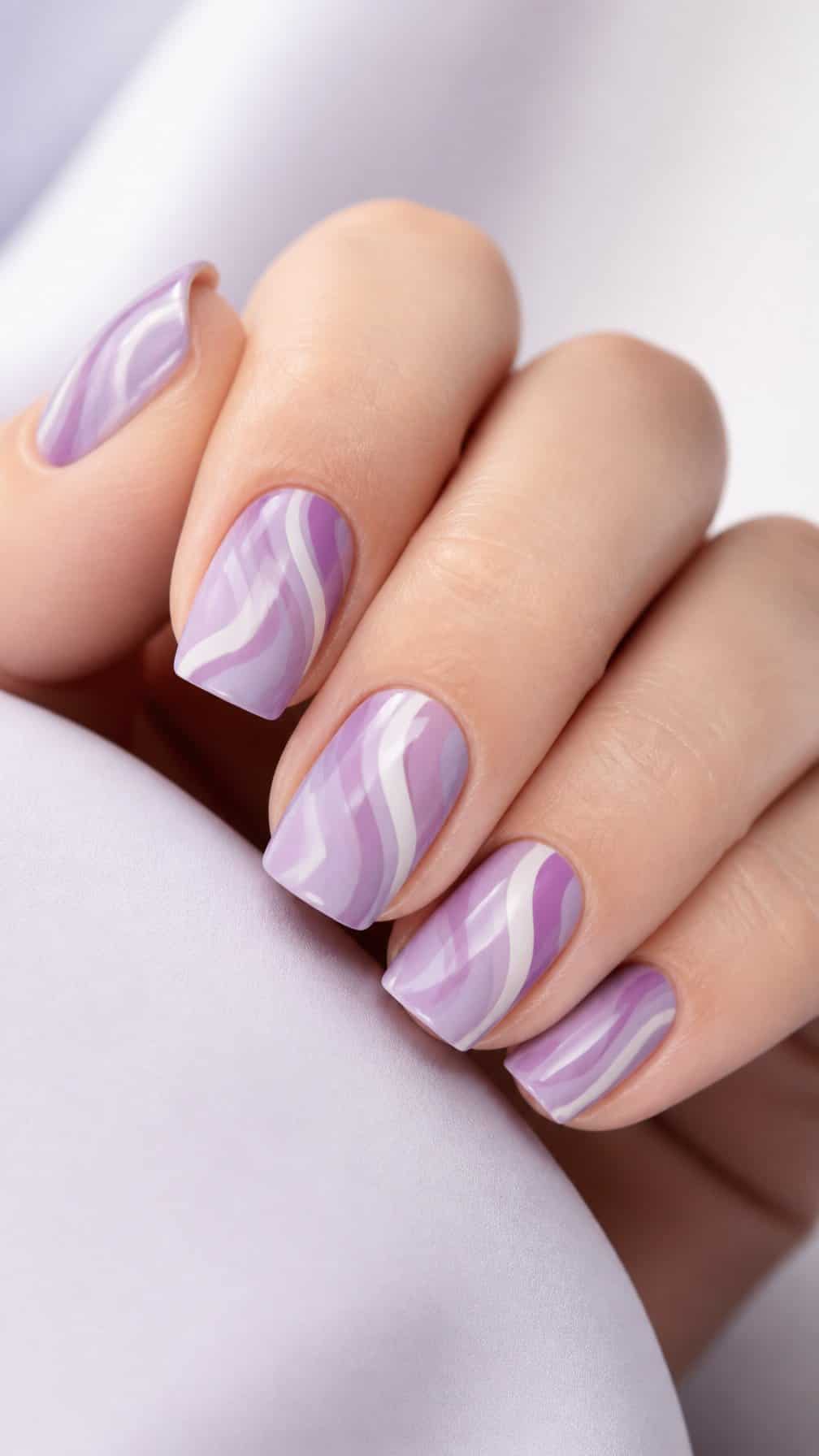
I like pastel purple swirl nails for their soft, fluid pattern. I would pair lilac, lavender, and milky white polish in curved lines that follow each nail’s shape. A sheer base keeps the design light, while a glossy topcoat sharpens the color contrast.
For a balanced look, I would place the swirls unevenly rather than copying one pattern across every nail. A fine detail brush helps create narrow lines, while slightly wider curves add dimension. I would use almond or oval nails to emphasize the flowing movement.
5) Lilac and White Floral Nails
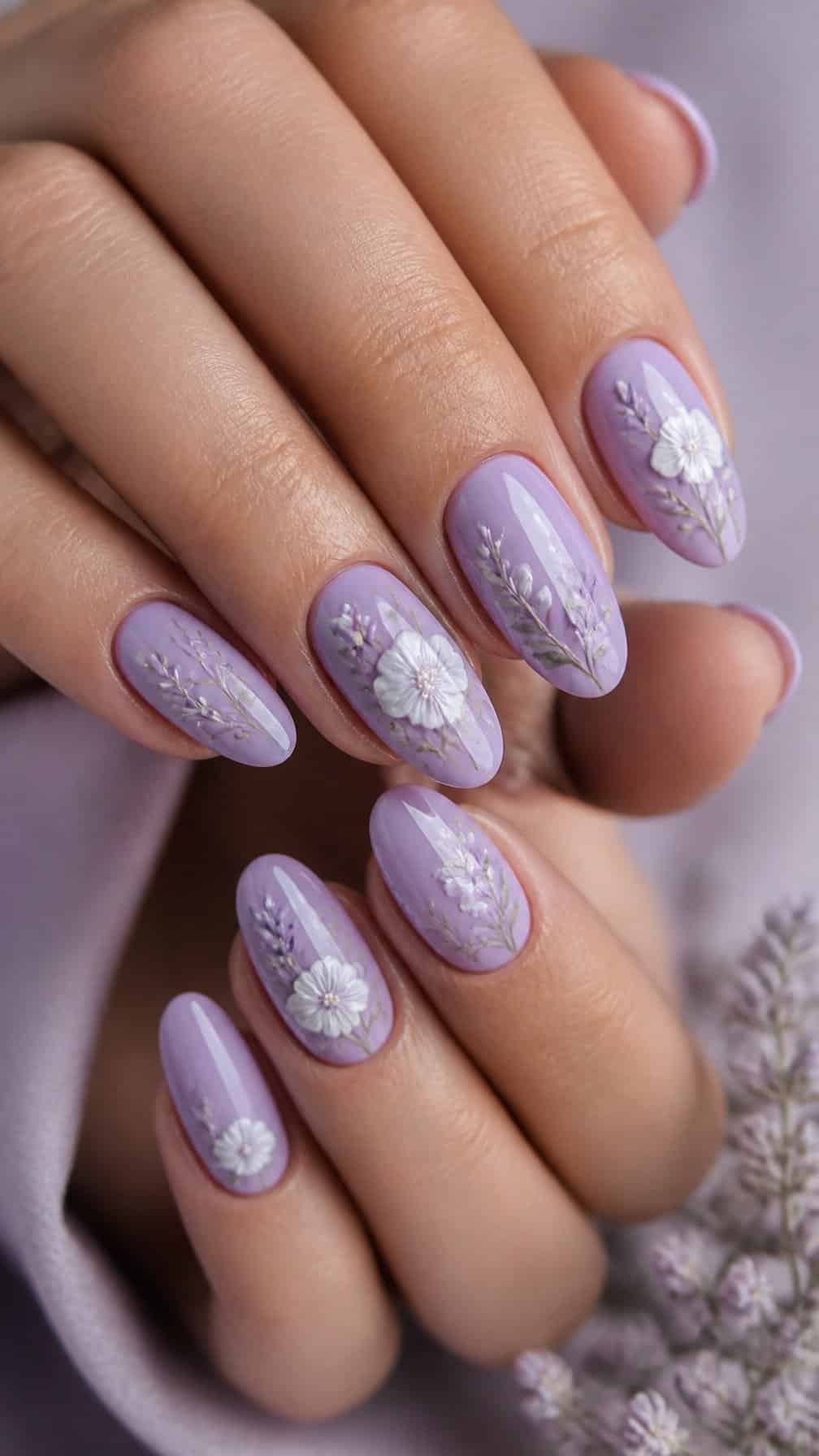
I like this design for its clean contrast between soft lilac polish and crisp white flowers. I would use lilac as the base, then add small daisies or five-petal blooms with a fine brush. A tiny yellow or lavender center gives each flower definition without making the pattern feel busy.
I would place the flowers on two or three accent nails and leave the others solid lilac. This arrangement keeps the manicure balanced while letting the floral details stand out. A glossy top coat also helps the white petals look brighter and the finish appear smooth.
6) Purple Aura Nails
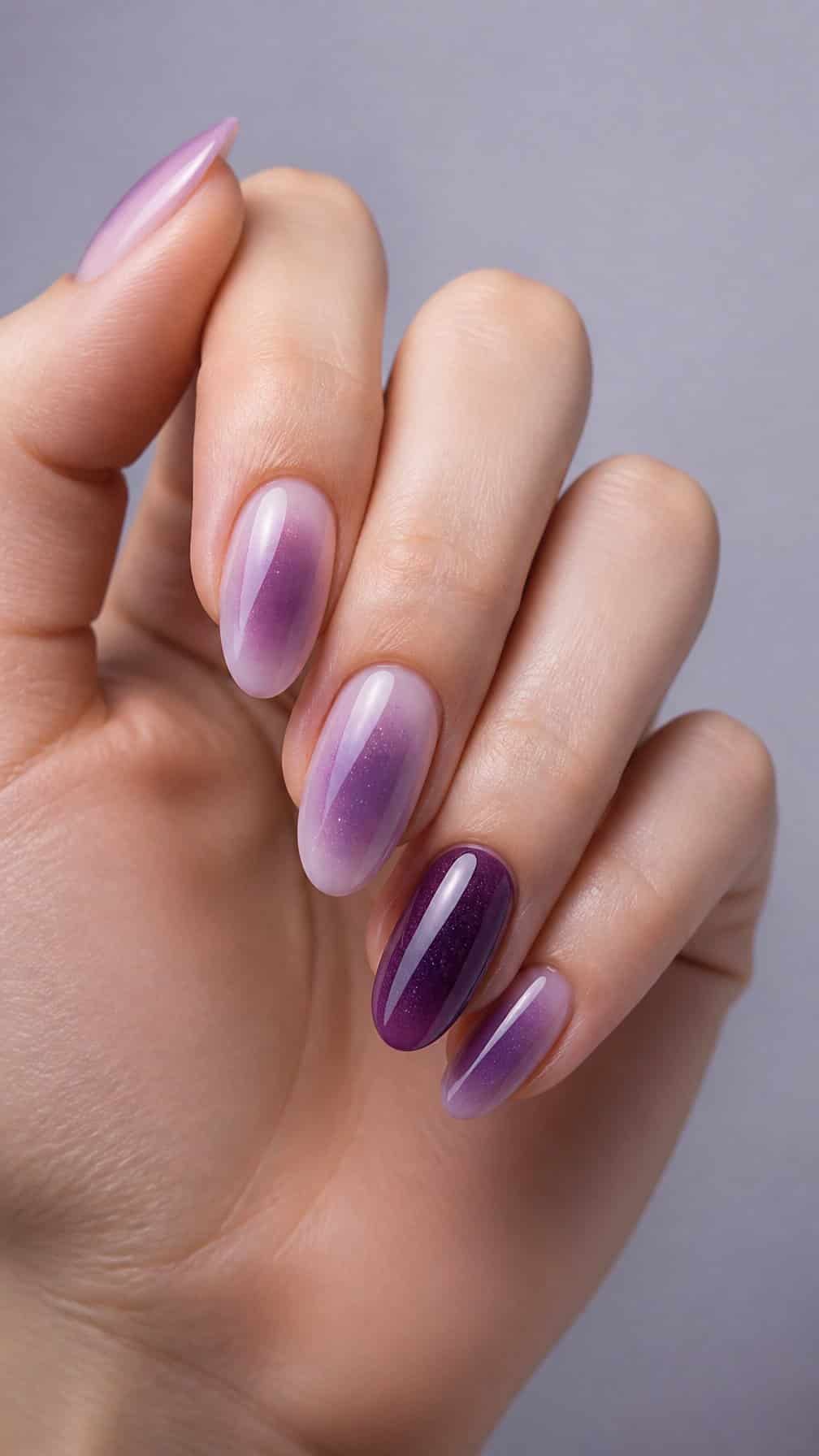
I create this look with a soft lavender center that fades into deeper purple around each nail, producing a diffused, halo-like effect. I prefer a sheer base and blended airbrush color because they keep the gradient smooth rather than sharply defined.
A glossy topcoat strengthens the aura effect by reflecting light across the layered tones. I pair the design with a short almond or rounded shape when I want the color transition to remain the main focus.
For added detail, I place a tiny rhinestone near the cuticle or use a fine shimmer over the center. I keep embellishments minimal so they complement the purple gradient without covering its soft finish.
7) Lavender Marble Nails
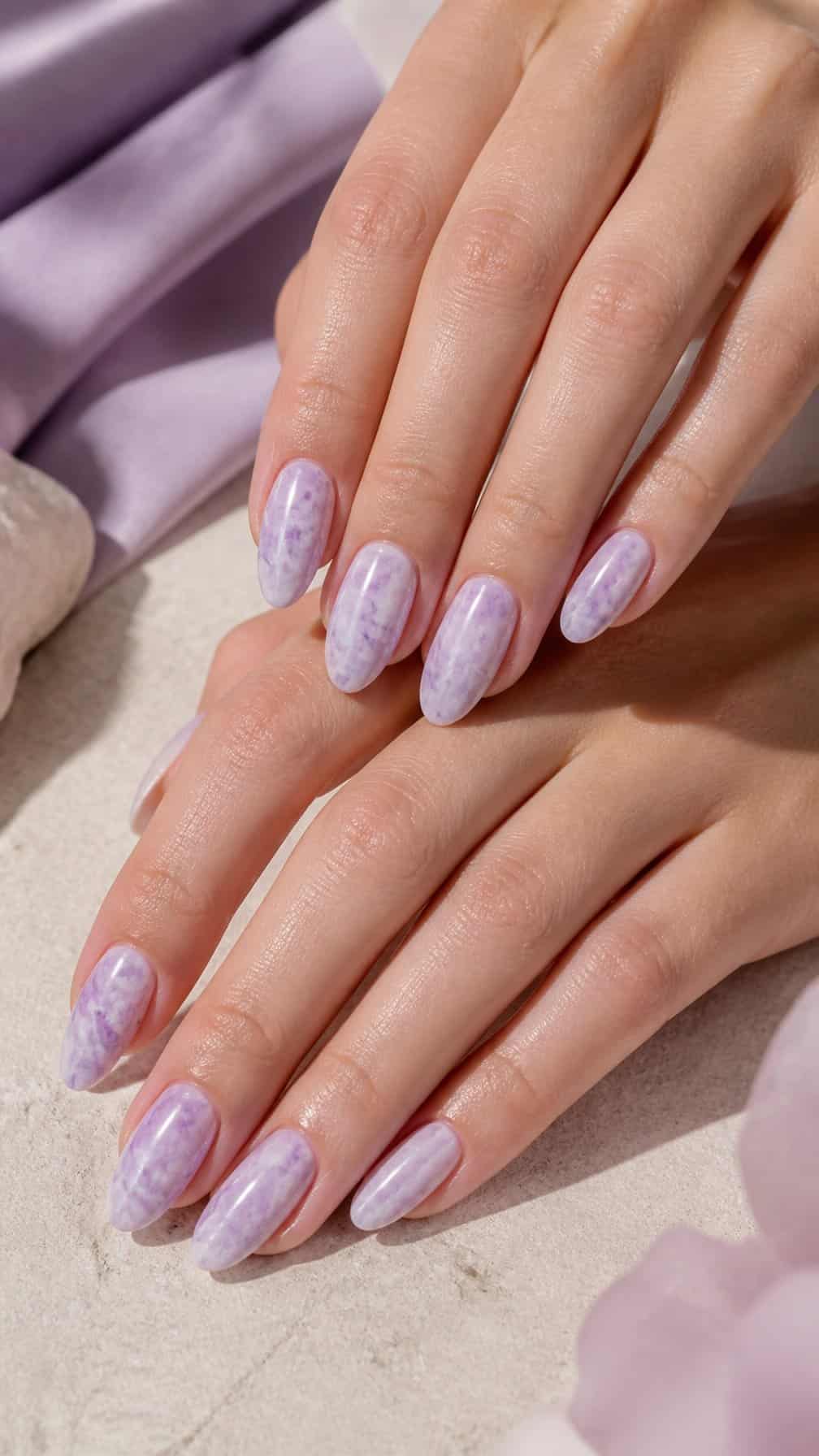
I pair a soft lavender base with white and slightly deeper purple veining to create a marble effect that looks delicate without appearing flat. I keep the lines irregular and lightly blended, since sharp symmetry can make the design look less natural.
I prefer a glossy topcoat for a polished finish, though a matte topcoat gives the colors a softer, stone-like appearance. I often place the marble pattern on every nail for a coordinated look, or use it on two accent nails against a solid lavender manicure.
8) Lilac Glitter Accent Nails
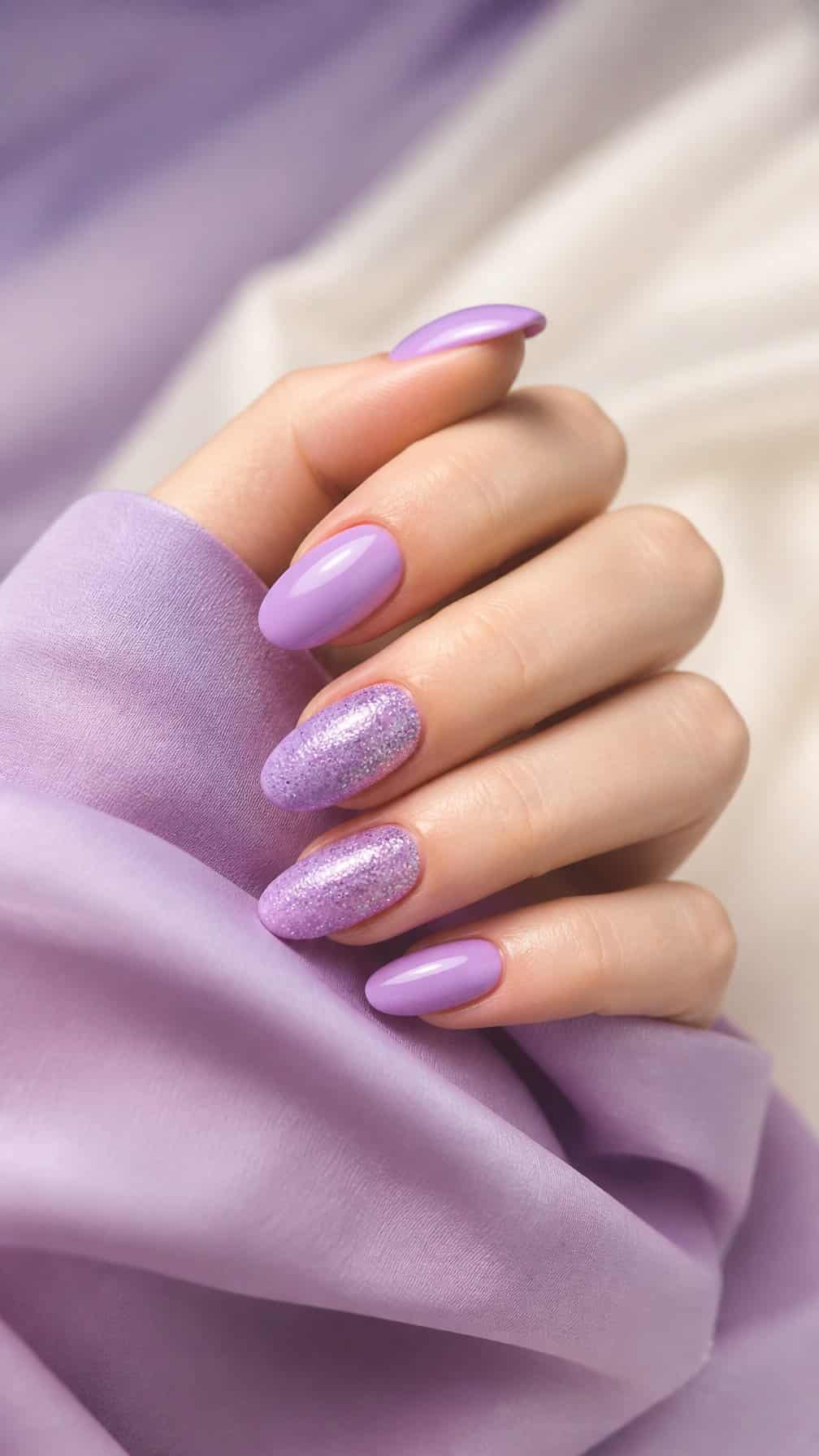
I like pairing a soft lilac base with glitter on one or two accent nails. The pale purple keeps the manicure light, while fine silver or iridescent glitter adds texture without overpowering the color.
For a cleaner finish, I apply glitter from the cuticle toward the center of the nail, creating a subtle fade. I keep the remaining nails glossy lilac and use a smooth top coat to even out the surface.
I find this design works well on short, rounded nails and longer almond shapes. A lavender-toned glitter creates a coordinated look, while silver gives the manicure a cooler contrast.
9) Violet Cat-Eye Nails
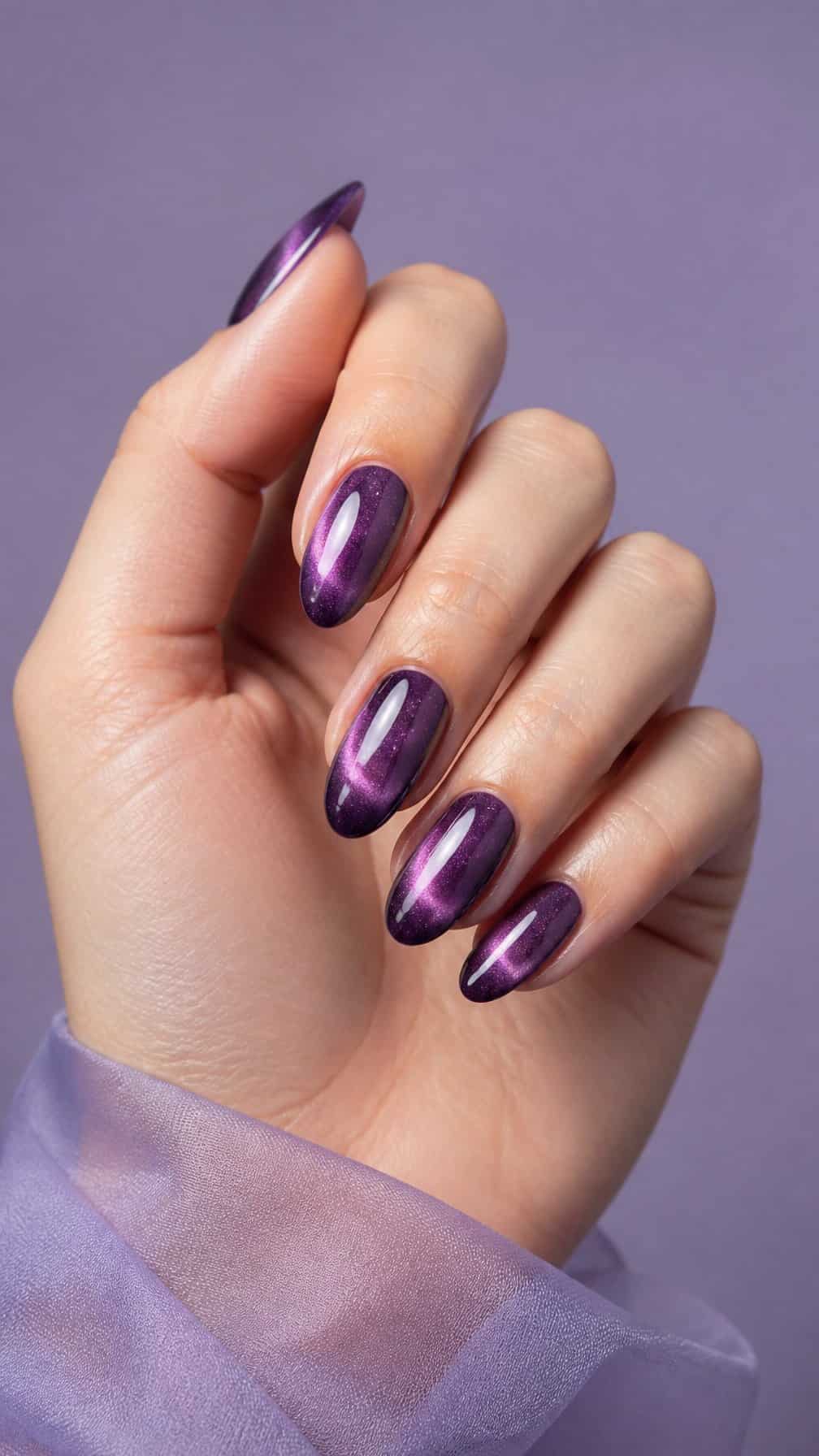
I like violet cat-eye nails for their shifting, dimensional finish. A magnetic polish creates a narrow reflective band across each nail, while the purple base changes from soft lavender to deeper violet as I move my hands. The effect works especially well on medium-length almond or coffin shapes.
I keep the design polished by using one rich violet shade on every nail and adding a glossy topcoat for clarity. For a softer look, I choose a sheer base and place the magnetic line slightly off-center. Fine silver shimmer can sharpen the light-catching detail without competing with the purple tone.
10) Purple Butterfly Nail Art
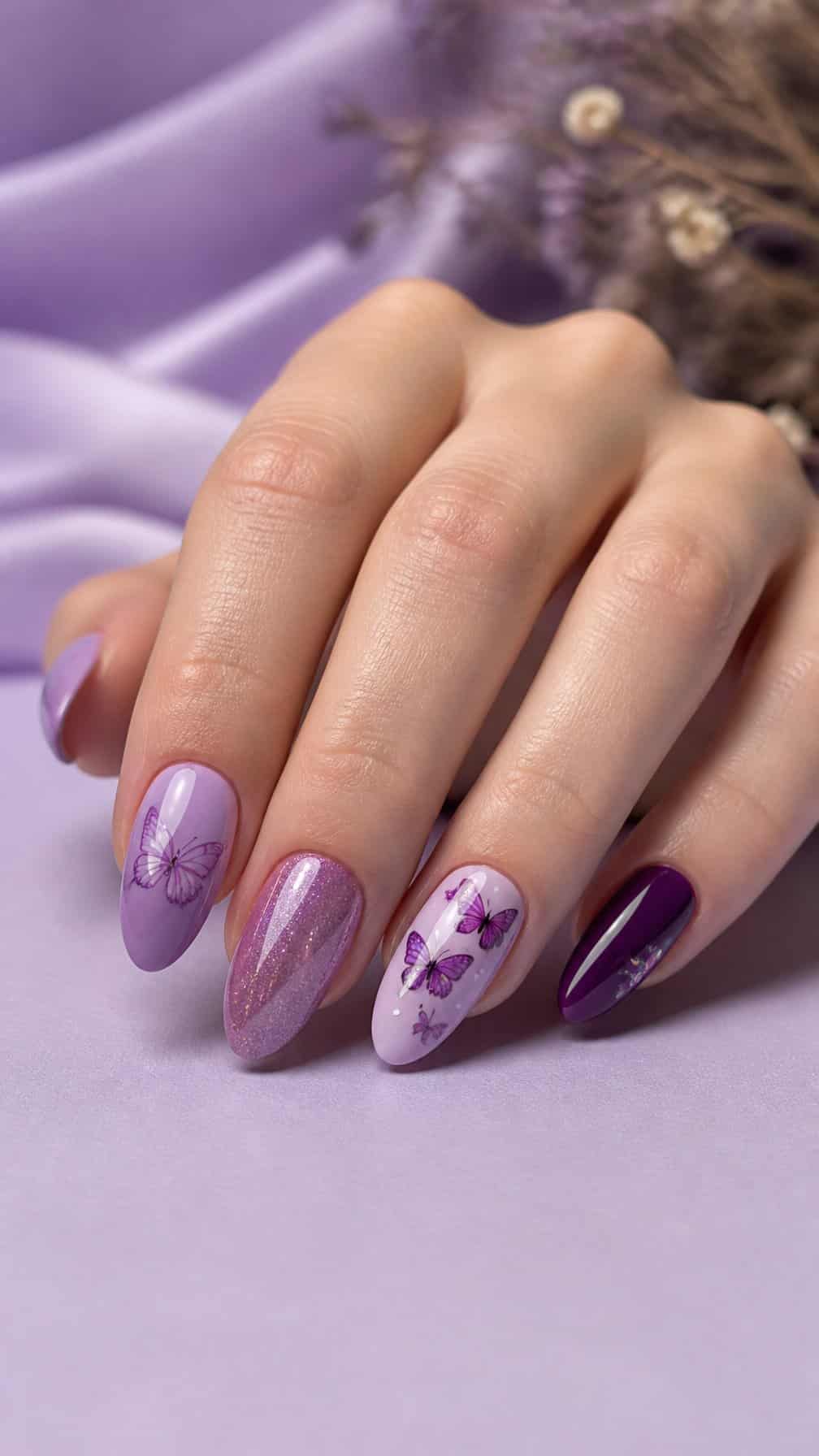
I use soft lilac polish as the base and add delicate butterfly outlines in deeper purple. Painting one butterfly across two adjacent nails creates a connected design, while small dots and thin antennae keep the details clean.
For contrast, I place a plum butterfly on a pale lavender nail and finish the remaining nails with sheer shimmer. I prefer a fine liner brush for the wings, then add a small silver accent at the center. This design works well with short or medium-length nails.
11) Plum French Tips
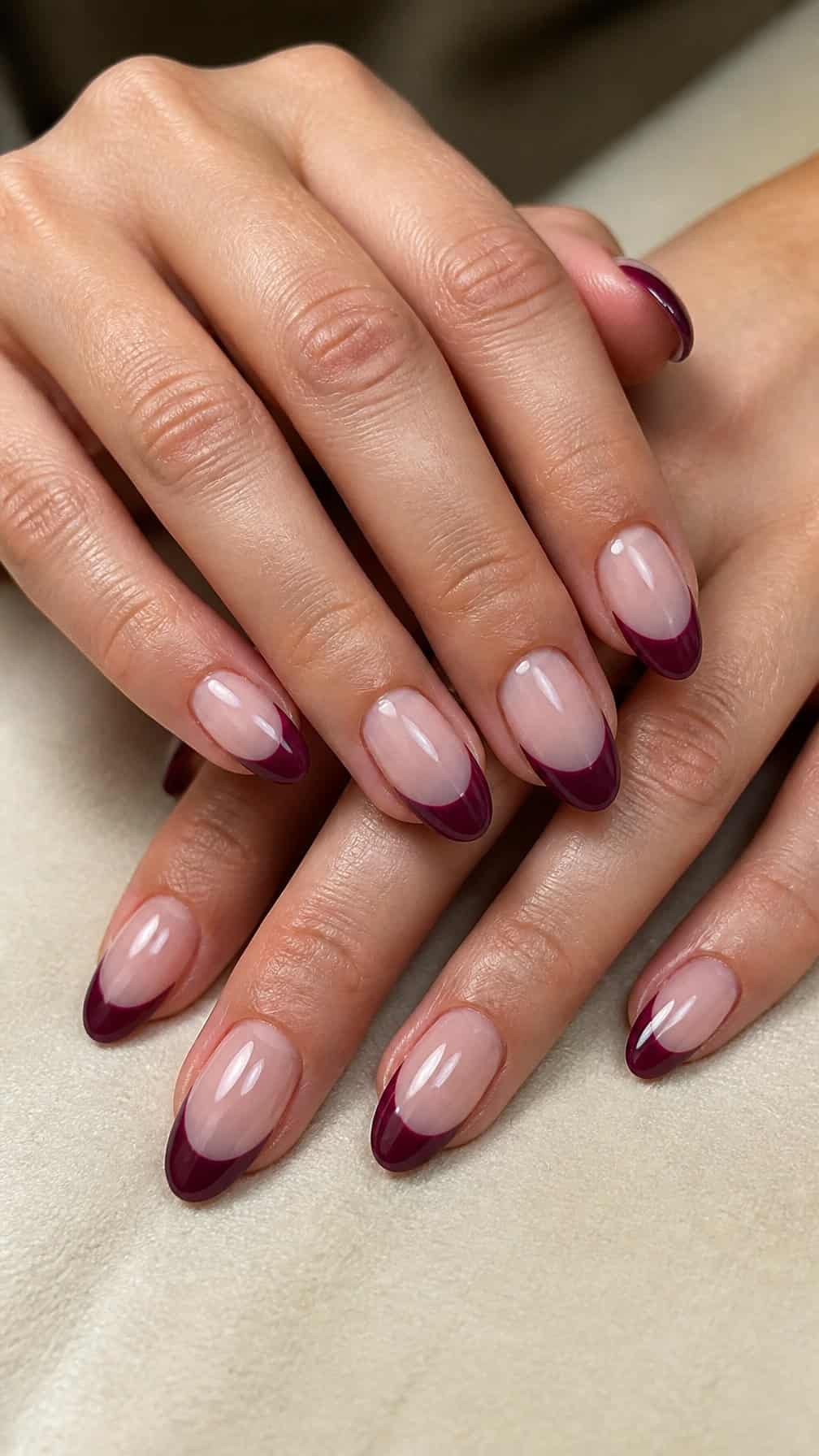
I use a deep plum shade to create French tips with more depth than classic white. The rich color suits short, medium, and long nails, while a sheer pink or nude base keeps the design balanced and polished.
For a clean result, I shape each tip to follow the natural curve of the nail. I prefer a thin line for a subtle finish, but a wider tip gives the manicure a stronger graphic look without adding extra decoration.
I often pair plum tips with a glossy topcoat, although a matte finish gives the color a softer, modern appearance. A fine gold accent on one or two nails can add detail while keeping the design restrained.
12) Deep Plum Glossy Nails
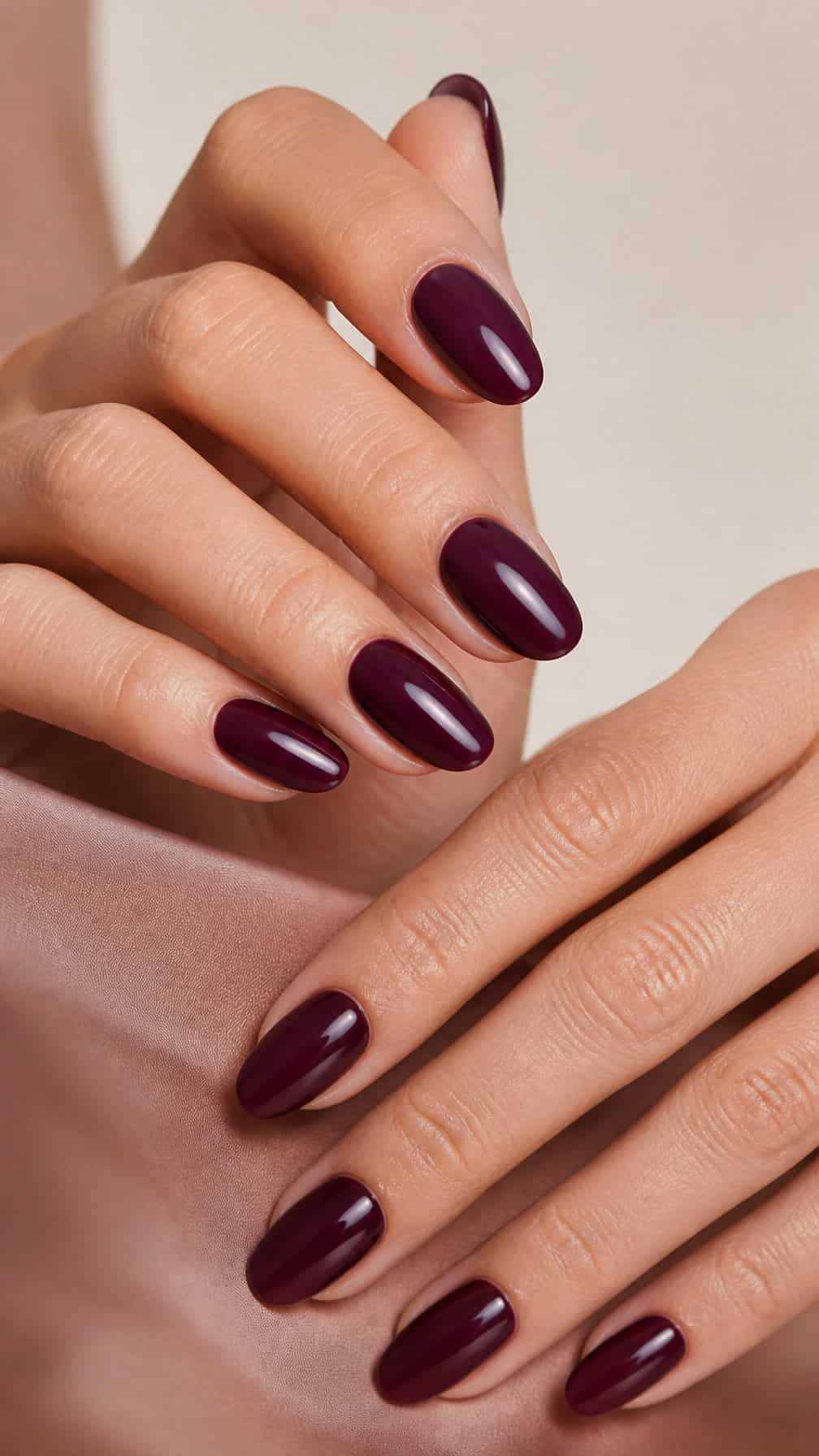
I like deep plum glossy nails for their rich, polished appearance. The dark purple shade works well on short, rounded nails, while longer almond or coffin shapes give it a more dramatic profile.
I would keep the finish smooth and reflective, without added glitter or patterns. This lets the plum color remain the main focus and creates a clean look that suits both casual outfits and formal clothing.
For a neat result, I prepare the nail surface carefully and apply thin layers of polish. I finish with a high-shine topcoat, then clean the edges with a small brush for a precise appearance.
13) Plum Velvet Nails
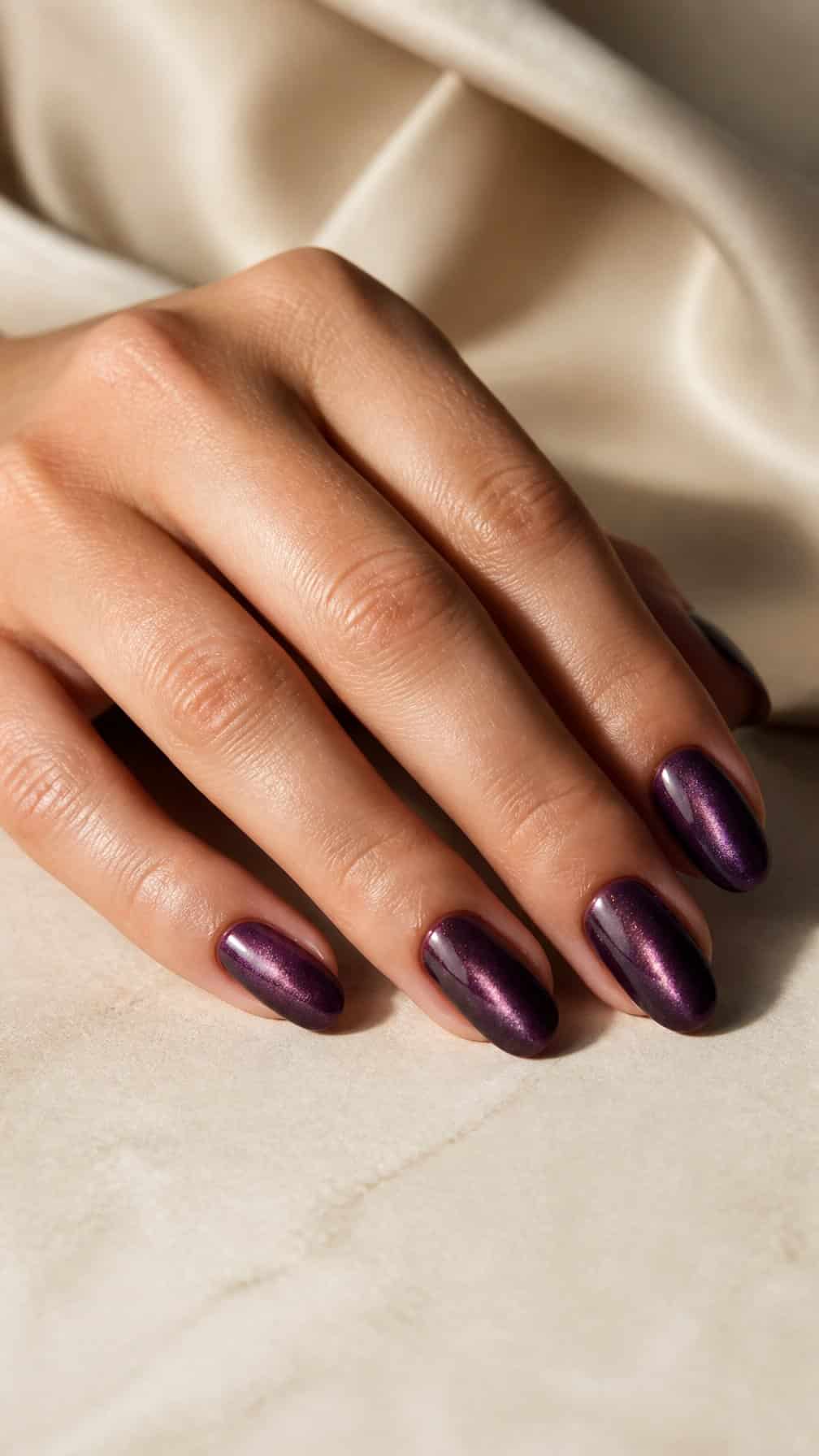
I use a deep plum polish with a velvet magnetic effect to create this rich, dimensional look. The shifting finish catches light in soft bands, giving the nails a textured appearance without adding raised decoration.
I keep the shape medium-length and softly rounded so the dark color remains polished rather than heavy. A glossy top coat protects the design, while a thin layer of cuticle oil helps the surrounding skin look neat against the saturated shade.
For a quieter version, I apply the velvet effect to every nail. I can also leave one or two nails in a plain plum cream finish to create subtle contrast.
14) Burgundy-Plum Ombre Nails
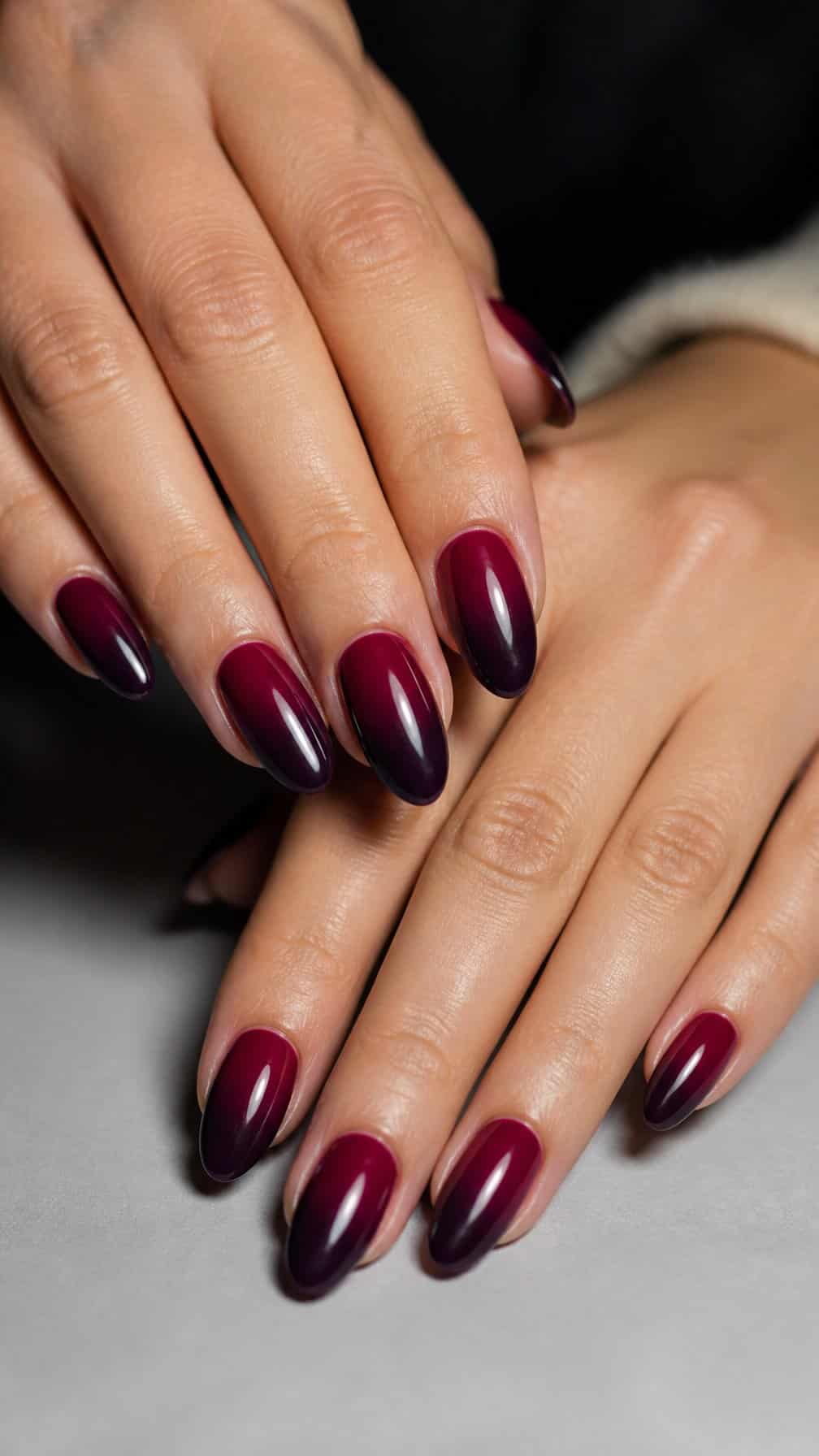
I like this ombre pairing for its smooth shift from deep burgundy at the tips to muted plum near the cuticles. The darker edge adds definition, while the purple base keeps the design from looking too red. I find a glossy finish best shows the color transition.
For a softer effect, I would use medium-length almond or coffin nails and keep the gradient seamless. A thin layer of shimmer can add dimension without hiding the blend, while a matte topcoat creates a refined, velvety texture.
15) Plum Matte Nails
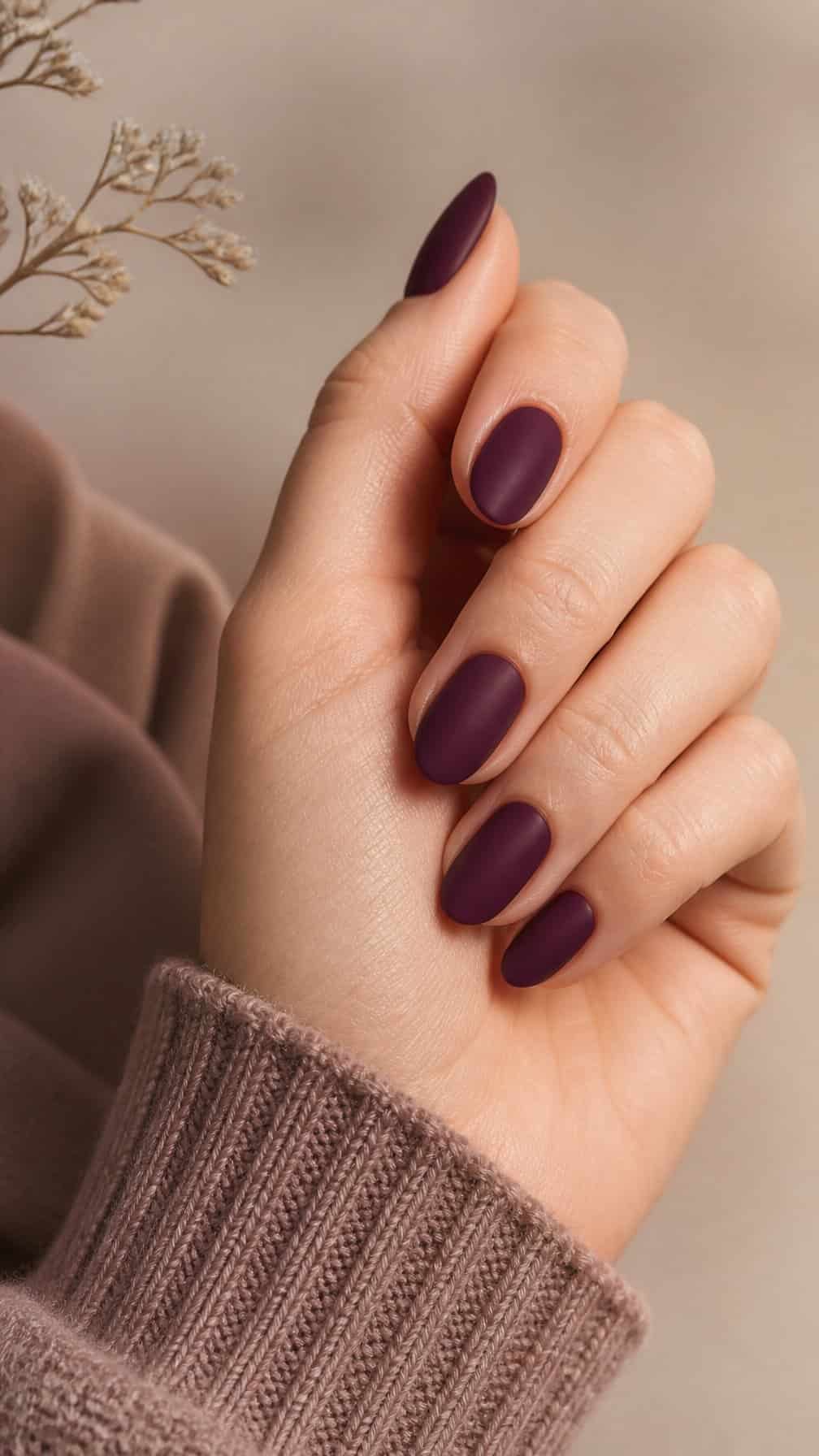
I like plum matte nails for their rich color and smooth, non-reflective finish. The deep purple shade adds definition without relying on glitter, making this design suitable for short, medium, or long nails.
I would keep the shape simple, such as a soft square, almond, or rounded tip, so the matte surface remains the focus. A glossy plum accent nail or thin French tip can add contrast while preserving the design’s restrained appearance.
I apply a quality matte top coat over fully dry polish to create an even finish. I also seal the free edge, since dark colors can show chips clearly and the top coat helps maintain a clean, uniform look.
16) Plum and Gold Foil Nails
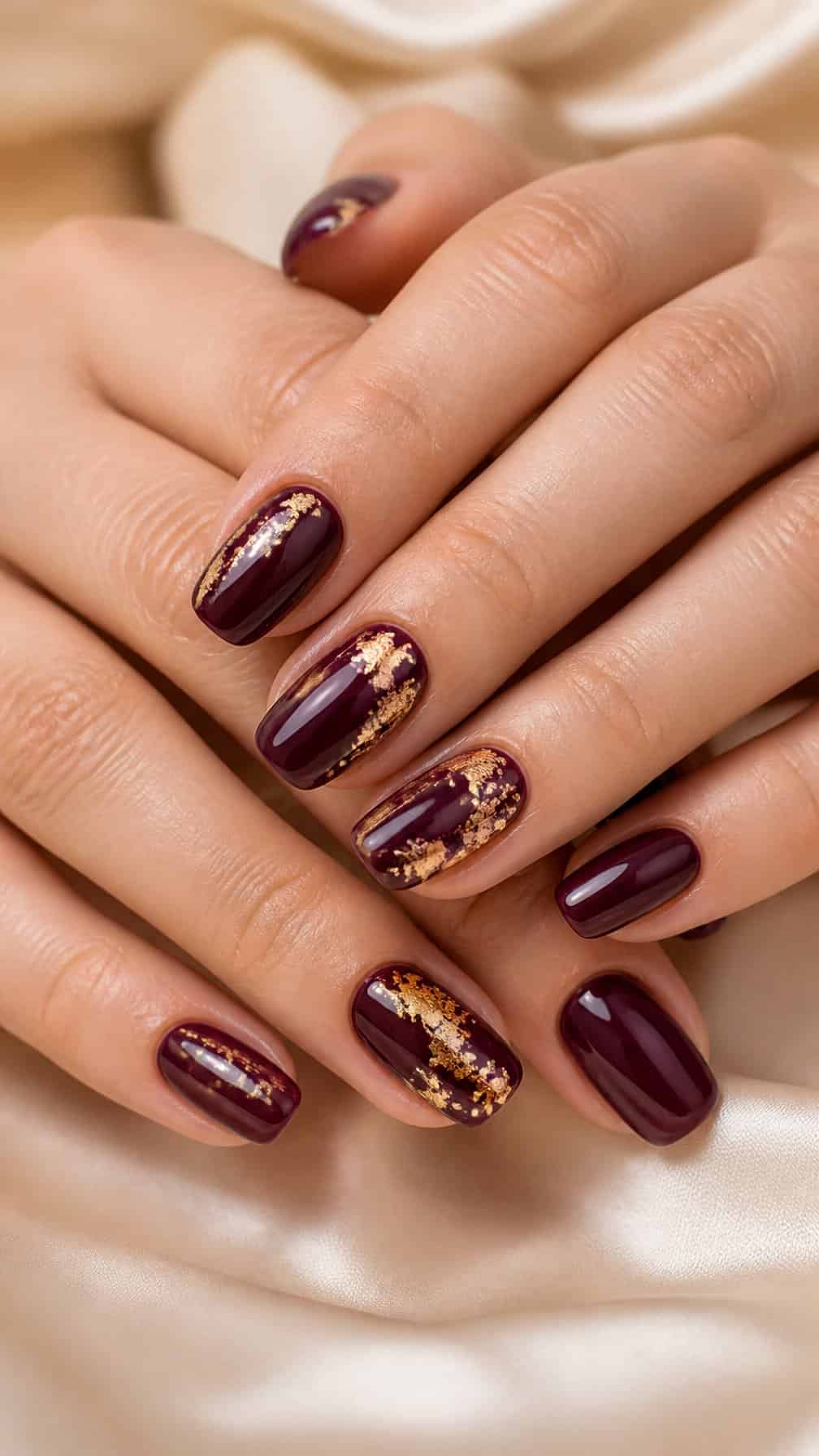
I like plum polish for its deep, wine-toned finish, while gold foil adds a controlled touch of shine. I would apply the plum shade across every nail, then place small foil fragments near the cuticles or along one side of each nail. The irregular edges keep the design from looking too uniform.
A glossy top coat helps smooth the foil and protects the dark color from losing its depth. I find this combination works especially well on medium or long almond nails, where the rich base and metallic accents have enough space to stand out.
17) Dark Purple Tortoiseshell Nails
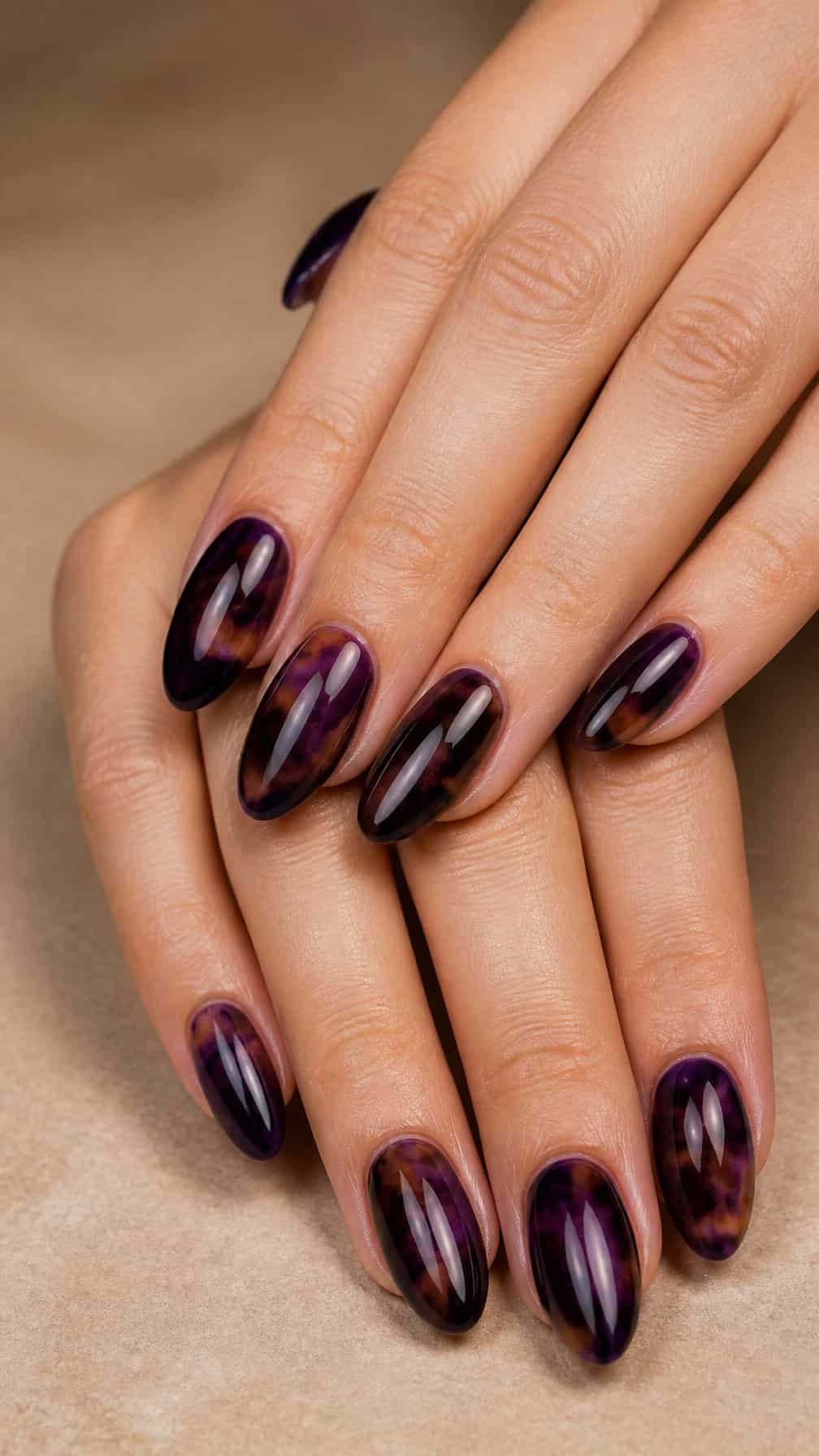
I like the layered depth of dark purple tortoiseshell nails, which combines plum, aubergine, and near-black patches in an irregular pattern. I would keep the shapes soft rather than sharply outlined, allowing each color to blend into the next while preserving the mottled effect.
I find this design especially effective on medium or long almond nails, where the pattern has enough space to remain visible. A glossy top coat enhances the tonal variation, while a matte finish creates a quieter, velvety appearance. I would use the tortoiseshell pattern on every nail or pair it with solid plum accents for contrast.
18) Eggplant Chrome Nails
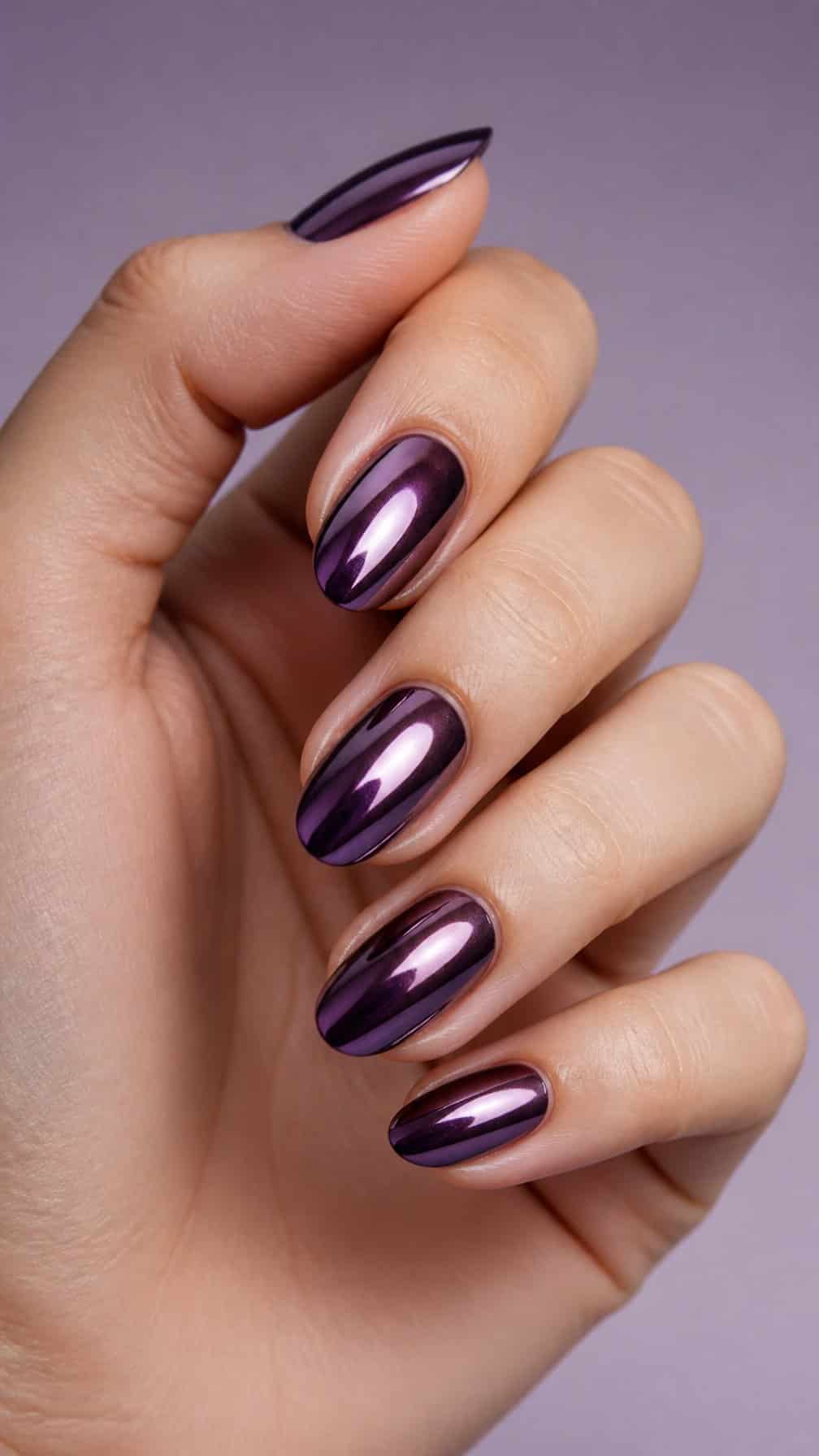
I like eggplant chrome nails for their deep purple base and reflective metallic finish. The color shifts subtly between aubergine and plum as the light moves across each nail, giving the manicure dimension without added decoration.
I would keep the shape clean, such as a short almond or softly squared tip, so the chrome effect remains the focus. A smooth, high-shine topcoat enhances the finish, while a thin black outline at the cuticle can create a sharper, more defined edge.
19) Purple Jelly Nails
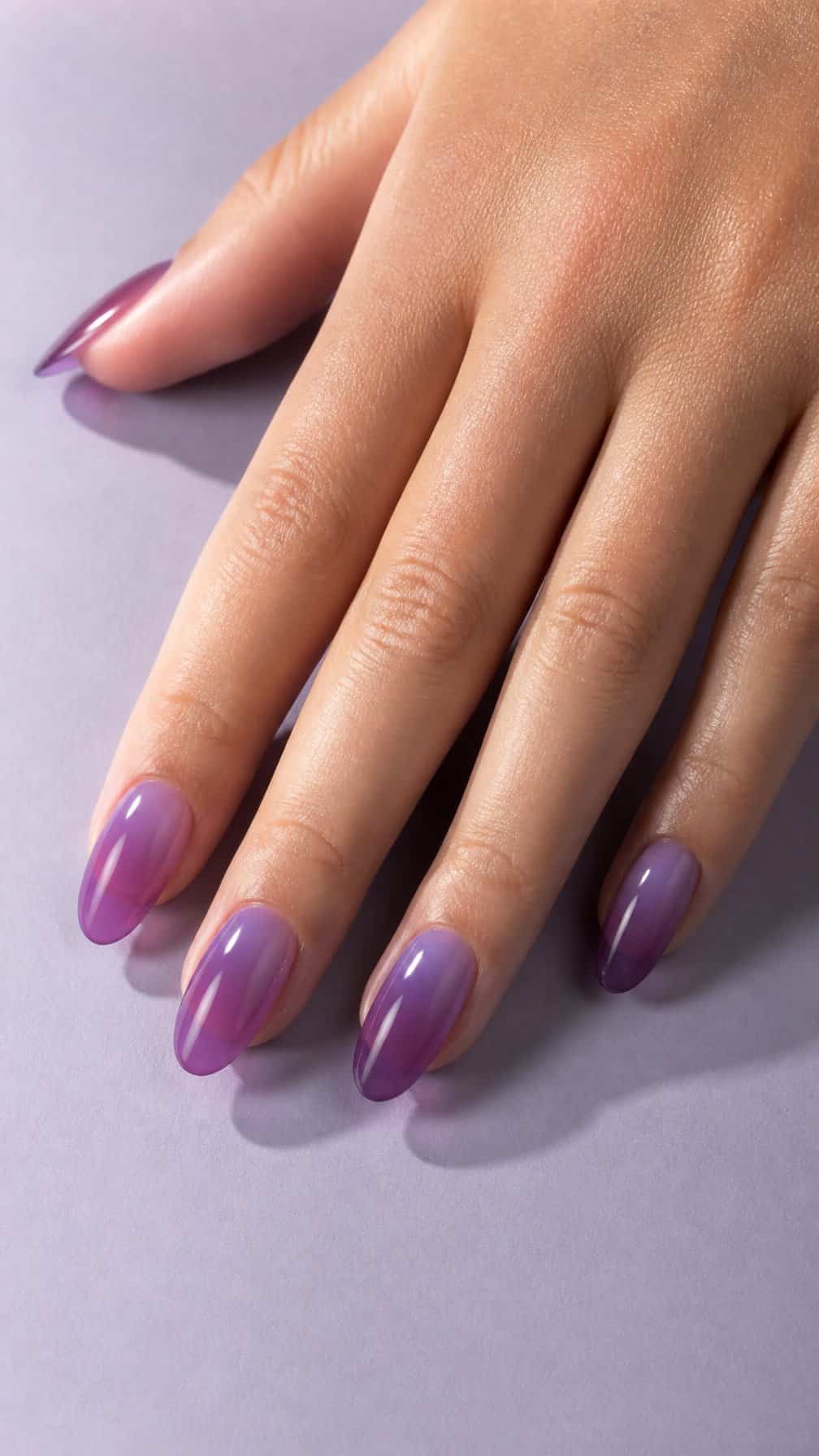
I like purple jelly nails for their translucent finish, which lets light pass through the color instead of creating a solid, opaque layer. I would choose a sheer lilac, grape, or plum polish and build two to three thin coats for a glassy effect.
I keep the shape simple, such as short squoval or medium almond nails, so the finish remains the main detail. A glossy top coat sharpens the wet-look appearance, while tiny lavender flowers or fine silver accents can add interest without covering the transparent color.
For a deeper version, I would layer a purple jelly polish over a nude base or use it on the tips of a clear French manicure. This approach creates visible color variation while keeping the design light and polished.
20) Amethyst Crystal Nail Art
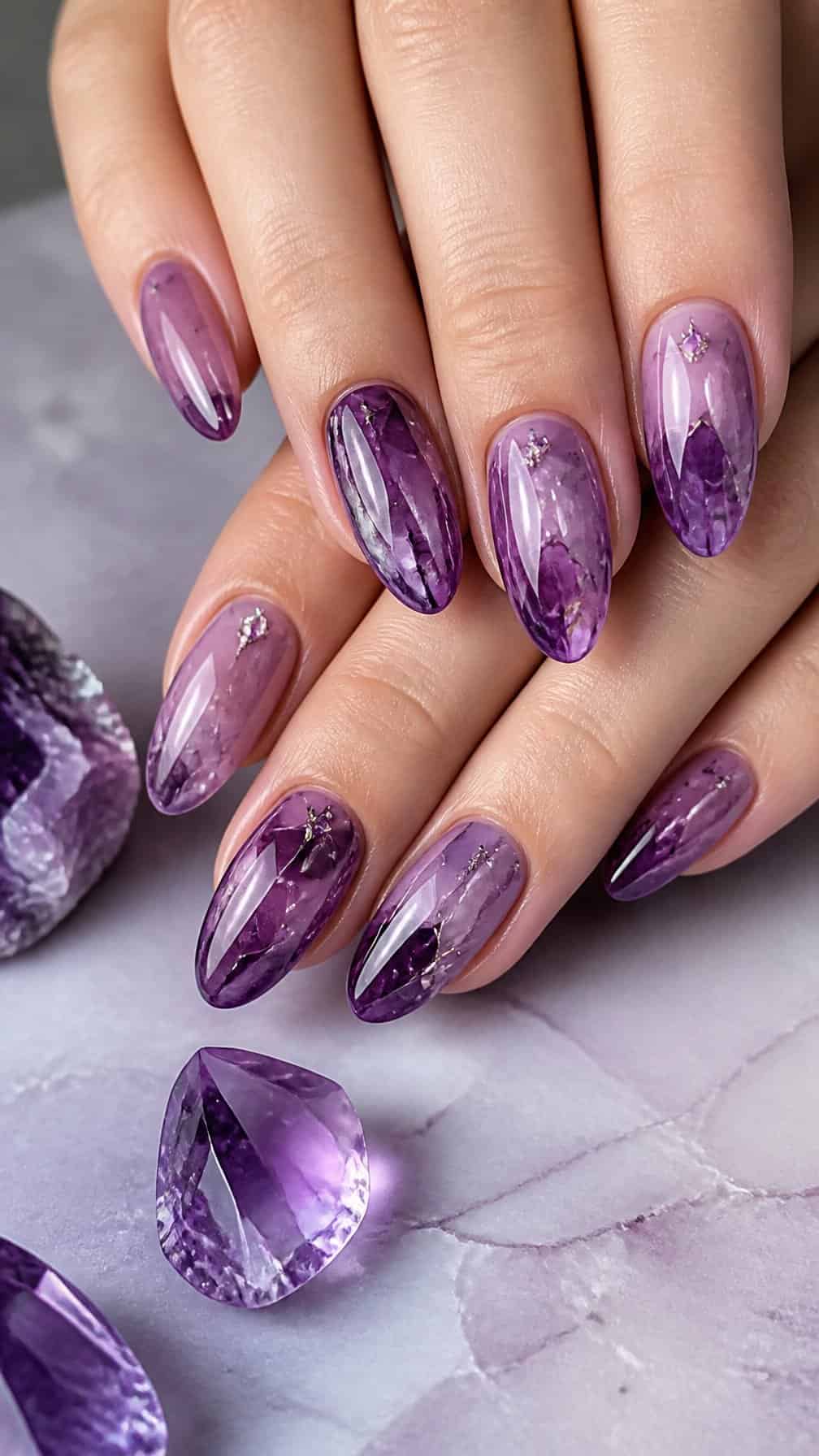
I create an amethyst-inspired manicure with translucent purple polish, angular white veining, and scattered silver accents. Layering sheer lilac over deeper violet gives each nail a crystalline depth, while irregular lines keep the design natural rather than overly precise.
I usually place the strongest detail on one or two accent nails and keep the remaining nails in a glossy plum or soft lavender shade. A fine brush helps me draw branching inclusions, and a high-shine top coat smooths the surface without hiding the layered color.
21) Lilac-to-Plum Gradient Nails
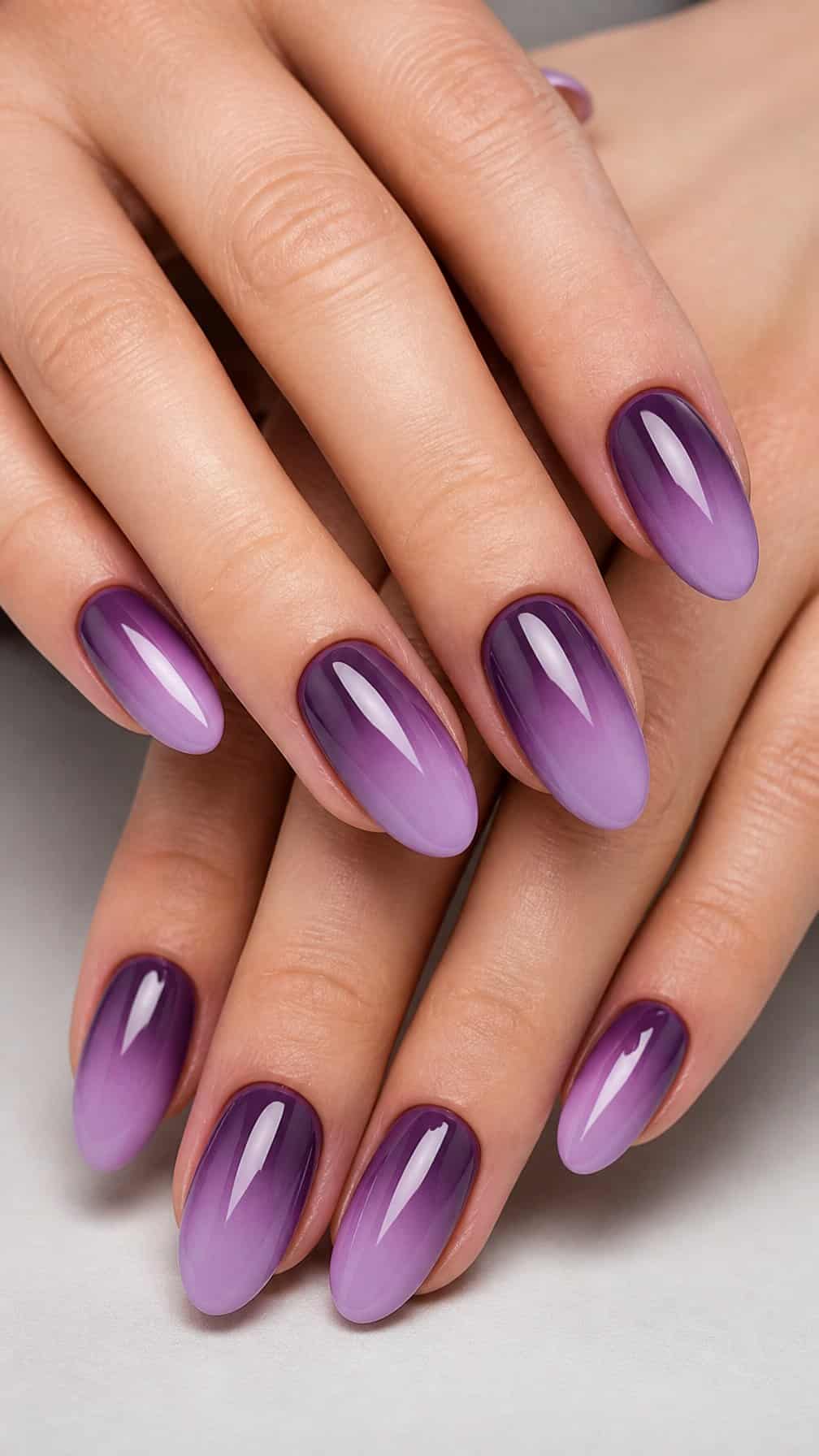
I like this gradient because it moves smoothly from a soft lilac at the cuticles to a deeper plum at the tips. I create the transition with thin layers and a makeup sponge, blending each shade before it dries. A glossy top coat helps the colors look seamless.
I keep the shape medium length, such as an almond or rounded square, so the color shift remains visible without looking busy. For extra detail, I add a fine shimmer over the gradient or place a small gold accent on one nail. This design works well for both casual outfits and evening looks.
22) Purple Checkerboard Nails
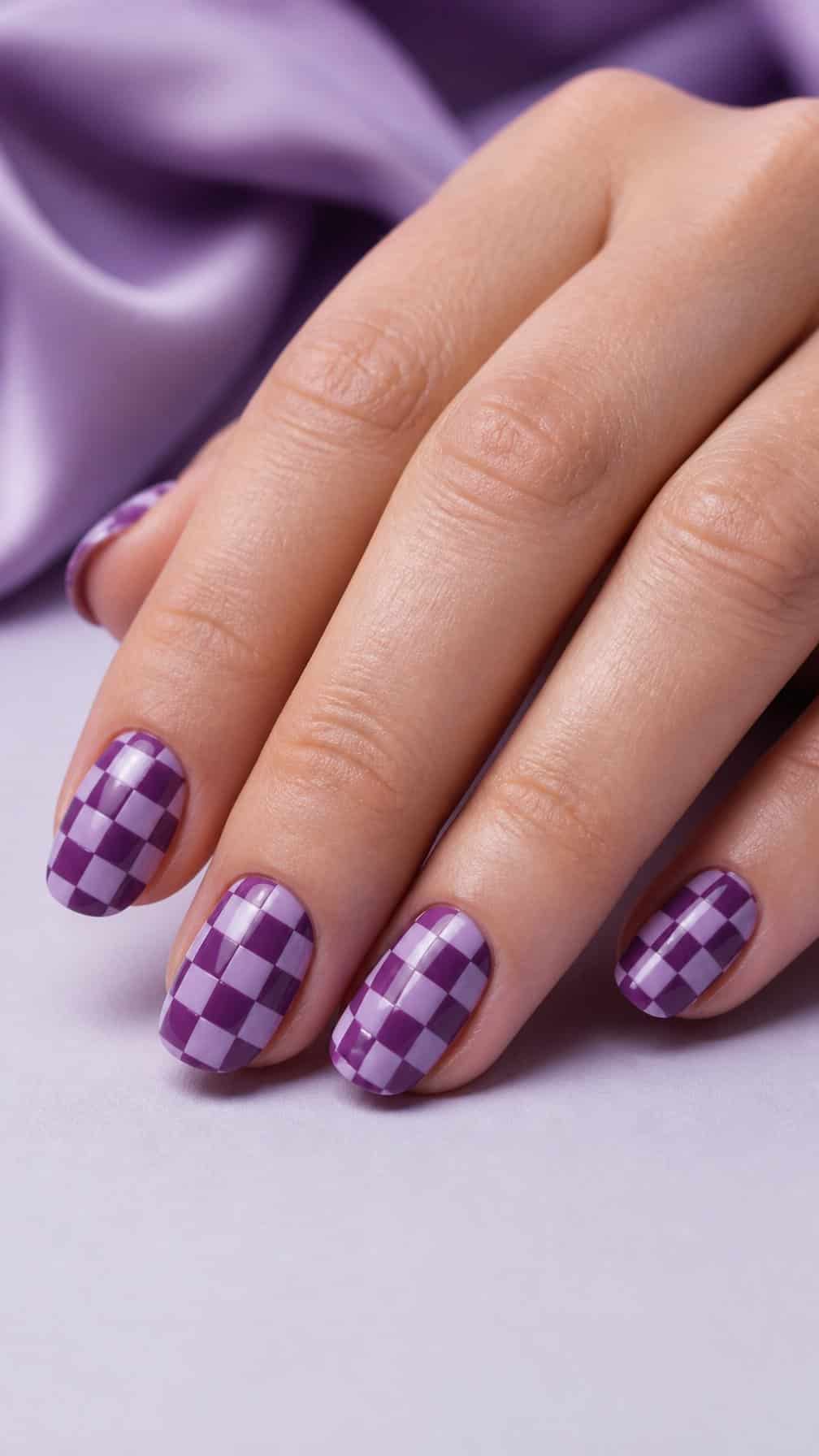
I like the graphic contrast of alternating lilac and deep purple squares. I would keep each block neat and evenly sized, then add a glossy topcoat to sharpen the pattern without overpowering it.
For a softer version, I would pair lavender with milky white or pale mauve. A darker checkerboard using plum and aubergine creates more definition, especially on short square or squoval nails.
I would paint the base shade first, let it dry completely, and use thin striping tape to map the grid. A fine detail brush can clean the edges before the final topcoat seals the design.
23) Lavender and Plum Color-Block Nails
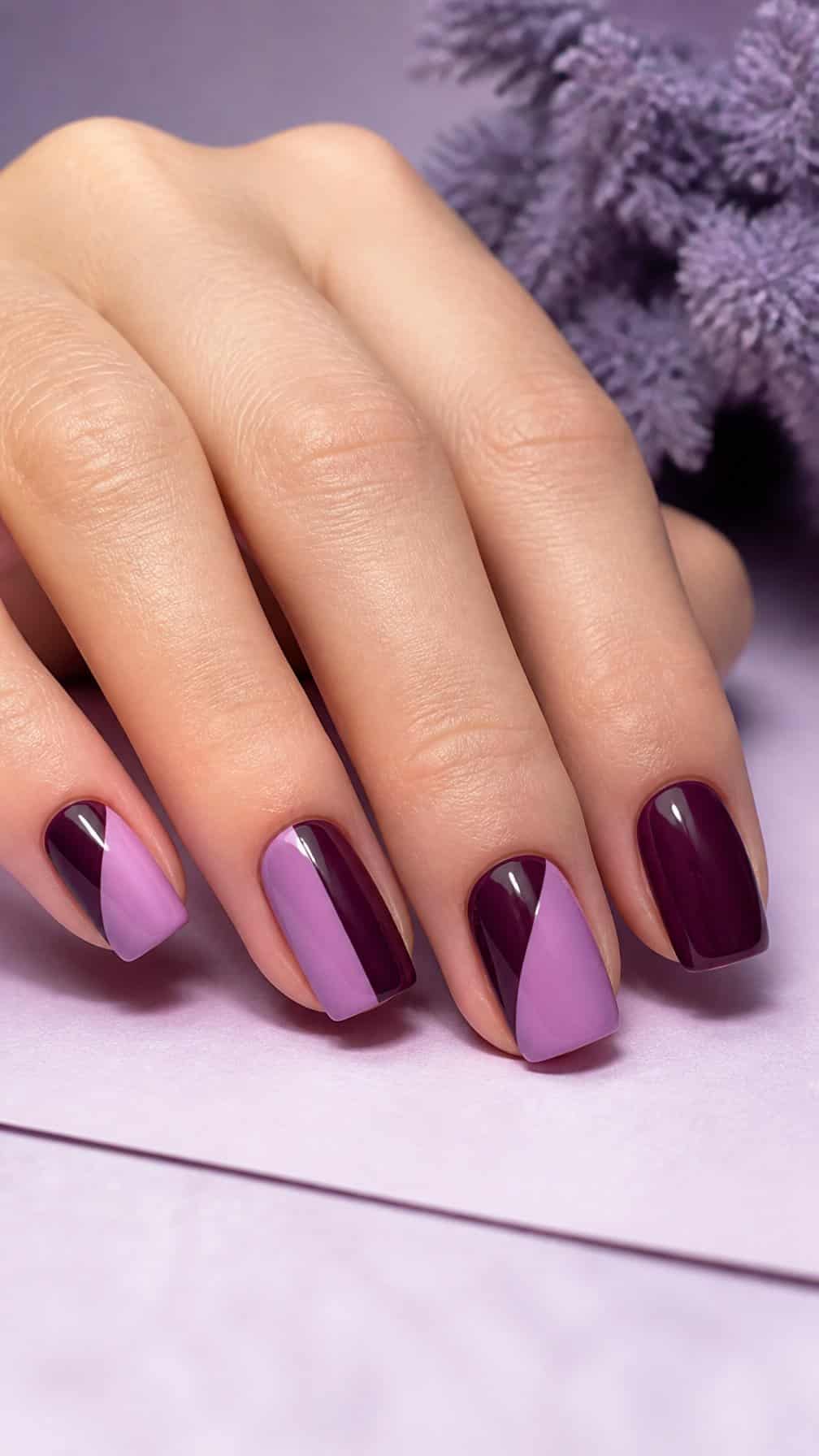
I pair soft lavender with deep plum for a manicure that balances brightness and depth. I use clean, angled blocks on each nail, alternating the dominant shade to create subtle variation without making the design feel busy.
I prefer a glossy finish because it sharpens the color contrast and helps the edges look crisp. A thin nude base can separate the shades, while short square or almond nails keep the geometric pattern polished and easy to wear.
24) Purple Dalmatian Print Nails
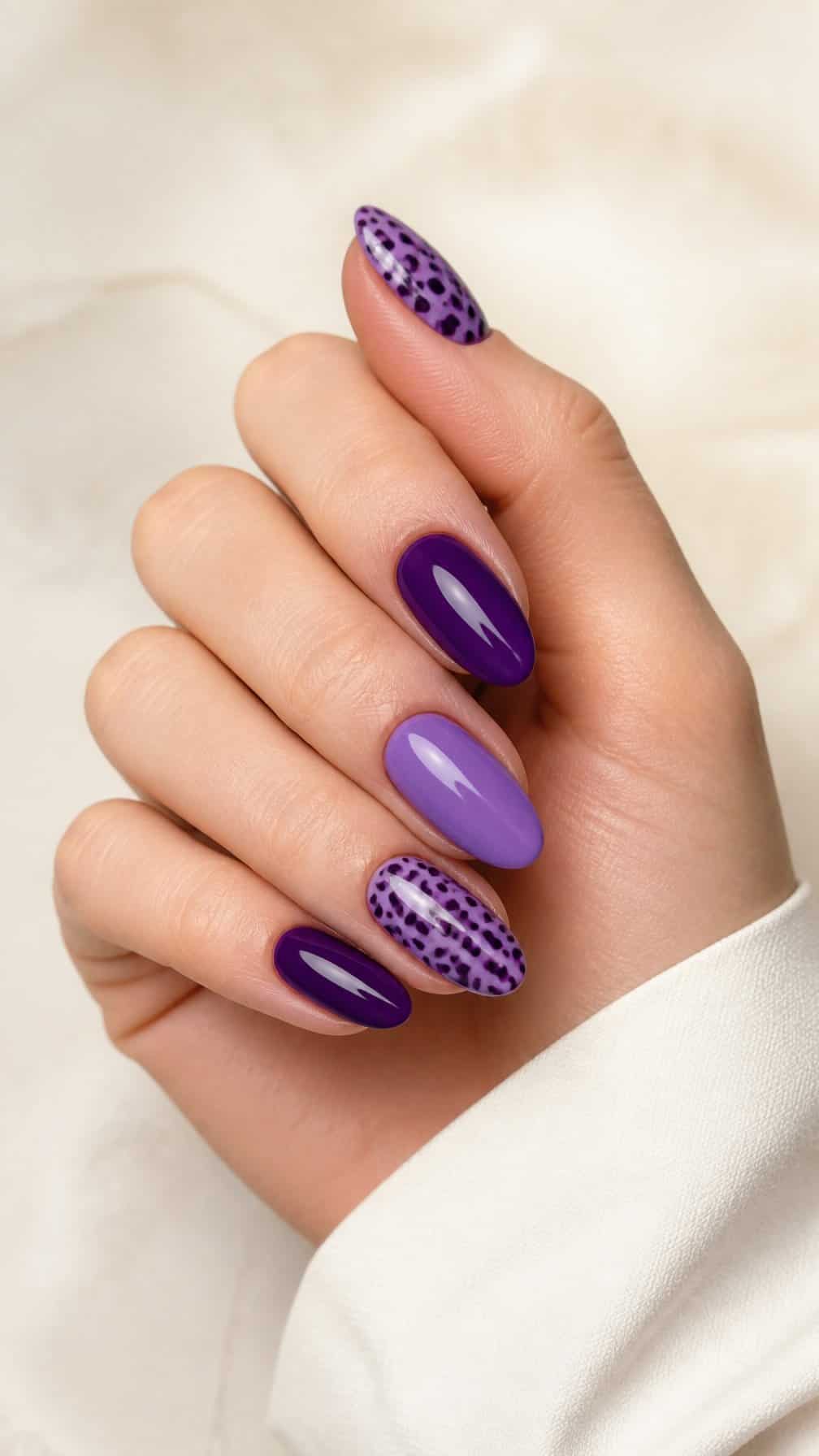
I like this playful design because it pairs a soft purple base with irregular black spots for a clean, spotted finish. I would use lilac on most nails, then add plum, violet, or white accents to keep the pattern varied without making it look crowded.
I create the spots with a fine nail-art brush or dotting tool, using uneven shapes instead of perfect circles. A glossy topcoat sharpens the contrast, while a matte finish gives the manicure a softer, modern appearance.
Choosing The Right Purple Shade
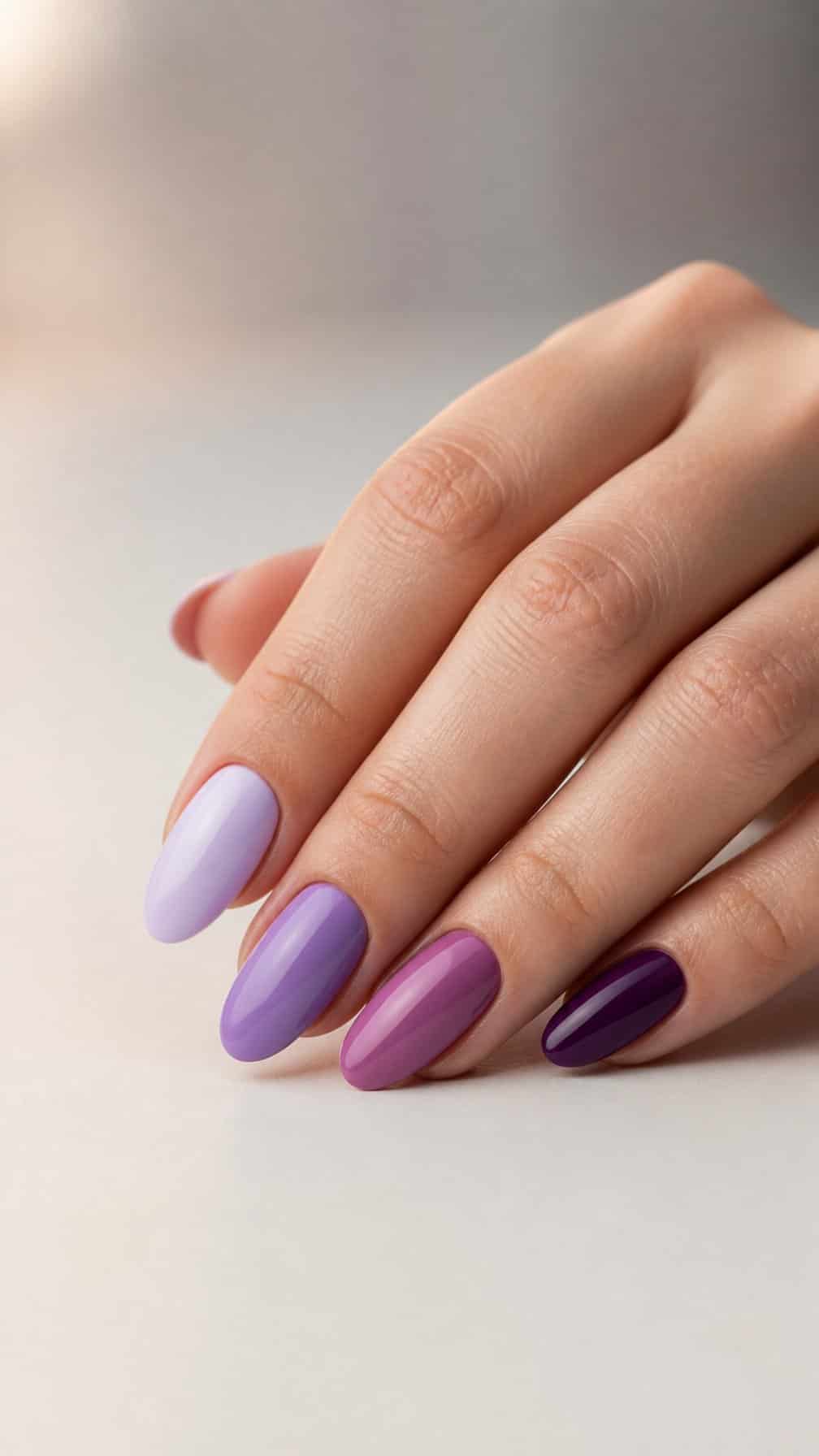
I choose purple polish by considering both the skin’s undertone and the setting. A suitable finish can make the same shade look polished for daily wear, refined for work, or more noticeable for an evening event.
Matching Undertones To Skin Tone
I match the polish’s undertone with the skin’s natural undertone rather than relying only on light or dark intensity. Cool undertones often suit blue-based shades such as lavender, periwinkle purple, violet, and cool plum. These colors can complement pink or rosy tones in the skin without creating a dull, gray appearance.
Warm undertones generally pair well with red- or yellow-based purples, including orchid, mauve, berry, raisin, and warm eggplant. If I have a neutral undertone, I can wear most purple families, but balanced shades such as dusty lilac, medium grape, and muted plum offer the easiest coordination.
I also consider contrast. Pale lilac creates a soft effect on fair skin, while rich aubergine provides definition. On medium and deep skin tones, saturated violet, magenta-purple, and blackberry shades remain distinct without looking washed out. Testing one coat near the cuticle helps me judge the color under natural light.
Selecting Finishes For Different Occasions
I use cream finishes when I want a clean, versatile manicure. Lilac cream works for daytime outfits and casual settings, while plum cream gives a more tailored appearance for work or formal events. These finishes also show the true color clearly, making them practical when I want the shade itself to remain the focus.
Sheer and jelly formulas create a lighter effect and suit short nails, minimalist designs, or layered manicures. I choose shimmer or pearl for a subtle reflective detail, especially for celebrations where I want more interest without heavy glitter.
For evening wear, metallic, chrome, and fine-glitter finishes catch direct light and pair well with simple nail shapes. Chunky glitter creates stronger texture, so I reserve it for accent nails or festive designs. A glossy topcoat deepens most purple shades, while a matte topcoat softens bright violet and makes dark plum look more modern.
Creating A Long-Lasting Manicure
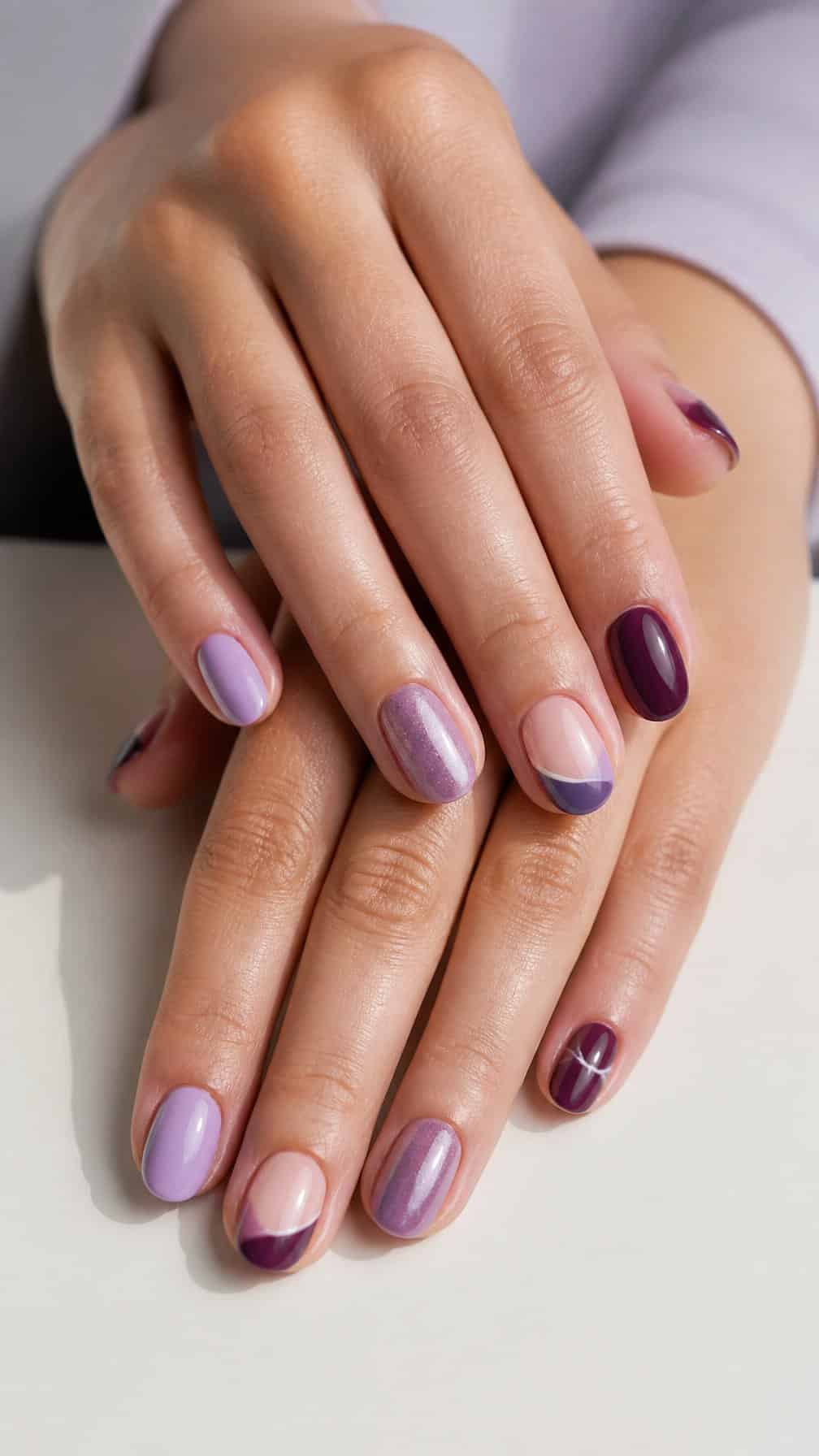
I get the best wear from purple polish when I prepare the nail surface carefully and seal each layer. Clean edges, thin coats, and protection from water and impact help lilac, violet, and plum shades stay even and glossy.
Proper Nail Preparation
I start by removing old polish with an acetone-based remover, then wash and dry my hands thoroughly. Moisture or oil left on the nail can cause polish to separate, so I wipe each nail with rubbing alcohol before applying base coat.
I file in one direction to shape the edge and avoid rough, split corners. I gently push back softened cuticles rather than cutting them, then remove only loose skin with sanitized tools. I avoid buffing aggressively because a thinner nail surface can weaken the manicure.
Before color, I apply a thin ridge-filling or smoothing base coat, depending on the nail’s texture. I let it dry until tacky, then brush polish slightly over the edge to seal the free edge.
Protecting Color And Preventing Chips
I apply two thin color coats instead of one thick coat, allowing each layer to dry for two to three minutes. Thin layers reduce flooding around the cuticle and help darker plum shades dry evenly without dents.
I finish with a glossy top coat, brushing across the nail tip and slightly over the free edge. I add another layer after two or three days, especially on frequently used nails, to restore shine and reinforce the seal.
For routine protection, I wear gloves while washing dishes or using cleaners and avoid opening containers with my nails. I also apply cuticle oil daily; flexible, moisturized nails resist splitting better than dry, brittle edges.