Your wedding hairstyle should support your day, not demand constant attention. If you prefer a polished look without complicated styling, you can choose an option that feels comfortable, secure, and true to your personal taste.

Save for later
Want to come back to this story? Save it with your email so it is easy to find again.
These 23 low-fuss bridal hairstyles help you look refined while keeping your preparation and upkeep simple. I cover adaptable choices for short, medium, and long hair, along with practical ways to keep each style comfortable throughout the celebration.
Table of Contents
- 1 1) Low Chignon with a Center Part
- 2 2) Sleek Low Ponytail with Face-Framing Pieces
- 3 3) Textured Half-Up Hairstyle with Soft Waves
- 4 4) Classic French Twist with Minimal Pins
- 5 5) Loose Side Braid with Wispy Tendrils
- 6 6) Polished Low Bun with a Middle Part
- 7 7) Beachy Waves with a Simple Veil
- 8 8) Relaxed Braided Crown with Natural Texture
- 9 9) Short Bridal Bob with a Deep Side Part
- 10 10) Pixie Cut with a Decorative Hairpin
- 11 11) Shoulder-Length Waves with a Floral Comb
- 12 12) Low Knot with Soft Curtain Bangs
- 13 13) Messy Bun with a Delicate Headband
- 14 14) Straight Hair with a Minimalist Barrette
- 15 15) Half-Up Twist with Loose Ends
- 16 16) Low Side Ponytail with Ribbon Detail
- 17 17) Natural Curls with a Side Part
- 18 18) Curly Updo with Pinned-Back Sides
- 19 19) Bohemian Fishtail Braid with Loose Texture
- 20 20) Sleek High Ponytail with Wrapped Base
- 21 21) Chin-Length Bob with Pearl Clips
- 22 22) Loose French Braid with Soft Volume
- 23 23) Low Bun with a Simple Birdcage Veil
- 24 Choosing a Low-Maintenance Style
- 25 Match the Style to Your Hair Texture
- 26 Consider Your Dress and Neckline
- 27 Keeping Your Look Effortless All Day
- 28 Schedule a Realistic Hair Trial
- 29 Use Accessories Without Added Complexity
- 30 Plan for Weather and Venue Conditions
1) Low Chignon with a Center Part

I like a low chignon with a center part because it keeps the shape neat without requiring constant adjustment. I smooth the hair close to the head, gather it at the nape, and secure the ends into a compact bun.
This style suits brides who prefer clean lines and minimal decoration. I can leave the finish sleek or loosen a few pieces around the face for softness, while pins or a simple comb add detail without creating extra fuss.
2) Sleek Low Ponytail with Face-Framing Pieces

I smooth my hair into a low ponytail at the nape, keeping the finish polished without adding unnecessary volume. A center or soft side part lets the style suit my face shape and works well with a veil, comb, or minimalist earrings.
I leave two slim pieces loose around my face and gently bend them with a curling iron, then brush them lightly for a relaxed finish. I secure the ponytail with a covered elastic and wrap a small section of hair around it to keep the base neat.
This style works best on straight or softly blown-out hair. I use lightweight smoothing cream rather than heavy hairspray, so the ponytail stays touchable while flyaways remain controlled.
3) Textured Half-Up Hairstyle with Soft Waves

I like this style because it keeps hair away from my face without requiring a rigid updo. I would add loose waves, then gather the top section at the back with discreet pins or a small covered elastic.
I would leave a few pieces around the temples for a relaxed finish and gently loosen the crown for texture. This approach suits medium to long hair and works well with simple accessories, such as a narrow comb or a few small pins.
I would ask my stylist to use lightweight products that provide hold without making the waves stiff. A trial run helps me check how the pinned section feels and whether the style stays comfortable for several hours.
4) Classic French Twist with Minimal Pins

I smooth my hair back into a low twist and secure only the sections that need support. This approach keeps the shape polished without creating a stiff, overworked finish.
I prefer a few strong pins placed inside the twist, where they stay hidden and distribute the weight evenly. A light mist of flexible hairspray controls flyaways while preserving natural movement around my face.
This style works best on medium to long hair with some texture. I add subtle volume at the crown or leave a few fine strands loose near the temples for a softer bridal look.
5) Loose Side Braid with Wispy Tendrils

I gather the hair loosely over one shoulder and weave it into a relaxed three-strand braid. I keep the tension soft, allowing a few uneven sections to preserve the style’s natural texture without making it look unfinished.
I pull delicate tendrils free around the temples, cheeks, and nape, then shape them with a curling iron for gentle movement. I secure the braid with discreet pins and finish with light-hold spray so it stays flexible through the ceremony and reception.
This style works well with medium to long hair and pairs naturally with lace, floral, or minimalist gowns. I add small pins, fresh flowers, or a narrow ribbon only when the accessories complement the braid rather than compete with it.
6) Polished Low Bun with a Middle Part

I smooth my hair into a clean middle part and gather it at the nape of my neck. I twist the length into a compact bun, securing it with pins that match my hair color. The style keeps loose strands controlled without requiring frequent adjustments.
I prefer this option when I want a refined look that works with veils, hairpins, or statement earrings. A small amount of styling cream adds shine and helps tame flyaways, while leaving the finish soft rather than stiff.
7) Beachy Waves with a Simple Veil
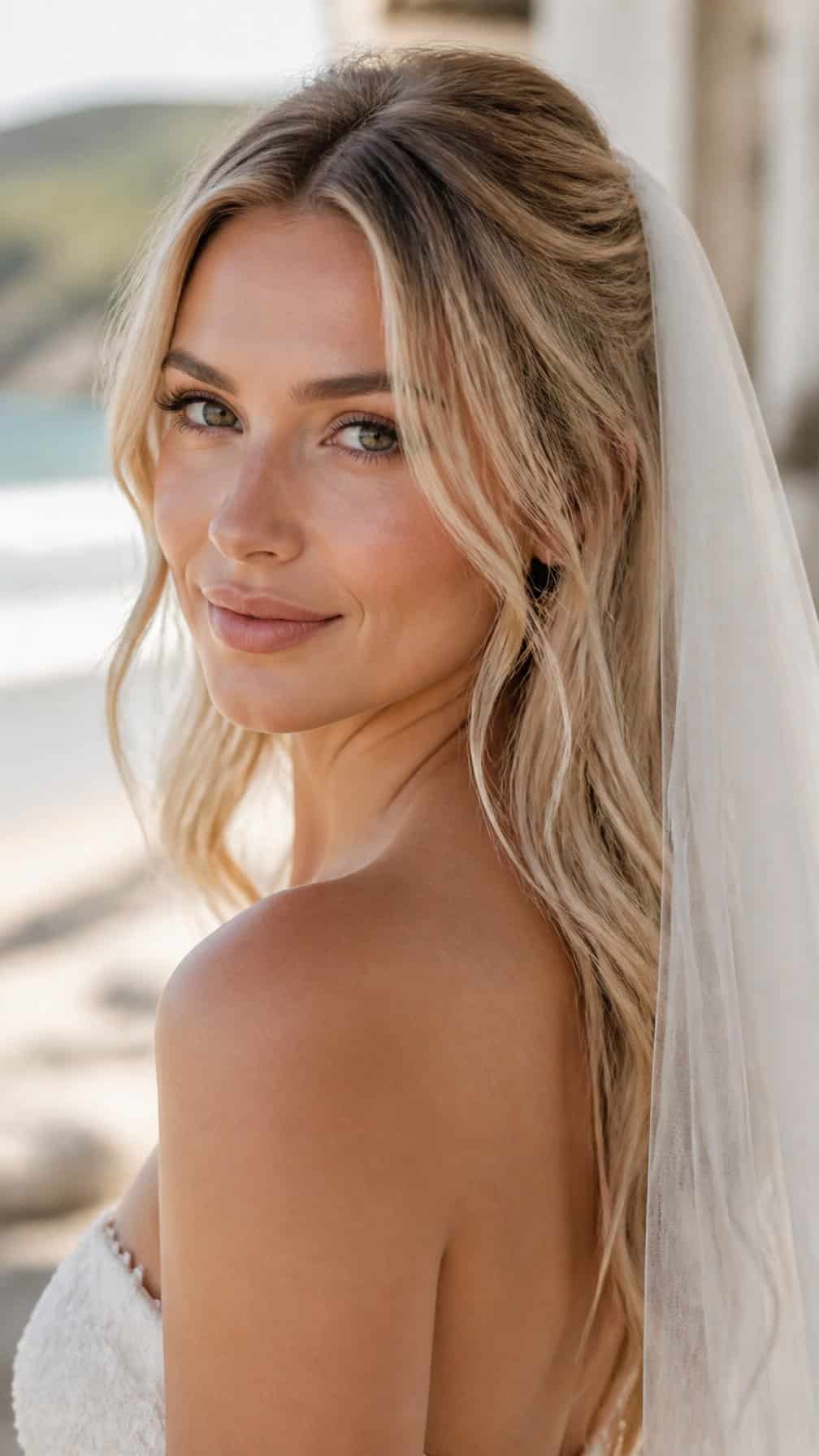
I create loose waves with a large-barrel iron, then brush them gently to soften the shape. The style keeps my hair relaxed and touchable without requiring intricate pinning or constant adjustment.
I secure a lightweight veil beneath the crown or at the nape, depending on the coverage I want. A few face-framing pieces can stay loose, while flexible-hold spray helps the waves maintain their texture without feeling stiff.
This option works well with side parts, center parts, and shoulder-length or longer hair. I ask my stylist to test the veil placement beforehand so it stays comfortable and does not flatten the waves.
8) Relaxed Braided Crown with Natural Texture

I like this braided crown for its soft structure and easy movement. I braid two sections from the front, join them at the back, and leave the remaining hair loose so its natural texture stays visible.
I avoid pulling the braid too tightly, which keeps the style comfortable and prevents it from looking overly polished. A few face-framing strands add softness, while discreet pins secure the crown without creating a heavy, rigid shape.
I use a light texturizing spray when the hair needs more grip, then finish with flexible hairspray. This approach works well with waves, curls, and gently air-dried hair, especially when I want the hairstyle to look intentional without demanding constant adjustment.
9) Short Bridal Bob with a Deep Side Part

I like a deep side part on a short bob because it creates a clean, structured shape without requiring elaborate styling. I would smooth the heavier side behind one ear and let the opposite side fall naturally along the cheekbone.
A light styling cream can control flyaways while preserving the bob’s movement. I would add a subtle bend at the ends if the cut needs more definition, then secure one side with a discreet pin or a small pearl clip.
This style works well with simple earrings, a veil attached near the part, or a fingertip-length veil positioned at the back. I would finish with flexible hairspray so the hair stays polished without looking stiff.
10) Pixie Cut with a Decorative Hairpin
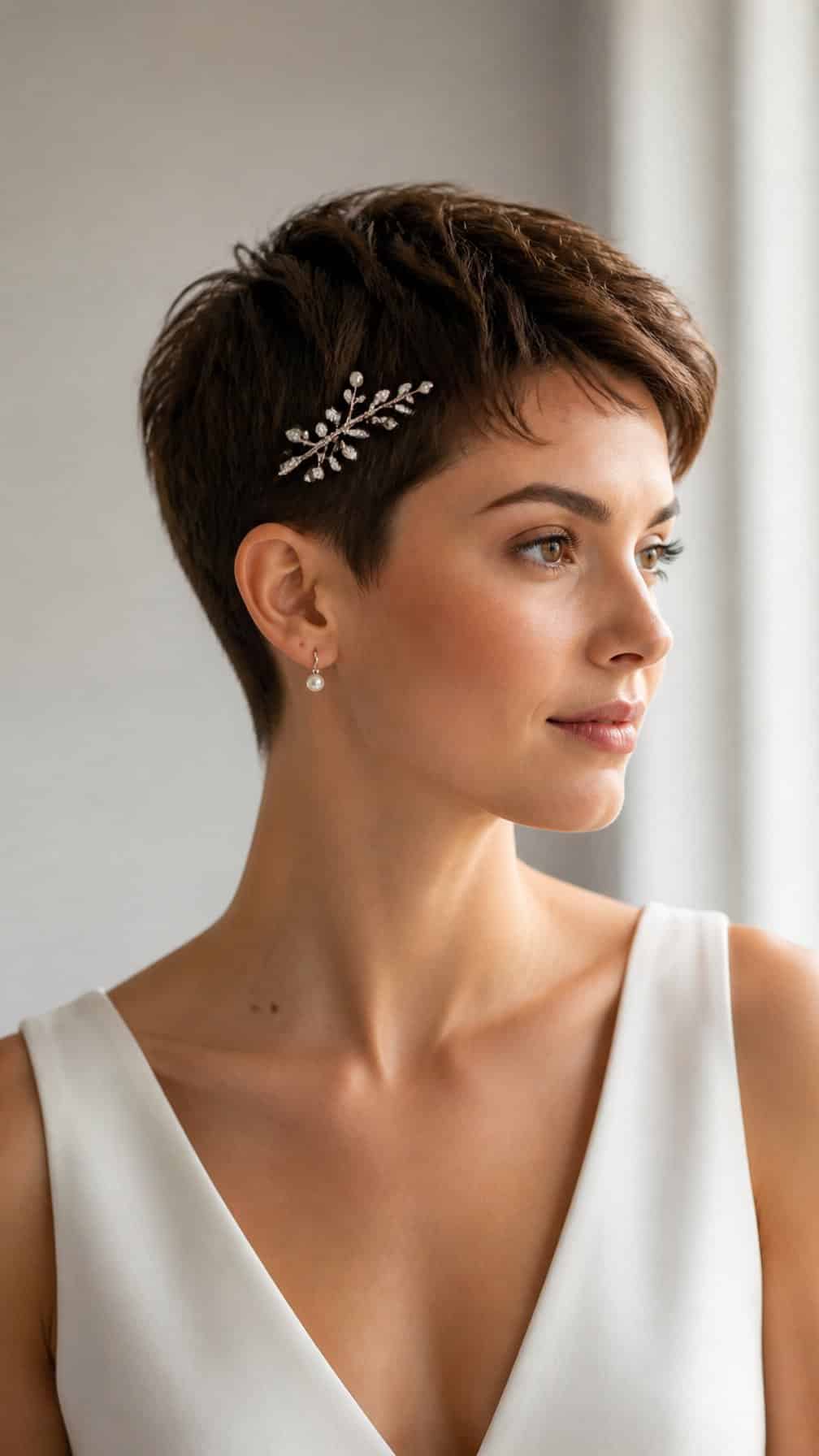
I would keep the cut polished with a light styling cream that defines its shape without creating stiffness. A decorative hairpin placed above one ear adds a small bridal detail while keeping the rest of the style simple and secure.
I would choose a pin with a smooth clasp and a low profile, especially for short or fine hair. Pearls, crystal details, or brushed metal can complement the dress and jewelry without making the hairstyle feel overly formal.
Before the ceremony, I would test the pin through the full day of movement. Positioning it into a small section of textured hair helps prevent slipping, and carrying a spare provides a practical backup.
11) Shoulder-Length Waves with a Floral Comb

I like shoulder-length waves because they frame the face without requiring a complicated updo. I create loose bends through the mid-lengths, then brush them lightly so the texture looks soft rather than tightly curled.
I place a floral comb above one ear or slightly behind the part, securing it with discreet pins. A comb with a lightweight design stays comfortable during the ceremony and reception while adding a clear bridal detail.
I finish with flexible hairspray and leave the ends natural. This style works well with strapless, square-neck, and simple dresses.
12) Low Knot with Soft Curtain Bangs
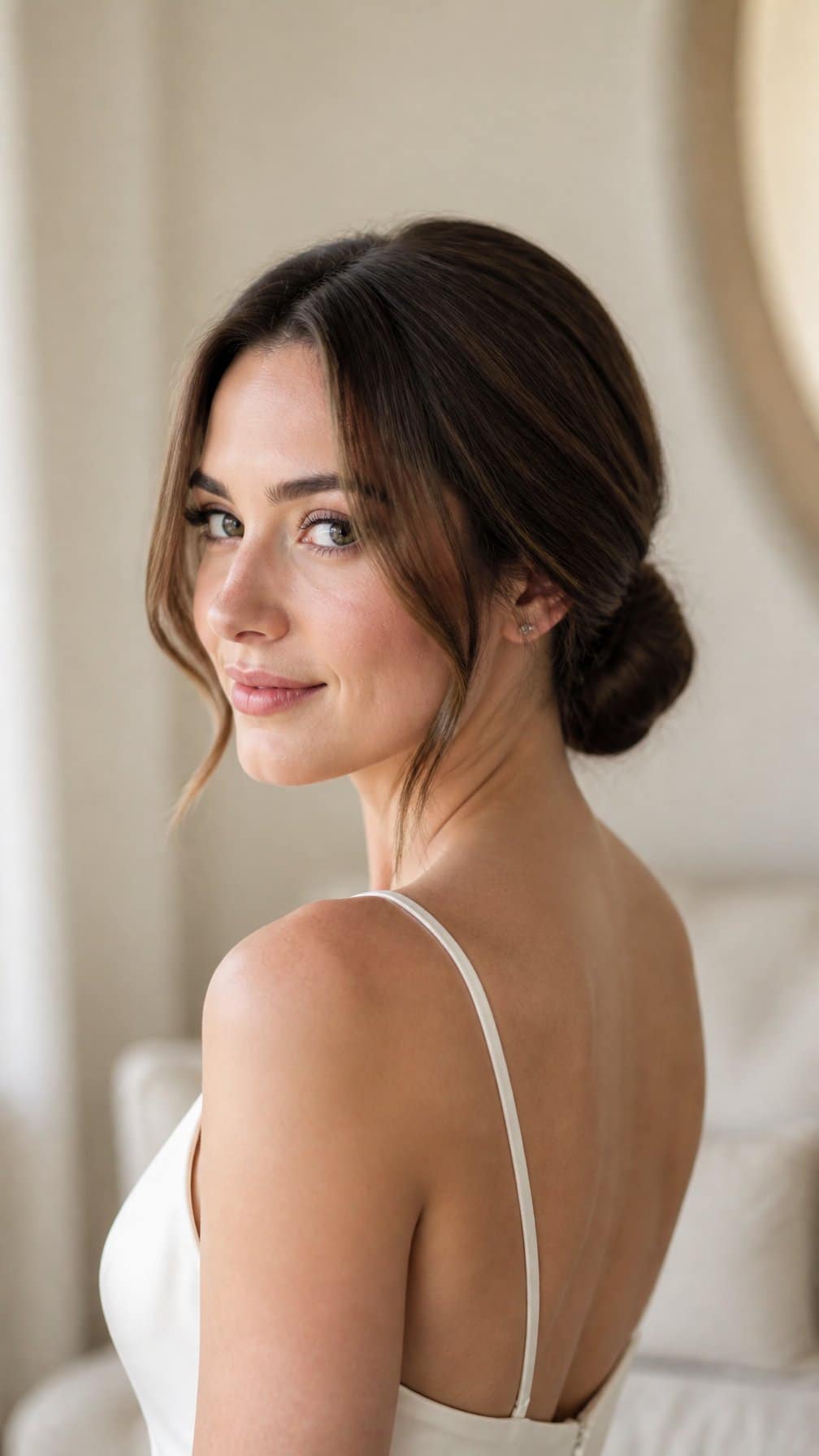
I like this low knot because it keeps the back of my hair tidy without looking overly structured. I part my hair down the center, leave the front pieces loose, and gather the rest at the nape. The knot works well with simple earrings or a detailed neckline.
I ask my stylist to shape the curtain bangs so they fall softly around my cheekbones. A light wave adds movement, while a small amount of smoothing cream controls flyaways without making the style look stiff.
This hairstyle suits straight, wavy, and lightly textured hair. I secure the knot with pins that match my hair color and keep a few spare pins nearby for touch-ups.
13) Messy Bun with a Delicate Headband
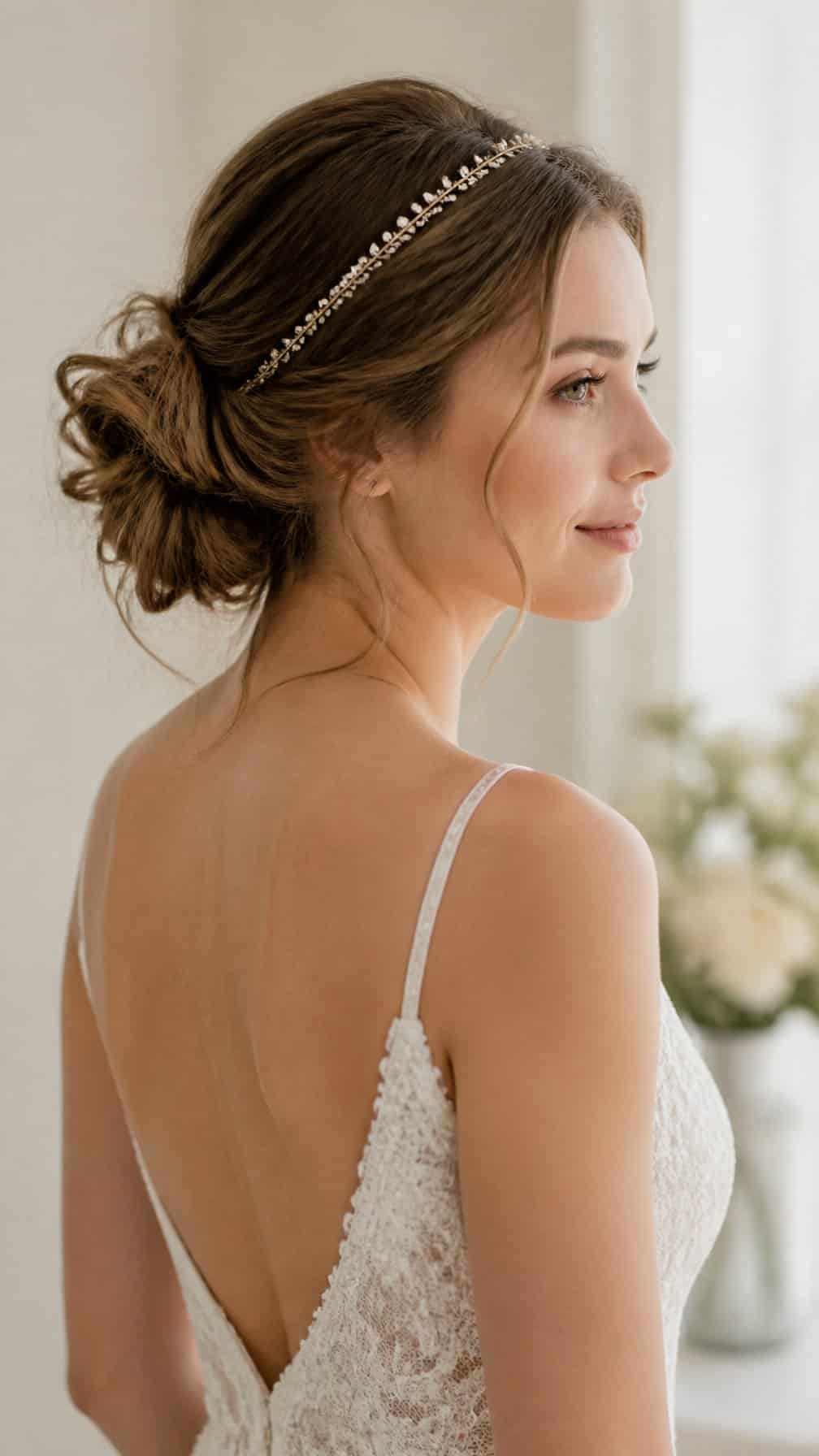
I gather my hair into a loose bun at the nape or slightly above it, leaving a few natural pieces around my face. This style keeps the shape relaxed without requiring every strand to sit perfectly, which suits me if I prefer a low-maintenance look.
I add a slim headband just behind my hairline, choosing a design with small pearls, crystals, or simple metallic details. The band provides definition and a bridal touch while staying lighter and less restrictive than a heavily embellished accessory.
I secure the bun with pins and finish with a flexible-hold spray. I keep the texture soft so the hairstyle remains comfortable through the ceremony, photos, and reception.
14) Straight Hair with a Minimalist Barrette
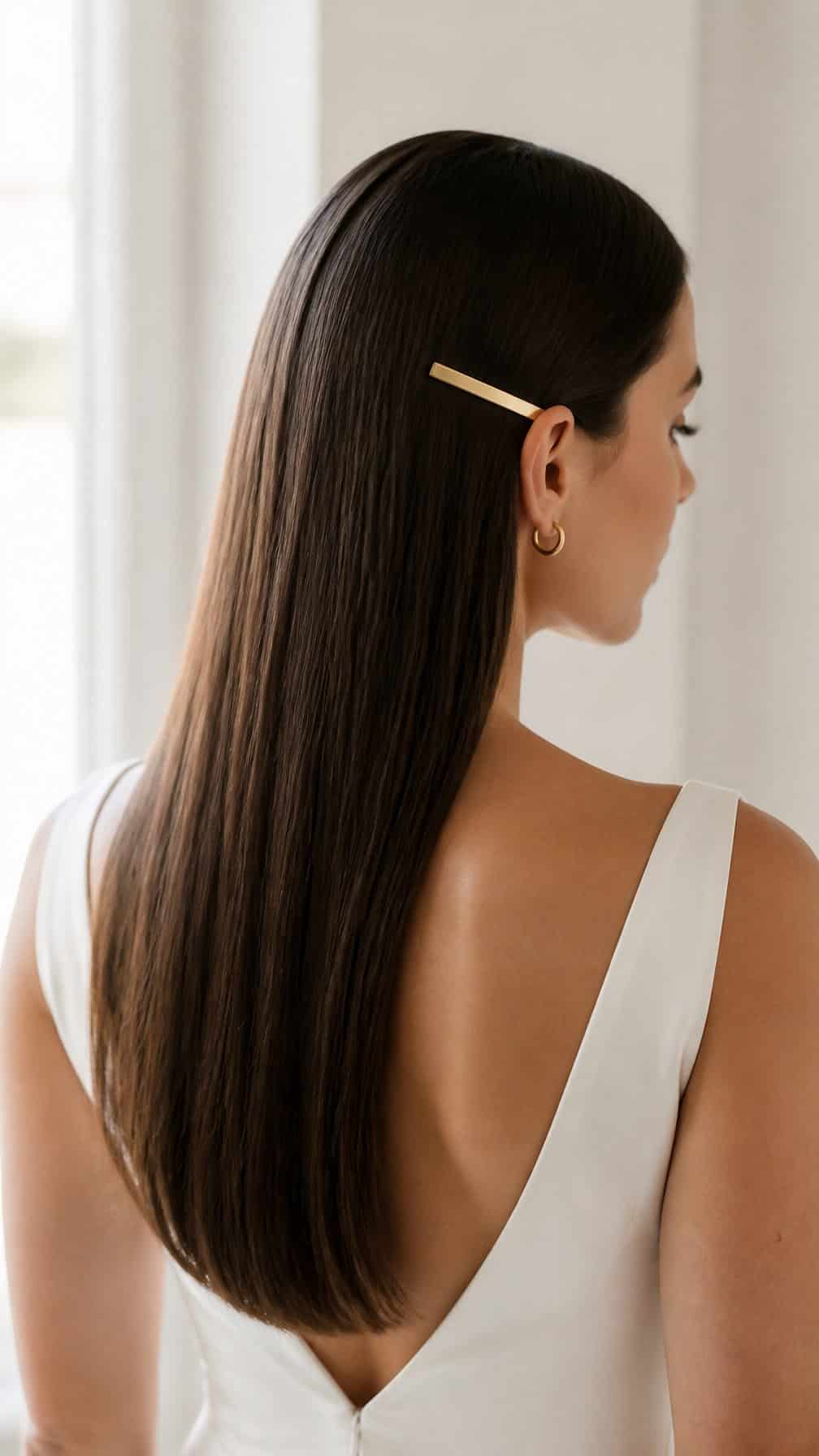
I keep straight hair sleek and polished, then add one slim barrette behind the ear or at the nape. This style takes little preparation and lets the hair’s natural shine remain the focus.
I choose a barrette with a simple finish, such as brushed metal, pearl, or matte acetate, to complement the dress without competing with it. A light smoothing cream controls flyaways, while flexible-hold spray keeps the shape in place without making the hair stiff.
I prefer this look for brides who want their hair down but dislike elaborate styling. The barrette also offers a practical way to secure one side and keep strands away from the face during photographs and the ceremony.
15) Half-Up Twist with Loose Ends
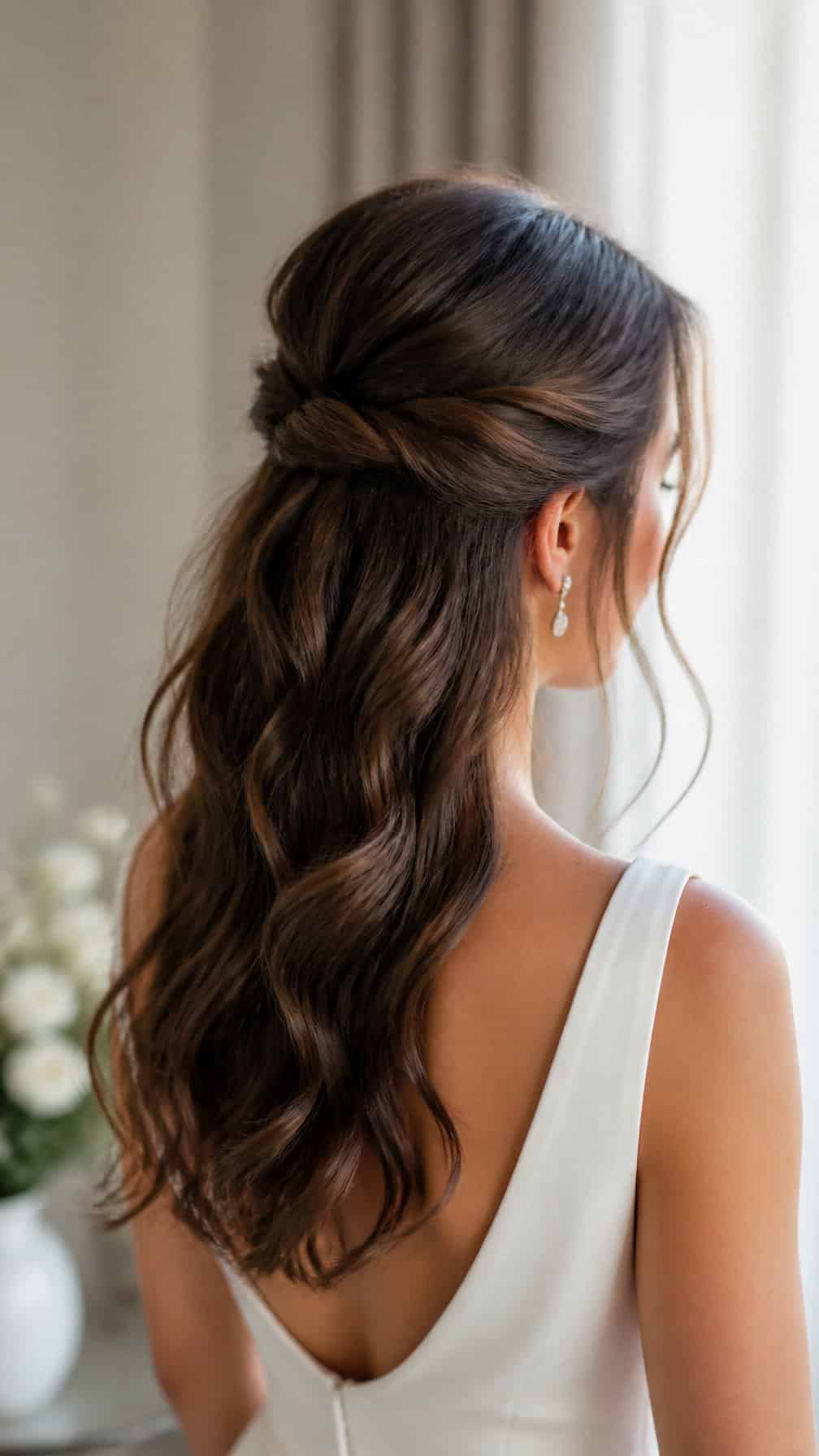
I gather the hair from each side of my head, twist the sections backward, and secure them at the crown. I leave the lower lengths loose, allowing their natural texture or gentle waves to remain visible.
This style keeps hair away from my face without requiring a tightly controlled finish. I can smooth the twists for a polished look or loosen them slightly so the style feels relaxed and comfortable throughout the day.
I use discreet pins and flexible hairspray to hold the twists while preserving movement. Small flowers, a simple comb, or a narrow ribbon can add detail without making the hairstyle feel busy.
16) Low Side Ponytail with Ribbon Detail

I gather my hair into a low ponytail positioned just behind one shoulder, keeping the shape relaxed rather than tightly styled. A smooth crown creates a polished finish, while softly brushed lengths maintain an easy, unfussy look.
I secure the base with a narrow ribbon that matches my dress, bouquet, or wedding colors. Velvet adds texture for a cool-weather celebration, while satin creates a cleaner, lighter detail. I tie the ribbon in a small knot or restrained bow so it stays practical and balanced.
I use a few pins beneath the ponytail to hold the placement and finish with light-hold spray. This style works especially well with statement earrings, open necklines, or a veil attached above the ponytail.
17) Natural Curls with a Side Part
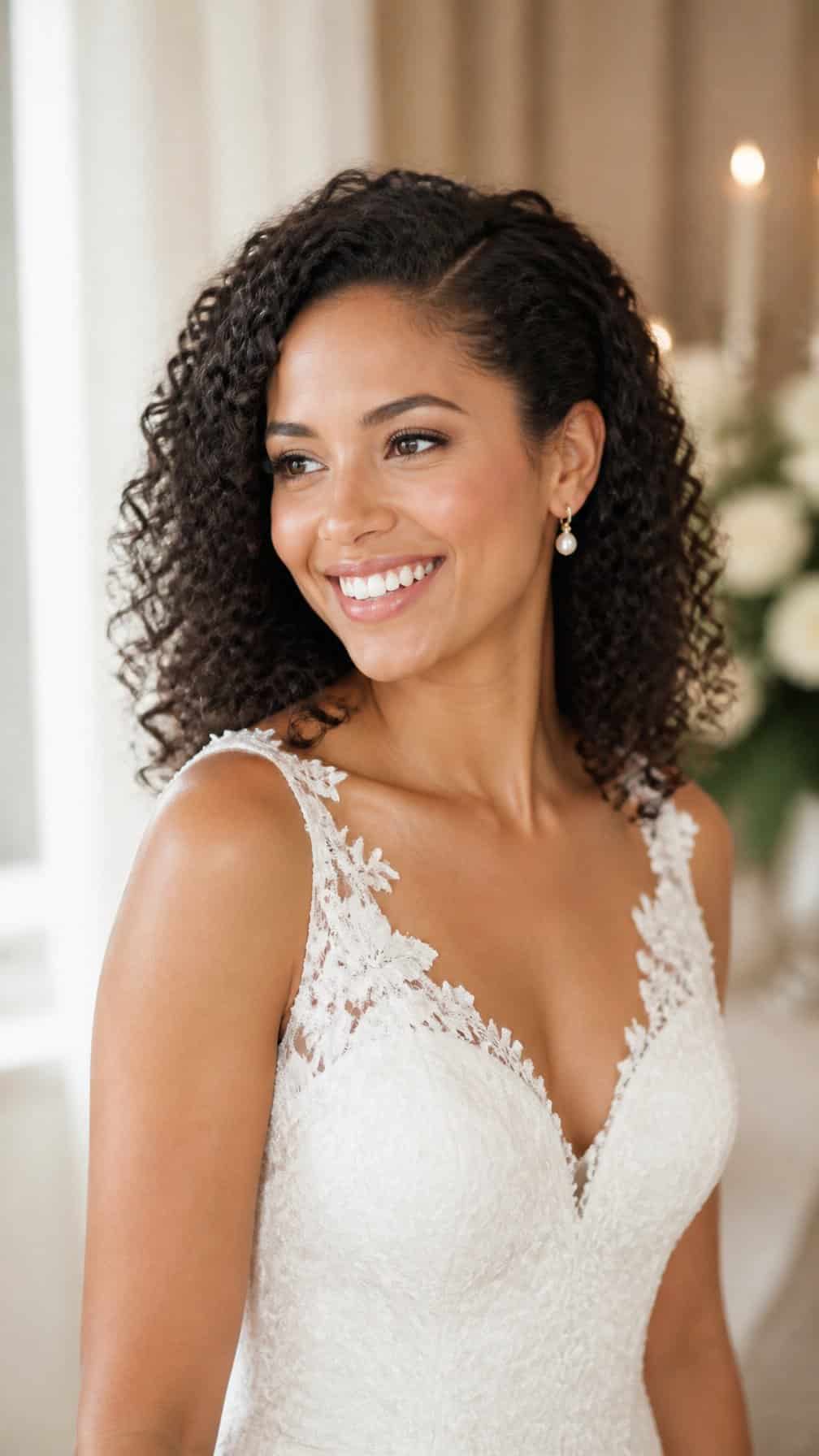
I keep my natural curls defined and move the part to one side for a polished shape without complicated styling. A small amount of curl cream or lightweight gel helps reduce frizz while preserving movement and texture.
I secure only the sections that need control, leaving the rest loose around my shoulders. This approach works well with simple accessories, such as pearl pins or a narrow comb, placed near the part. I also schedule a trial to confirm how my curls respond to the venue’s humidity and my chosen products.
18) Curly Updo with Pinned-Back Sides
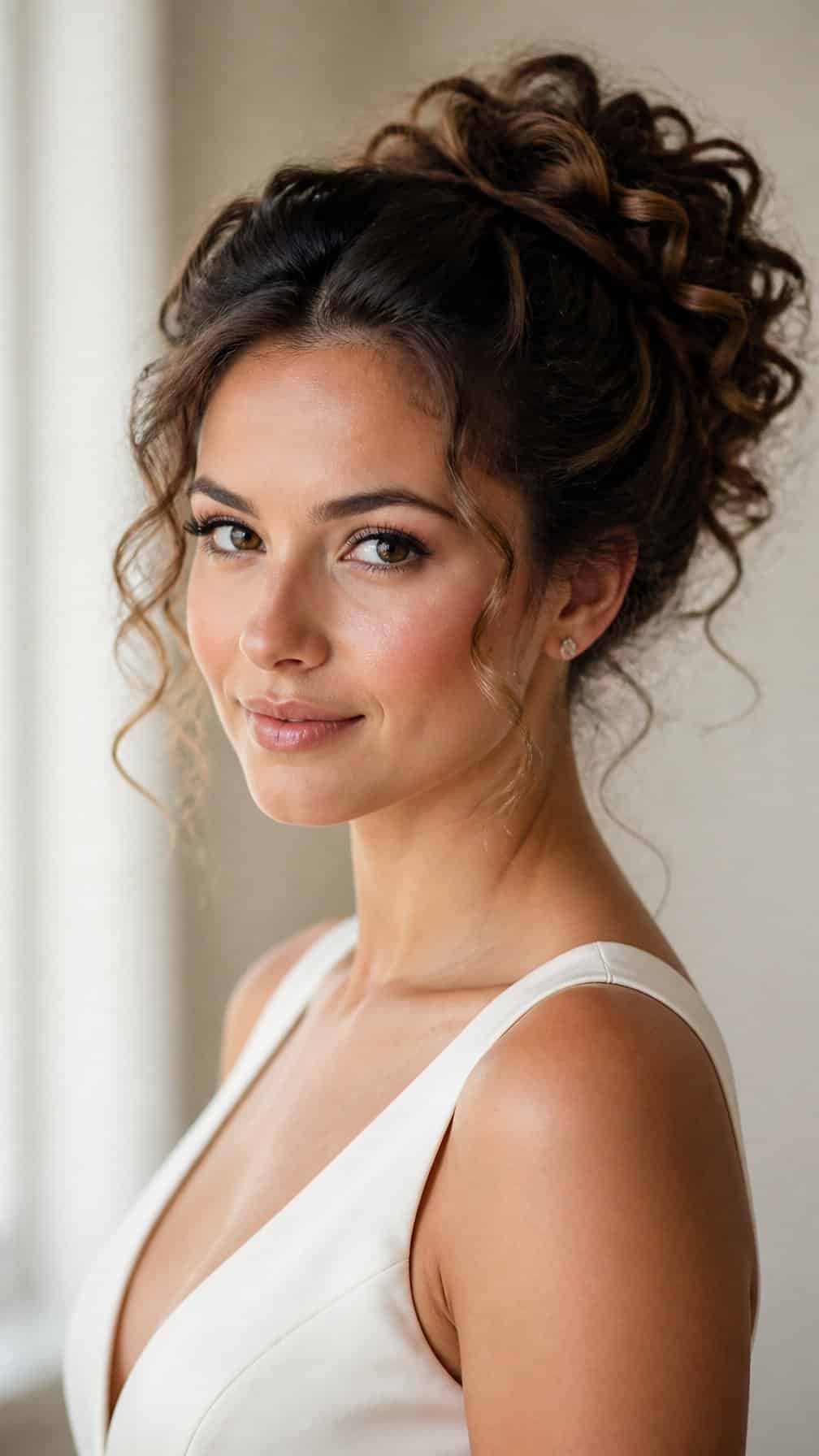
I like this style because it keeps curls gathered without requiring constant adjustment. I would pin the sides neatly behind the ears, then secure the remaining curls into a loose updo that preserves their natural shape and texture.
For a polished finish, I would define a few curls around the face and leave them soft rather than tightly styled. Small pins hidden beneath the curls can hold the shape, while a light-hold spray helps reduce flyaways without making the hair stiff.
I would choose this updo for medium to thick, naturally curly hair or hair styled with a curling iron. A trial run lets me check the placement of the pins, the balance of the curls, and whether the style feels comfortable throughout the day.
19) Bohemian Fishtail Braid with Loose Texture
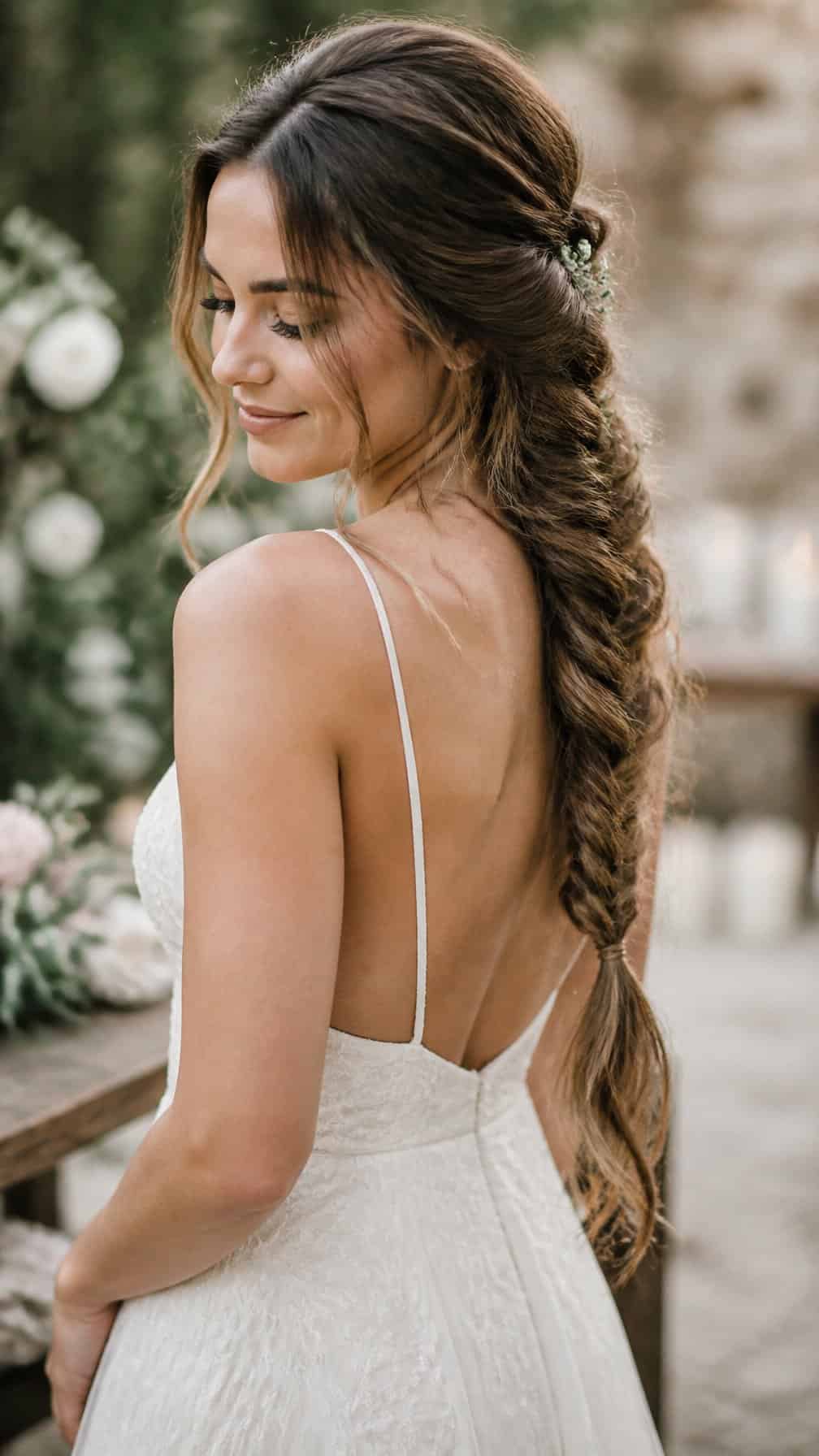
I like this fishtail braid for its relaxed structure and soft, handmade character. I keep a few face-framing pieces loose and pull gently at the braid to create texture without making it look untidy.
I usually start with lightly waved hair and secure the braid at the nape or over one shoulder. Small floral pins, a simple ribbon, or pearl accents can complement the style while keeping the focus on the braid. I finish with flexible-hold spray so the texture stays touchable and the loose strands remain natural throughout the celebration.
20) Sleek High Ponytail with Wrapped Base

I like this high ponytail for its clean shape and controlled finish. I smooth my hair back at the crown, secure it firmly, and wrap a small section around the elastic to conceal it. The result keeps the face open while adding height without loose strands.
I use a strong-hold gel or styling cream to manage flyaways, then finish the ponytail with a flat iron if I want a straighter texture. I prefer a simple veil, pearl pins, or small earrings so the hairstyle remains the main detail.
21) Chin-Length Bob with Pearl Clips
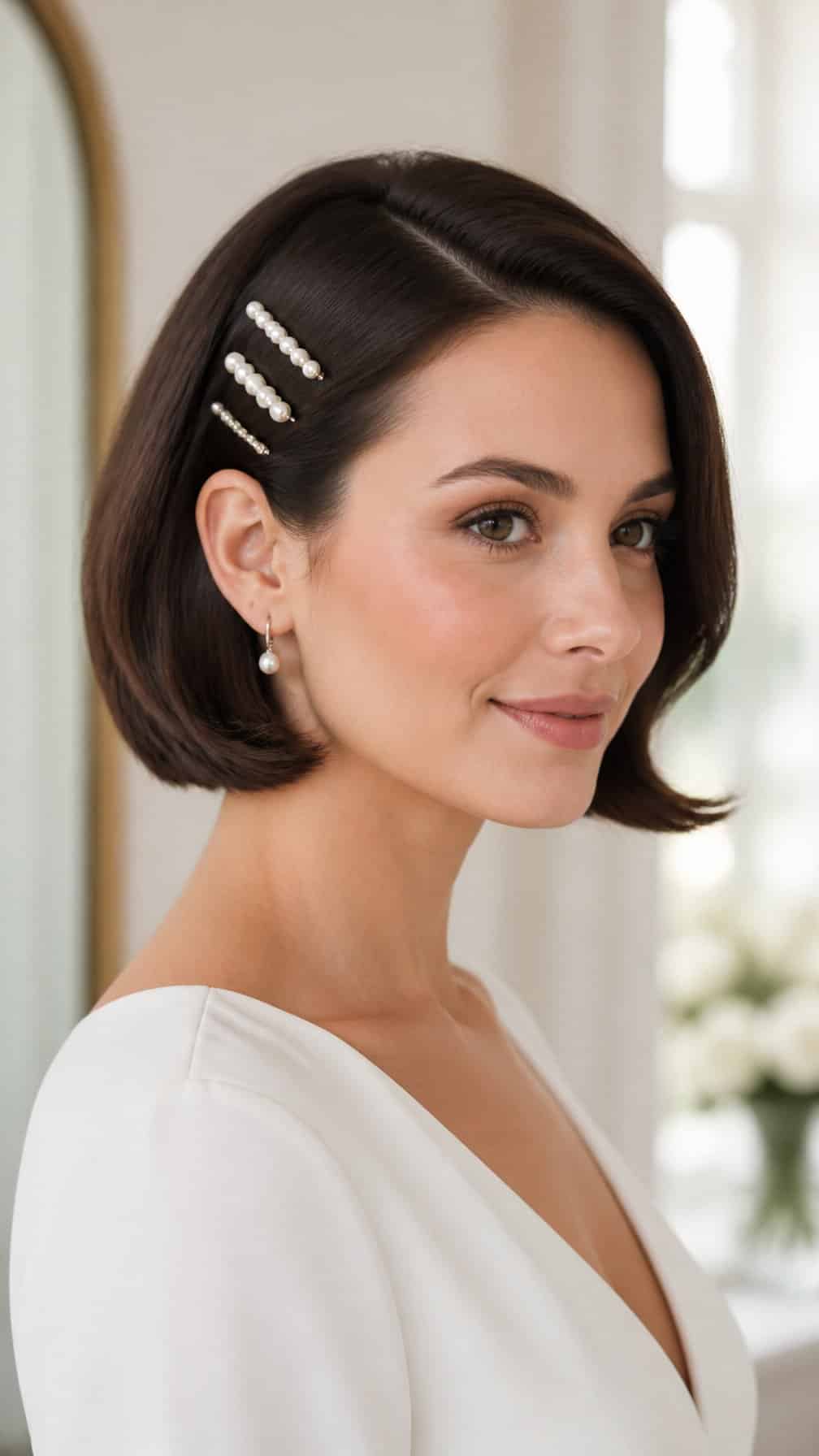
I like a chin-length bob for its clean shape and easy upkeep. I would keep the hair smooth or add a slight bend at the ends, then place two or three pearl clips above one ear for a polished bridal detail.
This style keeps the neckline and earrings visible without requiring pins, extensions, or repeated adjustments. I would choose clips with secure clasps and position them on the fuller side of the part so they stay balanced throughout the ceremony and reception.
22) Loose French Braid with Soft Volume

I begin with gently waved hair and add volume at the crown before braiding. I keep the French braid relaxed rather than pulling each section tightly, which creates a softer shape and makes the style comfortable for extended wear.
I secure the braid with a discreet elastic, then loosen a few strands around my face and along the plait. I prefer this look for brides who want their hair controlled without a rigid finish. A light mist of flexible hairspray helps hold the texture while preserving natural movement.
23) Low Bun with a Simple Birdcage Veil
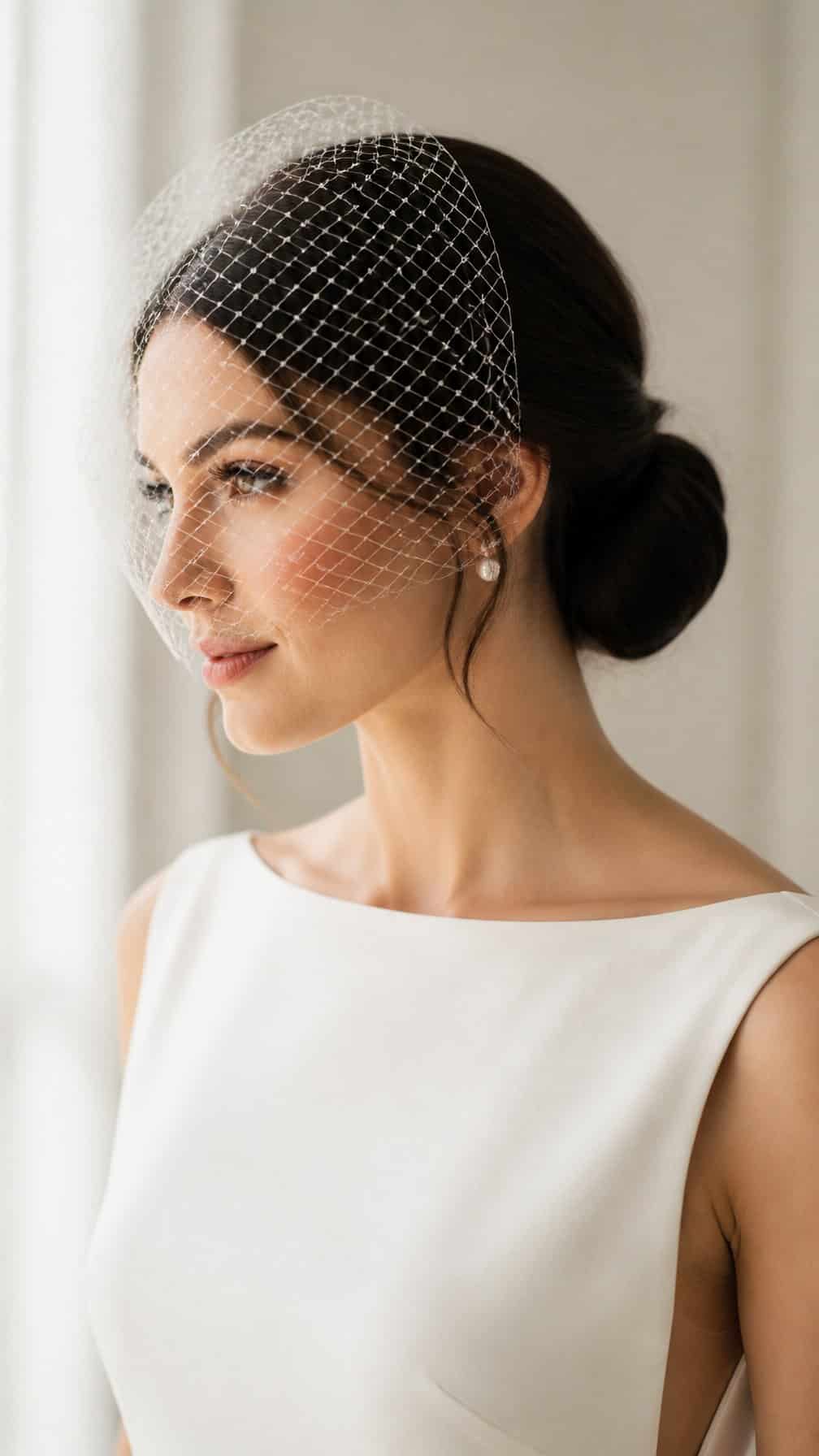
I smooth my hair into a low bun at the nape of my neck, keeping the shape compact and secure. This style suits me when I want a polished look without curls, pins, or loose pieces competing for attention.
I attach a short birdcage veil slightly off-center, using discreet pins beneath the bun. The veil frames my eyes and adds vintage detail while leaving my hairstyle visible from every angle.
I prefer a clean side part or brushed-back front, depending on my dress and accessories. A light layer of flexible hairspray controls flyaways without making the bun feel stiff.
Choosing a Low-Maintenance Style
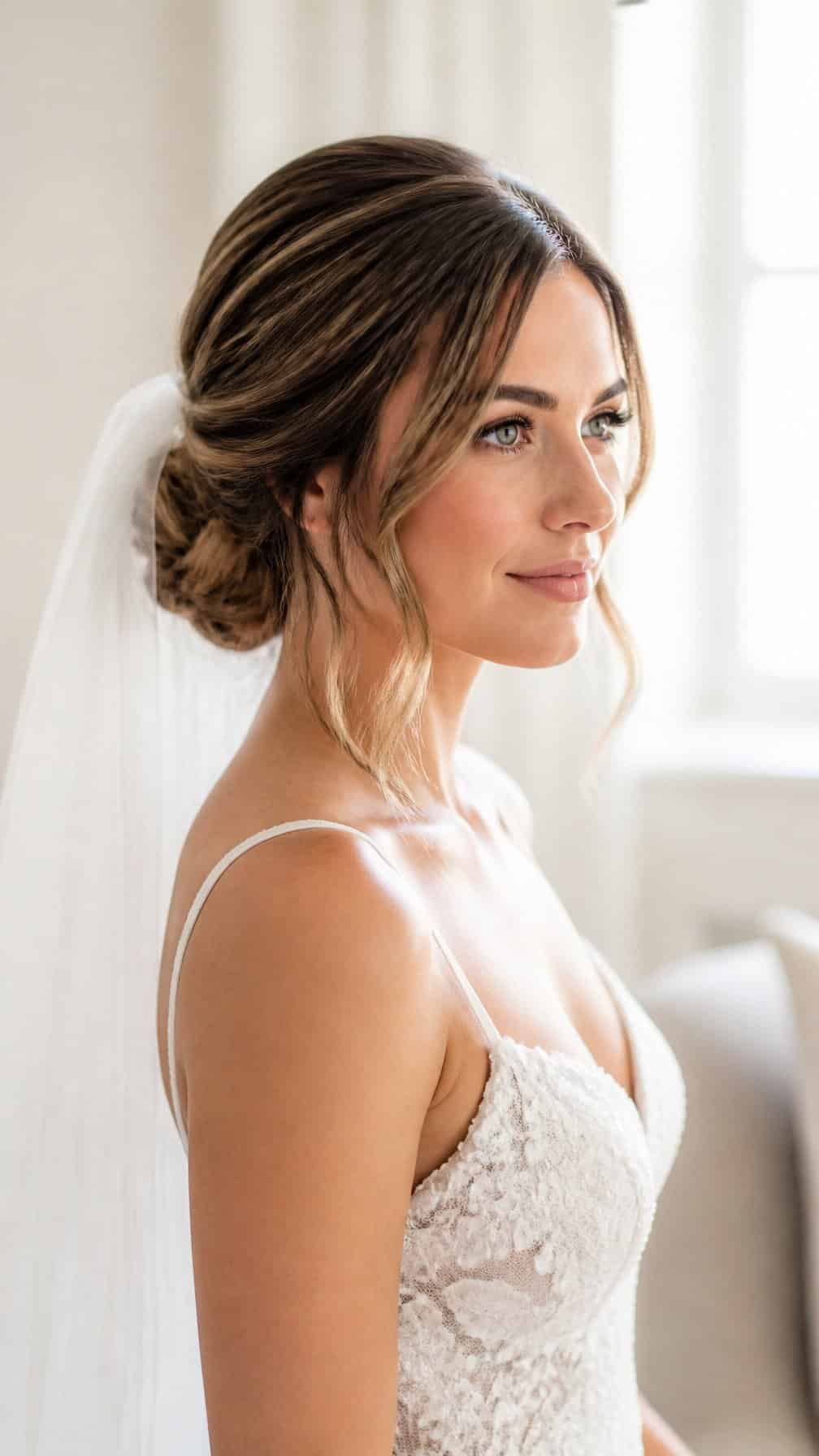
I choose a bridal hairstyle that works with the hair’s natural behavior and stays comfortable through the ceremony, photos, and reception. The dress neckline, fabric, and accessories also help determine whether a loose, pinned, or pulled-back style creates the right balance.
Match the Style to Your Hair Texture
I work with my natural texture instead of forcing it into a shape that needs constant correction. Fine, straight hair often holds best in a sleek low bun, a smooth ponytail, or a half-up style with light teasing at the crown. I avoid heavy products that flatten the roots.
For waves or curls, I can define the existing pattern and secure only the areas that need control. A low twist, textured chignon, or pinned-back style keeps the shape visible while reducing handling. I schedule a trial with the products I plan to use, especially if humidity affects my hair.
Thick hair needs strong but comfortable pins and a style that distributes weight. I ask my stylist to remove unnecessary bulk so the hairstyle does not pull at my scalp. A few face-framing pieces can soften the look without creating loose sections that require frequent adjustment.
Consider Your Dress and Neckline
I use the neckline to decide how much hair should remain around my shoulders. A high neckline, halter, or detailed back usually pairs well with a low bun or sleek updo, which keeps the dress visible. I test the hairstyle with the actual veil, earrings, and hair accessories.
A strapless or sweetheart neckline gives me more flexibility. Loose waves, a half-up style, or a low ponytail can add softness without covering the bodice. If the dress has lace, beading, or a dramatic back, I keep the hairstyle simpler so the details remain easy to see.
I also consider movement and comfort. A strap or collar that catches on loose hair can make an otherwise simple style inconvenient, while a long veil may pull on delicate pins. I choose secure placement and avoid accessories that add weight during several hours of wear.
Keeping Your Look Effortless All Day

I protect comfort by testing the hairstyle under realistic conditions, choosing lightweight accessories, and preparing for the venue’s temperature and humidity. My goal is a style that still looks intentional after walking, dancing, photos, and several hours of wear.
Schedule a Realistic Hair Trial
I schedule the trial at least four weeks before the wedding and bring my veil, hair accessories, and a photo of my dress neckline. I also arrive with clean, fully dry hair unless my stylist gives different instructions. This lets me assess the style accurately instead of judging it on unusually oily or heavily textured hair.
I wear the hairstyle for several hours during the trial. I walk outside, sit in a chair, move my head, and test whether pins feel tight or scratch my scalp. I take front, side, and back photos in natural light, then ask my stylist to record the products, tools, and pin placement used.
Use Accessories Without Added Complexity
I choose accessories that secure easily and do not require constant adjustment. A slim comb, small pins, or a lightweight ribbon can add polish without changing the hairstyle’s structure. I avoid pieces with sharp edges, heavy chains, or loose elements that may catch on my veil, dress, or guests’ clothing.
I ask my stylist to install the accessory during the trial and test its stability with normal movement. If I wear a veil, I confirm whether it attaches above or below the style and whether removing it will disturb the pins. I pack spare bobby pins and a small comb, but I assign one trusted person to handle quick fixes.
Plan for Weather and Venue Conditions
I match my hairstyle to the setting rather than relying on indoor conditions. For an outdoor summer ceremony, I ask about humidity-resistant products and avoid styles that depend on perfectly smooth strands. For a windy location, I use secure pins and keep delicate face-framing pieces limited.
I also consider the venue’s temperature, travel time, and dance space. I carry blotting paper, a travel-size finishing spray, and any approved touch-up products in an emergency kit. If rain threatens, I arrange covered transitions between locations and keep a compact umbrella available without compressing the hairstyle.