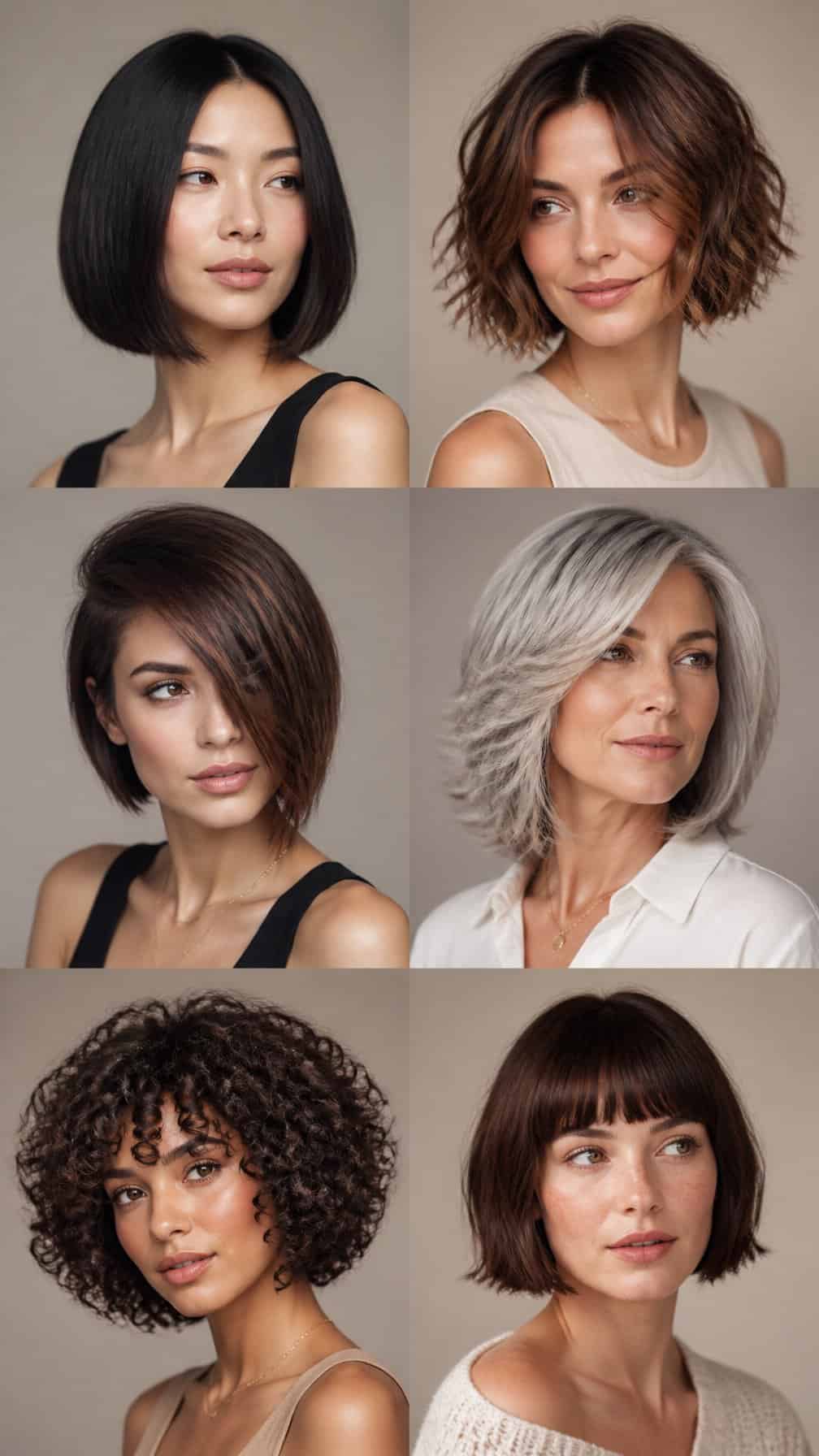
The right bob can balance your features, highlight your best angles, and suit your personal style. I’ll guide you through polished, textured, layered, and wavy options designed for different face shapes and hair types.
Save for later
Want to come back to this story? Save it with your email so it is easy to find again.
You can choose a bob that complements your face shape while matching your preferred length, texture, and styling routine. Explore versatile cuts for oval, round, square, heart-shaped, and long faces, along with practical tips to help you maintain the look.
Table of Contents
- 1 1) Classic Chin-Length Bob
- 2 2) Blunt Bob for Oval Faces
- 3 3) Side-Parted Bob for Round Faces
- 4 4) Long Bob for Square Faces
- 5 5) Soft Layered Bob for Heart-Shaped Faces
- 6 6) Angled Bob for Round Faces
- 7 7) Collarbone Bob for Long Faces
- 8 8) Curtain-Bang Bob for Oval Faces
- 9 9) Textured Bob for Fine Hair
- 10 10) Wavy Bob for Square Faces
- 11 11) Sleek A-Line Bob
- 12 12) Chin-Grazing Bob for Heart-Shaped Faces
- 13 13) Shaggy Bob for Round Faces
- 14 14) Curly Bob for Oval Faces
- 15 15) Inverted Bob for Square Faces
- 16 16) French Bob with Micro Bangs
- 17 17) Asymmetrical Bob for Round Faces
- 18 18) Layered Lob for Long Faces
- 19 19) Bixie Bob for Fine Hair
- 20 20) Jawline Bob with Side Bangs
- 21 21) Feathered Bob for Heart-Shaped Faces
- 22 22) Stacked Bob for Fine Hair
- 23 23) Tousled Bob for Oval Faces
- 24 24) Graduated Bob for Square Faces
- 25 Choosing a Bob for Your Face Shape
- 26 Understanding Face Shape Proportions
- 27 Matching Length and Volume to Facial Features
- 28 Styling and Maintenance Tips
- 29 Parting, Bangs, and Texture Considerations
- 30 Trim Schedules and At-Home Care
1) Classic Chin-Length Bob
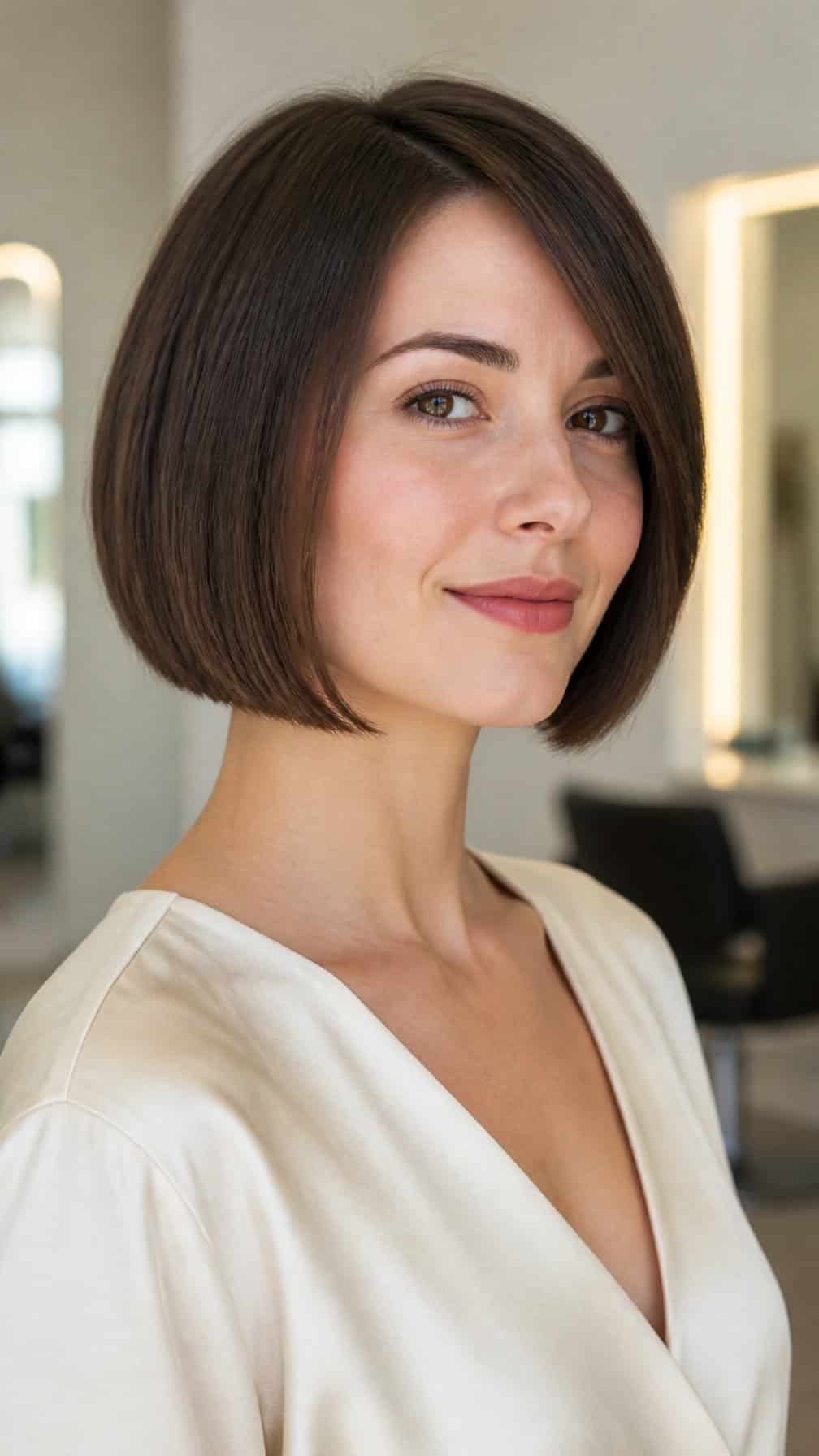
I find a chin-length bob especially effective when I want to define the jaw without adding complicated styling. Its clean perimeter draws attention to the lower face, while subtle internal layers can prevent thick hair from appearing too heavy.
For a round face, I prefer a slightly longer front edge and a center or off-center part to create gentle vertical balance. On oval and heart-shaped faces, a level cut can highlight natural proportions without overwhelming the features.
I usually recommend soft bends or polished ends rather than excessive volume. Regular trims keep the shape precise, and lightweight styling cream helps control flyaways while preserving movement.
2) Blunt Bob for Oval Faces
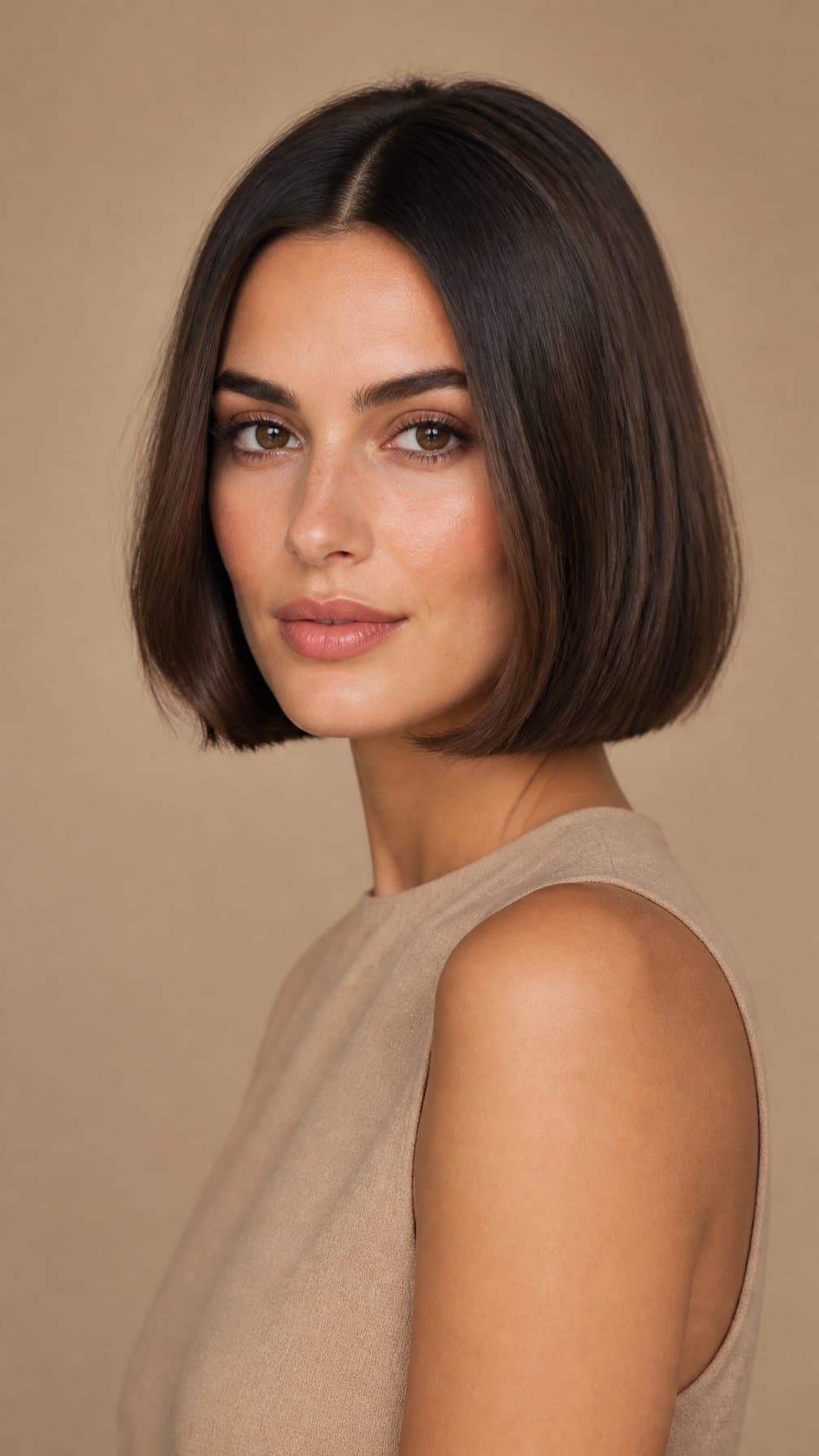
I find a blunt bob especially balanced on an oval face because its clean, even edge adds definition without changing the face’s natural proportions. A length that sits at the chin or just above the shoulders keeps the shape polished and easy to style.
I recommend a center part for a symmetrical finish, while a soft side part introduces subtle movement. Straight styling highlights the precise perimeter, but gentle waves can soften the outline without reducing the bob’s structured effect.
I usually suggest light internal texturing only when the hair feels dense. Keeping the ends mostly solid preserves the haircut’s graphic quality and gives fine or medium hair a fuller-looking edge.
3) Side-Parted Bob for Round Faces
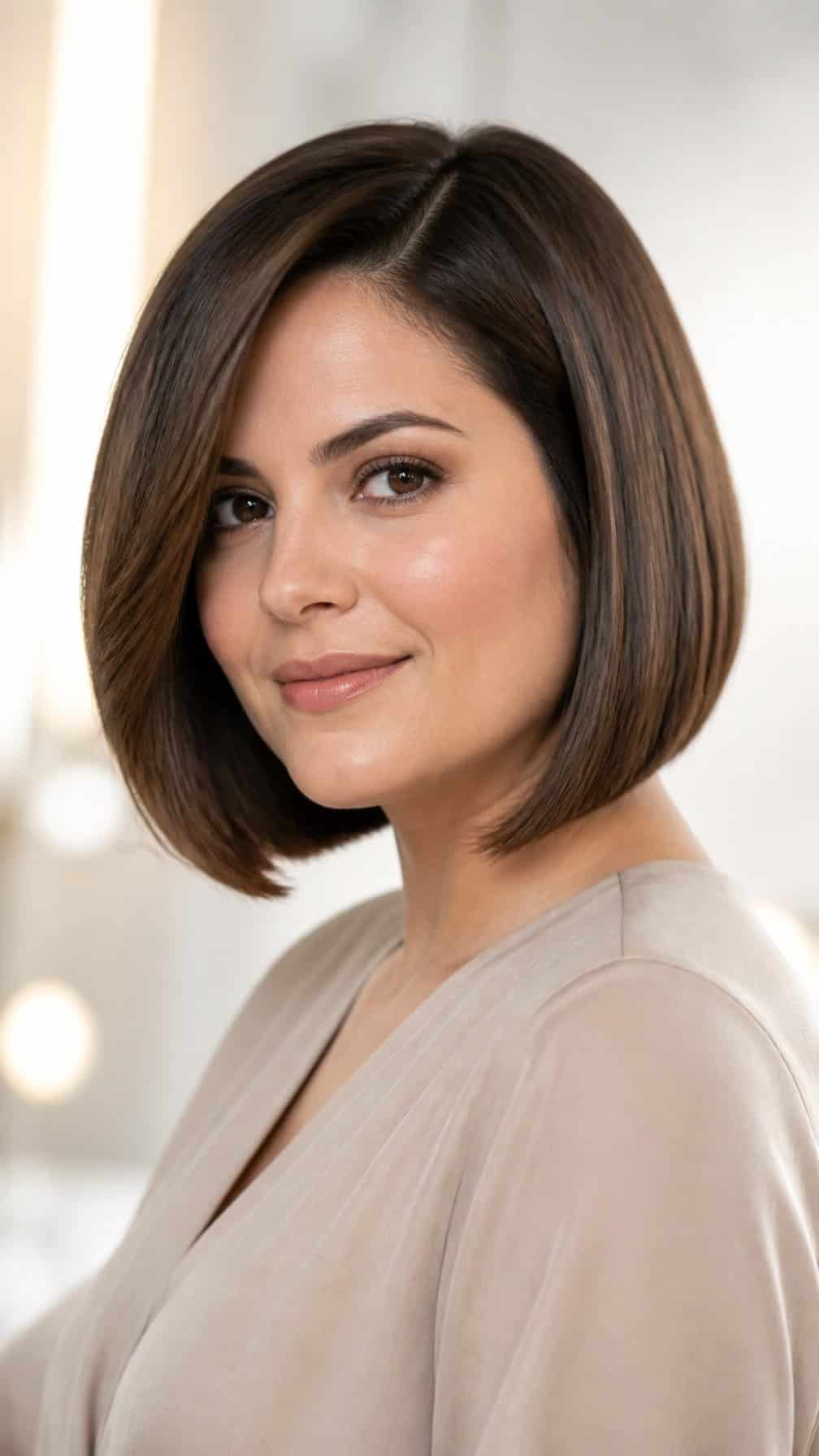
I use a deep side part to create a stronger diagonal line through the hairstyle, which can make a round face appear more elongated. The uneven distribution of hair adds definition without relying on excessive volume.
I prefer a bob that falls slightly below the chin, with soft, graduated ends that avoid stopping at the widest part of the cheeks. I keep the crown lightly lifted and the sides smooth to maintain a balanced shape.
For styling, I direct the front section across the forehead and use a round brush to shape the ends away from the face. I avoid overly rounded curls, since they can emphasize facial width.
4) Long Bob for Square Faces
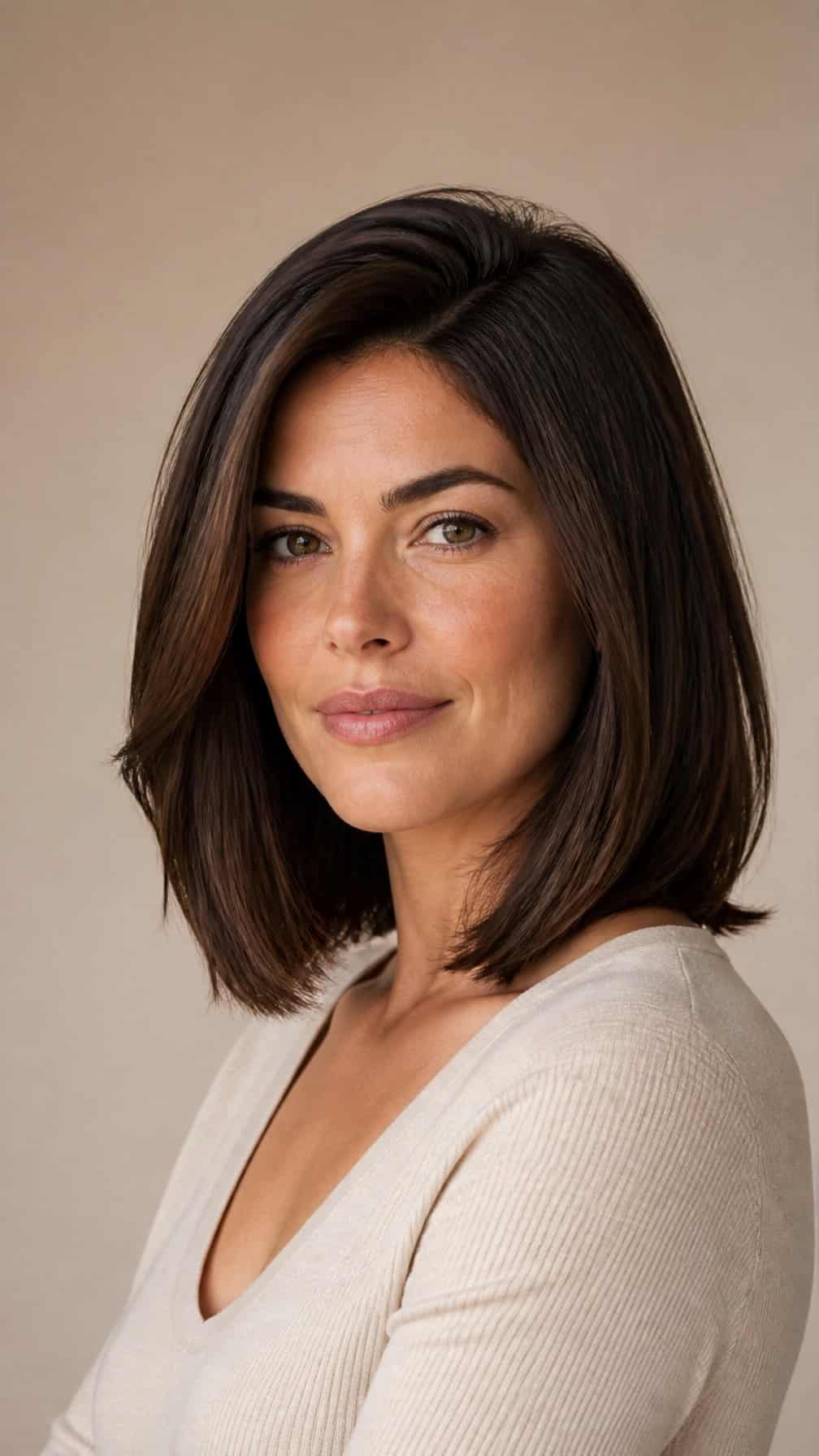
I recommend a long bob that falls just below the chin or reaches the collarbone. This length creates vertical movement while keeping the cut polished and easy to style.
I prefer soft, blended layers around the front rather than a sharp, blunt edge. They reduce emphasis on the jaw’s angles and help the hair frame the face without adding width at its broadest point.
I usually style this bob with a slight side part and loose bends. The asymmetry and gentle movement balance strong cheekbones and a defined jaw while preserving the clean shape that makes a long bob practical.
5) Soft Layered Bob for Heart-Shaped Faces
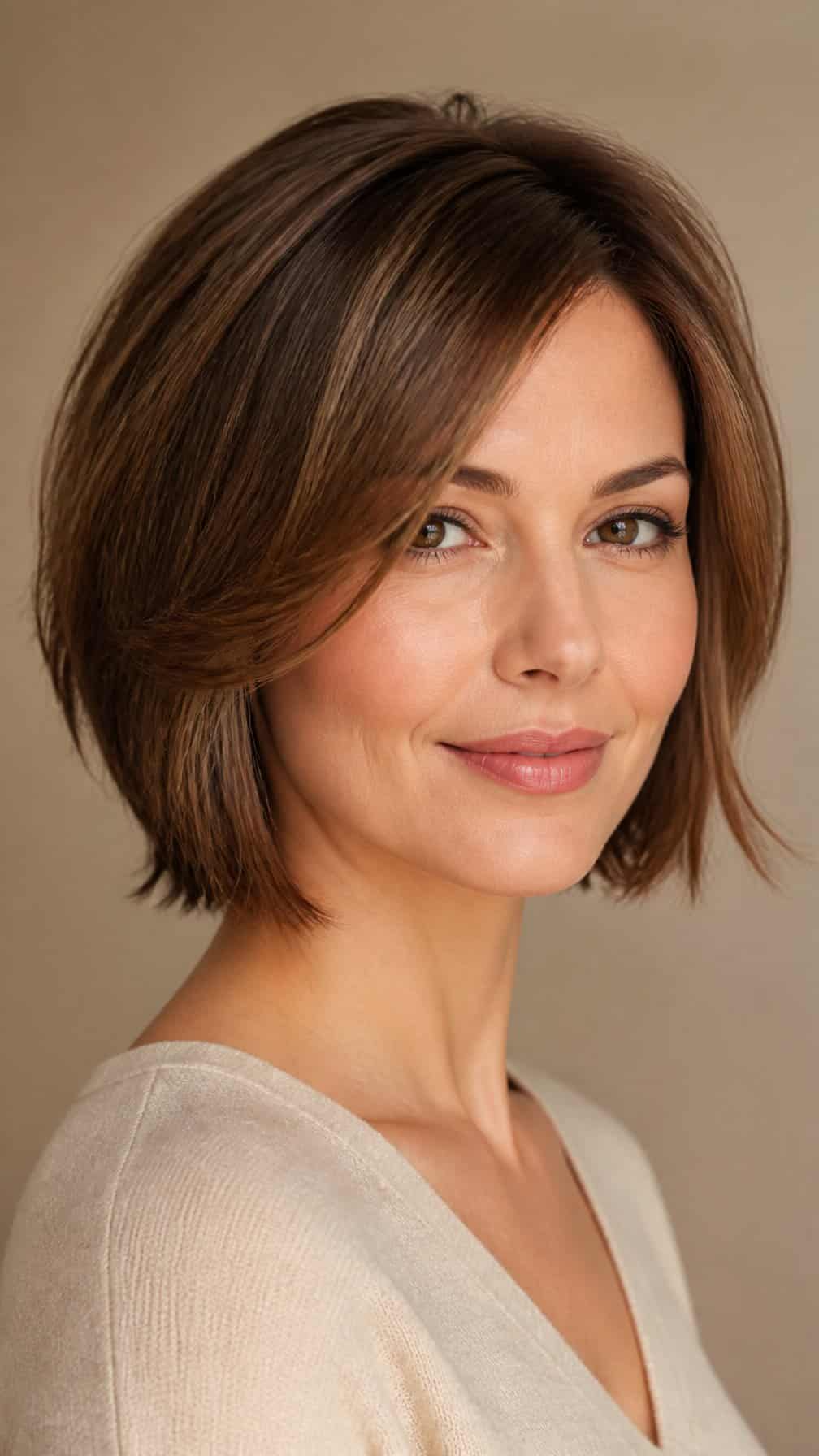
I use soft layers to balance a wider forehead and narrower chin without adding sharp contrast. Keeping the length near the chin or slightly below it gives the lower face more visual weight, while gentle shaping prevents the cut from looking heavy.
I prefer a side part or relaxed off-center part because it breaks up the width across the forehead. I also keep the layers subtle around the cheeks and jaw, then style the ends with a light bend rather than a tight curl.
Fine to medium hair often benefits from this shape because the layers create movement without removing too much density. I recommend a lightweight styling cream or mousse to define the texture while preserving the bob’s soft, flexible finish.
6) Angled Bob for Round Faces
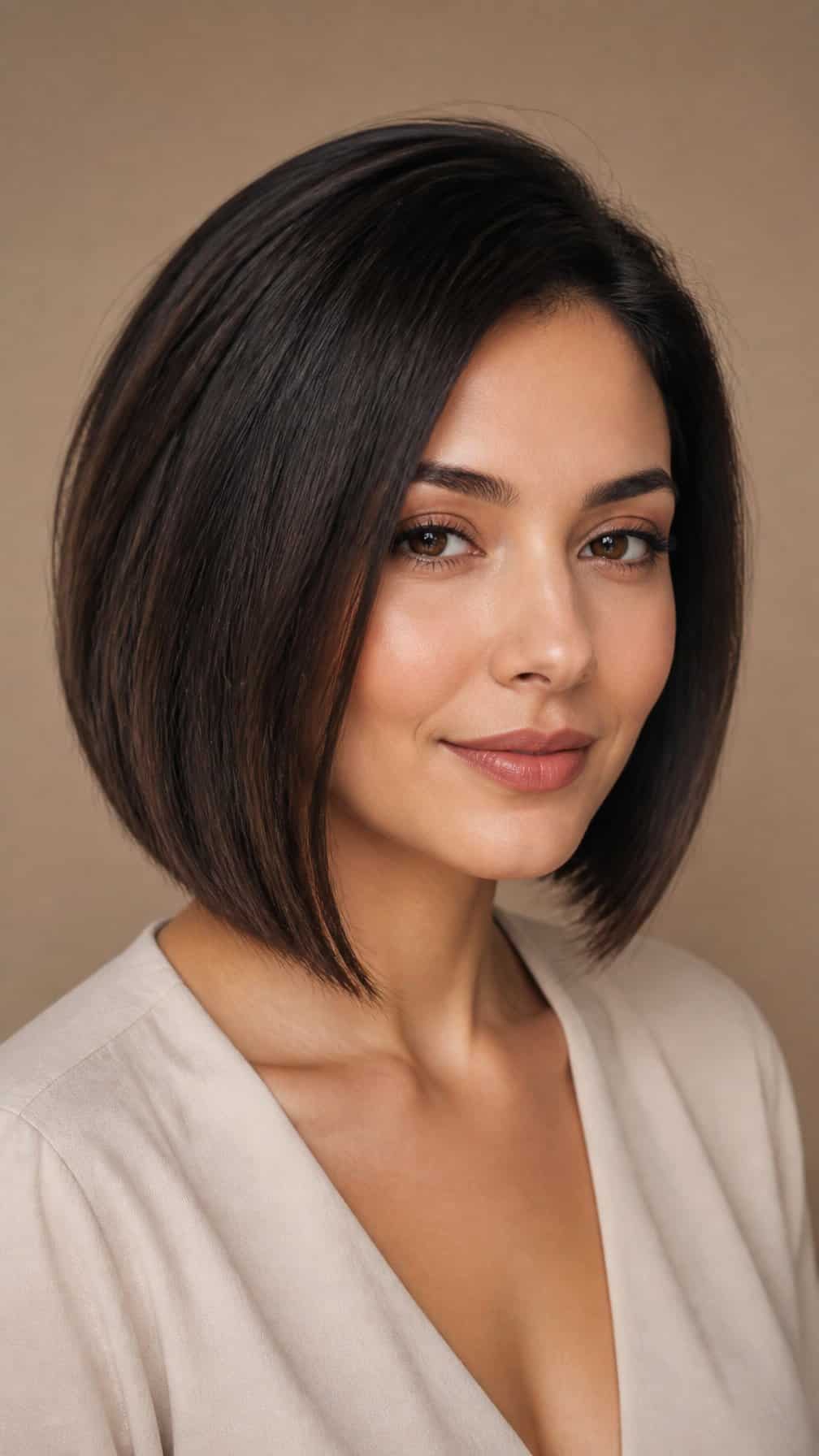
I use an angled bob to create a longer, more defined outline around a round face. The shorter length at the back adds structure, while the front pieces extend toward the collarbone and draw the eye downward.
I prefer a side part or a slightly off-center part because it breaks up symmetry and adds visual height. Smooth styling keeps the shape precise, while soft bends through the longer front sections add movement without making the sides look wider.
I adjust the angle to suit my hair texture and features. Fine hair often benefits from a crisp, blunt perimeter, while thick hair may need subtle internal layering to reduce bulk and help the cut fall neatly.
7) Collarbone Bob for Long Faces
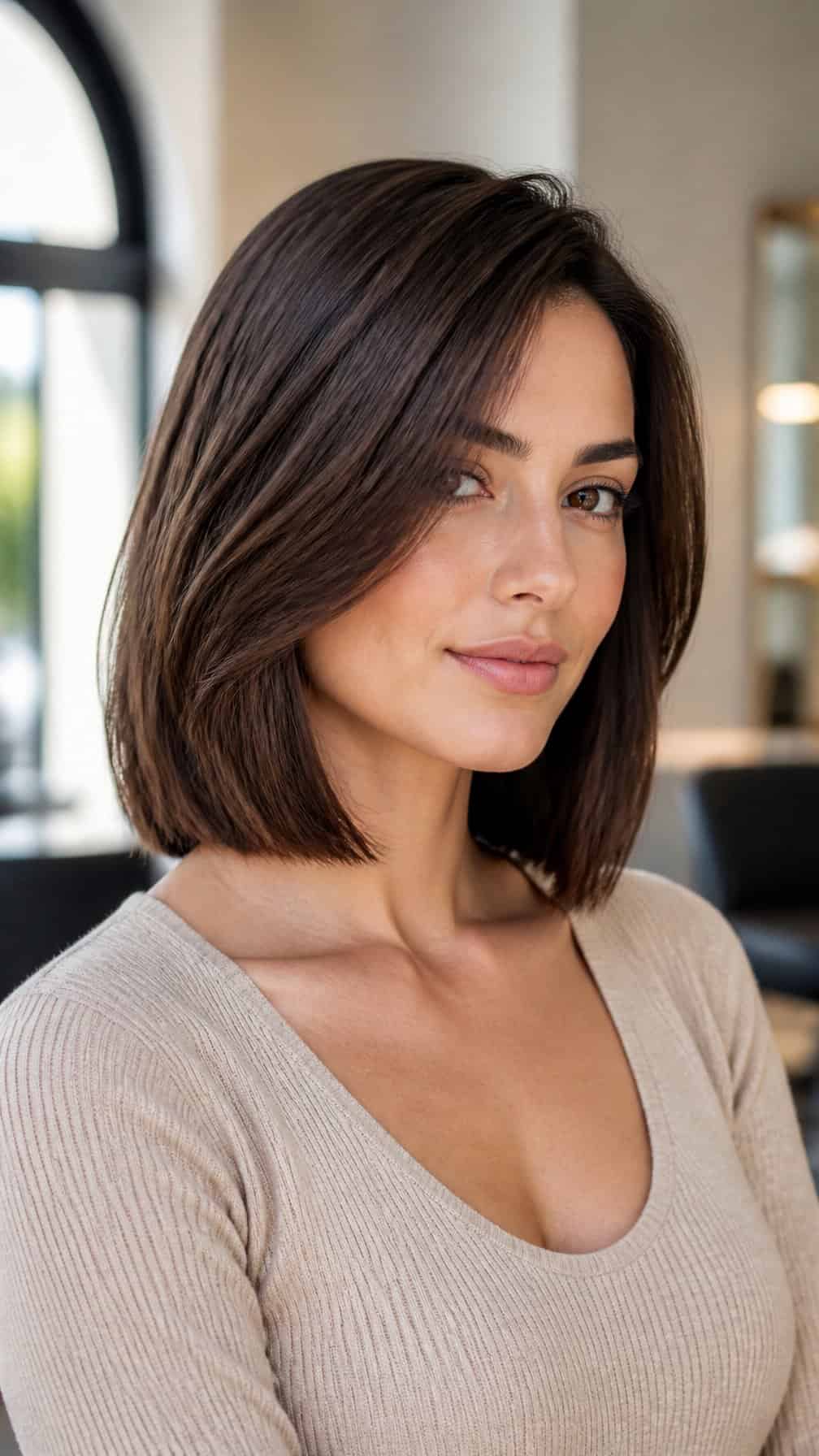
I recommend a collarbone bob for long faces because its length adds visual width without shortening the neck. The cut typically falls at or just above the collarbone, creating balance while keeping enough length for movement.
I prefer soft, face-framing layers that begin near the cheekbones or jaw. These layers add shape around the sides, while a slightly off-center part can break up vertical lines. Light waves or textured ends also enhance the fuller appearance.
I would avoid excessive height at the crown, which can make the face look longer. A blunt or gently graduated edge works well, especially when paired with side-swept bangs that add width across the forehead.
8) Curtain-Bang Bob for Oval Faces
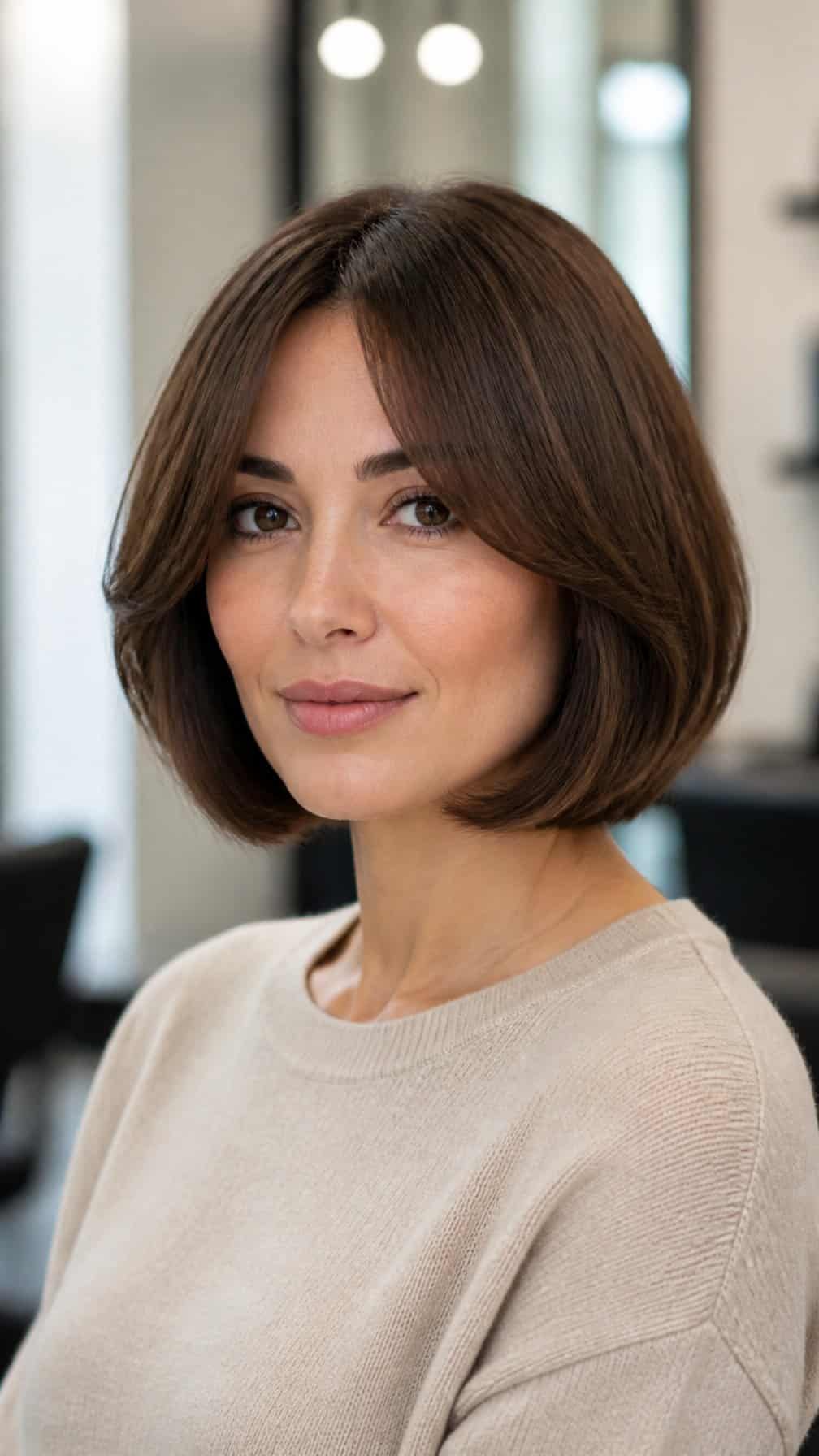
I like this bob for an oval face because the center-parted bangs frame the forehead without disrupting the face’s balanced proportions. I would keep the ends near the chin or slightly below it to maintain a clean, structured shape.
The curtain bangs should open softly at the center and blend into longer pieces around the cheekbones. I find that this gradual transition adds movement while preserving the bob’s polished outline.
I would style the hair with a round brush, directing each bang section away from the face. A light texturizing spray can add separation, while a smooth finish keeps the cut refined rather than bulky.
9) Textured Bob for Fine Hair
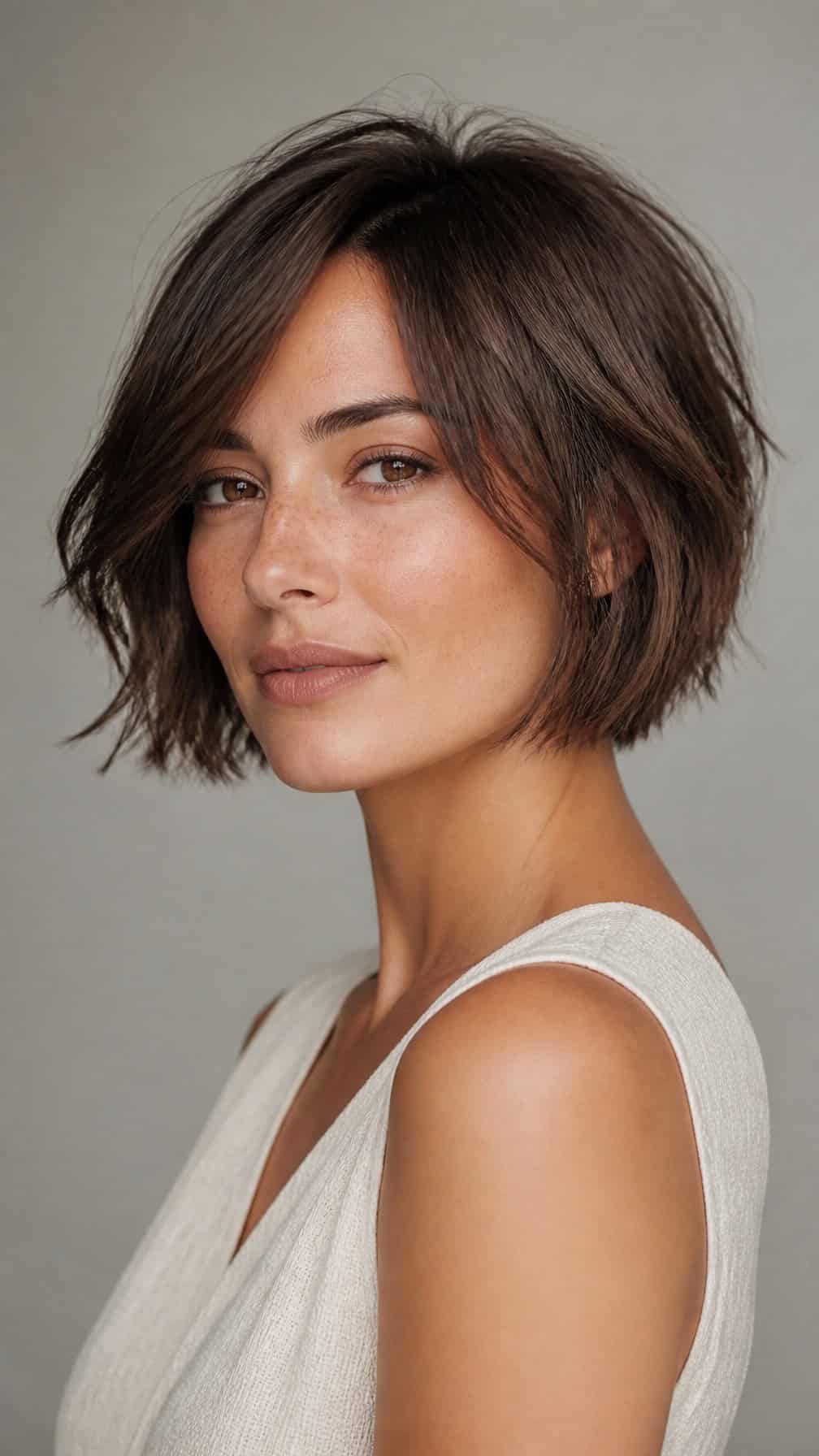
I recommend a textured bob when I want fine hair to look fuller without adding heavy layers. Choppy ends and subtle internal texture create movement, while a chin- to shoulder-length shape keeps the cut balanced across different face shapes.
I would ask for light, piecey layers rather than aggressive thinning, which can make delicate hair appear sparse. A slightly tousled finish adds dimension, and a side part can create extra lift at the roots.
I style this cut with a lightweight volumizing mousse and a quick blow-dry using a round brush. I finish with a small amount of dry texture spray, concentrating on the mid-lengths and ends rather than weighing down the roots.
10) Wavy Bob for Square Faces
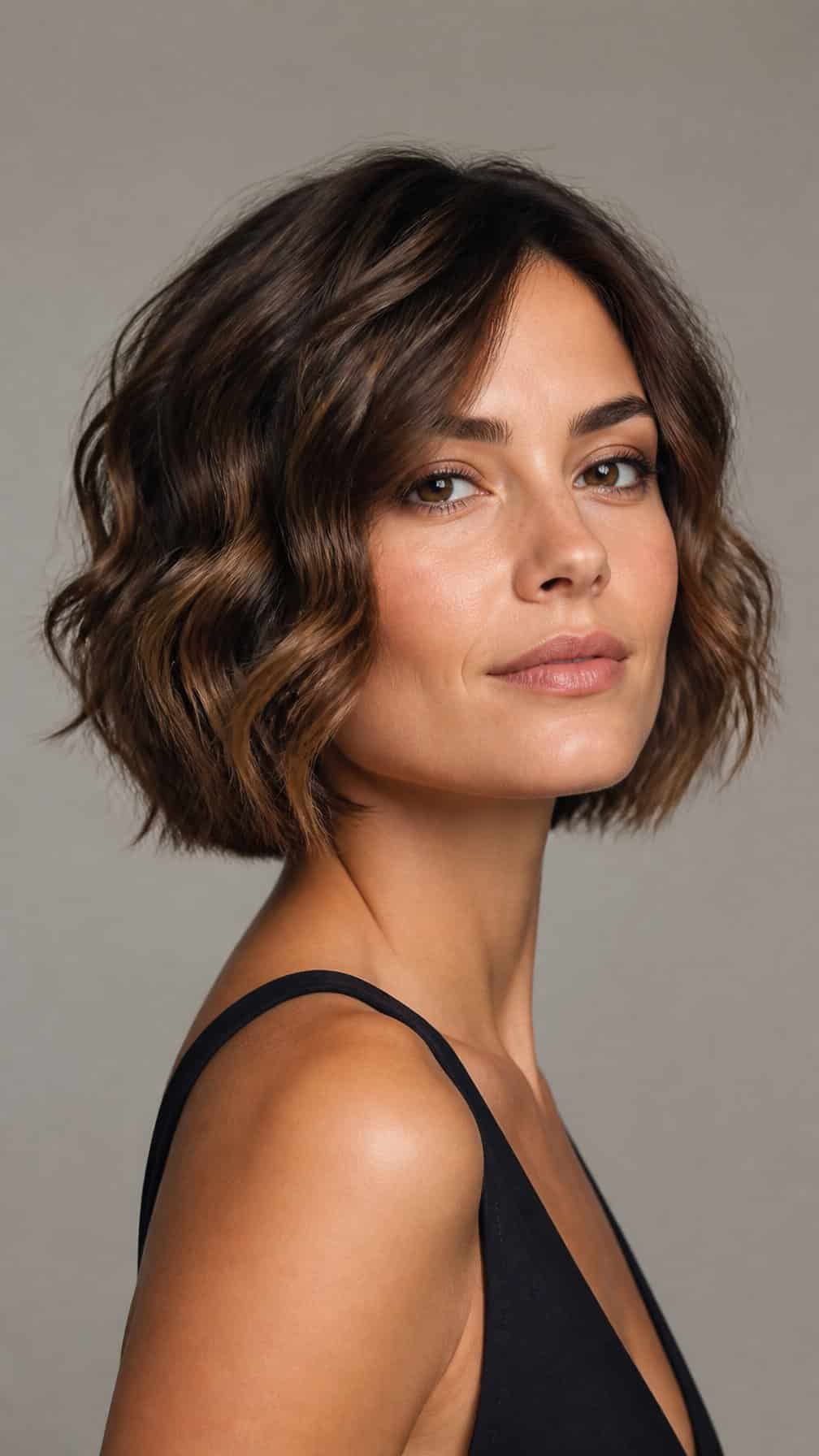
I like a wavy bob for softening the defined angles of a square face. Loose bends add movement around the cheeks and jaw, while a length near the chin or collarbone keeps the shape balanced without emphasizing width.
I would ask for subtle, uneven waves rather than polished curls. A side part can create visual asymmetry, and lightly textured ends help the cut fall naturally. I use a lightweight mousse or sea-salt spray to support the waves without making them stiff.
11) Sleek A-Line Bob
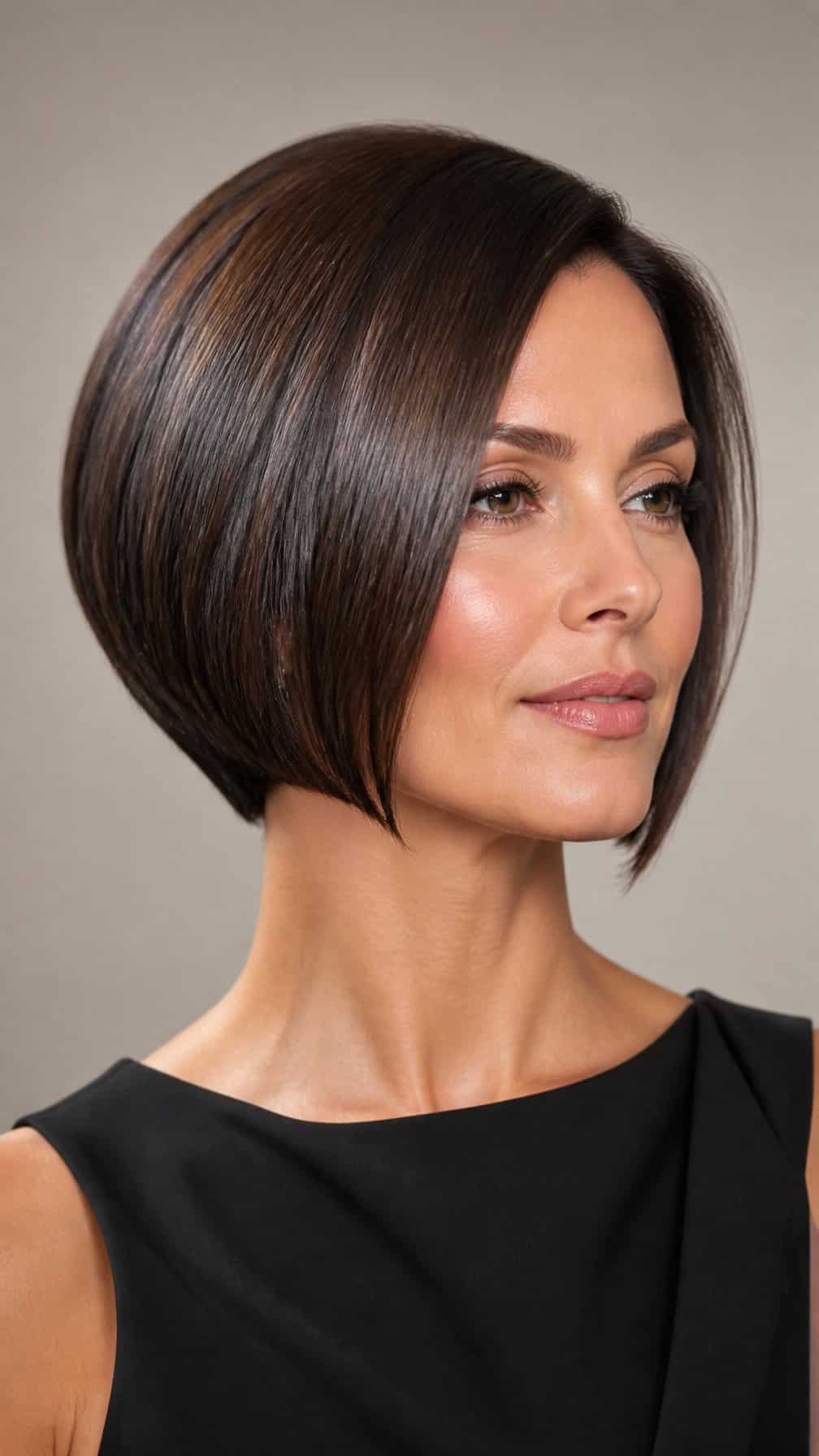
I like this polished cut for its clean, angled shape: shorter layers at the back gradually extend toward the chin. The structure adds definition around the jaw while keeping the overall look streamlined.
I recommend a precise finish for straight or fine hair because it highlights the graduated line without adding unnecessary bulk. I use a center part for symmetry or a side part to create softer movement around the face.
A light smoothing cream and flat iron can enhance the sleek surface, while regular trims preserve the sharp angle. I find this style especially flattering on oval, round, and heart-shaped faces.
12) Chin-Grazing Bob for Heart-Shaped Faces
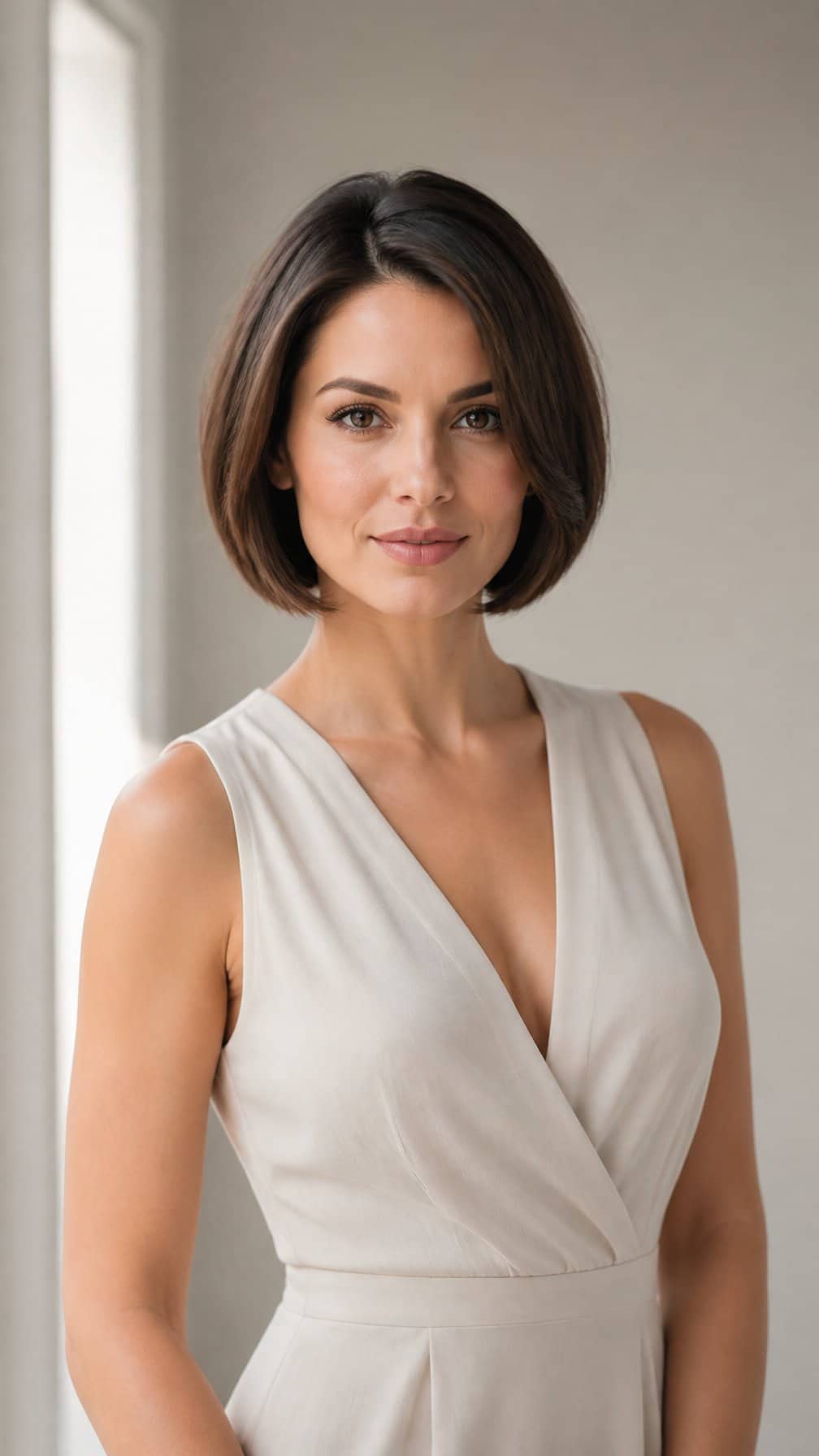
I find a chin-grazing bob especially effective on heart-shaped faces because its length draws attention toward the jaw. The clean edge adds visual fullness where the face appears narrower, while the shorter shape keeps the style polished and easy to maintain.
I prefer a soft side part or side-swept fringe with this cut. That placement balances a broader forehead without adding excessive volume at the crown. I would keep the ends lightly textured rather than heavily layered, since too many layers can make the lower half look thinner.
For styling, I use a round brush to create gentle movement at the ends and direct the front pieces toward the jawline. A small amount of smoothing cream controls flyaways while preserving the bob’s natural shape.
13) Shaggy Bob for Round Faces
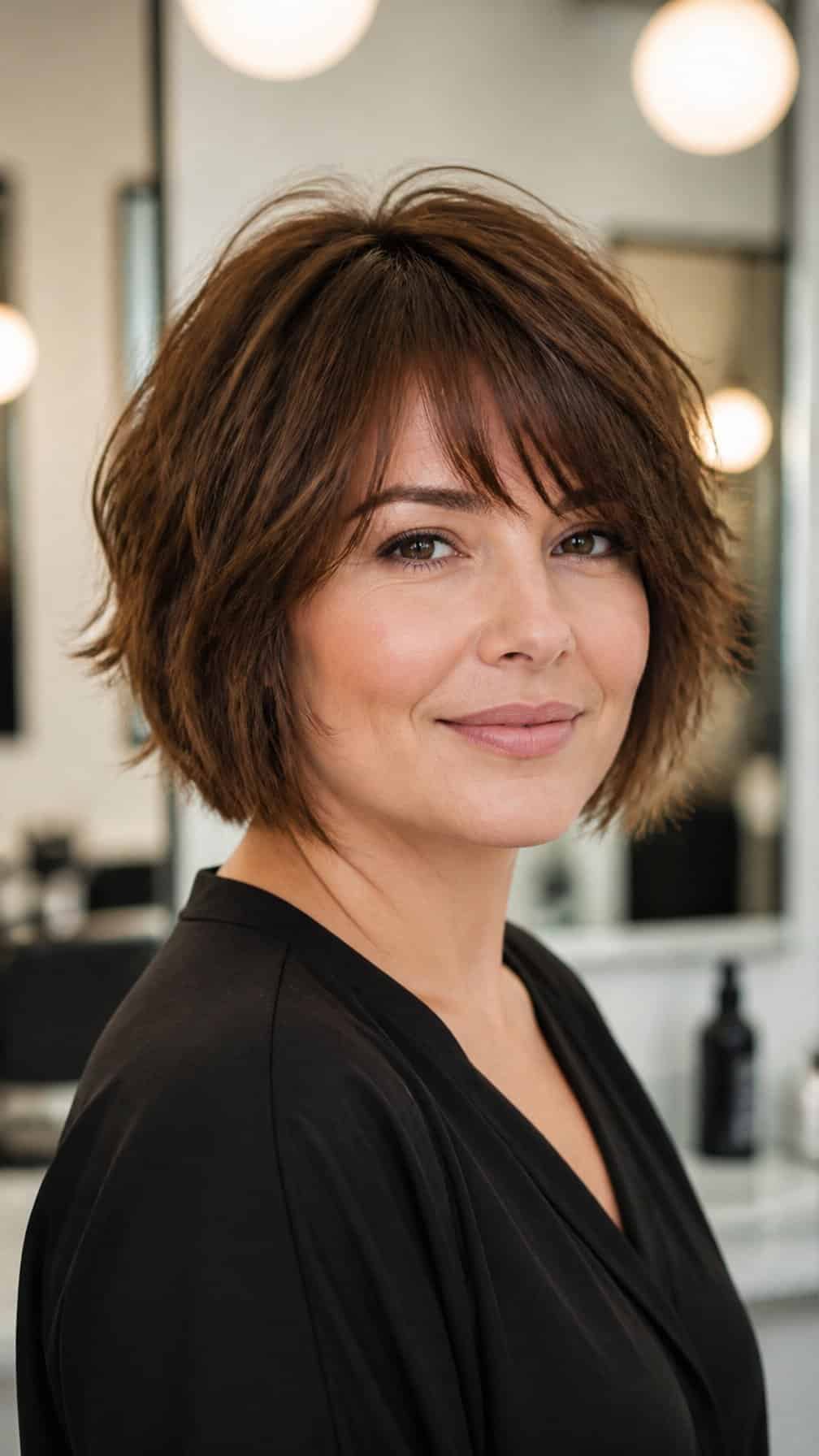
I like a shaggy bob for its layered shape and uneven texture, which can add definition around fuller cheeks. I would keep the length near the chin or slightly below it, then place softer layers through the crown and sides to create vertical movement.
I prefer a relaxed finish rather than carefully polished waves. Lightly tousled ends draw attention through the haircut instead of across the widest part of the face, while a side part can add asymmetry. I would use a lightweight texturizing spray to separate the layers without making the style look stiff.
14) Curly Bob for Oval Faces
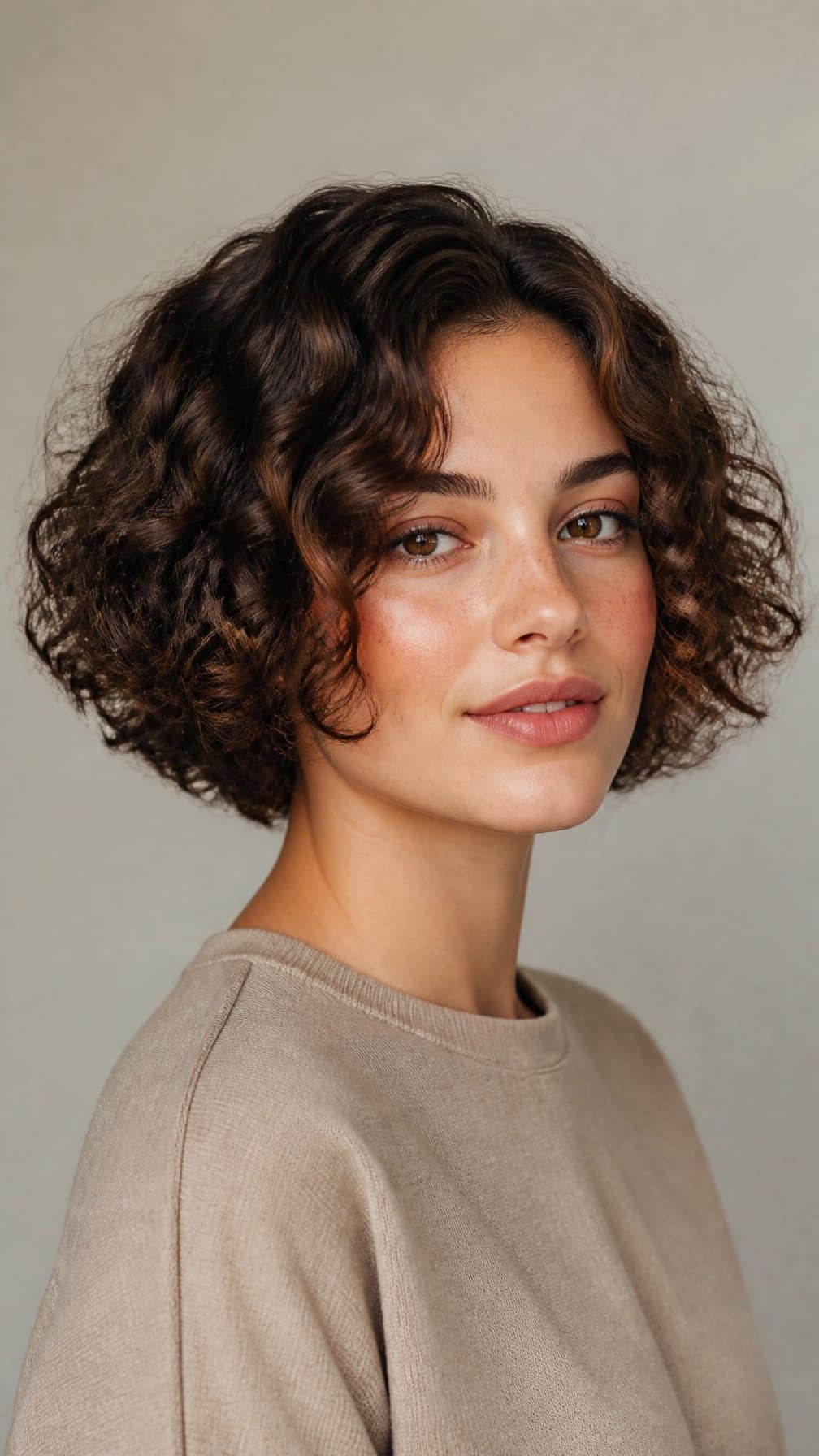
I like a curly bob on an oval face because its rounded shape adds width without overwhelming balanced features. I would keep the length near the chin or slightly below it, allowing the curls to frame the cheeks and jaw.
I recommend soft, graduated layers to prevent the shape from looking bulky. They help curls sit naturally while preserving definition and movement. A side part can add gentle asymmetry, while a center part creates a more even, structured finish.
I would use lightweight styling cream and avoid heavy products that flatten the curls. Trimming the ends regularly also helps maintain the bob’s shape and keeps the curl pattern looking controlled.
15) Inverted Bob for Square Faces
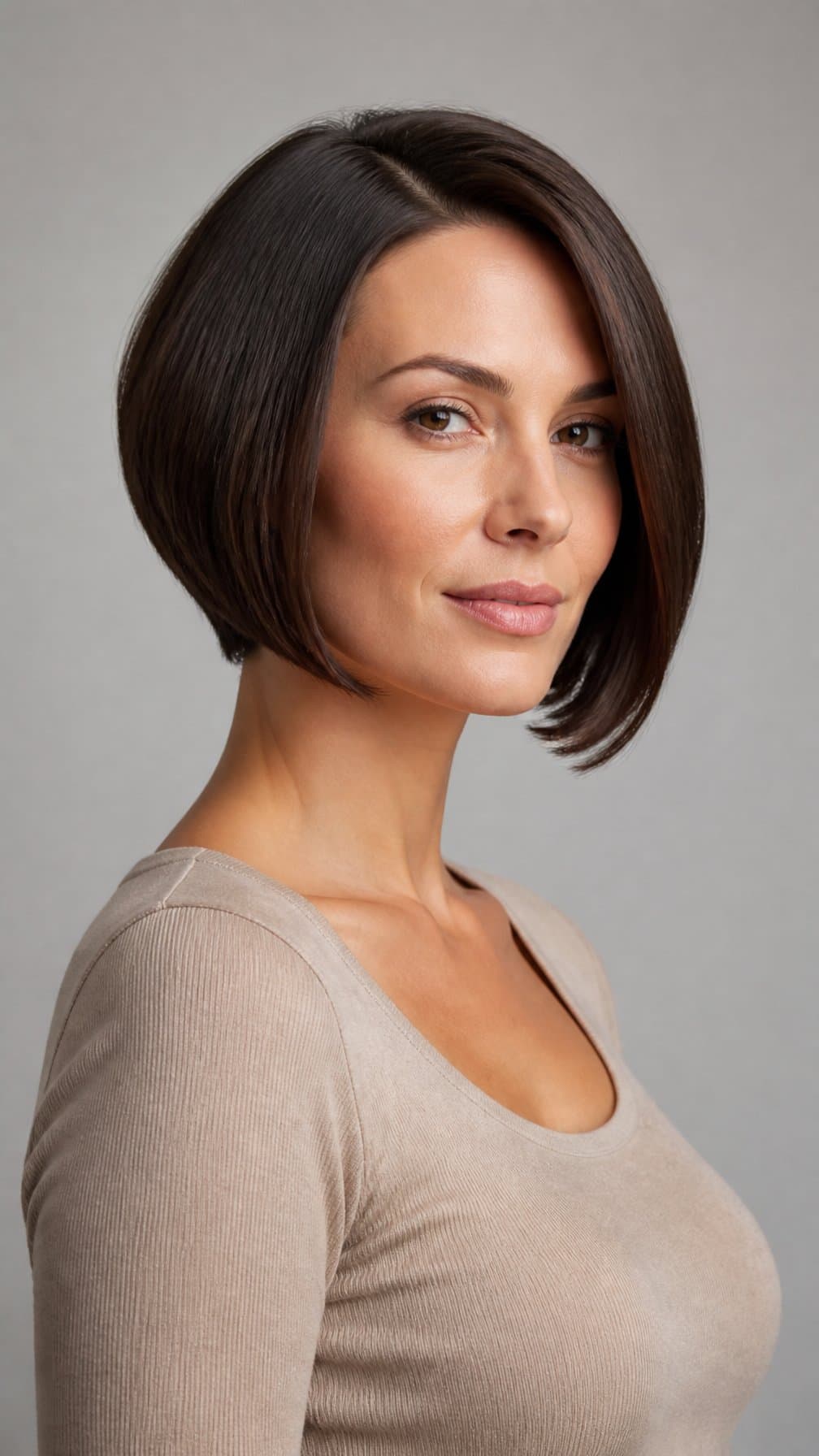
I like an inverted bob for square faces because its shorter back and longer front create a gentle diagonal around the jaw. That angled shape adds movement without hiding the face’s defined structure.
I recommend keeping the front pieces slightly below the jaw and adding subtle graduation at the back. I would style it with a smooth finish or loose bends, avoiding excessive volume at the sides, which can make the jaw appear broader.
For a softer result, I would choose a side part and light face-framing layers. A polished finish suits straight hair, while fine, loose waves bring texture without overwhelming the clean shape.
16) French Bob with Micro Bangs
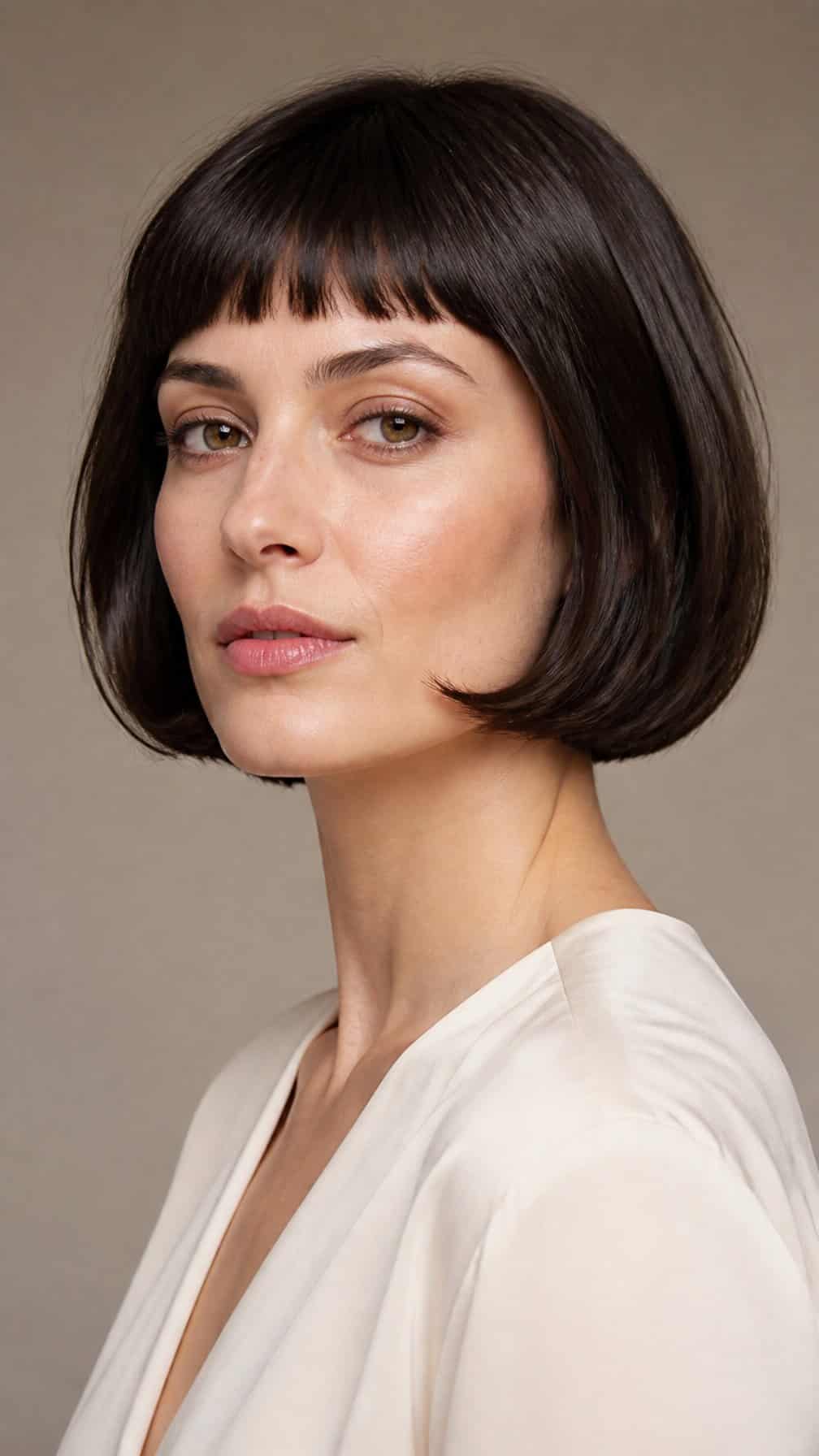
I like this short bob for its clean shape and precise proportions. The cut typically ends near the jaw, while micro bangs draw attention to the eyes and create a crisp horizontal line across the forehead.
I find it especially effective on oval and heart-shaped faces, where the compact length can complement balanced features or a narrower chin. For round faces, I would ask for slightly more length below the jaw and subtle texture through the ends to add definition.
I would style it with a small amount of lightweight cream, keeping the finish smooth but not overly polished. A natural bend or slight tousling prevents the blunt cut from looking rigid.
17) Asymmetrical Bob for Round Faces
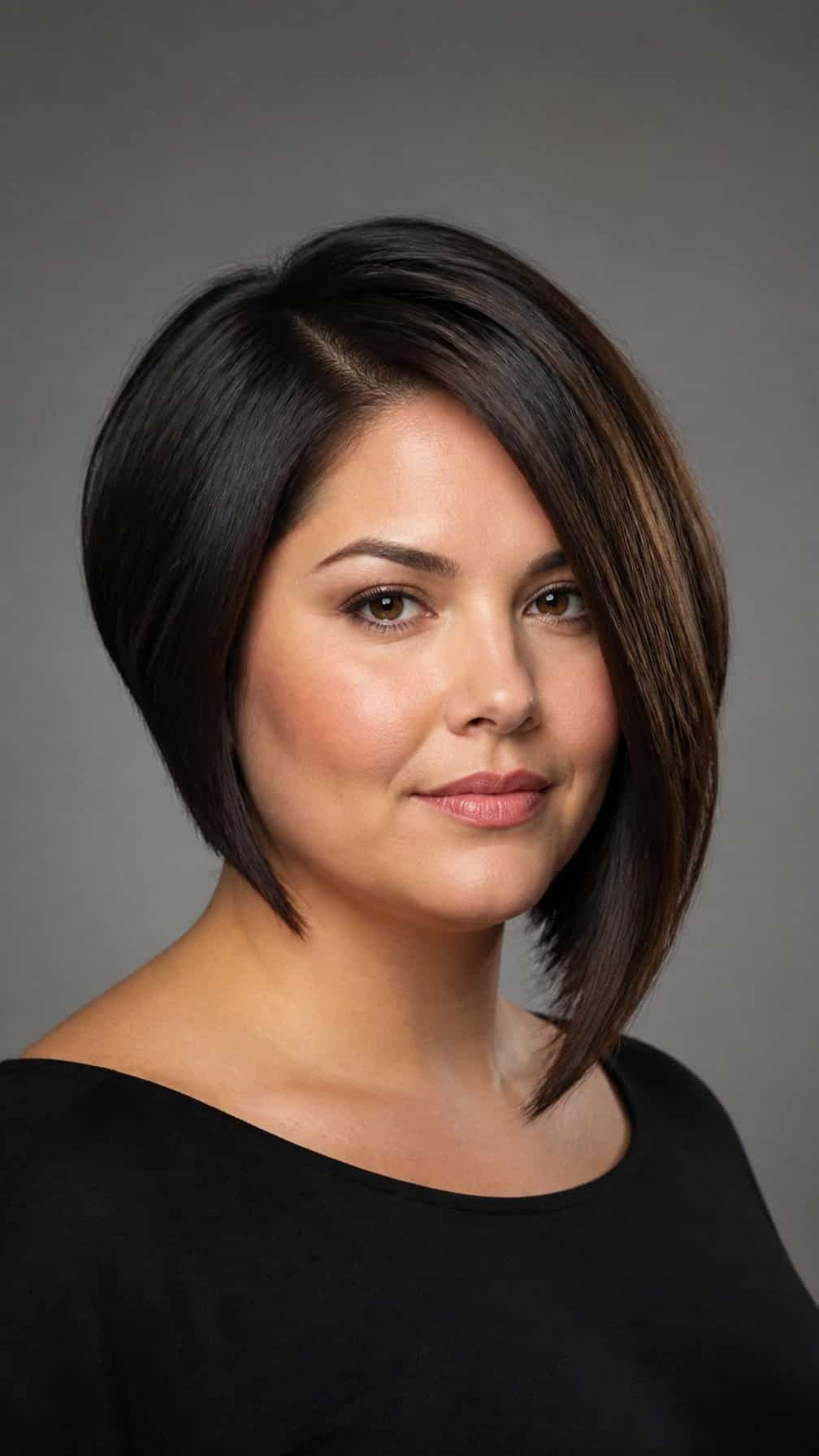
I use an asymmetrical bob to create a longer visual line around a round face. One side falls below the chin while the shorter side adds structure, shifting attention away from the widest part of the cheeks.
I prefer a side part with a smooth, angled finish because it reinforces the uneven shape without making the style look harsh. Keeping the ends slightly tapered prevents the cut from appearing bulky along the jaw.
For fine hair, I add light layers through the longer side to maintain movement and volume. I avoid heavy, rounded shaping at the cheeks, which can emphasize facial width instead of balancing it.
18) Layered Lob for Long Faces
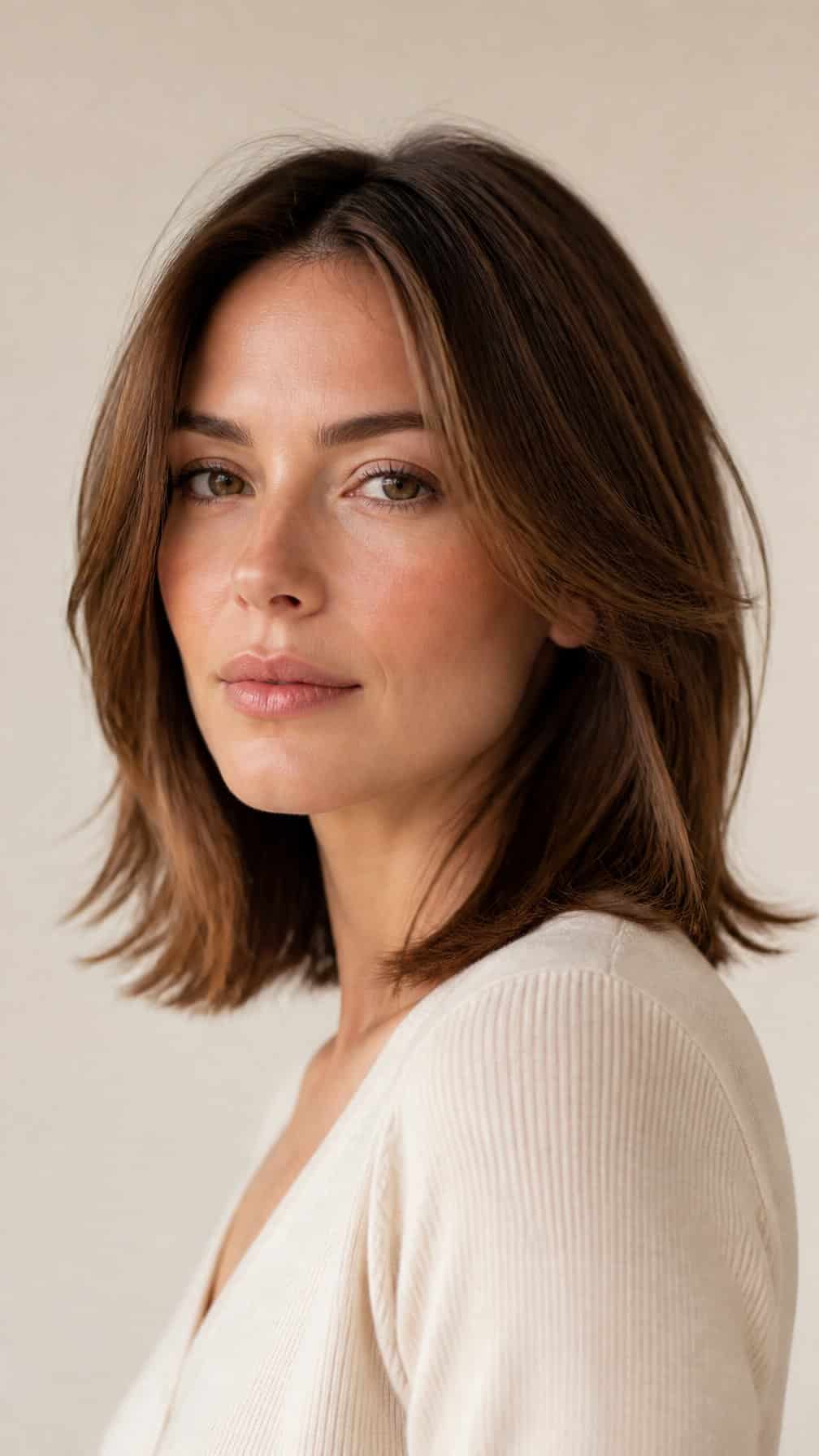
I recommend a layered lob that falls between the chin and shoulders to add width without making the face appear longer. Soft layers around the cheekbones and jaw create movement and help balance a narrow, elongated shape.
I would keep the ends slightly tousled rather than sharply sleek. A side part or gently off-center part also adds visual width, while light texture prevents the cut from looking flat.
For styling, I prefer loose waves with volume through the sides instead of height at the crown. Face-framing pieces should blend gradually into the length, creating a polished shape that remains easy to maintain.
19) Bixie Bob for Fine Hair
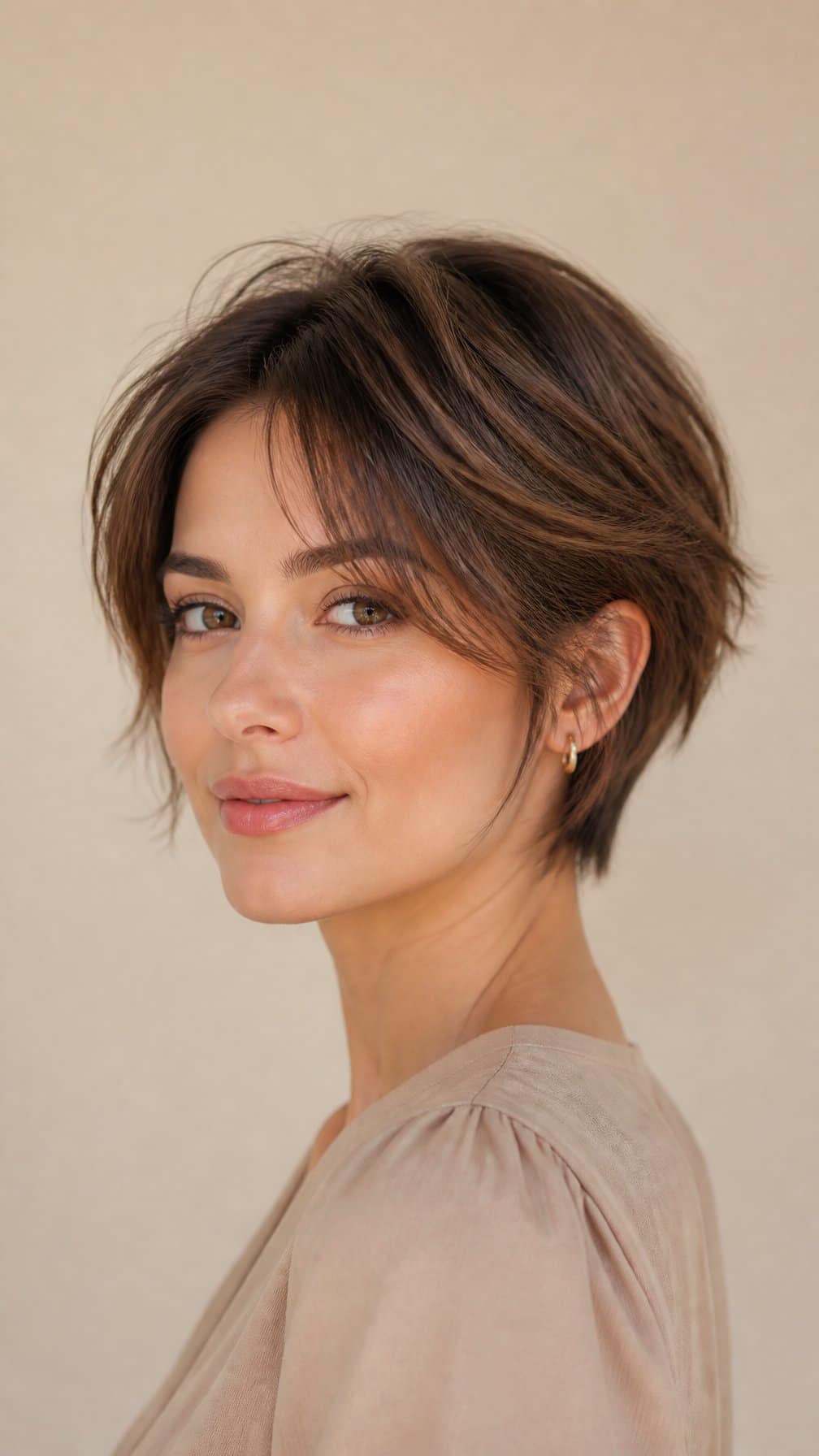
I like the bixie bob for fine hair because its cropped shape combines bob structure with layered, pixie-inspired movement. I would keep the sides softly tapered and add light layers through the crown to create lift without removing too much density.
A slightly tousled finish helps the cut look fuller, while a side part can add height and adapt the style to different face shapes. I recommend lightweight mousse or a texturizing spray rather than heavy creams, which can flatten fine strands. Regular trims also help preserve the clean outline.
20) Jawline Bob with Side Bangs
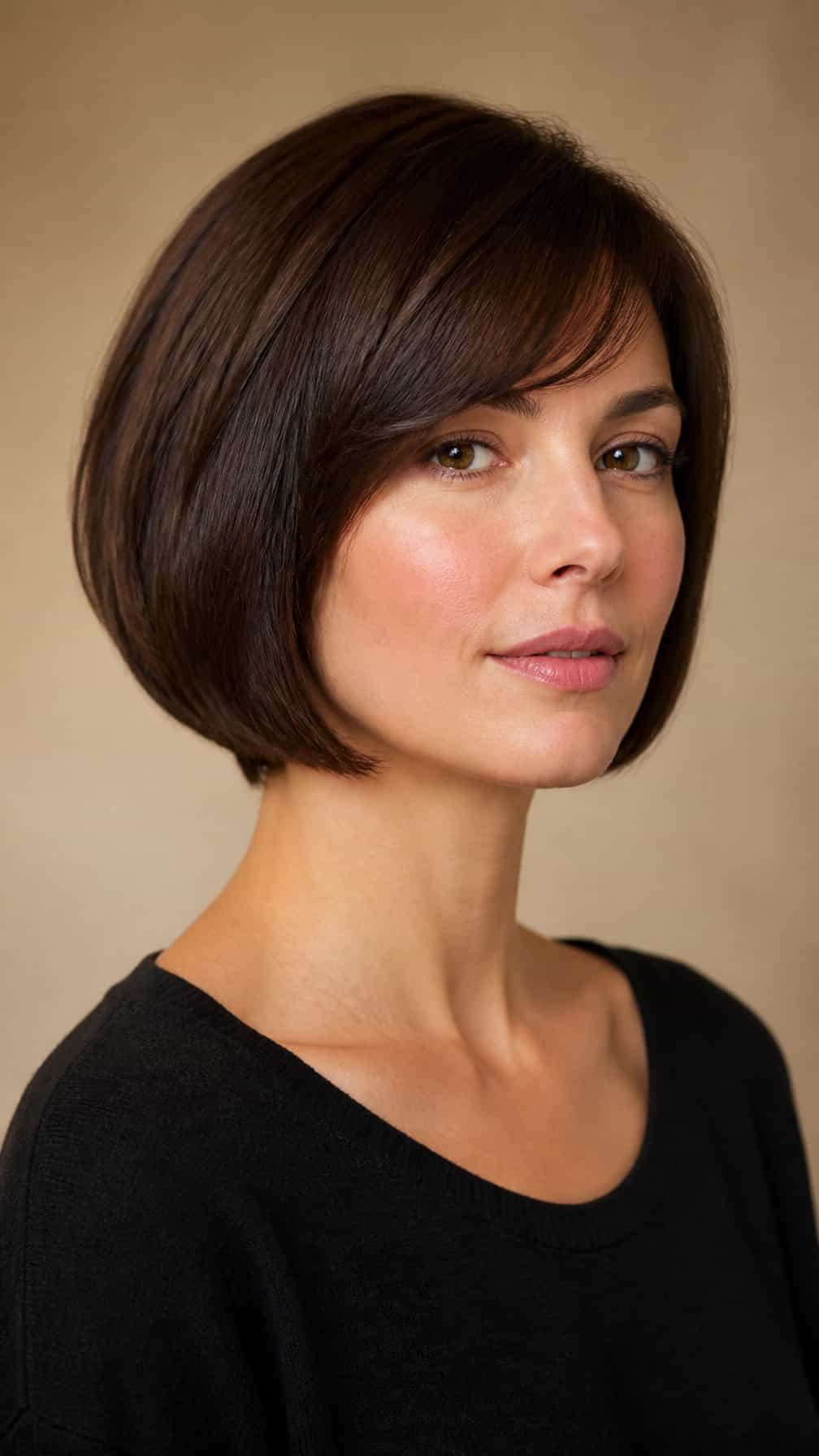
I like this jawline-length bob for the way it frames the lower face without adding unnecessary width. The clean cut creates structure, while side-swept bangs soften the forehead and draw attention diagonally across the features.
I recommend keeping the ends lightly textured rather than heavily layered. That finish preserves the bob’s defined shape and helps the style sit naturally around the jaw. I can also adjust the bang length to highlight the cheekbones or create more coverage across the forehead.
For styling, I would use a round brush to direct the bangs away from the face and smooth the perimeter. A small amount of lightweight cream can control flyaways without flattening the hair or making the cut look stiff.
21) Feathered Bob for Heart-Shaped Faces
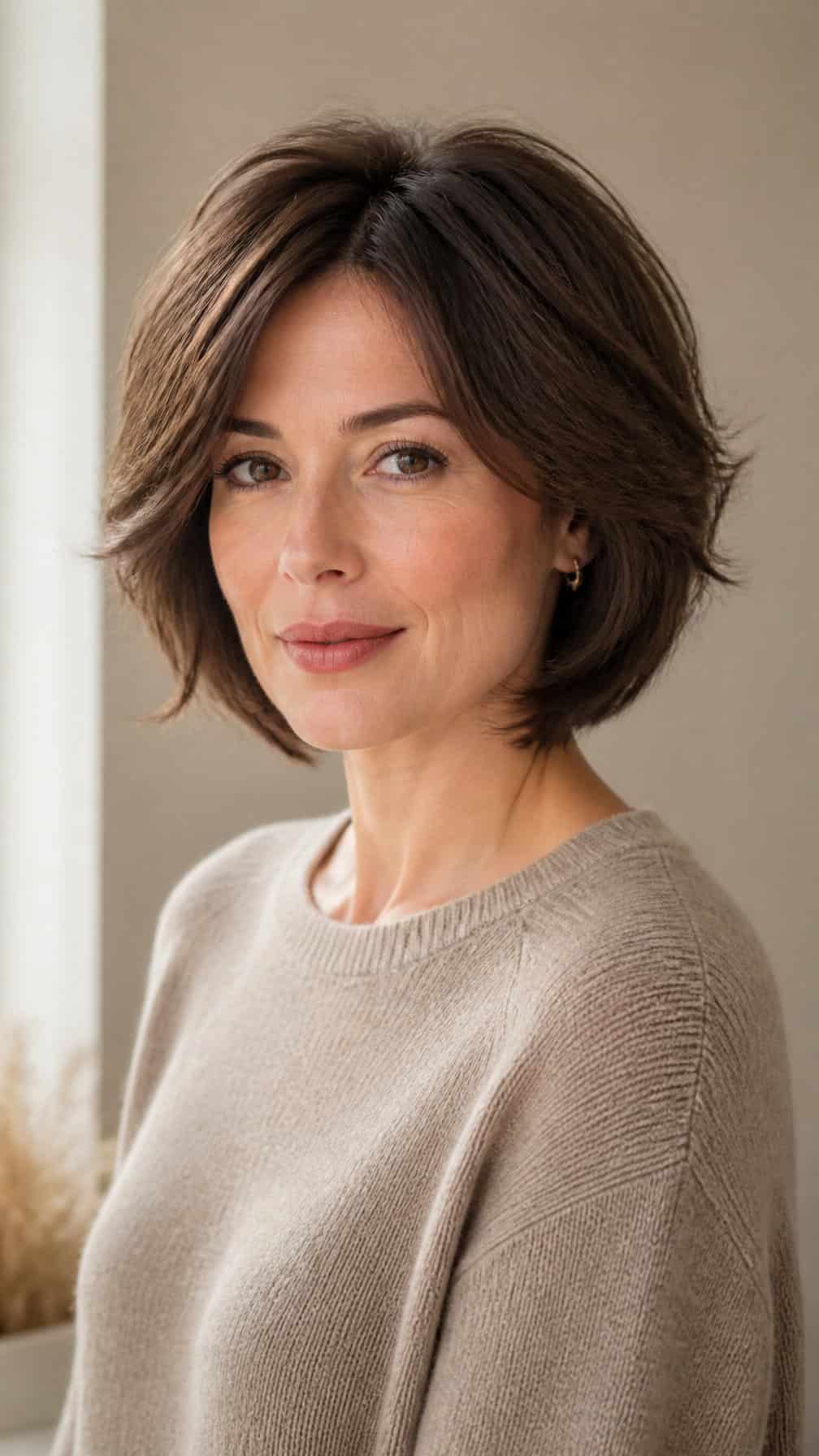
I like a feathered bob for balancing a heart-shaped face, especially when the cut falls around the chin or slightly below it. Soft layers add width near the jaw while keeping the forehead from appearing more prominent.
I would ask for feathered ends that blend gradually rather than sharp, stacked layers. A side part can shift attention across the face, and light volume through the lower sections creates a more even outline.
I find this style works well with straight, wavy, or lightly textured hair. I would use a round brush to direct the ends outward, then finish with a small amount of lightweight styling cream to keep the layers flexible.
22) Stacked Bob for Fine Hair
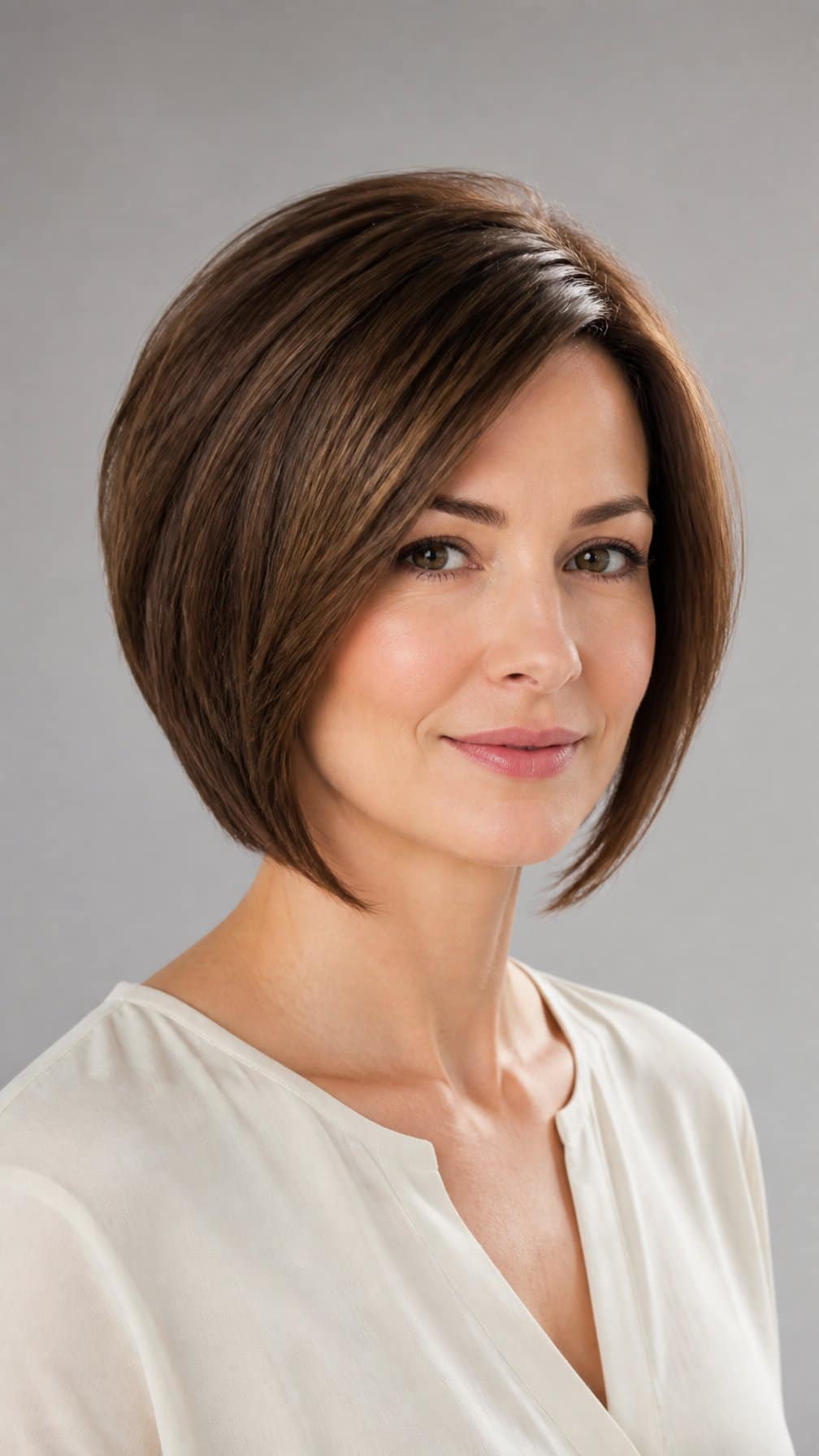
I recommend a stacked bob when I want fine hair to look fuller without adding heavy layers. Shorter pieces at the back create a gently lifted shape, while longer front sections frame the jaw and cheeks.
I usually pair this cut with a clean side part or subtle off-center part to add movement at the roots. A lightly graduated neckline keeps the silhouette neat, and soft texture through the ends prevents the style from appearing flat or overly precise.
I find this shape especially flattering on oval, heart, and long face shapes because its width at the back can balance facial proportions. For daily styling, I use a round brush to direct the layers upward and finish with a lightweight volumizing spray.
23) Tousled Bob for Oval Faces
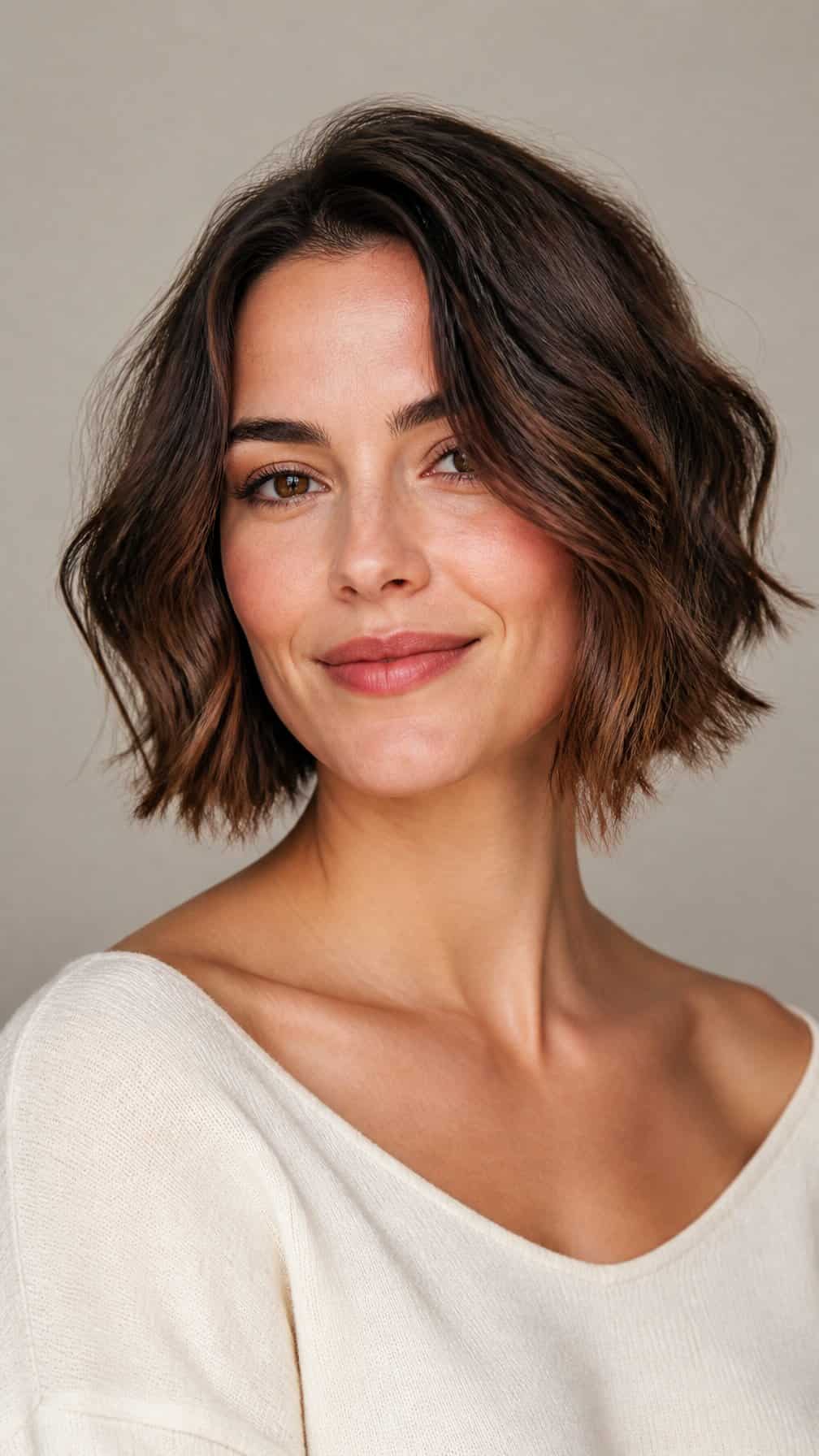
I like a tousled bob on an oval face because its loose texture adds movement without disrupting natural facial balance. I would keep the length between the chin and shoulders, then add subtle layers to prevent the shape from looking heavy.
I use a lightweight texturizing spray on damp hair and let it air-dry or finish with a diffuser. A few irregular waves create definition, while a slightly off-center part adds casual asymmetry. I would avoid excessive thinning, which can make the ends appear sparse.
This style works well with soft curtain bangs or longer face-framing pieces. I would ask for dry-textured ends and moderate layering so the bob remains easy to style and retains a polished outline.
24) Graduated Bob for Square Faces
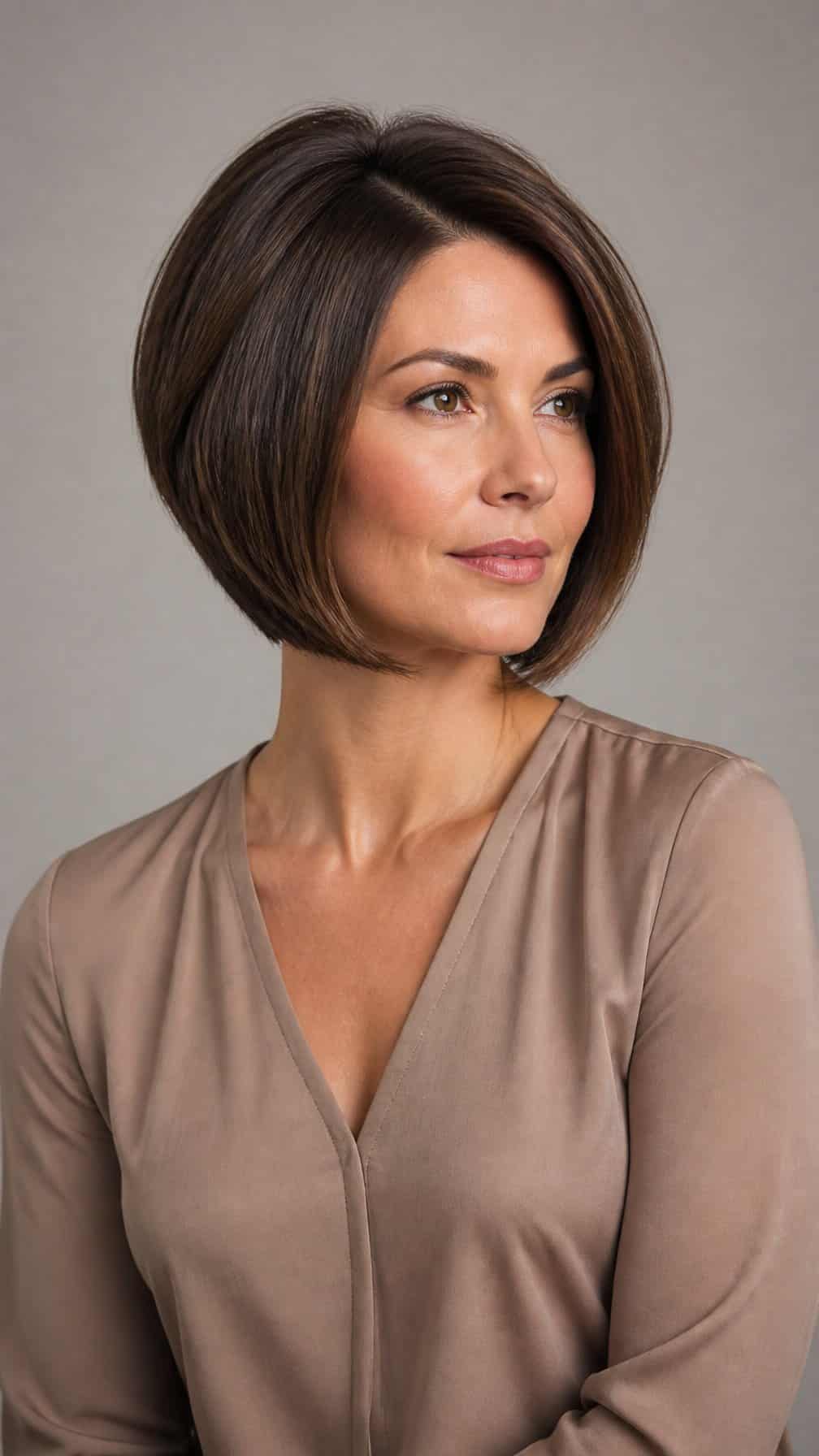
I like a graduated bob for softening the strong angles of a square face. The shorter layers at the back create lift, while the longer front pieces draw the eye downward and add gentle movement around the jaw.
I would keep the ends slightly textured rather than sharply blunt. A side part or loose, off-center part can introduce asymmetry, and subtle waves help prevent the style from looking too rigid.
I prefer a length that falls near the chin or just below it, depending on the individual’s features. Light layering through the sides maintains the graduated shape without adding excessive width at the jaw.
Choosing a Bob for Your Face Shape
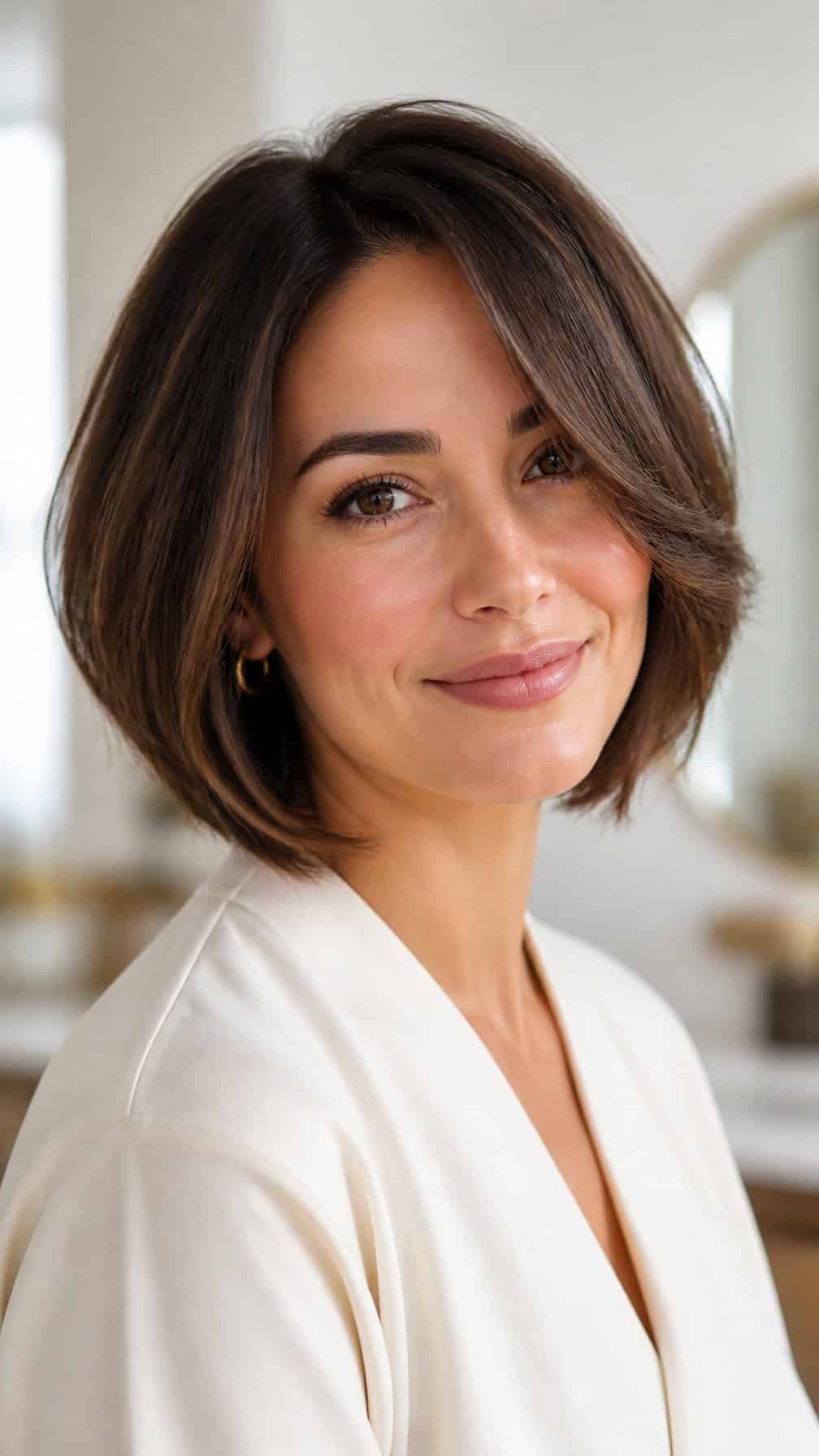
I assess face shape by looking at width, length, jaw definition, and cheekbone placement rather than relying on labels alone. I then adjust the bob’s length, part, layers, and volume to balance those proportions while preserving the wearer’s preferred styling routine.
Understanding Face Shape Proportions
I start by comparing the forehead, cheekbones, jaw, and overall face length. An oval face usually has balanced proportions, while a round face has similar width and length with softer edges. A square face often shows a defined jaw and comparable forehead and cheekbone width. Long faces benefit from styles that add horizontal fullness, whereas heart-shaped faces typically appear wider at the forehead and narrower at the chin.
I also consider individual features within the same shape. A strong jaw may suit softened ends or subtle layers, while a narrow chin can look more balanced with fullness near the jawline. Face-shape guidelines work best as starting points, because hair density, texture, and personal styling preferences affect the final result.
Matching Length and Volume to Facial Features
I choose bob length according to the area I want to emphasize. A chin-length cut can frame the jaw, but it may draw attention to a prominent or narrow chin. For a round face, I often prefer a slightly longer bob that falls below the chin, with height at the crown and minimal volume at the cheeks.
A square face can benefit from side-swept movement, textured ends, or gentle waves that soften angular lines. For a long face, I look for collarbone-length shapes, fuller sides, or a fringe that reduces visible length. Heart-shaped faces often suit chin-level fullness, side parts, and wispy bangs that balance a broader forehead. Fine hair may need blunt ends for density, while thick hair can handle internal layers to control bulk.
Styling and Maintenance Tips
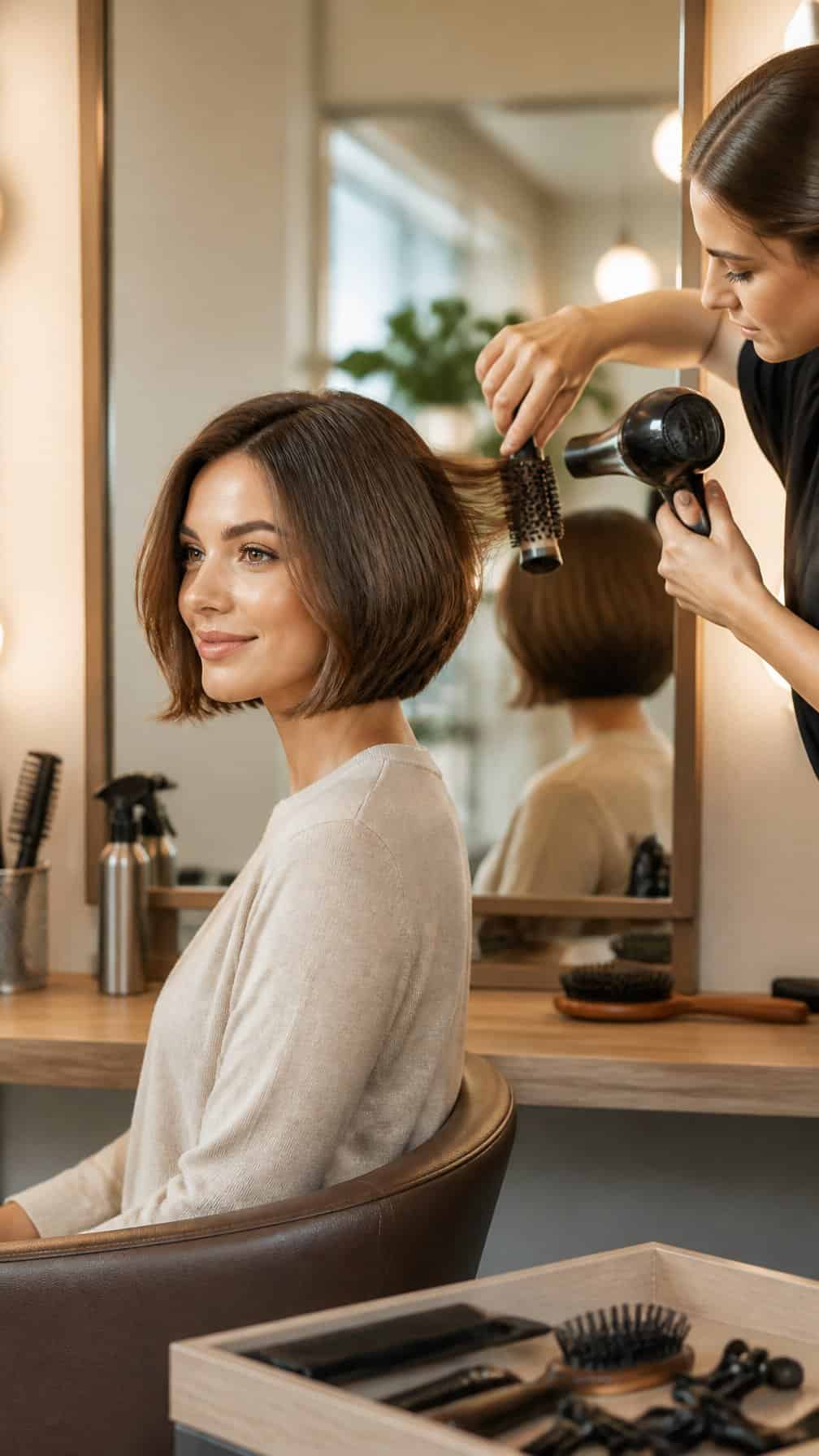
I adjust the part, fringe, and styling technique to balance facial proportions while preserving the bob’s intended shape. I also use regular trims and targeted home care to control split ends, frizz, and unwanted bulk.
Parting, Bangs, and Texture Considerations
I choose the part according to the effect I want. A side part adds diagonal movement and can soften strong angles, while a center part creates symmetry and emphasizes the jawline. For round faces, I usually keep the part slightly off-center and add height at the crown rather than volume at the cheeks.
I match bangs to both face shape and hair density. Curtain bangs suit many bobs because they frame the eyes without creating a solid horizontal line. Blunt bangs need regular shaping and work best when the hair has enough density to hold a clean edge.
I style texture with the cut’s structure in mind. I use a lightweight mousse for fine hair, a smoothing cream for coarse hair, and a small amount of texturizing spray for waves. I apply products from mid-lengths to ends to keep the roots from becoming heavy.
Trim Schedules and At-Home Care
I schedule trims every six to eight weeks to maintain a precise bob line. Shorter bobs, blunt ends, and bangs may need attention closer to every four weeks, while layered or chin-length styles can often go slightly longer. I ask my stylist to check the perimeter, face-framing pieces, and neckline separately.
At home, I detangle from the ends upward with a wide-tooth comb and limit high heat when possible. I apply heat protectant before blow-drying or using an iron, then direct the airflow downward to reduce frizz and preserve shine.
I wash according to my scalp and hair type rather than following a fixed schedule. I use a clarifying shampoo occasionally when buildup affects volume, but I follow it with conditioner on the mid-lengths and ends. I sleep with dry hair and avoid tight elastics that can bend or crease the shape.