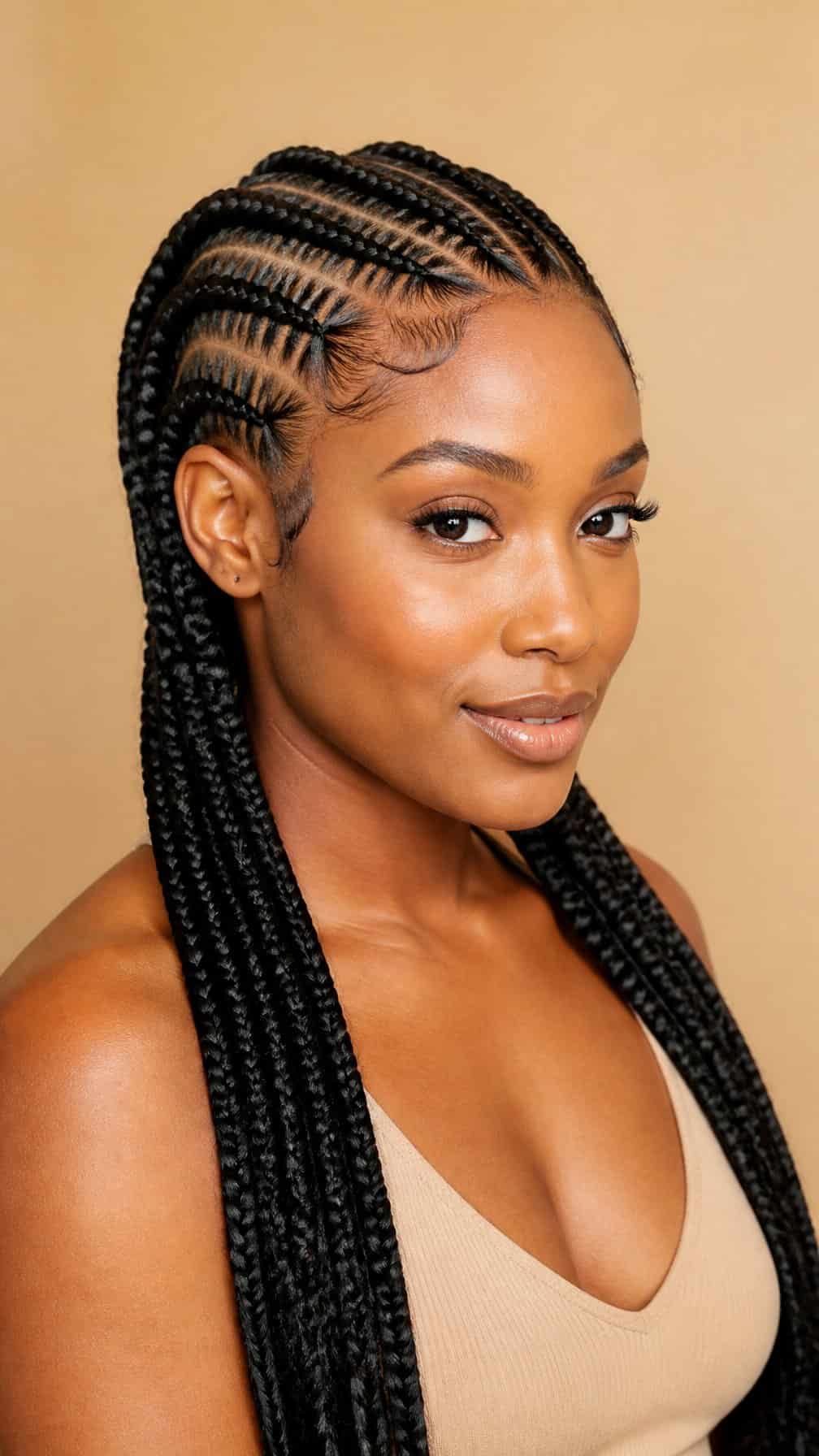
Cornrows can give you a polished style with lasting structure, whether you prefer clean lines, intricate parts, added length, or decorative details. The right design helps you balance personal style, comfort, and practical wear.
Save for later
Want to come back to this story? Save it with your email so it is easy to find again.
You can find a long-lasting cornrow style by comparing braid patterns, sizes, extensions, finishes, and maintenance needs. I’ll cover versatile looks ranging from classic straight-back rows to geometric designs, braided updos, textured extensions, and statement details, along with preparation and care guidance to help protect your hair between appointments.
Table of Contents
- 1 1) Classic straight-back cornrows
- 2 2) Feed-in cornrows with neat extensions
- 3 3) Ghana braids with tapered ends
- 4 4) Lemonade cornrow braids
- 5 5) Fulani-inspired cornrows with beads
- 6 6) Stitch braids in geometric patterns
- 7 7) Zigzag cornrow designs
- 8 8) Cornrow ponytail with sleek edges
- 9 9) Cornrow bun with braided sections
- 10 10) Medium knotless cornrows
- 11 11) Small straight-back cornrows
- 12 12) Cornrows with curly extensions
- 13 13) Jumbo cornrows with clean parting
- 14 14) Crisscross cornrow pattern
- 15 15) Heart-shaped cornrow design
- 16 16) Triangle-part cornrows
- 17 17) Side-swept cornrow braids
- 18 18) Cornrow bob with tucked ends
- 19 19) Halo cornrow crown
- 20 20) Cornrows with metallic cuffs
- 21 21) Cornrow Mohawk with braided sides
- 22 22) Basket-weave cornrows
- 23 Preparing Cornrows for Long-Lasting Wear
- 24 Scalp Cleansing and Moisturizing
- 25 Choosing the Right Hair Extensions
- 26 Maintaining Healthy Cornrows Between Appointments
- 27 Nighttime Protection and Moisture
- 28 Washing and Drying Without Frizz
- 29 Signs It Is Time to Take Them Down
1) Classic straight-back cornrows
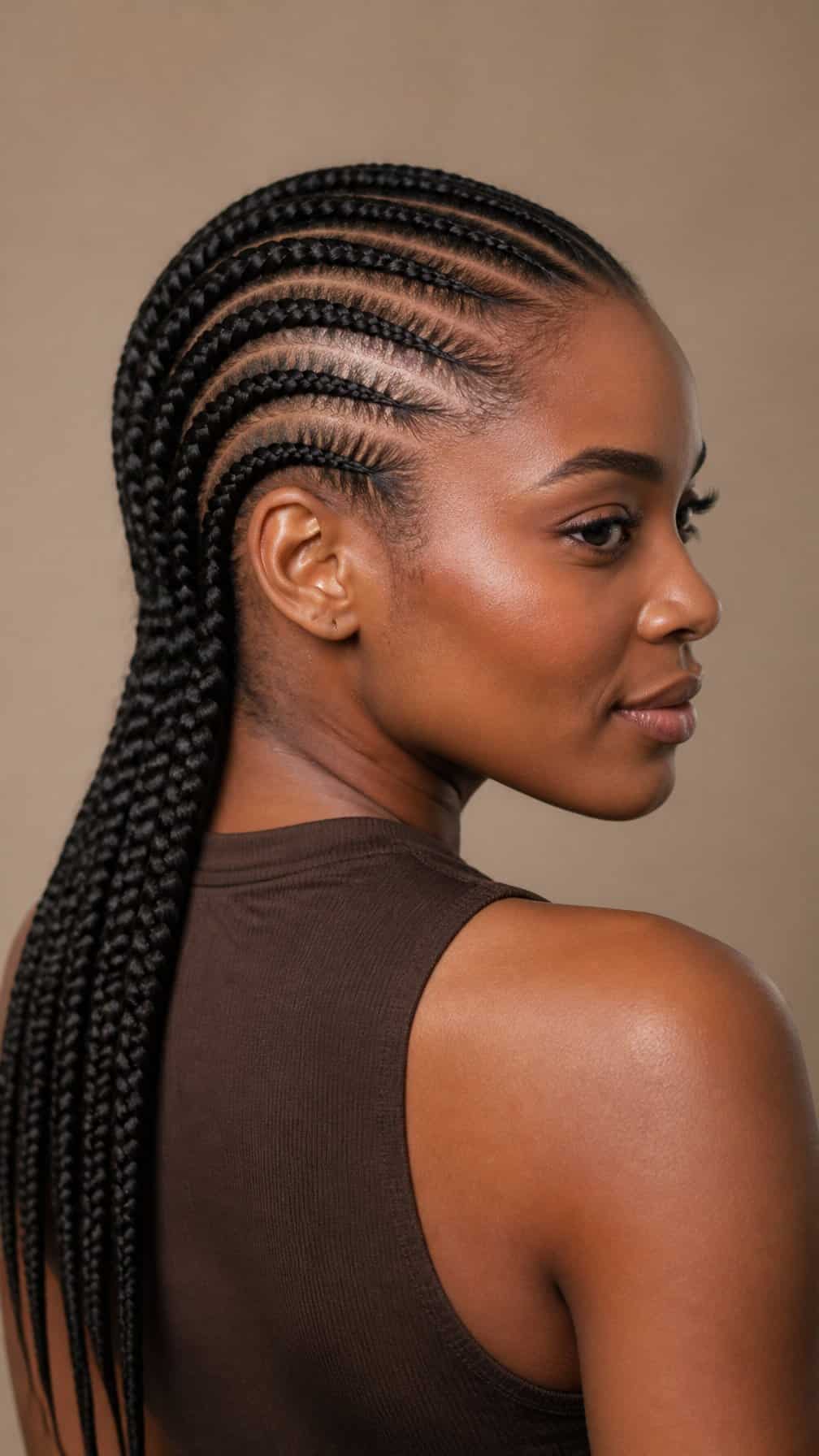
I choose classic straight-back cornrows when I want a clean style with a simple shape. The braids run from the hairline toward the nape in parallel rows, making the pattern easy to maintain and suitable for casual or polished looks.
I ask my stylist to keep the row spacing consistent and avoid excessive tension around the edges. I also protect the braids at night with a satin scarf or bonnet, which helps reduce frizz and keeps the parts defined.
This style can last for several weeks when my scalp stays comfortable and the braids remain neat. I refresh the look by gently cleaning my scalp, applying light moisture, and smoothing loose hairs without adding heavy product.
2) Feed-in cornrows with neat extensions
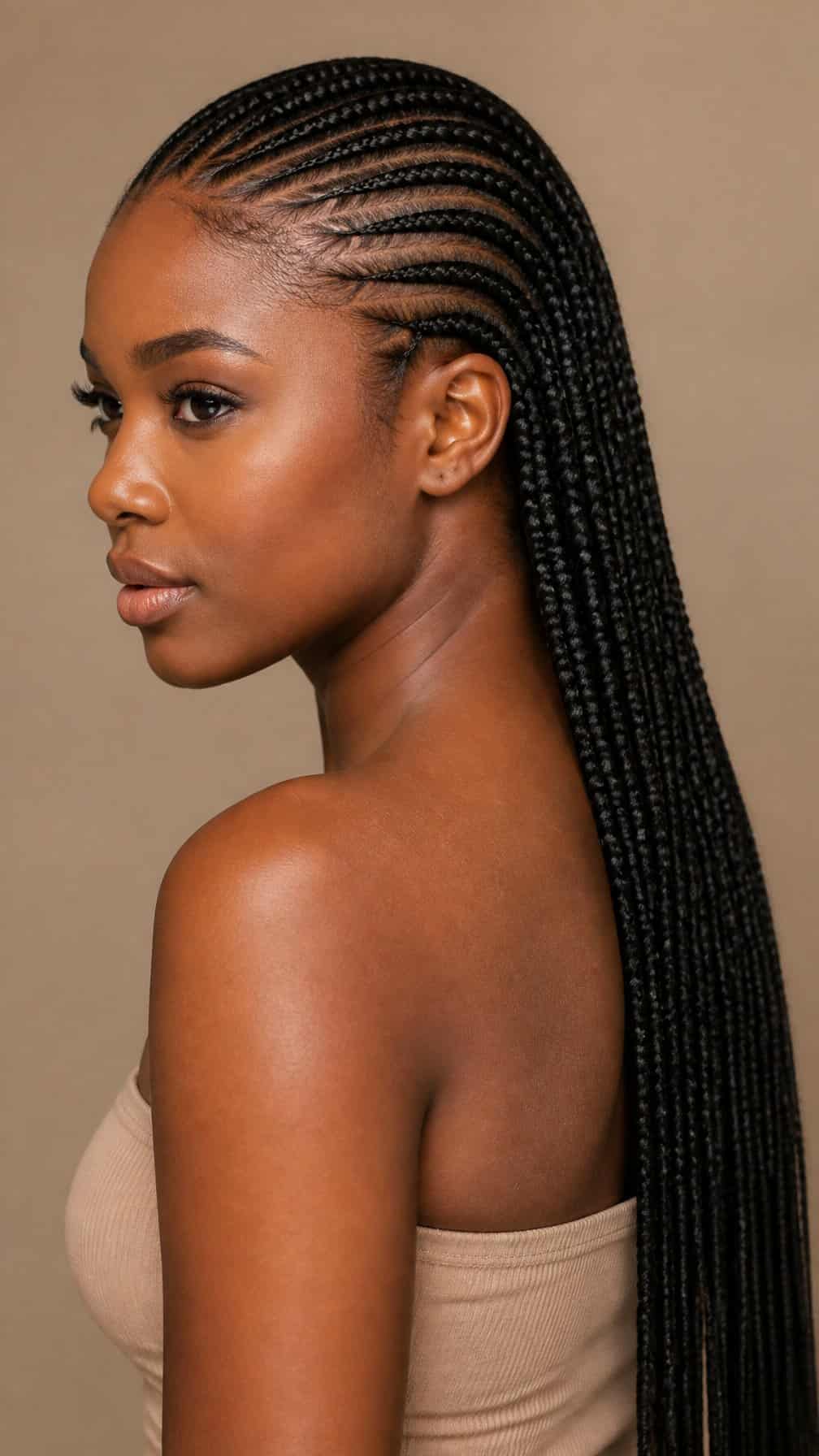
I start with smaller sections at the hairline and gradually add extension hair as I braid toward the back. This technique creates a smooth, tapered appearance without placing all the added weight at the roots.
I keep each row evenly spaced and match the extension shade closely to the natural hair for a polished finish. A light edge control helps define the partings, while a satin scarf at night reduces friction and keeps the braids neat.
I avoid adding excessive hair, since extra weight can cause tension and discomfort. With gentle washing, careful drying, and regular scalp care, this style can stay tidy for several weeks.
3) Ghana braids with tapered ends
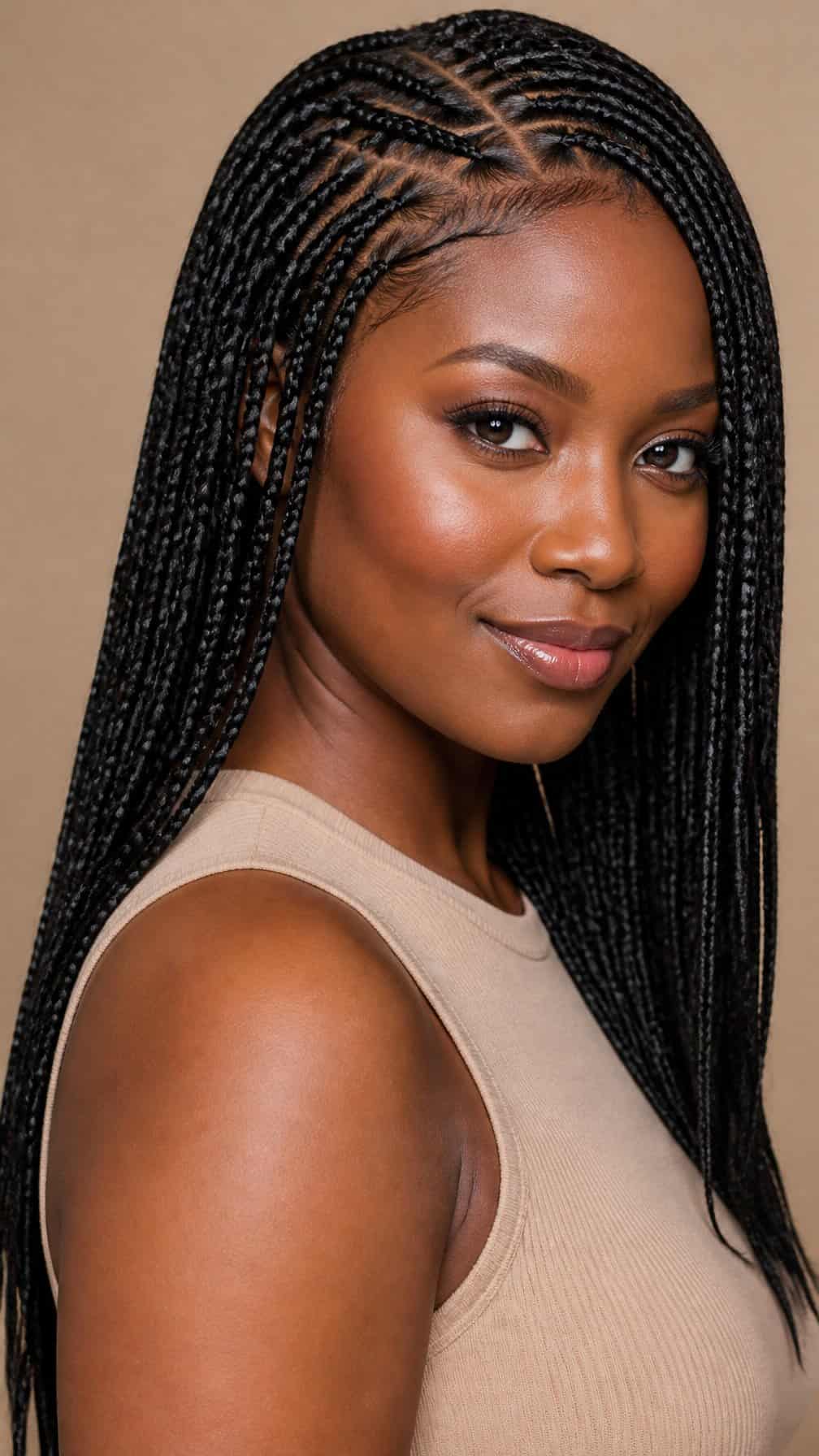
I like Ghana braids with tapered ends for their clean shape and gradual finish. The braids start with fuller sections near the scalp, then narrow toward the tips instead of ending in a blunt line. This detail gives the style a lighter appearance while keeping the pattern structured.
I would choose medium-sized rows for a balanced look that remains practical for several weeks. A stylist can curve the braids slightly along the head or keep them straight, depending on the desired shape. I recommend smoothing the edges without pulling them tightly, especially around the hairline.
To maintain the style, I cover my braids with a satin scarf at night and cleanse my scalp gently when needed. I also apply a small amount of lightweight oil if my scalp feels dry, avoiding heavy products that can leave buildup.
4) Lemonade cornrow braids
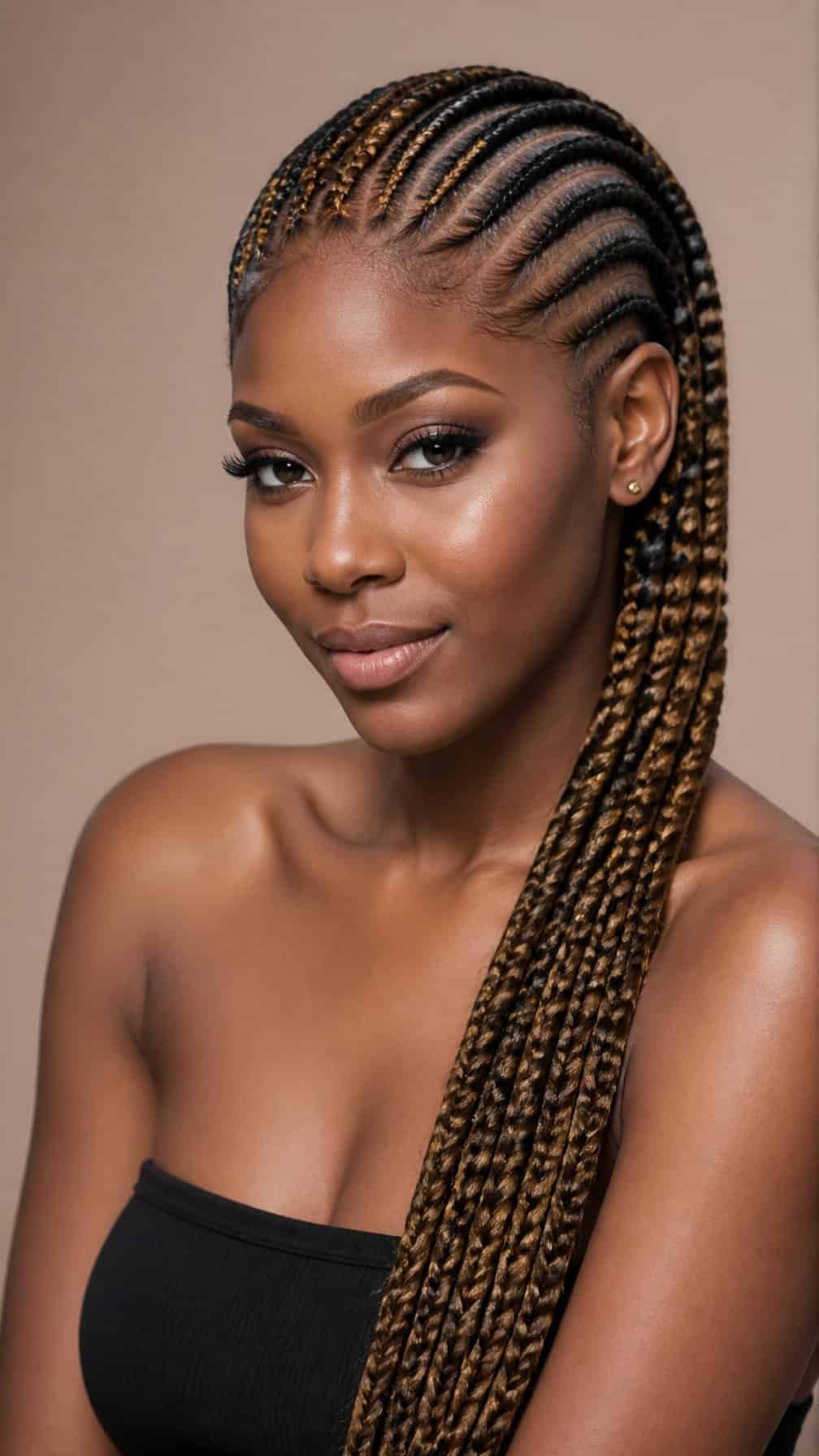
I like lemonade cornrow braids for their sweeping pattern, which directs the rows toward one side instead of keeping them centered. This layout creates a defined profile while leaving the scalp design visible. I would choose medium-sized rows for a balance between detail, comfort, and manageable upkeep.
I protect the style at night with a satin scarf or bonnet and avoid heavy products that can build up along the parts. With gentle cleansing and careful drying, I can keep the braids neat for several weeks, depending on hair growth and daily activity. I also ask my braider to avoid excessive tension around the hairline.
5) Fulani-inspired cornrows with beads
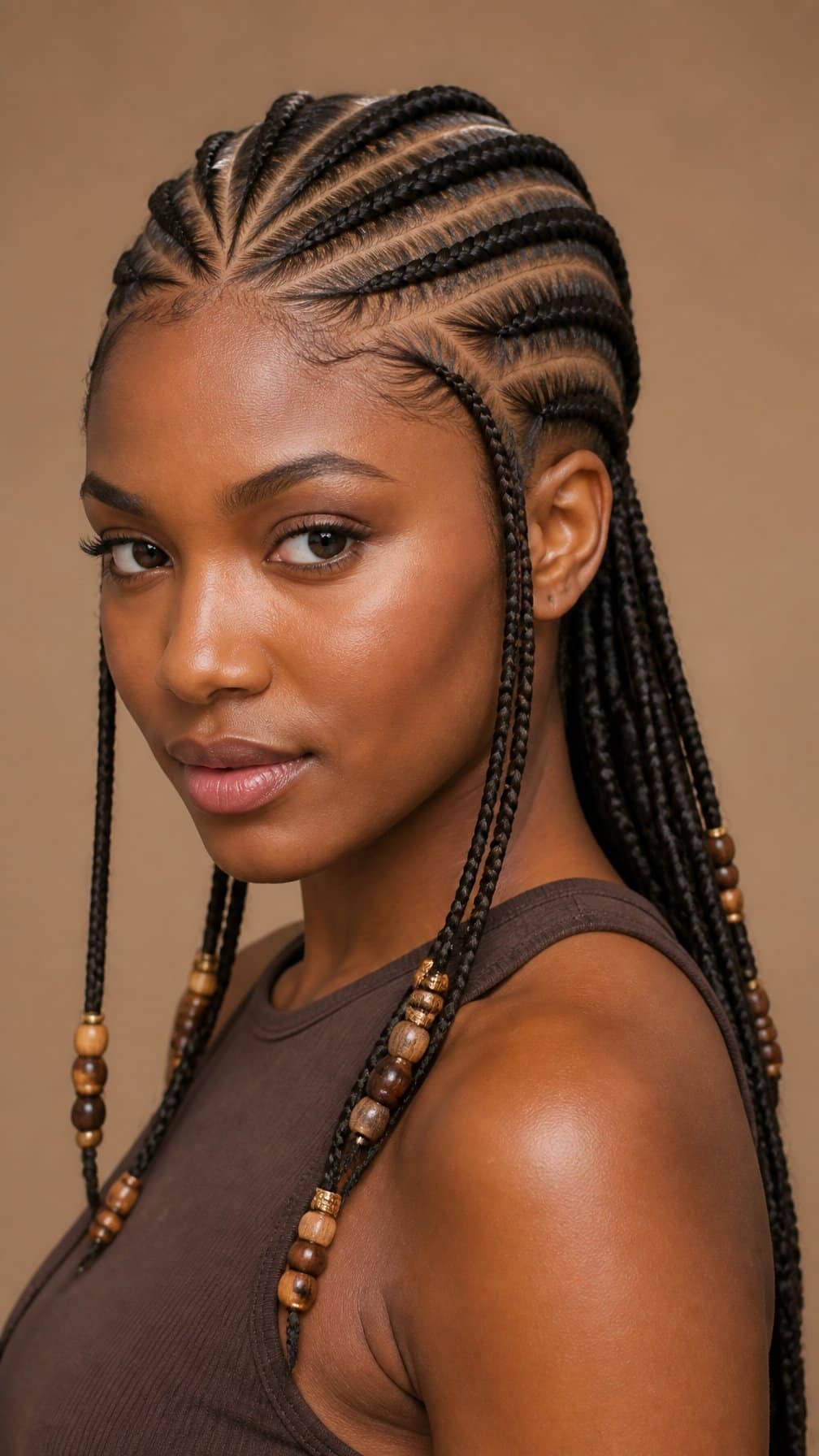
I use a mix of narrow cornrows, curved partings, and one or two central braids to create a Fulani-inspired layout. I add beads near the ends, choosing lightweight styles that match the hair’s texture and do not pull on the scalp.
I keep the braid pattern consistent from the hairline to the crown, then leave selected braids slightly longer for movement. This style can last for several weeks when I protect it at night with a satin scarf and cleanse the scalp gently without rough scrubbing.
6) Stitch braids in geometric patterns
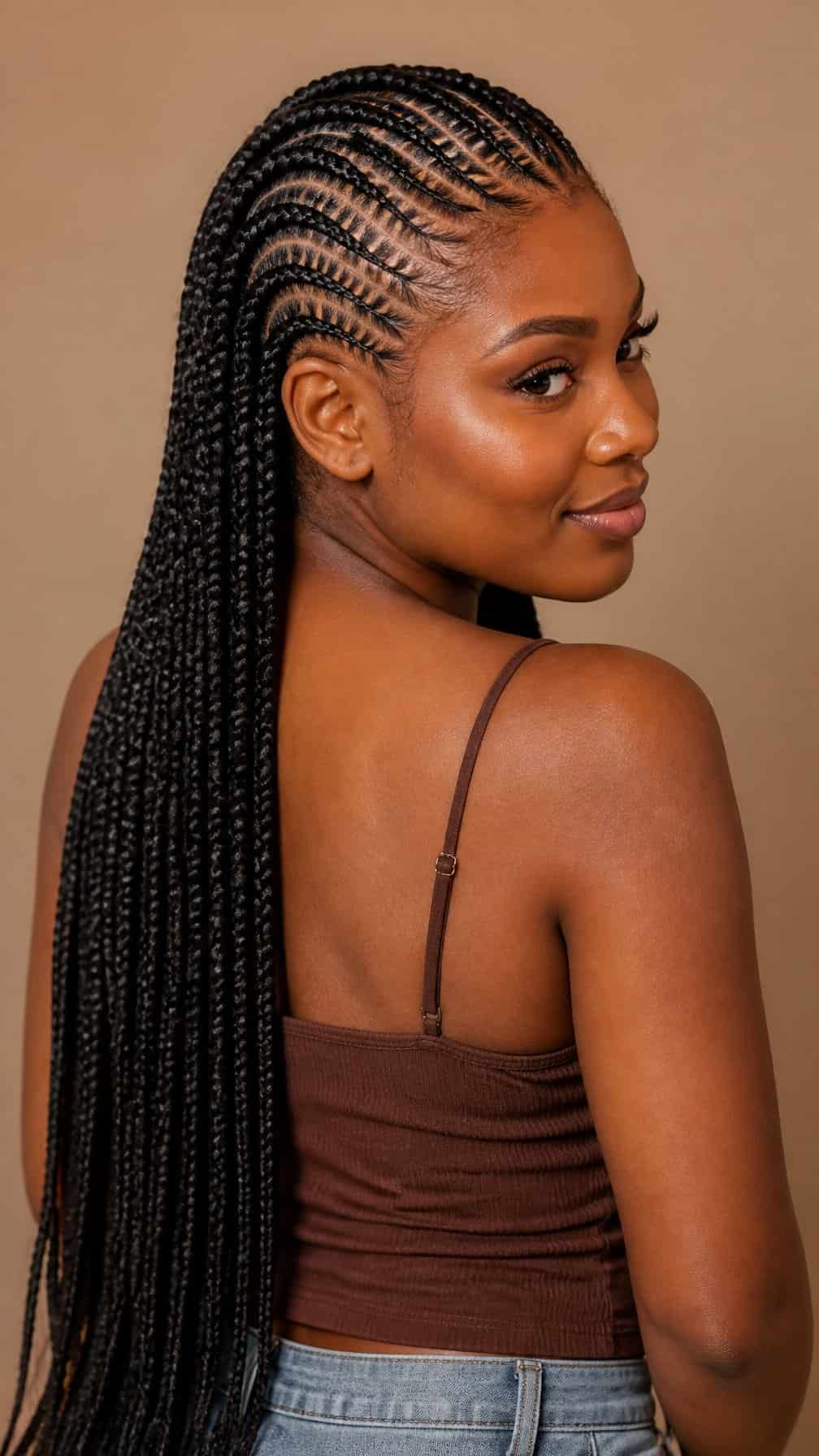
I like stitch braids arranged into clean triangles, diamonds, or curved sections because the parting creates a precise, structured look. I would ask for consistent braid widths and crisp lines, especially around the hairline, to keep the pattern defined as it grows.
I choose a geometric layout that follows my head shape rather than forcing an overly complex design. Smaller stitch braids can outline the pattern, while slightly larger braids add contrast and reduce styling time.
I protect the style by wrapping my hair at night with a satin scarf or bonnet. I also keep the scalp clean with a gentle, diluted cleanser and avoid tight edges, since excessive tension can cause discomfort and breakage.
7) Zigzag cornrow designs
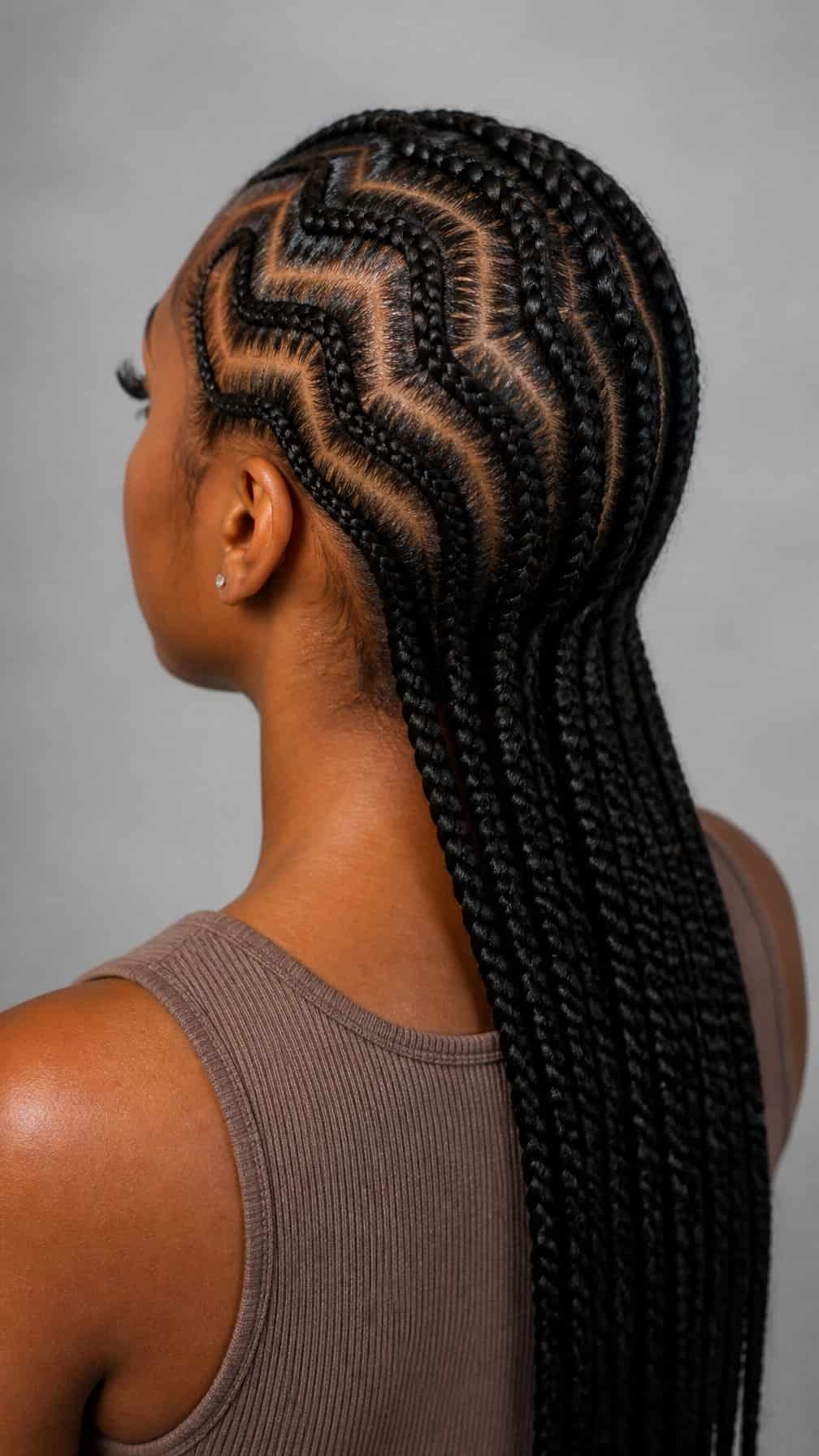
I like zigzag cornrows for the way angled partings create movement across the scalp. I ask my braider to map the pattern first, since uneven sections can make the design look unbalanced. Medium-sized rows usually show the shape clearly while remaining practical for daily wear.
I prefer combining straight-back rows with one or two zigzag sections for a controlled, geometric finish. This approach gives the style visual interest without covering every area in a complex pattern. I keep the ends braided into a low bun, ponytail, or individual plaits, depending on the desired length and upkeep.
For longer wear, I protect the braids at night with a satin or silk scarf and avoid tight pulling when styling them. I also keep the scalp clean with a gentle, diluted cleanser and let it dry fully. If the zigzags feel painful or the scalp looks irritated, I loosen the style rather than forcing it to last.
8) Cornrow ponytail with sleek edges
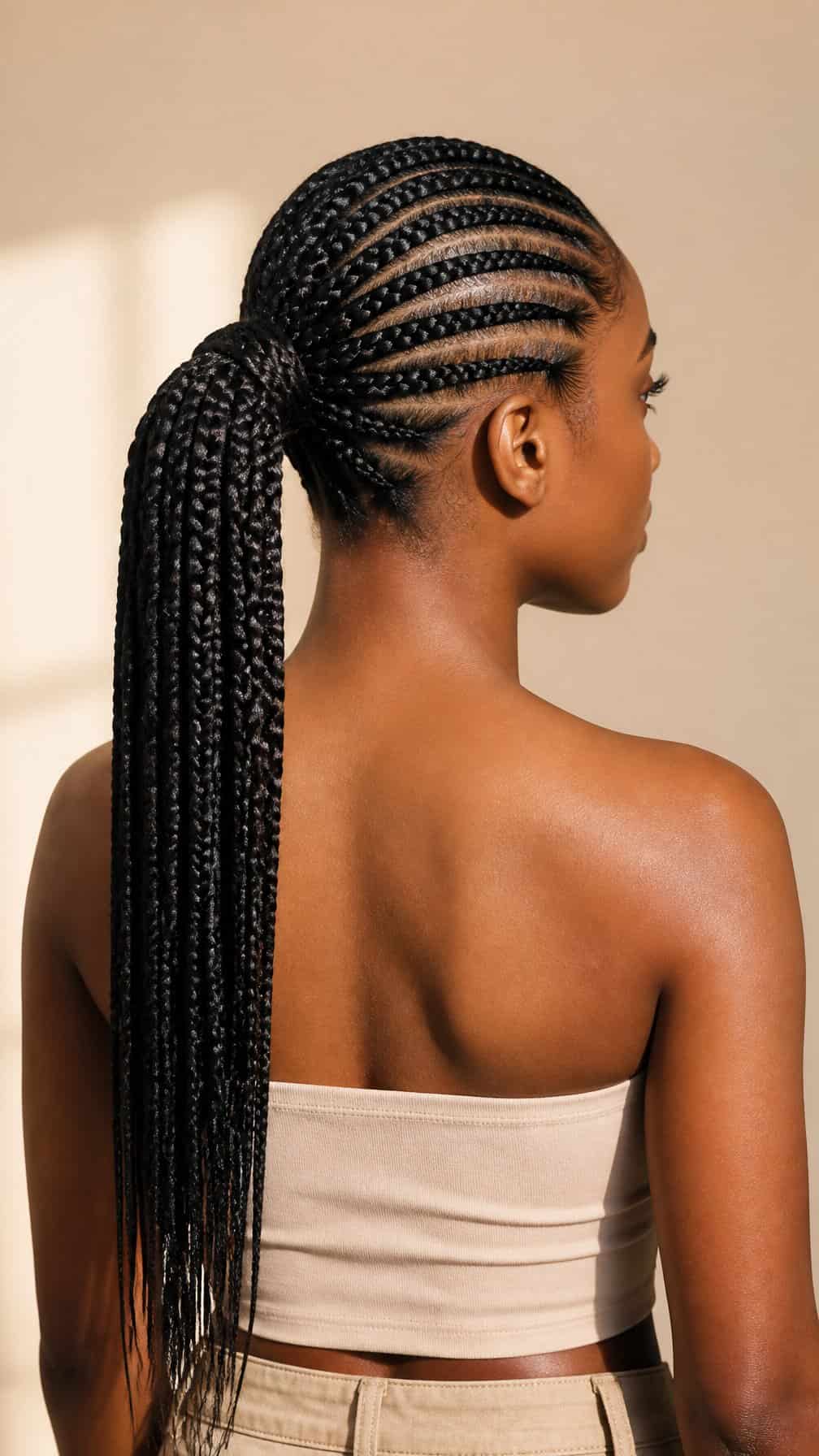
I like this style for its clean shape and practical hold. I braid the cornrows toward the crown, gather the loose length into a ponytail, and secure it with a covered elastic to reduce friction and tension.
For the edges, I use a small amount of edge control and a soft brush to smooth the hair without creating a stiff, flaky finish. I avoid pulling the hairline too tightly, since repeated tension can cause breakage.
I sleep in a satin scarf or bonnet and refresh the edges with a little water and product as needed. With gentle maintenance, the style can stay neat for several weeks, depending on hair growth and daily activity.
9) Cornrow bun with braided sections
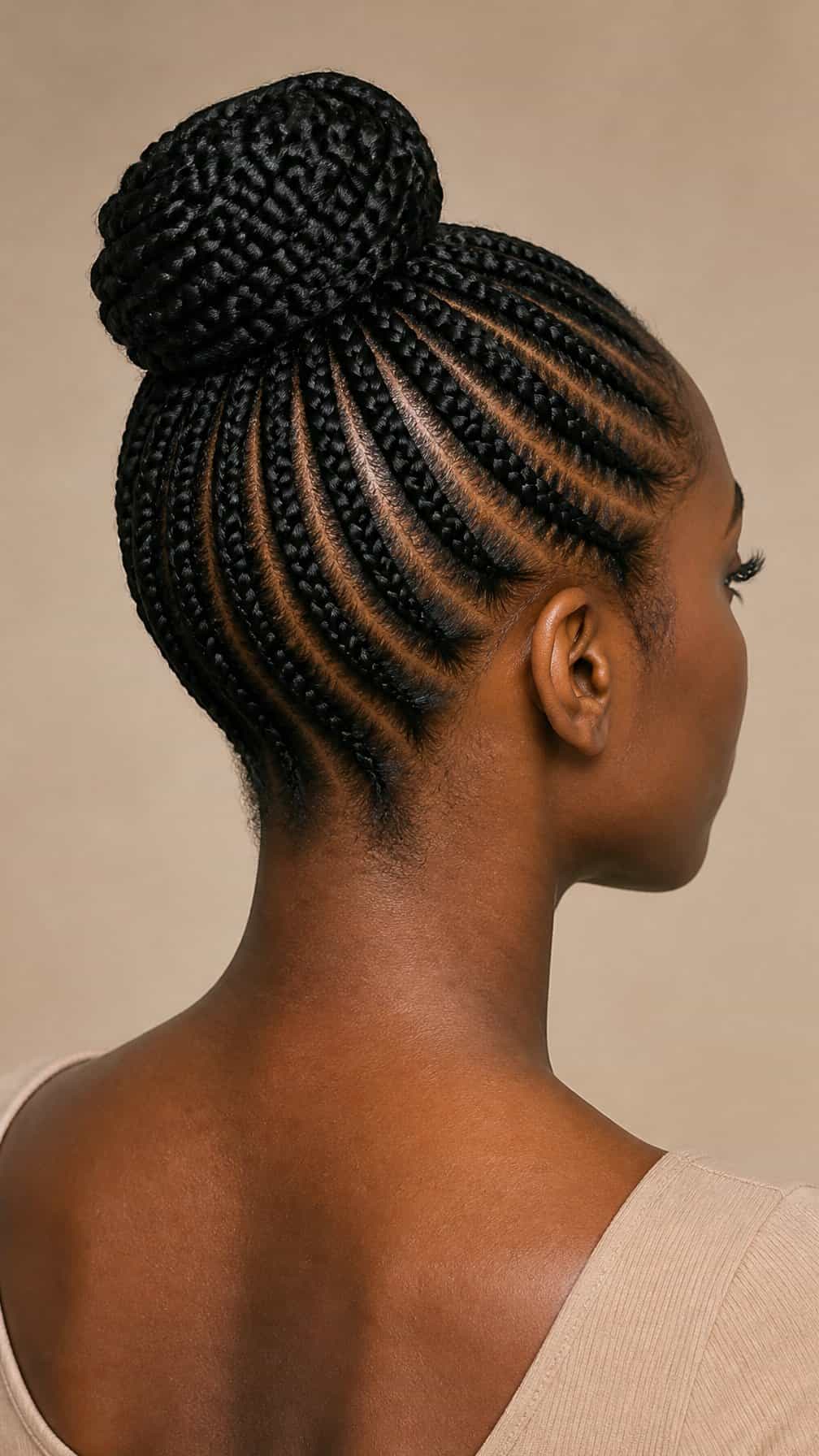
I create this style by directing neat cornrows toward a low or high bun, then adding individual braids through selected sections. The combination gives the base more texture while keeping the overall shape controlled and polished.
I prefer medium-width rows because they provide enough structure without making the bun feel heavy. I secure the gathered ends with a covered elastic, wrap the braids around it, and pin them in place for a tidy finish.
I protect the style at night with a satin scarf or bonnet and apply light moisturizer to the scalp as needed. With gentle handling, this arrangement can stay neat for several weeks, depending on hair growth and maintenance.
10) Medium knotless cornrows
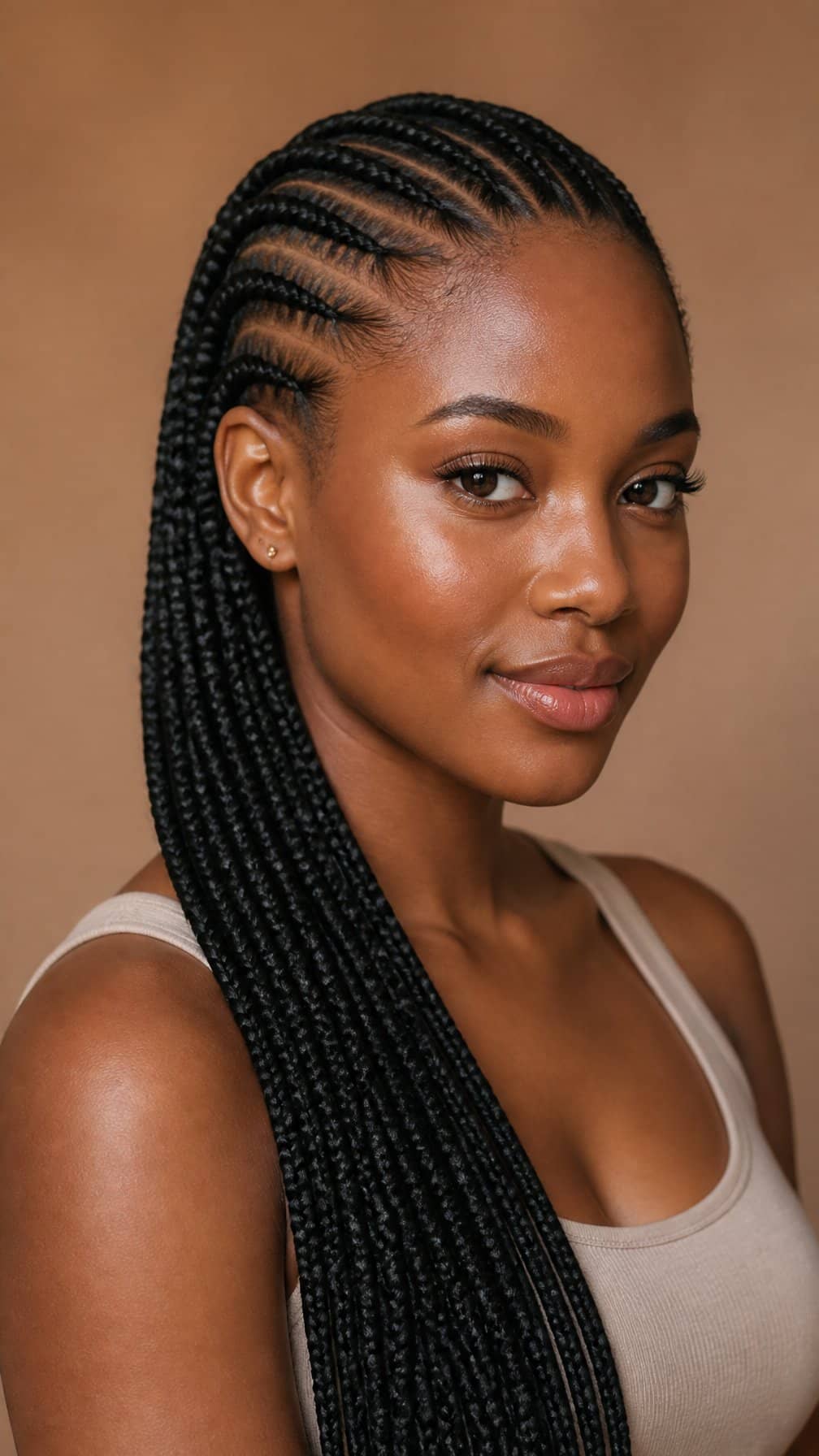
I like medium knotless cornrows for their neat appearance and lighter feel at the roots. A stylist feeds in extensions gradually rather than creating a bulky knot, which can reduce tension and create a smoother start at each braid.
I choose a clean center part, side part, or geometric pattern depending on the look I want. With gentle washing, careful drying, and a satin scarf at night, I can usually maintain the style for several weeks while keeping the parts defined and the braids tidy.
11) Small straight-back cornrows
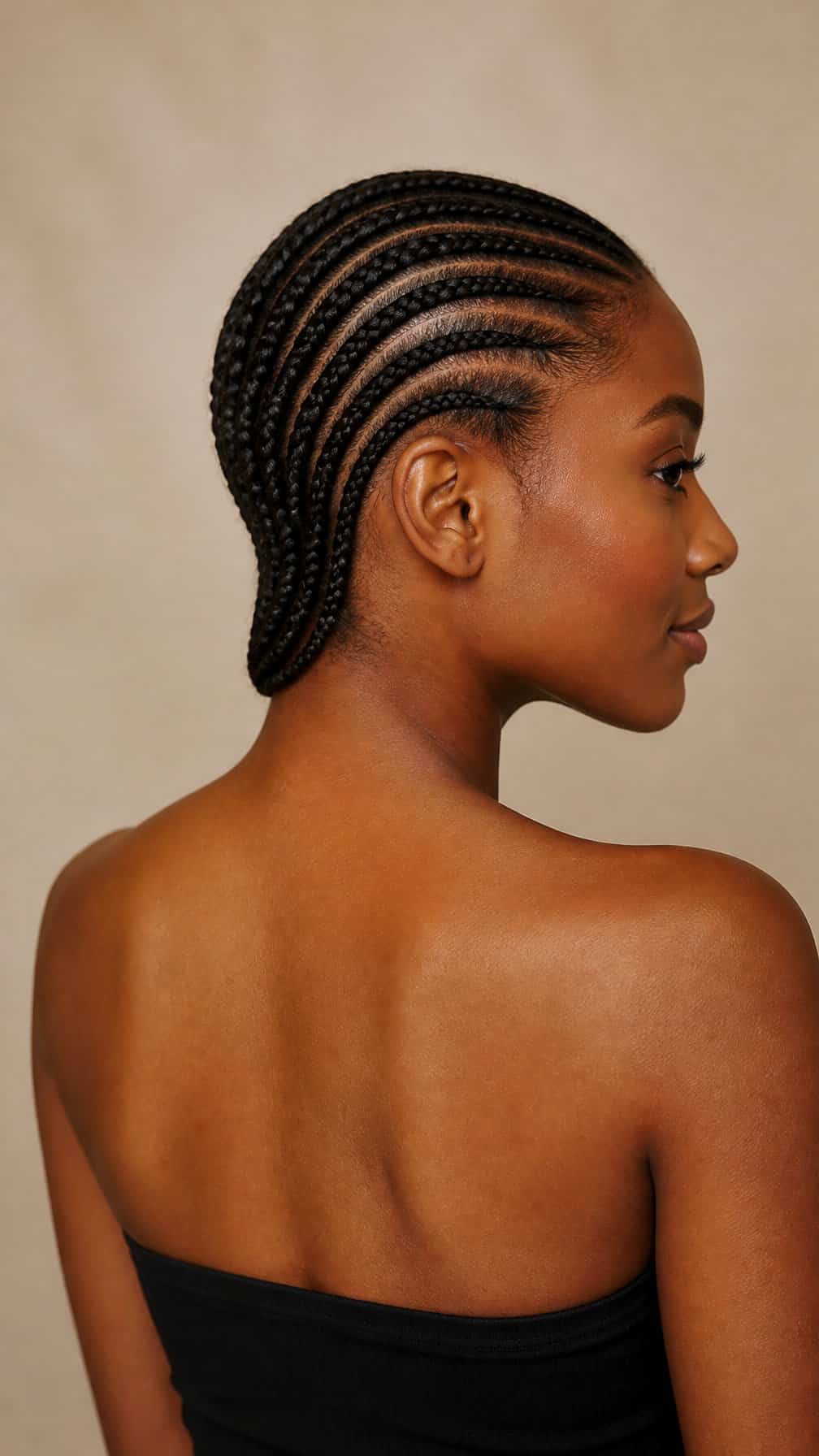
I like this style for its clean, practical structure. I braid narrow rows from the hairline toward the nape, keeping each part even and the tension consistent. The uniform pattern creates a neat look that works for casual and polished settings.
I use lightweight styling products to smooth flyaways without making the scalp feel coated. A satin scarf or bonnet at night helps reduce friction, while gentle cleansing around the parts keeps the style fresh. With careful maintenance, I can usually wear these cornrows for several weeks.
12) Cornrows with curly extensions
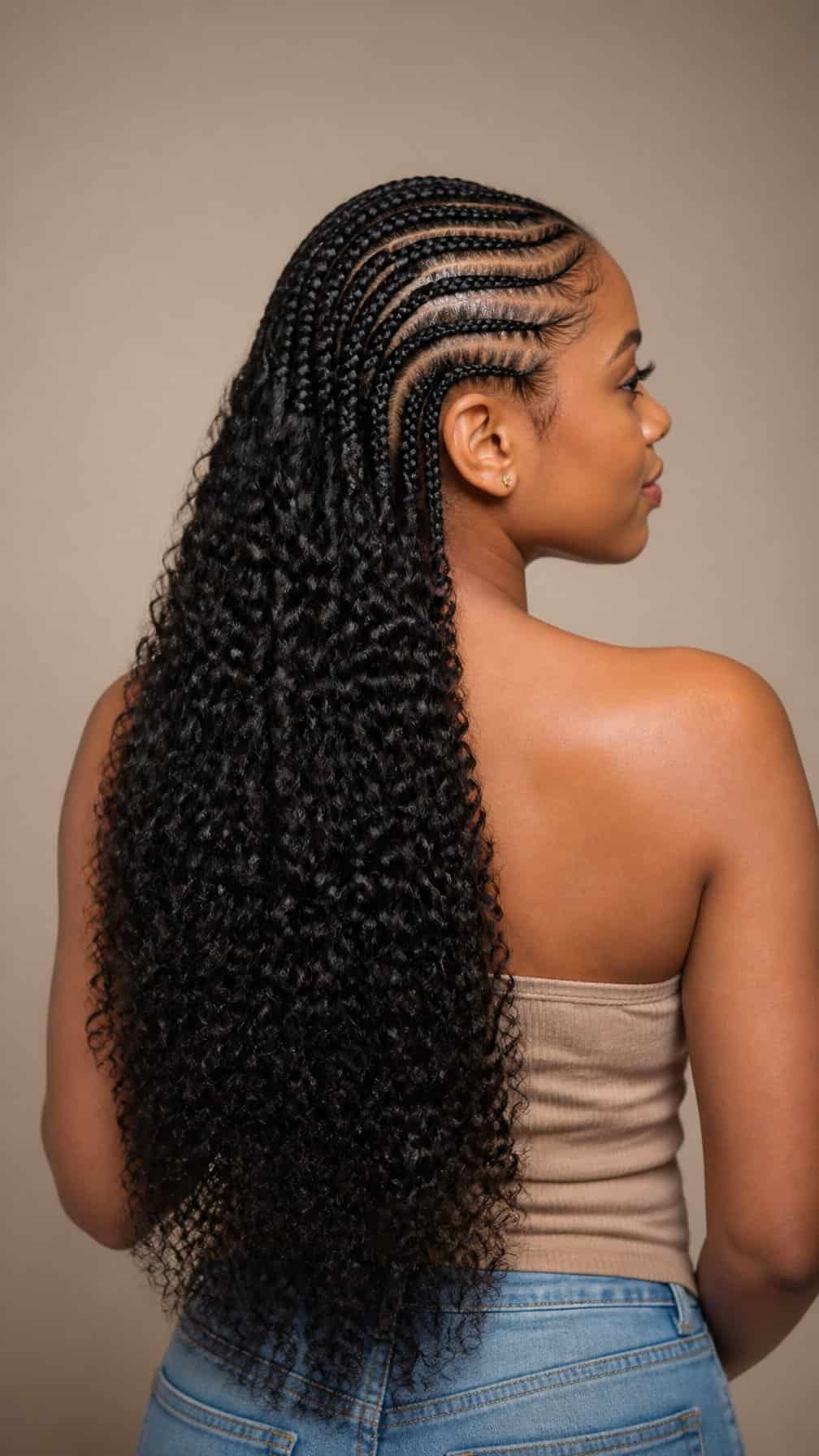
I like pairing neat cornrows with curly extensions when I want added length and texture without braiding every strand. I braid the front close to the scalp, then attach the curls at the ends for a softer finish that still looks structured.
I choose extensions that match my natural texture and secure them firmly at each braid’s base. Lightweight curls reduce tension, while regular wrapping at night helps prevent frizz and tangling.
I refresh the style by smoothing the rows with a small amount of edge control and separating the curls with my fingers. With gentle upkeep and a clean scalp, this combination can stay presentable for several weeks.
13) Jumbo cornrows with clean parting
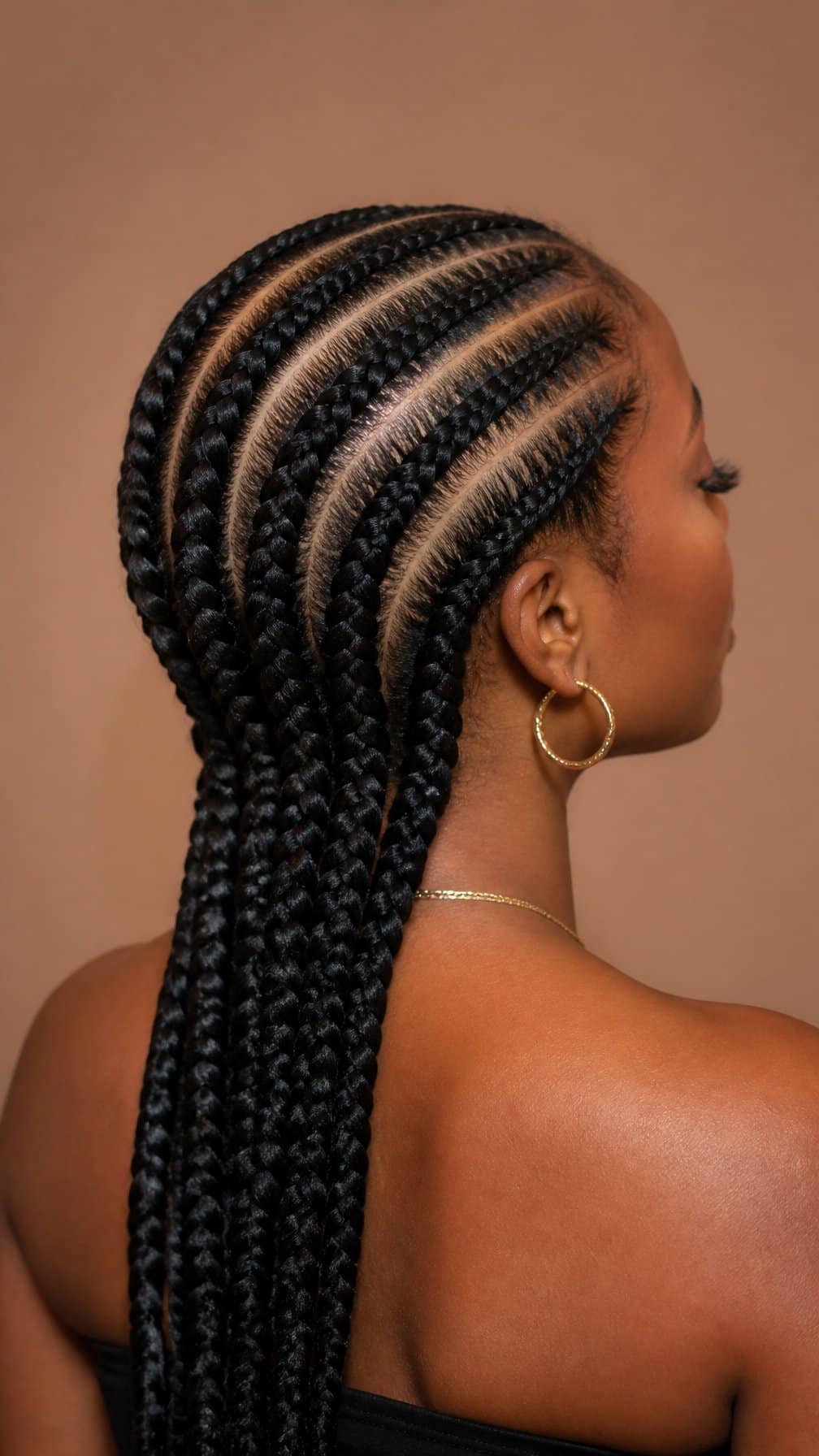
I use precise, evenly spaced sections to give this style a polished structure. The larger braids take less time than smaller patterns, while the clean parting keeps the look organized as the style settles.
I prefer a lightweight styling product around the roots to smooth flyaways without creating heavy buildup. I also keep the braids firm but comfortable, since excessive tension can irritate the scalp and make the style difficult to maintain.
To extend the wear, I cover the hair at night with a satin scarf or bonnet and refresh the scalp with a light, non-greasy product when needed. I avoid frequent washing, which can loosen the parts and cause frizz.
14) Crisscross cornrow pattern
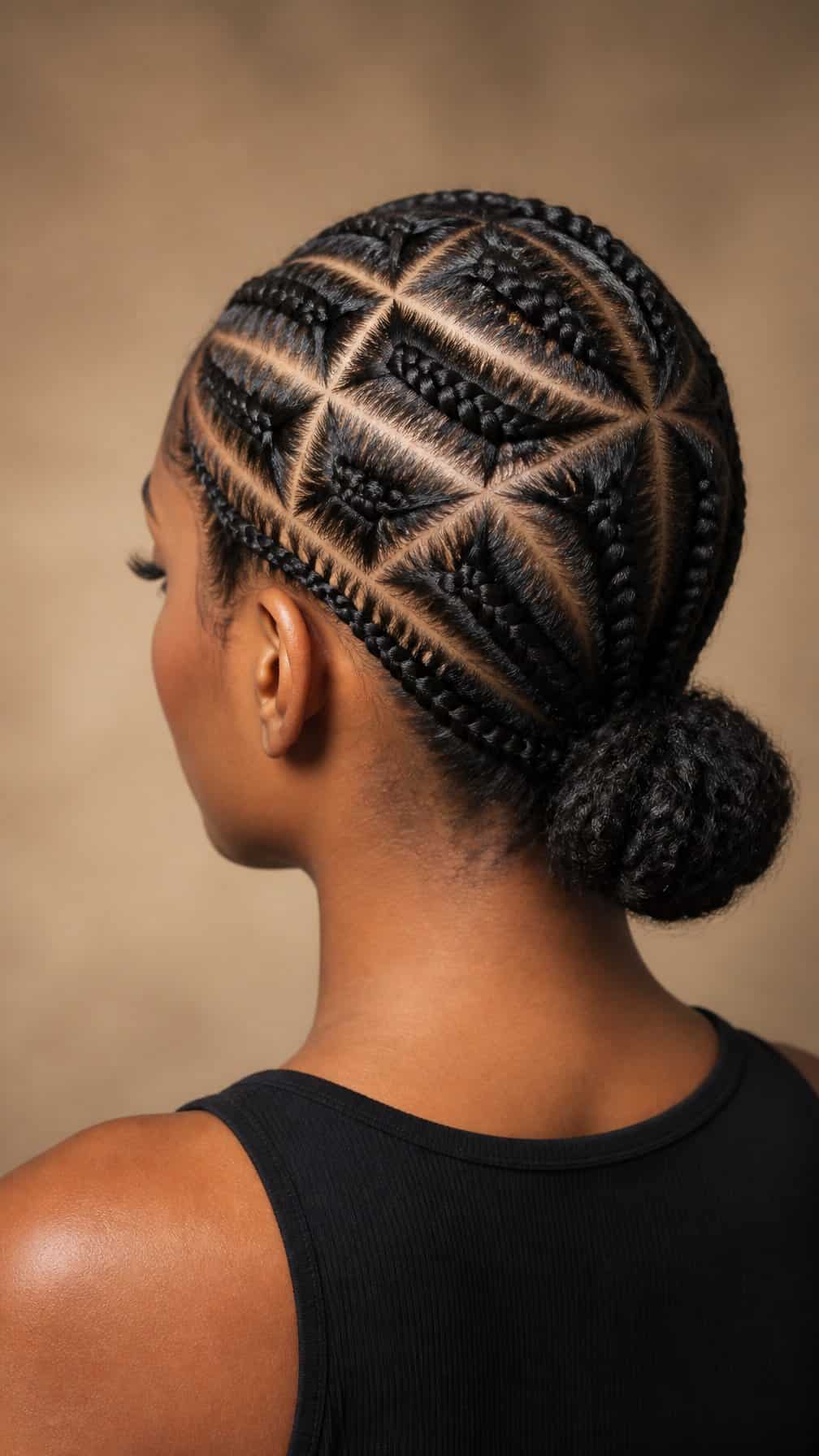
I like this pattern for its structured, graphic finish. The braids cross over one another to create diamond or lattice-shaped sections, giving the style visual detail without relying on added color or accessories.
I ask my braider to map the parting carefully before braiding, since even spacing keeps the design balanced. Medium-width cornrows make the intersections easy to see, while smaller rows create a more intricate result but may require additional styling time.
I protect the pattern at night with a satin scarf or bonnet and keep the scalp moisturized with a lightweight product. With gentle maintenance and minimal pulling, this style can stay neat for several weeks, depending on hair growth and daily care.
15) Heart-shaped cornrow design
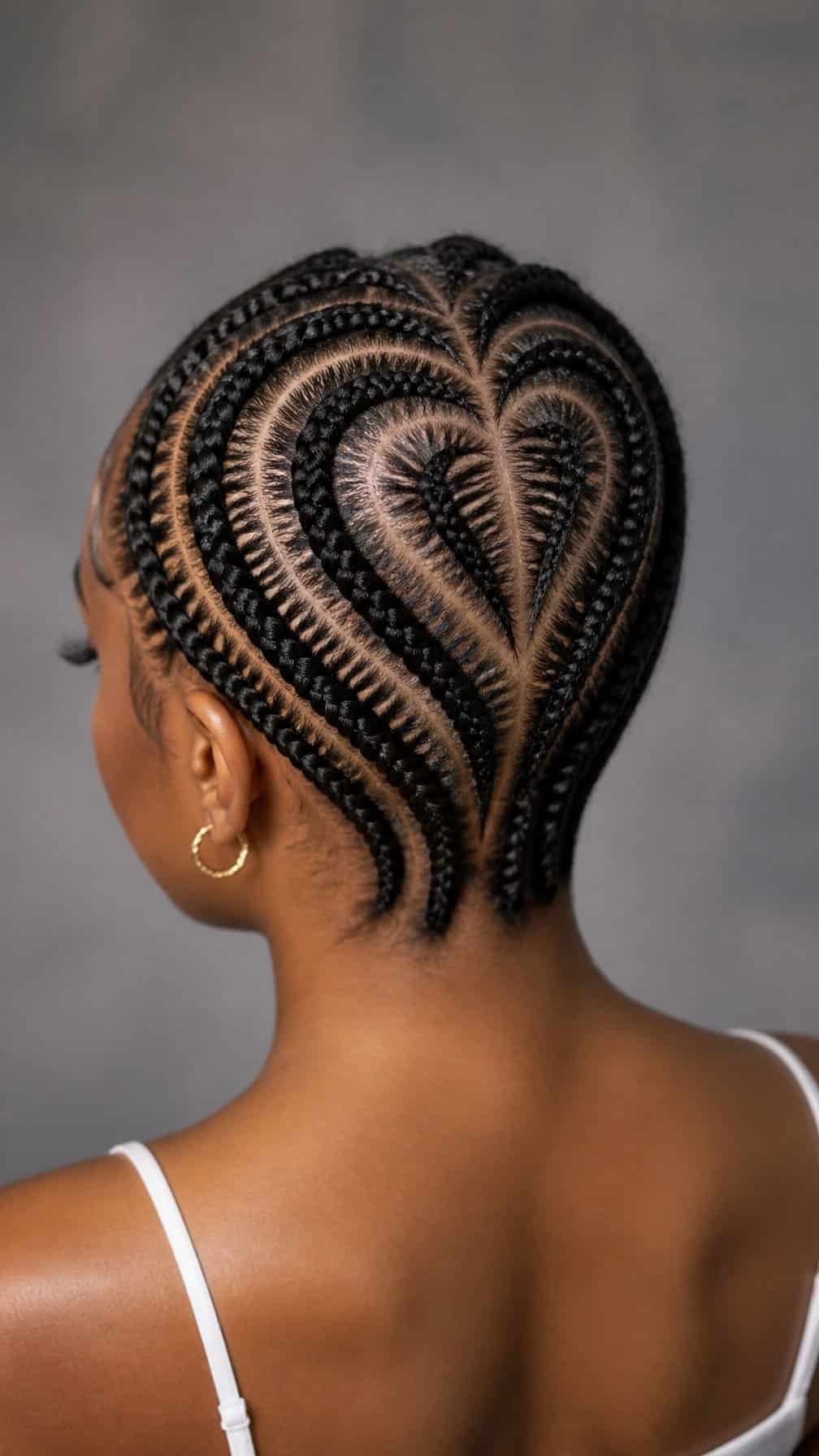
I create this style by curving cornrows around the head to form one or more heart outlines. The pattern stands out most when the parts remain clean and the braids follow balanced curves. I can place the design near the crown, along the sides, or at the back.
I usually pair the heart shape with straight-back rows, small feed-in braids, or neatly laid edges. Medium-sized braids make the outline easy to see, while smaller cornrows add detail without making the design look crowded.
I keep the style comfortable by avoiding excessive tension around the temples and hairline. With gentle maintenance, a satin scarf at night, and light scalp care, I can help the braids stay neat for several weeks.
16) Triangle-part cornrows
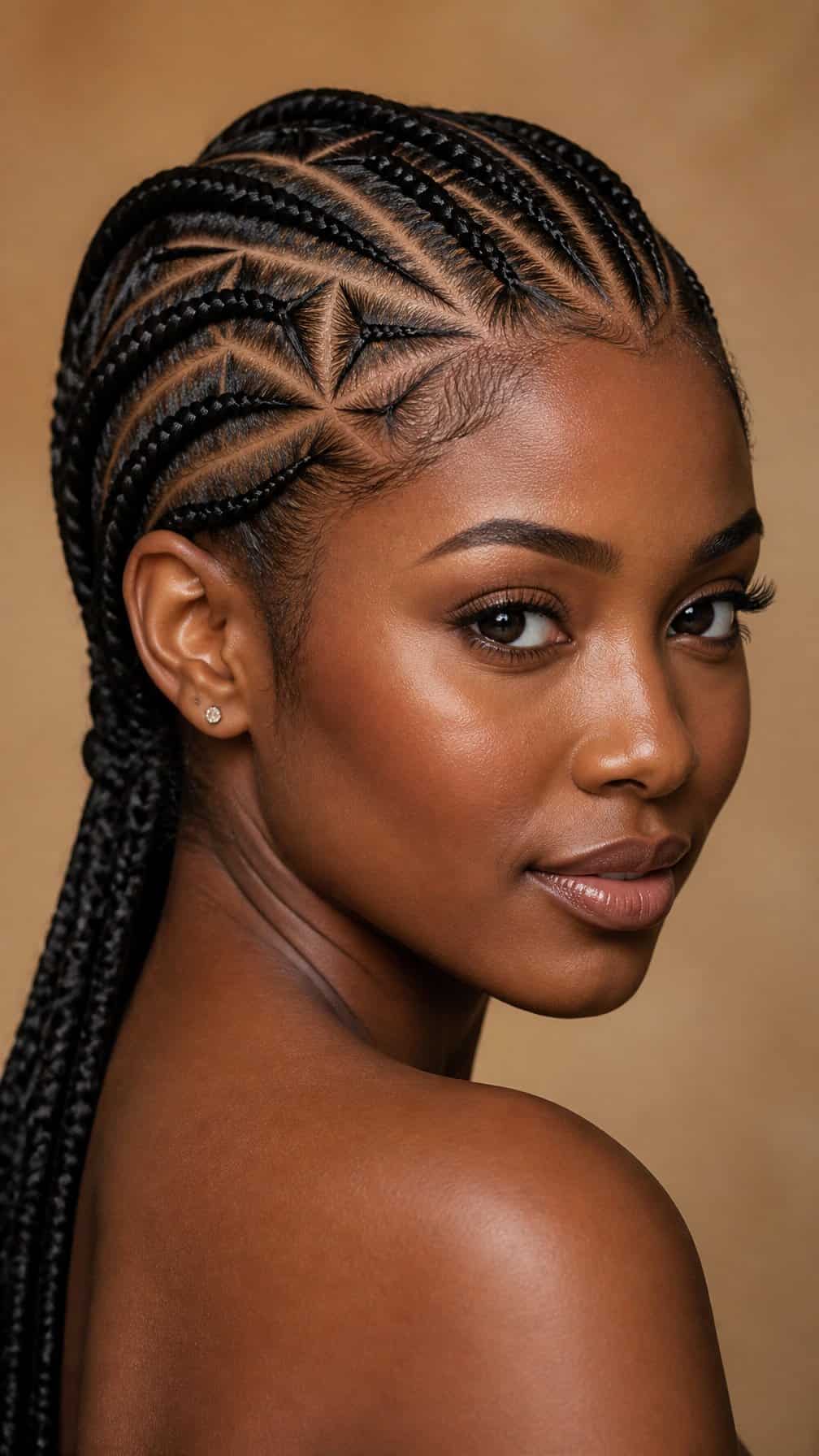
I like triangle-part cornrows for the geometric structure they add to a protective style. I create clean, angled sections before braiding, then keep each row consistent in size and direction for a balanced finish.
This pattern can suit straight-back rows, curved designs, or a mix of both. I use a light hold product to smooth flyaways without coating the scalp, and I avoid making the braids too tight around the hairline.
With gentle nighttime care, such as a satin scarf or bonnet, I can help preserve the parting and reduce friction. I also keep the scalp clean and dry between washes so the style remains comfortable for several weeks.
17) Side-swept cornrow braids
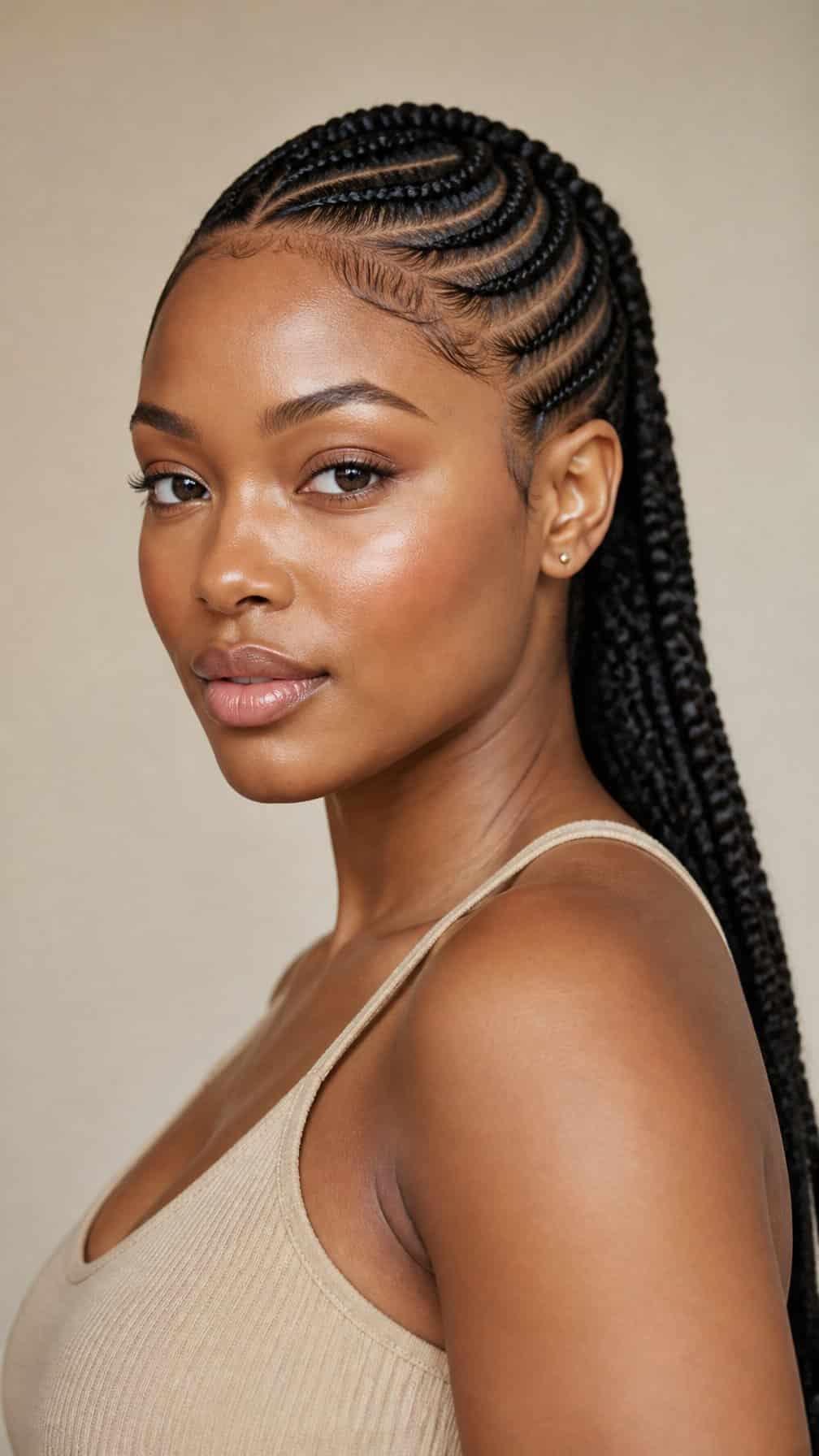
I like this layout because the braids angle toward one side, creating a clean directional shape without adding complicated detail. I usually pair narrow and medium cornrows to give the style varied texture while keeping the parting defined.
I find that side-swept rows work well on medium to long hair, especially when the ends gather into a low bun, ponytail, or loose braided finish. I secure the edges gently and avoid excessive tension around the hairline.
With careful washing, drying, and nighttime protection, I can keep the pattern neat for several weeks. I use a satin scarf or bonnet to reduce friction and refresh the scalp with a light, non-greasy product when needed.
18) Cornrow bob with tucked ends
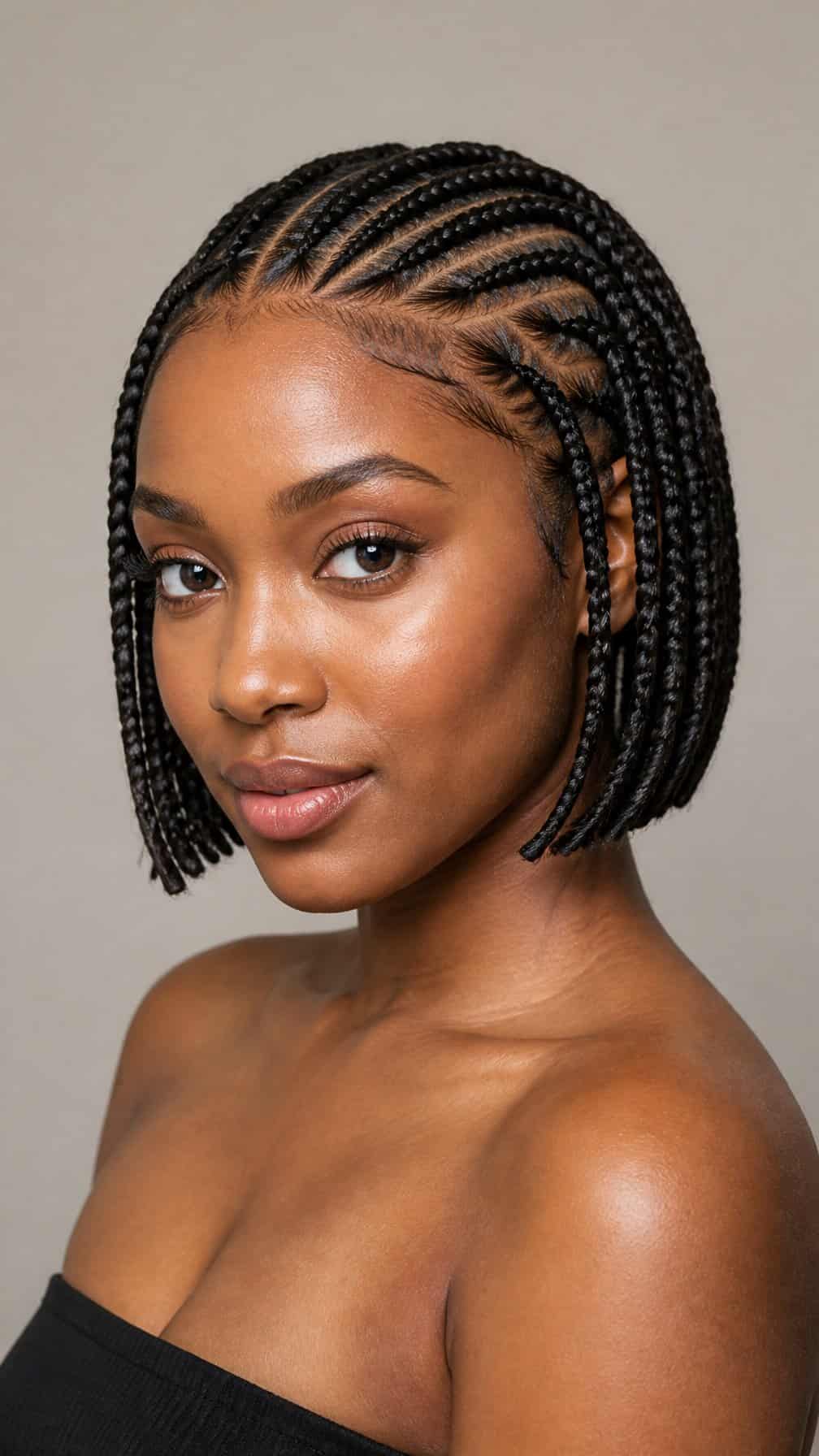
I like this style for its clean, shaped finish. I braid the cornrows toward the nape, then tuck and secure the ends beneath the lower rows to create a bob-like outline without loose tips.
The tucked ends help reduce daily handling and keep the shape neat for several weeks when I protect it at night with a satin scarf or bonnet. I also apply a small amount of lightweight scalp oil as needed, avoiding heavy products that can create buildup.
I choose medium-sized braids for a balanced look and ask for gentle tension around the hairline. A stylist can adjust the parting and length to suit my face shape while keeping the tucked section flat and secure.
19) Halo cornrow crown
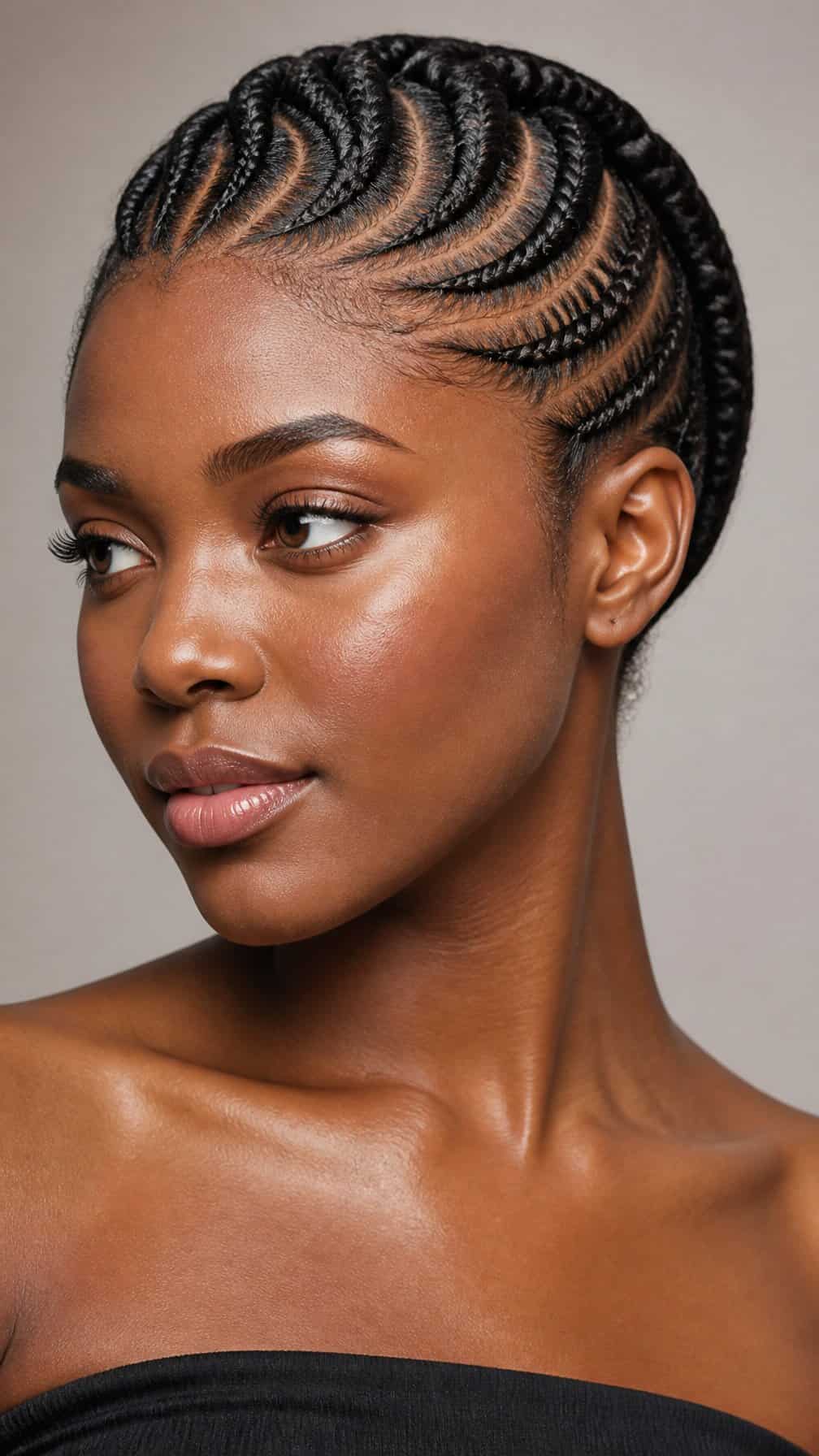
I like the halo cornrow crown for its circular shape, which frames my face while keeping the rest of my hair secured. I have the braids directed around the head in a continuous ring, leaving the center either braided, tucked, or styled with loose texture.
I find this design works best on medium to long hair because added length helps the crown maintain its shape. I ask for clean parting and consistent tension, especially around the temples and nape, where uneven sections can make the halo look unbalanced.
To help the style last for weeks, I protect it at night with a satin scarf or bonnet and avoid heavy products that can build up along the parts. I also keep the scalp moisturized with a lightweight, water-based product.
20) Cornrows with metallic cuffs
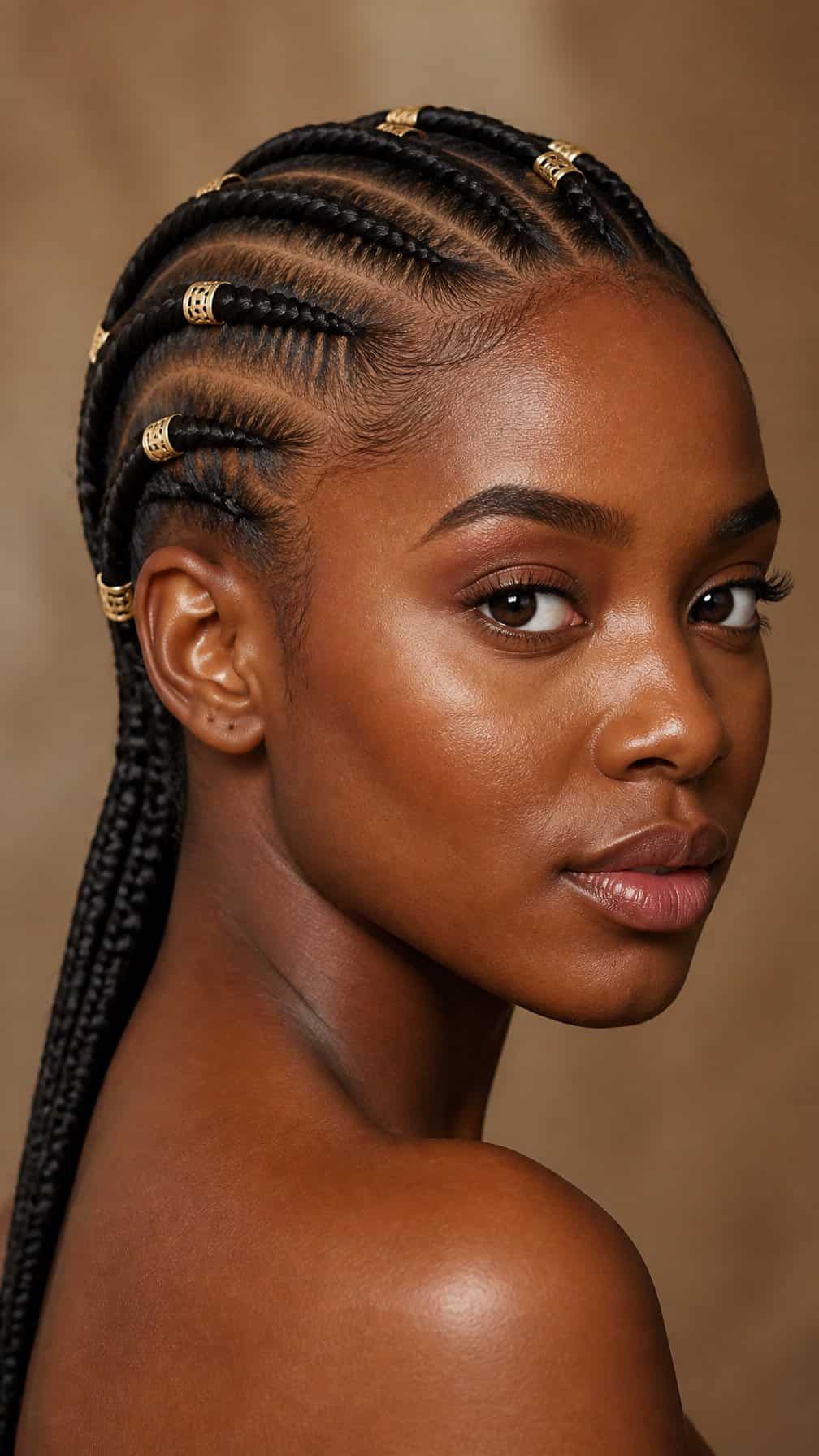
I add small metallic cuffs to finished cornrows for a polished accent without changing the braid pattern. Gold, silver, and bronze tones create different effects, while evenly spaced cuffs keep the style balanced and comfortable.
I place the cuffs loosely around selected braids rather than clustering them in one area. This approach lets the cornrows remain the main focus and reduces pressure on individual sections. I also check that each cuff has smooth edges to avoid catching on hair or fabric.
To help the style last for weeks, I protect the braids at night with a satin scarf or bonnet and avoid pulling the cuffs when styling. I remove them gently before taking down the cornrows.
21) Cornrow Mohawk with braided sides
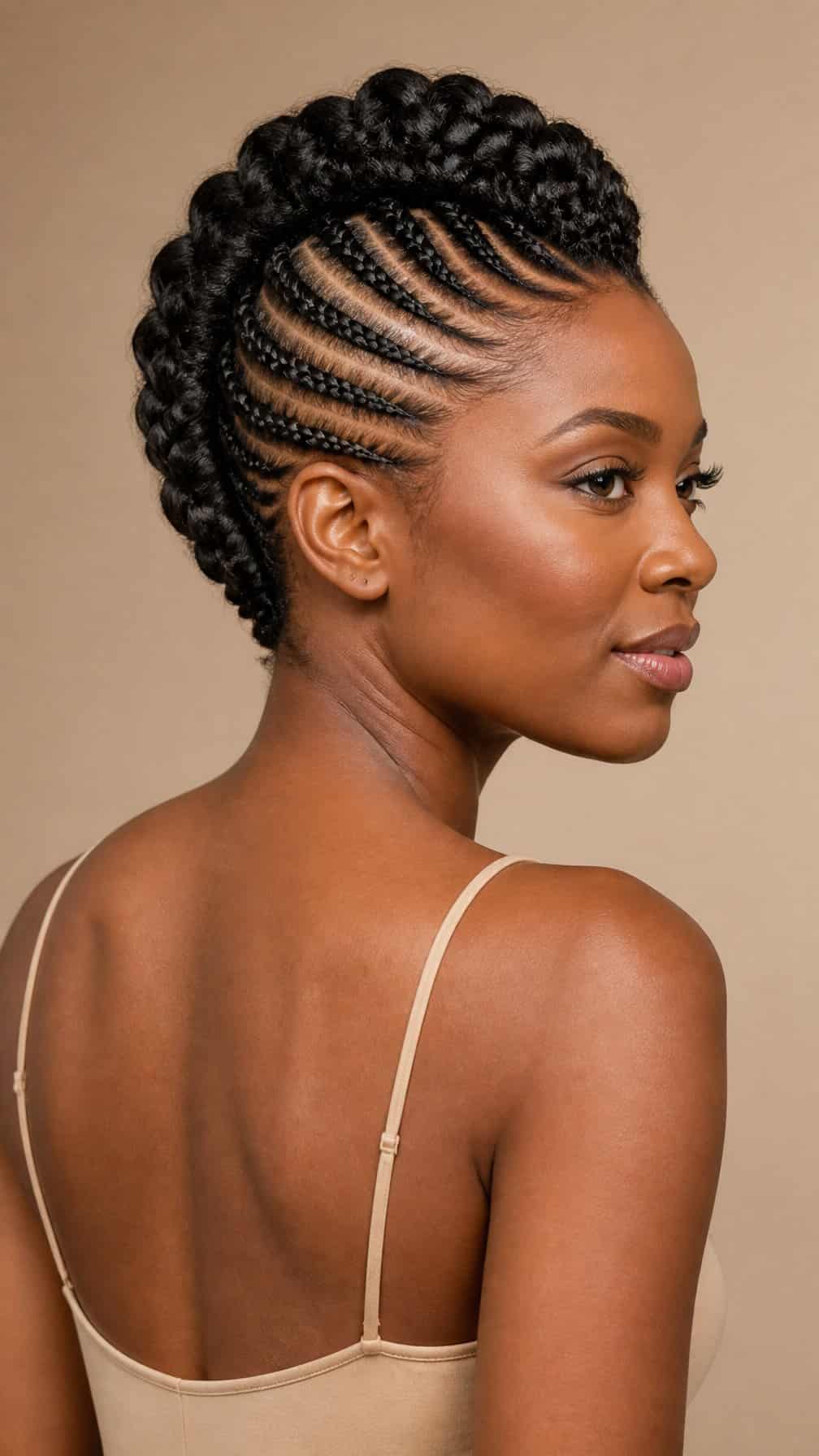
I keep the center section raised to create a mohawk shape, while tight cornrows along both sides direct attention toward the crown. The contrast between the sleek sides and fuller top gives this style a structured, athletic appearance.
I prefer medium-sized rows for easier maintenance and a balanced look. I can add extensions to the central braids when I want more length or volume, but neat parting remains essential to the design.
I protect the style at night with a satin scarf or bonnet and avoid heavy products near the scalp. With gentle care, this arrangement can stay defined for several weeks, depending on my hair growth and routine.
22) Basket-weave cornrows
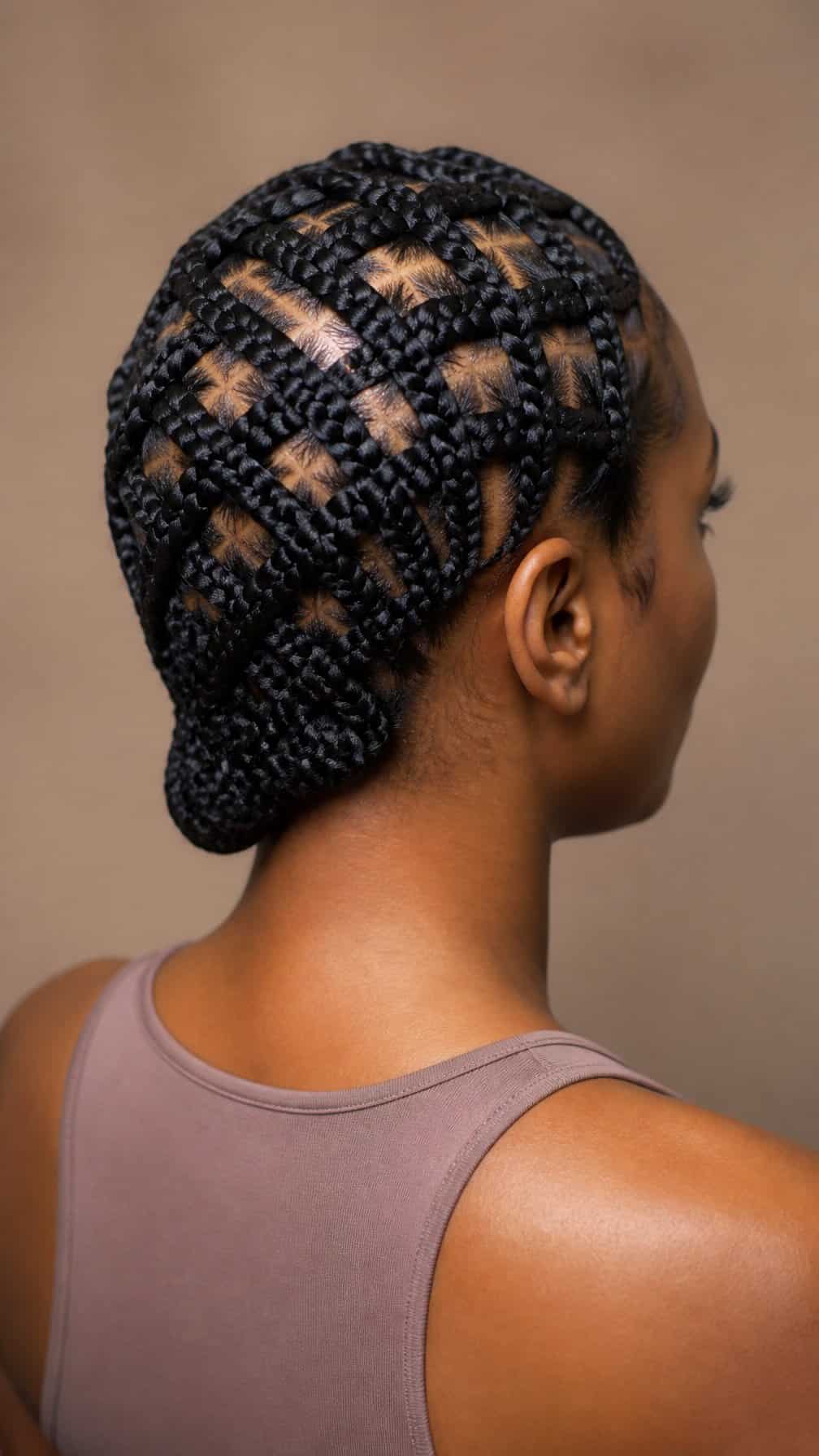
I like basket-weave cornrows for their structured pattern and strong visual detail. The stylist crosses and interlaces sections across the scalp, creating a design that resembles woven strips while keeping the hair close to the head.
I would ask for clean parting and consistent tension, especially where the rows intersect. Smooth, moisturized hair helps the pattern look neat, while a satin scarf or bonnet can reduce frizz during sleep.
With gentle maintenance, this style can stay defined for several weeks. I recommend protecting the edges, avoiding heavy products that cause buildup, and cleansing the scalp carefully without rough scrubbing.
Preparing Cornrows for Long-Lasting Wear
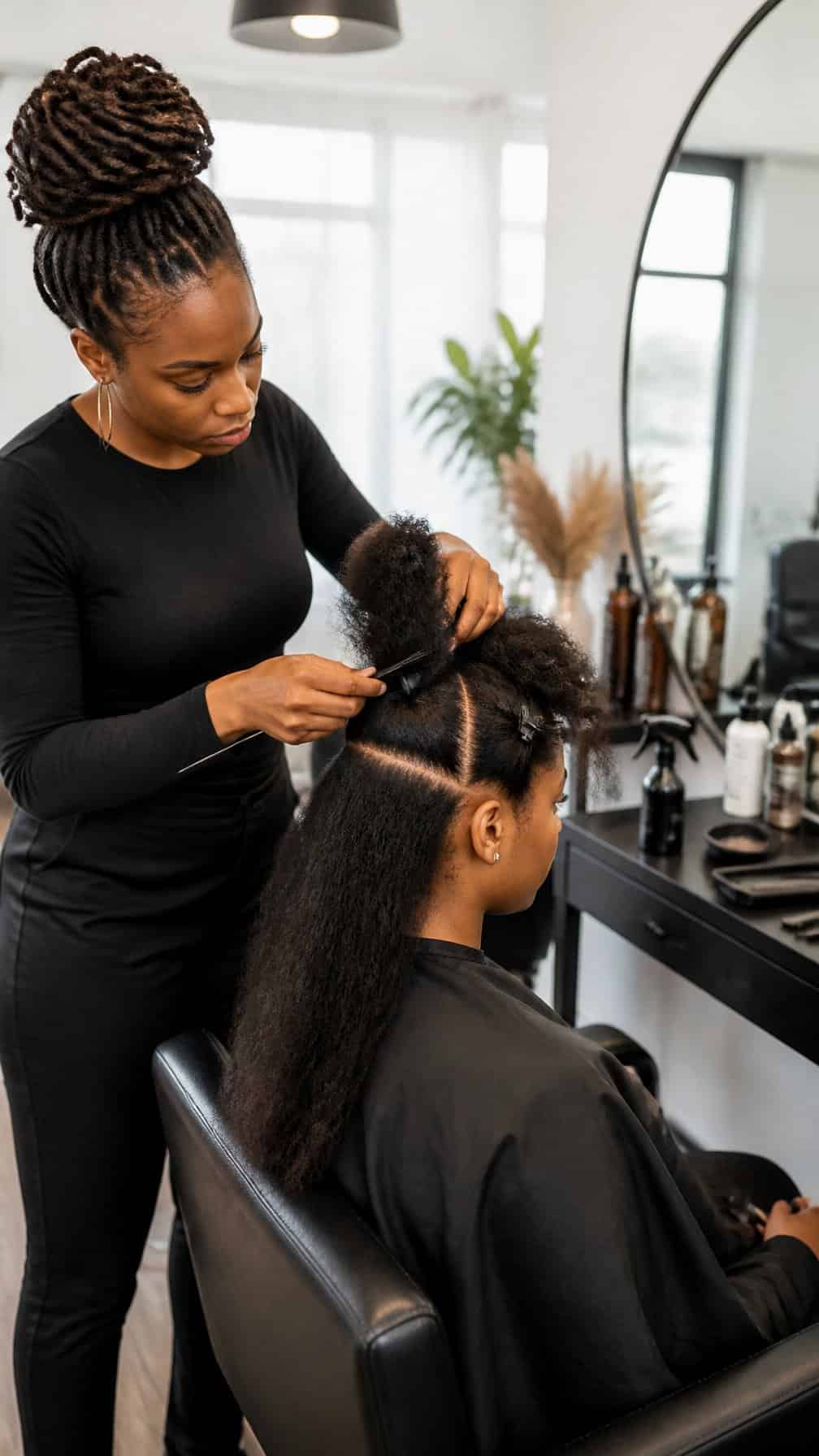
I protect the style’s longevity by starting with a clean, balanced scalp and selecting extensions that match my hair’s texture, density, and condition. Proper preparation helps reduce buildup, slipping, excessive tension, and dryness during several weeks of wear.
Scalp Cleansing and Moisturizing
I cleanse my scalp with a gentle shampoo before braiding, focusing on the roots rather than scrubbing the lengths aggressively. If I have heavy product buildup, I use a clarifying shampoo once, then follow with a moisturizing conditioner to prevent brittle strands.
After washing, I let my hair dry completely before installation. Braiding damp hair can trap moisture against the scalp and make the style uncomfortable. I apply a lightweight, water-based leave-in conditioner and a small amount of scalp oil only where needed; heavy grease can cause buildup and make the parts slippery.
I also detangle carefully from the ends upward and check for tenderness, flakes, or irritated areas. I avoid braiding over inflamed skin and ask my stylist to keep the first rows comfortably firm rather than tight.
Choosing the Right Hair Extensions
I choose extensions according to my hair’s thickness and the size of the planned cornrows. Lightweight synthetic hair works well for many styles, while thick or heavy bundles can add unnecessary tension, especially around the hairline and temples.
Before braiding, I separate the extension hair into even pieces and remove excessive length when the finished style does not require it. I also check the fiber for roughness, since coarse strands can catch on my natural hair and increase friction.
For sensitive skin, I wash or soak synthetic extensions according to the manufacturer’s care guidance and let them dry fully before use. I match the extension color and texture closely to my hair when I want a natural finish, and I avoid adding hair to weak or thinning sections.
Maintaining Healthy Cornrows Between Appointments
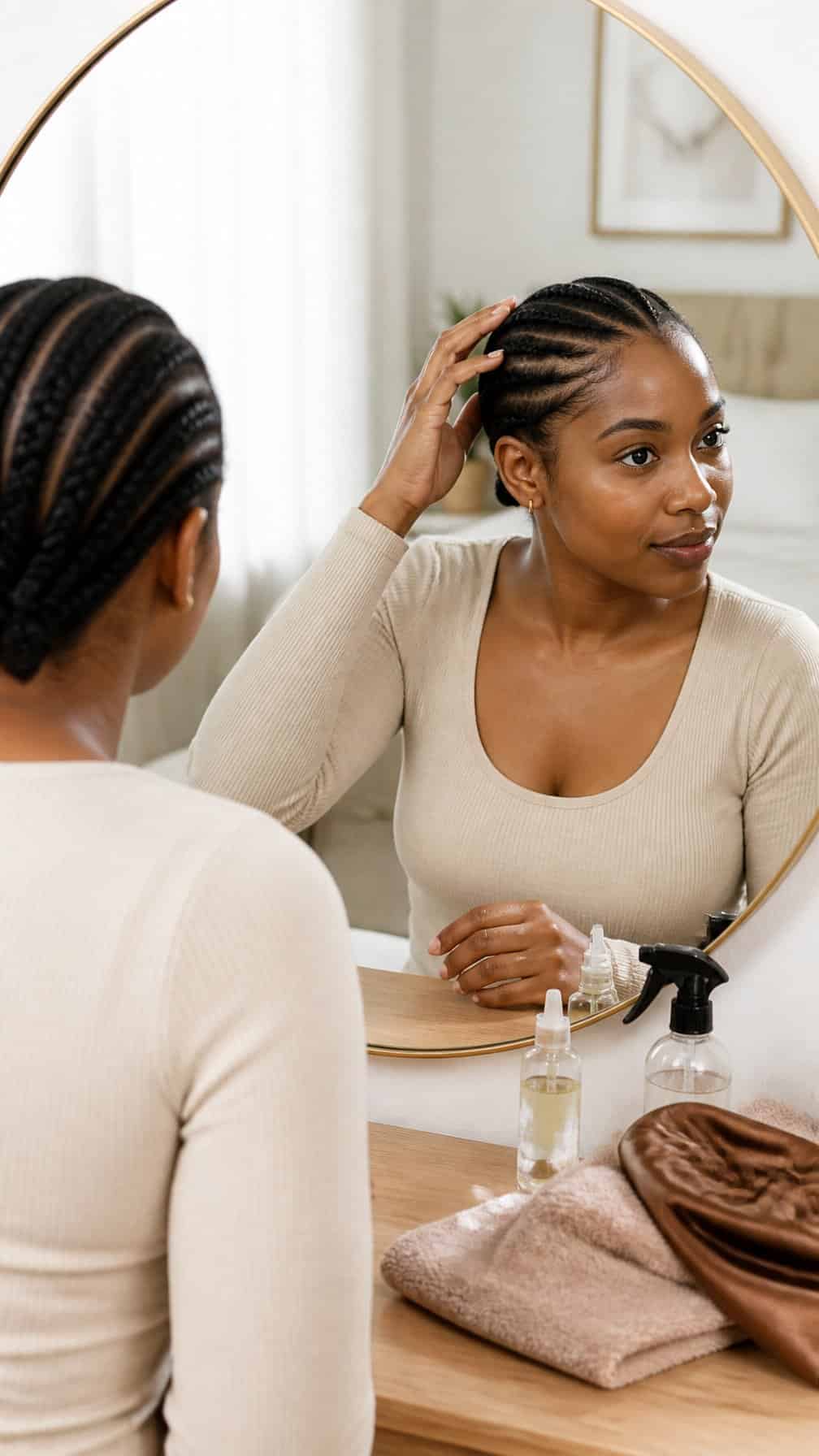
I protect the style from friction, cleanse the scalp carefully, and monitor tension throughout the wear period. These habits help me preserve neat parts while reducing dryness, buildup, breakage, and scalp irritation.
Nighttime Protection and Moisture
I cover my cornrows before bed with a satin or silk scarf, bonnet, or pillowcase. Cotton can absorb moisture and create friction, which may roughen the hair and loosen the braid pattern. I tie the scarf securely but avoid knots that press against my edges or cause headaches.
I apply a small amount of lightweight leave-in conditioner or scalp moisturizer when my hair feels dry. I focus on the exposed scalp and avoid coating the braids with heavy oils, grease, or thick creams that can trap buildup.
I also check my sleeping position. If the braids pull when I lie down, I reposition them loosely or use a larger bonnet. Persistent nighttime tension can worsen soreness around the hairline and temples.
Washing and Drying Without Frizz
I wash my scalp about every one to two weeks, adjusting the schedule for exercise, sweat, and product use. I dilute shampoo with water in an applicator bottle, place it along the parts, and massage gently with my fingertips instead of scrubbing across the braids.
I rinse thoroughly so cleanser does not remain under the rows. I apply diluted conditioner mainly to the hair between the braids when needed, keeping the roots light to limit residue.
After washing, I press the style with a microfiber towel or clean T-shirt rather than rubbing it. I use a hooded dryer on low or cool heat and make sure the roots dry completely; damp cornrows can develop odor and irritate the scalp.
Signs It Is Time to Take Them Down
I remove cornrows when I notice persistent pain, swelling, bumps, or burning, especially around the edges and nape. Tightness should not remain after the first few days, and pain does not indicate that the style is working.
I also watch for thinning edges, broken hairs, excessive shedding, or parts that look wider than when I installed the braids. These changes can signal too much tension or prolonged wear.
Heavy buildup, unpleasant odor, constant itching, and matted new growth also justify removal. I take the braids down gently, detangle with conditioner, cleanse my scalp, and give my hair a break before installing another style.