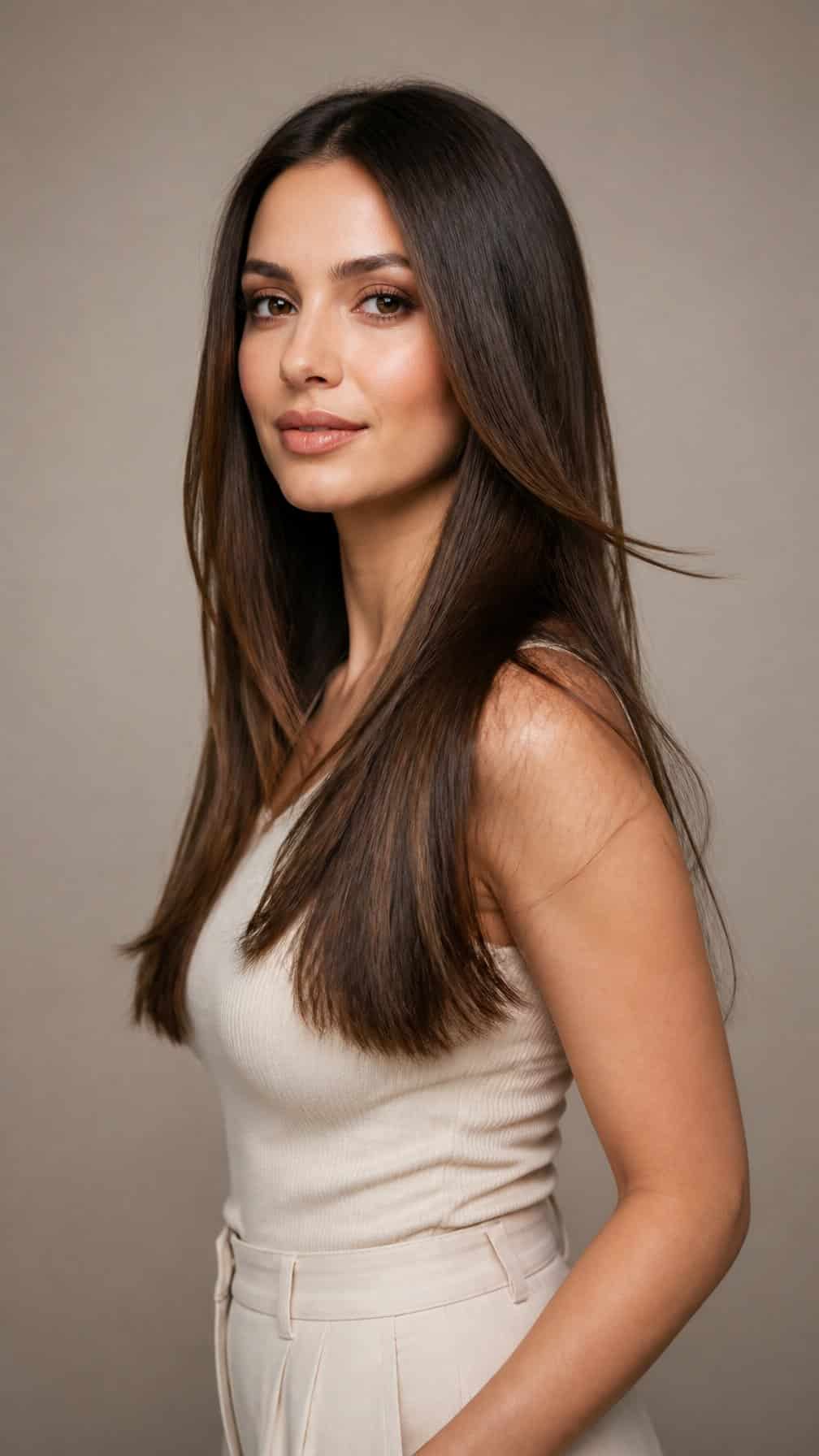
Straight hair can look polished without appearing flat or rigid. You can keep its clean lines while adding shape, lift, and natural-looking motion through thoughtful cuts, subtle layering, and flexible styling.
Save for later
Want to come back to this story? Save it with your email so it is easy to find again.
These 22 straight hairstyles show you how to add movement while preserving a smooth, streamlined finish. I’ll guide you through varied lengths, face-framing details, airy ends, and practical ways to maintain body without sacrificing softness.
Table of Contents
- 1 1) Long layers with beveled ends
- 2 2) Face-framing layers starting at the cheekbones
- 3 3) Softly rounded U-shaped cut
- 4 4) Collarbone-length cut with internal layers
- 5 5) Curtain bangs with long, sleek lengths
- 6 6) Blunt lob with feathered ends
- 7 7) Butterfly cut for straight hair
- 8 8) Long shag with polished, piecey layers
- 9 9) Wispy side-swept bangs
- 10 10) Chin-length layers on a long bob
- 11 11) V-shaped cut with subtle graduation
- 12 12) Textured ends on mid-back hair
- 13 13) 90s-inspired layered blowout
- 14 14) Long hair with invisible layers
- 15 15) Shoulder-length cut with flipped ends
- 16 16) Soft wolf cut for naturally straight hair
- 17 17) Face-framing bottleneck bangs
- 18 18) Sleek hair with long blended layers
- 19 19) Clavicut with airy ends
- 20 20) Long bob with rounded layers
- 21 21) Tapered ends for waist-length hair
- 22 22) Straight hair with cheekbone-grazing layers
- 23 How To Keep Straight Hair From Looking Flat
- 24 Choosing The Right Cut And Length
- 25 Using Lightweight Styling Products
- 26 Blow-Drying For Natural Lift
- 27 Maintaining Smooth, Flexible Styles
- 28 Preventing Heat Damage And Breakage
- 29 Refreshing Hair Between Wash Days
- 30 Managing Humidity And Flyaways
1) Long layers with beveled ends

I like long layers with beveled ends when I want straight hair to look polished without appearing flat. The gradual shaping keeps the length intact, while the angled ends create a soft transition that moves naturally around the shoulders.
I would ask for face-framing pieces that blend into the lower layers rather than stop abruptly. A smooth blow-dry with the ends turned slightly inward can emphasize the bevel, while a flat iron used sparingly keeps the finish sleek and flexible.
This style works especially well on medium to thick hair, where the layers can reduce weight without making the ends look thin. I would use a lightweight smoothing cream to control flyaways and preserve movement.
2) Face-framing layers starting at the cheekbones

I like cheekbone-length layers for adding shape without sacrificing a sleek finish. The shorter pieces draw attention to the eyes and cheekbones, while the longer lengths keep the style polished and easy to wear.
I usually ask for the layers to blend gradually into the rest of the haircut rather than stop sharply. On straight hair, that transition creates gentle movement around the face and prevents the ends from looking too heavy.
I can style this cut with a round brush for a soft bend or leave it mostly straight for a cleaner effect. A small amount of lightweight smoothing cream helps control flyaways without flattening the layers.
3) Softly rounded U-shaped cut

I like a softly rounded U-shaped cut for keeping straight hair polished without making it look flat. The center-back length sits slightly lower than the sides, creating a gentle curve that follows the hair’s natural fall.
I would keep the layers long and subtle, with the shortest pieces beginning below the shoulders. This preserves density through the ends while giving the lengths enough separation to shift when I move.
A center part emphasizes the balanced shape, while a side part adds an easy change in direction. I would finish with a lightweight smoothing product, concentrating on the mid-lengths and ends so the hair stays sleek but flexible.
4) Collarbone-length cut with internal layers

I like this collarbone-length cut because it keeps a clean outline while adding subtle movement through the interior. The ends sit near the shoulders, and hidden layers reduce bulk without making the style look choppy.
When I style it straight, I direct the sections away from my face and use a flat iron only where needed. This preserves the natural bend at the ends and gives the hair a light, flexible finish.
I use a lightweight smoothing cream rather than heavy oil, especially on fine hair. A center part creates a balanced look, while a soft side part adds more lift and changes the direction of the layers.
5) Curtain bangs with long, sleek lengths

I like curtain bangs with long, sleek lengths because the center part creates shape without disrupting the straight finish. I would ask for cheekbone-skimming layers that blend gradually into the rest of the hair, keeping the ends clean and substantial.
I style this look with a round brush while directing each side away from my face. A lightweight smoothing cream controls flyaways, while a small amount of flexible hairspray helps the bangs hold their curve without making the lengths stiff.
The movement comes from the graduated front pieces rather than heavy layering throughout. I keep the lower sections mostly one length, which preserves polish and lets the hair swing naturally as I move.
6) Blunt lob with feathered ends

I keep the length around the collarbone, where the blunt perimeter gives straight hair a clean, substantial shape. I ask for lightly feathered ends rather than heavy layers, so the cut retains its polished outline while the tips bend and separate naturally.
I style mine with a smoothing brush and a small amount of lightweight serum, directing the ends slightly away from my face. This creates gentle movement without turning the look into obvious waves. A center part keeps the shape modern, while a soft side part adds lift at the roots.
7) Butterfly cut for straight hair

I like the butterfly cut on straight hair because its layered shape creates movement without relying on curls. Shorter layers around the face add lift, while longer lengths maintain a smooth, flowing outline.
I would ask for blended layers rather than sharply disconnected sections, especially if my hair is fine or naturally flat. A round brush can turn the face-framing pieces away from the cheeks, and a lightweight mousse can support volume without making the lengths stiff.
This cut works best when I keep the ends trimmed and use minimal heat. On very thick hair, I may need internal weight removal so the layers fall freely instead of forming a bulky shape.
8) Long shag with polished, piecey layers

I like this long shag because it adds visible movement without making straight hair look messy. Polished, piecey layers frame my face and create separation through the lengths while preserving the overall shape.
I keep the ends lightly textured rather than heavily thinned, which helps them retain body and appear intentional. A smoothing cream controls flyaways, while a small amount of styling paste defines selected pieces.
This cut works especially well when I want volume around the crown and softer motion near the bottom. I can wear it with a center part for balance or shift the part slightly to create a more casual finish.
9) Wispy side-swept bangs

I like wispy side-swept bangs for adding shape without hiding the length of straight hair. Their feathered ends blend softly into the rest of the style, while the angled direction creates movement around the eyes and cheekbones.
I would keep the bangs lightweight and slightly longer at the sides so they sweep naturally instead of forming a heavy block. A small amount of styling cream can define the separation, while a round brush helps guide the hair into place without making it look stiff.
This option works well with a center or off-center part, depending on how much lift I want at the roots. Regular trims preserve the airy texture and prevent the ends from becoming uneven.
10) Chin-length layers on a long bob

I like chin-length layers on a long bob because they add shape without removing the sleek quality of straight hair. The shorter pieces frame my jaw and create a clear focal point, while the longer ends keep the style polished.
I ask for subtle graduation rather than heavily blended layers when I want controlled movement. This approach lets the front pieces shift naturally around my face without making the cut look choppy or overly textured.
I can wear the bob with a center part for balanced framing or a side part for more lift through the front. A lightweight smoothing cream helps define the layers while keeping the lengths flexible and straight.
11) V-shaped cut with subtle graduation

I like this cut for keeping straight hair sleek while adding movement through the ends. The back forms a soft V, and subtle graduation prevents the shape from looking blunt or heavy.
I would keep the shortest layers near the front or around the face, depending on the hair’s density. Light layering through the lower lengths helps the ends shift naturally when I move, without creating obvious steps or sacrificing fullness. A center part emphasizes the shape, while a side part gives it a softer finish.
12) Textured ends on mid-back hair

I keep the length sleek through the mid-back area, then add light texture from the lower half downward. This placement preserves the straight silhouette while giving the ends enough separation to move instead of forming one heavy line.
I prefer subtle, uneven layers around the last few inches rather than strong graduation. When I style the hair with a round brush or flat iron, I bend the ends slightly in alternating directions for a relaxed finish that still looks polished.
A lightweight smoothing cream controls flyaways without flattening the texture. I also trim the ends regularly, since dry or split tips can make this style look rough rather than intentionally piecey.
13) 90s-inspired layered blowout

I build this style with long, blended layers that curve away from the face and create lift through the crown. A round brush shapes the ends while keeping the lengths smooth, so the hair moves instead of hanging flat.
I prefer a soft side part or slightly off-center part to support the voluminous finish. Velcro rollers can help set the crown and front sections, while a light styling cream keeps the layers defined without making them stiff. The result works best on medium to long, straight hair with enough length for the layers to swing.
14) Long hair with invisible layers

I keep the length intact while adding subtle layers beneath the top section. This technique preserves a sleek outline but removes some weight through the ends, helping straight hair fall with softer movement.
I prefer invisible layers for a polished style that does not look heavily cut. When I blow-dry the hair with a round brush or use a large-barrel iron, the hidden shaping creates gentle bends without obvious steps.
Regular trims help maintain the clean shape, especially if the ends feel thin or dry. I also use a lightweight smoothing product from mid-length to ends so the hair stays fluid without losing its natural swing.
15) Shoulder-length cut with flipped ends

I like this shoulder-grazing length because it keeps straight hair polished without making it look flat. The ends turn slightly outward, creating movement around the collarbone and adding a light, structured finish.
I would ask for subtle layering near the perimeter rather than heavy internal layers. A round brush or flat iron can shape the ends away from the face, while a lightweight smoothing product helps control flyaways without removing the cut’s natural swing.
This style works well with a center part for balance or a side part for extra lift. I would keep the flip soft and unevenly angled so the look stays modern instead of appearing overly styled.
16) Soft wolf cut for naturally straight hair

I like a soft wolf cut because it adds shape without hiding naturally straight texture. I would keep the crown lightly layered and leave the lower lengths longer, creating gentle volume near the top with movement through the ends.
I would ask for blended layers rather than sharp, choppy sections. Face-framing pieces can begin around the cheekbones or jaw, depending on how much definition I want, while wispy bangs add softness without requiring heavy styling.
To style it, I would apply a lightweight volumizing mousse to damp roots and let the hair air-dry or blow-dry with a round brush. I would finish with a small amount of smoothing cream on the ends to maintain separation without weighing the layers down.
17) Face-framing bottleneck bangs

I like bottleneck bangs with straight hair because their shorter center and longer outer edges create movement around the face. I would ask for softly tapered ends rather than a blunt line, allowing the fringe to blend into the rest of the haircut.
I can wear them parted slightly at the center or brushed to either side. On sleek lengths, a light bend at the ends keeps the style relaxed without removing the smooth finish.
I would use a round brush or flat iron to direct the outer sections away from my cheeks. A small amount of lightweight styling cream can reduce flyaways while preserving the bangs’ natural separation.
18) Sleek hair with long blended layers

I like long blended layers for adding movement without disrupting a sleek finish. The gradual shaping keeps the ends connected, while subtle variation through the lengths helps straight hair fall with more dimension.
I would ask for soft layers that begin below the chin or around the shoulders, depending on face shape and overall length. A smooth blow-dry or flat-iron pass can emphasize the clean lines, while a light serum controls flyaways without making the hair look flat.
This style works especially well when I want polished hair that still shifts naturally as I move. Regular trims help preserve the blended edges and prevent the longest layers from appearing thin or uneven.
19) Clavicut with airy ends

I like this collarbone-length cut because it keeps straight hair polished while preserving lightness through the ends. I ask for subtle internal layers and soft point-cutting, which help the perimeter move without creating obvious steps.
I style mine with a center or slightly off-center part, then use a round brush to turn the ends away from my face. A lightweight smoothing cream controls flyaways without flattening the shape, while flexible hairspray keeps the finish touchable. This length works especially well when I want movement that still looks precise.
20) Long bob with rounded layers

I like this long bob for its smooth shape and subtle movement. Rounded layers curve inward toward the ends, giving straight hair a softer outline without sacrificing its clean finish.
I would keep the layers blended and concentrated around the lower half of the cut. This placement preserves fullness while allowing the ends to swing naturally when I move or style the hair.
I can wear the bob with a center part for balance or shift it slightly to one side for extra lift. A lightweight smoothing cream and a large round brush help define the curved ends without making the style look stiff.
21) Tapered ends for waist-length hair

I keep the lengths sleek while tapering the final few inches into a soft point. This shape removes blunt heaviness without sacrificing the visual impact of waist-length hair, and it lets the ends shift naturally when I move.
I prefer subtle long layers that begin below the shoulders, then blend into the tapered perimeter. A center part emphasizes the length, while a side part adds gentle direction. I use a lightweight smoothing product to control flyaways without flattening the hair’s natural swing.
22) Straight hair with cheekbone-grazing layers

I like cheekbone-grazing layers because they add shape without taking away the clean line of straight hair. The shortest pieces sit around the face, drawing attention to the eyes and cheekbones while blending into longer lengths.
I usually recommend a center part for balanced framing or a soft side part for a slightly fuller look on one side. A lightweight smoothing cream can reduce flyaways while keeping the layers flexible and natural.
This cut works well with fine or medium-density hair because the layers create movement without requiring heavy styling. I would use a flat iron only on the ends, leaving a slight bend so the face-framing pieces do not look rigid.
How To Keep Straight Hair From Looking Flat

I create movement by balancing the haircut, product weight, and drying direction. Small adjustments, such as removing excess weight or lifting the roots while drying, can give straight hair shape without making it look stiff.
Choosing The Right Cut And Length
I choose layers according to the hair’s density and natural texture. Fine straight hair usually benefits from subtle internal layers or face-framing pieces, while too many short layers can make the ends look thin. Medium and thick hair can support longer layers that remove bulk and help the lengths move.
I also consider how the haircut sits when dry. A blunt cut at the collarbone can make fine hair look fuller, while long, one-length hair may pull the roots downward. I ask for carefully placed layers rather than heavily razored ends, which can create uneven, wispy tips. A side part or soft fringe can add height around the face without changing the overall length.
Using Lightweight Styling Products
I keep products away from the roots unless they specifically provide lift. A volumizing mousse or light root spray works best on damp hair; I apply a small amount at the crown and part line, then distribute the rest through the midlengths. Heavy creams, oils, and waxes can flatten straight hair, especially when I use them before drying.
I use a lightweight heat protectant every time I apply hot tools. After drying, I can add texture with a dry shampoo or flexible-hold spray, focusing on the roots and midlengths rather than coating the ends. I start with less product and build gradually, because excess residue can make clean hair look limp.
Blow-Drying For Natural Lift
I begin by blotting wet hair with a microfiber towel and letting it air-dry until it is about 70 percent dry. Then I lift sections at the roots with a vent brush or round brush while directing airflow from the roots toward the ends. I keep the dryer moving to prevent heat from pressing one section flat.
For extra height, I dry the crown in the opposite direction from my usual part, let it cool briefly, and then move it back. I finish with cool air to help the shape hold. I avoid pulling the brush tightly through the lengths, since excessive tension creates a smooth finish but removes the movement I want.
Maintaining Smooth, Flexible Styles

I protect straight hair with controlled heat, lightweight moisture, and careful handling. I also refresh the roots, lengths, and ends differently so the style stays polished without losing its natural movement.
Preventing Heat Damage And Breakage
I apply a heat protectant to damp or dry hair before using a blow-dryer, flat iron, or curling tool. I check the product directions and coat the mid-lengths and ends, where repeated styling often causes the most dryness.
I dry my hair completely before using a flat iron. On fine or delicate hair, I keep the temperature near 300–350°F; thicker hair may need more heat, but I avoid repeatedly passing over the same section. I use one slow pass instead of several quick passes.
I detangle with a wide-tooth comb, starting at the ends and working upward. I also alternate partings and styles to reduce tension in one area, and I trim split ends when they begin traveling up the hair shaft.
Refreshing Hair Between Wash Days
I revive straight styles by brushing the roots gently with a cushioned brush, then directing cool air from a blow-dryer through flattened areas. Cool air helps reshape the hair without adding another round of high heat.
For oily roots, I apply a small amount of dry shampoo to the scalp, wait two to three minutes, and massage it in before brushing. I avoid spraying large amounts onto the lengths because powder can make them look dull or stiff.
I smooth the ends with a drop of lightweight serum or hair oil warmed between my palms. If the hair has bends from sleeping, I lightly mist those sections with water and use a round brush on low heat to restore a soft curve.
Managing Humidity And Flyaways
I use an anti-humidity cream or lightweight smoothing spray before leaving home, concentrating on the outer layer and ends. I choose formulas that provide flexible hold so the hair remains touchable rather than coated or rigid.
I let the hair cool completely after blow-drying before brushing it into place. Brushing too soon can disturb the shape and create static, especially when the hair is dry or the air lacks moisture.
For individual flyaways, I rub a tiny amount of serum over my fingertips and press them lightly along the part and crown. I can also use a clean spoolie with a trace of hairspray for precise control. At night, I loosely wrap my hair in a satin scarf or use a satin pillowcase to reduce friction and morning frizz.